Creamy Mushroom Sauce for Pasta, Chicken, Steak, and Pork
 ""
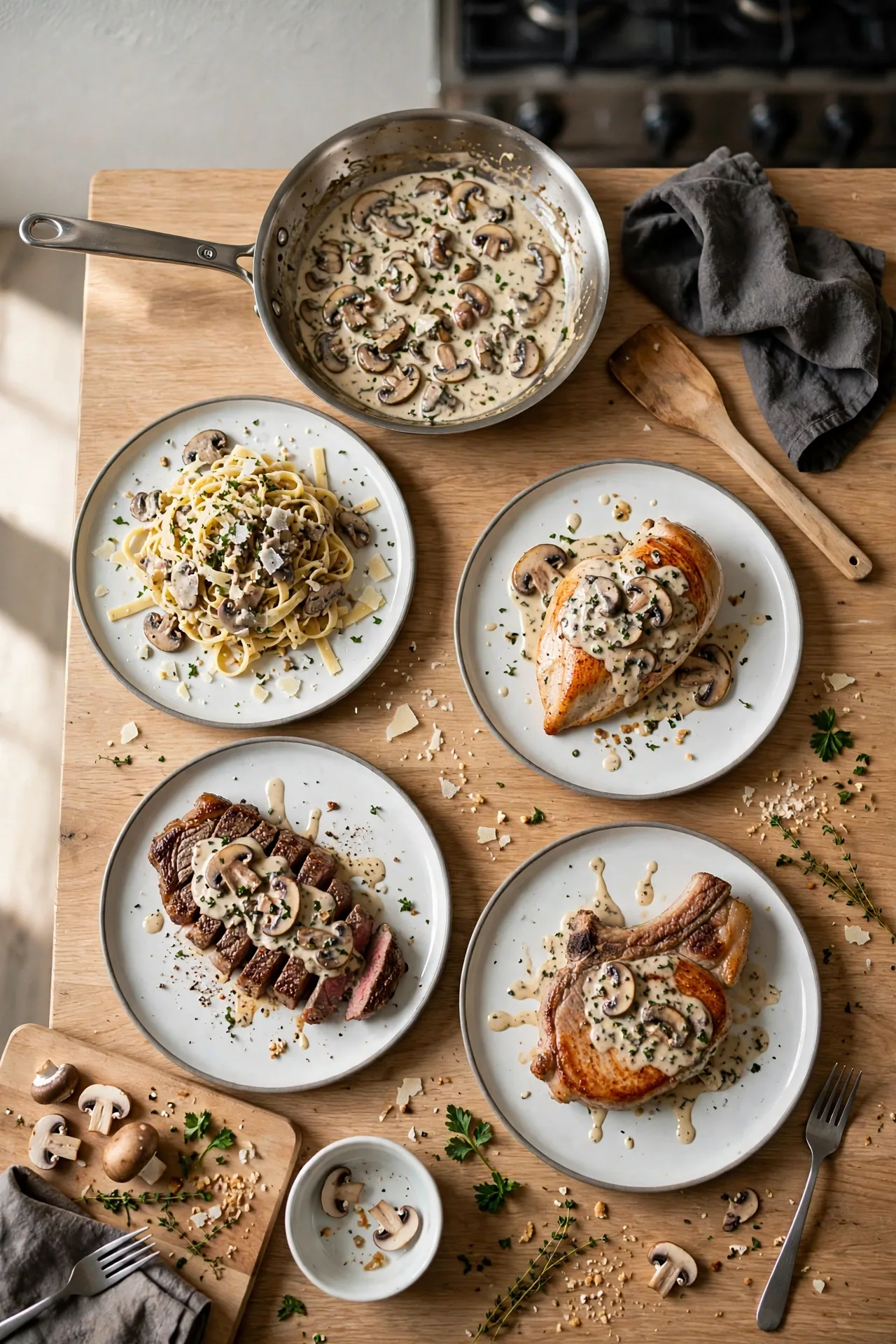
 Pin it
In this post
This creamy mushroom sauce recipe shows you one sauce for four dinners — pasta, chicken, steak, and pork — with step-by-step photos for each version. Use the links below to jump to the version or step you need.
- Pick Your Version
- Recipe Overview
- Ingredients
- Why These Ingredients Matter
- How the Recipe Flows
- Step 1: Slice the Mushrooms and Line Up the Aromatics
- Step 2: Cook Your Protein (Skip for Pasta)
- Step 3: Build the Mushroom Sauce
- Step 4: Finish Your Version
- Pasta
- Chicken
- Steak
- Pork
- When the Sauce Goes Off Track
- If You’re Out of Something
- Keeping Leftovers
- Make-Ahead Plan
- A Few Facts Behind the Method
- Questions Readers Ask
- Which Version to Make
- Recipe Card
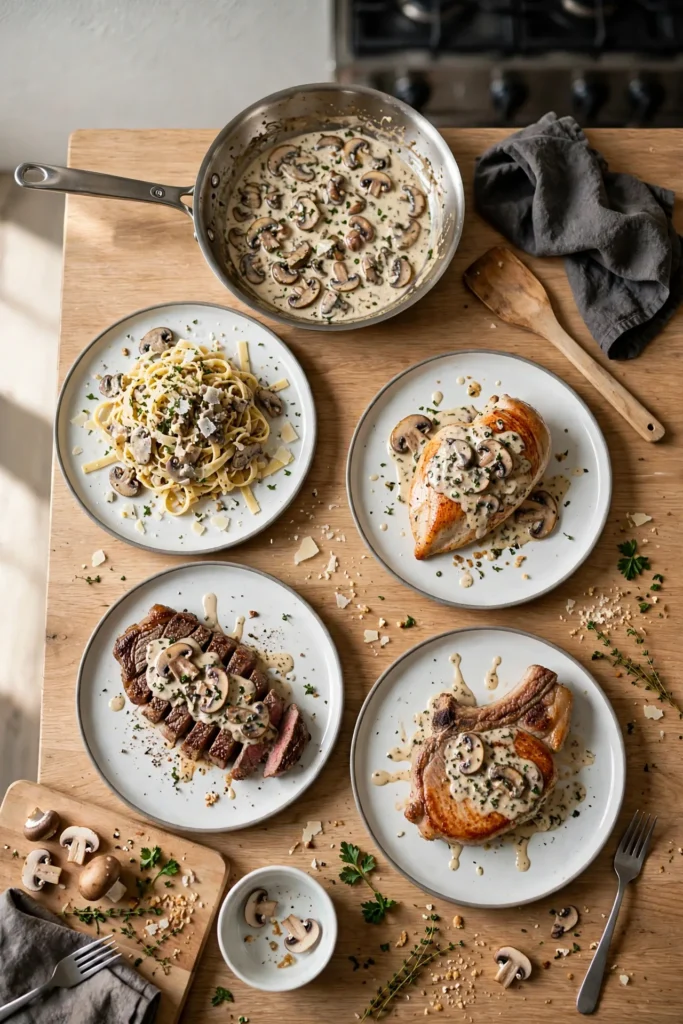
One skillet of browned mushrooms, a splash of white wine, and a cup of cream makes a sauce that works on fettuccine, chicken breasts, steak, and pork chops. The sauce itself never changes. What changes is what goes into the pan before it, and what you do with the sauce at the end.
That is why this post shows the sauce once and builds four dinners around it. Cook your protein first, leave the browned bits in the pan, and the sauce picks up that flavor. Making pasta instead? The same sauce starts in a clean pan while the water boils.
It is a weeknight-sized recipe: one skillet, about 45 minutes, and a method that works the same way each time. The details that matter most are how you brown the mushrooms, how gently you simmer the cream, and whether you check the meat with a thermometer.
Pick Your Version
| Version | What goes in the pan first | Cook to |
|---|---|---|
| Pasta | Nothing. Boil pasta while the sauce simmers | Al dente |
| Chicken | 4 breasts, pounded to ¾ inch | 165°F (74°C) |
| Steak | 4 strip or sirloin steaks, 1 inch thick | 145°F (63°C), then rest 3 minutes |
| Pork | 4 boneless chops, 1 inch thick | 145°F (63°C), then rest 3 minutes |
Those temperatures are the USDA’s safe minimums. Chicken at 165°F is the standard for all poultry, and 145°F with a three-minute rest applies to steaks and chops.
Recipe Overview
- Serves: 4
- Prep time: 15 minutes
- Cook time: 30 to 35 minutes (about 25 to 30 for pasta)
- Total time: about 45 minutes (about 40 for pasta)
- Sauce yield: roughly 2 to 2½ cups
- Equipment: 12-inch skillet, instant-read thermometer, wooden spatula, and a large pot if you are making pasta
Ingredients
For the mushroom sauce (every version)
- 1 pound (450 g) cremini mushrooms, sliced ¼ inch thick
- 2 tablespoons unsalted butter
- 1 tablespoon olive oil
- 1 medium shallot, finely diced (about ⅓ cup)
- 3 garlic cloves, minced
- 2 teaspoons fresh thyme leaves (or ¾ teaspoon dried)
- ½ cup (120 ml) dry white wine, such as Pinot Grigio or Sauvignon Blanc
- ¾ cup (180 ml) low-sodium chicken broth (beef broth works well with steak)
- 1 cup (240 ml) heavy cream
- 1 teaspoon Worcestershire sauce
- 1 teaspoon fresh lemon juice
- ½ teaspoon kosher salt, divided, plus more to taste
- ¼ teaspoon black pepper
- 2 tablespoons chopped fresh parsley
For the pasta version
- 12 ounces (340 g) fettuccine
- 1 tablespoon kosher salt, for the cooking water
- ¼ cup freshly grated Parmesan, optional
For the chicken version
- 4 boneless, skinless chicken breasts (6 to 8 ounces each)
- 1 teaspoon kosher salt
- ½ teaspoon black pepper
- 1 tablespoon olive oil or avocado oil
For the steak version
- 4 strip or sirloin steaks, about 1 inch (2.5 cm) thick and 8 ounces each
- 1¼ teaspoons kosher salt
- ½ teaspoon black pepper
- 1 tablespoon avocado oil or another high-heat oil
For the pork version
- 4 boneless pork loin chops, about 1 inch (2.5 cm) thick and 6 to 8 ounces each
- 1 teaspoon kosher salt
- ½ teaspoon black pepper
- 1 tablespoon olive oil or avocado oil
Allergen note: the sauce contains dairy. Worcestershire sauce usually contains fish (anchovies), and the pasta contains wheat. Check labels on broth and Worcestershire if you are cooking for someone with an allergy.
Why These Ingredients Matter
Cremini mushrooms have more flavor than white button mushrooms and hold their shape in a skillet. Shallot is milder and sweeter than onion, which suits a cream sauce. Wine adds acidity and lifts the browned bits off the pan; Worcestershire and lemon at the end add savory depth and brightness so the cream does not taste flat.
How the Recipe Flows
Read this once before you start. The order is the same for every version:
- Slice the mushrooms and prep the aromatics.
- Cook your protein (skip this for pasta).
- Build the mushroom sauce in the same skillet.
- Finish your version: toss with pasta, or spoon over the protein.
Step 1: Slice the Mushrooms and Line Up the Aromatics
Once the wine goes into the pan, the sauce moves quickly, so measure everything first.
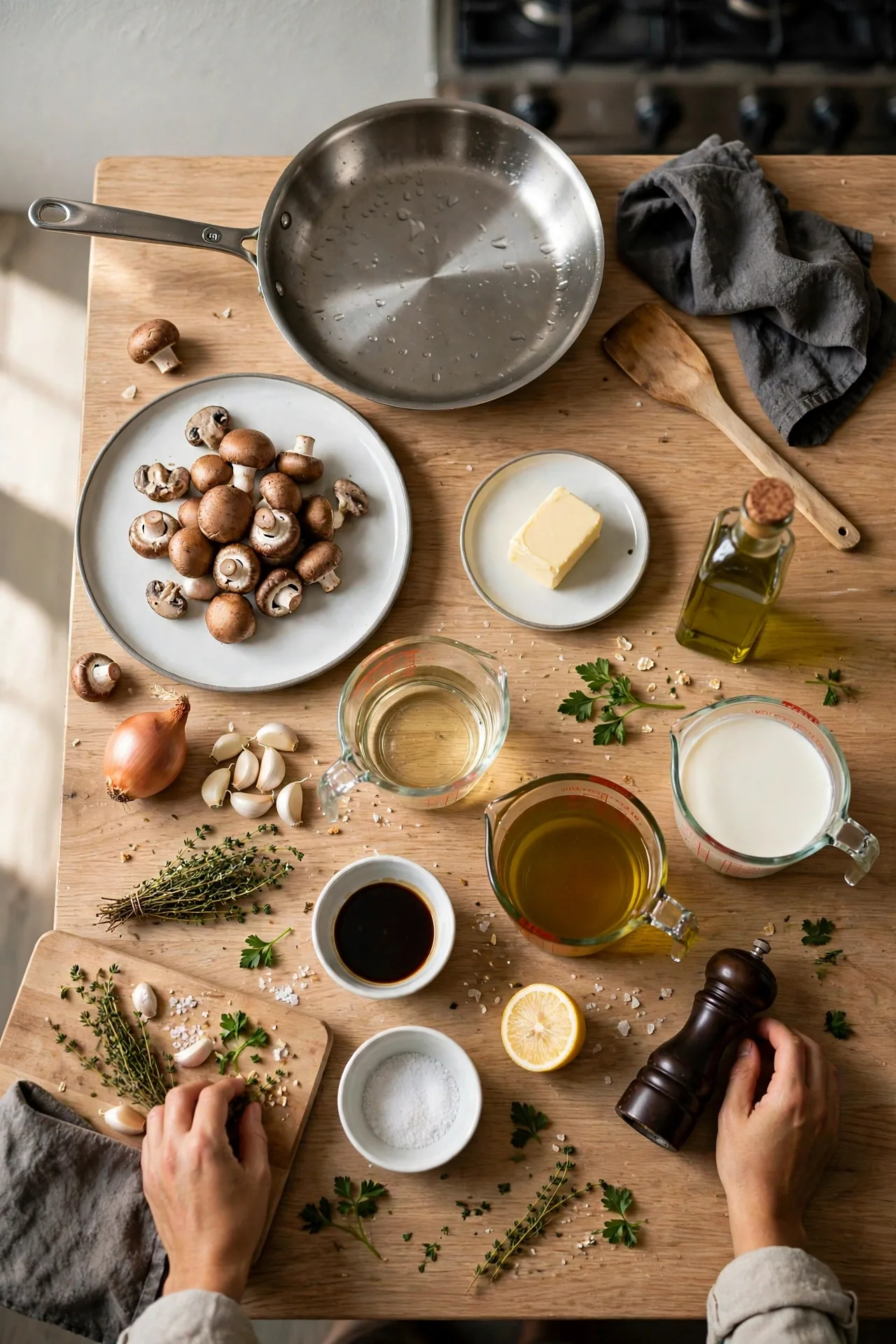
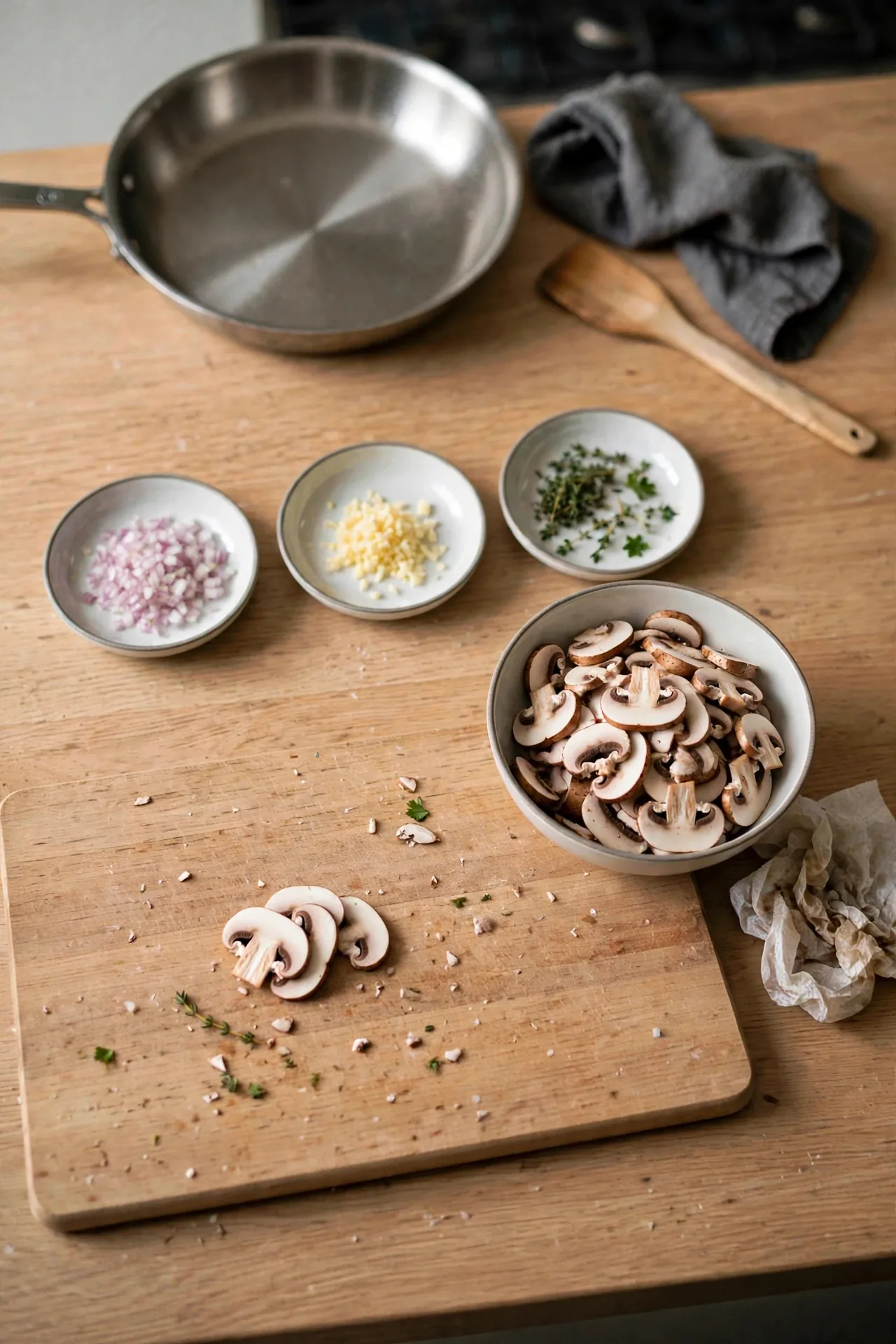
Set out the sauce ingredients: mushrooms, butter, oil, shallot, garlic, thyme, wine, broth, cream, Worcestershire, lemon, parsley, salt, and pepper.
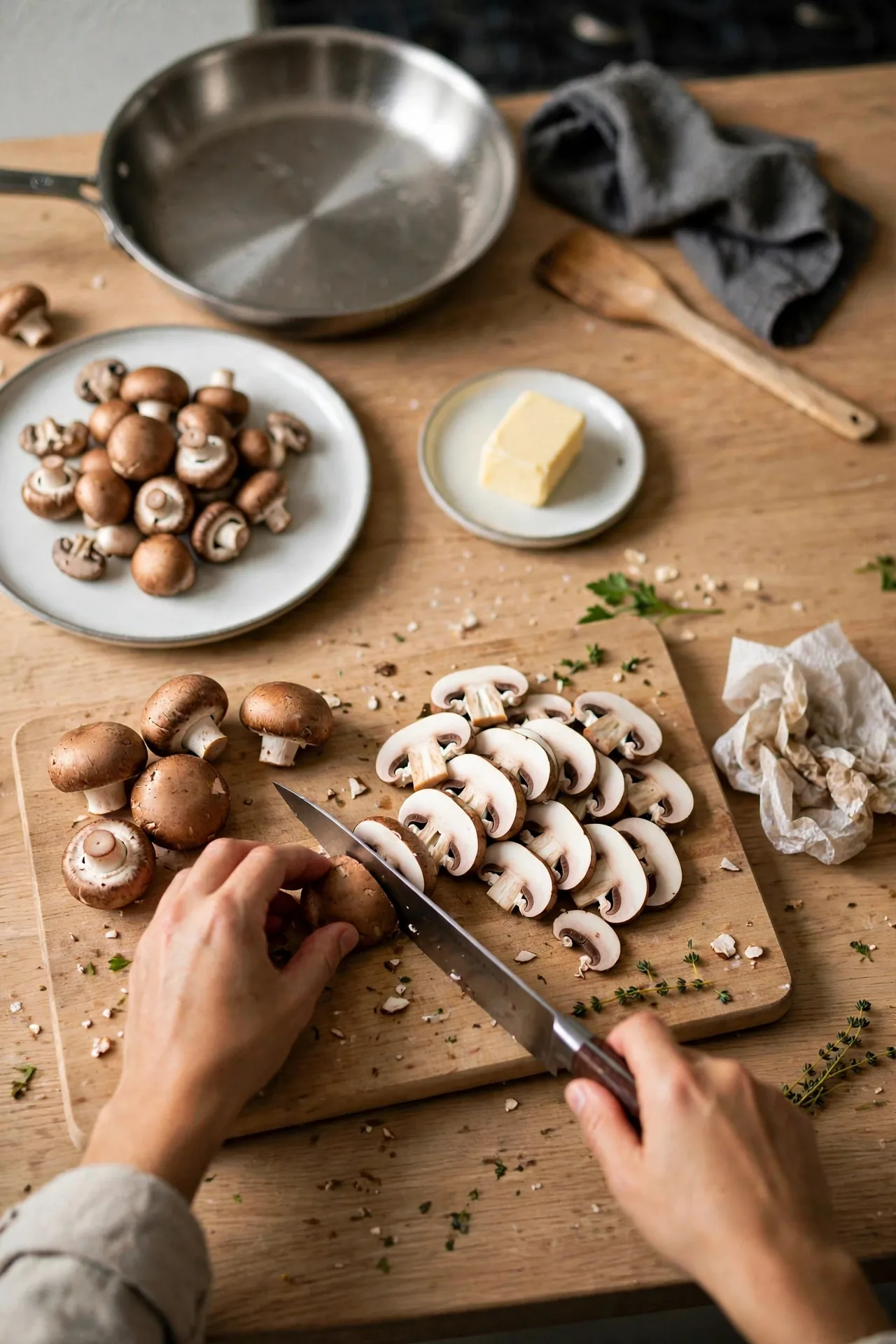
Wipe the mushrooms with a damp paper towel instead of rinsing them. They tend to soak up water, and extra water delays browning. Trim the dry stem ends, then slice the caps about ¼ inch thick. Even slices brown at the same pace.
Dice the shallot, mince the garlic, and pull the thyme leaves from the stems. Keep the sliced mushrooms in a bowl and the aromatics in small bowls near the stove.
Step 2: Cook Your Protein (Skip for Pasta)
Use a 12-inch skillet over medium-high heat. Always pat the meat dry first; a wet surface steams and browns slowly. Whichever version you choose, do not wash the pan afterward. The browned bits stuck to the bottom become part of the sauce.
Doneness check: USDA guidance is to use a food thermometer rather than color, firmness, or time. Insert it sideways into the thickest part of the meat.
If You’re Making the Chicken Version
Place each breast between two sheets of parchment or plastic wrap and pound the thick end until the whole breast is about ¾ inch thick. Even thickness is what lets the thin end and thick end finish together.
Season both sides with the 1 teaspoon salt and ½ teaspoon pepper (that is the total for all four breasts).
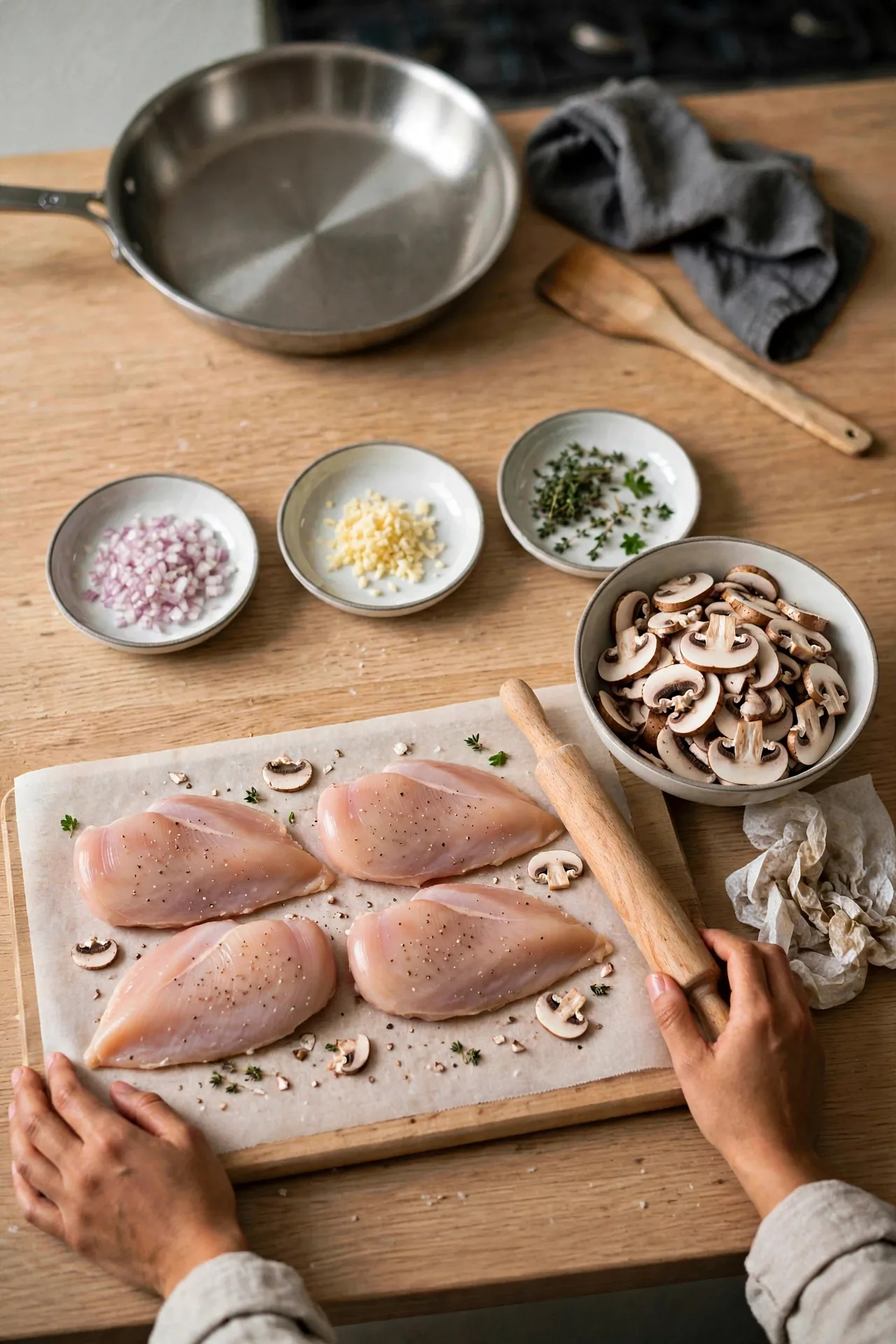
Heat the oil in the skillet for about 2 minutes, until it shimmers. Lay the chicken in, leaving space between pieces. If four breasts do not fit without touching, cook two at a time.
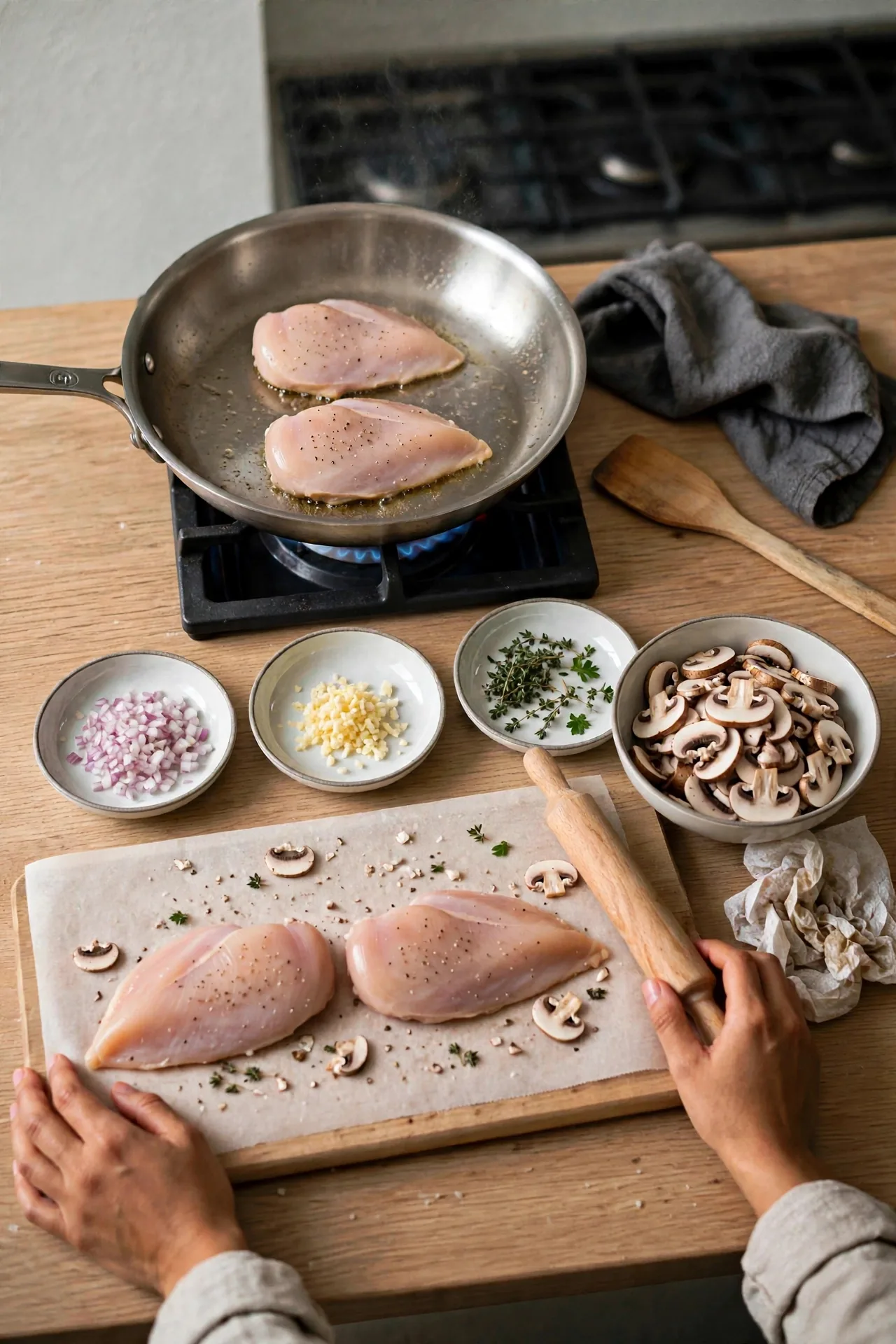
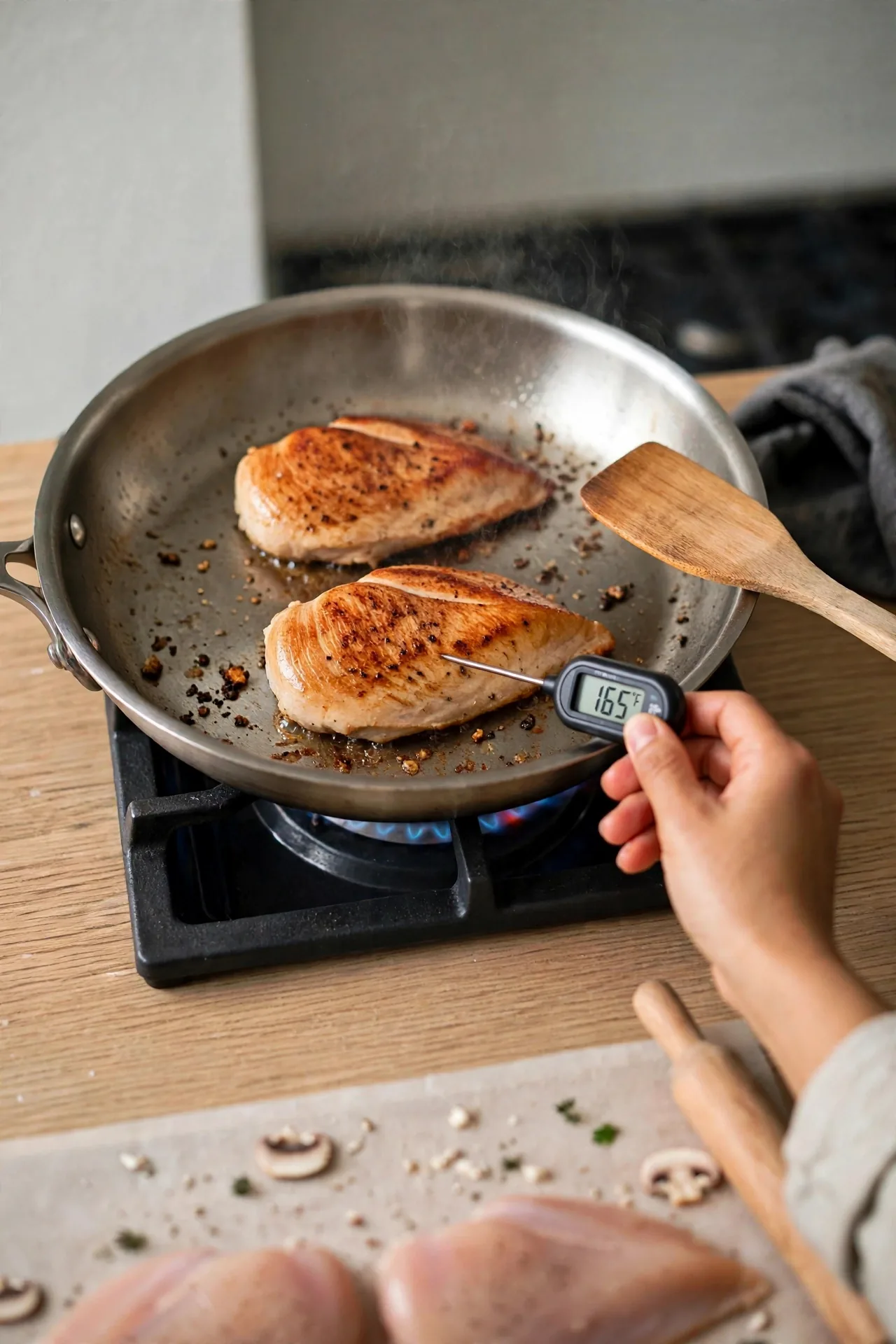
Leave the chicken alone for 5 to 6 minutes. It releases easily once the underside is golden; if it sticks, give it another minute. Flip and cook 4 to 6 minutes more.
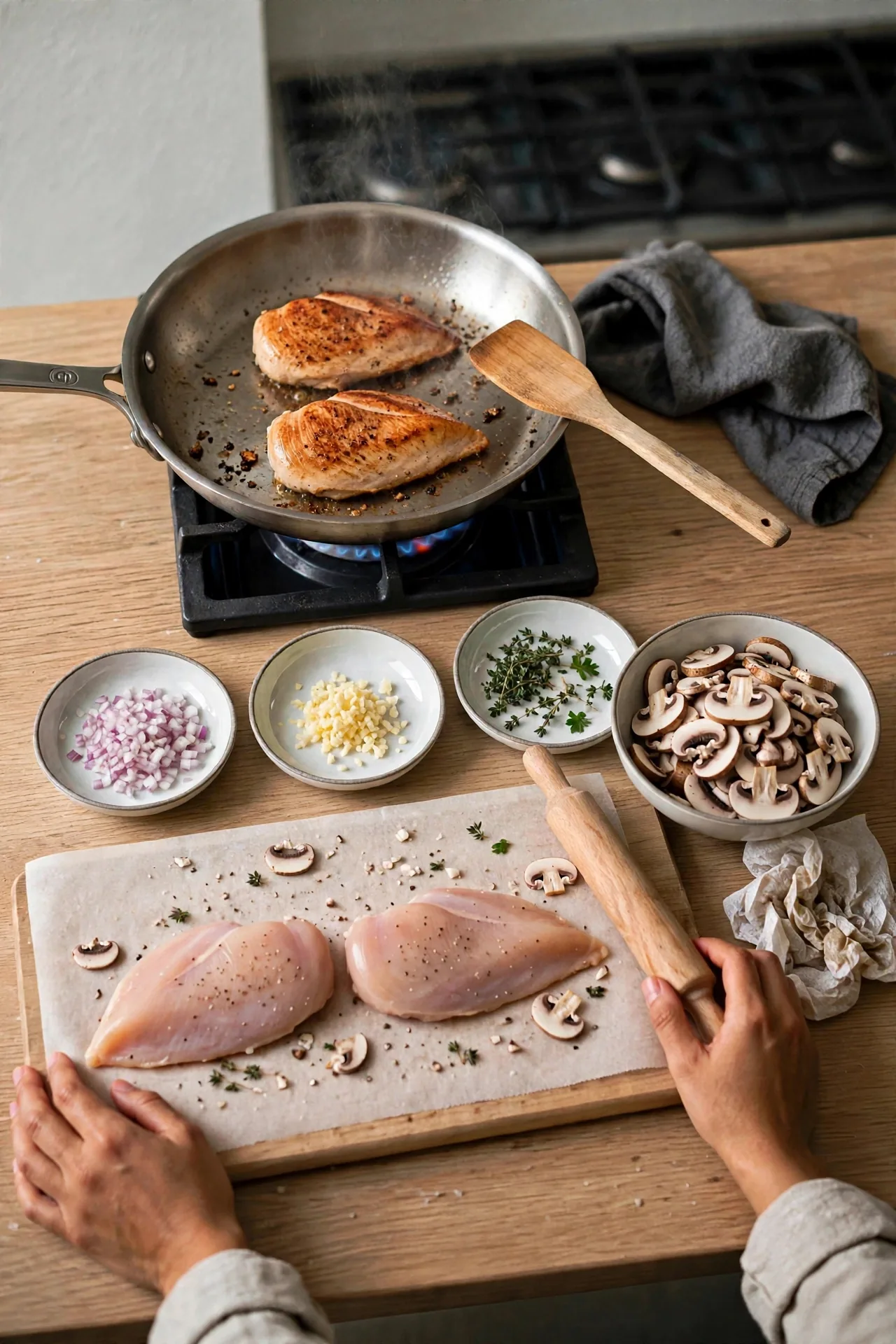
Where chicken usually goes wrong: a breast that is thicker at one end overcooks at the thin end by the time the thick end is done. Pounding evens it out, and the thermometer settles it. Cook until the thickest part reads 165°F (74°C). If the outside darkens faster than the inside cooks, lower the heat to medium.
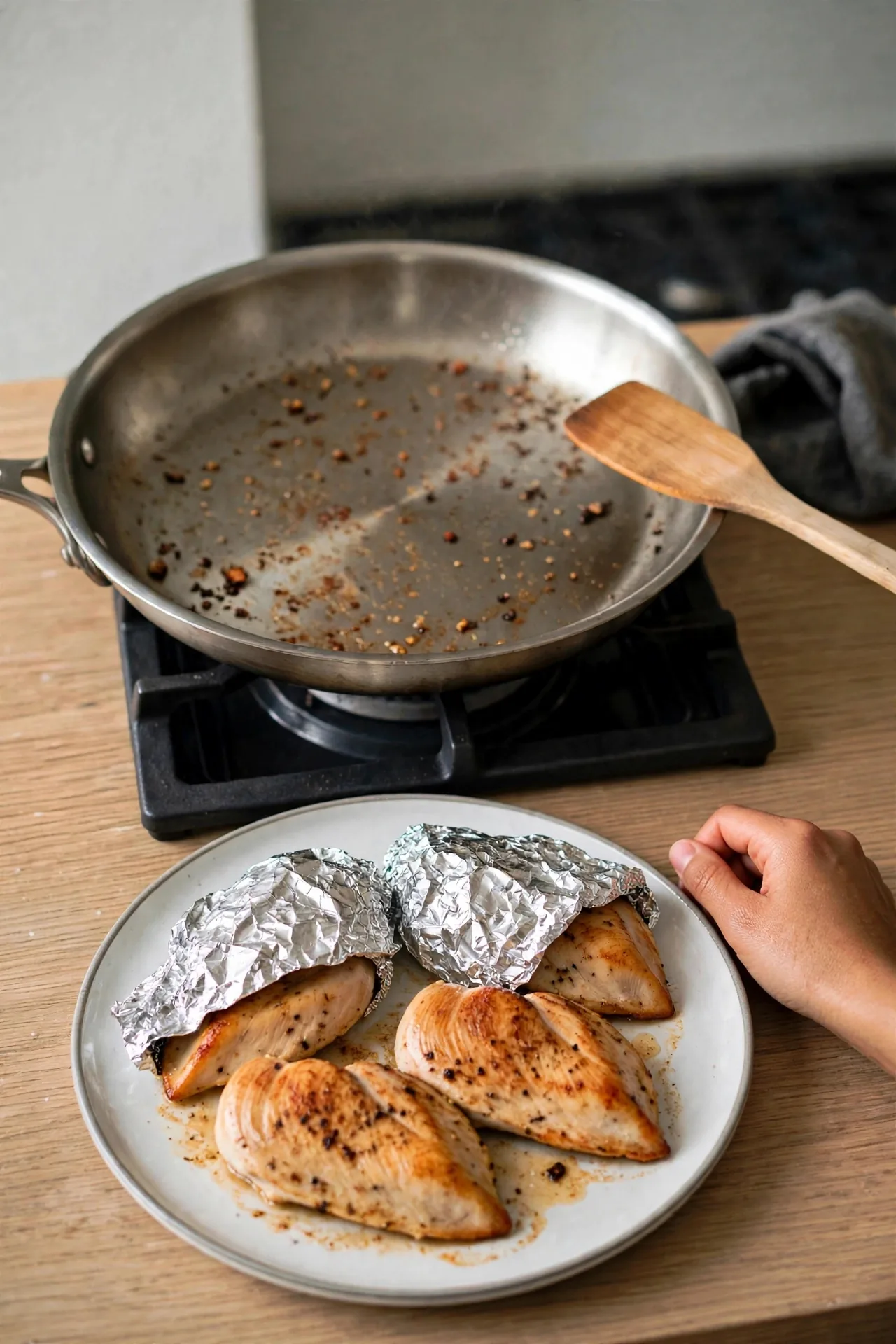
Move the chicken to a plate and tent it loosely with foil for 5 minutes while you make the sauce. If you cooked in batches, add the second batch to the plate once it is done.
If You’re Making the Steak Version
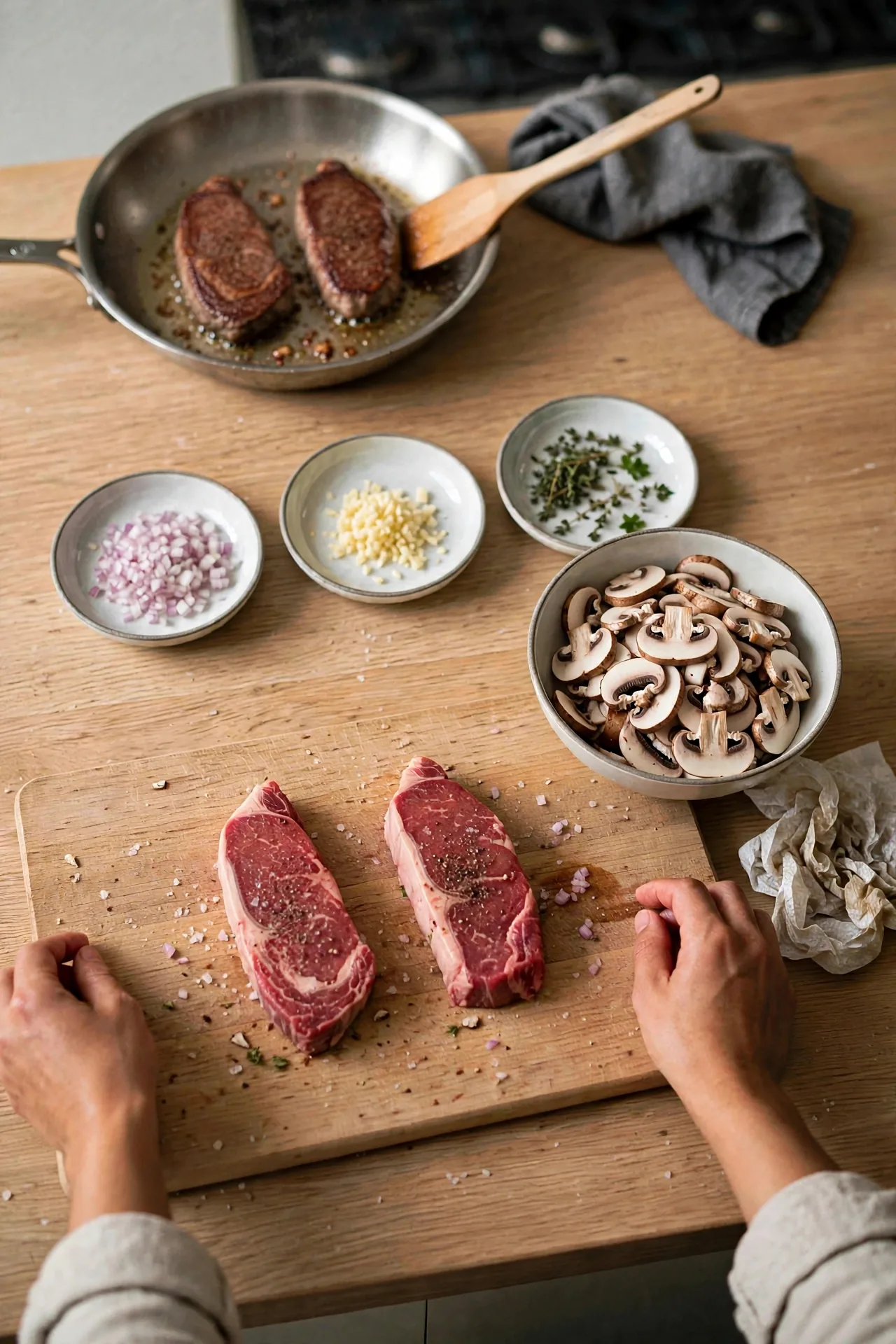
Pat the steaks very dry. Season both sides with the 1¼ teaspoons salt and ½ teaspoon pepper (total for four steaks). Salting 10 to 15 minutes ahead is fine if you have the time, but it is not required.
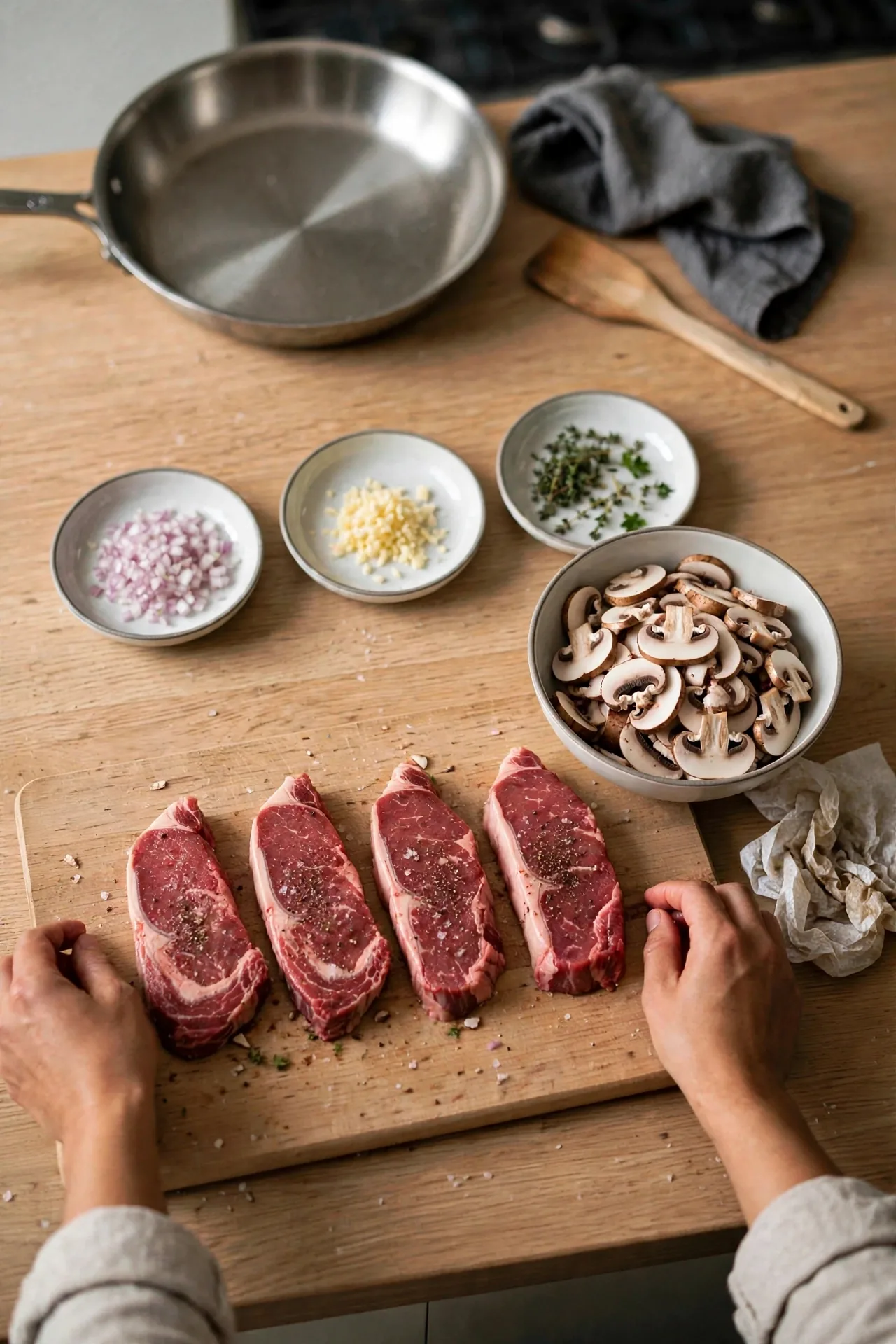
Heat the avocado oil in the skillet until it shimmers and just begins to smoke lightly. Cook the steaks two at a time, which keeps the pan hot. Crowding drops the temperature and the steaks gray instead of browning.
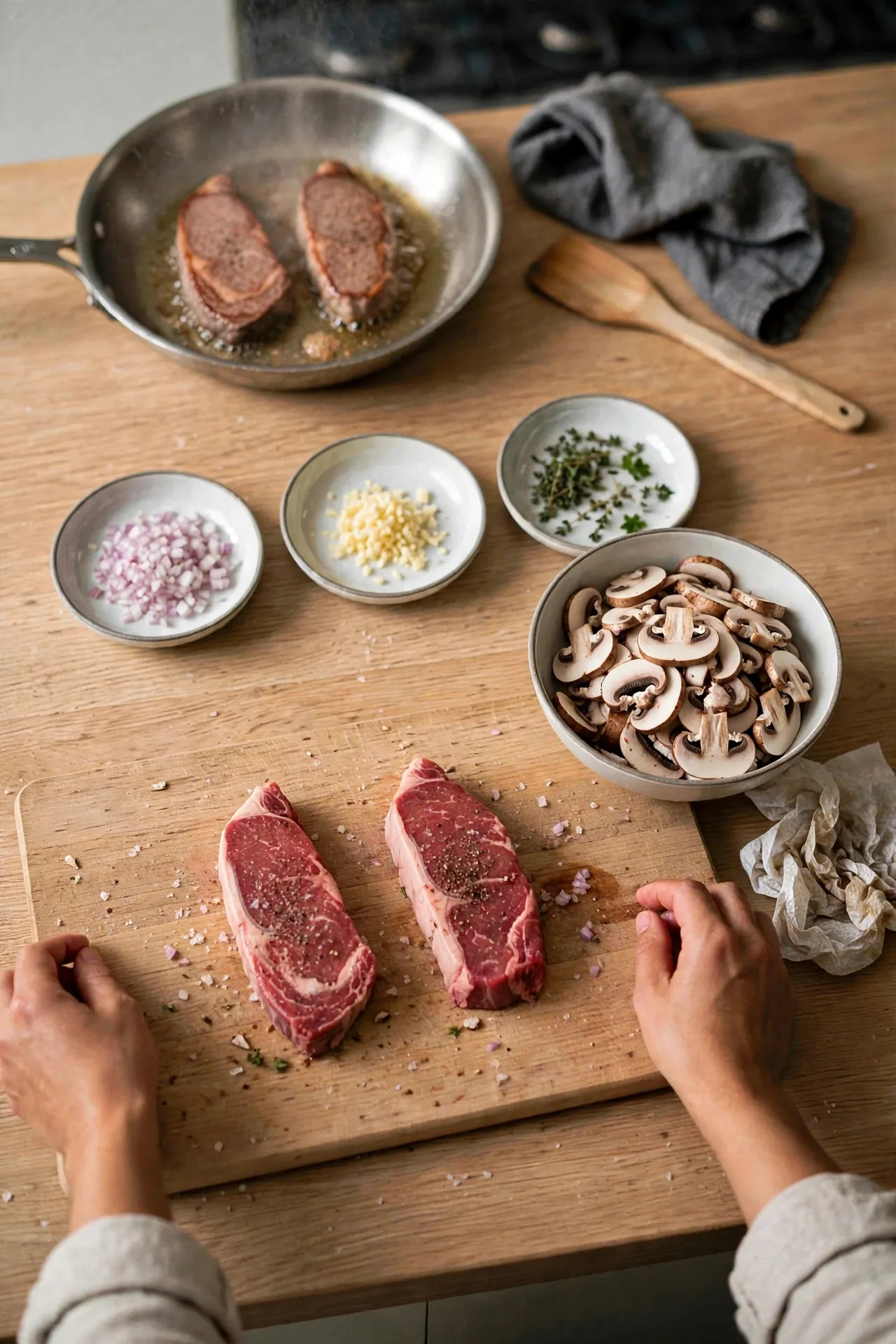
Cook 4 to 5 minutes on the first side without moving them, then flip and cook another 4 to 5 minutes for 1-inch steaks. A thicker or thinner steak will need more or less time.
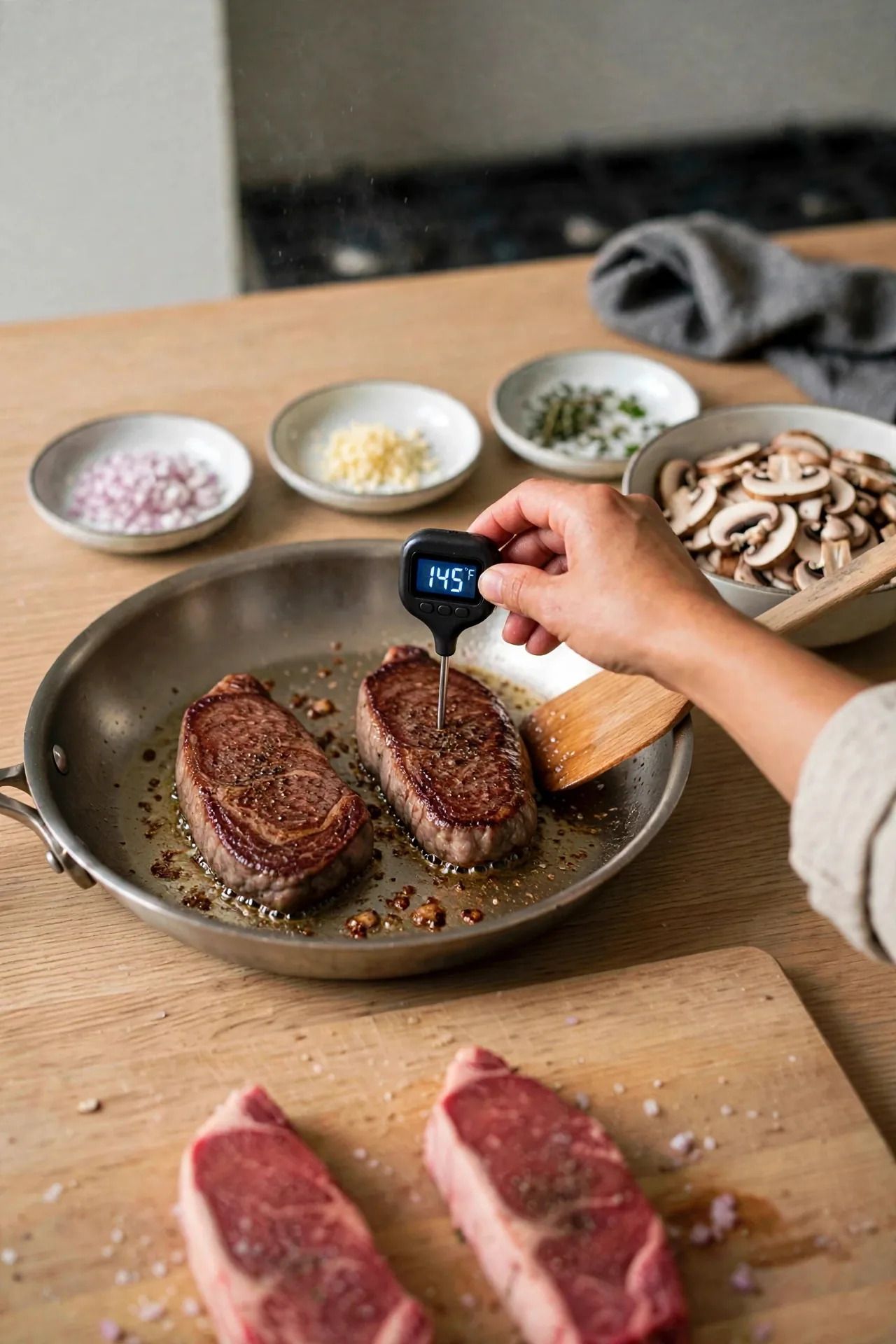
Temperature to know: the USDA safe minimum for beef steaks is 145°F (63°C) with a 3-minute rest. Some cooks pull steak earlier for a rarer center; that is a personal preference with a food-safety tradeoff, and it matters more if you are serving pregnant guests, young children, or older adults. Check the center with the thermometer rather than guessing.
Rest the steaks on a plate for at least 5 minutes. Cooking them in two batches? Move the first pair to the plate, then cook the second.
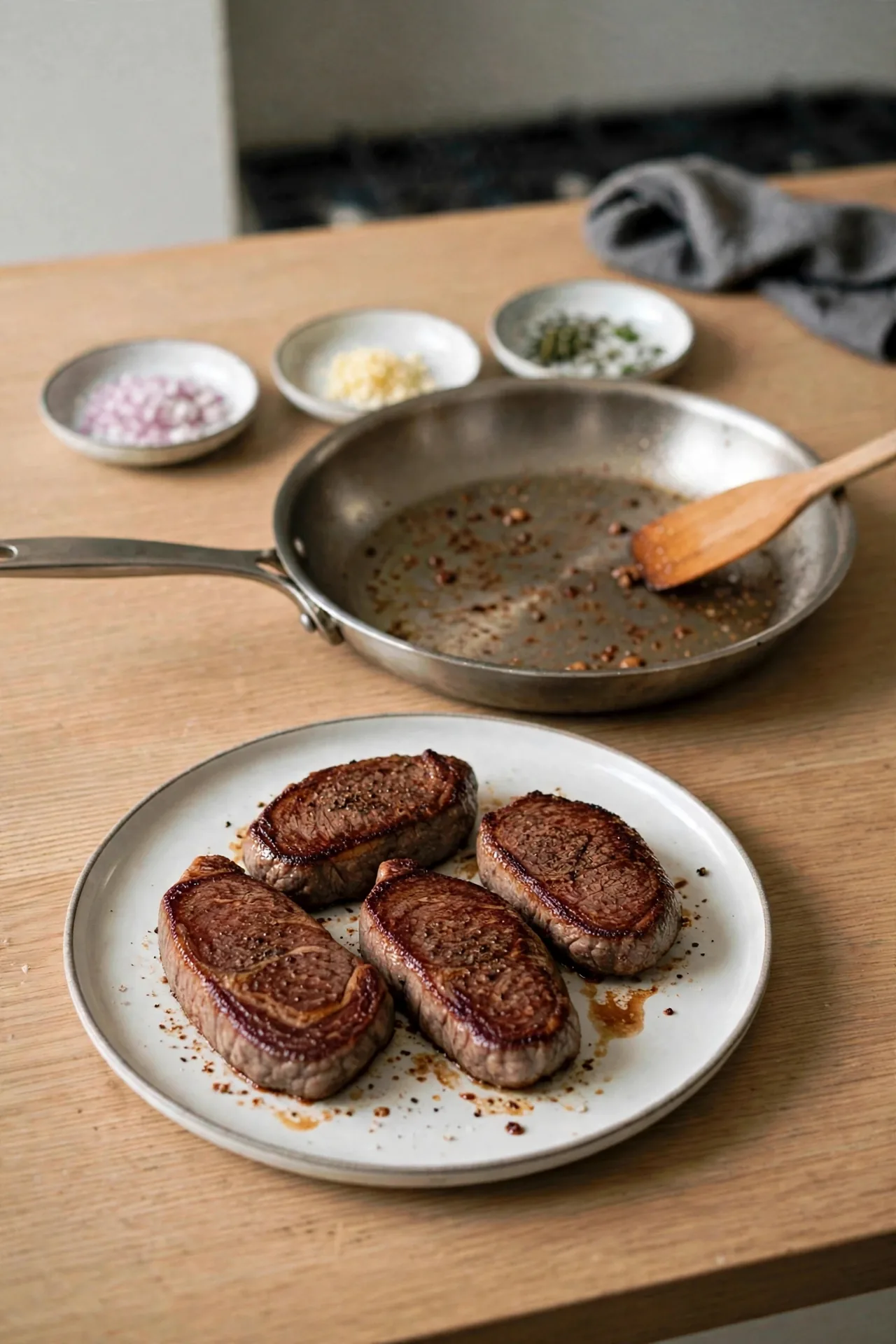
If the pan looks burnt: a fond that is dark brown is fine. If it is black and smells acrid, wipe the pan with a paper towel and start the sauce in fresh butter and oil, or the sauce will taste bitter.
If You’re Making the Pork Version
Pat the chops dry. Season both sides with the 1 teaspoon salt and ½ teaspoon pepper (total for four chops).
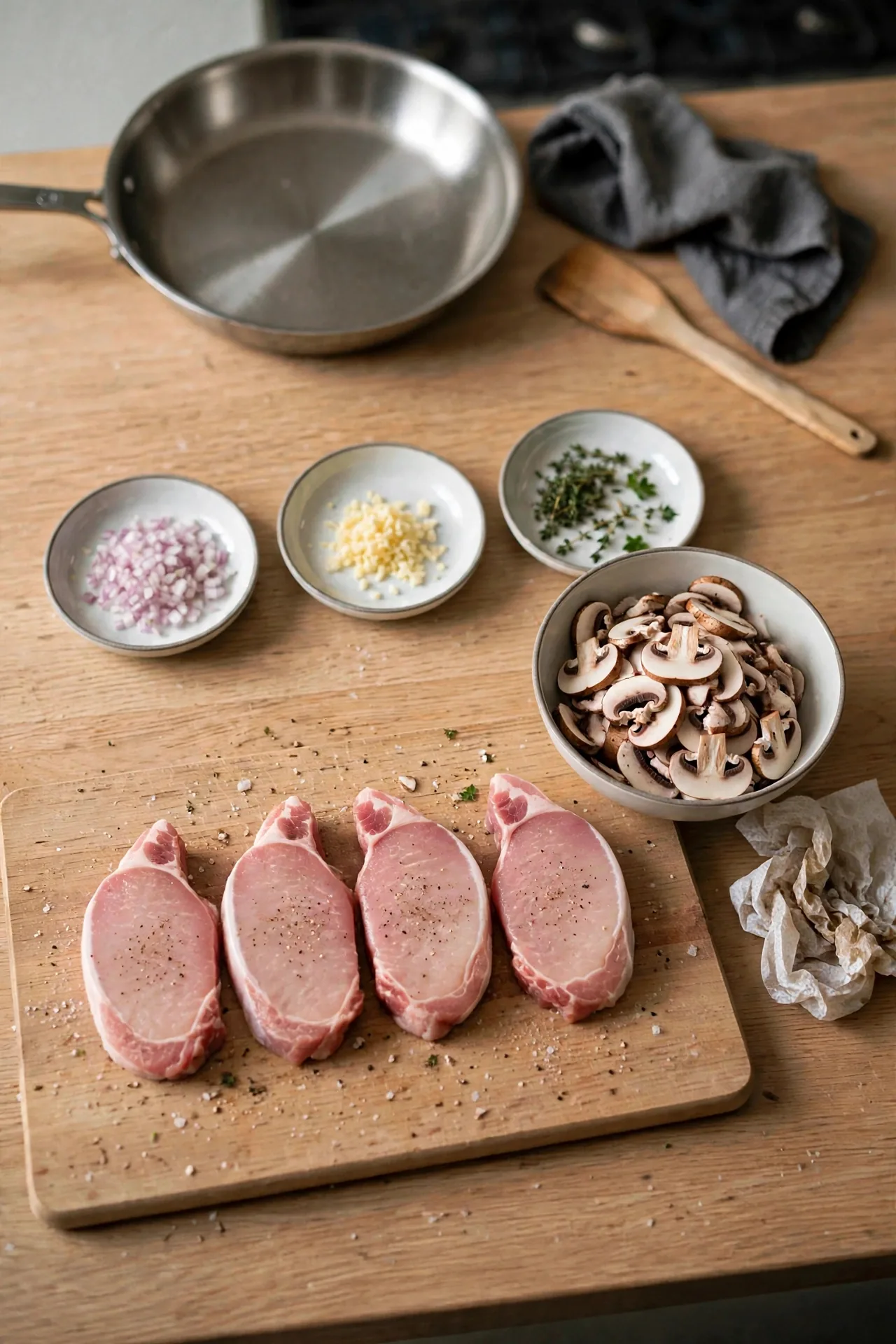
Heat the oil until it shimmers, then add two chops at a time, leaving space around each.
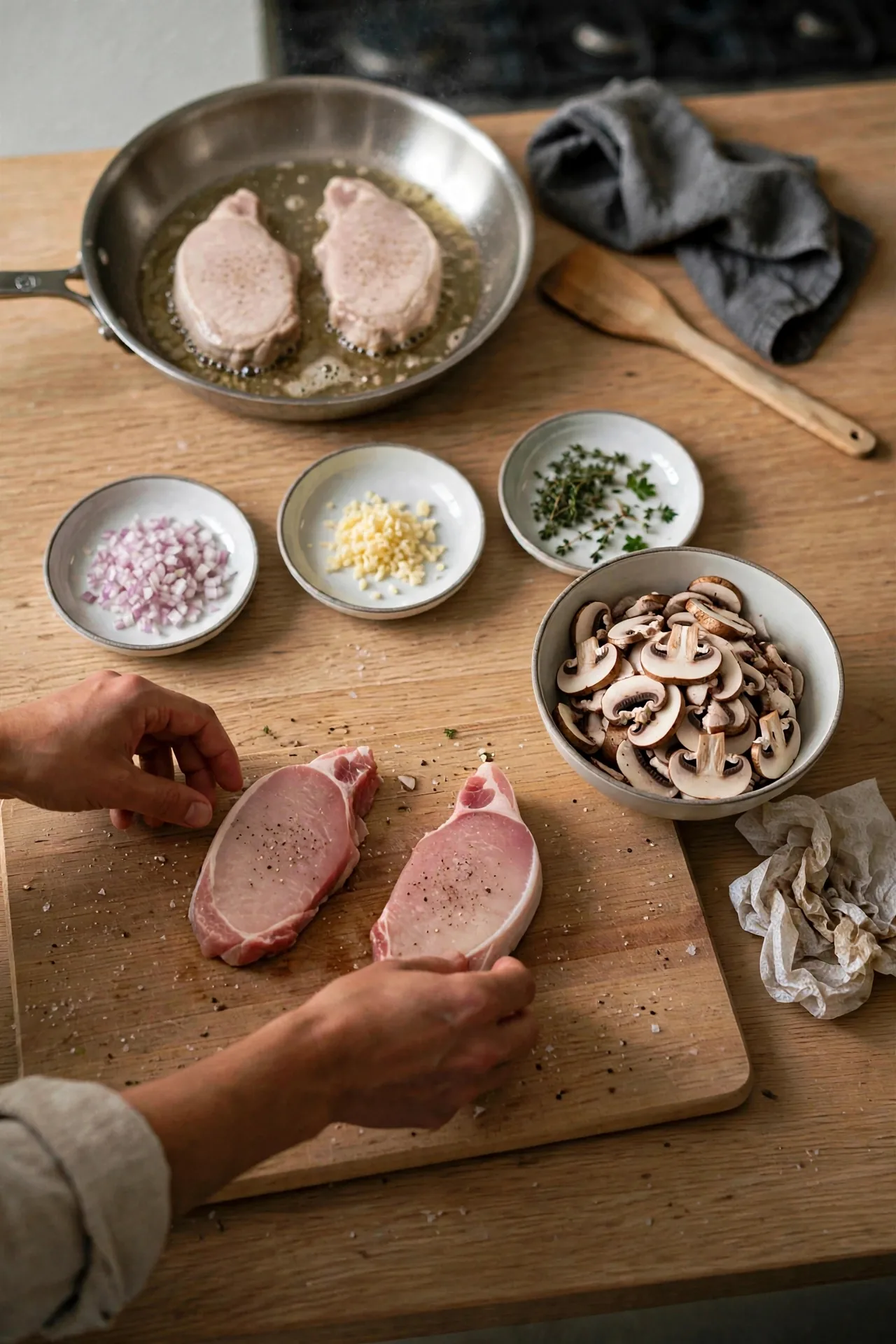
Cook 4 to 5 minutes without moving them, until the underside is deeply golden. Flip and cook 4 to 5 minutes more.
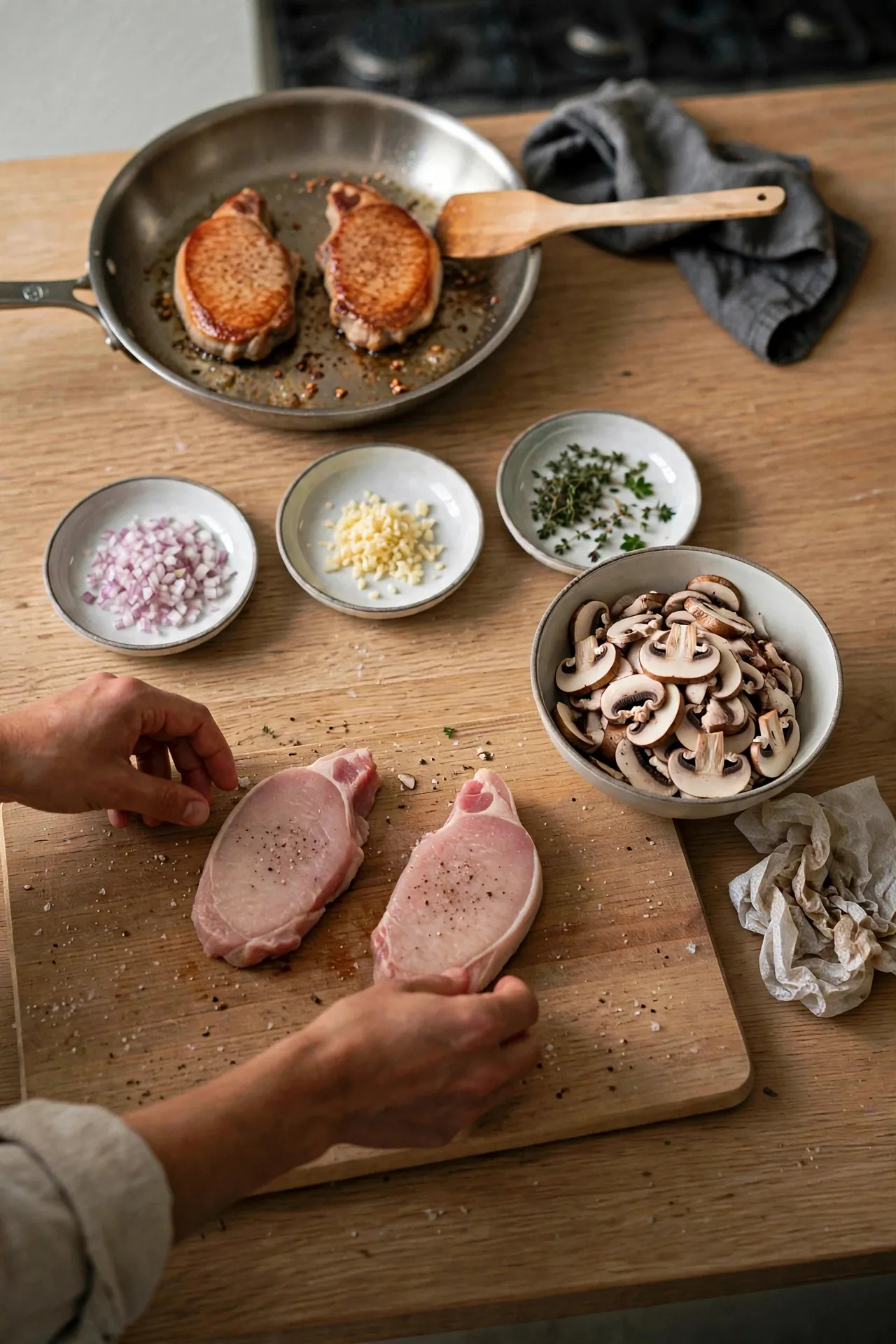
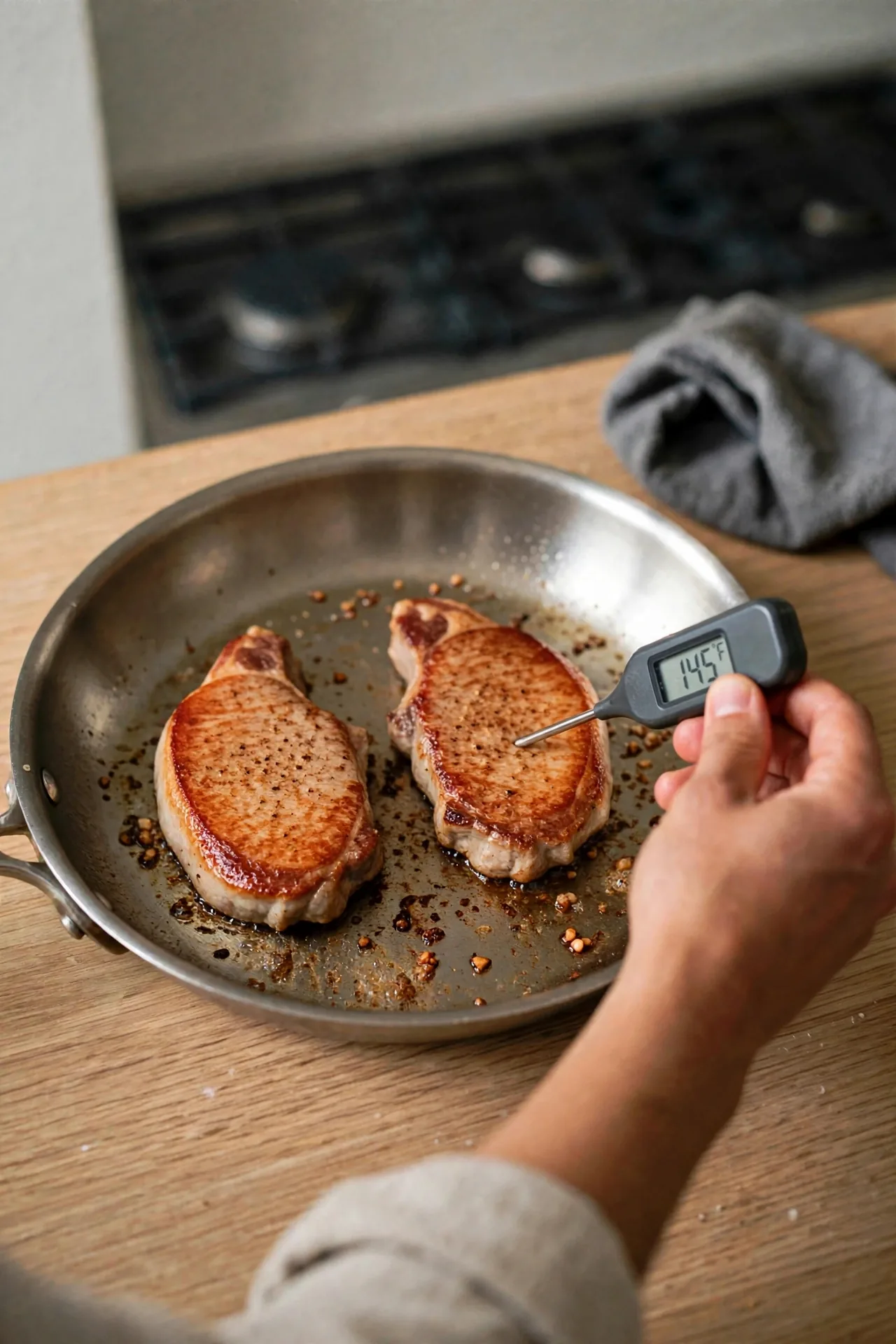
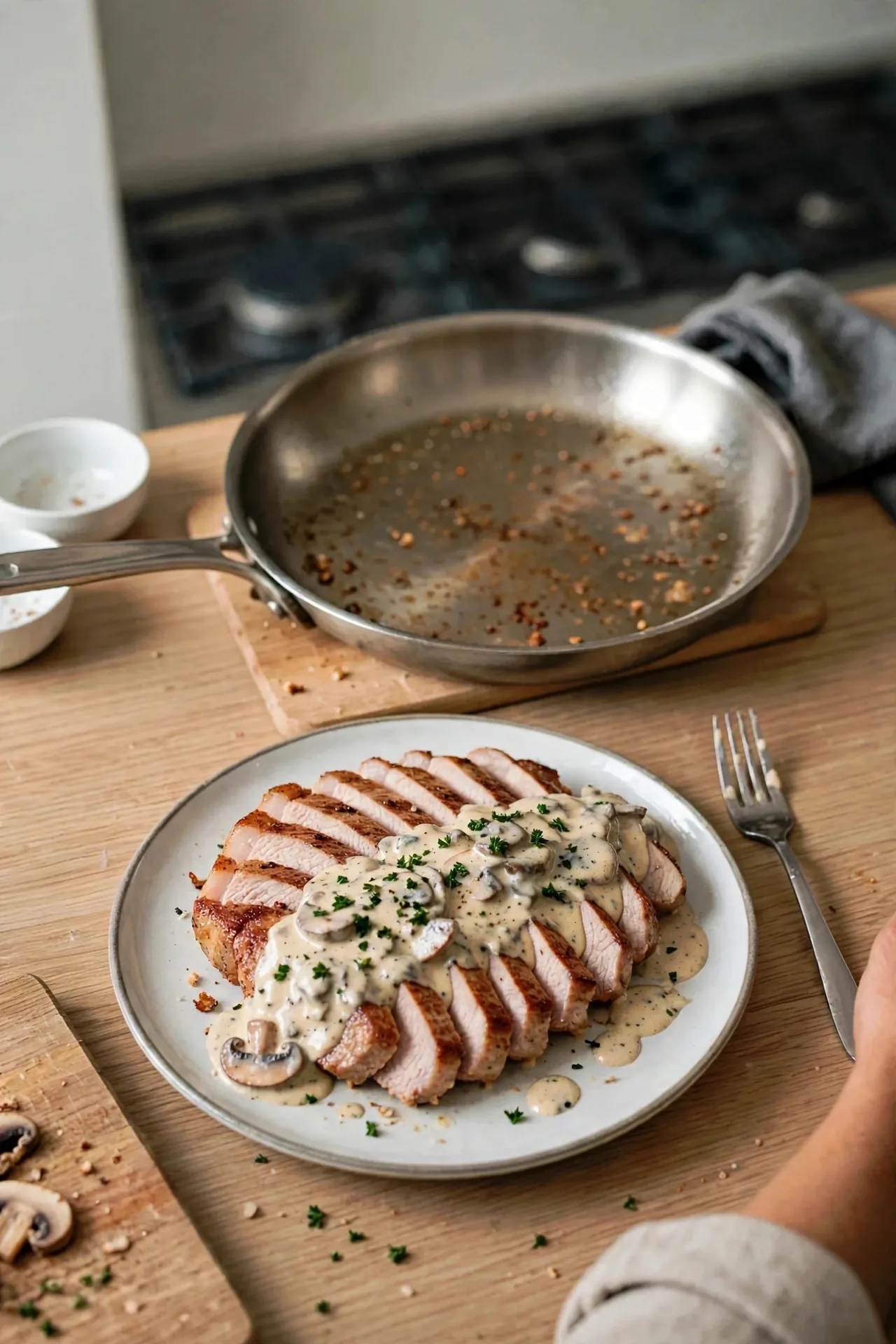
Cook to 145°F (63°C), measured in the thickest part and away from the bone if there is one. Pork loin dries out quickly past that point, so check early. A little pink in the center is normal at this temperature; the USDA notes that cooked pork can be pink even when it has reached a safe temperature.
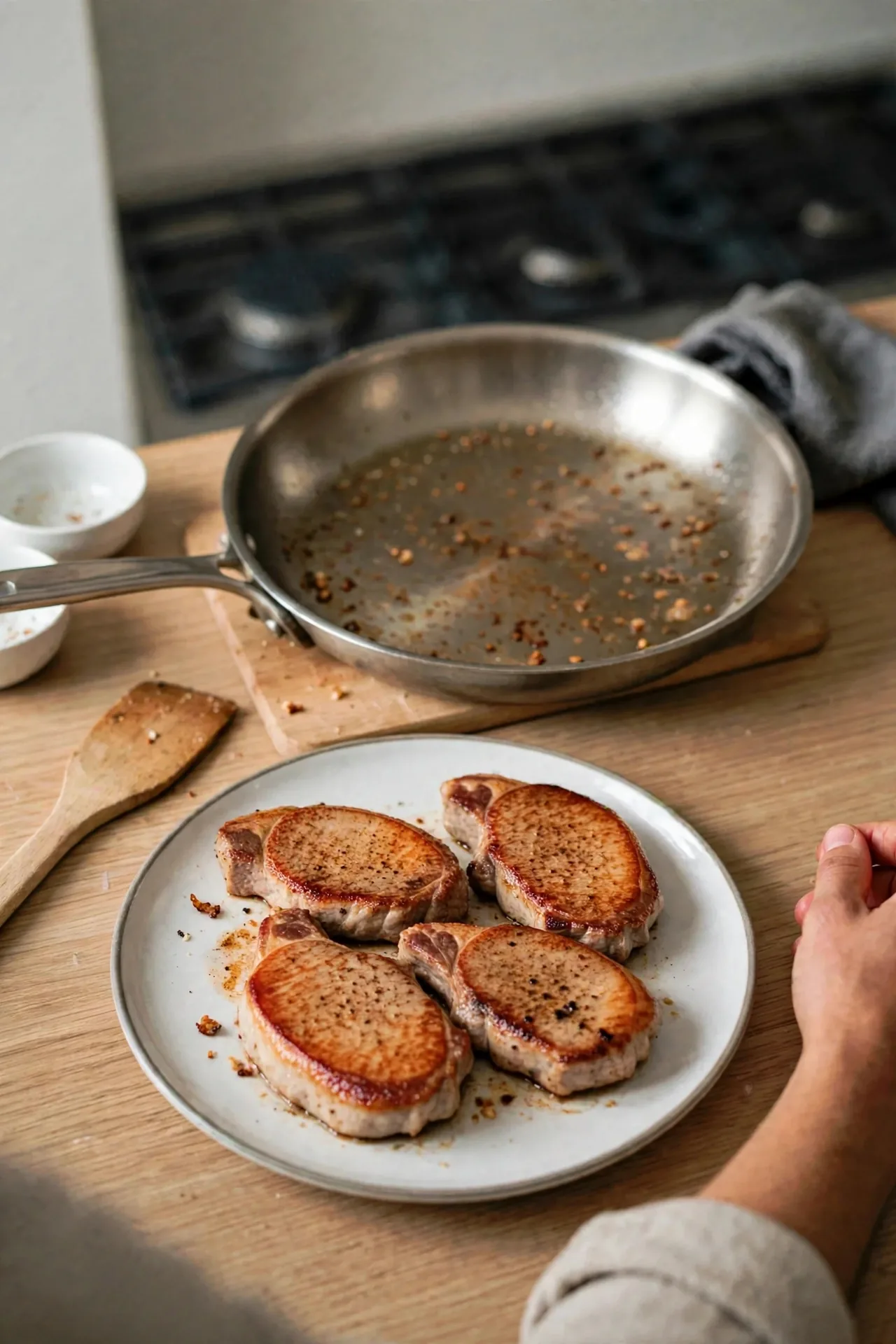
Rest the chops for at least 3 minutes (5 is better) while you make the sauce.
Step 3: Build the Mushroom Sauce
This is the shared part. If you cooked a protein, pour off all but about 1 tablespoon of fat from the skillet first. Making pasta? Put a large pot of water on to boil as soon as the mushrooms go into the pan.
Brown the Mushrooms
Set the skillet over medium-high heat. Add the butter and olive oil. Wait for the butter to melt and foam.
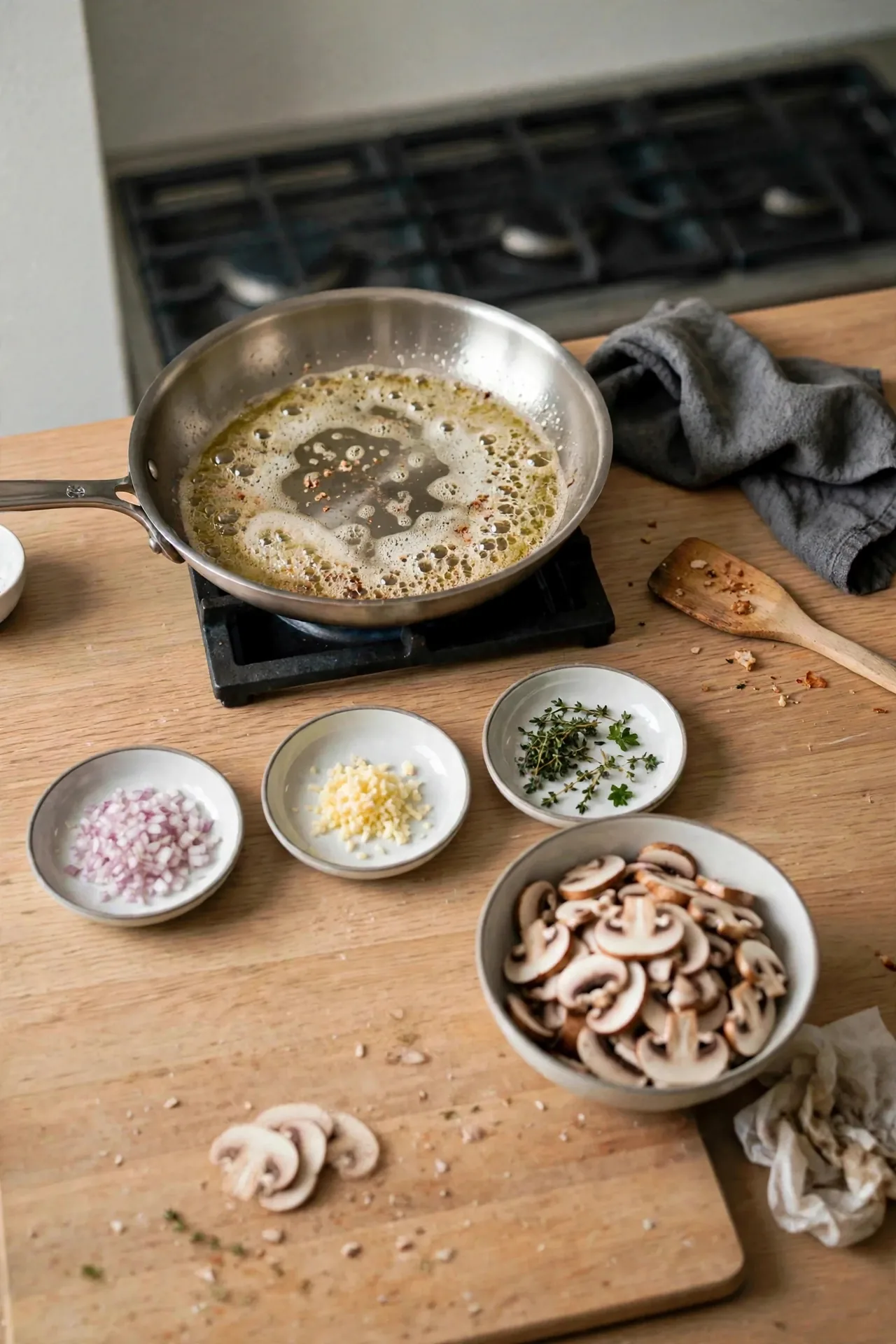
Add the sliced mushrooms in one fairly even layer, then leave them alone for 2 to 3 minutes. If they will not fit without heavy overlap, brown them in two batches. Piled-up mushrooms steam in their own liquid and turn gray and rubbery.
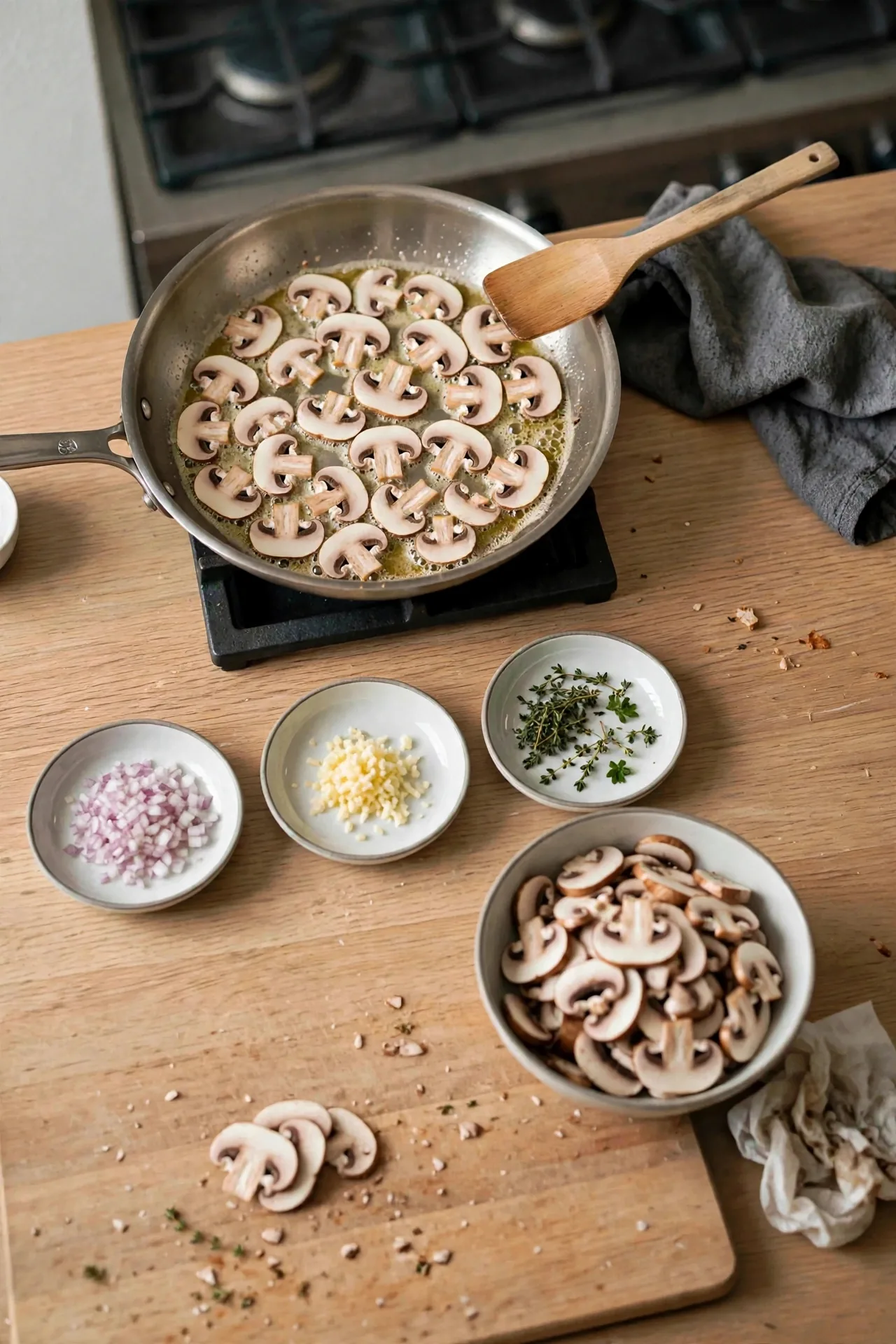
Next they release water. Stir every minute or so as the pan fills with liquid and the mushrooms shrink. Keep the heat steady and wait for the liquid to evaporate, roughly 5 minutes.
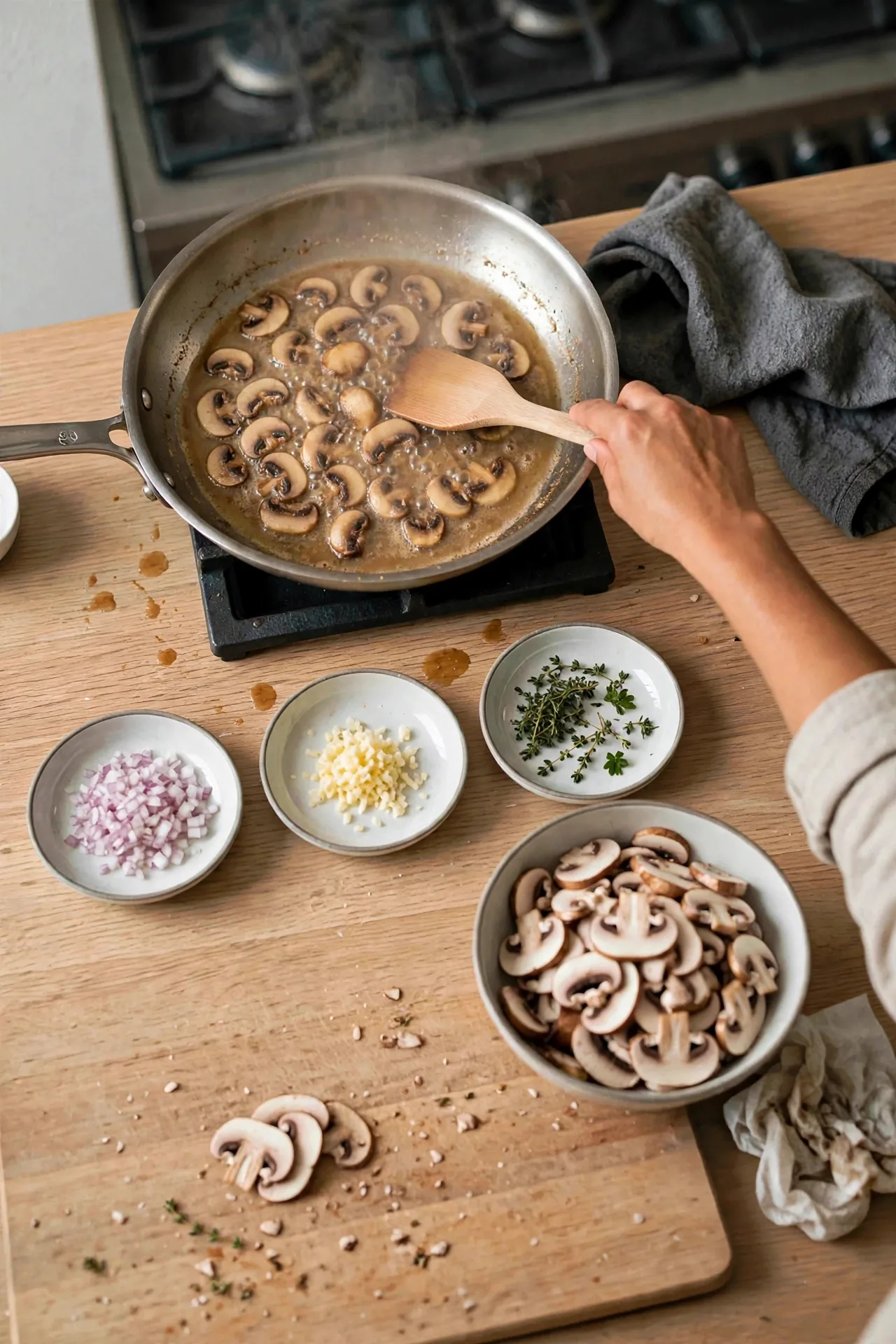
Once the pan looks mostly dry, the mushrooms start to brown. Cook another 3 to 5 minutes, stirring now and then, until they are deep golden brown and about half their raw volume. This is where most of the flavor comes from, so do not rush it.
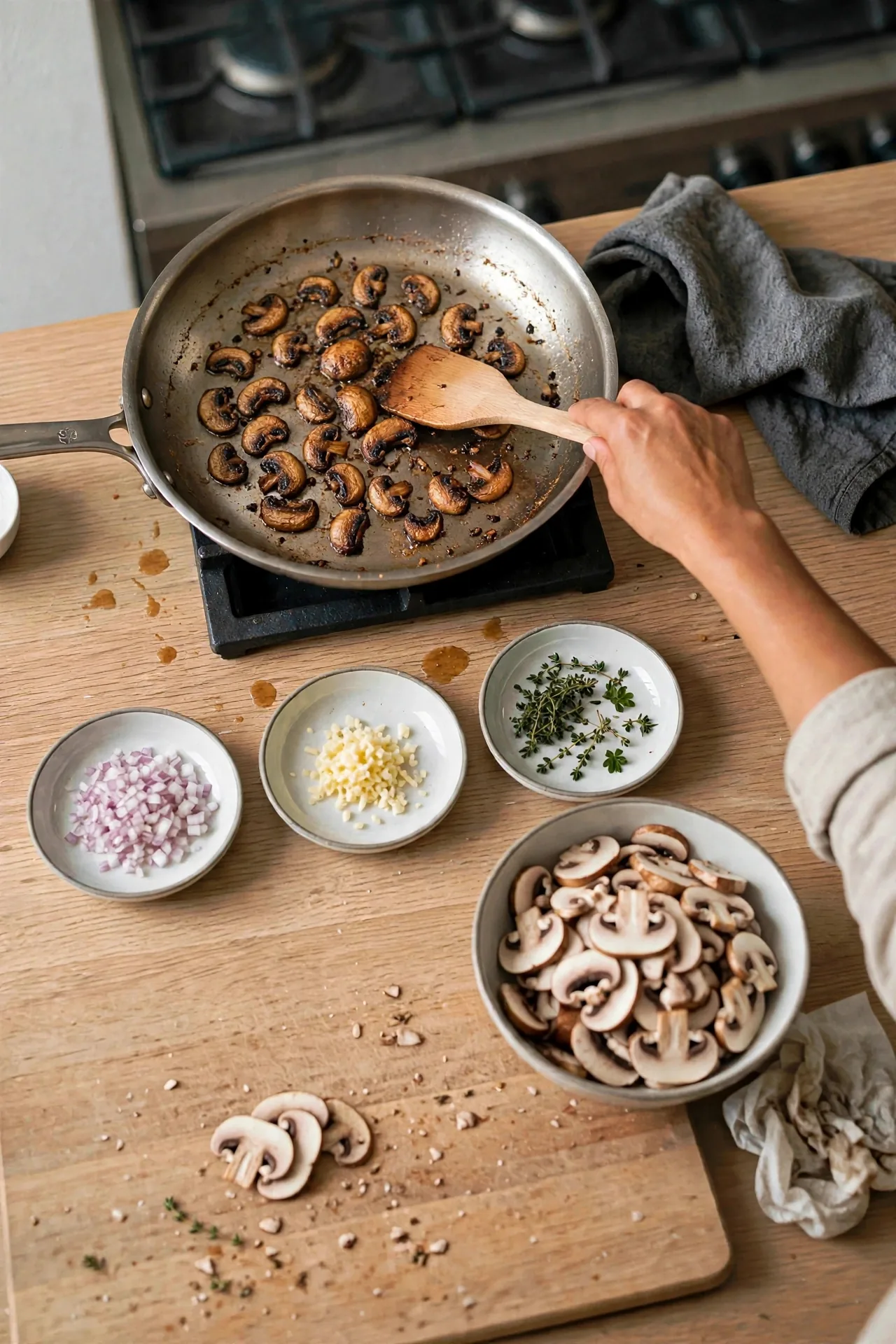
Add the Aromatics
Add the shallot and ¼ teaspoon of the salt. Cook 1 to 2 minutes, stirring, until the shallot turns soft and translucent.
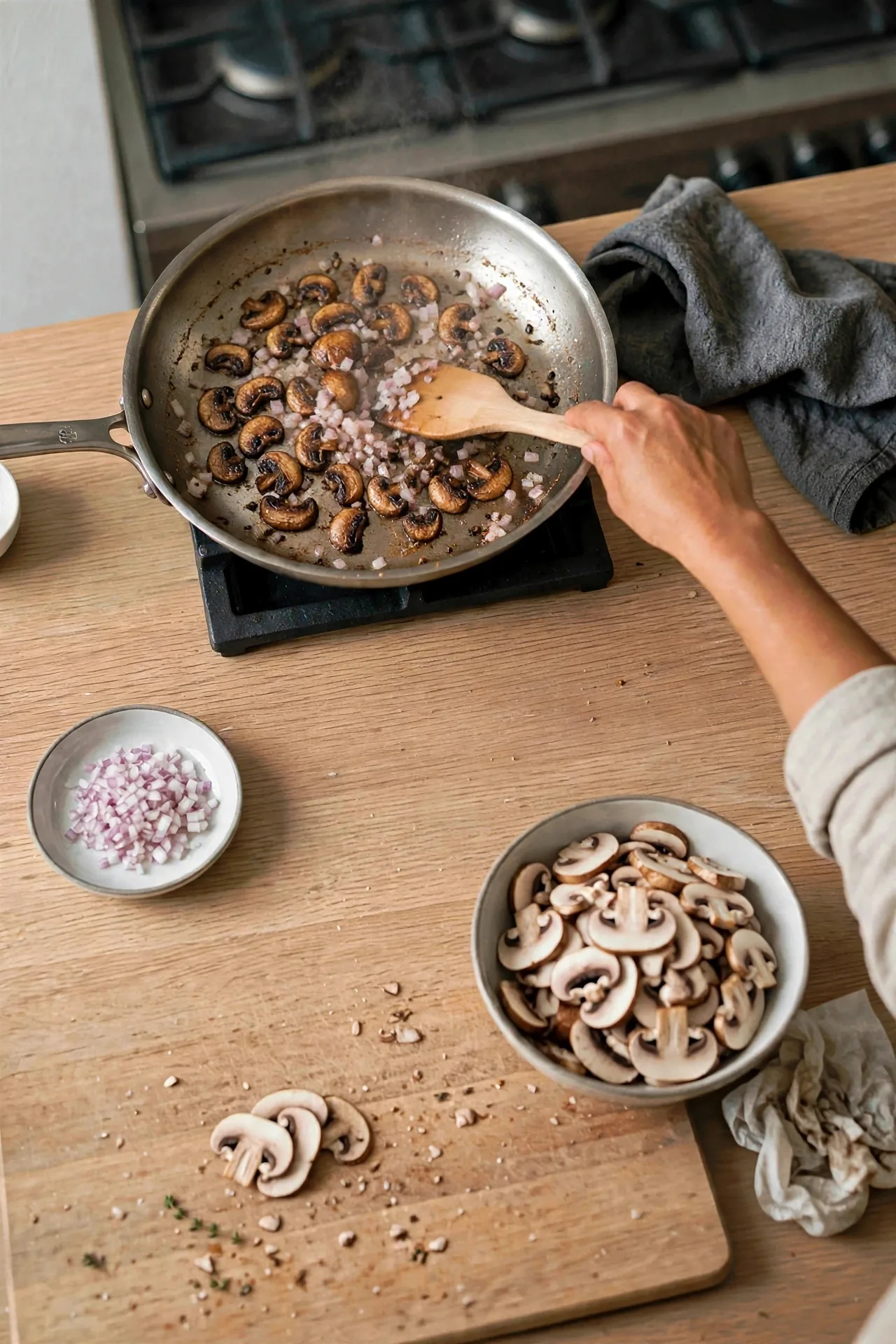
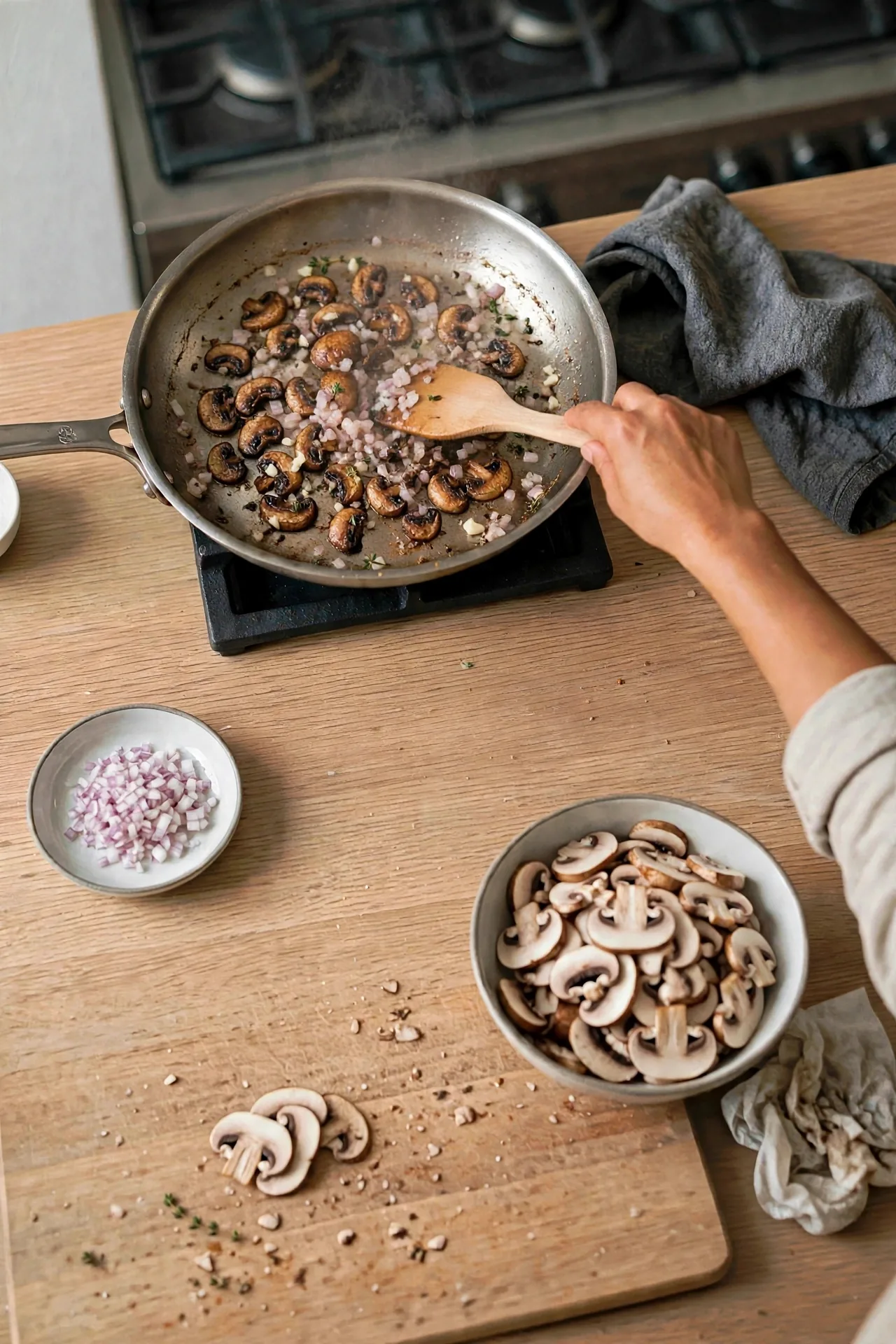
Add the garlic and thyme and stir for about 30 seconds, until fragrant. Garlic burns quickly; if it browns, the sauce picks up a bitter edge, so move on to the wine right away.
Deglaze, Then Reduce
Pour in the wine and scrape the bottom of the pan with a wooden spatula to loosen the browned bits. It will bubble and steam.
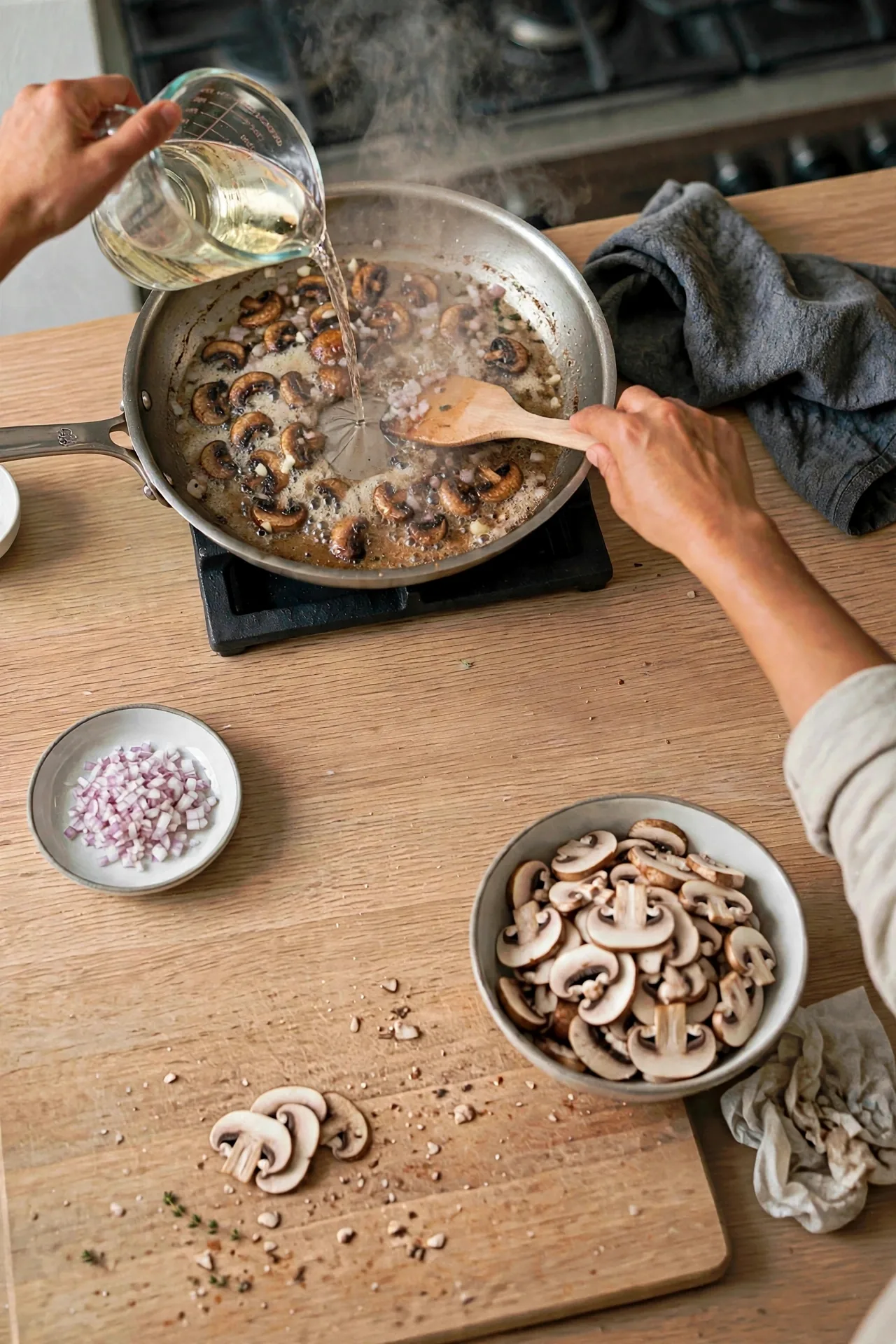
Simmer 2 to 3 minutes. It is ready when only a thin, syrupy film of liquid is left and the sharp smell of alcohol is gone.
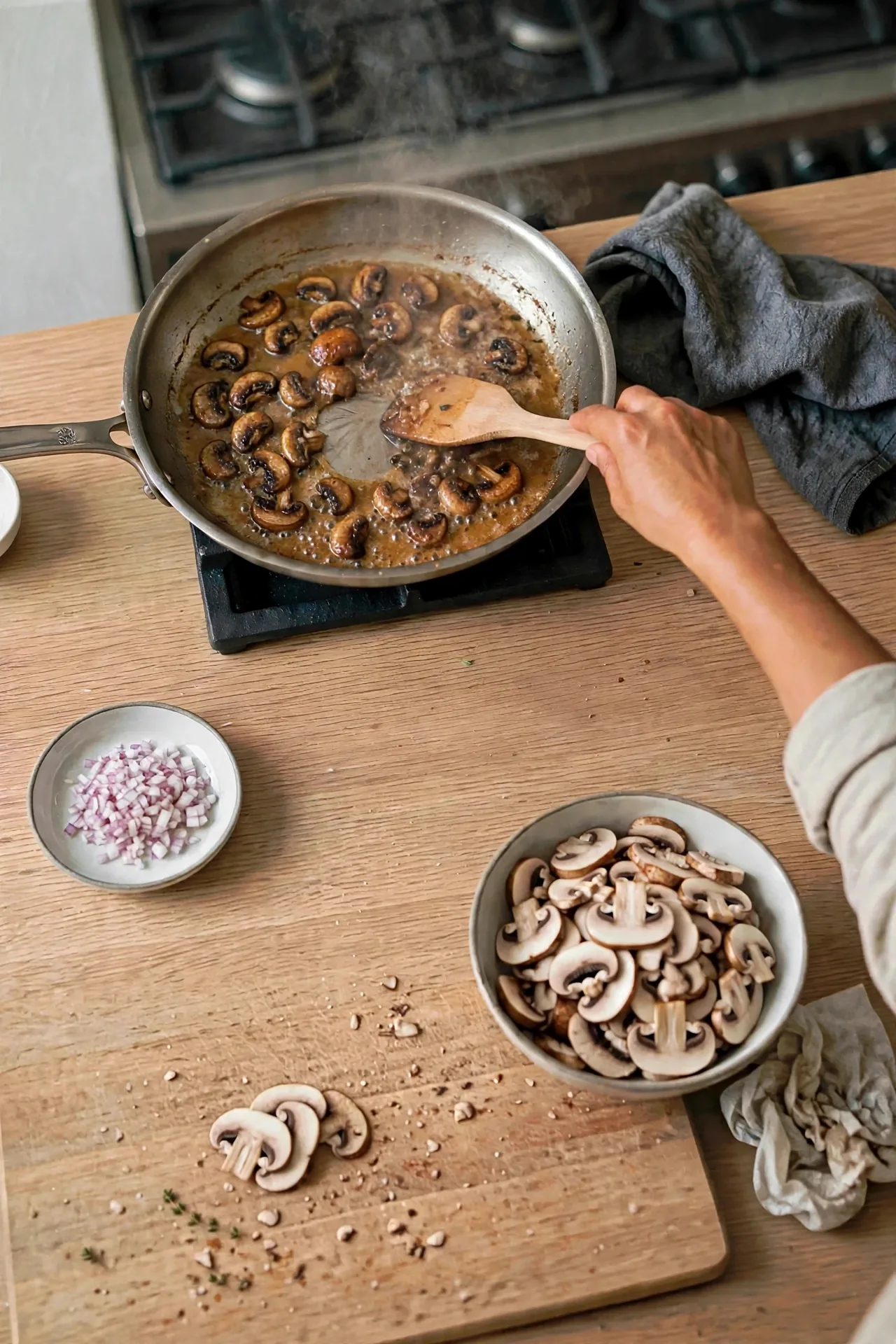
Add the broth and simmer 3 to 4 minutes, until it reduces by about half.
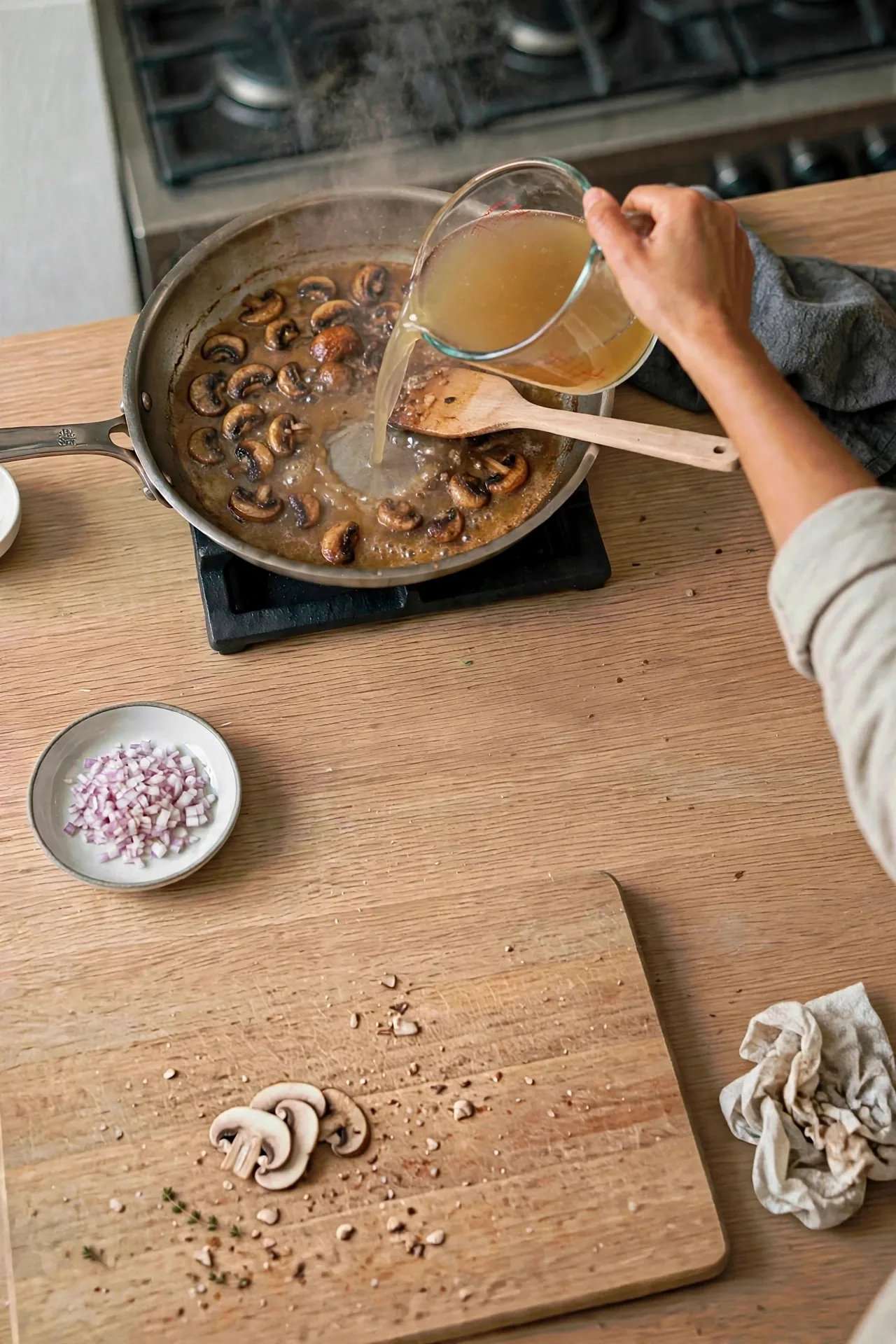
Add the Cream and Thicken
Pour in the cream and stir.
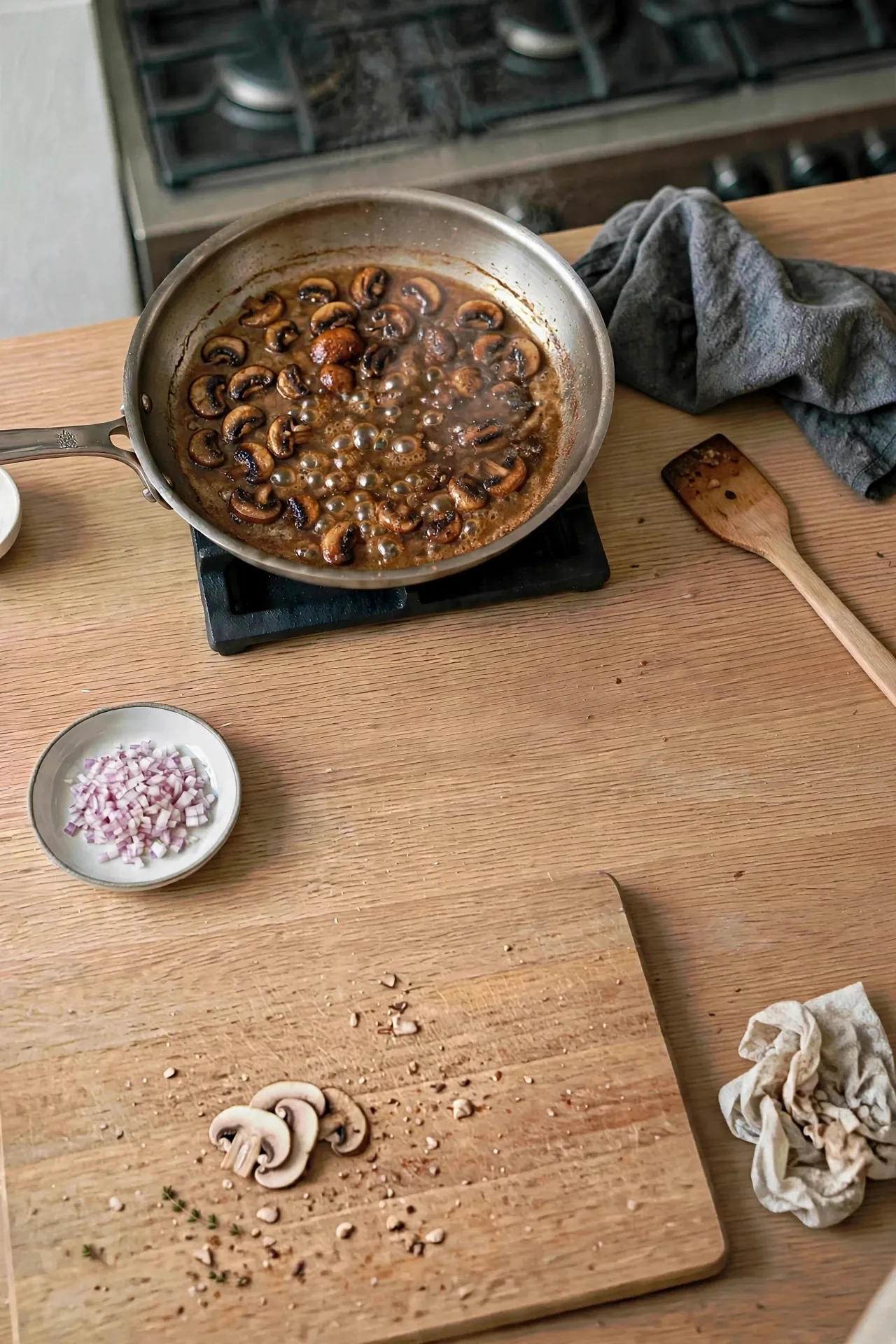
Lower the heat to medium-low and simmer gently for 4 to 6 minutes, stirring often. You want small bubbles at the edges, not a rolling boil.
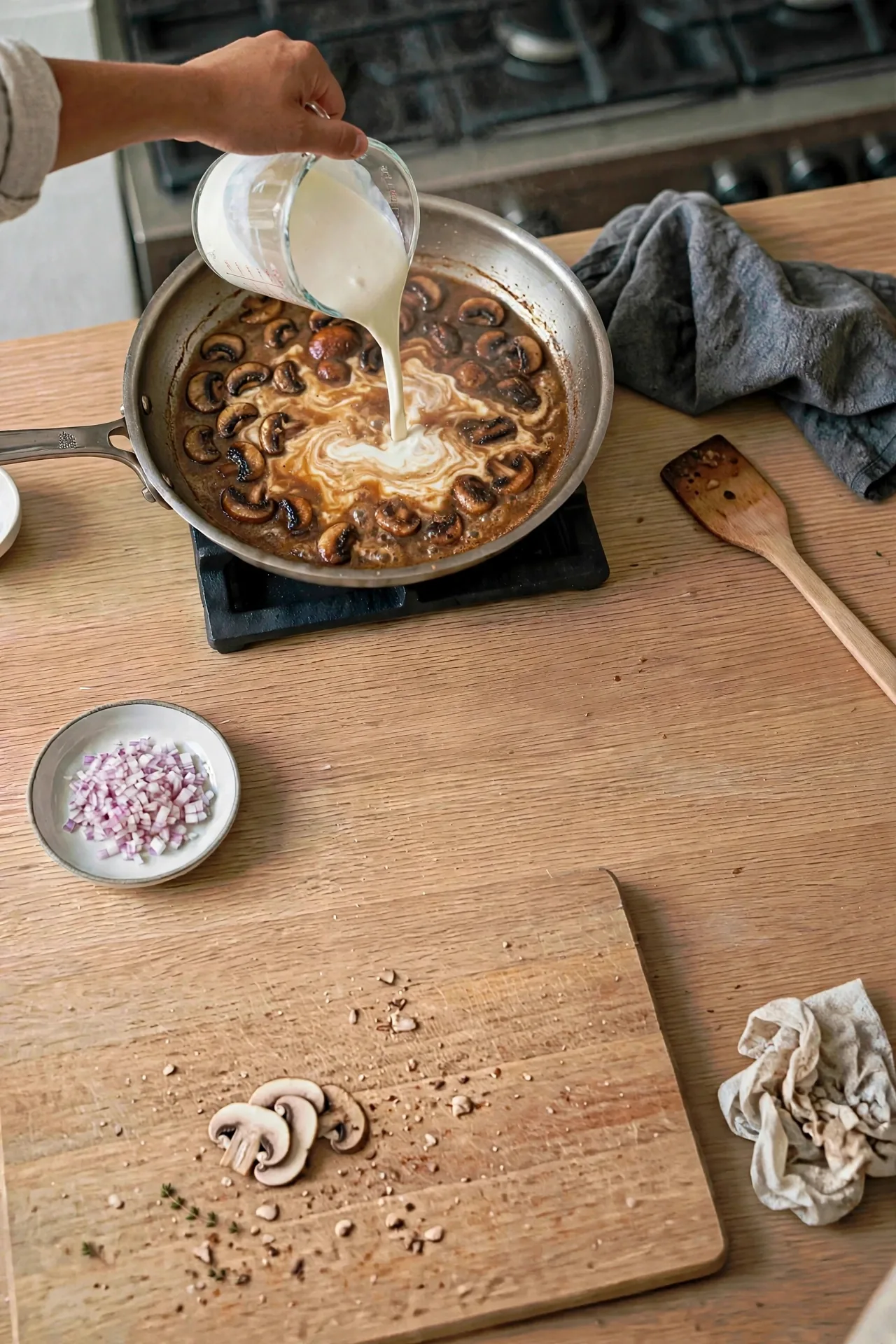
Why the sauce splits: cream tends to separate, leaving a greasy, grainy look, when it boils hard or when acid goes in over high heat. Keep it at a gentle simmer and add the lemon juice only at the end, off the heat.
The spoon test: dip a wooden spoon in the sauce and draw a finger across the back. If the line holds and the sauce does not run back in, it is thick enough. If it runs, simmer another minute or two and test again.
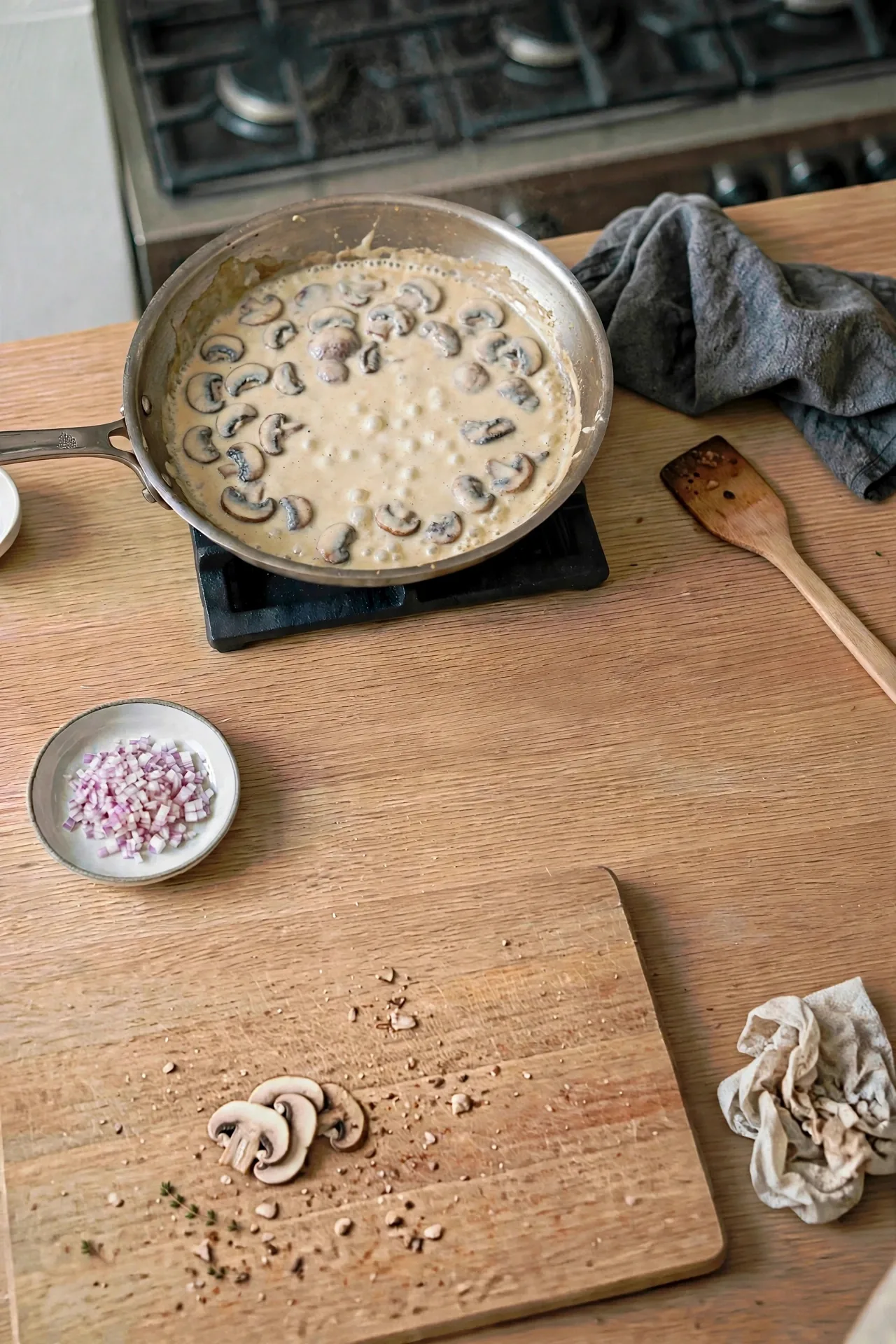
Finish and Season
Take the pan off the heat. Stir in the Worcestershire, lemon juice, black pepper, and parsley. If you rested a protein, pour any juices from the plate into the sauce. Taste, then add up to the remaining ¼ teaspoon salt, a pinch at a time.
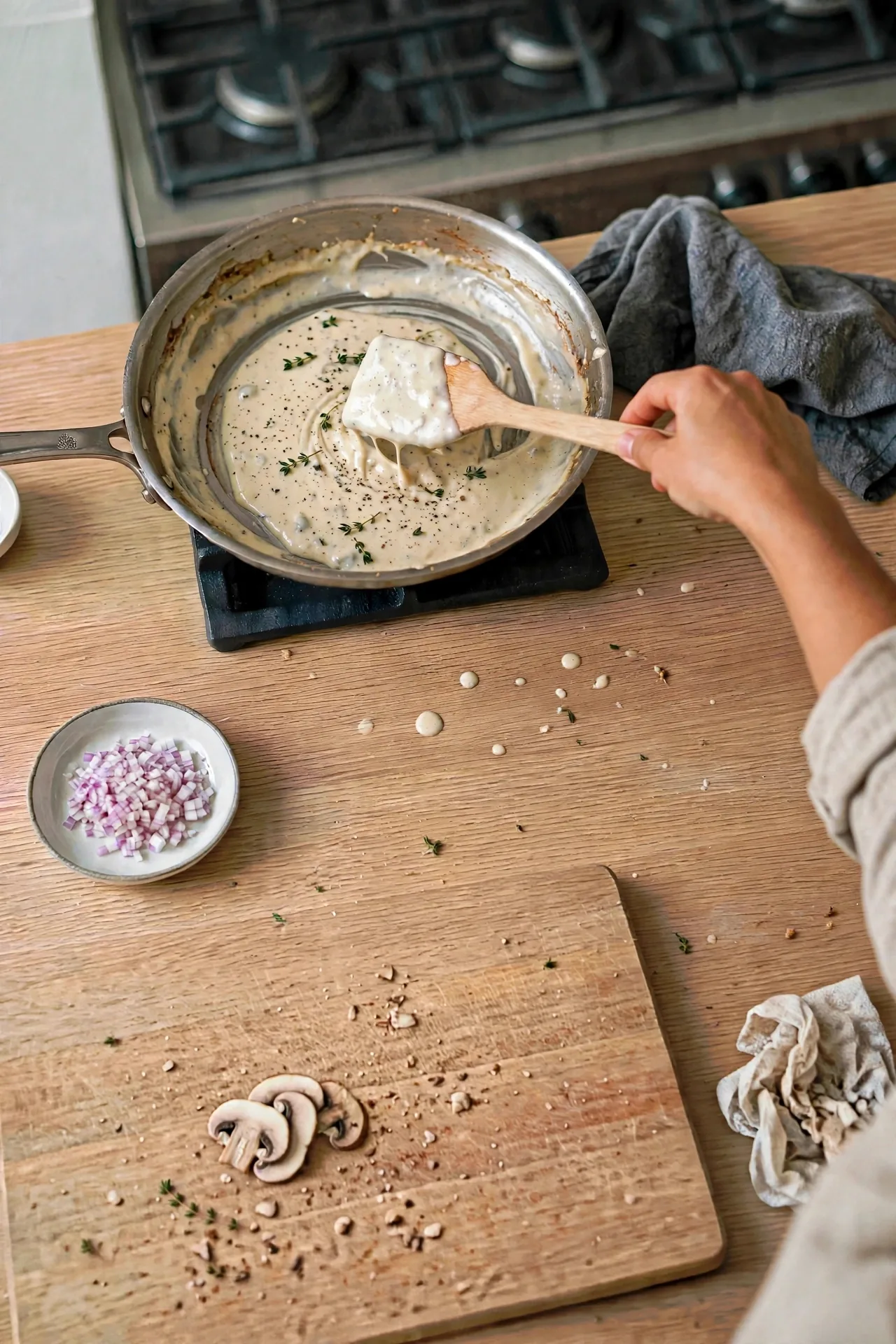
Step 4: Finish Your Version
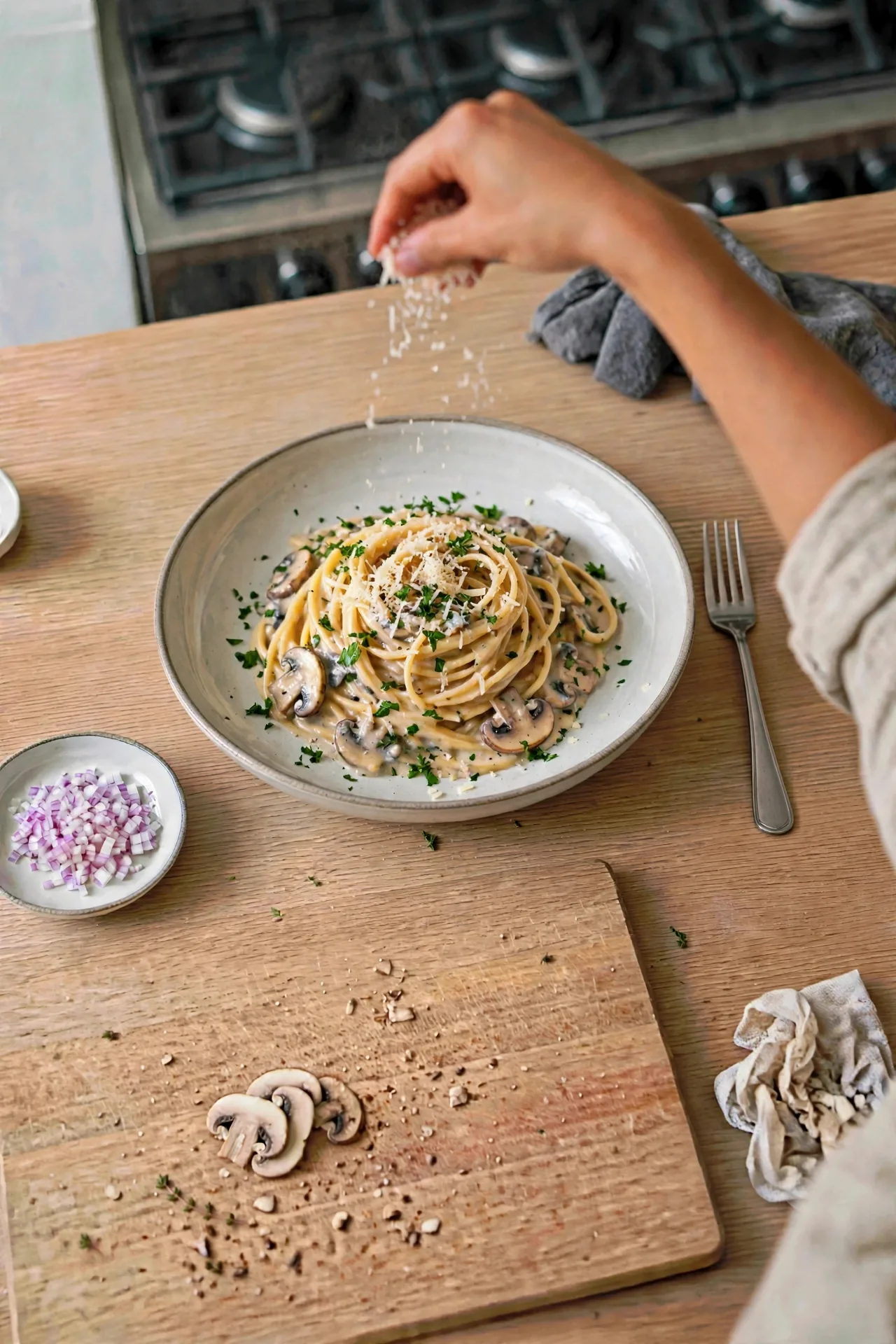
Pasta
Cook the fettuccine in salted boiling water (1 tablespoon kosher salt) for 1 minute less than the package directions. It will finish cooking in the sauce.
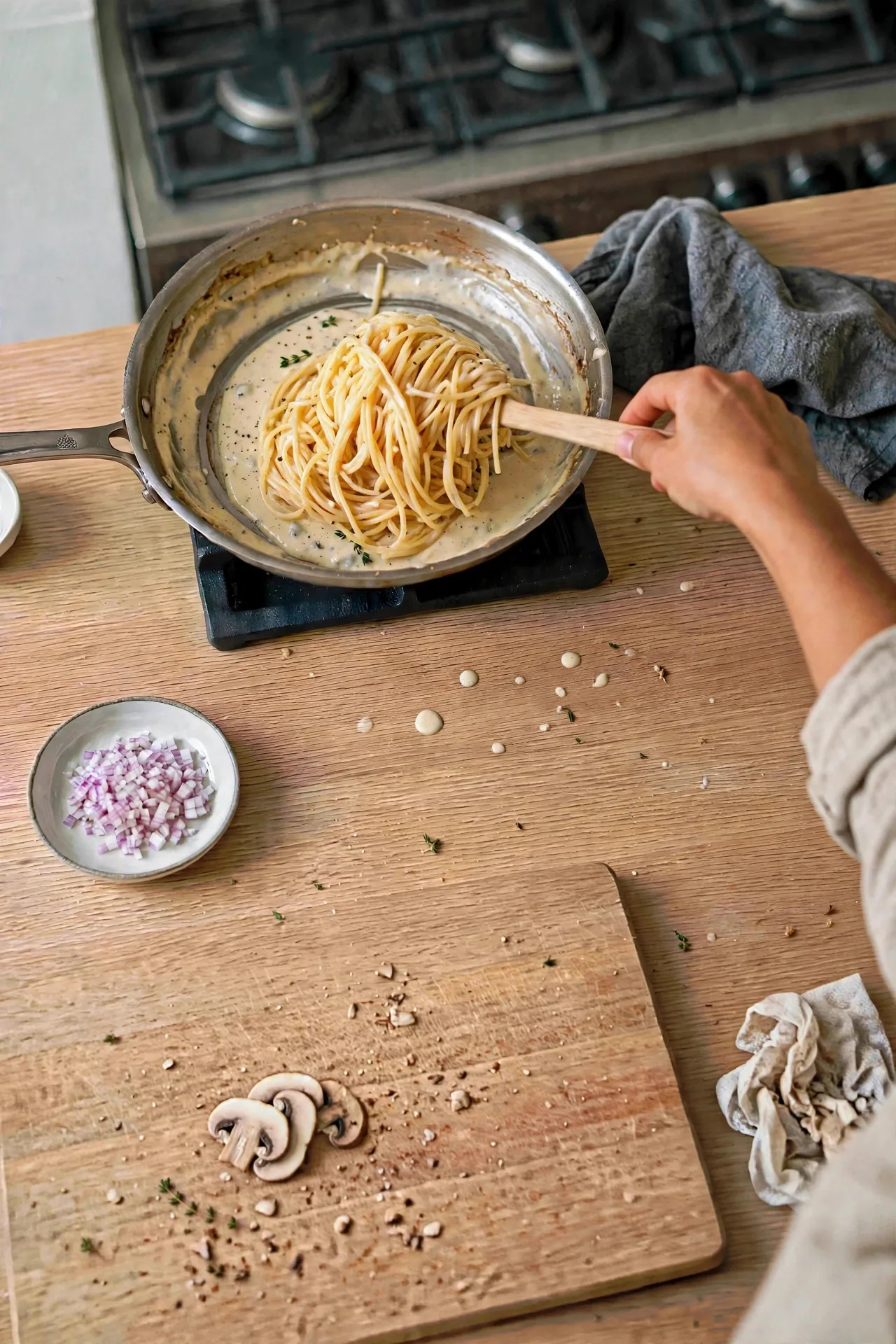
Before draining, scoop out ½ cup of the cloudy cooking water. The starch in it helps the sauce cling to the noodles. Drain the pasta.
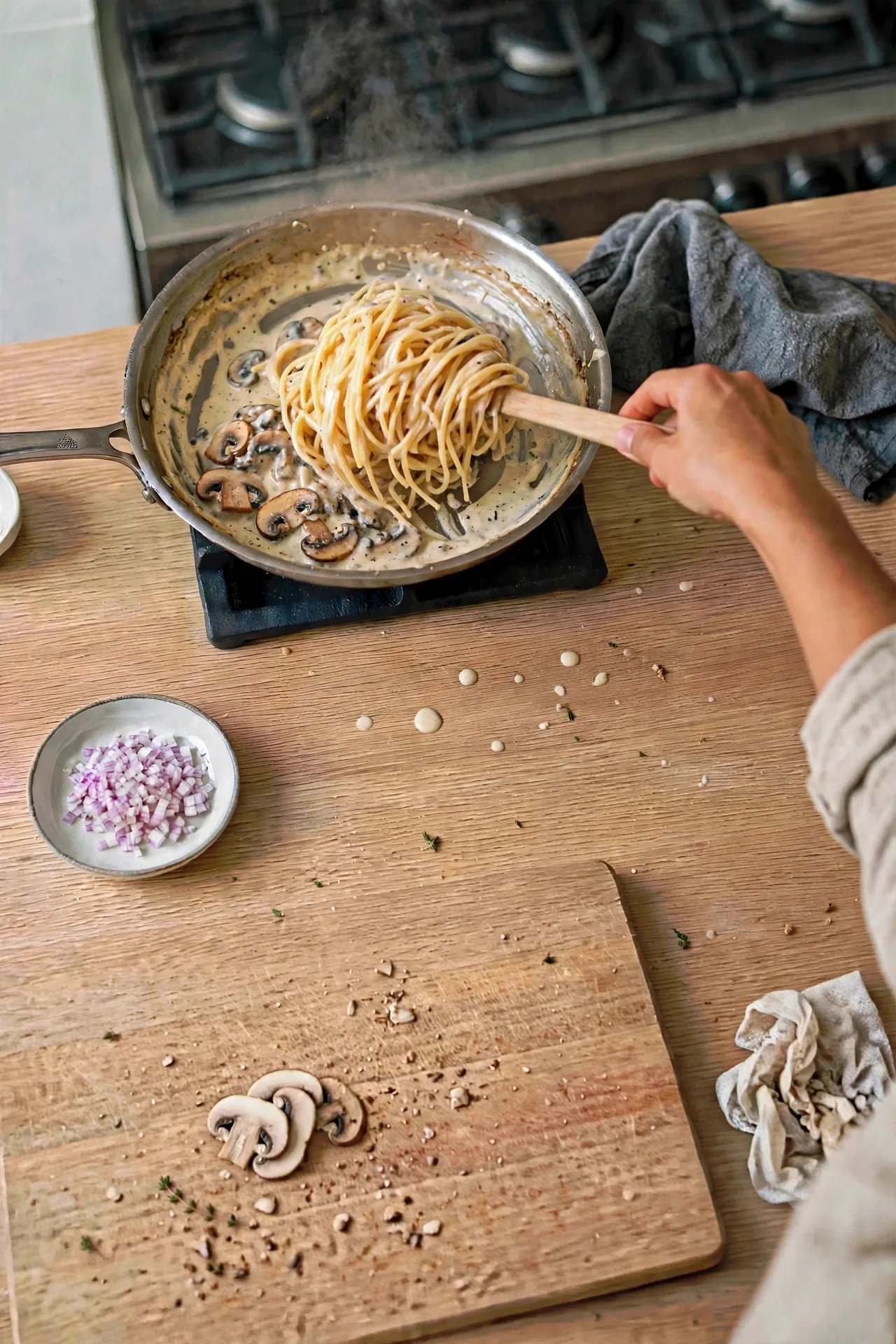
Add the pasta to the skillet with 2 to 3 tablespoons of pasta water. Toss over low heat for 1 to 2 minutes, until the sauce coats every strand. If it tightens up, add pasta water a spoonful at a time. Stir in the Parmesan if using.
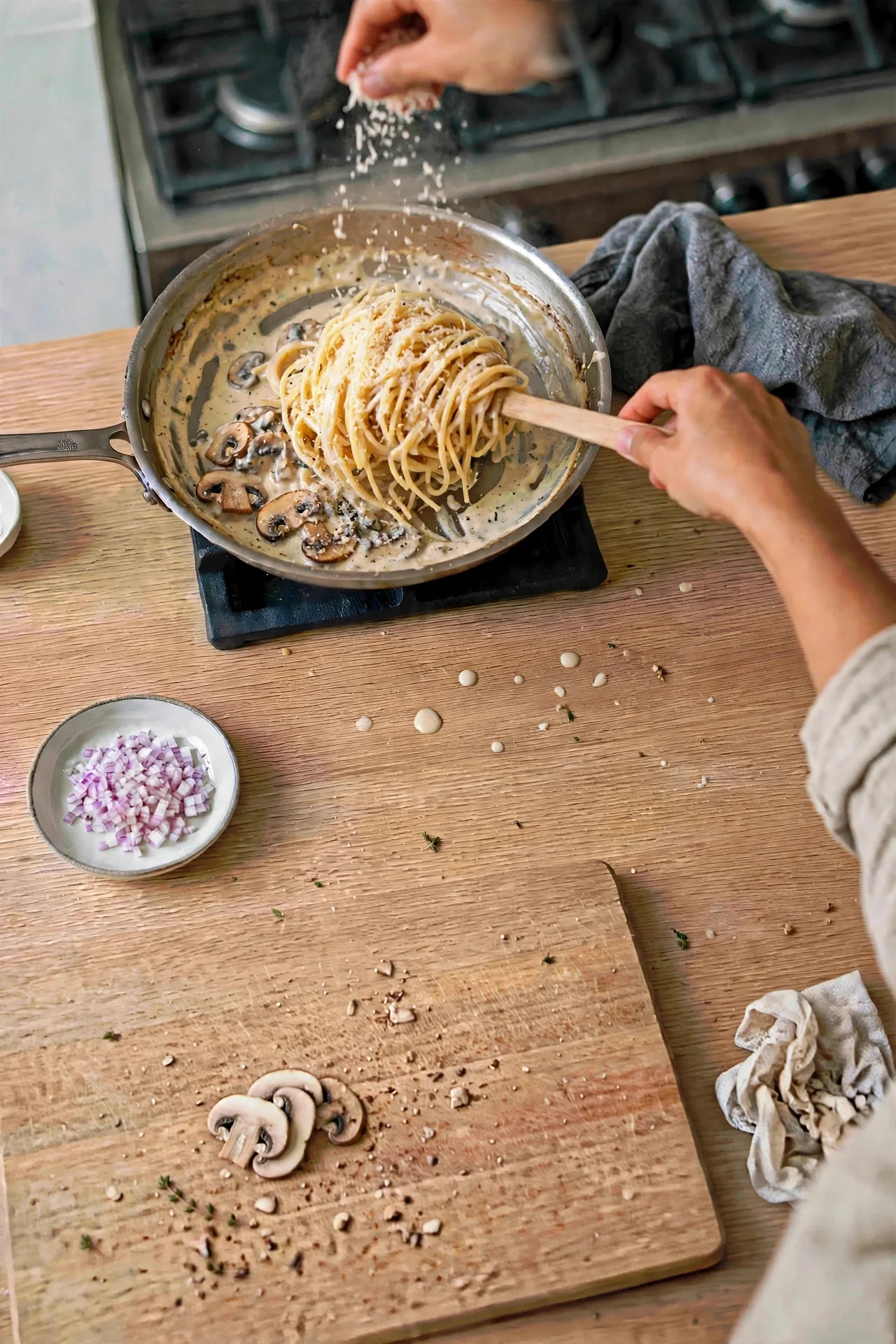
Serve right away, with extra parsley.
Chicken
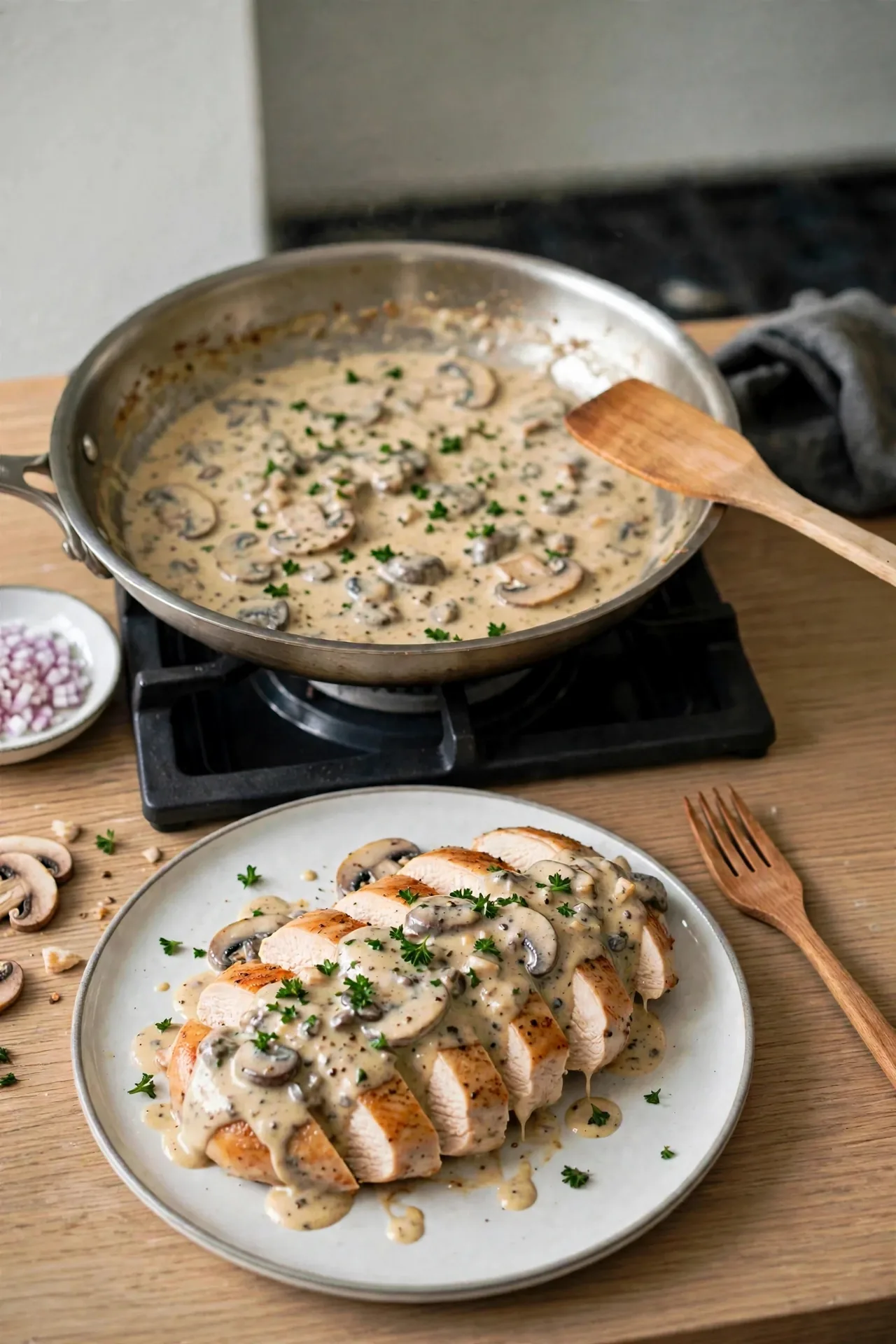
Return the chicken and any juices from the plate to the skillet and spoon sauce over the top. Warm over low heat for 1 to 2 minutes, just enough to heat it through without cooking it further.
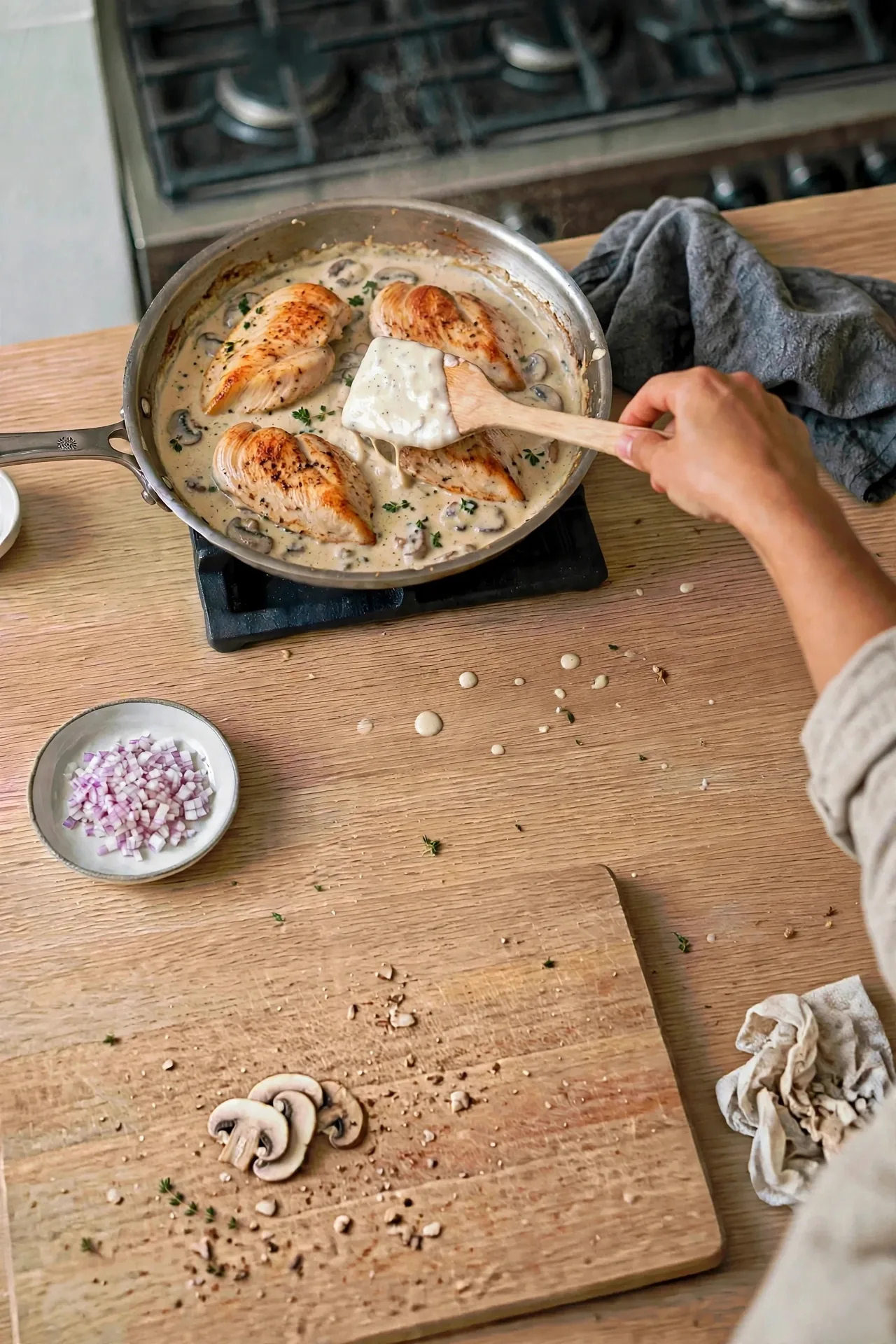
Check the thickest part once more. It should still read at least 165°F. Serve with sauce spooned generously over each breast.
Steak
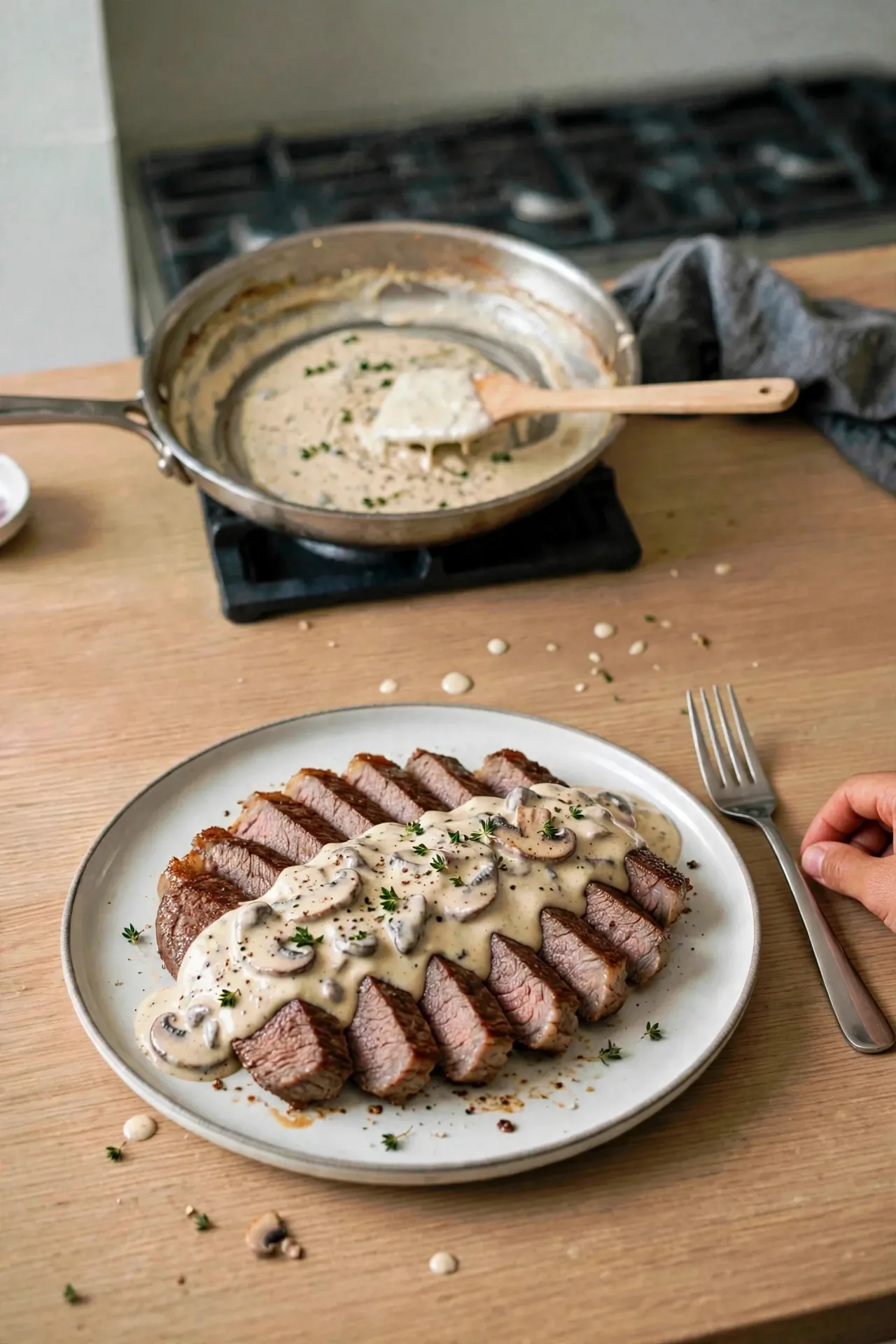
Plate the rested steaks and spoon the sauce over them. Skip the step of simmering the steaks in the sauce; a minute in a hot pan would push them past the doneness you just cooked to.
Pork
Plate the rested chops and spoon the sauce over them, along with any juices from the plate.
When the Sauce Goes Off Track
| What you see | Likely cause | Fix |
|---|---|---|
| Thin, runs off the spoon | Not simmered long enough | Simmer gently 1 to 2 more minutes and retest |
| Too thick or sticky | Over-reduced, or sat too long | Stir in broth (or pasta water) a tablespoon at a time |
| Greasy, grainy, or separated | Cream boiled hard | Take off the heat and whisk in a splash of warm broth; may not fully recover |
| Mushrooms gray and soft | Pan crowded or heat too low | Cook in batches next time; keep going to evaporate the liquid |
| Too salty | Over-seasoned | Dilute with a little unsalted broth or cream; salt cannot be removed |
| Bitter | Burnt garlic or burnt fond | Start over with fresh fat if the pan is black |
If You’re Out of Something
- No white wine: use an extra ¼ cup of broth plus 1 teaspoon of white wine vinegar or lemon juice. The sauce will taste a bit less rounded.
- Cream: half-and-half simmers thinner and has less margin before it splits, so keep the heat low and expect a looser sauce. Whole milk is too thin for this recipe.
- Mushrooms: white button mushrooms work. For deeper flavor, replace up to half with shiitake caps (discard the tough stems).
- Shallot: ½ small yellow onion, finely diced, can stand in.
- Worcestershire: use 1 teaspoon soy sauce for a similar savory note. It changes the allergen profile (soy and wheat).
Keeping Leftovers
Refrigerate cooked protein and sauce in covered containers, and use within 3 to 4 days. Reheat leftovers to 165°F (74°C). Warm the sauce gently over low heat with a splash of broth, stirring until smooth; high heat risks separating it.
Store pasta and sauce separately if you can, since noodles keep absorbing the sauce and turn soft. Cream sauces tend to separate after freezing and thawing, so this one is better made fresh or stored in the refrigerator.
Make-Ahead Plan
You can make the sauce through the cream stage a day or two ahead and refrigerate it. Reheat gently, then finish with the Worcestershire, lemon, and parsley just before serving. Cook the protein and boil the pasta fresh.
A Few Facts Behind the Method
- Mushrooms are mostly water. They are roughly 90 percent water, which is why a pound of sliced mushrooms shrinks so much and why you need to cook off that liquid before they can brown.
- The browned bits are flavor. Browning the surface of meat and mushrooms leaves concentrated, caramelized residue on the pan. Wine and broth dissolve it back into the sauce.
- Pink pork can be safe. According to the USDA, cooked pork can be pink at a safe internal temperature, which is why a thermometer is more reliable than color.
Questions Readers Ask
Can I double the sauce?
Yes, but use a wider pan or brown the mushrooms in batches. The cream will also need more simmering time, so go by the spoon test instead of the clock.
Can I cook two proteins in one dinner?
Yes. Cook the one with the shortest time or the lowest tolerance for overcooking last, and rest everything on the same plate. Sauce the pasta and proteins separately so each stays at its own temperature.
Which pasta shape works best?
Wide, flat noodles like fettuccine or pappardelle hold the sauce well. Penne or rigatoni also work; use the pasta water to loosen the sauce.
Do I need to wash the skillet between the protein and the sauce?
No. The browned bits add flavor. Wipe it out only if they are black and burnt.
Which Version to Make
The sauce is the same every time, so the choice comes down to the night. Pasta is the quickest, since it needs no separate protein. Chicken is the most forgiving when pounded thin. Steak rewards a good thermometer and a hot pan, and pork chops are in between. Whichever you pick, three things decide the outcome: brown the mushrooms until the pan is dry, keep the cream at a gentle simmer, and let a thermometer tell you when the meat is done.
For serving, pasta pairs with a bright green salad. Chicken or pork goes well with rice or mashed potatoes, and steak with roasted potatoes and green beans.
Recipe Card
Ingredients
Equipment
Method
- Wipe the mushrooms clean and slice ¼ inch thick. Dice the shallot, mince the garlic, and pick the thyme leaves.
- Chicken, steak, or pork only: pat the meat dry and season both sides. For chicken, pound to ¾ inch thick first. Heat the oil in a 12-inch skillet over medium-high until it shimmers. Cook in batches without crowding: Chicken: 5 to 6 minutes on the first side, 4 to 6 minutes on the second, until the thickest part reads 165°F (74°C). Rest 5 minutes. Steak: 4 to 5 minutes per side for 1-inch steaks, until the center reads 145°F (63°C). Rest at least 5 minutes (USDA minimum rest is 3). Pork: 4 to 5 minutes per side, until the center reads 145°F (63°C). Rest at least 3 minutes (5 is better).
- Leave the skillet unwashed (pour off all but about 1 tbsp fat). Pasta: start a large pot of salted water boiling now.
- Heat the butter and olive oil over medium-high. Add the mushrooms in an even layer and let them sit 2 to 3 minutes. Cook about 5 minutes more to evaporate their liquid, then 3 to 5 minutes until deep golden brown.
- Stir in the shallot and ¼ tsp salt for 1 to 2 minutes, until soft. Add the garlic and thyme for about 30 seconds.
- Pour in the wine, scraping up the browned bits. Simmer 2 to 3 minutes until only a syrupy film remains.
- Add the broth and simmer 3 to 4 minutes until reduced by about half.
- Add the cream, lower the heat to medium-low, and simmer gently 4 to 6 minutes, stirring often, until the sauce coats the back of a spoon.
- Off the heat, stir in the Worcestershire, lemon juice, pepper, parsley, and any resting juices. Taste and add up to ¼ tsp more salt.
- Finish: Pasta: cook fettuccine 1 minute short of package time, reserve ½ cup cooking water, drain, and toss in the sauce with 2 to 3 tbsp water for 1 to 2 minutes. Add Parmesan if using. Chicken: return chicken and juices to the pan, spoon sauce over, and warm 1 to 2 minutes. Steak or pork: plate the rested meat and spoon sauce over the top.
Emily Hart
Hi, I'm Emily! I develop cozy, doable recipes for busy home cooks — clear steps, honest ingredients, and flavors the whole table will love. Follow on Pinterest
Follow on Pinterest
Leave a Reply