Creamy Chicken Tortellini Soup (Easy One-Pot Dinner)
Tender seared chicken, plump cheese tortellini and spinach folded into a silky Parmesan broth — one pot, about an hour.
 Pin it
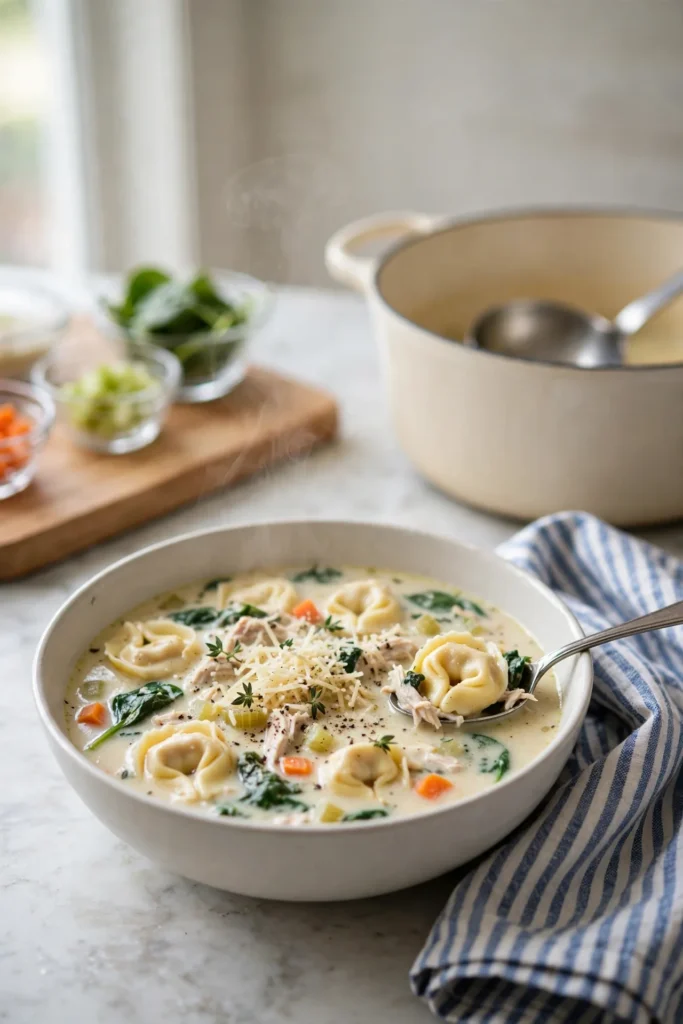
Some soups are background food. This one is the main event. Tender chicken seared until golden, shredded and folded back into a silky Parmesan broth with plump cheese tortellini, sweet carrots, and spinach wilted in at the last minute. It tastes like the best parts of chicken noodle soup and creamy Italian comfort food decided to share a pot.
What sets it apart is the base. The chicken sears first, leaving browned bits in the Dutch oven, and those bits melt into butter with onion, carrot, and celery. A spoonful of flour turns it into a roux, broth goes in slowly, and the whole thing thickens into something with real body before the cream ever appears. No thin, watery broth. No gluey thickness either — just a soup that coats the spoon.
Why This One Works
- The chicken gets seared, not boiled. Browning the breasts first builds a layer of flavor that poaching never gives you, and the fond left in the pot becomes the backbone of the broth.
- A real roux, not a cornstarch slurry. Flour cooked into the vegetables gives the soup a stable, silky thickness that holds up to reheating.
- Tortellini goes in near the end. Cheese tortellini only needs a few minutes; adding it late keeps it plump and tender instead of bloated.
- Spinach at the finish. It wilts in under a minute and keeps its color and bite.
Ingredients
- 2 boneless, skinless chicken breasts (about 1 lb)
- 1 teaspoon kosher salt, plus more to taste
- ½ teaspoon black pepper, plus more to taste
- 2 tablespoons olive oil
- 3 tablespoons butter
- 1 yellow onion, diced
- 2 carrots, peeled and diced
- 2 celery stalks, diced
- 4 garlic cloves, minced
- 1 tablespoon fresh thyme leaves
- ⅓ cup all-purpose flour
- 6 cups low-sodium chicken broth
- 1 cup heavy cream
- ¾ cup finely grated Parmesan, plus more for serving
- ¼ teaspoon ground nutmeg
- 1 package (9 oz) refrigerated cheese tortellini
- 3 cups baby spinach
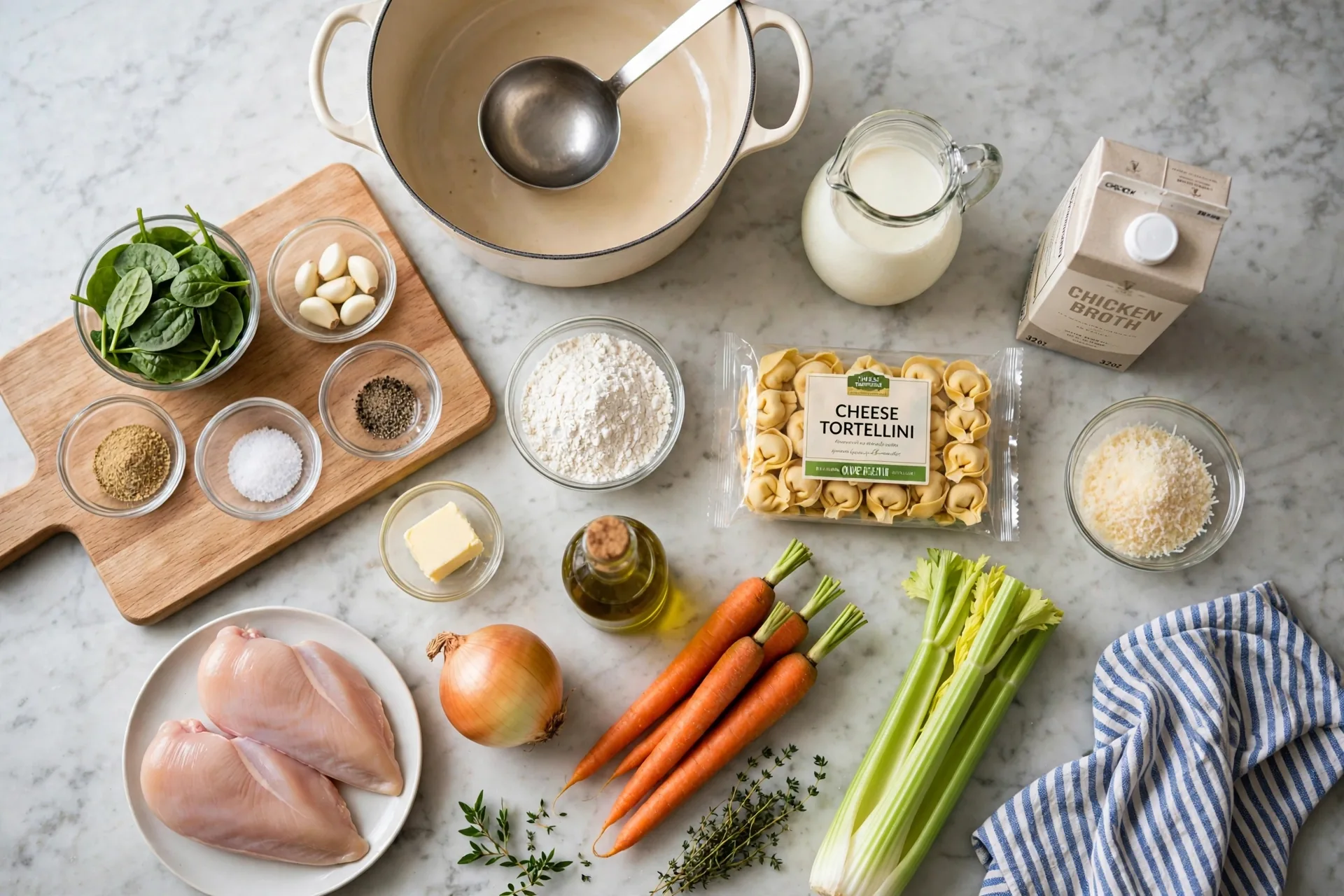
Use refrigerated tortellini rather than frozen if you can — it cooks faster and stays more tender. Low-sodium broth matters here because Parmesan brings its own salt; you can always add more at the end.
Step 1: Sear the Chicken
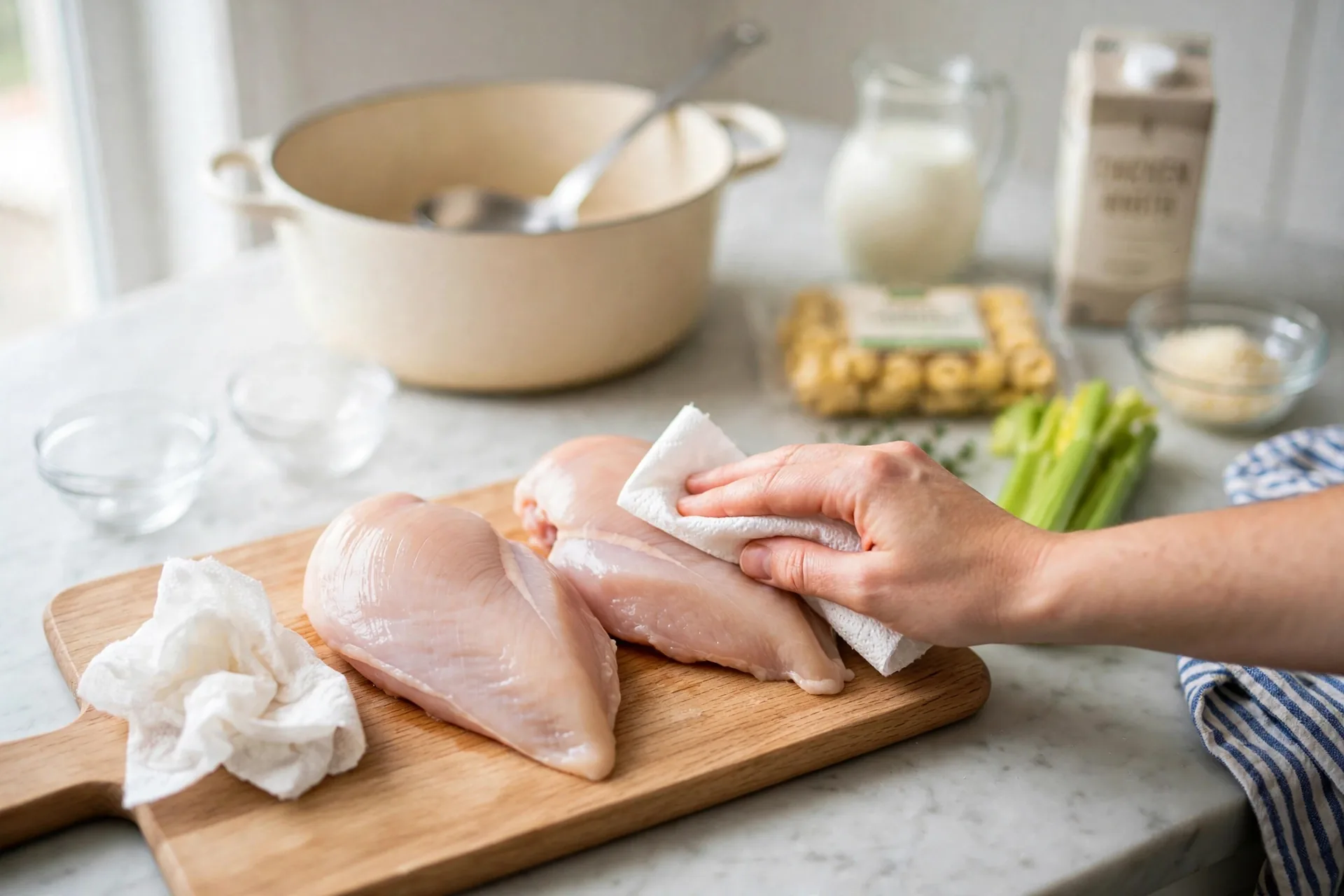
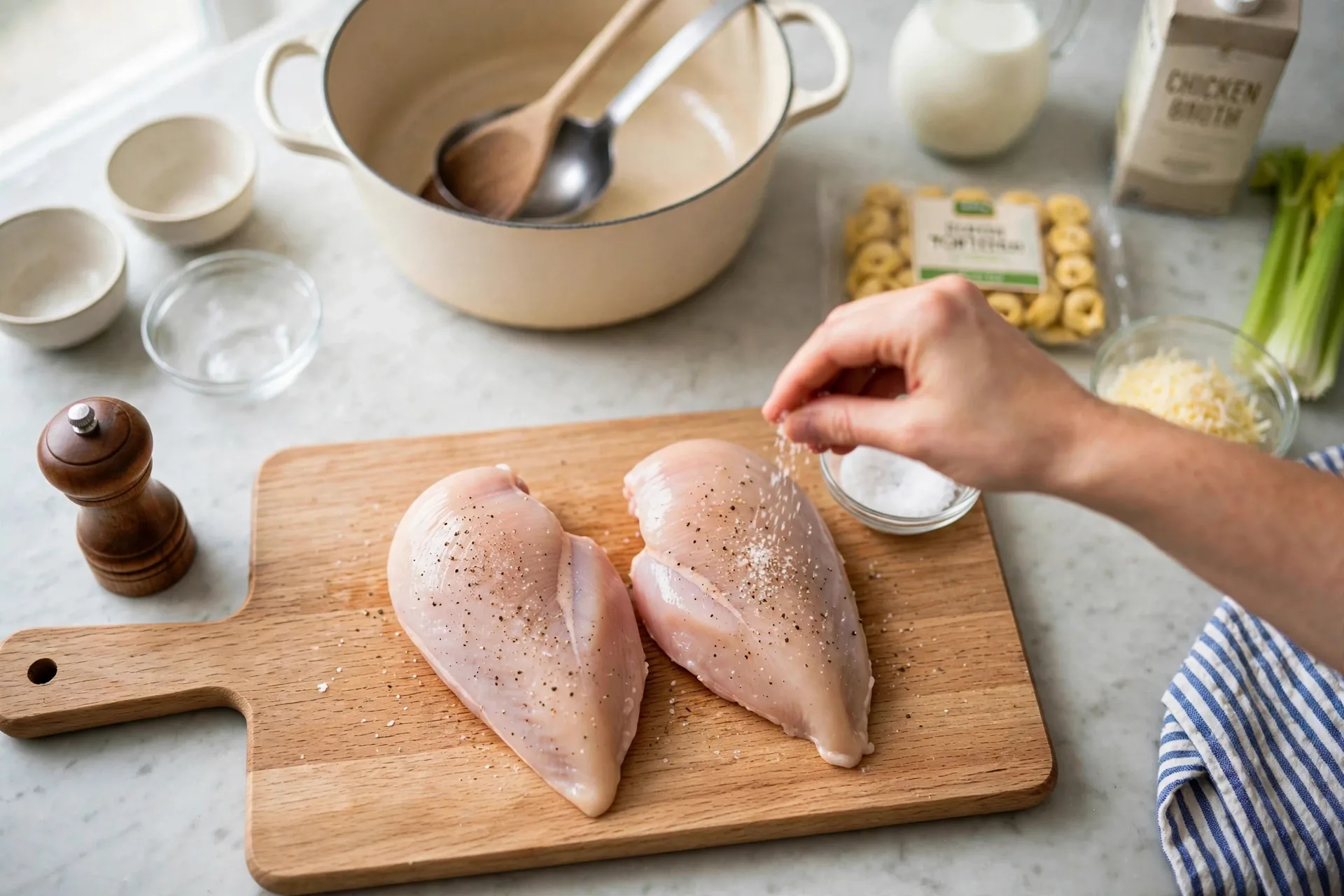
Pat the chicken breasts dry with paper towels. Moisture is the enemy of browning, so don’t skip this.
Season both sides with the salt and pepper. Heat the olive oil in a Dutch oven over medium-high heat until it shimmers, then lay in the chicken with space between the pieces.
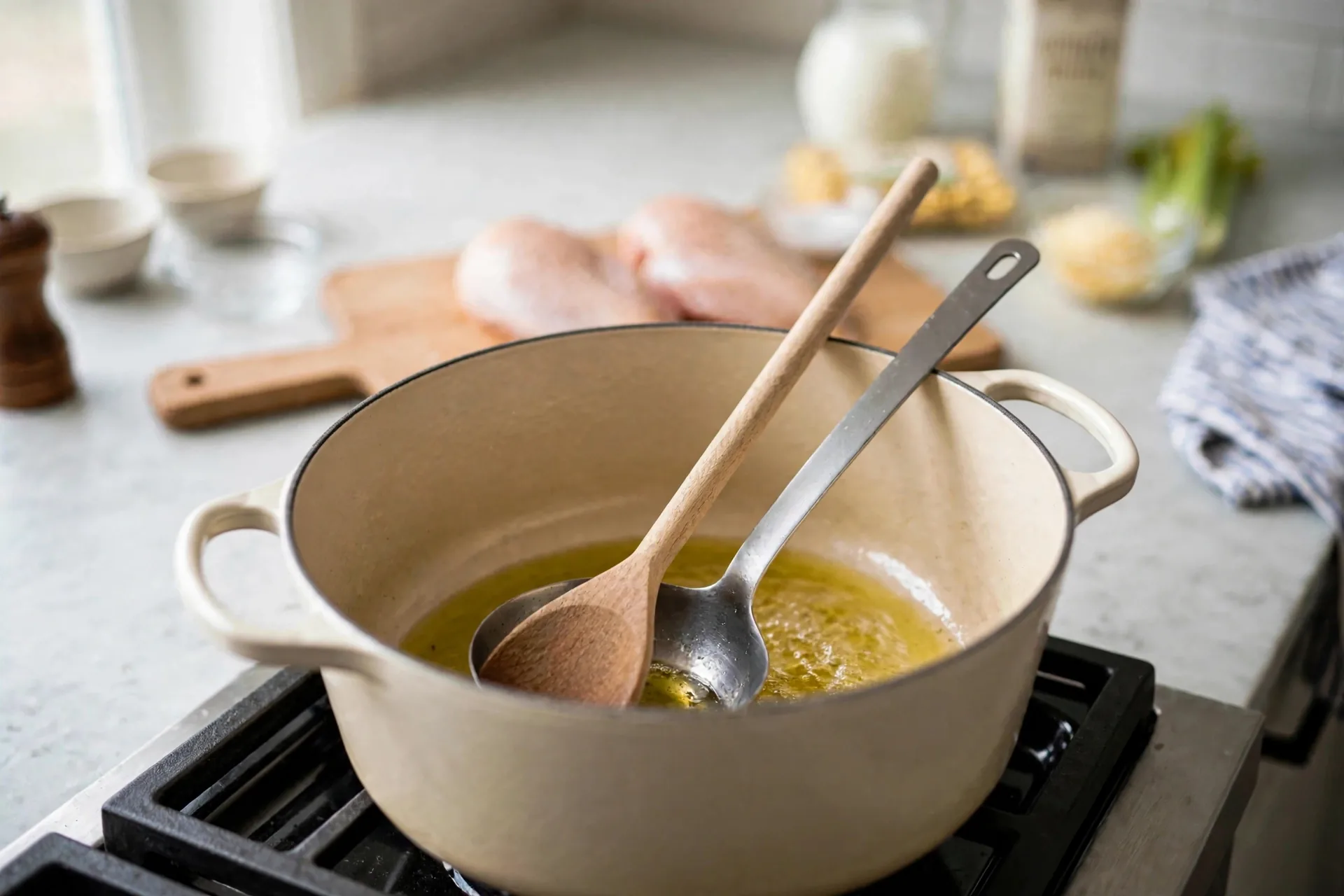

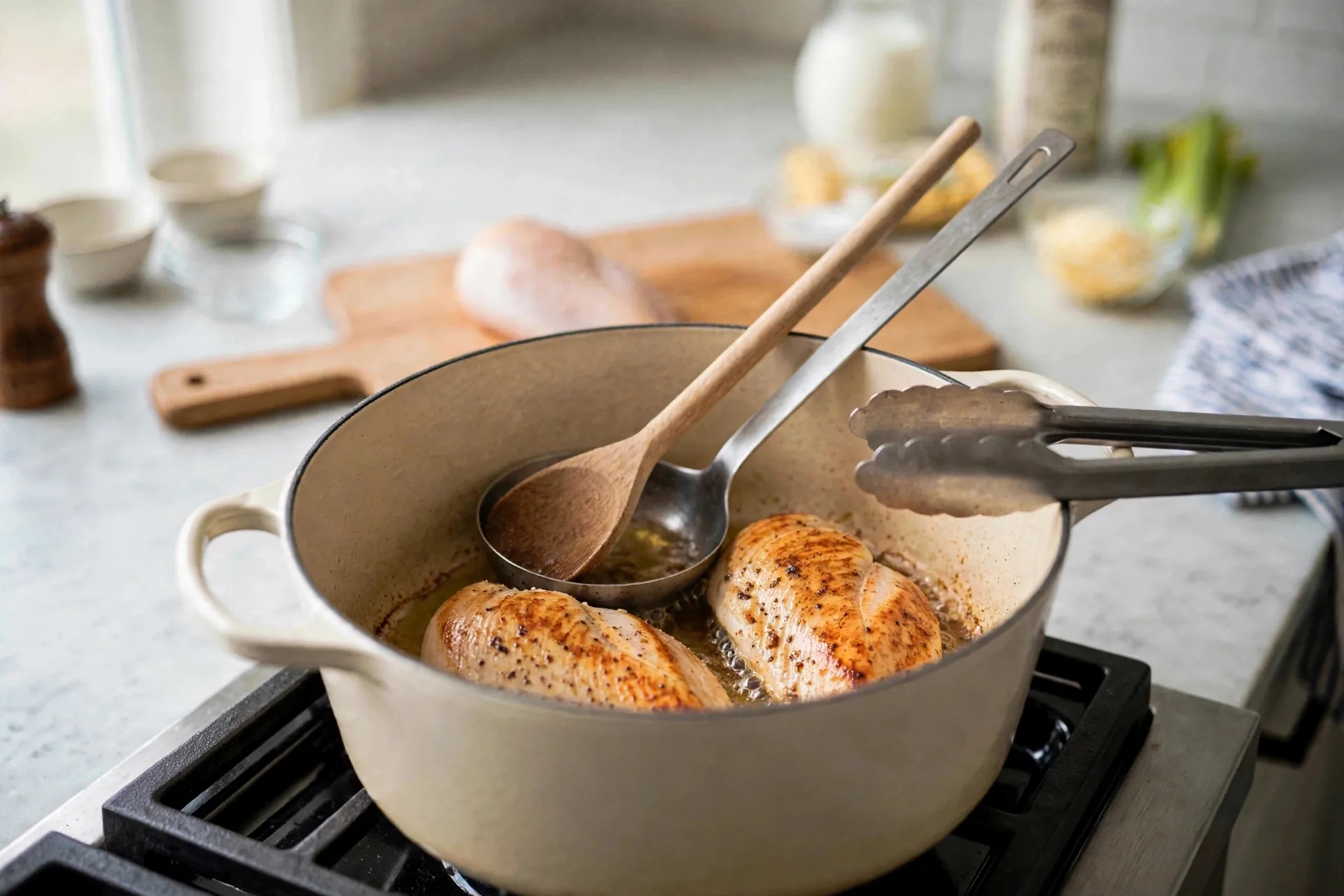
Sear 4 to 5 minutes per side until deeply golden. You’re cooking for color here as much as doneness — check the thickest part with an instant-read thermometer and pull the chicken at 165°F (74°C).

Step 2: Rest and Shred
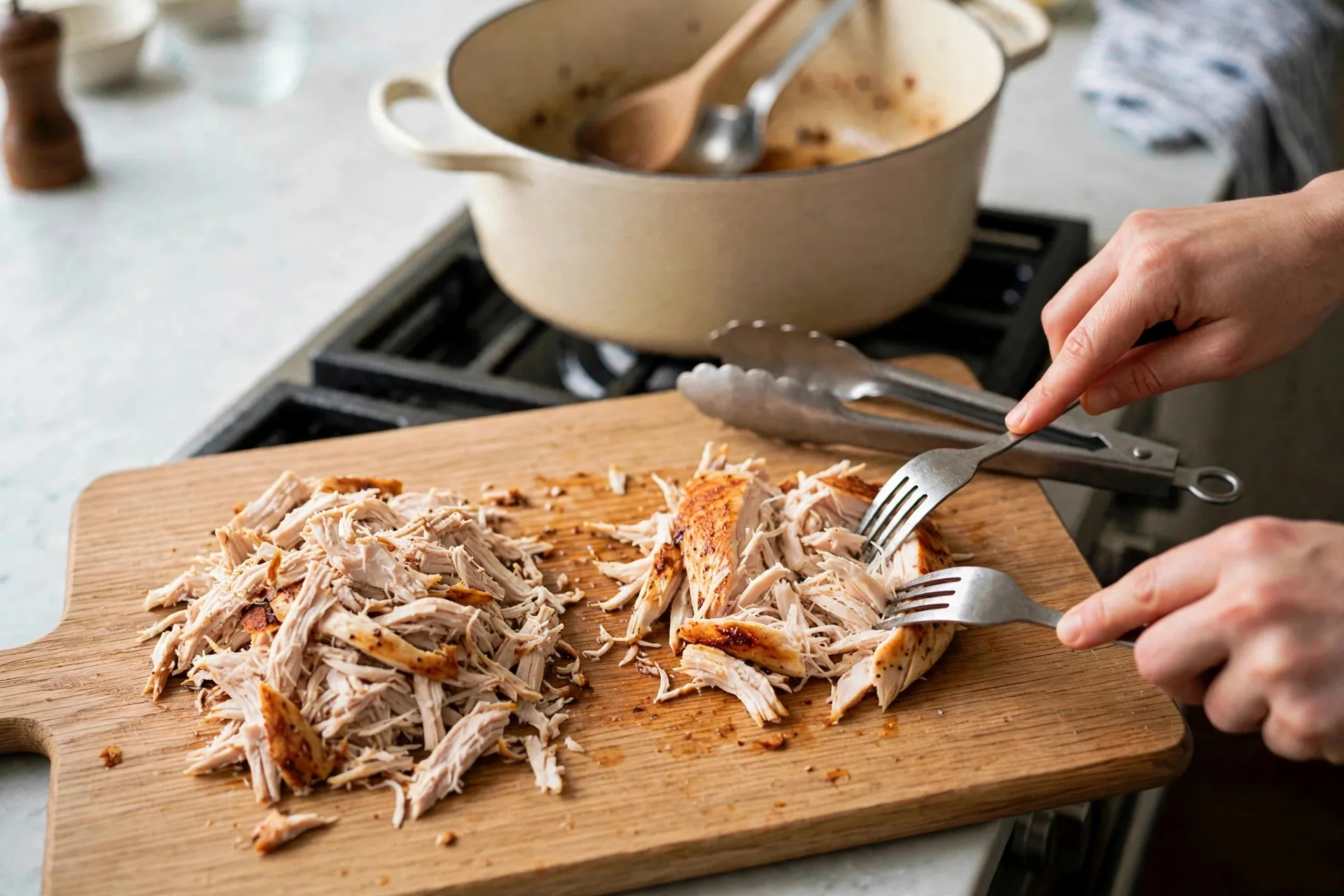
Move the chicken to a cutting board and rest it 5 to 10 minutes. The juices redistribute instead of running out onto the board, and the meat shreds more cleanly when it’s had a moment.
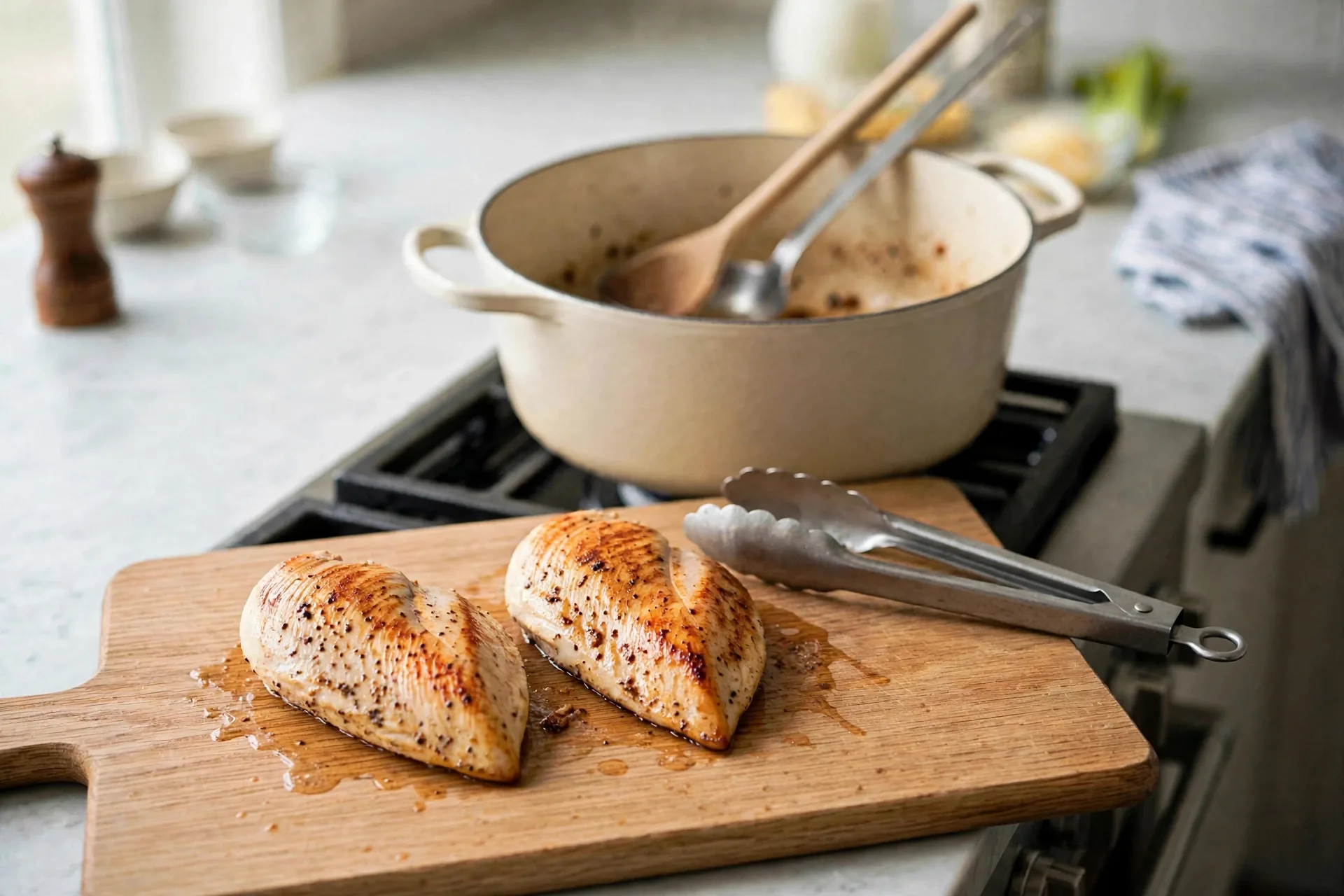
Pull the meat apart with two forks into thin shreds, keeping some of the golden seared edges in the mix — those carry the most flavor.
Step 3: Build the Vegetable Base
While the chicken rests, dice the onion, carrots, and celery into small, even pieces. Mince the garlic and strip the thyme leaves from their stems.
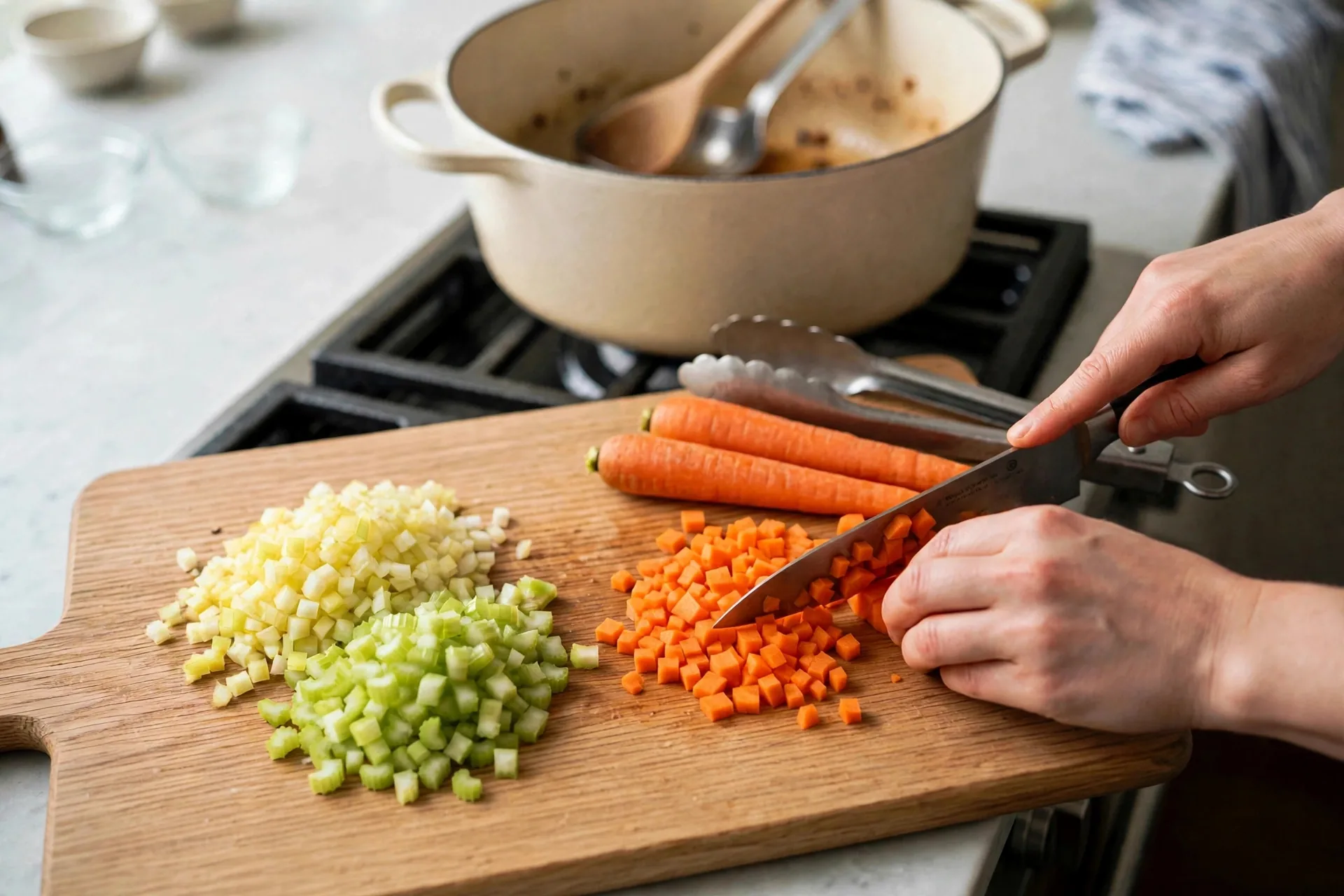
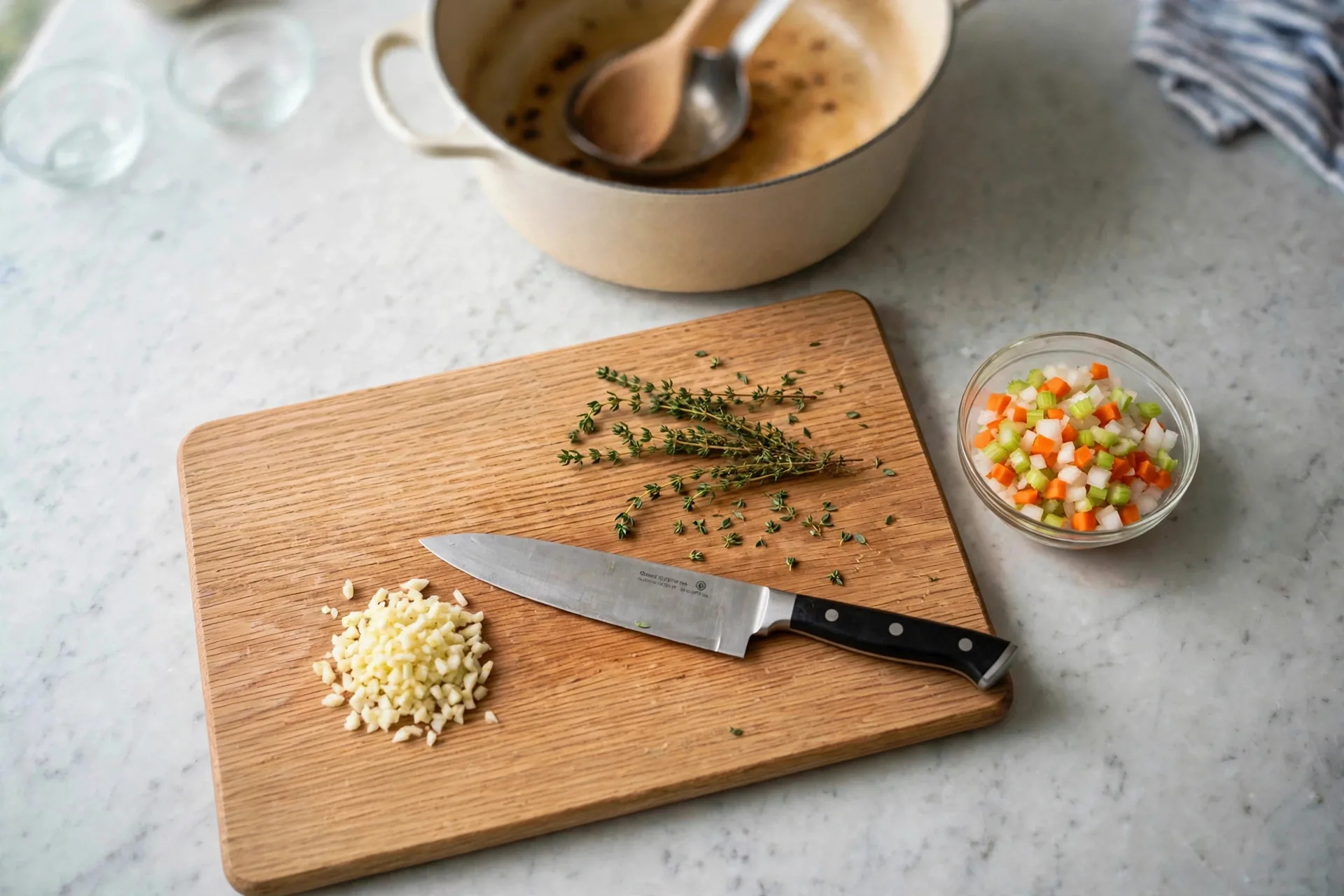
Melt the butter in the same Dutch oven over medium heat, scraping up the browned bits from the chicken — that’s concentrated flavor going straight into the soup. Add the onion, carrot, and celery and cook, stirring, until the onion turns translucent and the carrots soften slightly, 6 to 8 minutes.
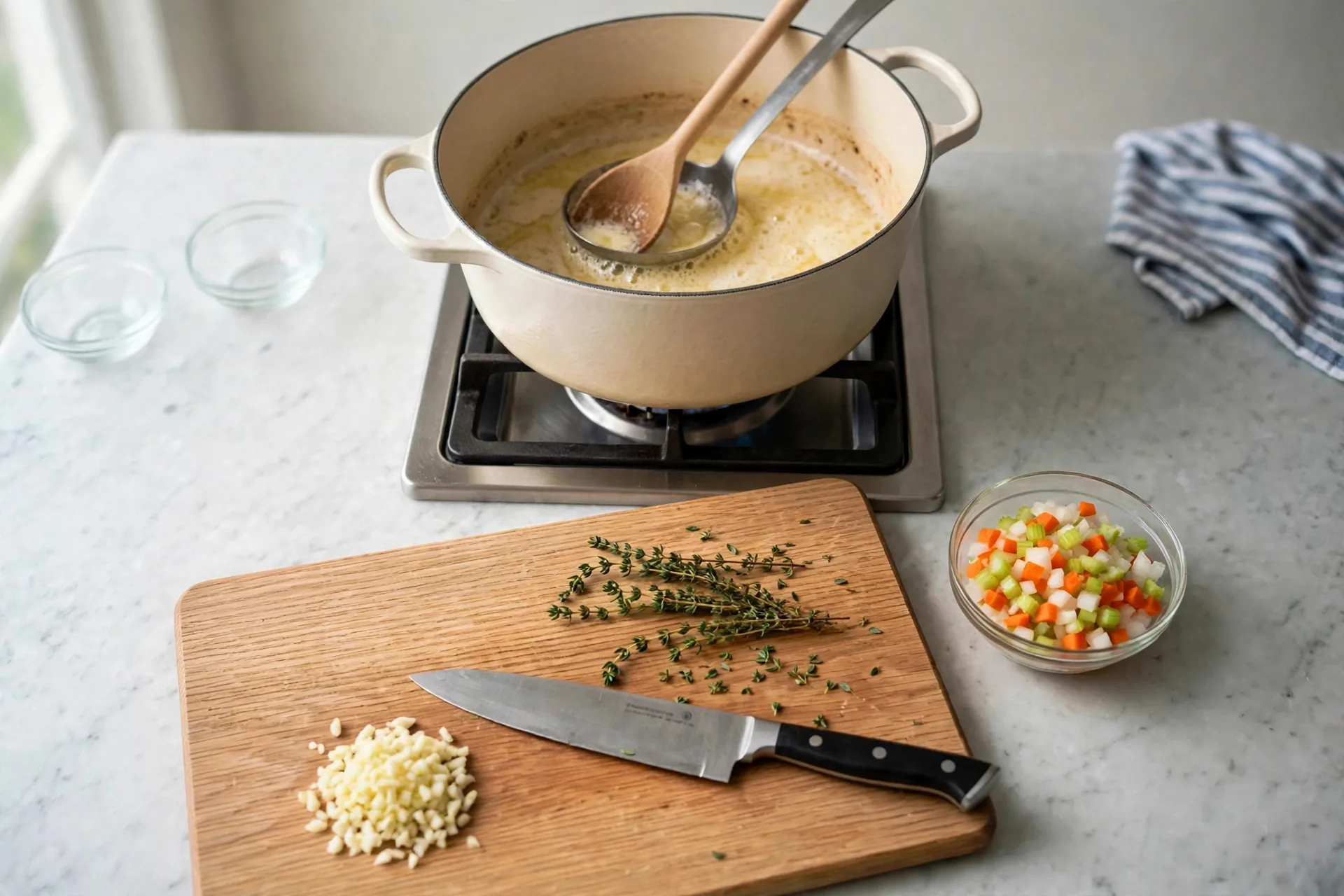
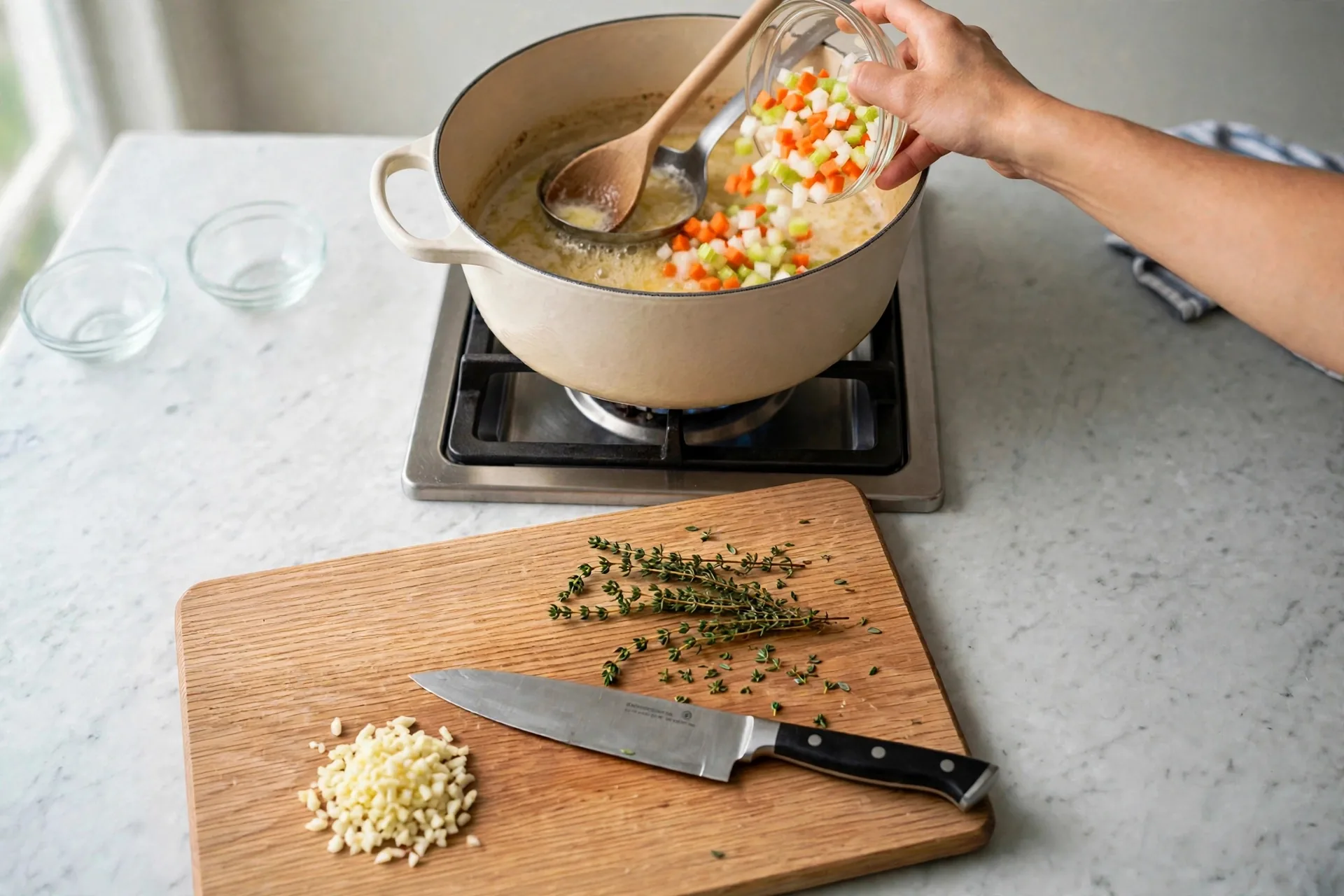
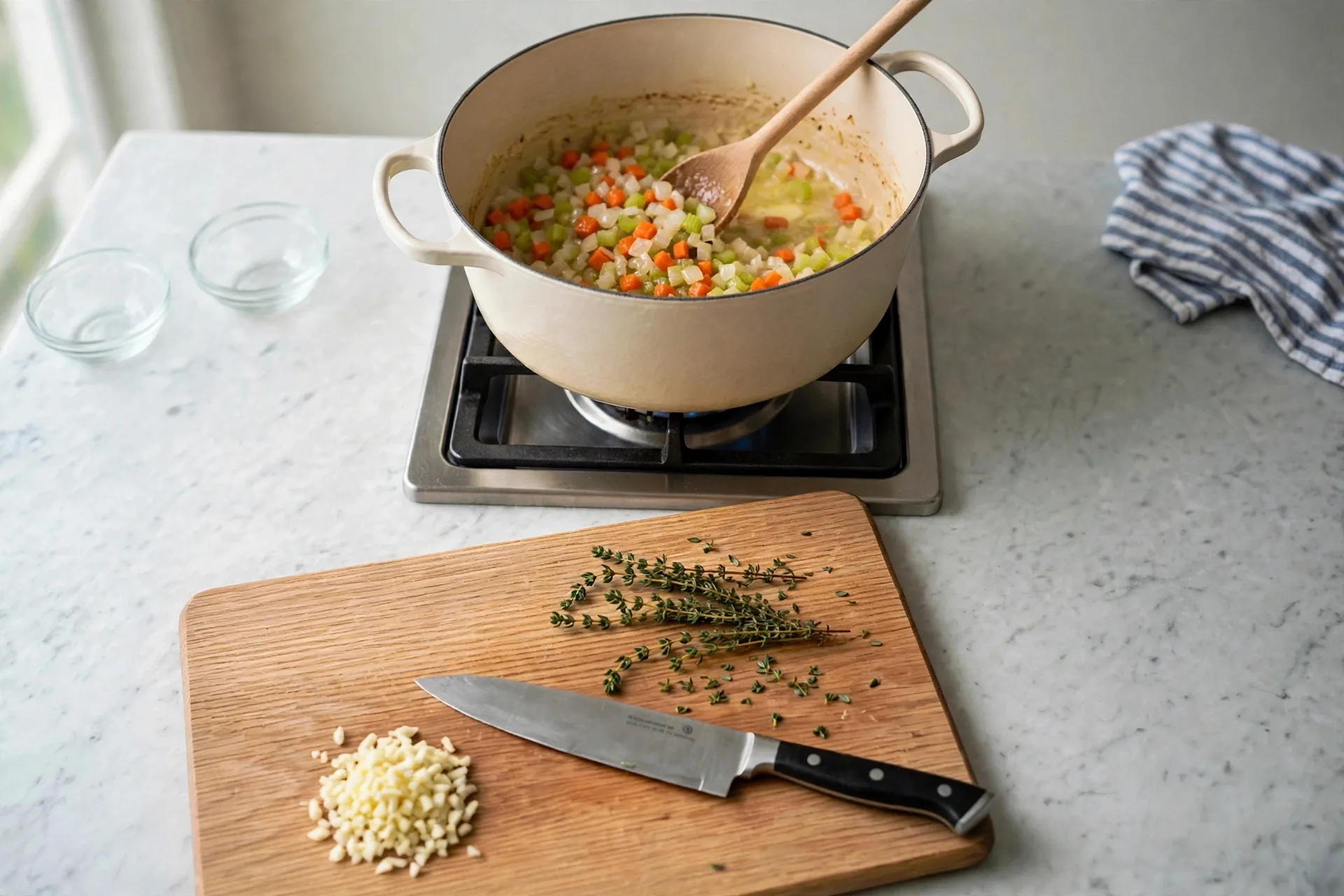
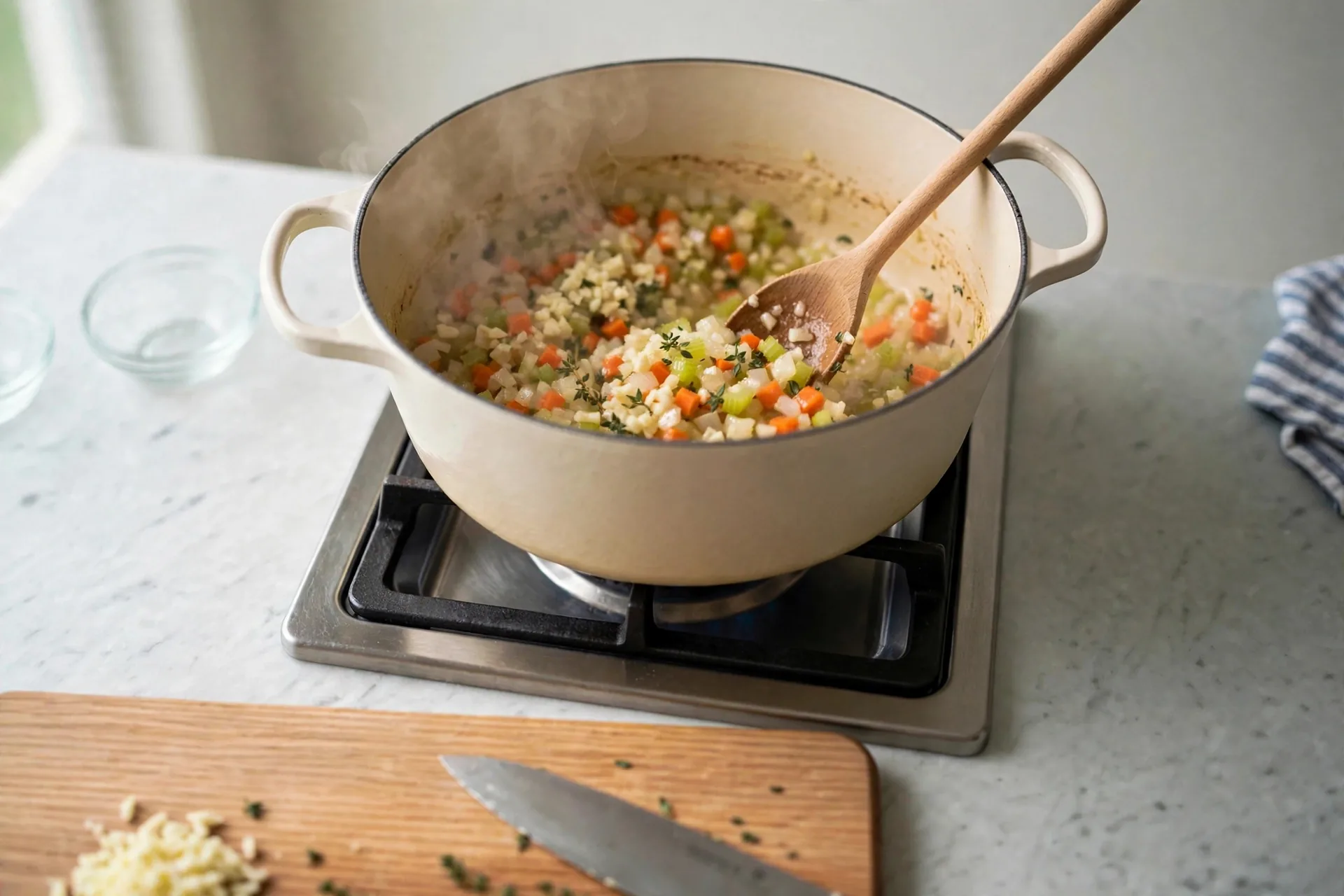
Stir in the garlic and thyme and cook just until fragrant, about 30 seconds. Garlic burns fast once minced, so keep it moving.
Step 4: Make the Roux and Add Broth
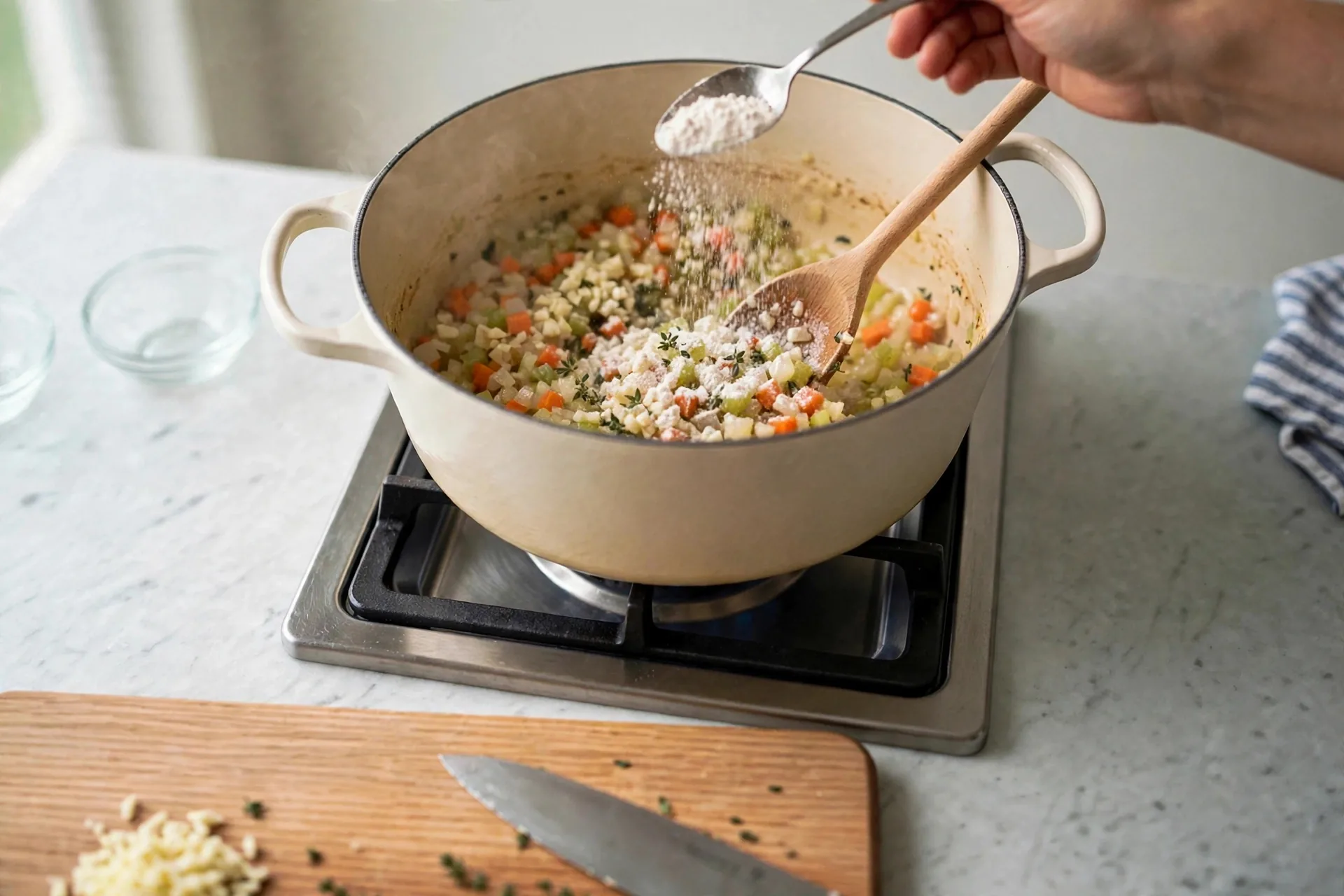
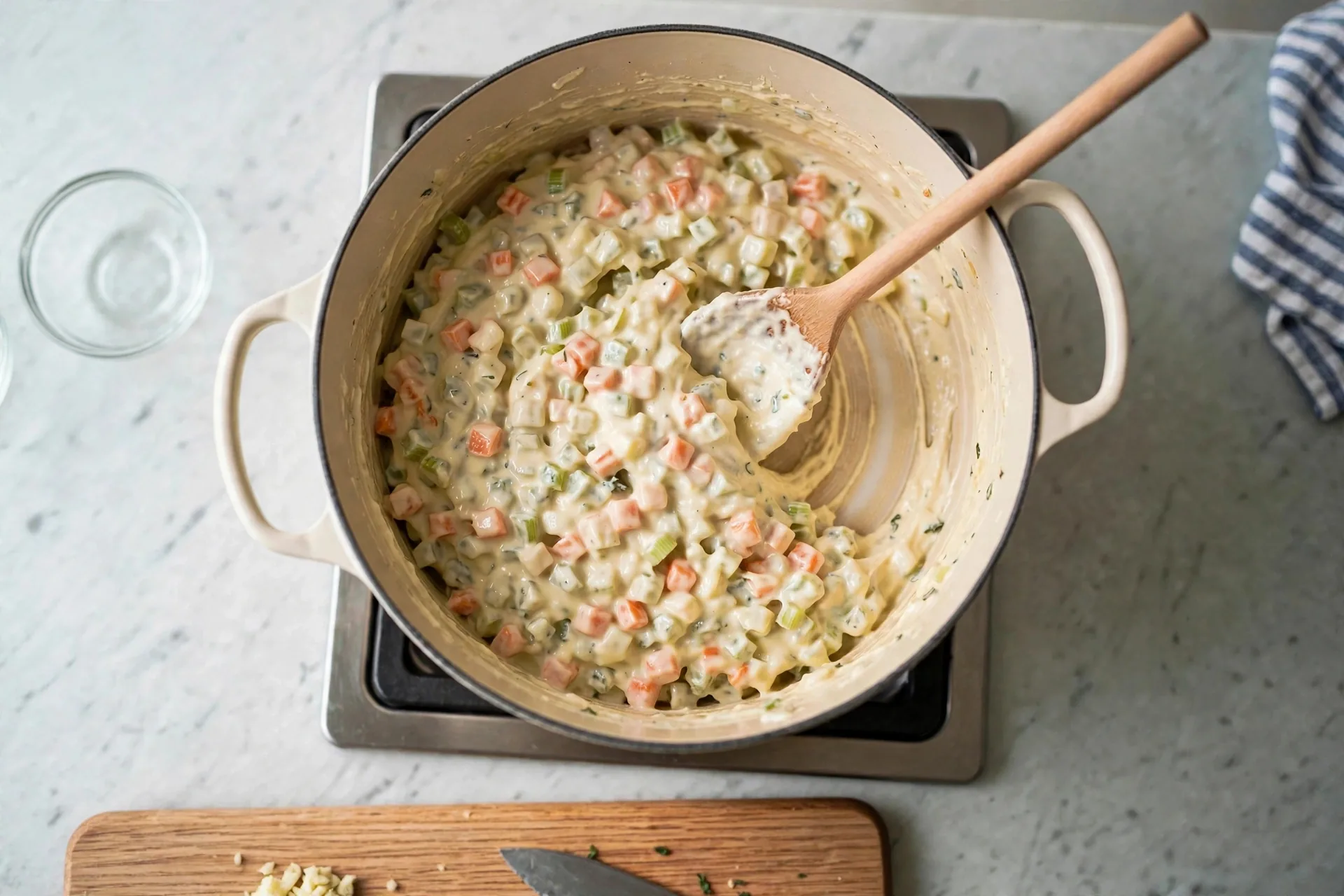
Sprinkle the flour evenly over the vegetables and stir constantly for about 2 minutes. The mixture will turn into a thick, pale paste and smell faintly toasty — that’s the raw flour taste cooking out. Don’t let it brown.
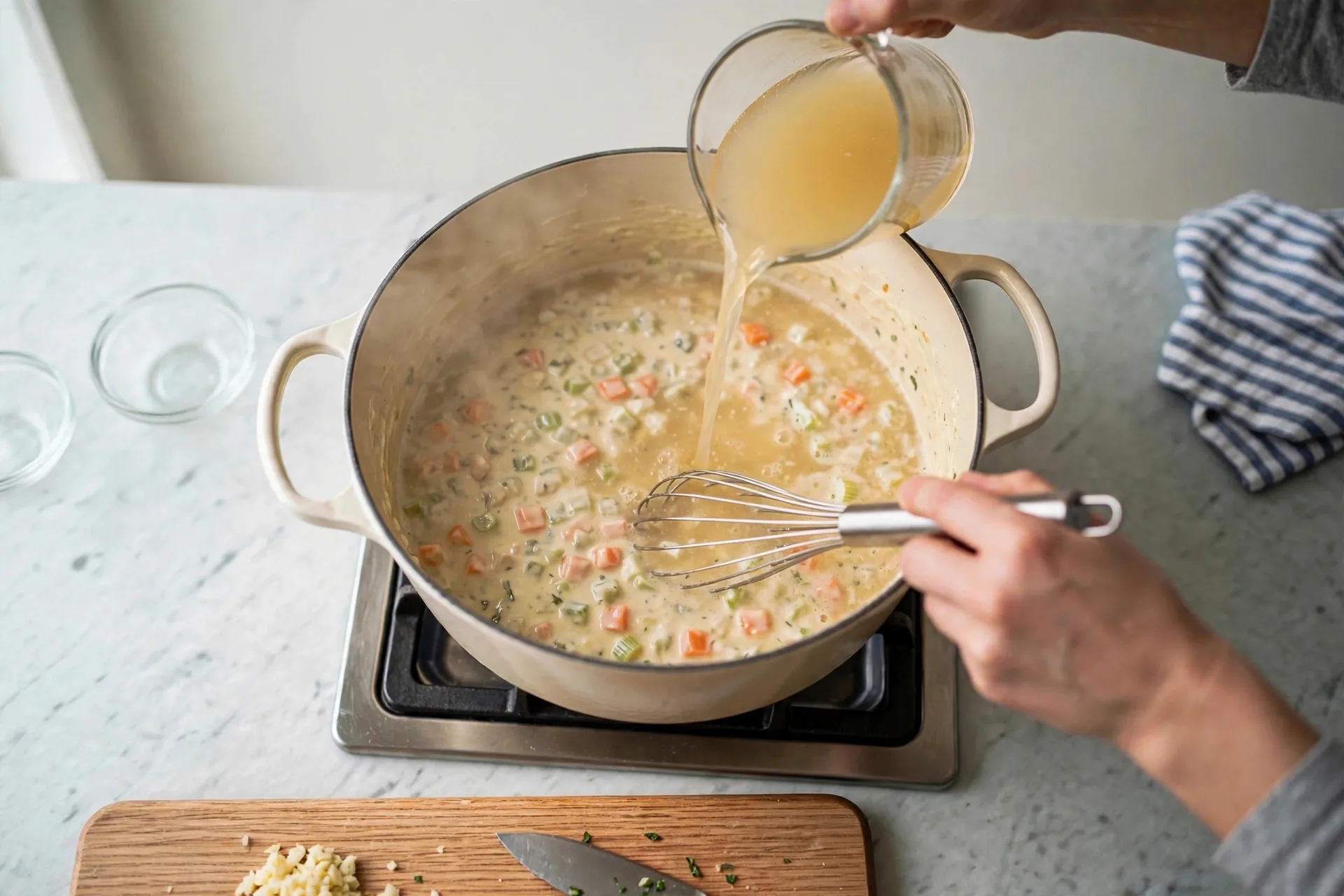
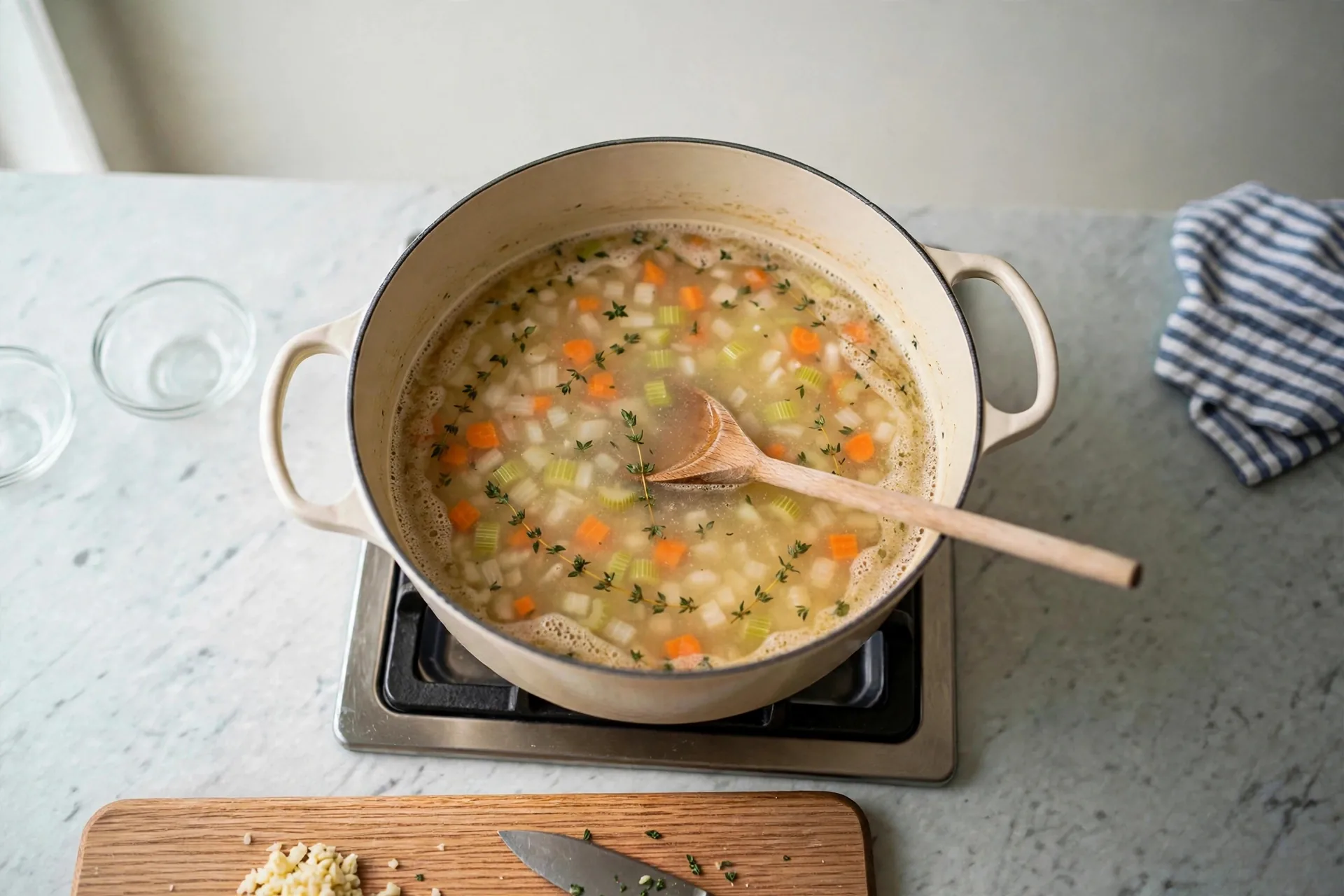
Pour in the chicken broth in a slow stream, whisking as you go. It will look lumpy at first; keep whisking and the lumps dissolve as the liquid heats. Bring to a gentle simmer and cook 8 to 10 minutes, until the broth is lightly thickened and the vegetables are tender.
Step 5: Cream, Parmesan, and Nutmeg
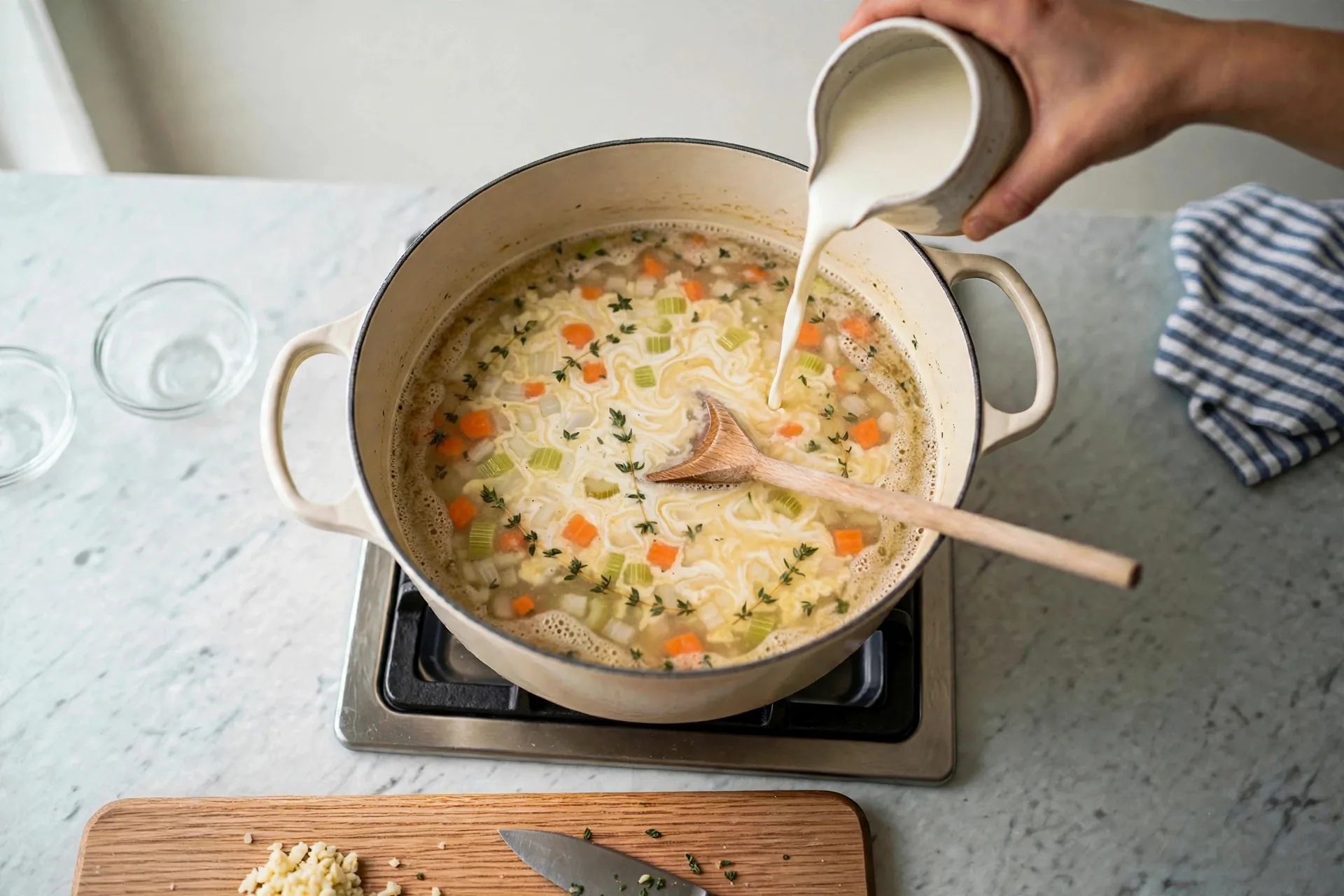
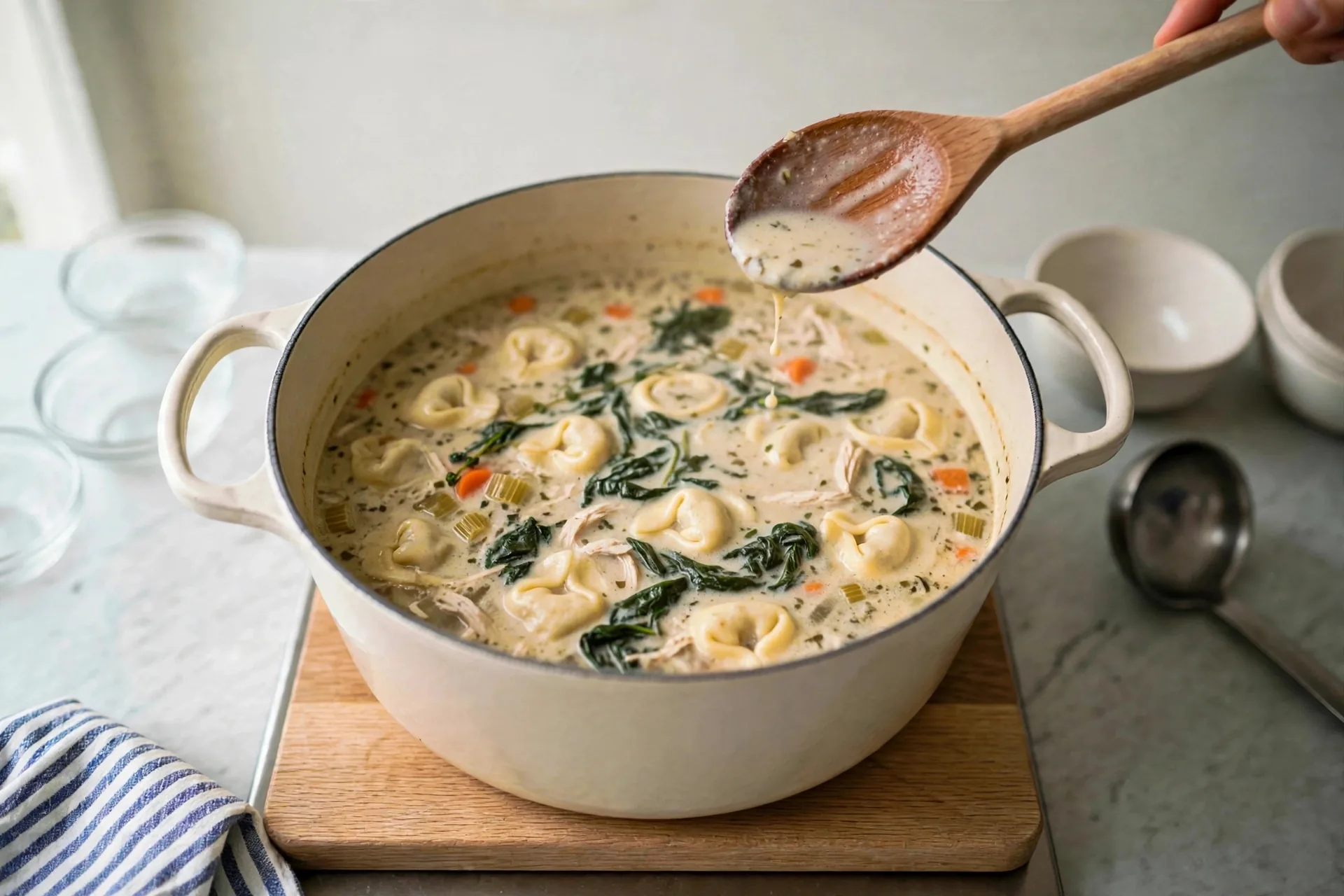
Lower the heat — the soup should barely tremble, not boil. Pour in the heavy cream, stirring, and watch the broth turn ivory.
Add the Parmesan a handful at a time, stirring until each addition melts, then the nutmeg. Taste and adjust the salt. The broth should be silky and lightly coat a spoon.
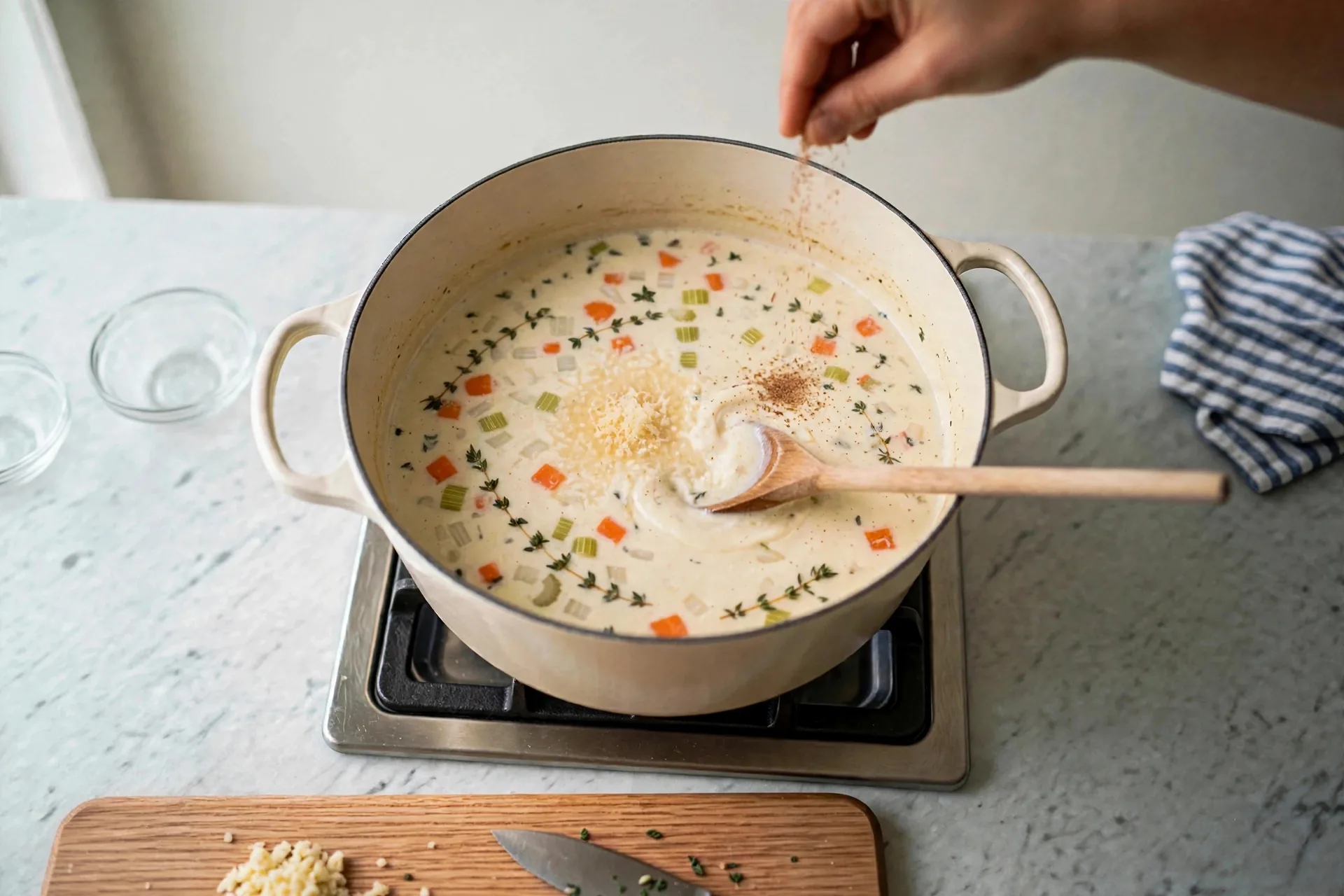
Step 6: Chicken, Tortellini, and Spinach
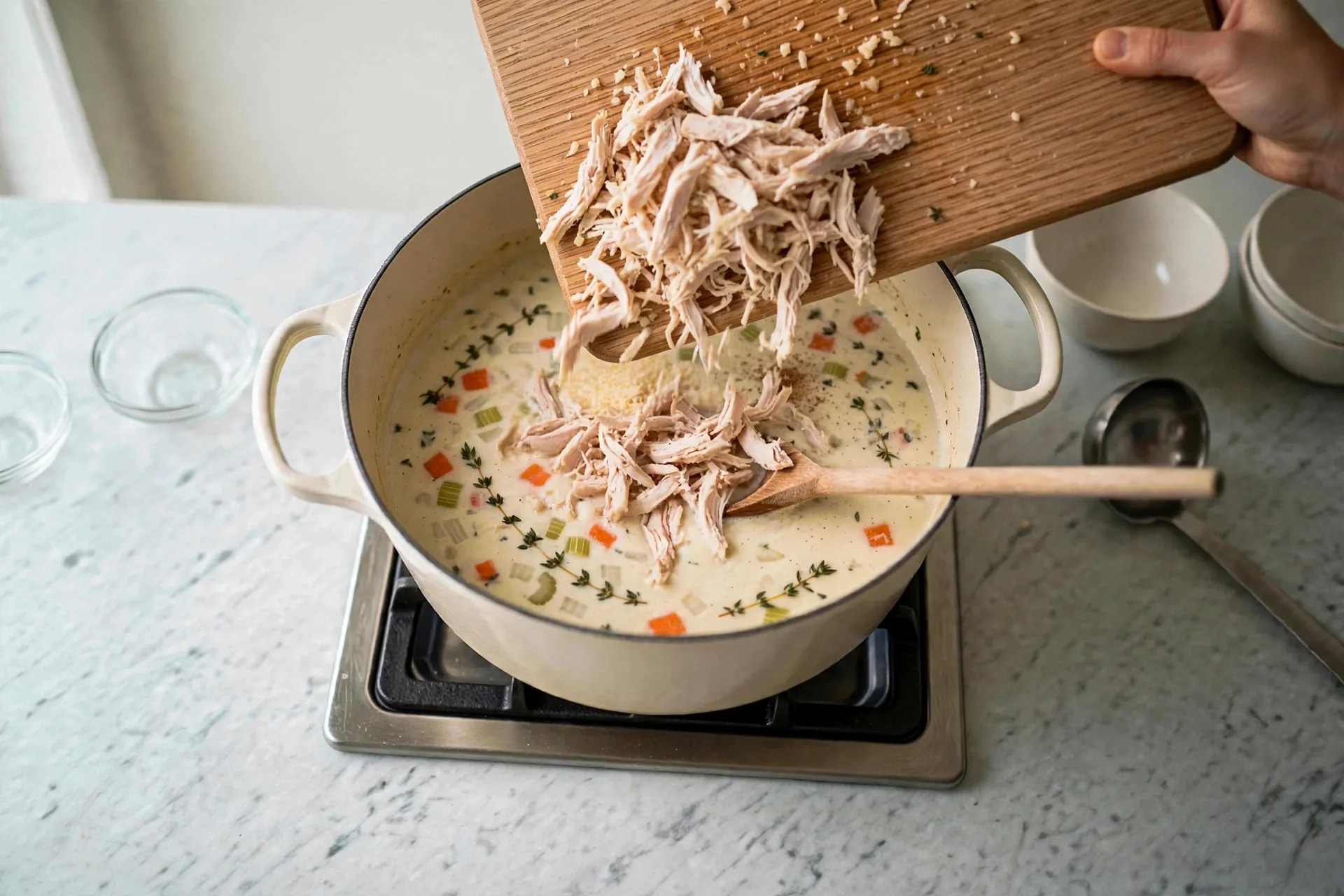
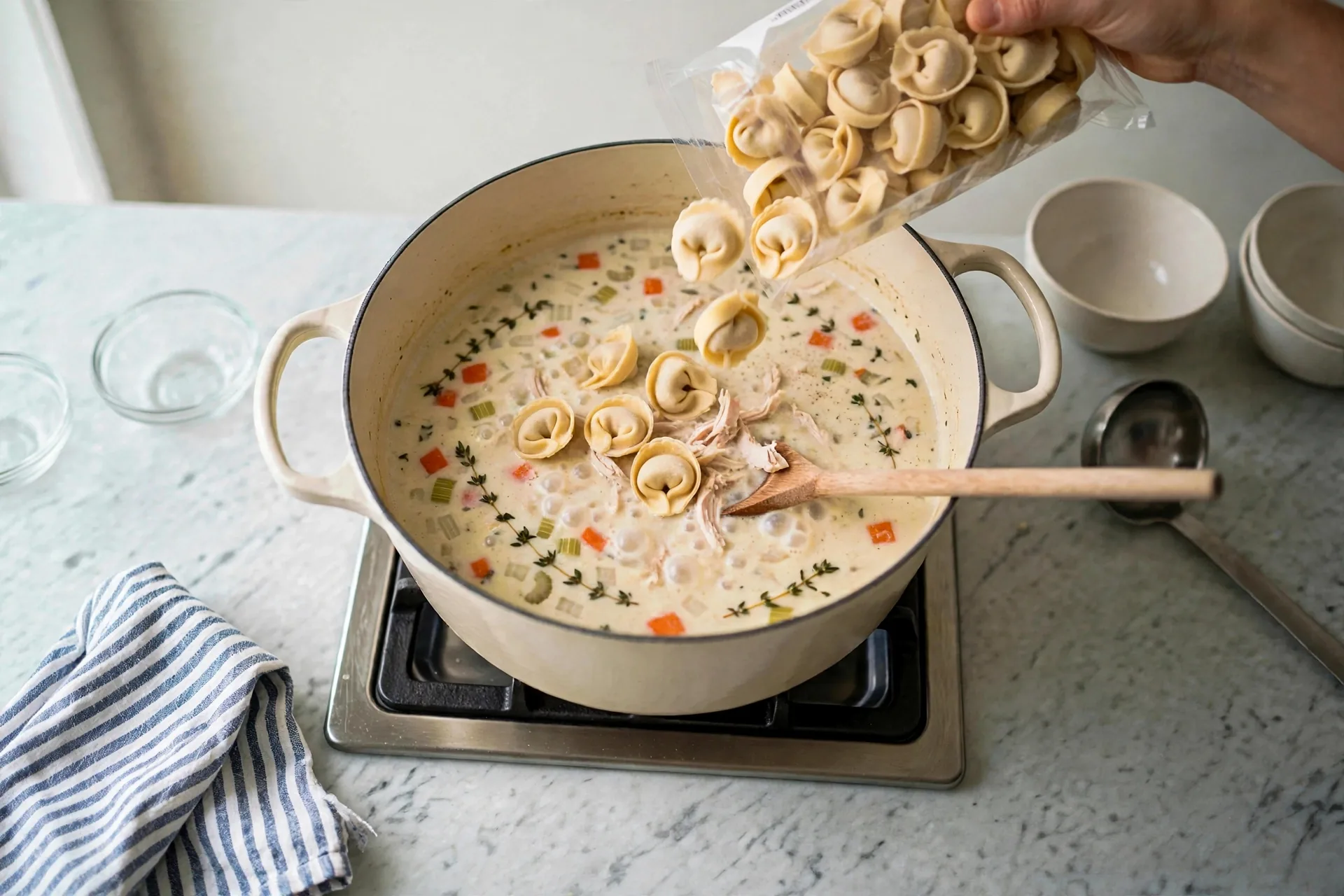
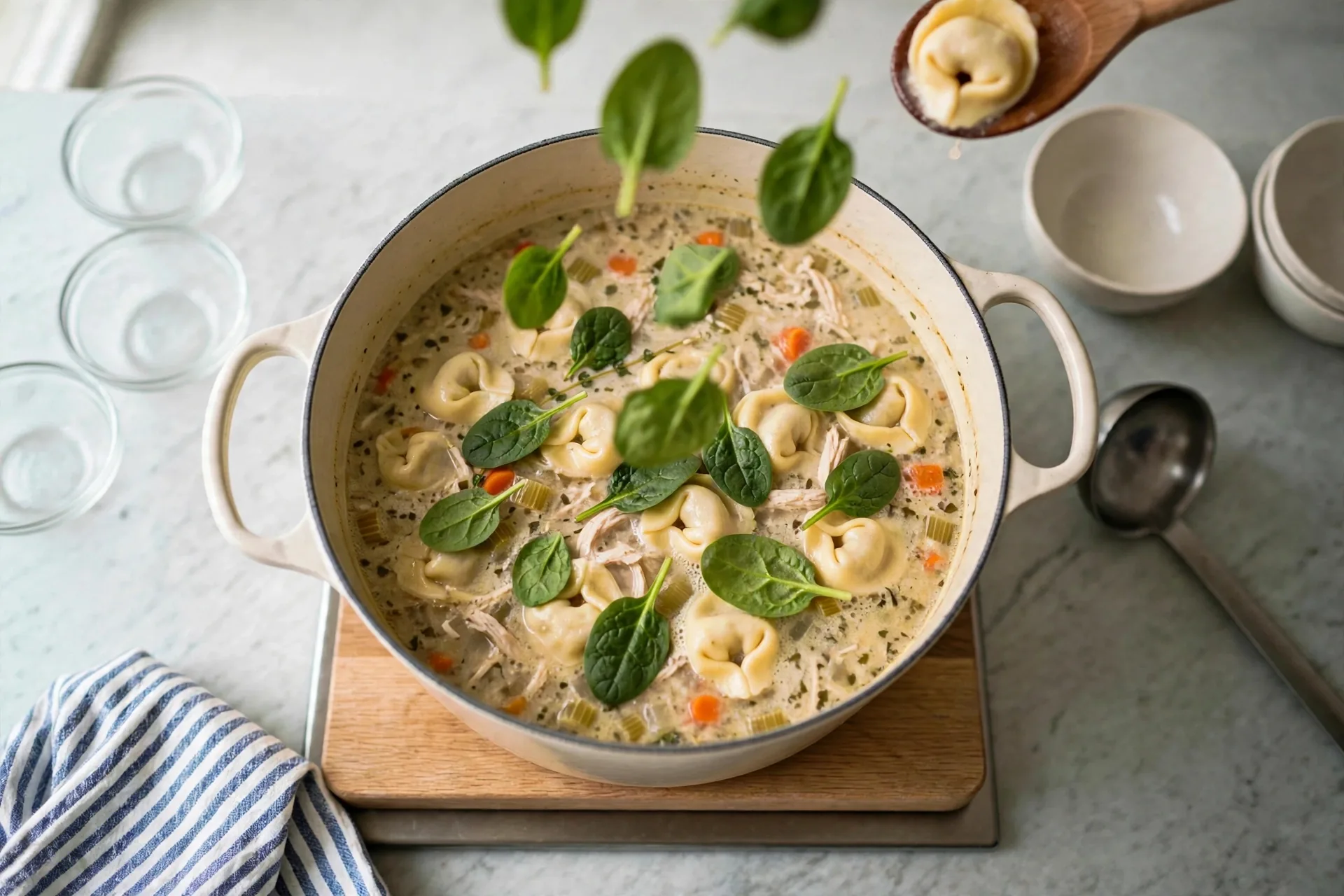
Return the shredded chicken to the pot, then pour in the tortellini. Simmer gently 4 to 6 minutes, until the tortellini are plump, tender, and floating.
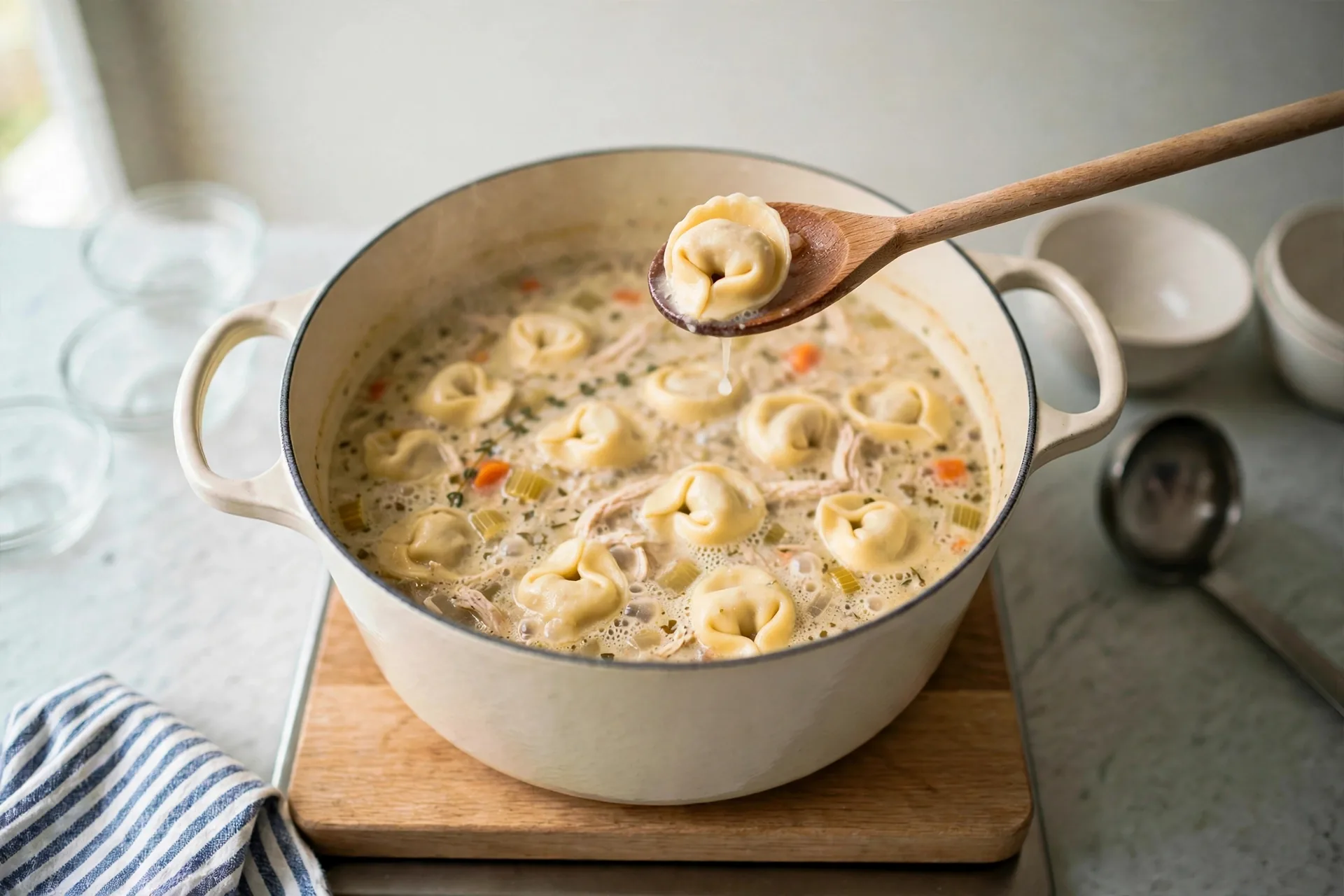
Add the spinach by the handful, stirring until it wilts into dark green ribbons, about a minute. If the soup seems too thick, thin it with a splash of broth.
Step 7: Ladle and Serve
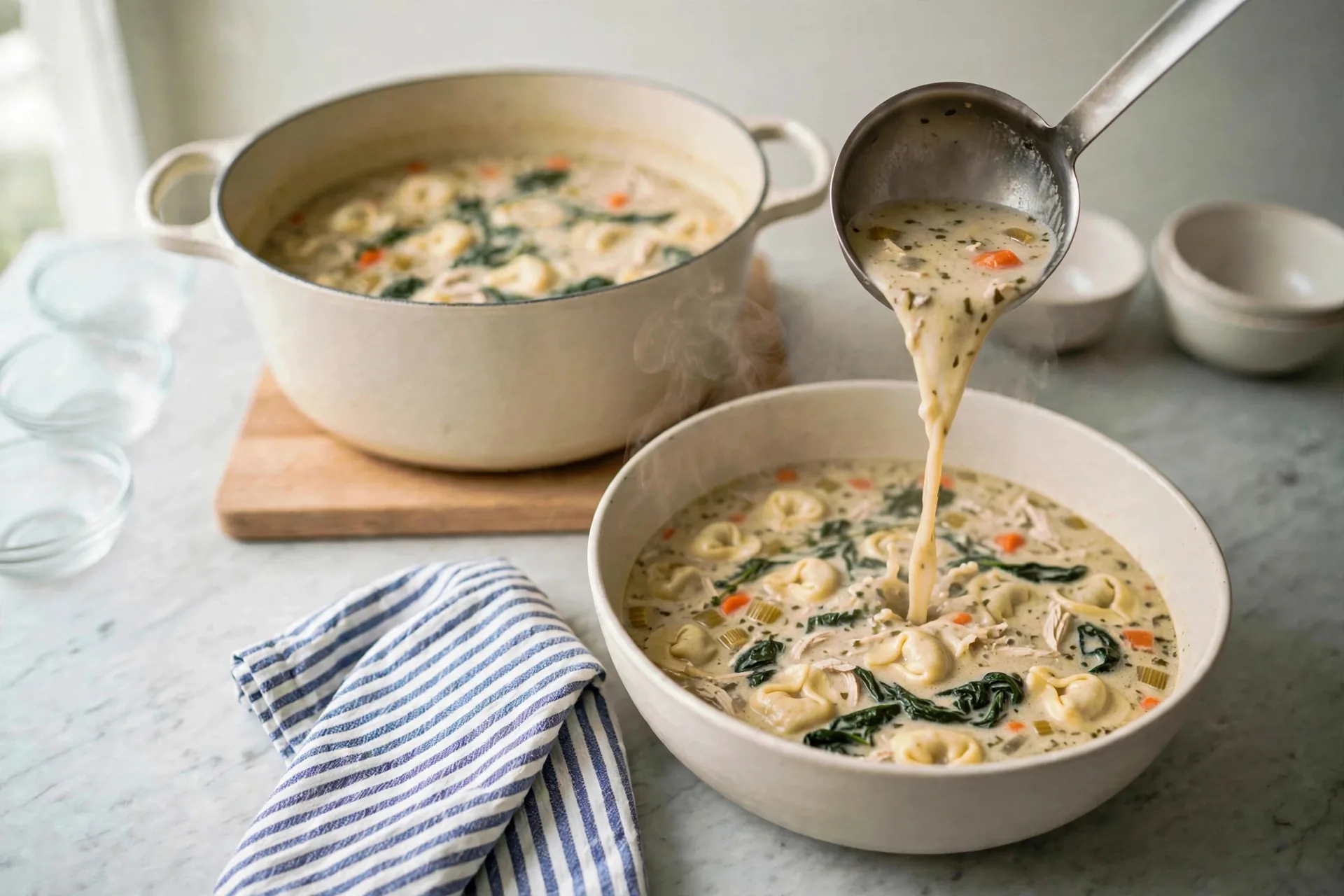
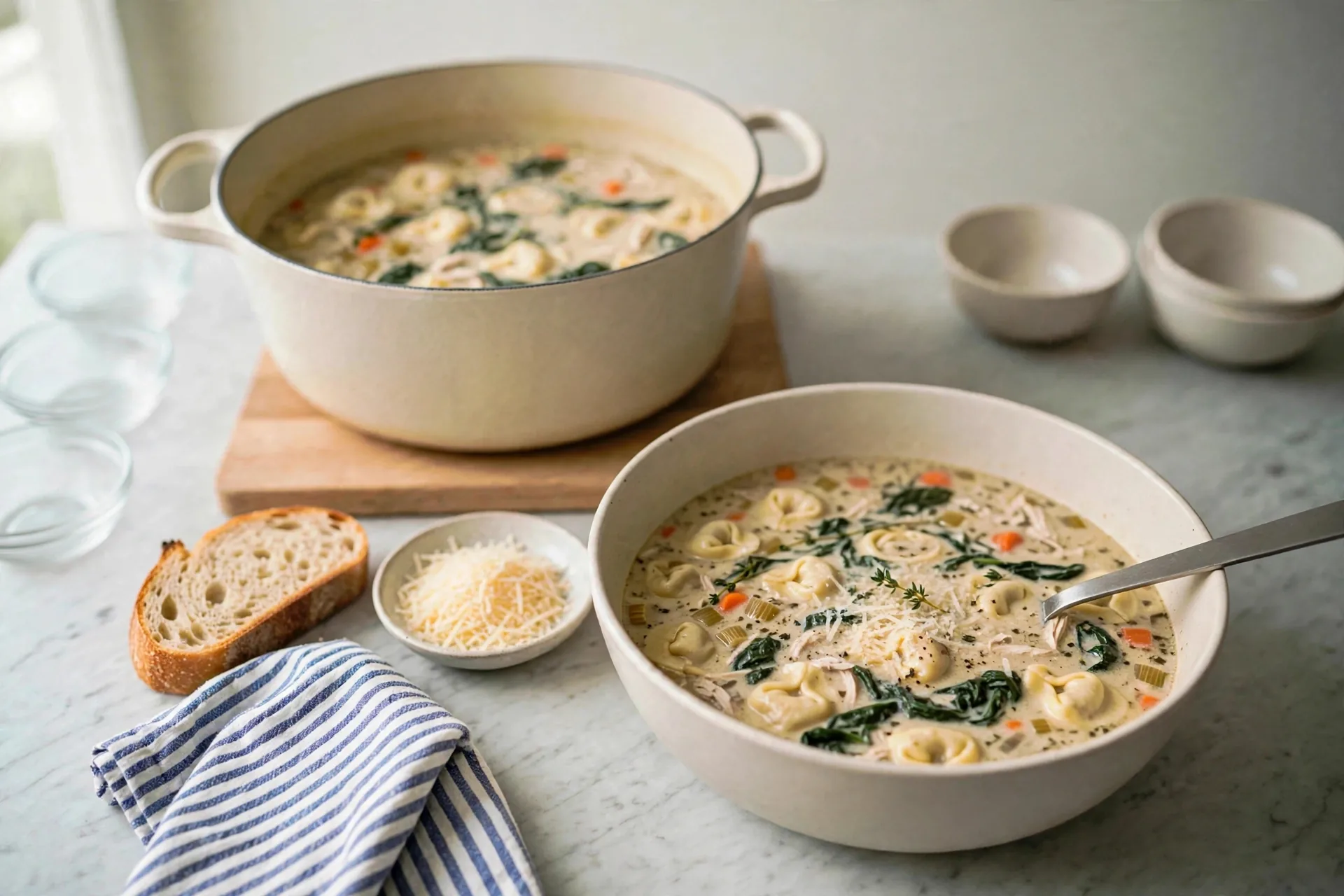
Ladle into warm bowls and finish each with extra Parmesan, a few thyme leaves, and cracked black pepper. Crusty bread alongside is not optional in spirit, though the soup stands on its own.
Ingredients
Equipment
Method
- Pat chicken dry, season with salt and pepper; sear in Dutch oven 4–5 min per side to 165°F (74°C).
- Rest 5–10 min; shred with two forks.
- Melt butter in same pot, scrape fond; sauté onion, carrot, celery 6–8 min; add garlic and thyme, 30 sec.
- Stir in flour, cook 2 min (blond roux); stream in broth while whisking; simmer 8–10 min.
- Lower heat; stir in cream, then Parmesan a handful at a time, then nutmeg; adjust salt.
- Return chicken; add tortellini; simmer 4–6 min until plump and floating; wilt spinach ~1 min.
- Ladle into warm bowls; top with Parmesan, thyme leaves, cracked pepper.
Notes
Keeping the Broth Silky, Not Gluey
Two habits decide the texture. First, cook the flour a full two minutes before any liquid goes in — undercooked flour leaves a pasty taste no amount of simmering fixes. Second, keep the heat low once the cream and Parmesan are in. A rolling boil after dairy goes in is how smooth soups turn grainy.
The tortellini keeps absorbing liquid as the soup sits, so what looks perfect at serving time will be thicker an hour later. That’s normal. When reheating, add a splash of broth and warm it gently rather than blasting it — the cheese inside the tortellini stays creamy instead of seizing.
If You’re Out of Something
- No fresh thyme: 1 teaspoon dried thyme, added with the garlic. Dried is stronger, so don’t match it leaf for leaf.
- No heavy cream: half-and-half works; the soup will be a little lighter. Avoid plain milk — it can curdle at a simmer.
- No cheese tortellini: any filled tortellini (mushroom, spinach-ricotta) works, or even plain cheese ravioli in a pinch.
- No baby spinach: chopped kale goes in 3 minutes earlier so it has time to soften.
- Chicken thighs instead of breasts: they sear just as well and stay a touch juicier. Same timing.
Storing and Reheating
Refrigerate in an airtight container up to 3 days. The tortellini will keep drinking up broth, so expect to add a splash when reheating. Warm in a pot over medium-low heat, stirring, until steaming — about 8 minutes. Freezing works for up to 2 months, though the tortellini softens on thawing; many cooks freeze the soup before adding tortellini and cook fresh pasta on reheating day.
Five Things Worth Knowing
- Searing builds fond, and fond is flavor. Those browned bits stuck to the pot are caramelized proteins and sugars — dissolving them into the soup adds a depth that plain simmered broth can’t match.
- 165°F is the number for chicken breasts. An instant-read thermometer takes the guesswork out; color alone is an unreliable guide in thick pieces.
- A blond roux thickens without coloring. Two minutes over medium heat cooks out the raw taste while keeping the roux pale, so the finished soup stays ivory instead of tan.
- Tortellini float when done. The pasta puffs slightly and rises as the filling heats through — a visual cue you can trust more than the clock.
- Nutmeg bridges dairy and chicken. A quarter teaspoon sounds odd in soup, but it rounds out the cream and Parmesan the way salt rounds out everything else.
Frequently Asked Questions
Can I use rotisserie chicken instead?
Yes — skip the searing step and add about 3 cups of shredded rotisserie chicken when the recipe calls for the shredded chicken. You’ll lose the fond, so add an extra tablespoon of butter with the vegetables to compensate.
Can I make it in a slow cooker?
You can, with trade-offs. Sear the chicken and build the vegetable-roux base on the stove first (the slow cooker can’t sear or make a proper roux), then transfer everything except the cream, tortellini, and spinach to the cooker for 4 hours on low. Stir in the dairy and tortellini for the last 20 minutes.
Why did my soup turn out lumpy?
The broth was added too fast to the roux. Next time, pour in a thin stream while whisking constantly. For the current pot, a few minutes of vigorous whisking at a simmer usually smooths it out.
Can I use frozen tortellini?
Yes — add 2 to 3 extra minutes to the simmer time. Don’t thaw first; they go straight from freezer to pot.
Is this soup gluten-free as written?
No, between the flour roux, the wheat tortellini, and the Parmesan processing. A gluten-free version needs a cornstarch slurry instead of roux and gluten-free tortellini.
How do I keep leftovers from getting too thick?
Store the soup as-is and thin with broth when reheating. If you know you’ll have lots of leftovers, you can also cook the tortellini separately and add it to individual bowls.
The Soup That Tastes Like Effort (Without Much)
This is a one-pot soup that eats like a project. The sear, the roux, the slow-built broth — each step is simple on its own, and together they make something that tastes slow-simmered and considered. It’s the pot you make when someone’s coming over, or when the week needs a reset in a bowl.
For another cozy bowl in the same spirit, the Roasted Tomato Soup takes the oven-roasted route to deep flavor.