Roasted Tomato Soup
Fresh tomatoes, onion, and a whole head of garlic roast on one sheet pan until caramelized, then simmer briefly with vegetable broth and basil and blend silky-smooth with a pour of cream.
 Pin it
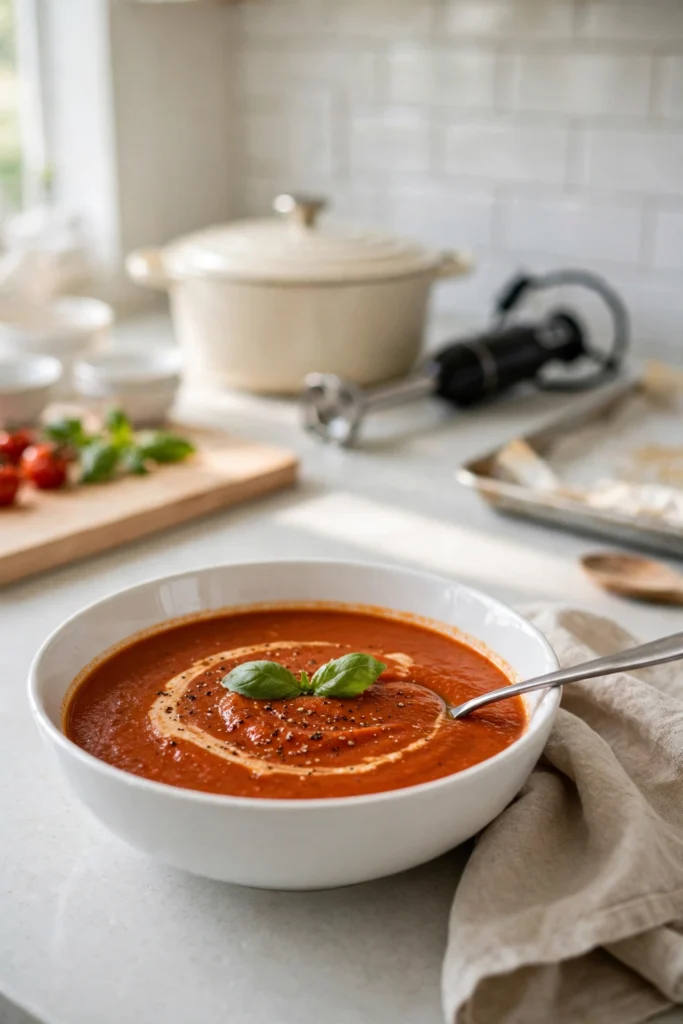
The difference between a decent tomato soup and a great one is about forty minutes in a hot oven. Raw tomatoes blended with broth taste thin and sharp. Tomatoes that have collapsed in their own juices, edges browned and sweet, blend into something else entirely: deep red, naturally thick, and rounded enough that a short pour of cream finishes it. This version roasts Roma tomatoes, onion wedges, and a whole head of garlic on one sheet pan, then simmers everything briefly with vegetable broth and fresh basil before blending it smooth.
It is an easy, forgiving recipe. Most of the cooking time is hands-off while the oven works, the ingredient list is short, and the method tolerates a little imprecision. What it does ask of you is patience at two points: letting the vegetables roast until they are genuinely caramelized, and blending until the soup is truly silky. Get those right and the bowl practically makes itself.
Recipe Overview
- Prep time: 20 minutes
- Cook time: 50 minutes
- Total time: 1 hour 10 minutes
- Servings: 4 to 6 (about 6 cups)
- Difficulty: Easy
Ingredients
For roasting
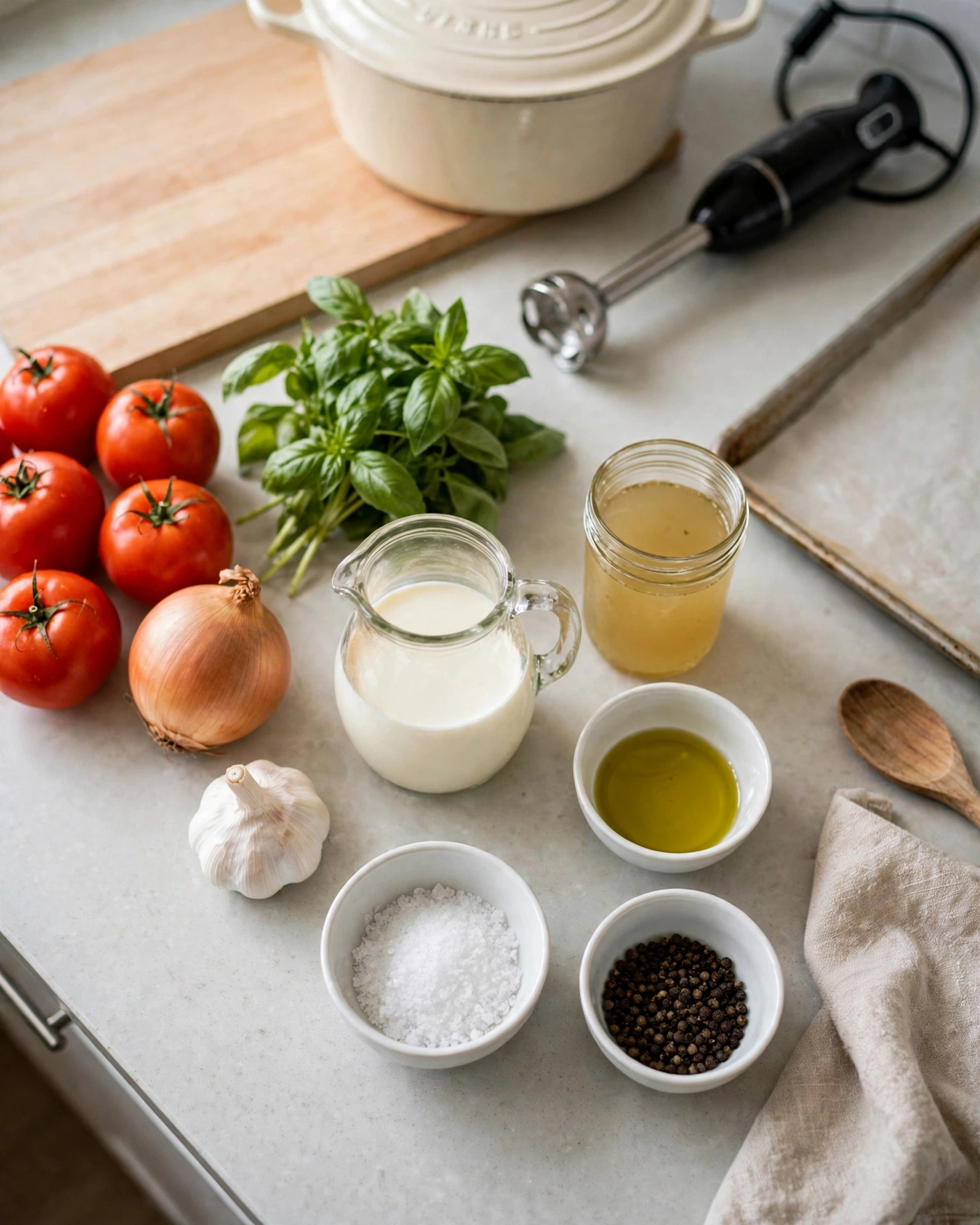
- 3 lbs Roma (plum) tomatoes (about 12–14), halved lengthwise
- 1 large yellow onion, peeled and cut into 8 wedges
- 1 whole head garlic, cloves separated (leave the papery skins on)
- 3 tablespoons olive oil
- 1 teaspoon kosher salt, plus more to taste
- 1/2 teaspoon freshly cracked black pepper, plus more to taste
For the soup
- 3 cups (720 ml) vegetable broth
- 1/2 cup packed fresh basil leaves, plus more for serving
- 1/2 cup (120 ml) heavy cream, plus more for swirling
You will also need: a rimmed baking sheet, parchment paper, a large Dutch oven or heavy-bottomed pot, an immersion blender (or a countertop blender), a chef’s knife, and a cutting board.
Ingredient Notes
Roma tomatoes are the right call here because they are meatier and less watery than slicing tomatoes, with fewer seeds. That means the soup thickens with less simmering and tastes like tomato instead of tomato water. If your Romas are underripe and hard, give them a day or two on the counter first; pale, firm tomatoes roast into a pale, sharp soup.
The garlic roasts in its skins, which protects the cloves from scorching and turns them soft and sweet enough to squeeze out like paste. Do not peel them first. Use a low-sodium vegetable broth if you can, since the pan juices are already seasoned and you will adjust salt at the end anyway.
How to Make Roasted Tomato Soup
Step 1: Prep the Vegetables
Heat the oven to 400°F (200°C) so it is fully hot before the pan goes in. Vegetables that start in a lukewarm oven steam before they roast.
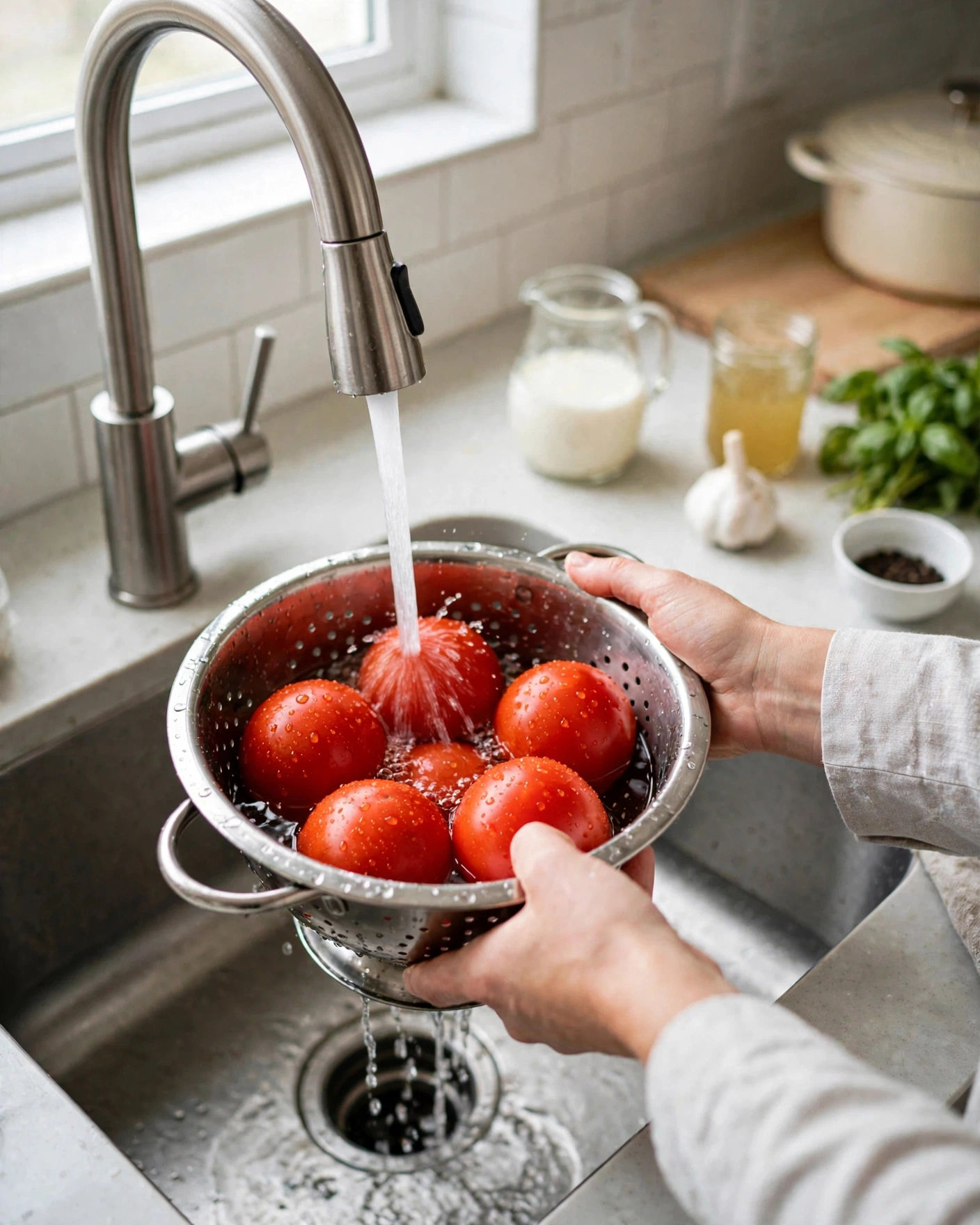
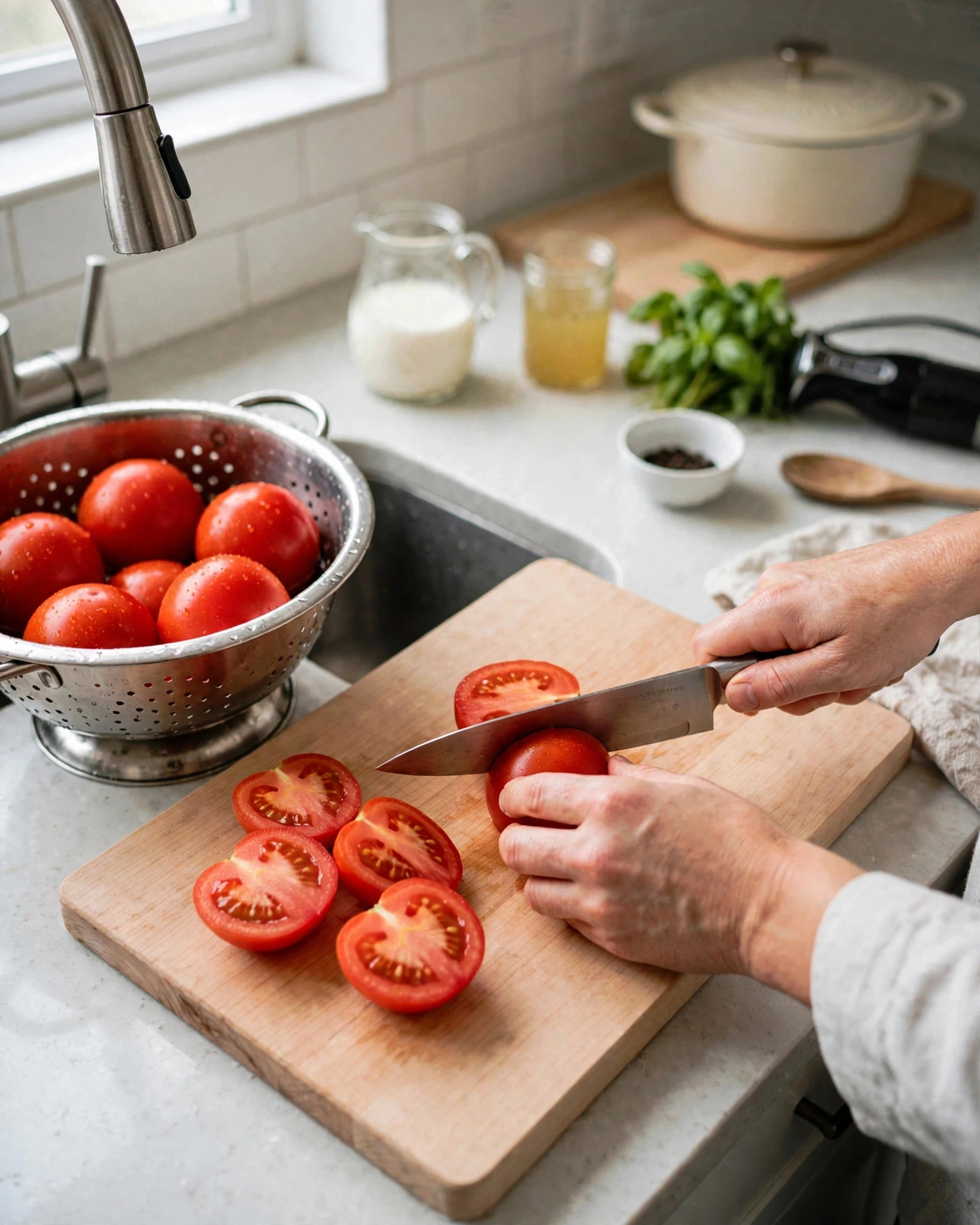
Rinse the tomatoes under cool water and pat them dry.
Slice each tomato in half lengthwise and set the halves aside, cut-side up.
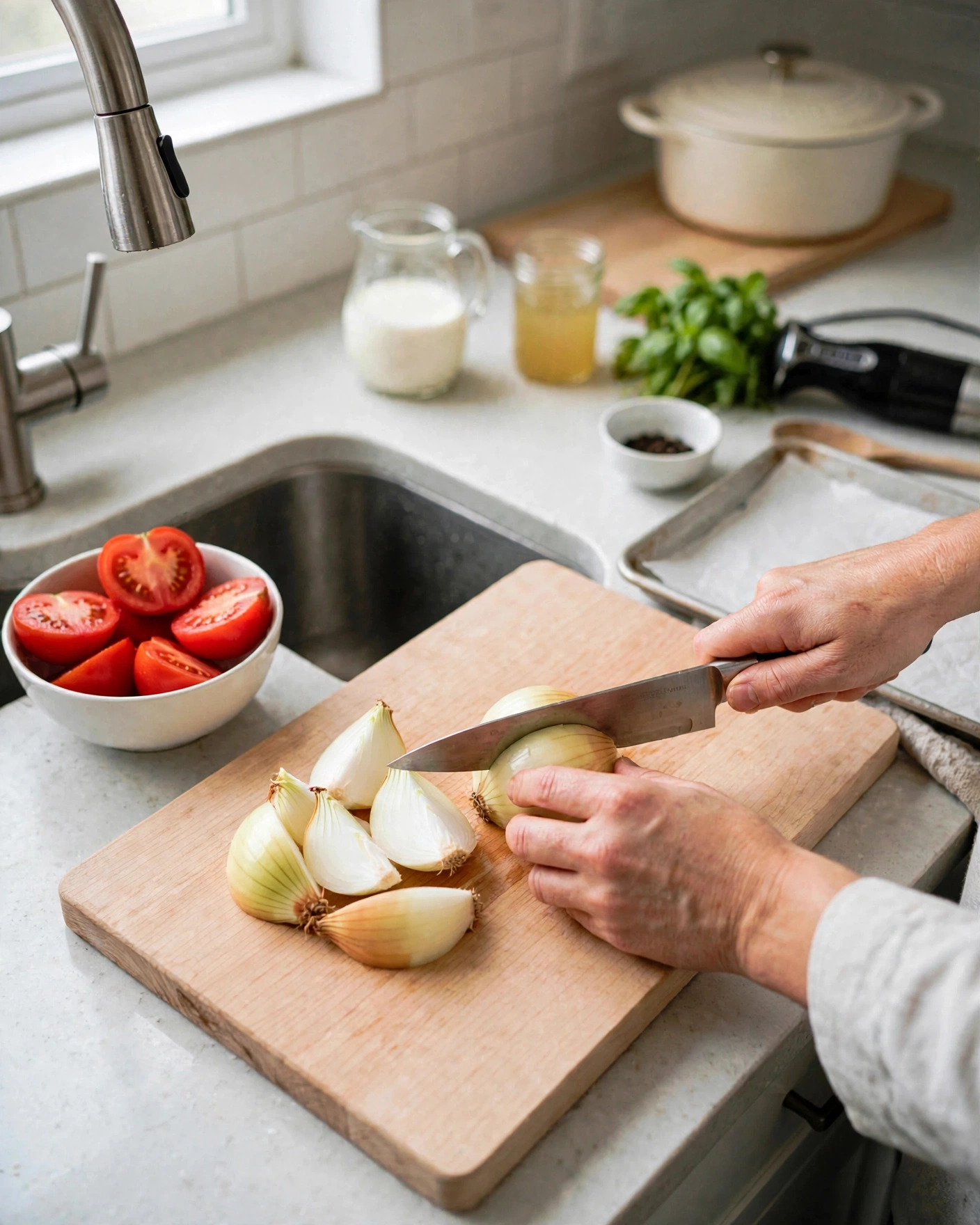
Cut the peeled onion into thick wedges, keeping a bit of the root end attached so the wedges hold together on the pan.
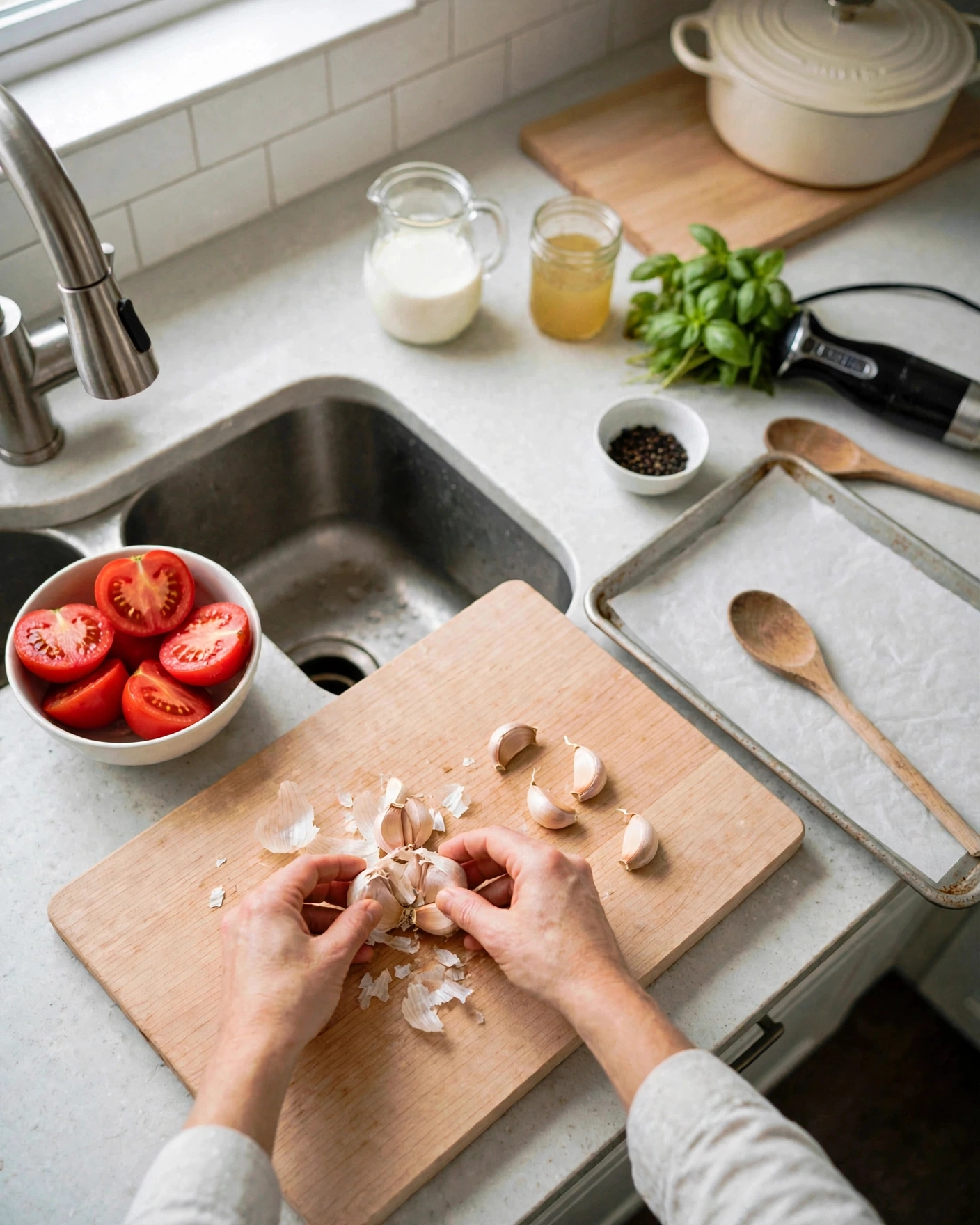
Break the garlic head apart into individual cloves. Leave the papery skins on; they come off easily after roasting and protect the cloves in the oven’s heat.
Step 2: Load and Season the Sheet Pan
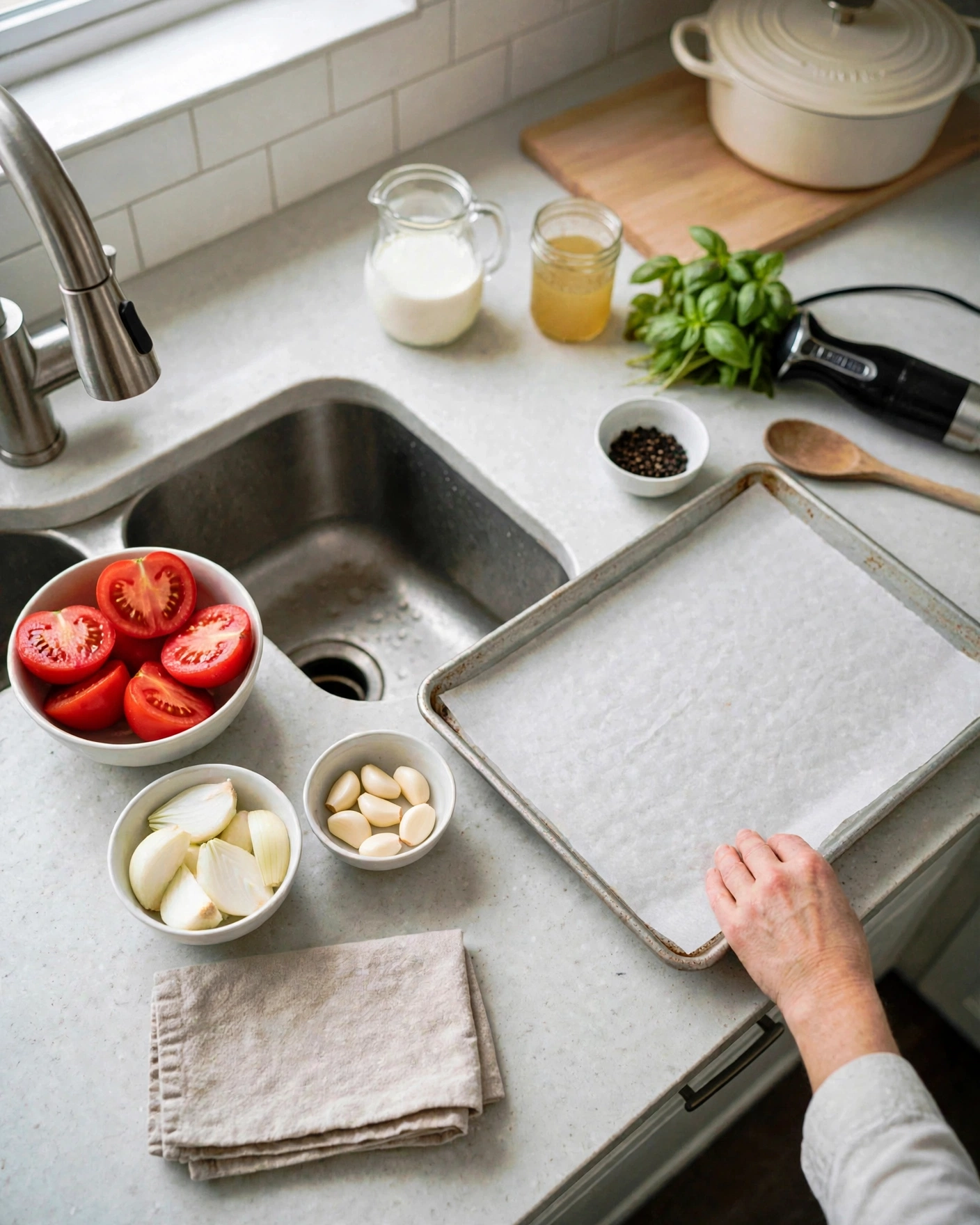
Lay the parchment across the baking sheet and smooth down the corners so it sits flat.
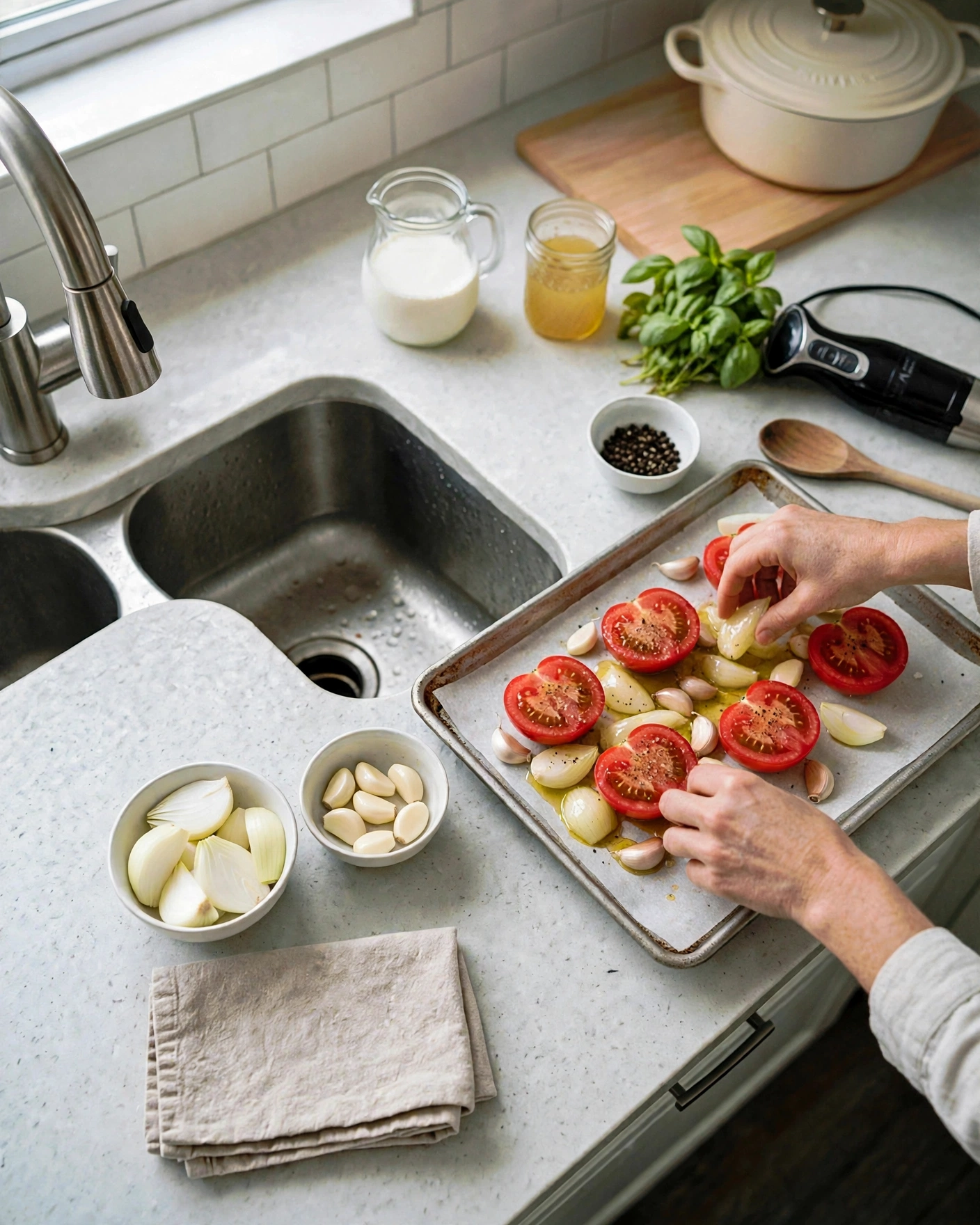
Arrange the tomato halves cut-side up in a single layer, leaving a little space between them. Crowded vegetables trap steam and never brown, so use two pans rather than piling everything onto one.
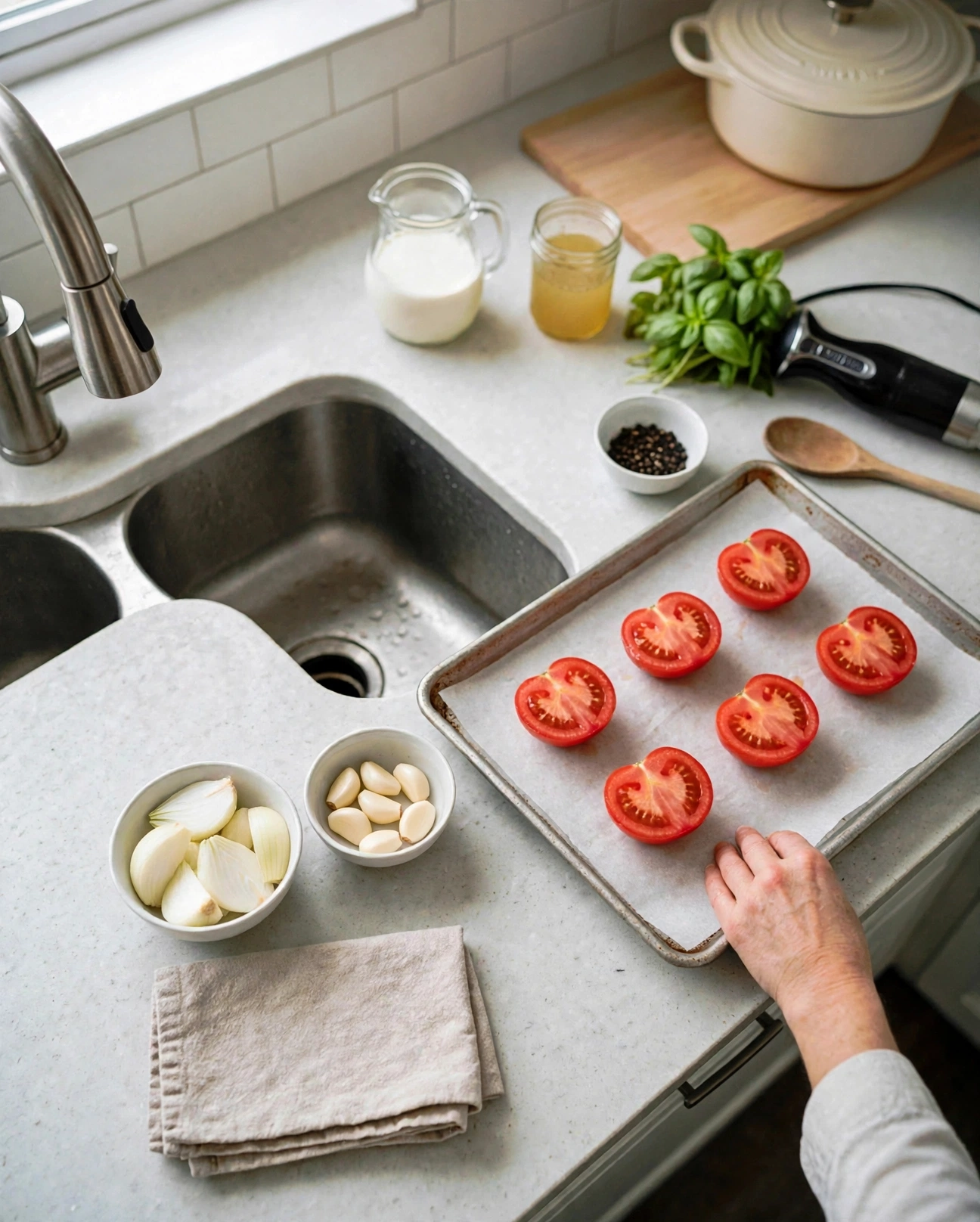
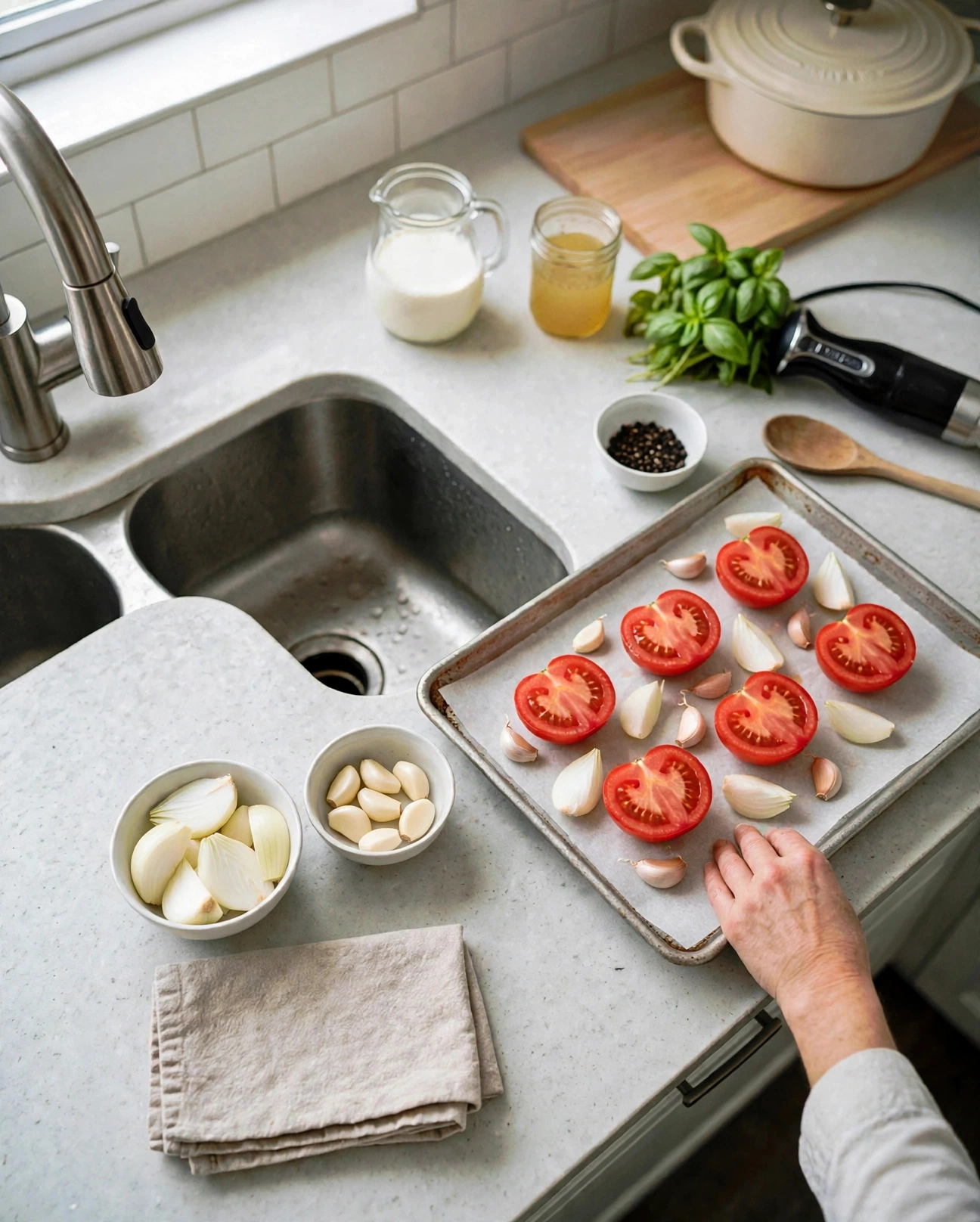
Tuck the onion wedges and unpeeled garlic cloves into the gaps between the tomatoes.
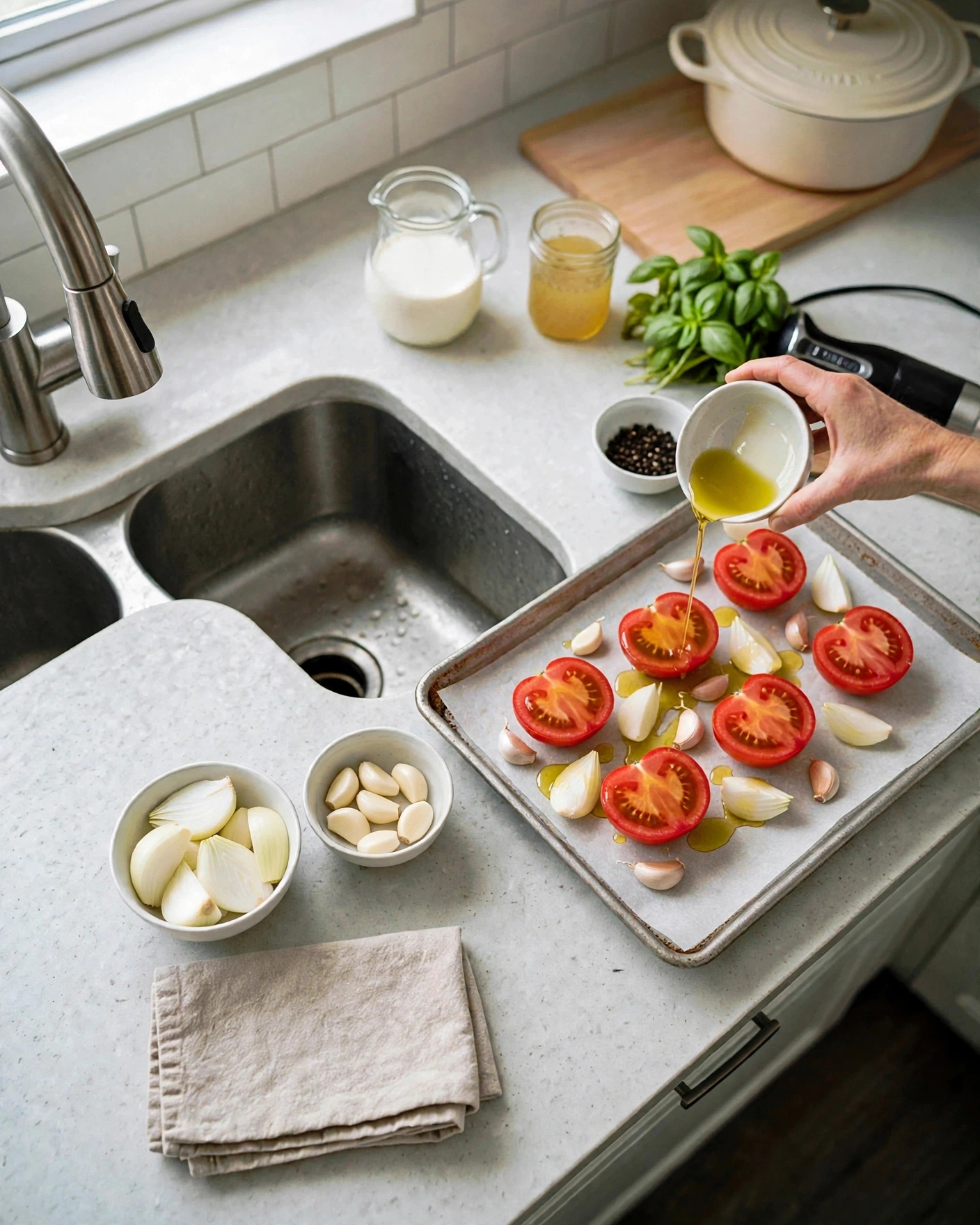
Drizzle the olive oil evenly over everything. The oil should glisten on the surfaces; dry spots are the spots that will scorch instead of caramelize.
Scatter the salt and pepper over the top.
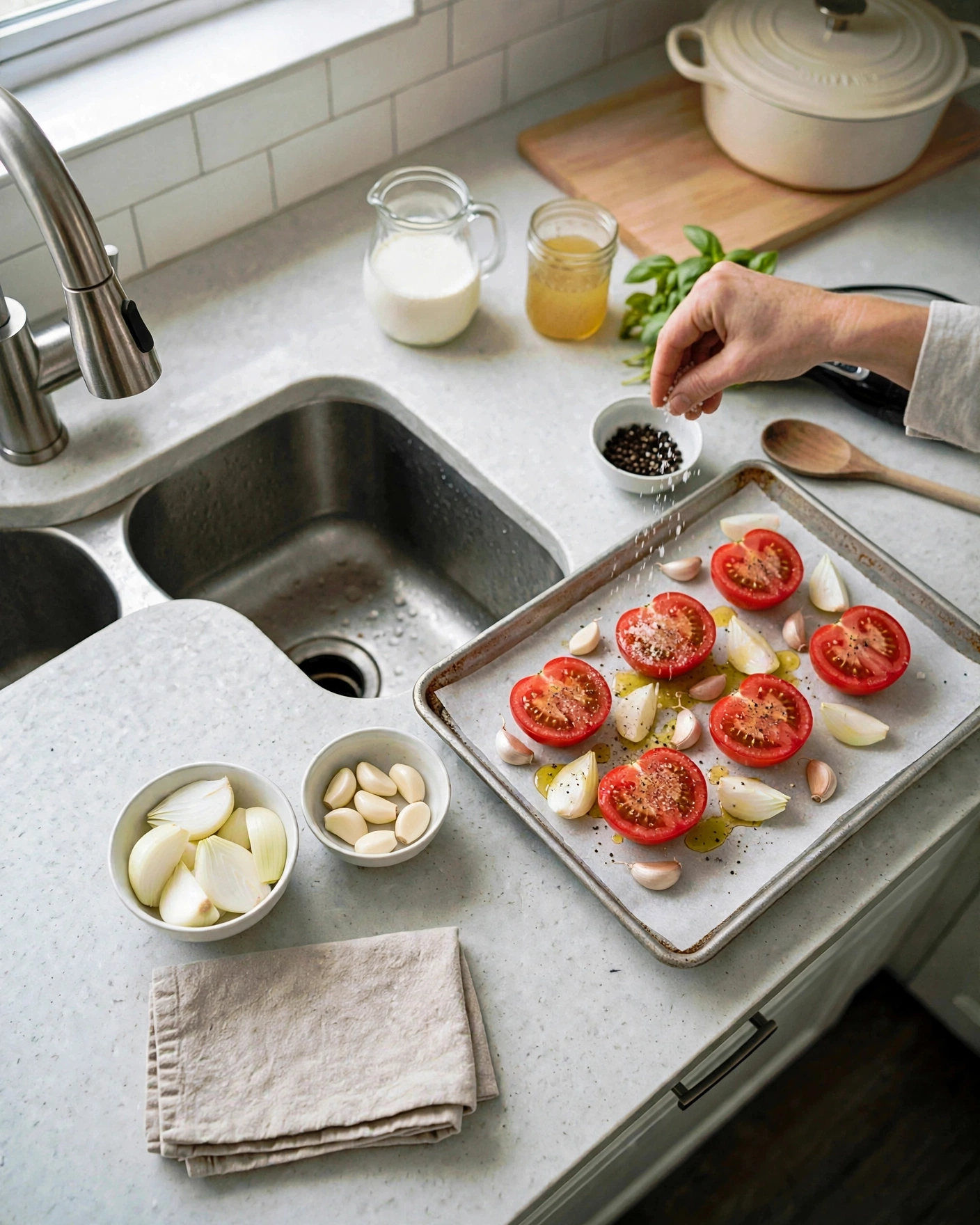
Use your hands to turn the onion wedges and garlic cloves in the oil so they are lightly coated all over. Leave the tomato halves cut-side up.
Step 3: Roast Until Deeply Caramelized
Slide the pan onto the middle rack of the oven.
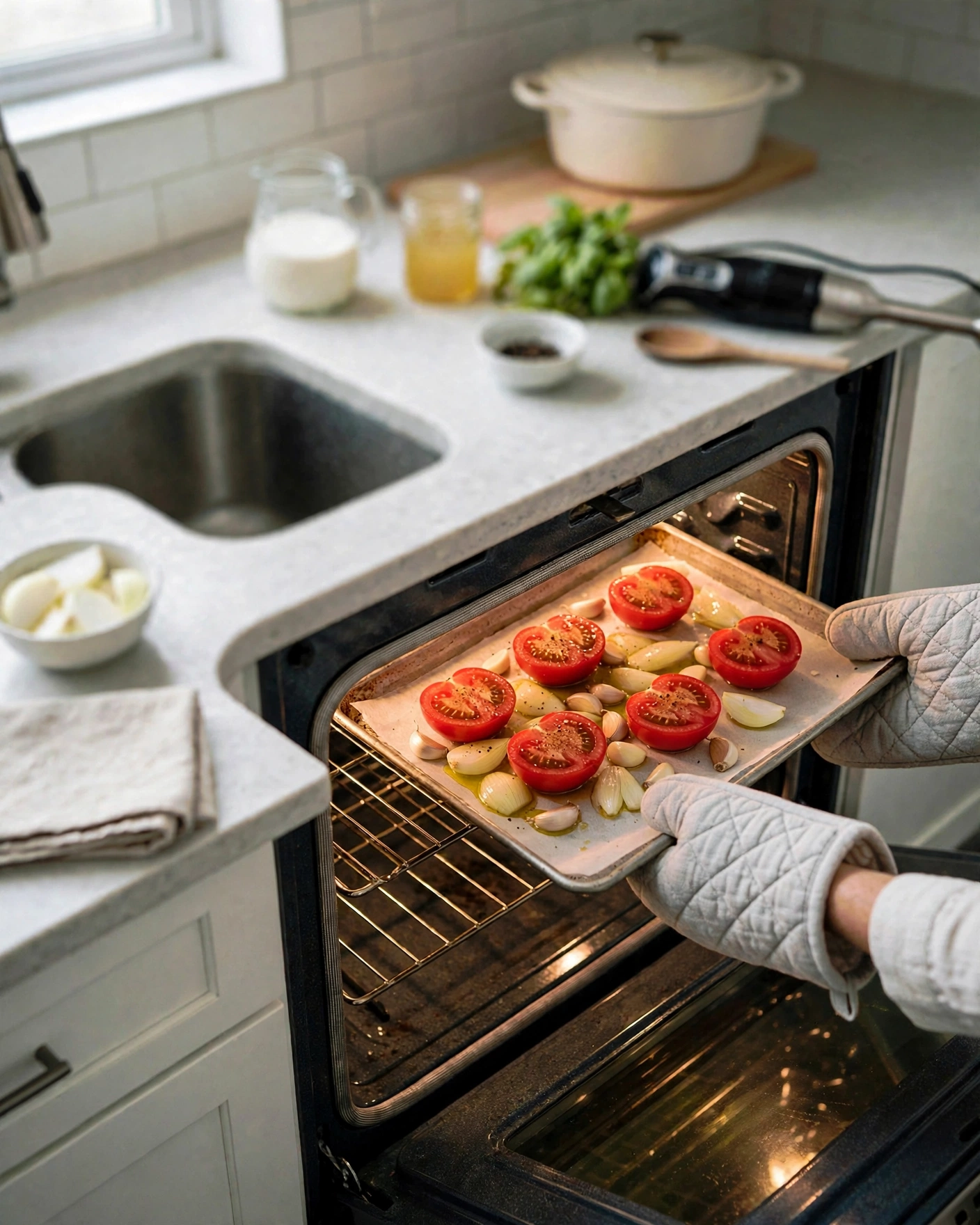
Roast for 35 to 45 minutes. You are looking for tomatoes that have collapsed and wrinkled, with dark caramelized edges and a few charred spots; onions that are soft and browned at the tips; garlic skins that have darkened and puffed slightly. The pan juices should be bubbling when you open the oven door. If the tomatoes still look plump and bright red, they need more time. Color is the doneness cue here, not the clock.
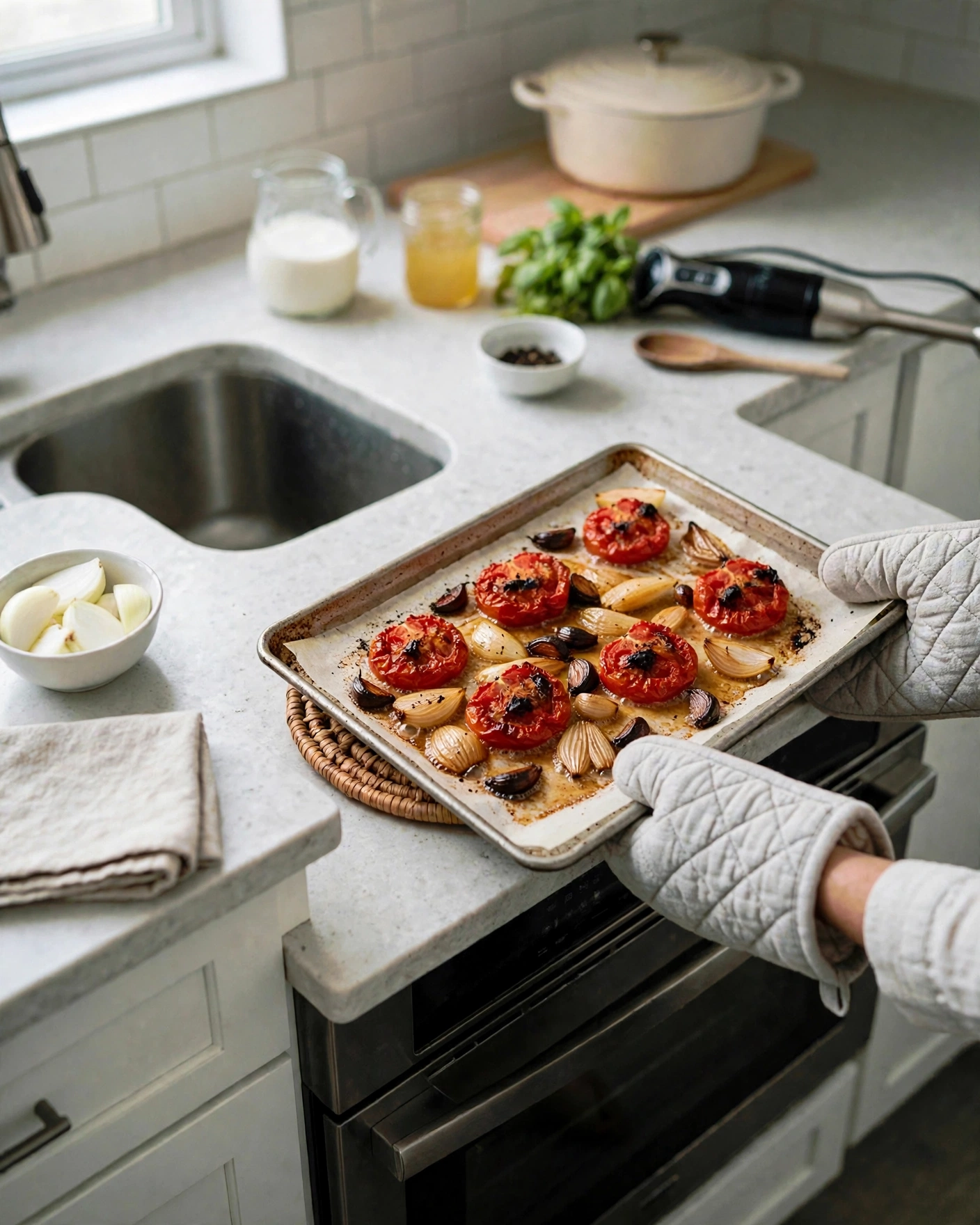
Watch for: pulling the pan too early. Under-roasted vegetables make a soup that tastes raw and acidic no matter how long you simmer it afterward. A little char on the edges is sweetness, not a mistake.
Step 4: Move Everything to the Pot
Set the hot pan on a trivet and let it cool just until you can handle the garlic. Pick up each roasted clove and squeeze gently; the soft golden paste will slip right out of the skin. Discard the papery skins.
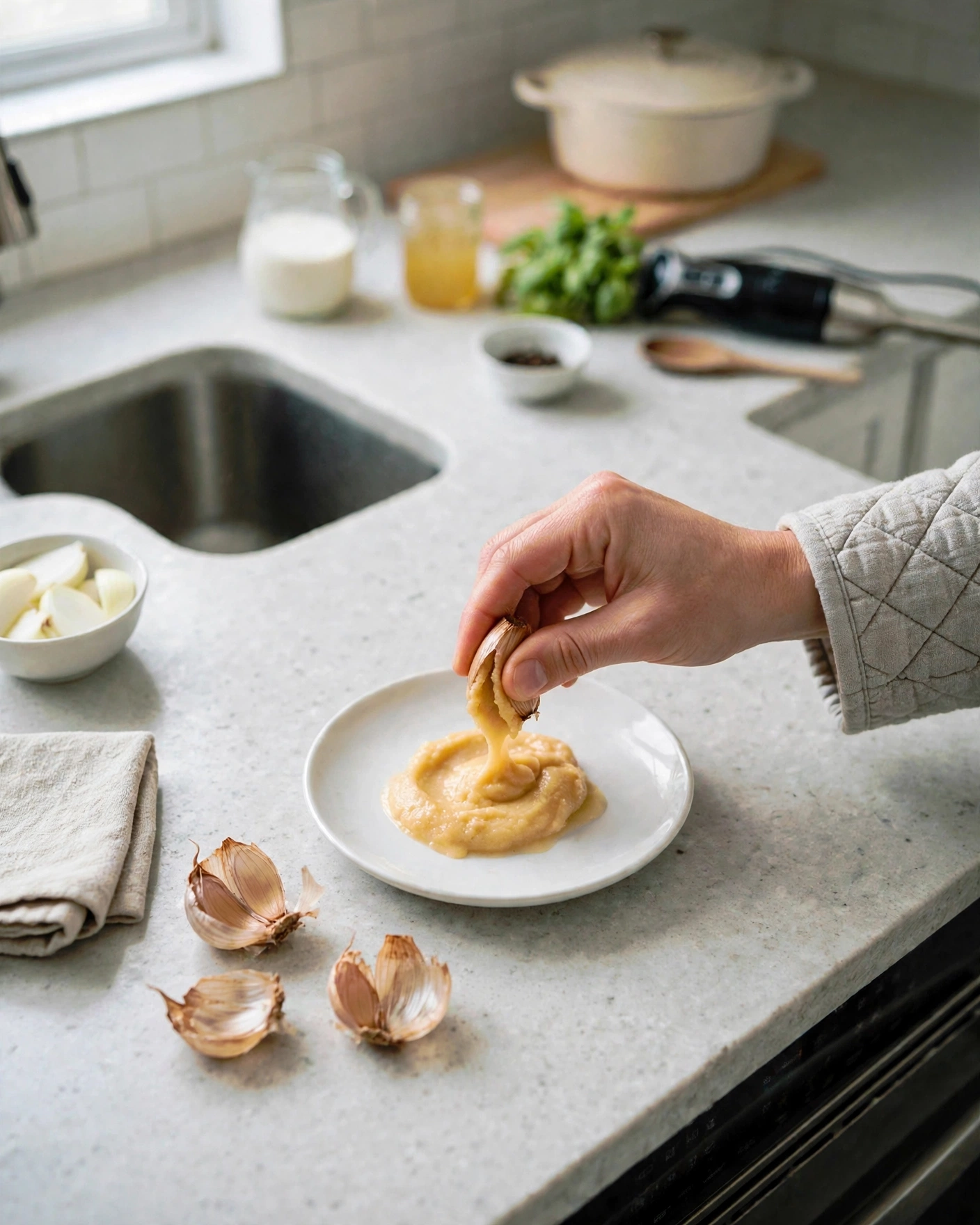
Scrape the roasted tomatoes, onion wedges, and garlic paste into a large Dutch oven. Scrape in the pan juices too, every last spoonful.
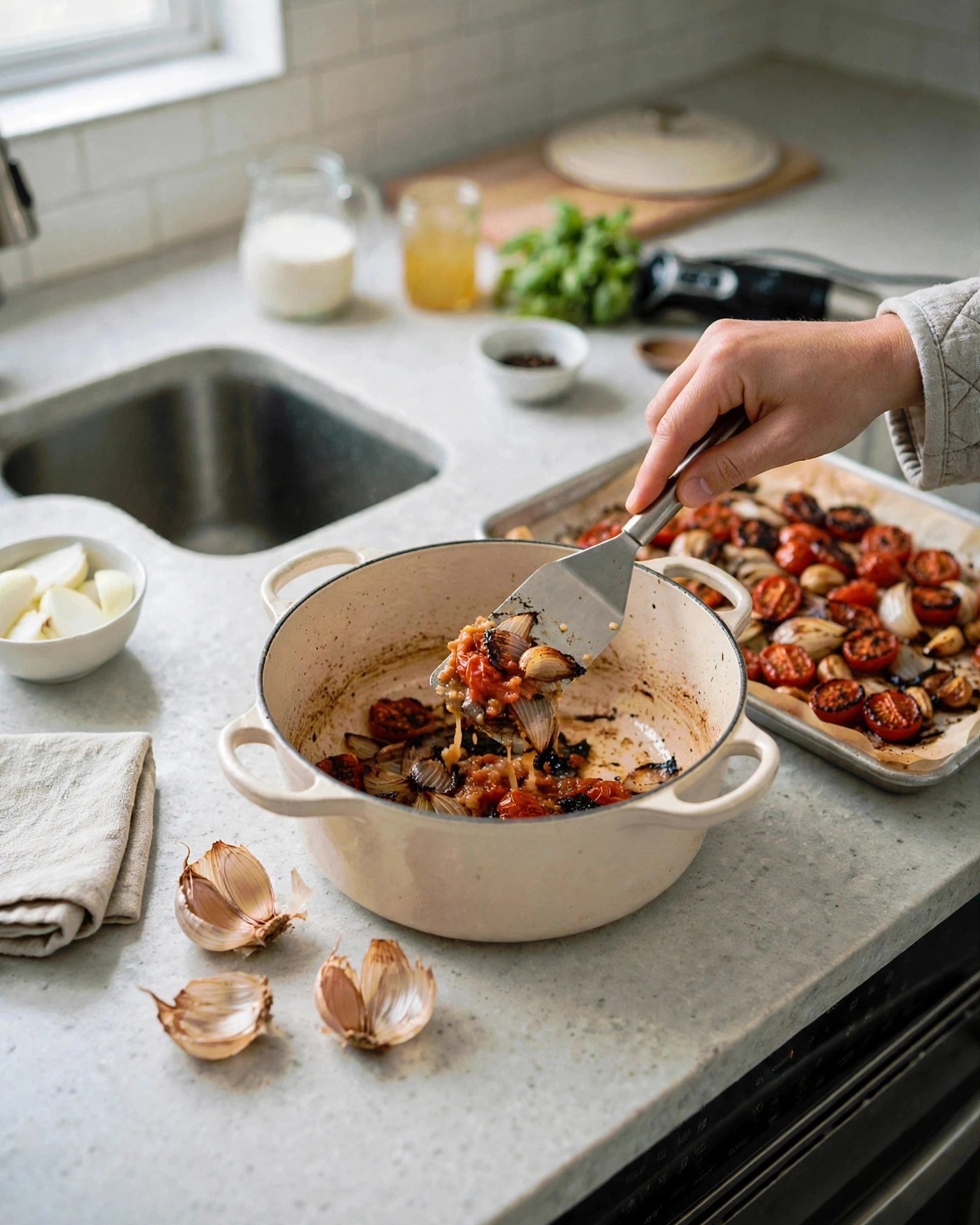
Those juices hold the caramelized sugars from the roast. Leaving them on the parchment is leaving flavor behind.
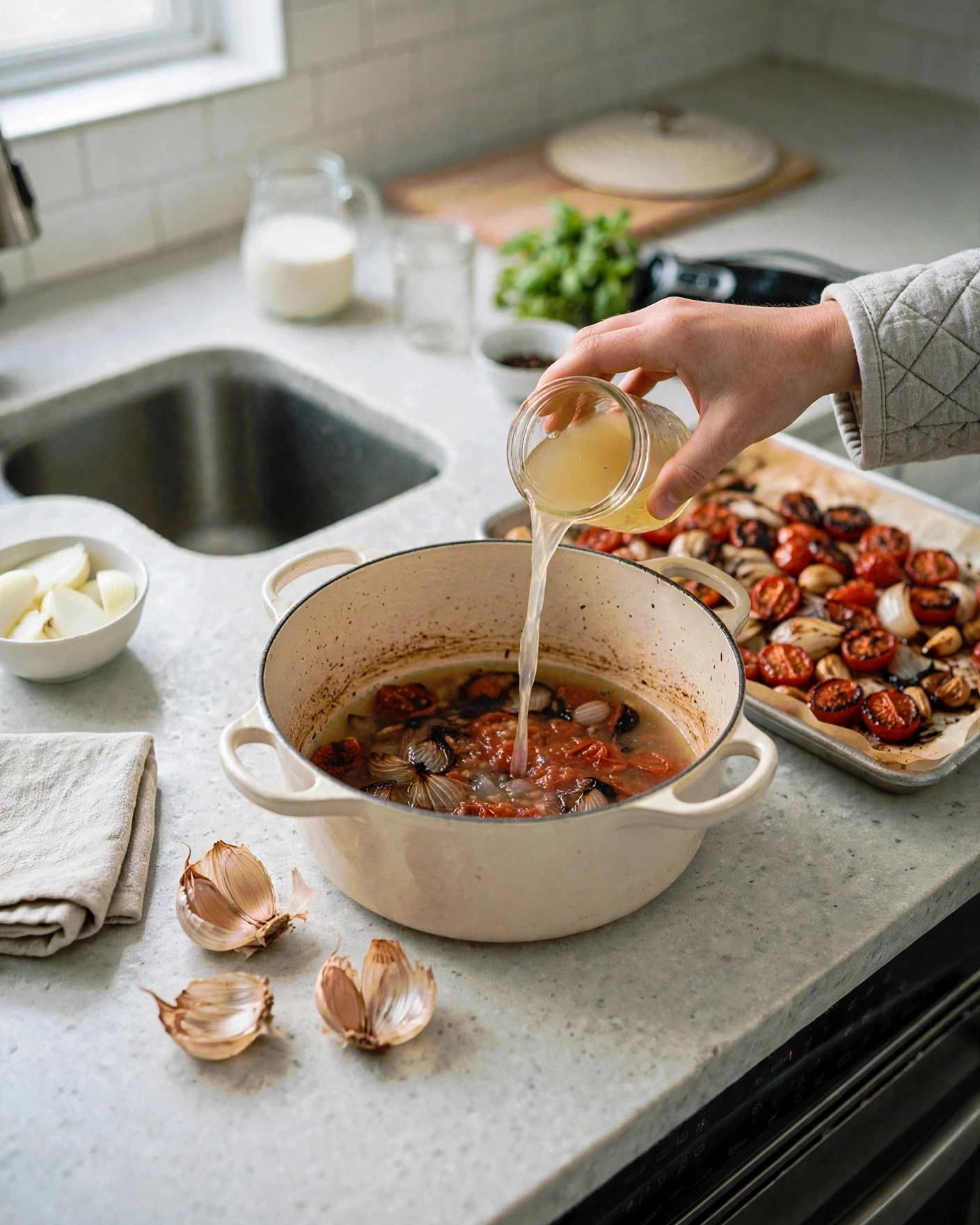
Pour in the vegetable broth. It will look thin and chunky at this stage; that is exactly right.
Step 5: Simmer, Then Blend It Silky
Set the pot over medium heat and bring it to a gentle simmer, with small bubbles breaking lazily at the edges. Let it cook for about 10 minutes so the onion softens completely and the flavors knit together. Stir once or twice.
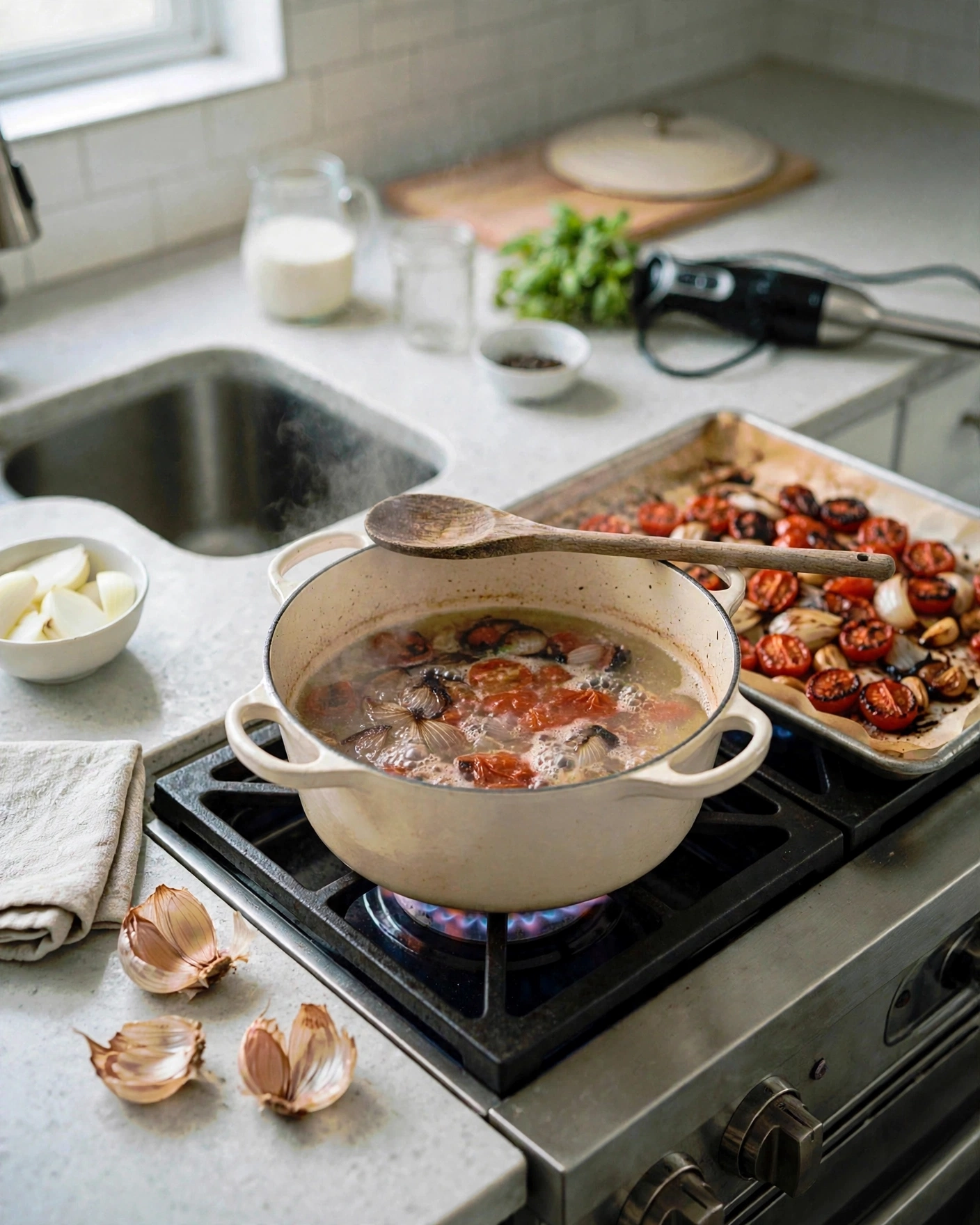
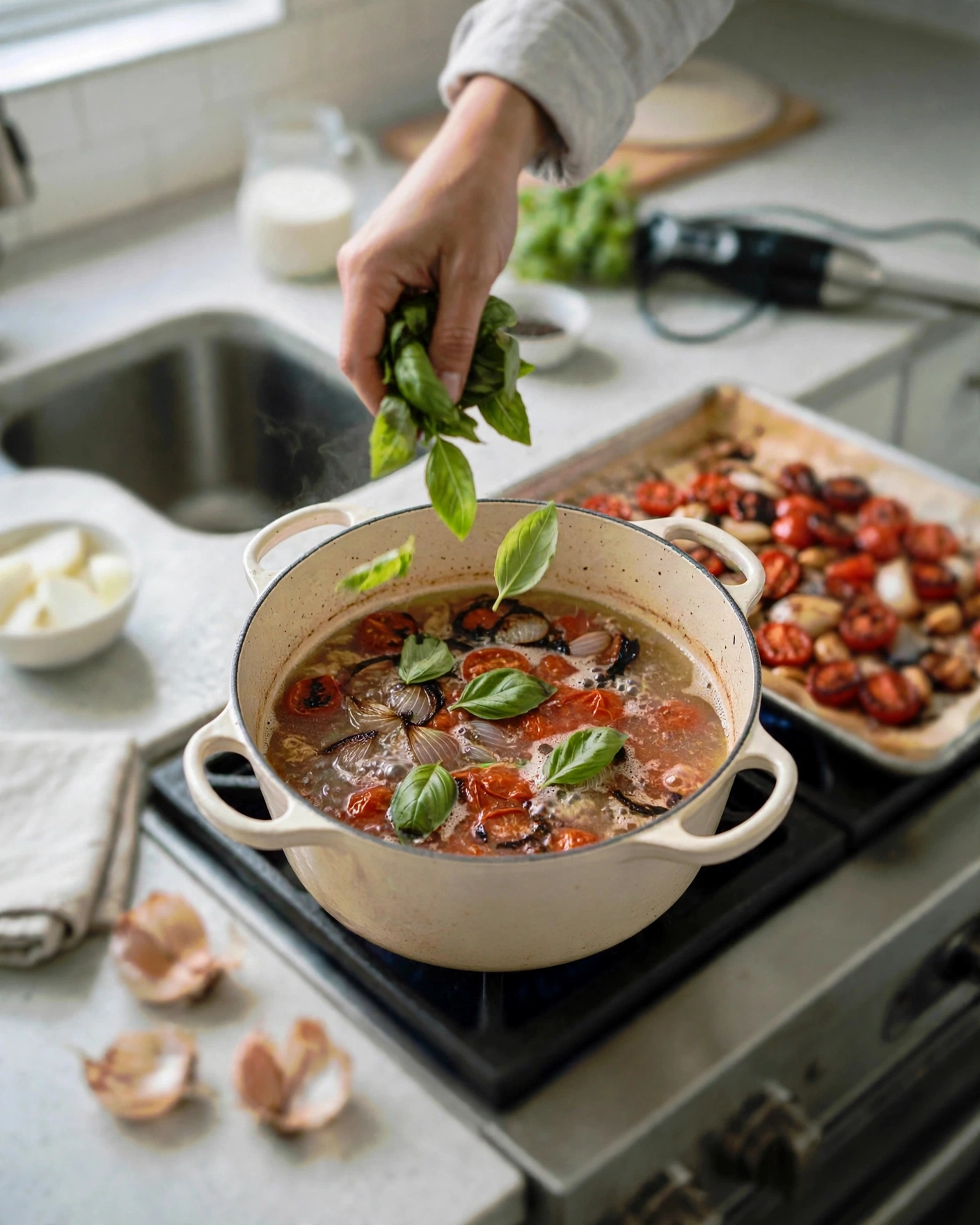
Stir in the fresh basil leaves. They will wilt almost immediately in the heat.
Take the pot off the heat. Lower the immersion blender into the soup, making sure the head is fully submerged before you switch it on, and blend. Move the blender slowly through the pot, tilting it to catch the corners, until no chunks remain. This takes longer than most people expect; give it a full minute or two of steady blending.
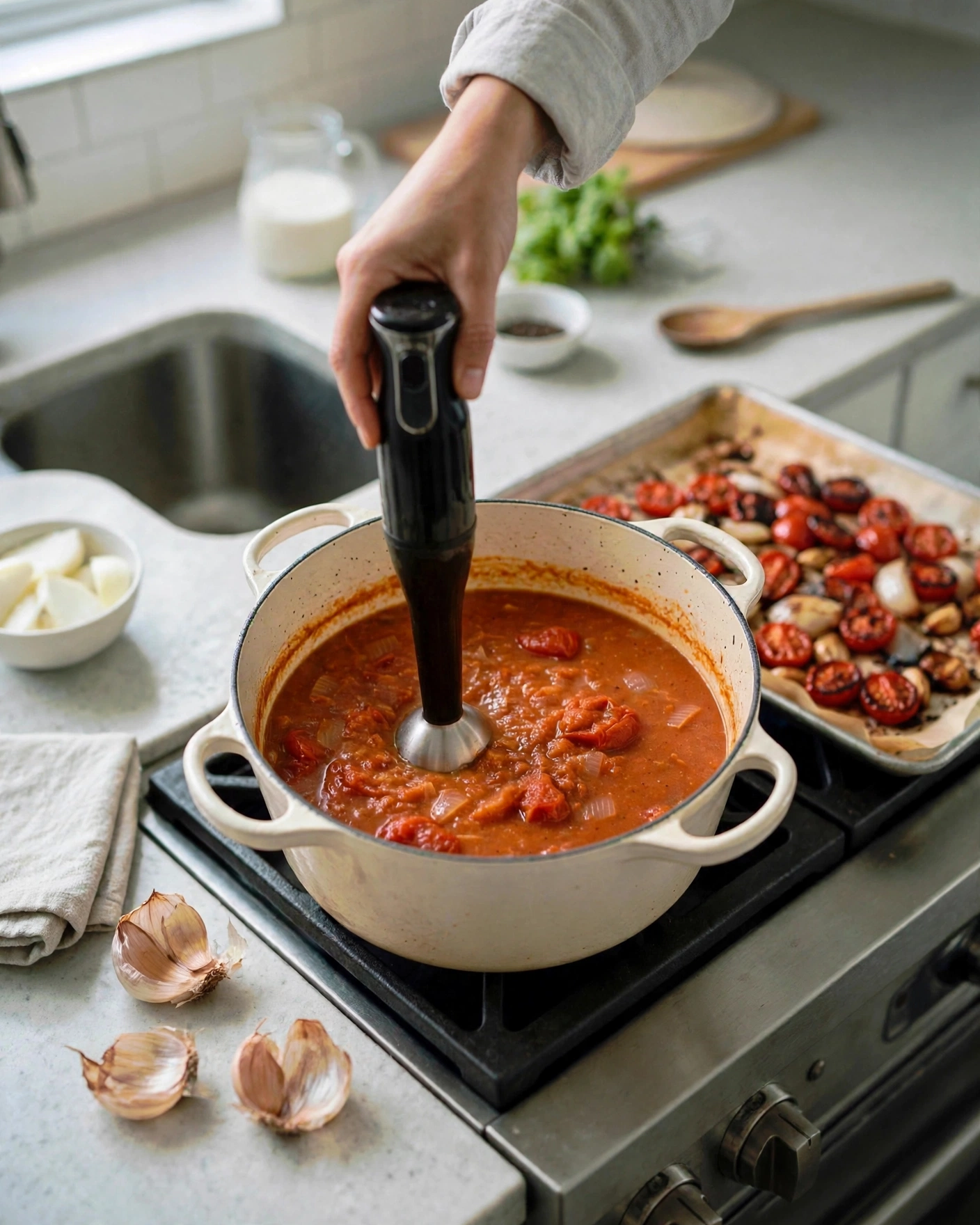
Safety note: hot soup and blenders demand respect. Keep the blender head under the surface the whole time so hot liquid cannot splash up. If you are using a countertop blender instead, work in small batches, fill the jar no more than halfway, remove the center cap from the lid, and hold a folded kitchen towel over the opening so steam can escape.
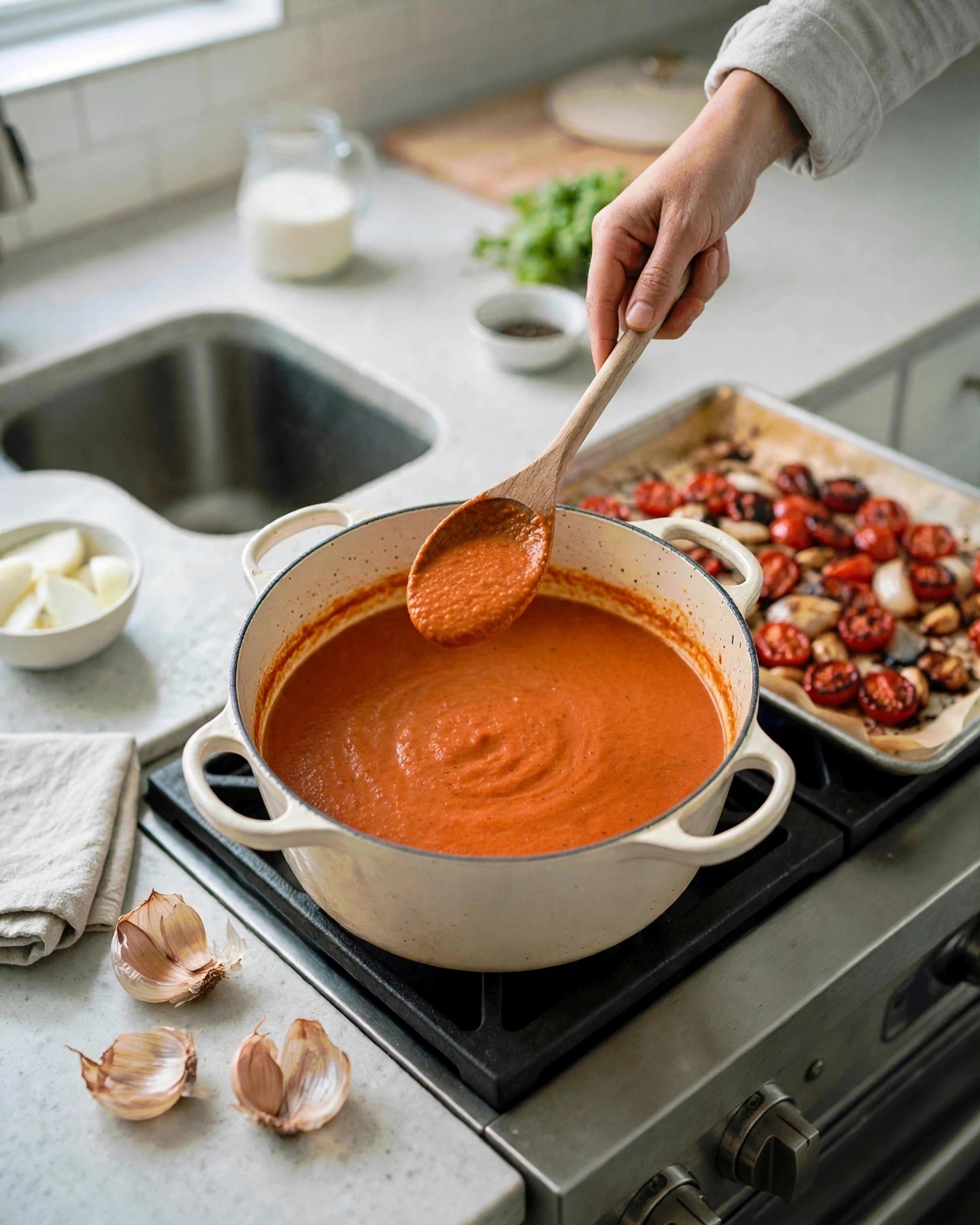
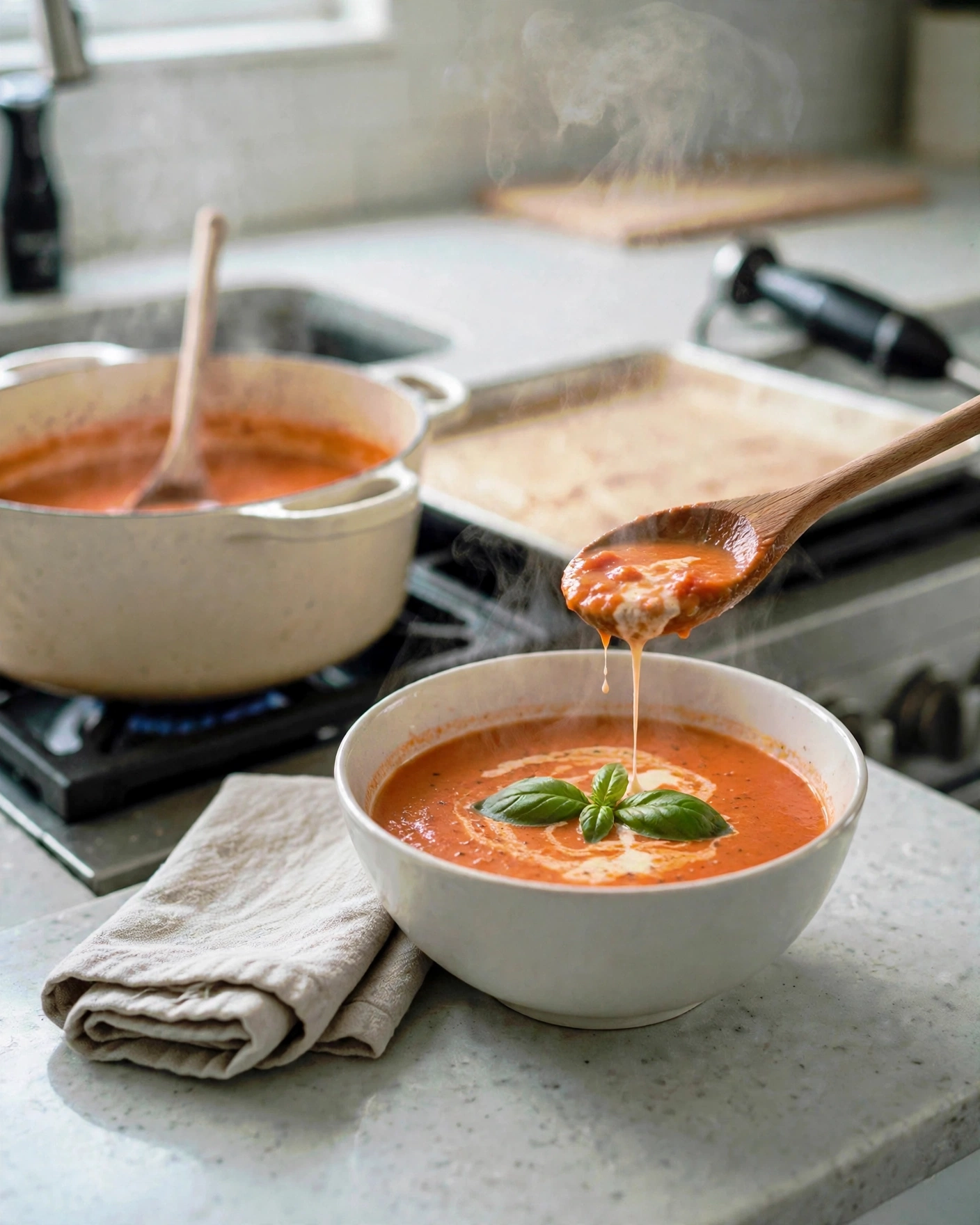
Lift the wooden spoon and check the back of it. The soup should coat it in an even, velvety layer with no visible bits of skin or onion. If you see chunks, keep blending.
Step 6: Stir in the Cream and Season
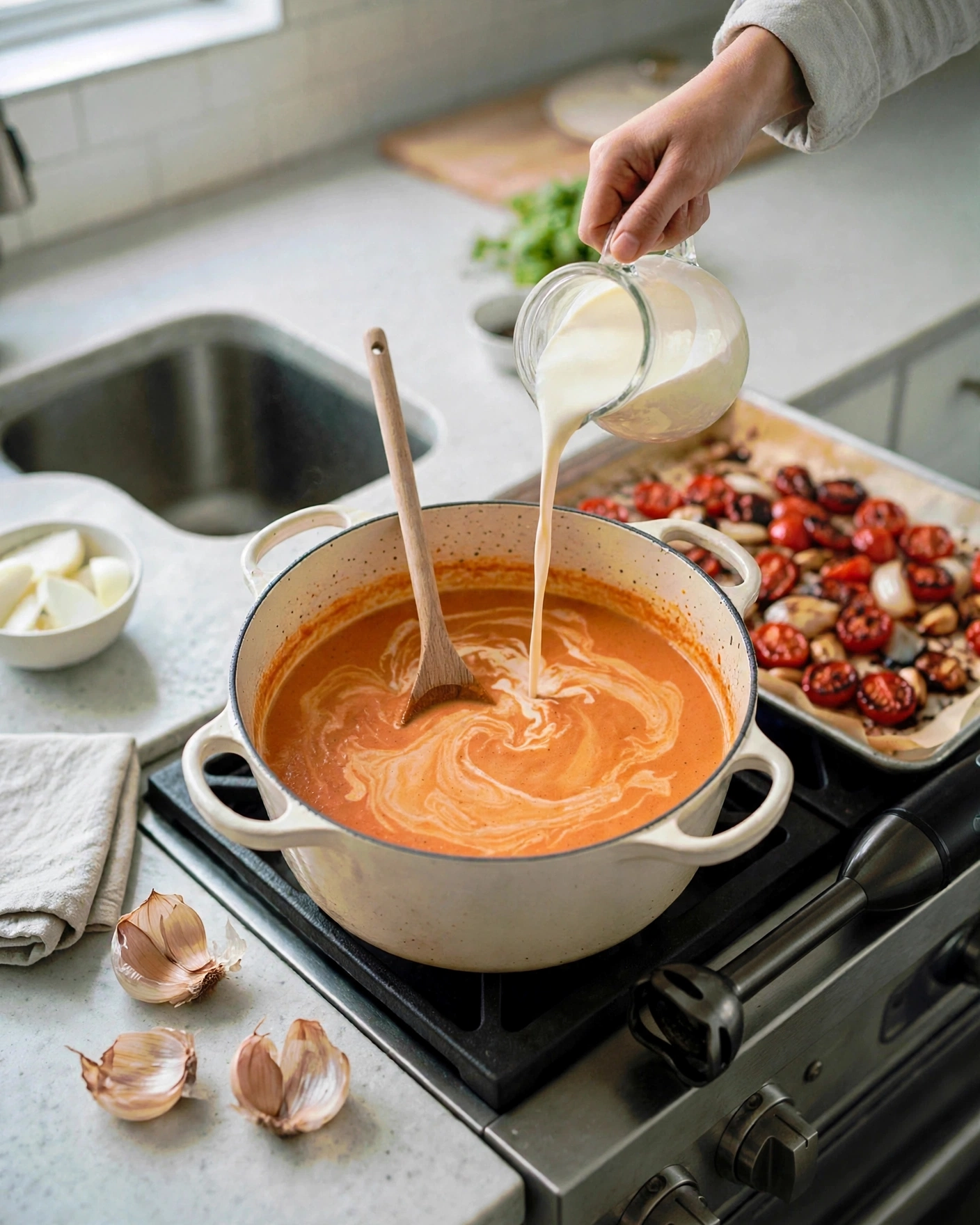
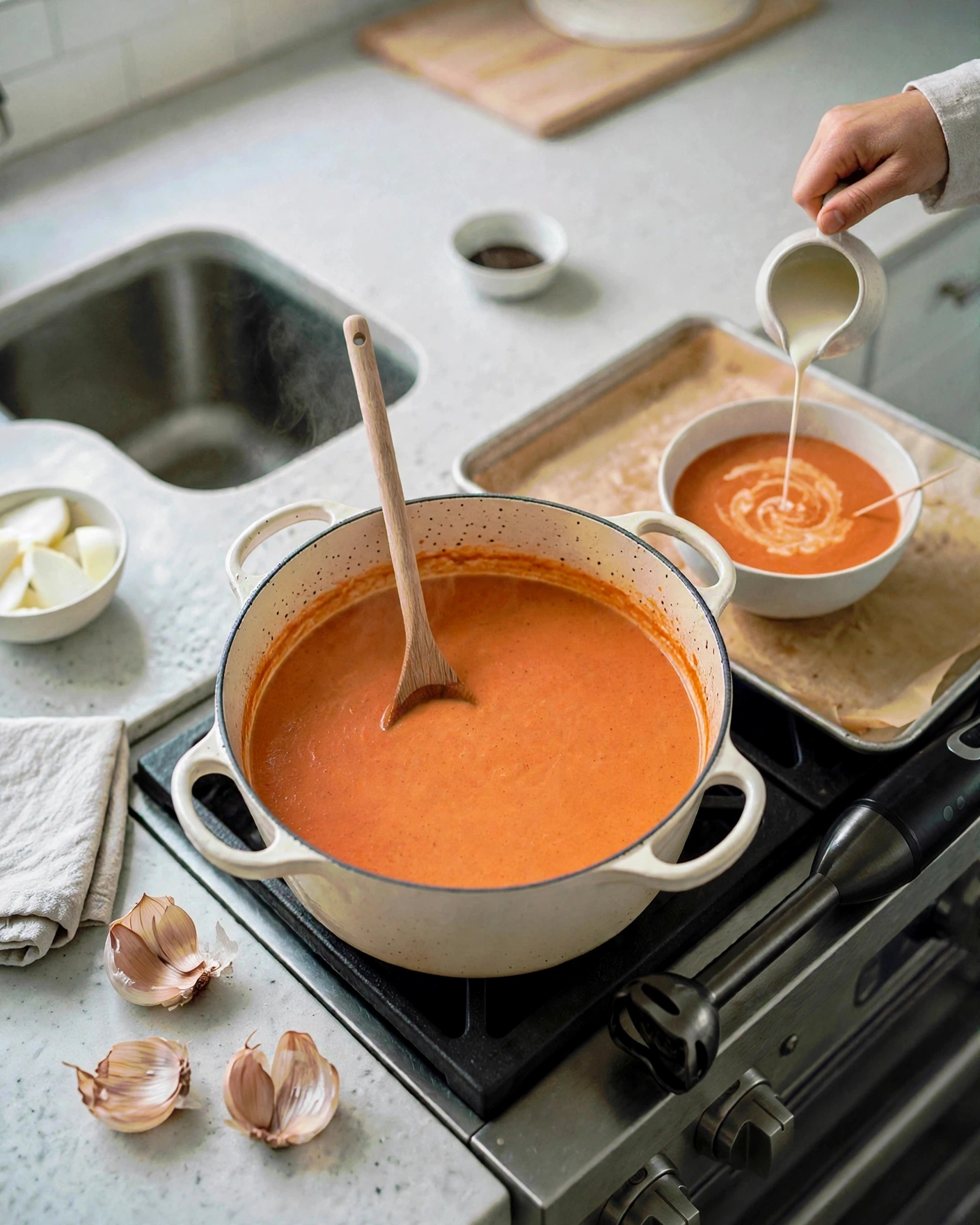
Pour in the heavy cream while stirring. You will see pale ribbons fold through the red soup as the color softens to a warm orange.
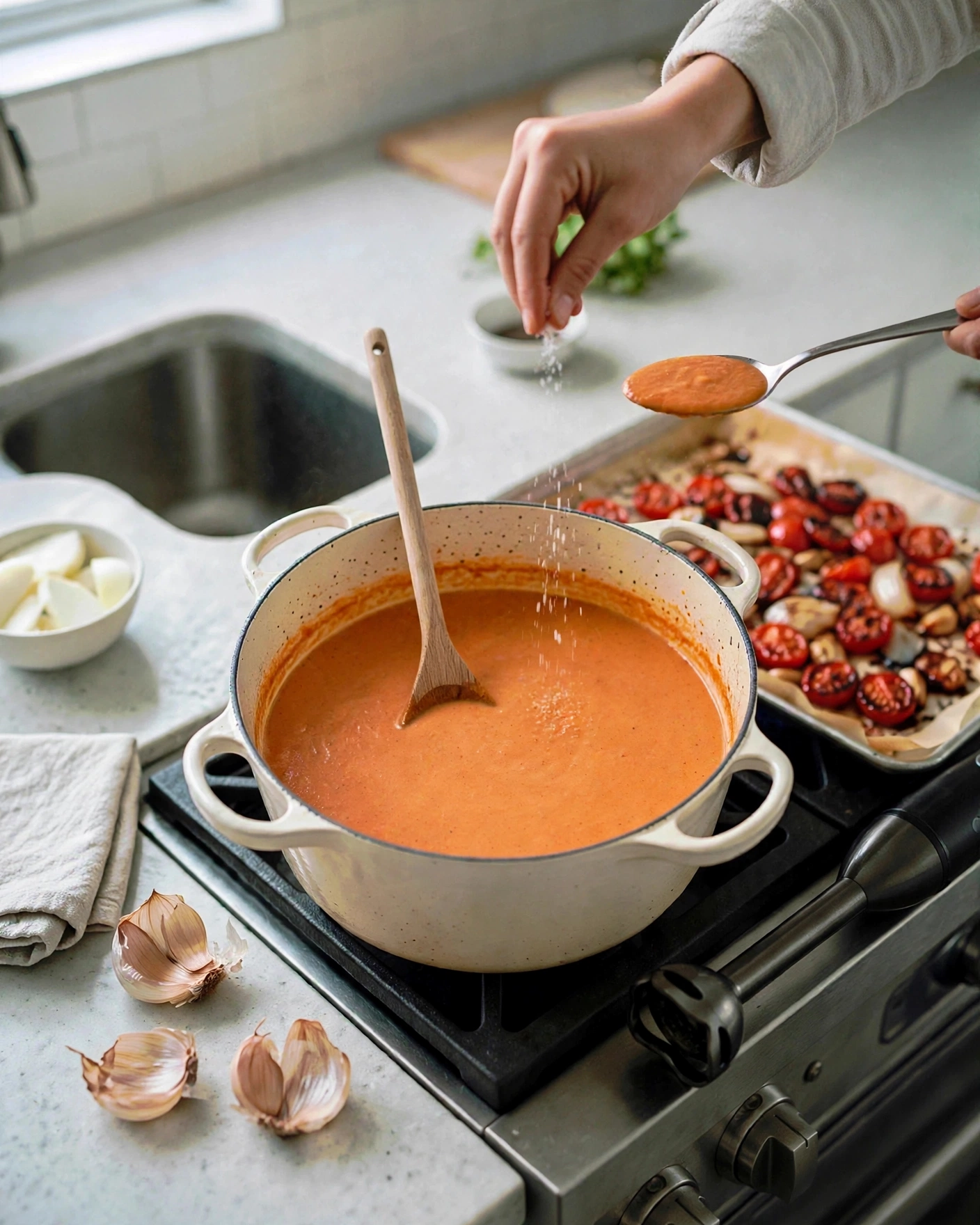
Taste the soup now, while it is warm but not bubbling. Add salt a pinch at a time and a few grinds of black pepper until the flavor tastes round and full rather than flat or sharp. Tomatoes vary a lot in acidity, so this final seasoning is doing real work; do not skip the tasting.
Common mistake: letting the soup boil after the cream goes in. A hard boil can turn a cream soup grainy or make it separate. Keep the pot at the barest warmth from here on; it only needs to be hot enough to serve.
Step 7: Ladle, Swirl, and Serve
Ladle the soup into warm bowls, filling each about three-quarters full.
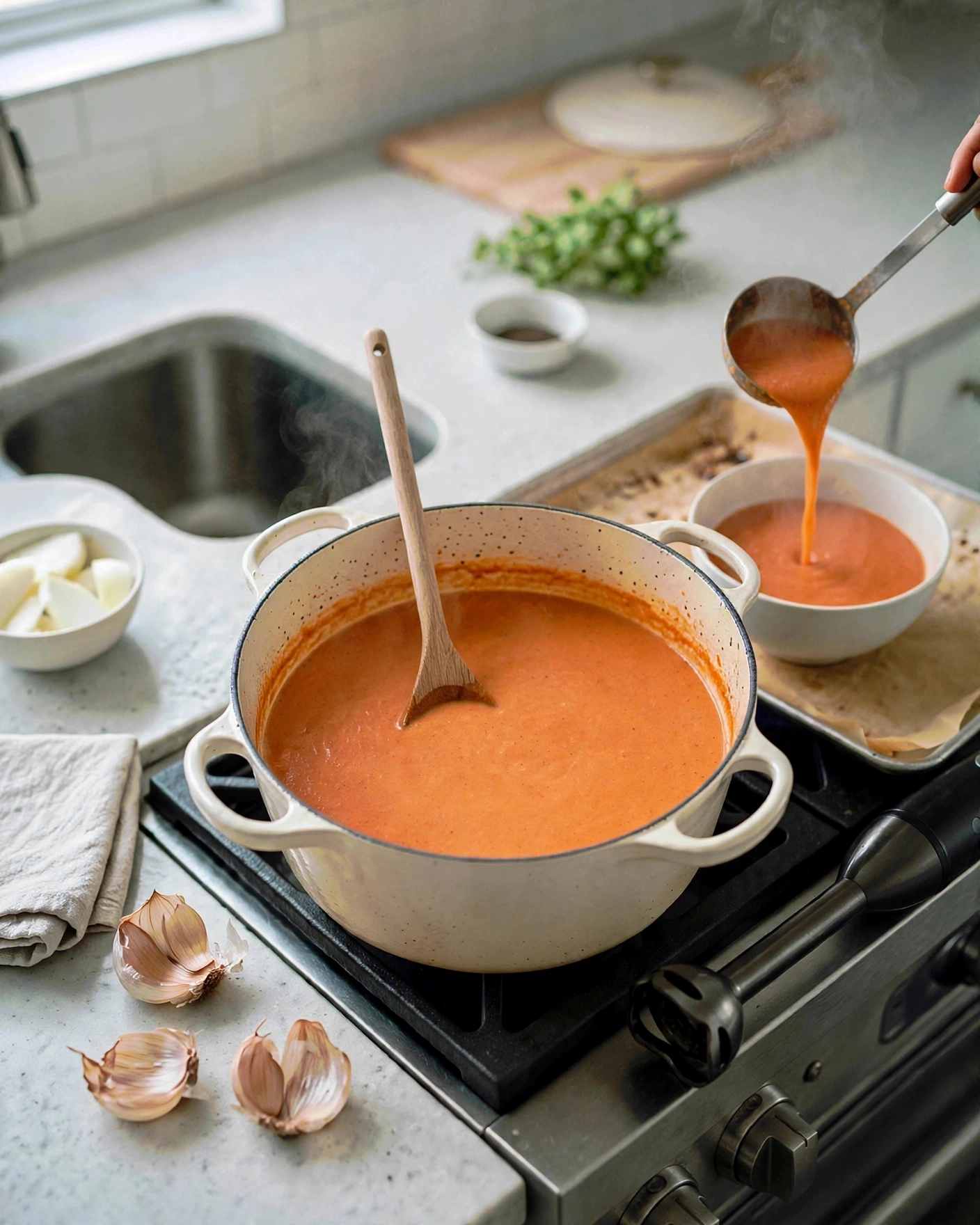
Drizzle a thin stream of cream over the surface of each bowl and drag the tip of a spoon through it once or twice to make a loose swirl.
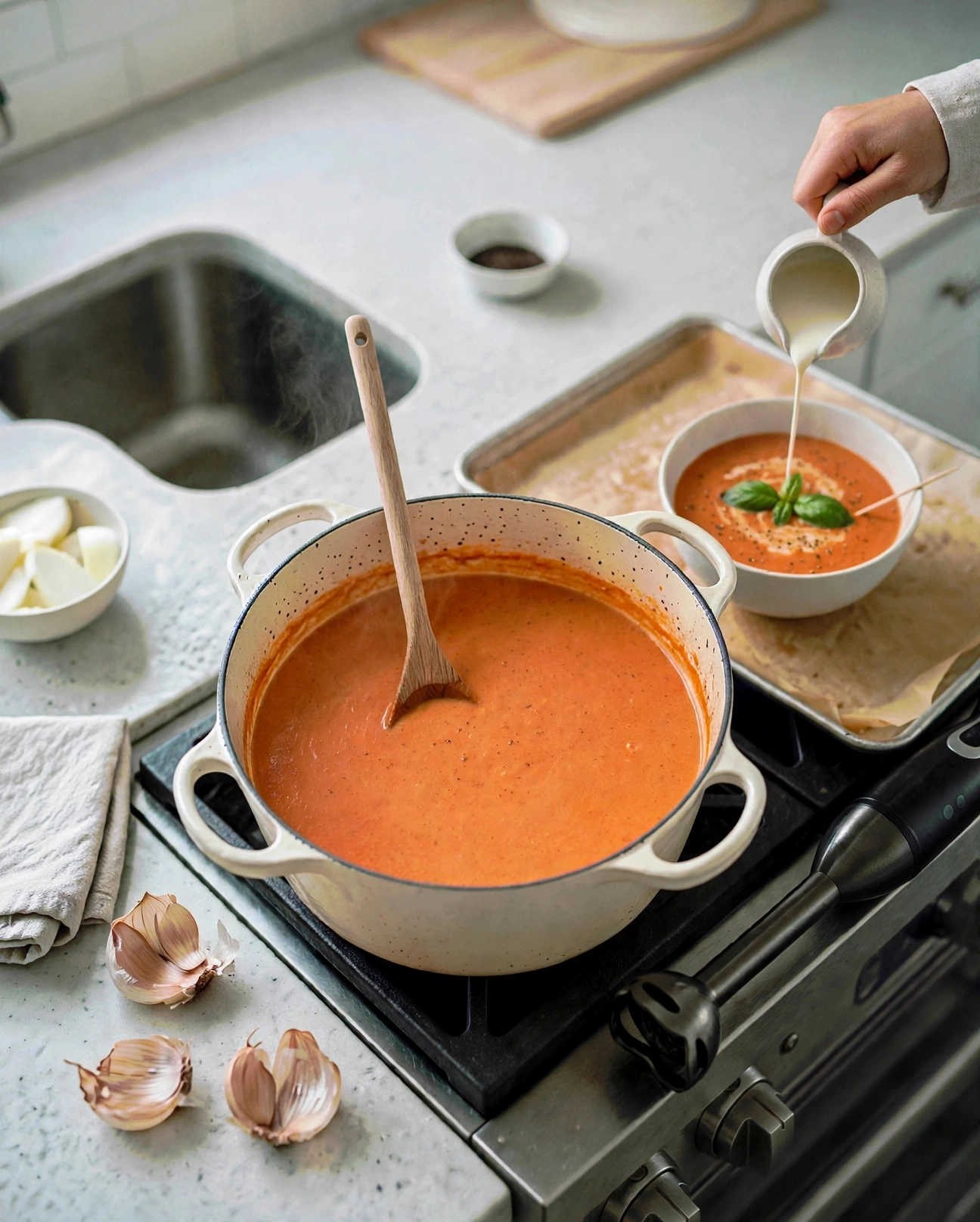
Finish with a couple of fresh basil leaves and a crack of black pepper over each bowl.
Serve right away, while the swirl is still distinct and the soup is steaming.
Roasted Tomato Soup
Ingredients
Equipment
Method
- Heat the oven to 400°F (200°C). Line a rimmed baking sheet with parchment paper.
- Rinse and halve the tomatoes lengthwise. Cut the onion into 8 wedges. Separate the garlic into cloves, leaving the skins on.
- Arrange the tomato halves cut-side up on the sheet with space between them. Tuck in the onion wedges and garlic cloves. Drizzle with olive oil, scatter over the salt and pepper, and toss the onion and garlic to coat, keeping tomatoes cut-side up.
- Roast 35-45 minutes, until the tomatoes have collapsed with caramelized, lightly charred edges, the onion is soft and browned, and the garlic skins have darkened.
- Squeeze the soft roasted garlic from its skins and discard the skins. Scrape the vegetables and all the pan juices into a large Dutch oven. Add the vegetable broth.
- Bring to a gentle simmer over medium heat and cook about 10 minutes, stirring once or twice. Stir in the basil.
- Off the heat, blend with an immersion blender until completely smooth and velvety, 1-2 minutes. (For a countertop blender: blend in batches, fill halfway, vent the lid, cover with a towel.)
- Stir in the heavy cream. Taste and adjust with more salt and pepper. Warm gently without boiling.
- Ladle into bowls. Swirl with a little extra cream and top with basil leaves and cracked black pepper. Serve hot.
Notes
Tips & Tricks
- Give the pan breathing room. Tomatoes packed edge to edge steam instead of roast. A second sheet pan is always better than a crowded one.
- Roast past your comfort zone. The first time, most people pull the pan when the tomatoes look “done” at 30 minutes. The extra 10 minutes of wrinkling and charring is where the sweetness comes from.
- Blend longer than looks necessary. The soup can look smooth from above while small bits of skin still hide near the bottom. Keep the blender moving for a full minute after you think it is done, then do the spoon test.
- Salt in layers, then once more at the end. The vegetables get salt before roasting, and the finished soup gets its final seasoning after the cream. That last tasting is what makes the bowl taste seasoned rather than just salty.
- Warm the bowls. A quick rinse with hot water keeps the soup hot at the table, which matters for a dish served this simply.
Swapping in What You Already Have
Cherry or grape tomatoes work in place of Romas; use the same 3 lbs, halve them, and expect a slightly sweeter soup. Chicken broth can replace the vegetable broth one-for-one, though the soup will no longer be vegetarian. Half-and-half stands in for heavy cream in a pinch; the result is a touch less rich, and the no-boiling rule matters even more with it.
No immersion blender? A countertop blender does the job if you work in batches and vent the lid for steam, as described in Step 5. For a dairy-free version, full-fat coconut milk replaces the cream, but be honest with yourself about the trade: the soup will carry a faint coconut flavor. Dried basil is not a good substitute for the fresh leaves here; the fresh herb added off the heat is doing real flavor work that dried cannot match.
Keeping It Good All Week
Cooled soup keeps in an airtight container in the refrigerator for 4 to 5 days, and the flavor actually settles nicely by day two. For longer storage, freeze it for up to 3 months in freezer-safe containers, leaving an inch of headspace. If you know you will freeze a batch, hold back the cream and stir it in after reheating; dairy can turn slightly grainy after freezing. Thaw overnight in the refrigerator, then reheat gently on the stove over medium-low heat, stirring often. Do not boil it.
Facts
- Cooking tomatoes breaks down their cell walls, which makes lycopene, the pigment behind their red color, easier for the body to absorb than it is from raw tomatoes. Roasting is one of the tastiest ways to get that effect.
- Roma tomatoes earned their reputation as sauce tomatoes honestly: denser flesh, fewer seeds, and less water than slicing varieties, so they cook down into a thicker soup with less simmering.
- Tomato soup with a grilled cheese sandwich is a classic American lunch-counter pairing that has been around for generations, and it remains the single best thing to serve alongside this bowl.
- Botanically speaking, the tomato is a fruit, a berry to be exact. It only became a soup staple once cooks learned to tame its acidity, which is exactly what roasting and a pour of cream do here.
FAQ
Can I use canned tomatoes instead of fresh?
You can, and the soup will still be good, but it will be a different recipe: the caramelized flavor from roasting fresh tomatoes is the whole point here. If you go the canned route, use two 28-ounce cans of whole peeled tomatoes with their juices, skip the roasting, and reduce the broth by about a cup since canned tomatoes bring more liquid.
Do I have to peel the tomatoes?
No. The skins soften in the oven and break down in the blender. If you want an extra-silky restaurant-style texture, pour the blended soup through a fine-mesh strainer before adding the cream.
Can I freeze this soup?
Yes, for up to 3 months. Cool it completely, freeze in airtight containers with an inch of headspace, and thaw overnight in the refrigerator. For the smoothest result, freeze the soup before adding the cream and stir the cream in while reheating.
How do I make it dairy-free?
Use full-fat coconut milk in place of the heavy cream, added the same way at the end. The soup will have a faint coconut note, which most people find pleasant against the roasted tomato.
My soup tastes too acidic. How do I fix it?
Start with ripe tomatoes and a full roast next time; under-roasted or underripe tomatoes are the usual cause. For the pot in front of you, make sure it is well salted first, since salt softens the perception of acidity, then add a small pinch of sugar (about 1/4 teaspoon) and taste again before adding more.
Can I use a regular blender instead of an immersion blender?
Yes. Blend in batches, never fill the jar more than halfway with hot soup, remove the center cap from the lid, and hold a folded kitchen towel over the opening so steam escapes safely. Then return it all to the pot before adding the cream.
Conclusion
This is a soup that rewards a simple habit: roast the vegetables a little longer than feels necessary, and the pot takes care of the rest. Serve it the classic way, with a grilled cheese sandwich for dipping, or keep it lighter with a slice of crusty bread. It also makes a strong next-day lunch; the flavors settle overnight and it reheats in minutes. Make a full batch while tomatoes are in season, freeze half before the cream goes in, and you will have a head start on dinner waiting in the freezer.