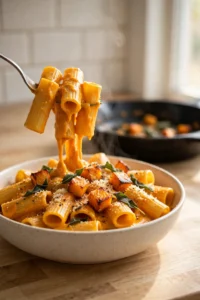
Ground Turkey Pasta 3 Ways: Savory, Creamy Spinach & Broccoli
Three ground turkey pasta dinners in one post — a savory tomato-cream penne, a creamy spinach penne with Parmesan, and a garlicky broccoli rotini. Each recipe stands on its own ingredients and method.
 Pin it
In this post
Three separate recipes live in this post, and each one stands on its own ingredients and method. Read straight through for all three, or jump to the one going on the stove tonight.
Ground turkey earns its place in a pasta pot for a practical reason: it browns fast, it takes seasoning well, and it turns a box of pasta into a full dinner without a long simmer. The three recipes below use that same starting point in three different directions. One leans on tomato and cream. One stays pale and silky with broth, cream, and Parmesan. One keeps things garlicky and green with broccoli cooked right in the pasta water. Learn the browning step once and the rest of each recipe falls into place, because all three follow the same order: pasta first, turkey second, sauce third, everything tossed together at the end.
Savory Ground Turkey Pasta
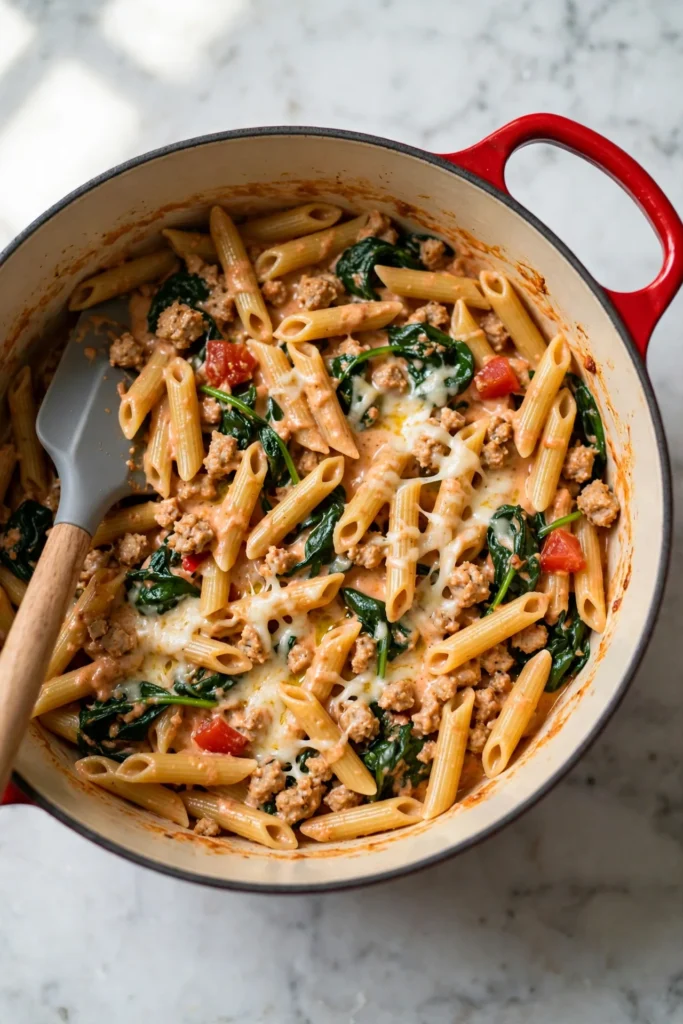
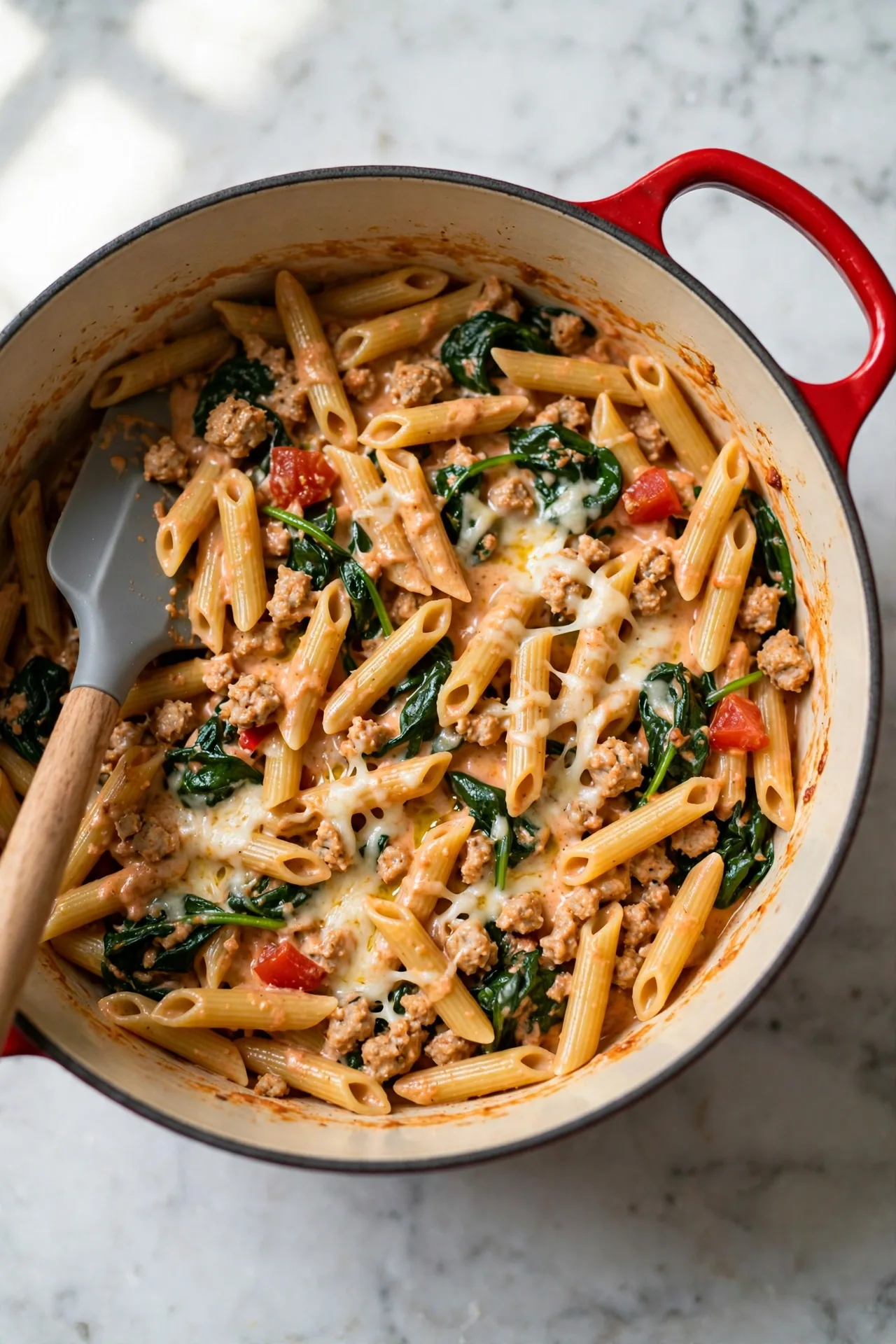
This one is the tomato version. Chunky marinara and a pour of cream meet browned turkey in a Dutch oven, fresh tomatoes and spinach go in near the end, and shredded mozzarella melts through the whole pot. Whole wheat penne holds up well here because its ridges catch the sauce.
Ingredients
For the pasta and turkey
- 16 oz whole wheat penne
- 1 lb ground turkey
- Olive oil
- Salt
For the sauce and finish
- Chunky marinara sauce
- Cream
- Fresh tomatoes, diced
- Fresh baby spinach
- Garlic powder
- Dried Italian herbs
- Shredded mozzarella
A note on amounts: the penne and the turkey carry stated quantities. The sauce ingredients above go in by the bowl and the pour, so no exact amounts are listed for them here or in the card below. Salt and garlic powder season the turkey by taste as you sprinkle. This recipe contains wheat and dairy.
Lay everything out before the stove gets hot. Bowls of prepped ingredients at the counter edge keep the fast middle of this recipe calm.
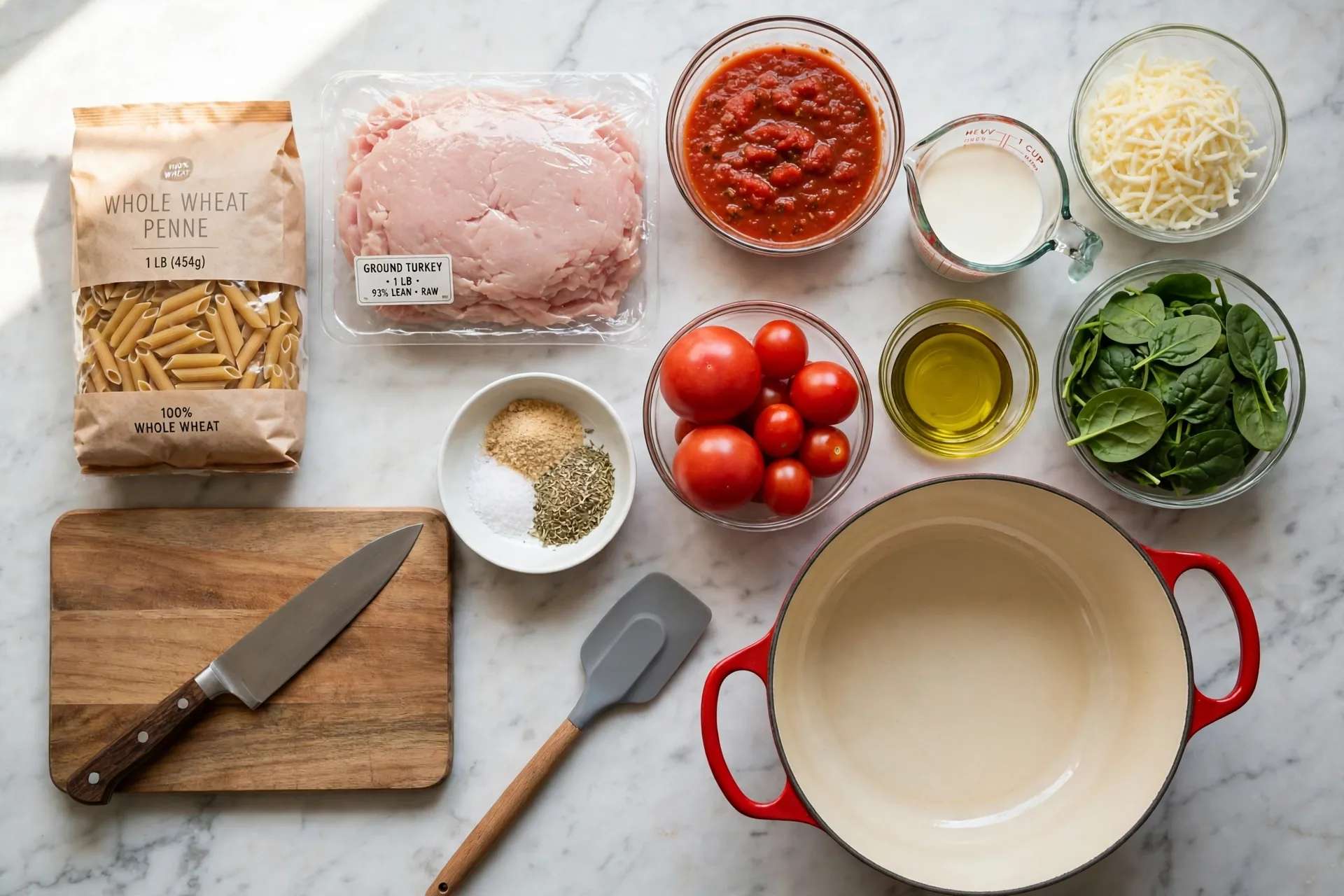
How to make Savory Ground Turkey Pasta
Prep the tomatoes and boil the penne
Cut the ripe tomatoes into half-inch pieces. Pieces that size soften into the sauce without disappearing, and they stay visible against the penne.
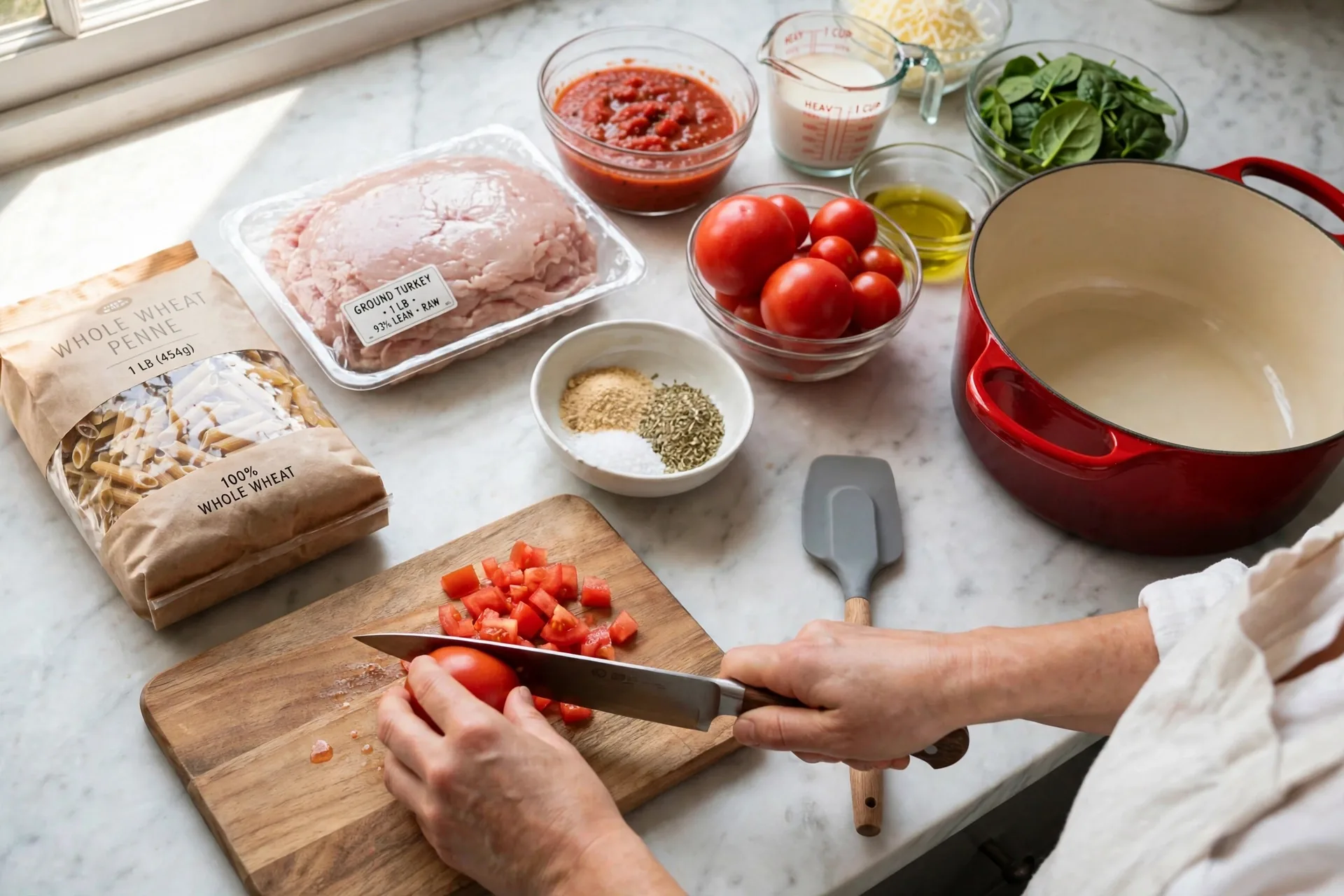
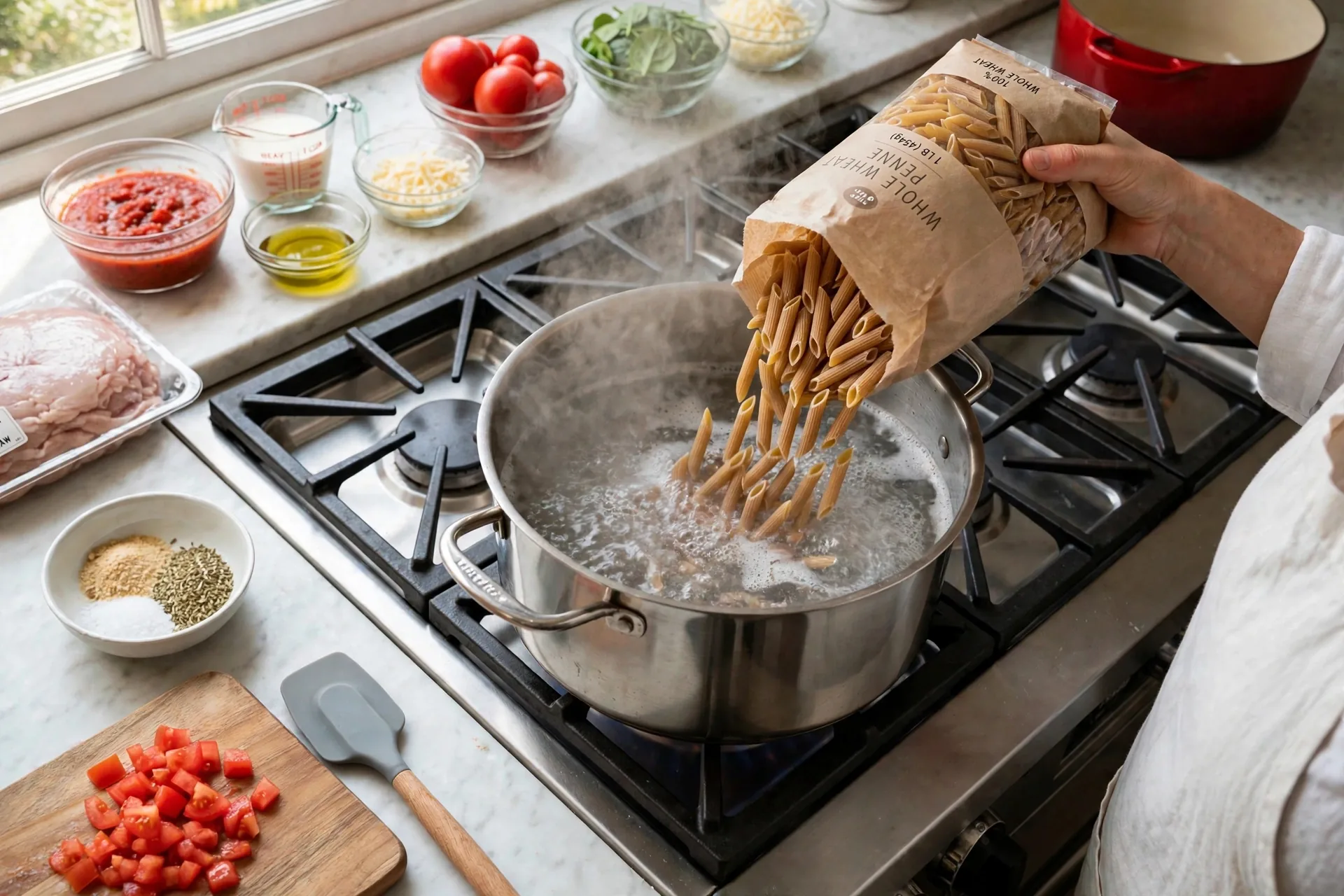
Bring a large pot of salted water to a rapid boil and lower the penne in. Dry whole wheat penne goes in stiff and brown-tan, and it needs room to move so the tubes do not stick.
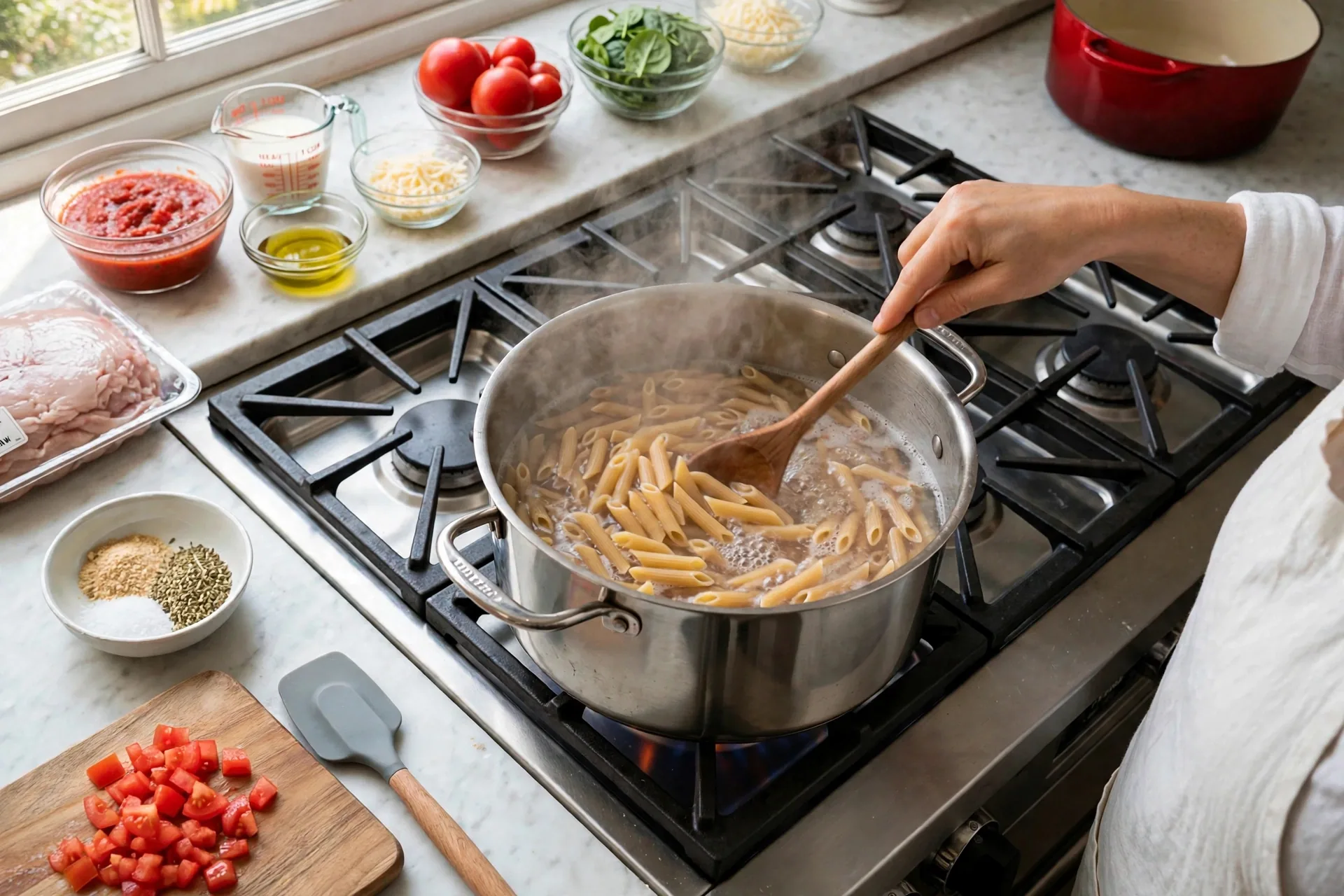
Stir once the tubes start to soften. A wooden spoon through the pot keeps them separated while they cook.
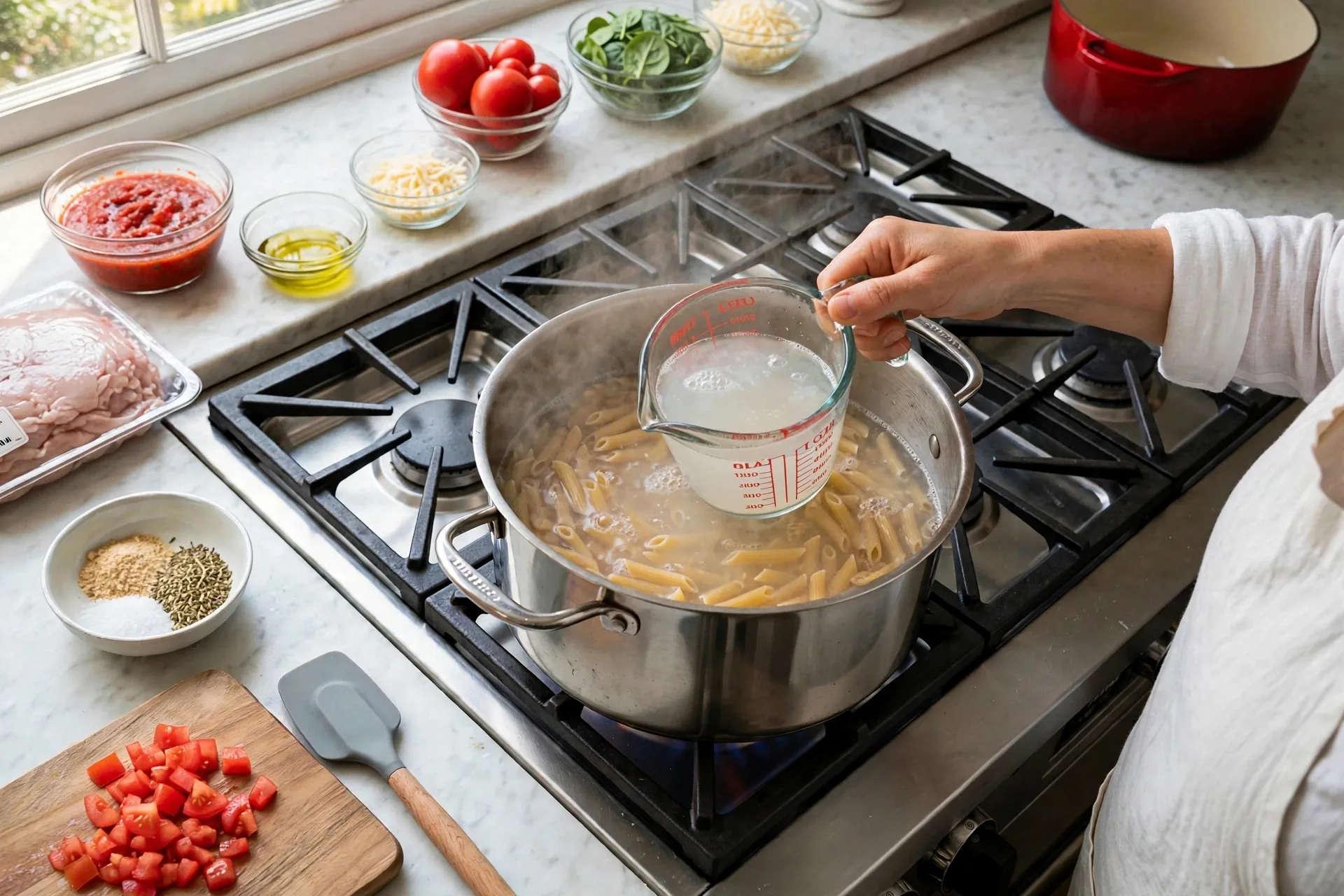
Before draining, dip a measuring cup into the pot and scoop out some of the cloudy water. That starchy water is what loosens the sauce later and helps it cling to the penne. Skip this and the finished sauce can sit on top of the pasta instead of coating it.
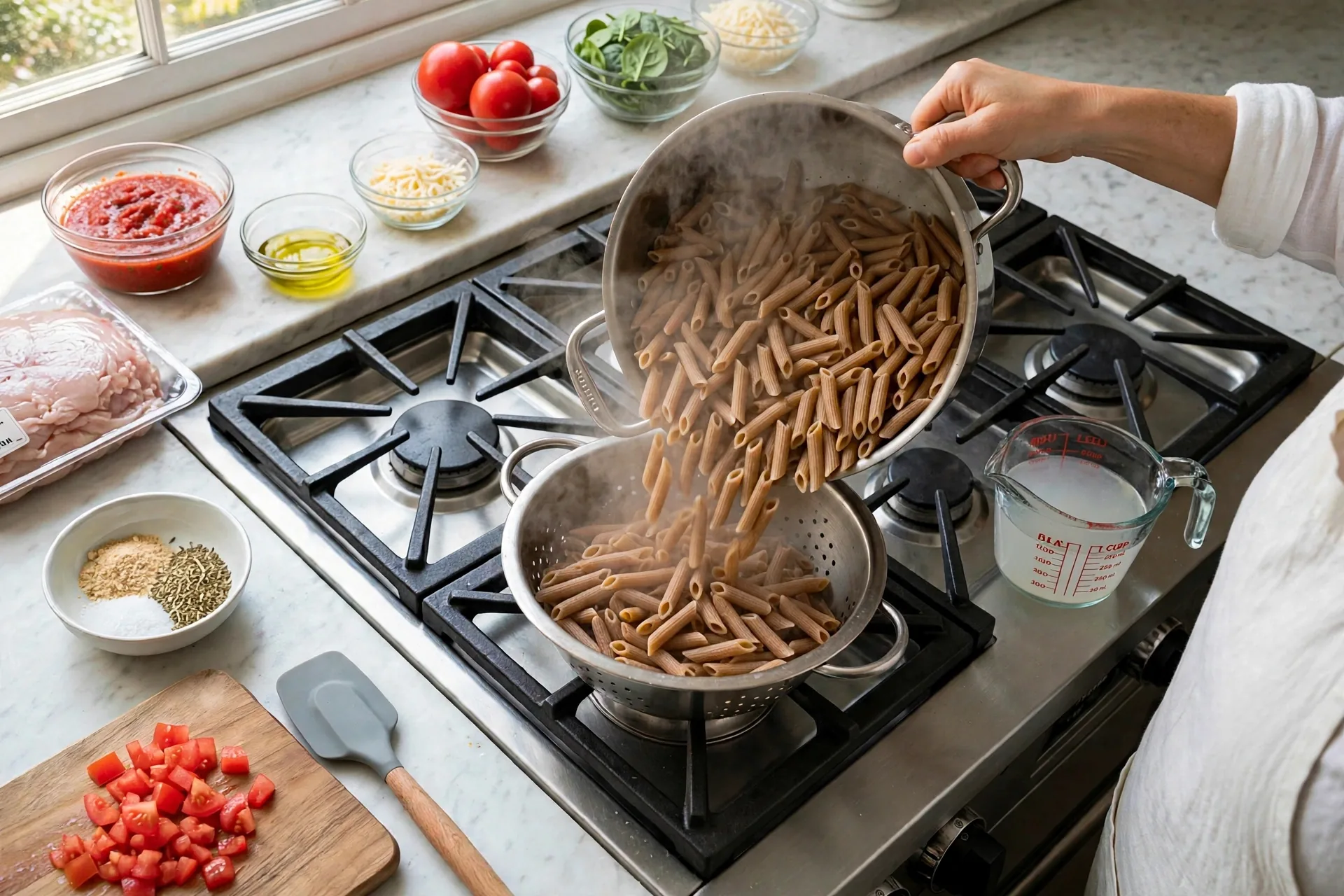
Drain the penne in a colander and set the cup of reserved water where you can reach it.
Brown the turkey
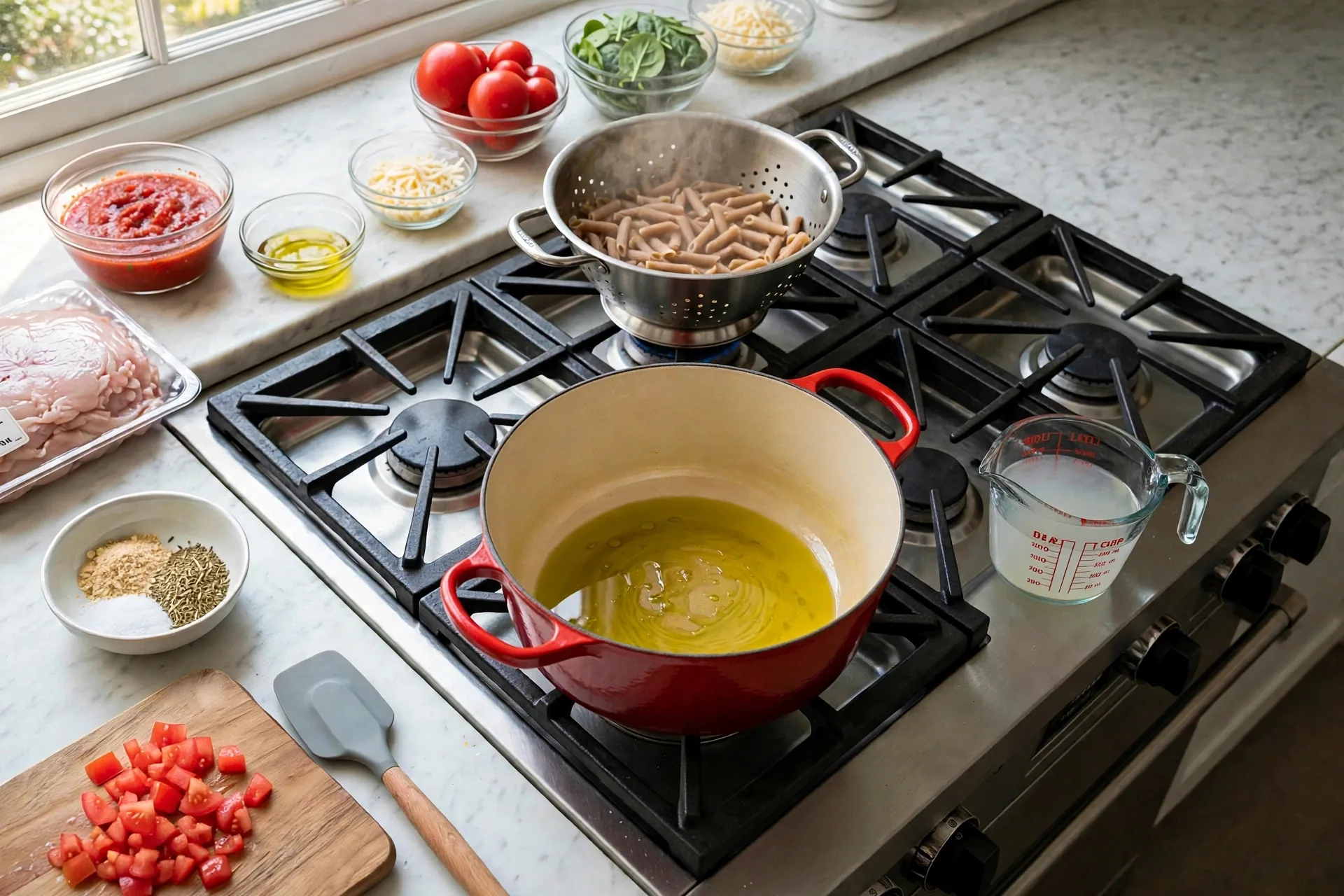
Set the Dutch oven on the stove and warm a pour of olive oil until it shimmers across the bottom. Oil that is not hot enough lets the turkey steam in its own liquid. Oil that smokes is too hot and will darken before the meat browns.
Set the block of ground turkey into the hot oil. It goes in pale pink and solid, and that is exactly right for this stage.
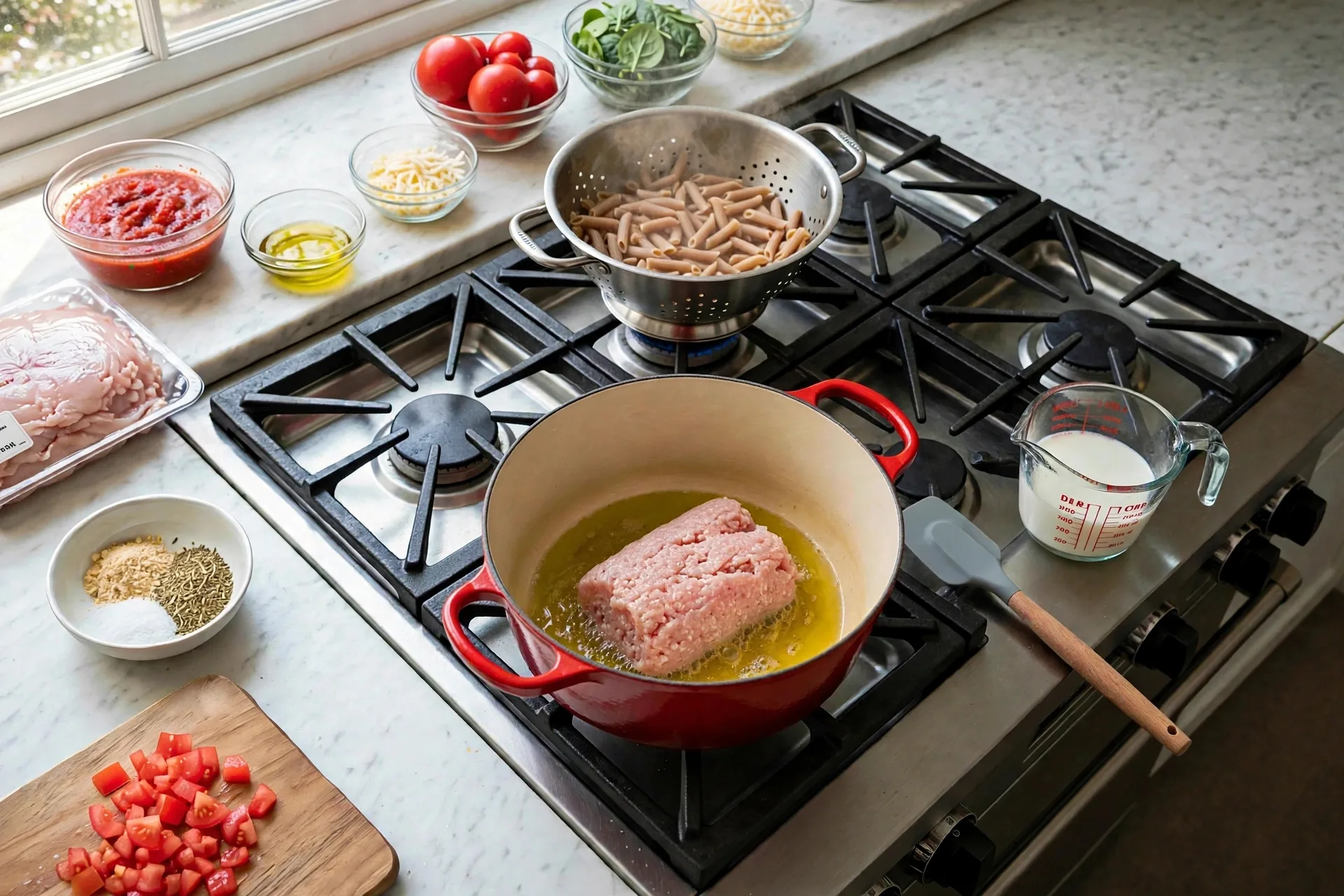
Break it apart with a spatula into small crumbles. Some pieces will still look pink and some will turn pale tan. That mix is normal halfway through browning.
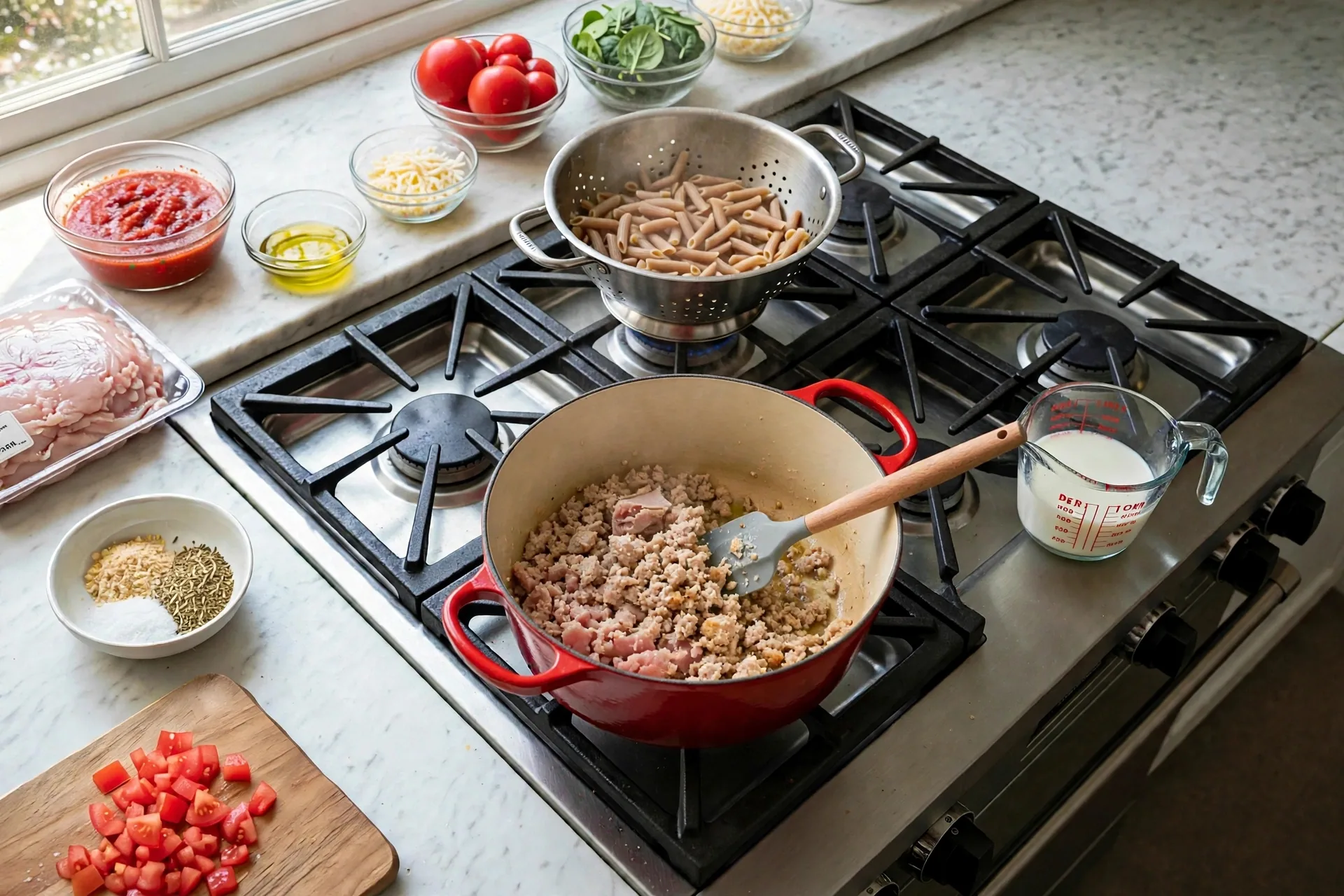
Keep cooking until no pink is left anywhere and the edges of the crumbles turn golden-brown, with small browned bits stuck to the pot bottom. Those browned bits are flavor for the sauce, not a sign of burning. Ground turkey must cook fully through, with no pink remaining, before anything else goes into the pot.
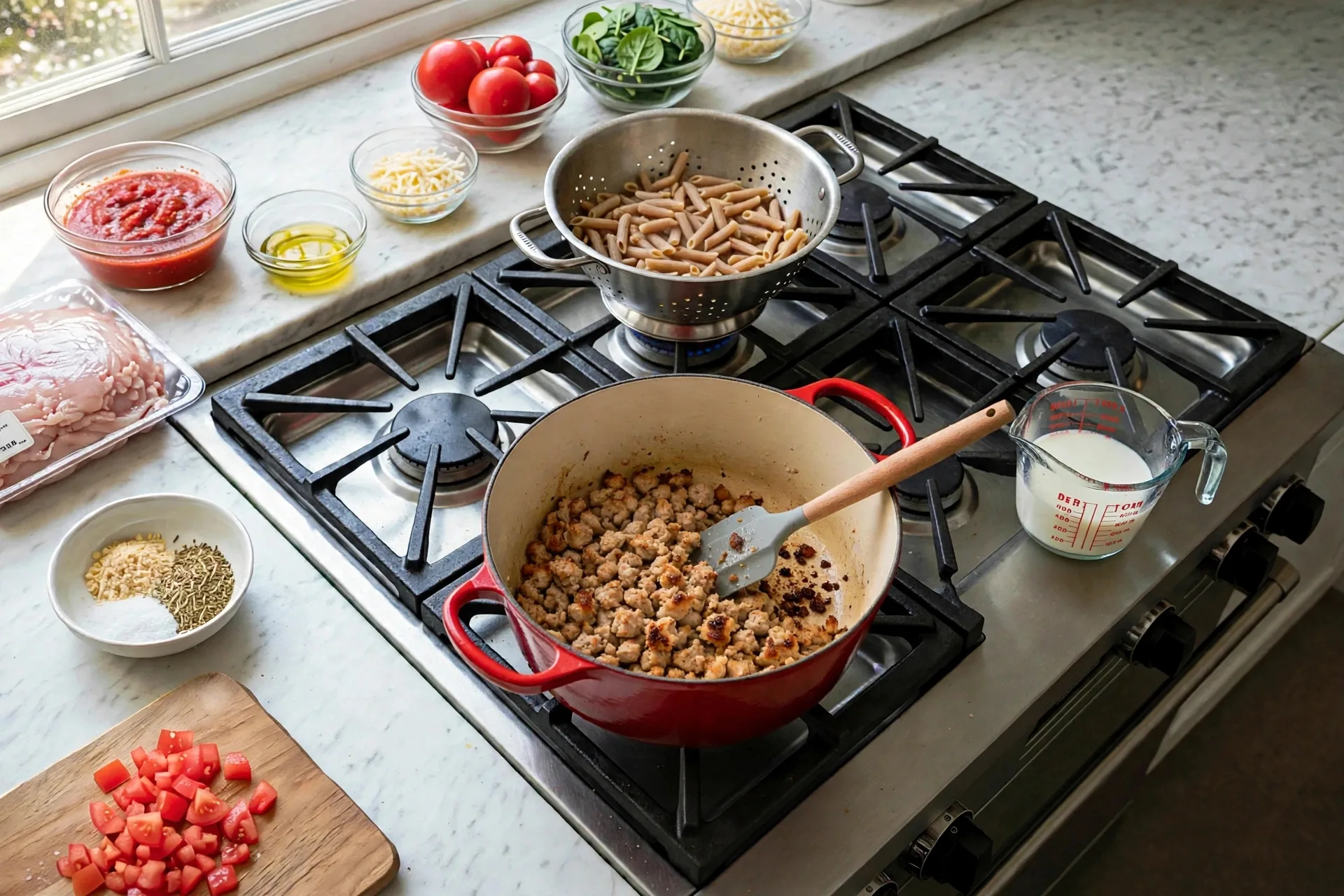
Build the sauce
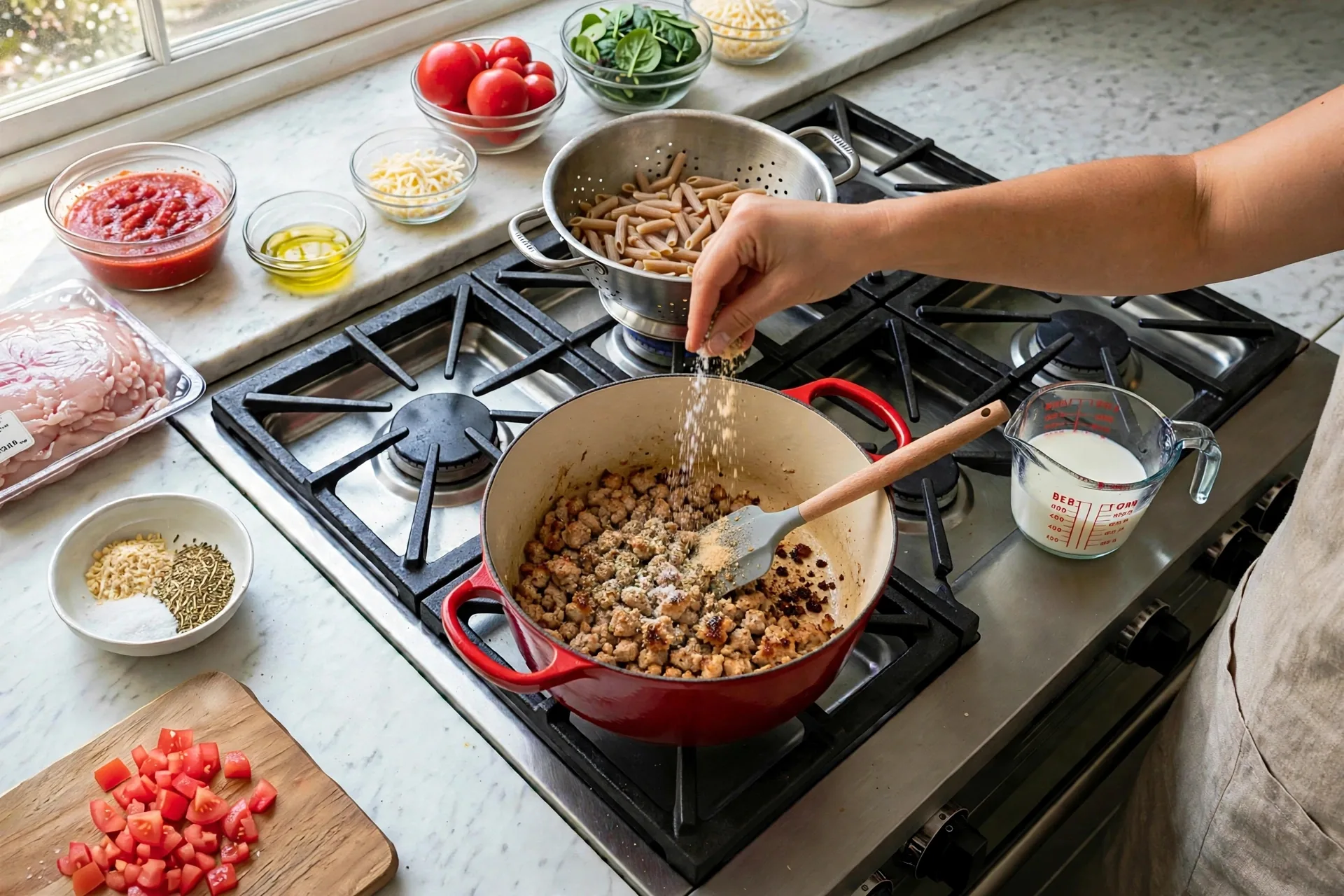
Sprinkle salt, garlic powder, and dried Italian herbs over the browned turkey. Seasoning now, while the meat is bare, flavors the crumbles themselves instead of only the sauce around them.
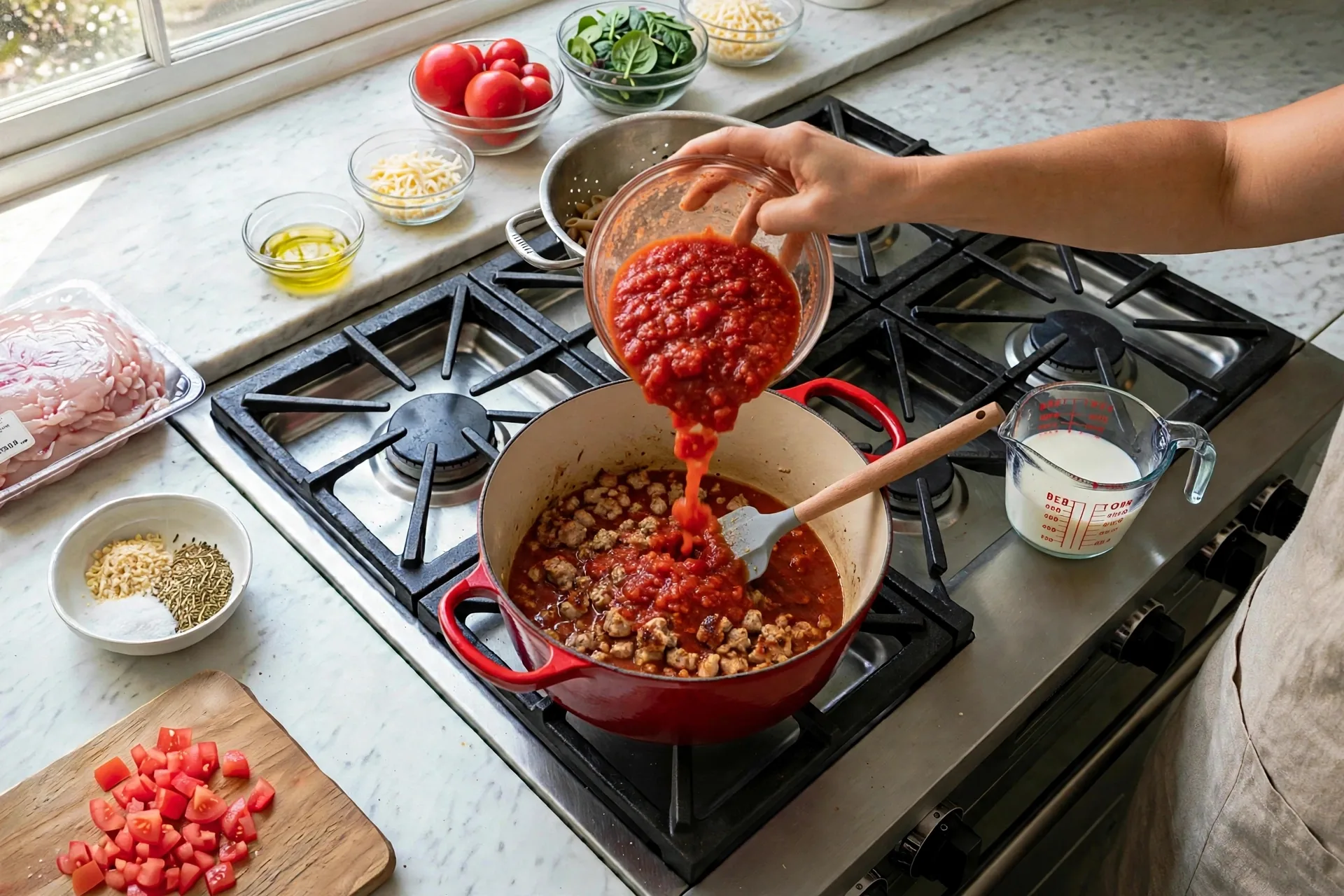
Pour in the chunky marinara. It pools around the crumbles and picks up the browned bits from the pot bottom as it heats.
Pour in the cream and watch the red sauce turn orange-pink where the two meet. Cream softens the sharp edge of the marinara and gives the sauce body.
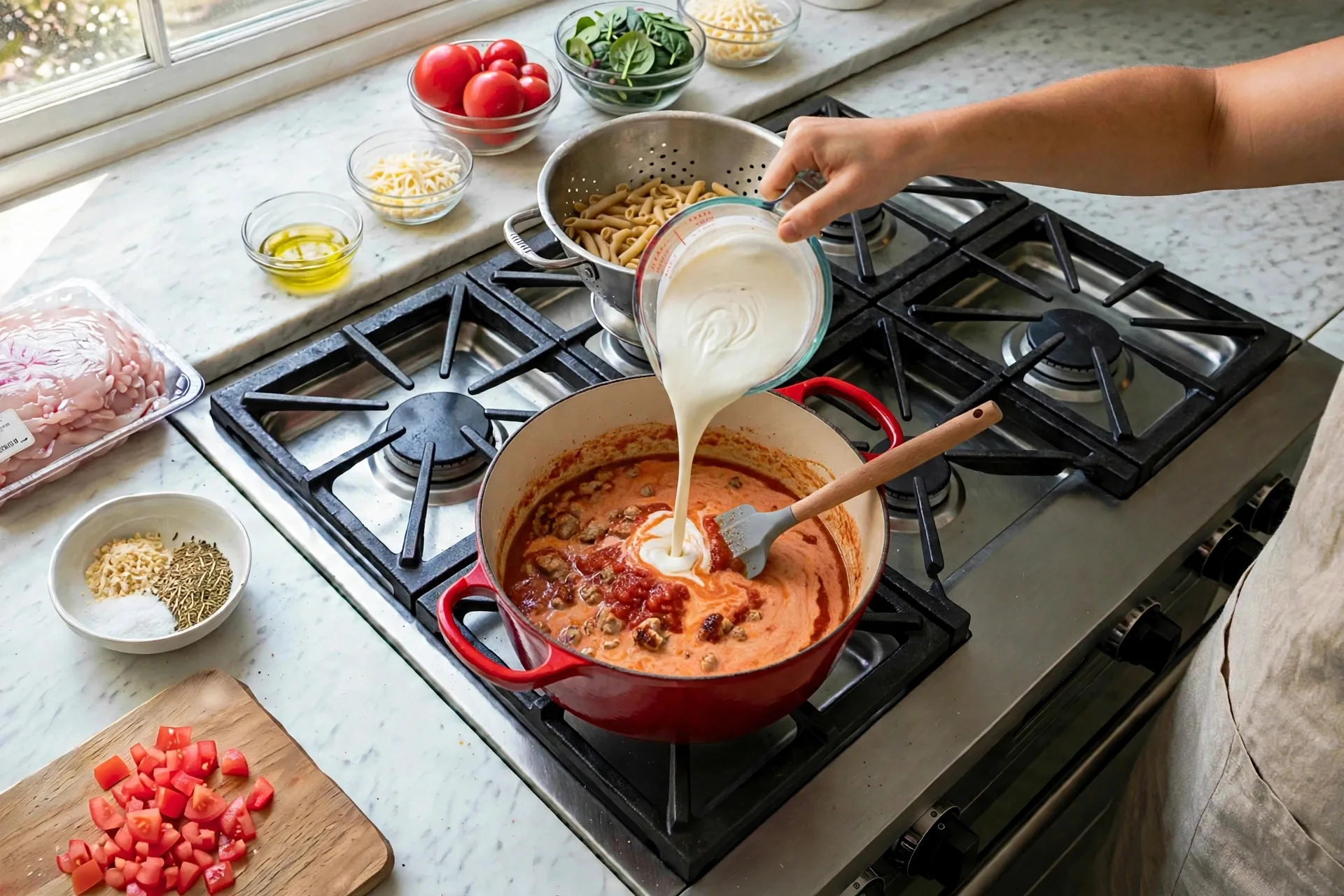
Stir until the sauce is one uniform light orange-pink color, with small bubbles breaking at the edges as it simmers. A sauce that still shows separate red and white streaks needs more stirring before the next ingredient goes in.
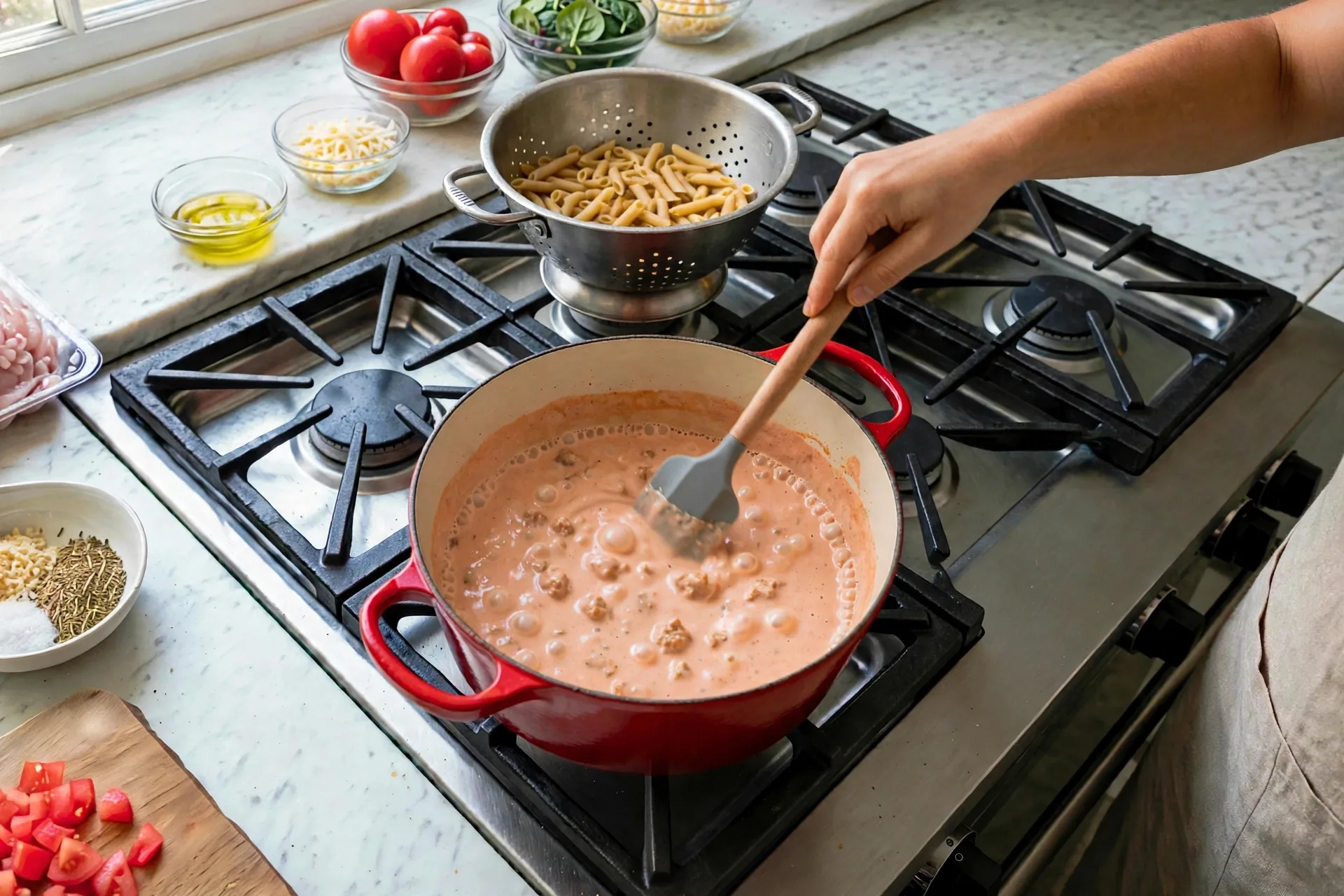
Tip the diced tomatoes in and let them warm through in the simmering sauce. They soften a little and keep their shape, so the finished pasta has fresh tomato pieces in it alongside the sauce.
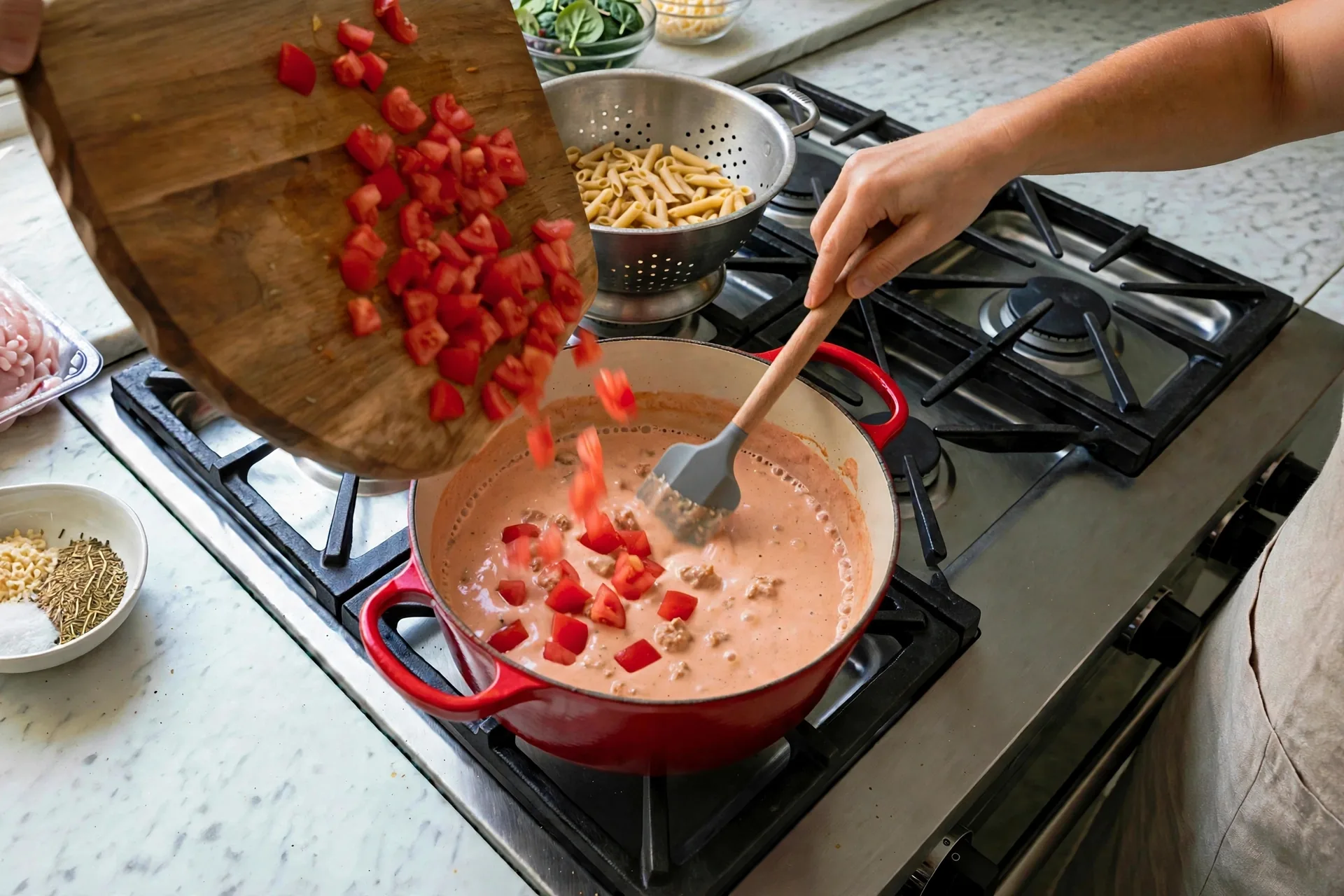
Pile the spinach on top in one big mound. It looks like far too much for the pot. It is not.
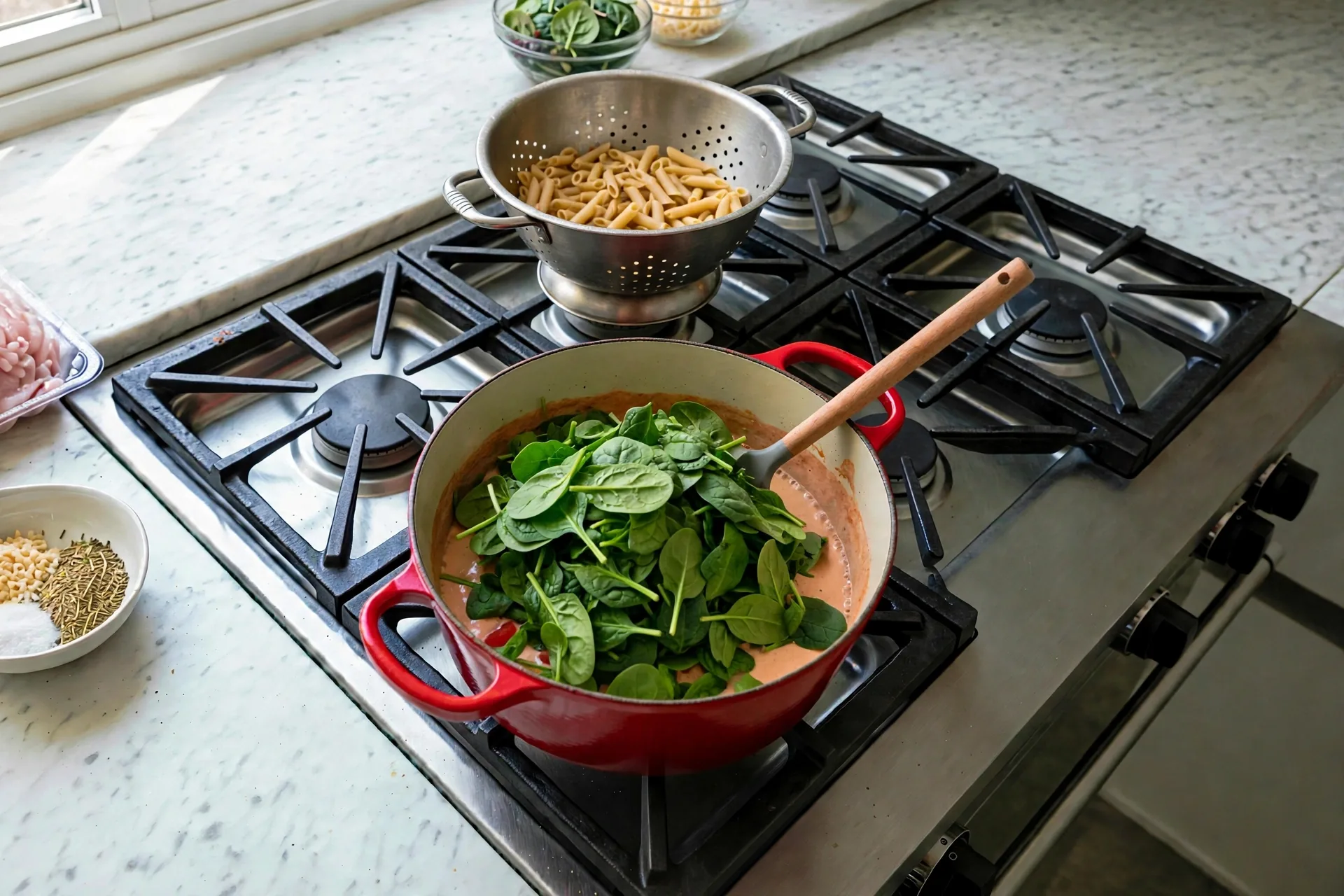
Stir the spinach down into the sauce until the leaves turn dark green and wilt into strands. Raw spinach wilts fast, and the volume drops to a fraction of the pile. If the leaves still look bright and bulky, they need more stirring, not more heat.
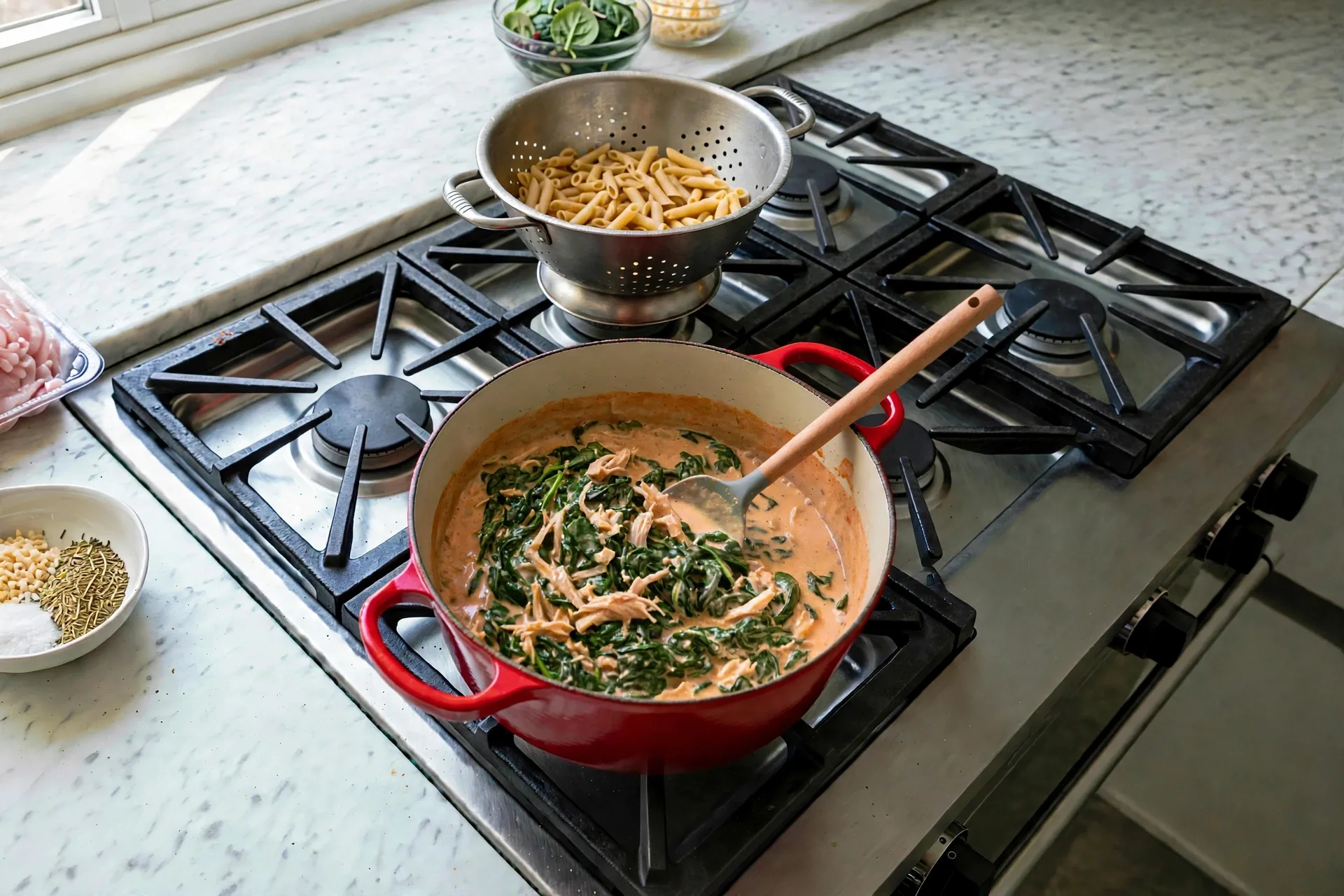
Bring it together
Tip the drained penne into the Dutch oven. The first tubes pick up sauce right away and the rest sit plain on top until you toss.
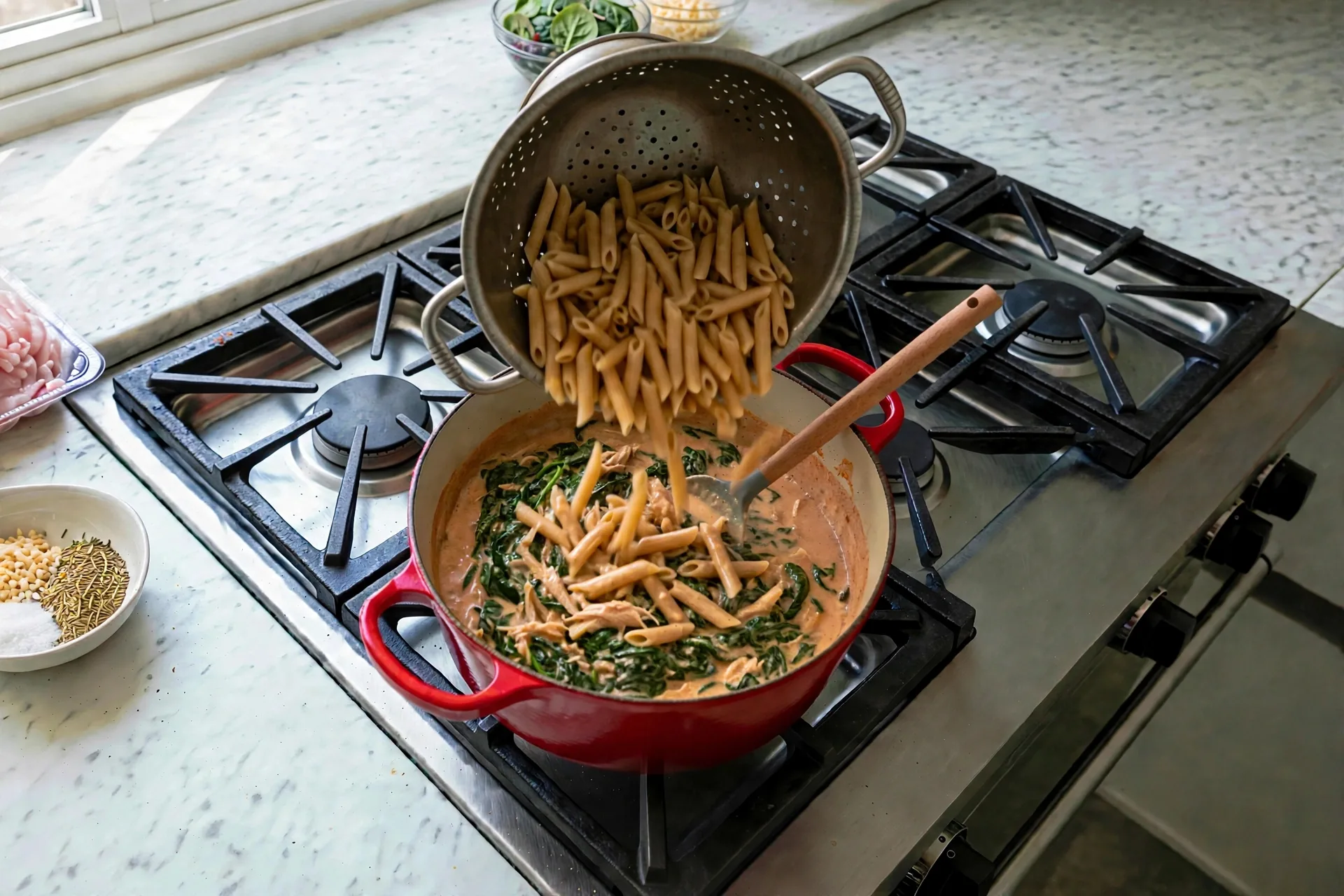
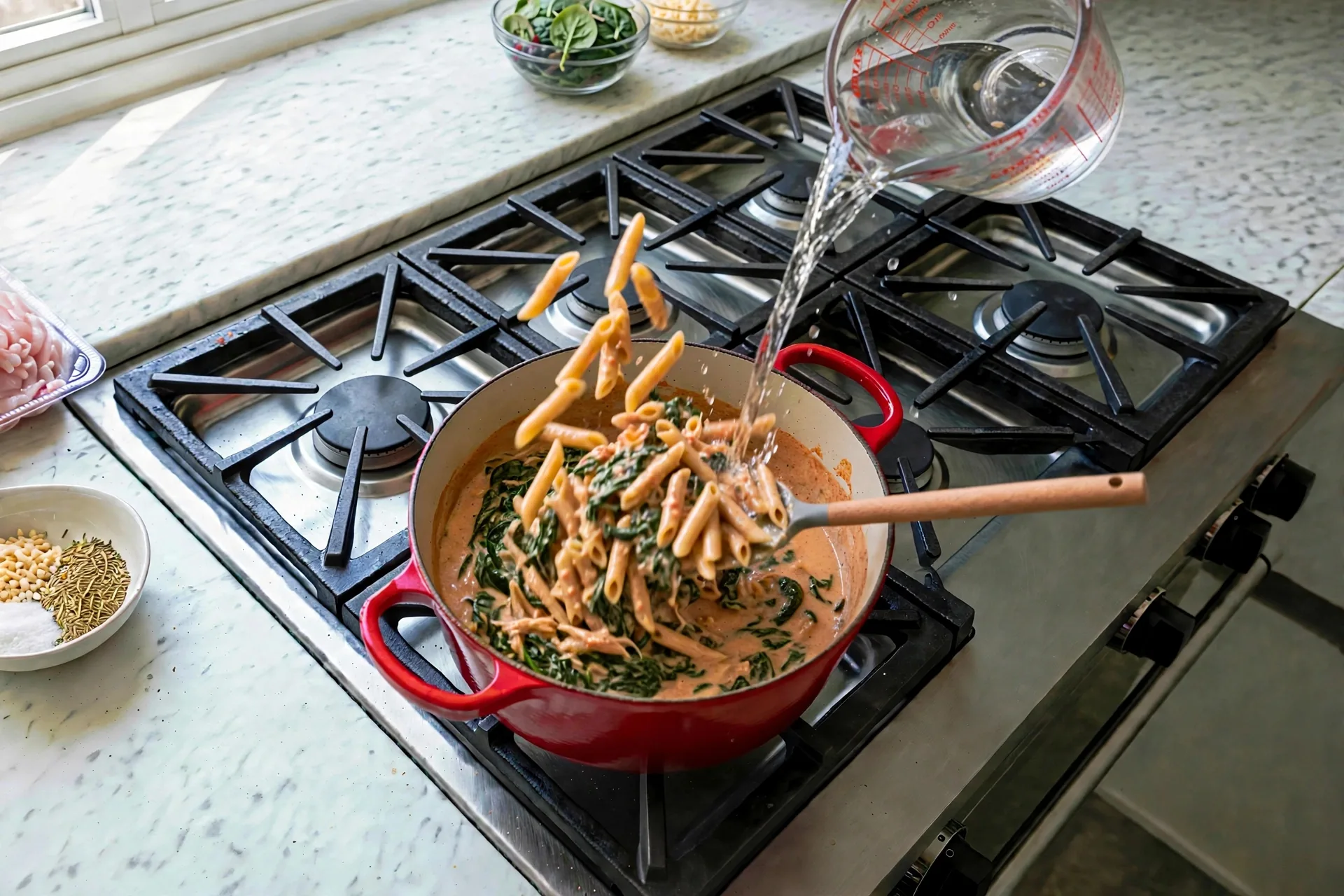
Toss everything with the spatula and add a splash of the reserved pasta water. The sauce should coat every tube instead of pooling at the bottom. If it looks thick and clingy in a stiff way, add another small splash. If it looks loose and watery, let the pot sit on the heat a short while longer while you toss.
Sprinkle the shredded mozzarella over the pasta. It sits in white shreds on top at first.
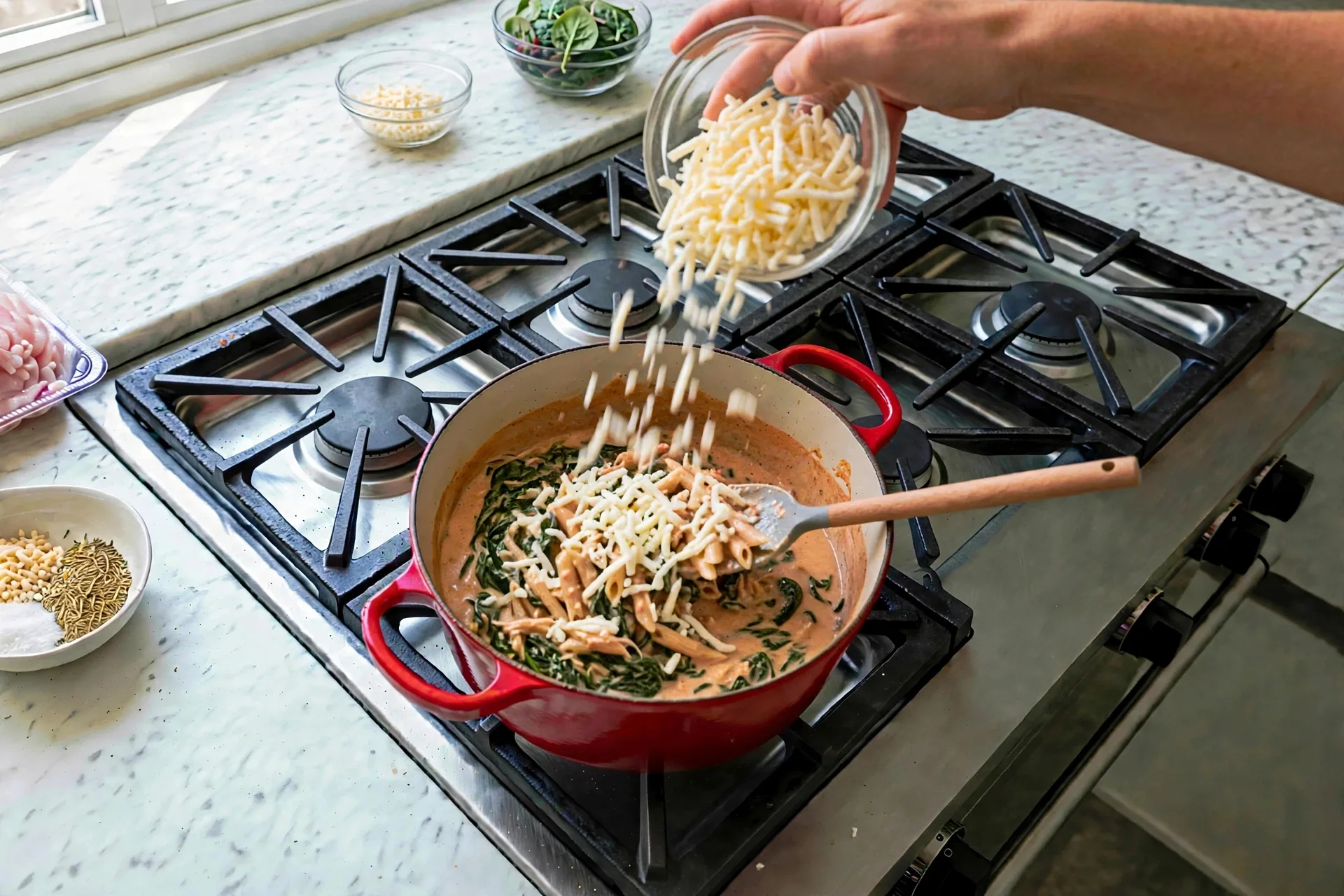
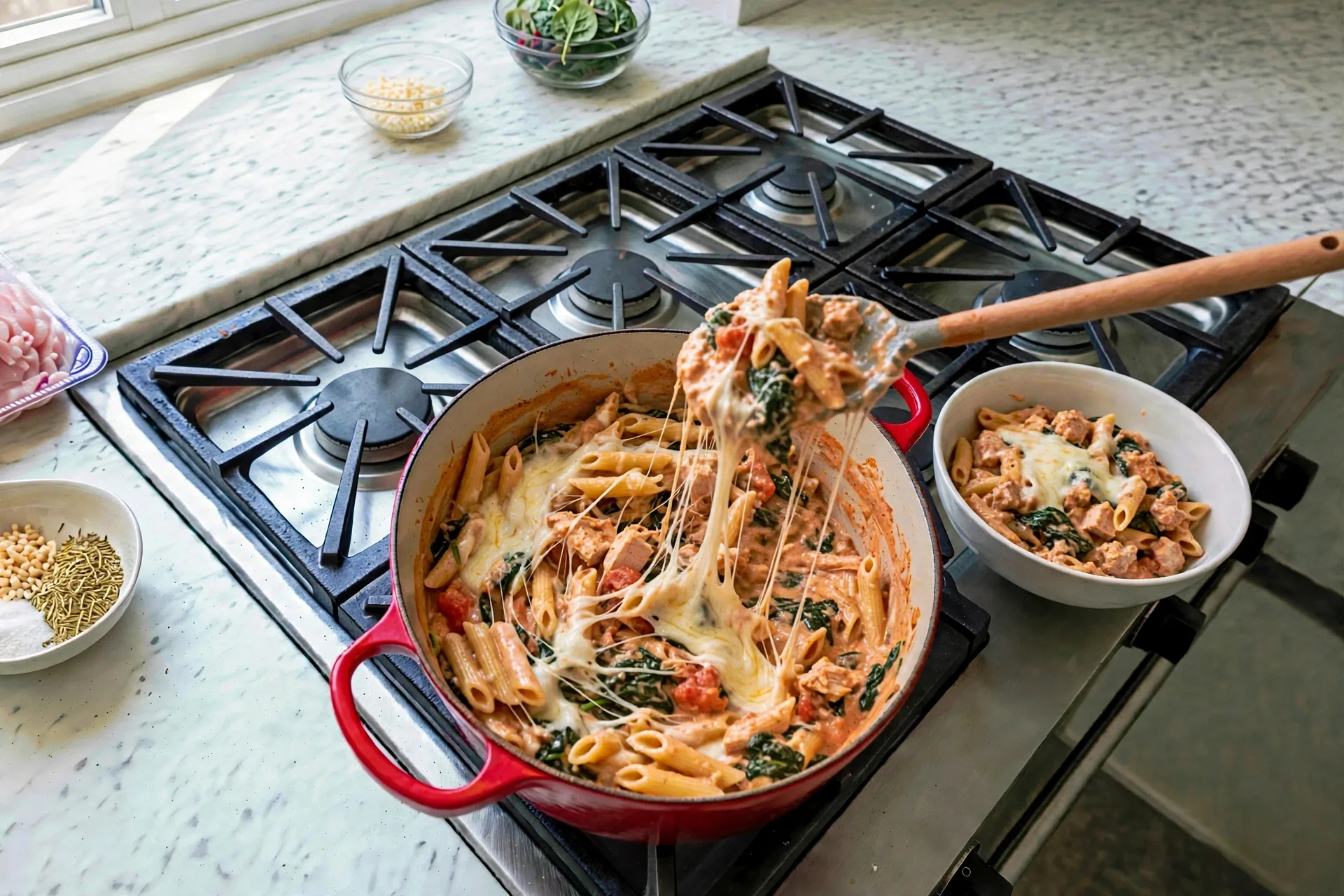
Stir until the mozzarella melts into soft, stretchy strands that cling to the penne, spinach, turkey, and tomato pieces. Pull the pot off the heat as soon as the cheese melts. Long cooking after the cheese goes in turns the strands tough.
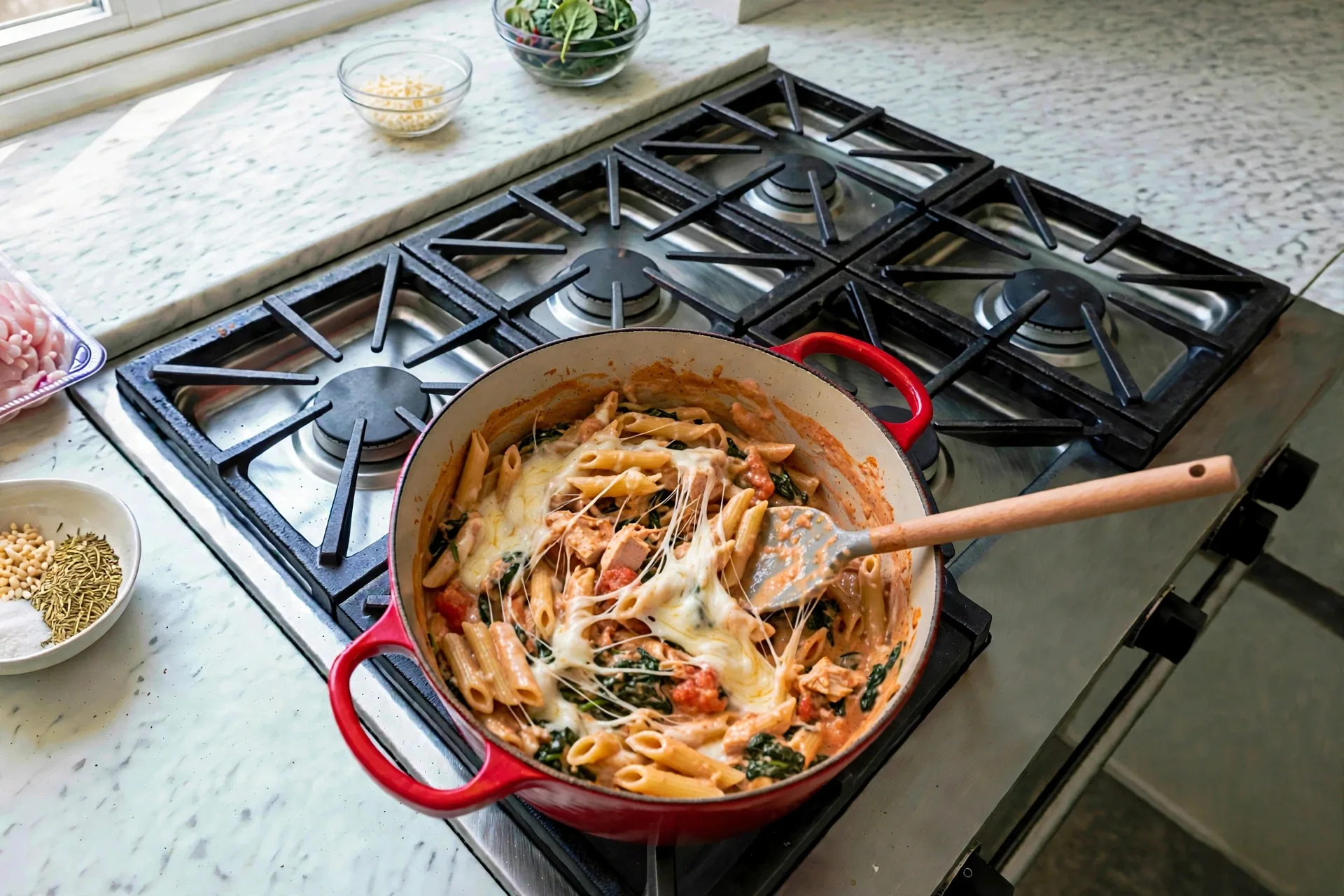
Spoon portions into bowls straight from the pot, with cheese strands stretching from the spoon. The spinach should still read dark green, the turkey golden, and the sauce orange-pink around every tube.
Common mistake: draining the pasta and forgetting the reserved water. Without it, a tomato-cream sauce tightens as it cools and the pasta turns sticky instead of glossy. Scoop the cup before you drain, every time.
Creamy Ground Turkey Spinach Pasta
The second recipe drops the tomato entirely. Broth and heavy cream build a pale ivory sauce, Parmesan melts into it for body, and spinach wilts in at the end. It cooks in a wide skillet instead of a Dutch oven, which gives the sauce more surface to thicken. If tomato sauces feel heavy to you some nights, this is the lighter-colored but still rich answer. A similar cream-sauce approach shows up in the creamy butternut squash pasta, which uses the same idea of a sauce that coats rather than pools.
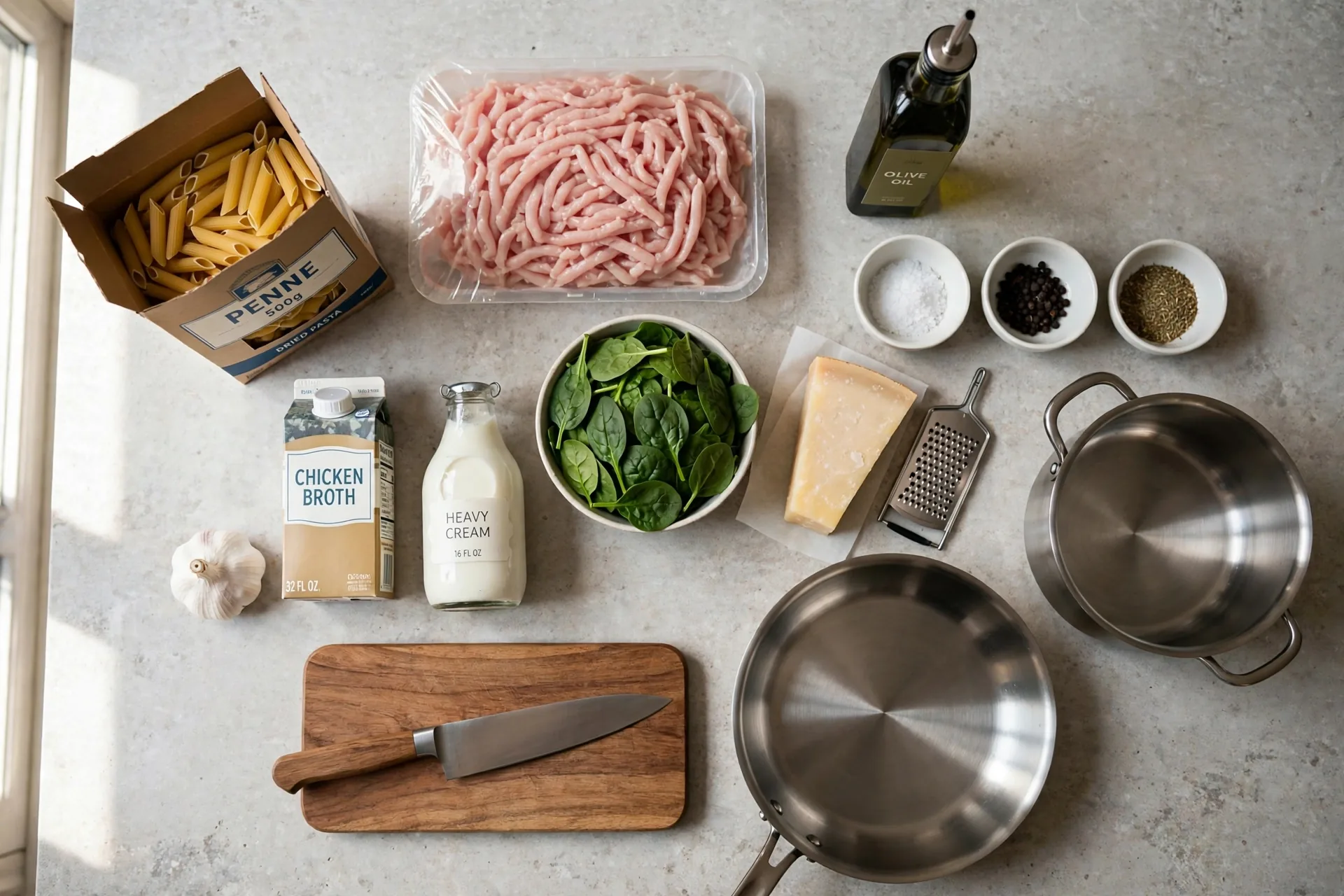
Ingredients
For the pasta and turkey
- 12 oz penne
- 1 lb ground turkey
- Olive oil
- Salt
- Black pepper
- Dried Italian seasoning
For the sauce and finish
- 3 garlic cloves
- Chicken broth
- Heavy cream
- Baby spinach
- Parmesan, finely grated
The penne, the turkey, and the garlic carry stated quantities. The broth, cream, spinach, and Parmesan go in by the pour, the handful, and the sprinkle, so no exact amounts are listed for them here or in the card below. This recipe contains wheat and dairy.
Get the small prep done first. Garlic and Parmesan both need to be ready before the turkey finishes browning, because the sauce steps move fast after that.
How to make Creamy Ground Turkey Spinach Pasta
Prep the garlic and Parmesan
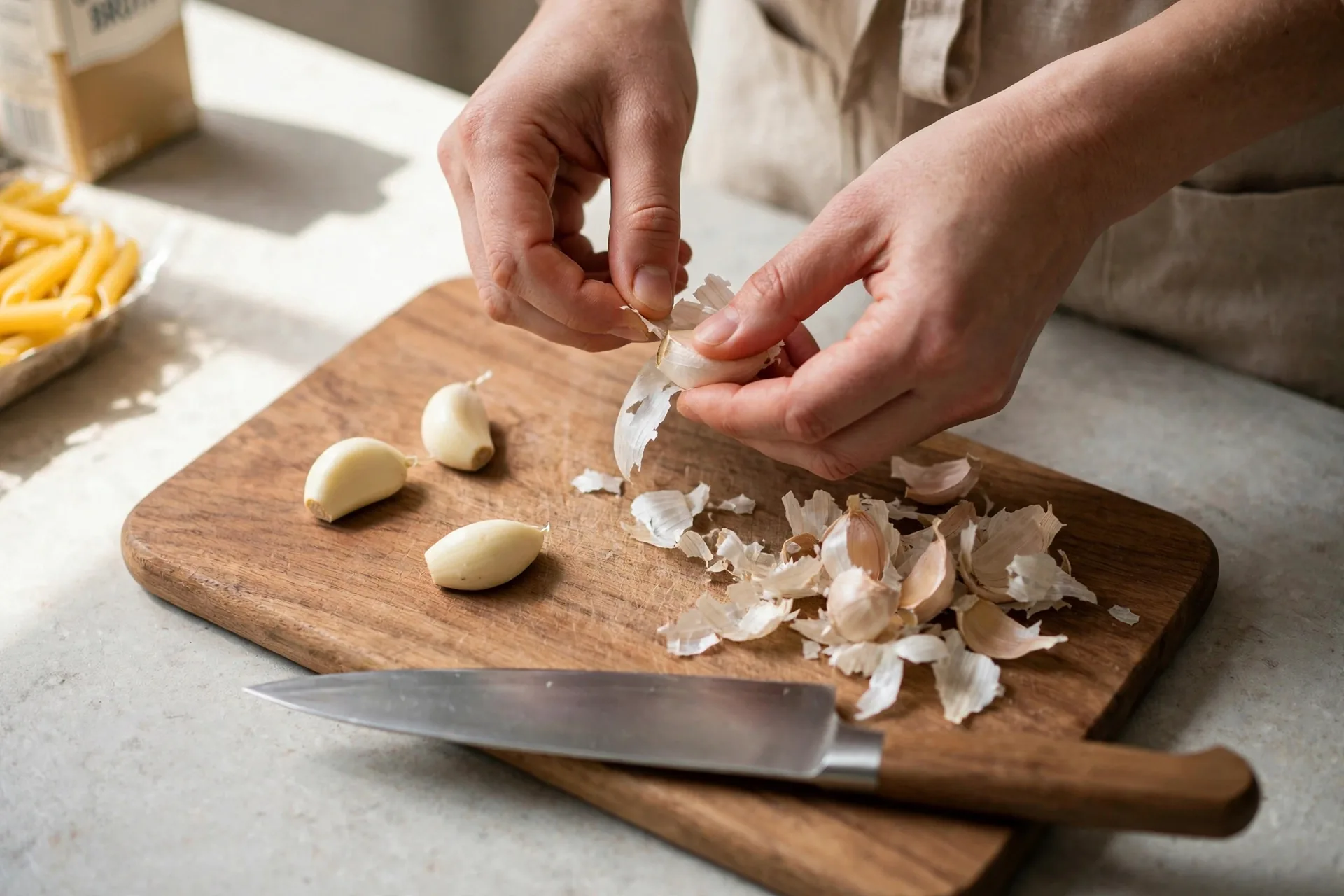
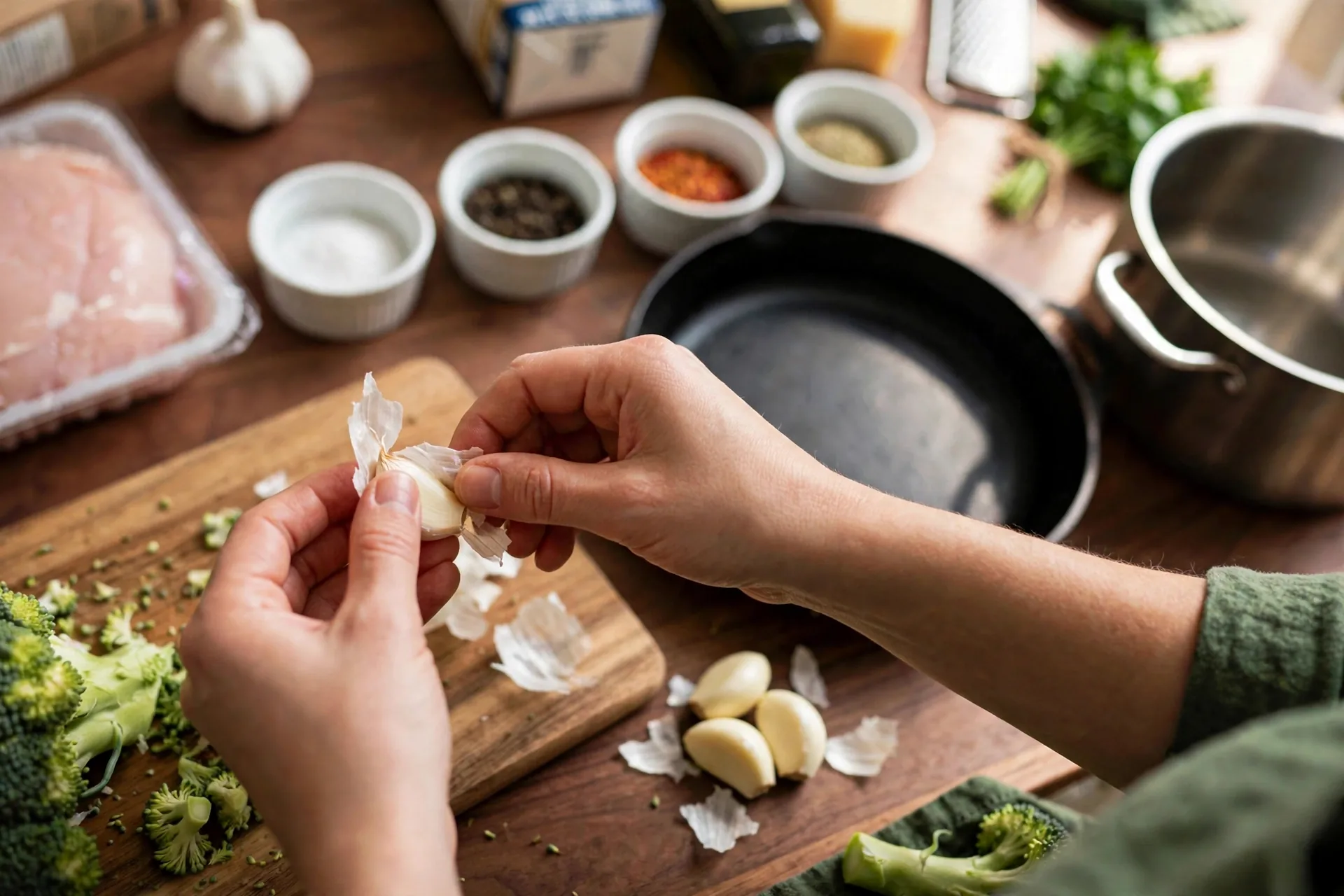
Peel the garlic cloves. Three peeled cloves, pale and firm, are what this sauce needs. Soft or sprouted cloves taste sharp in a cream sauce, so pick firm ones.
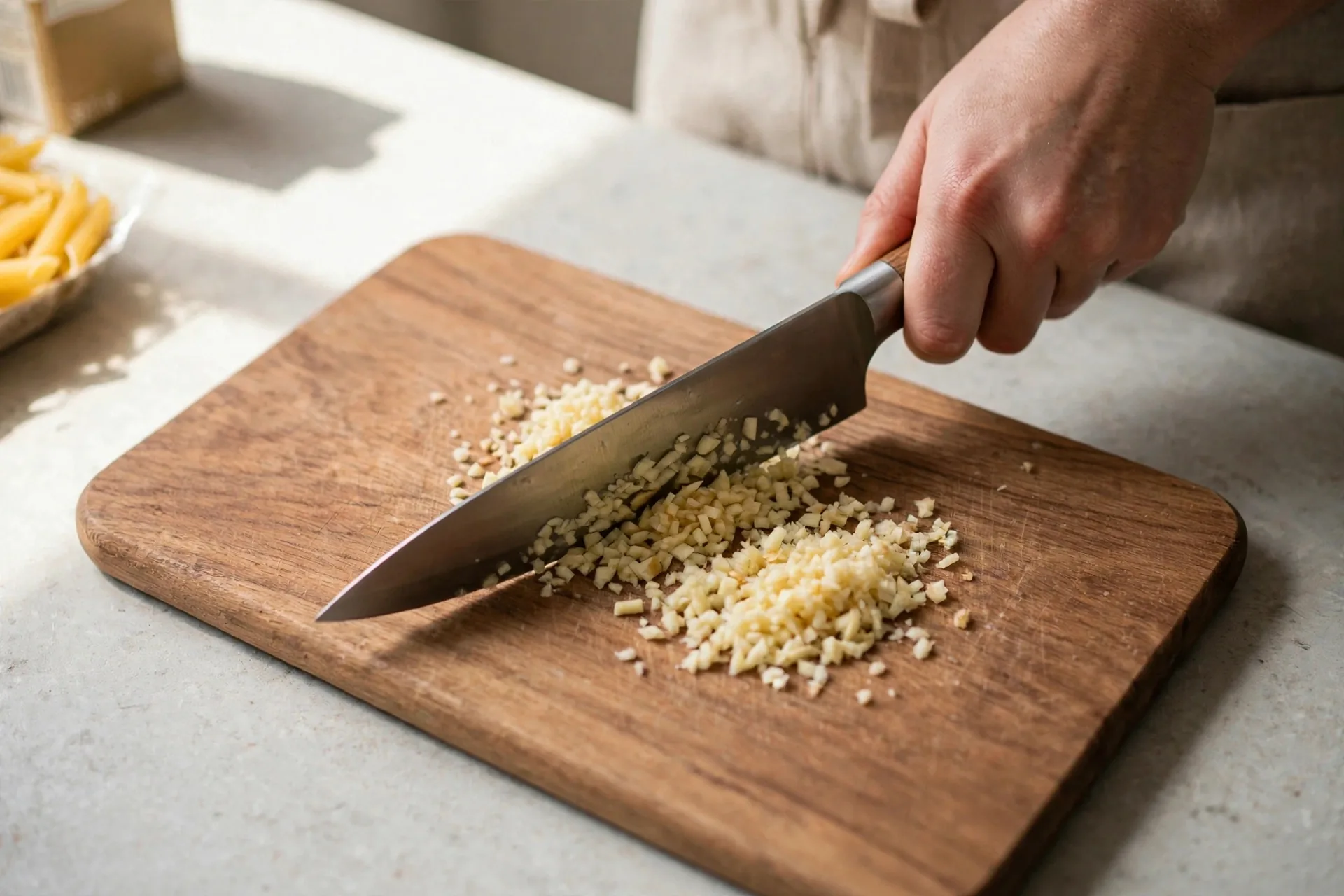
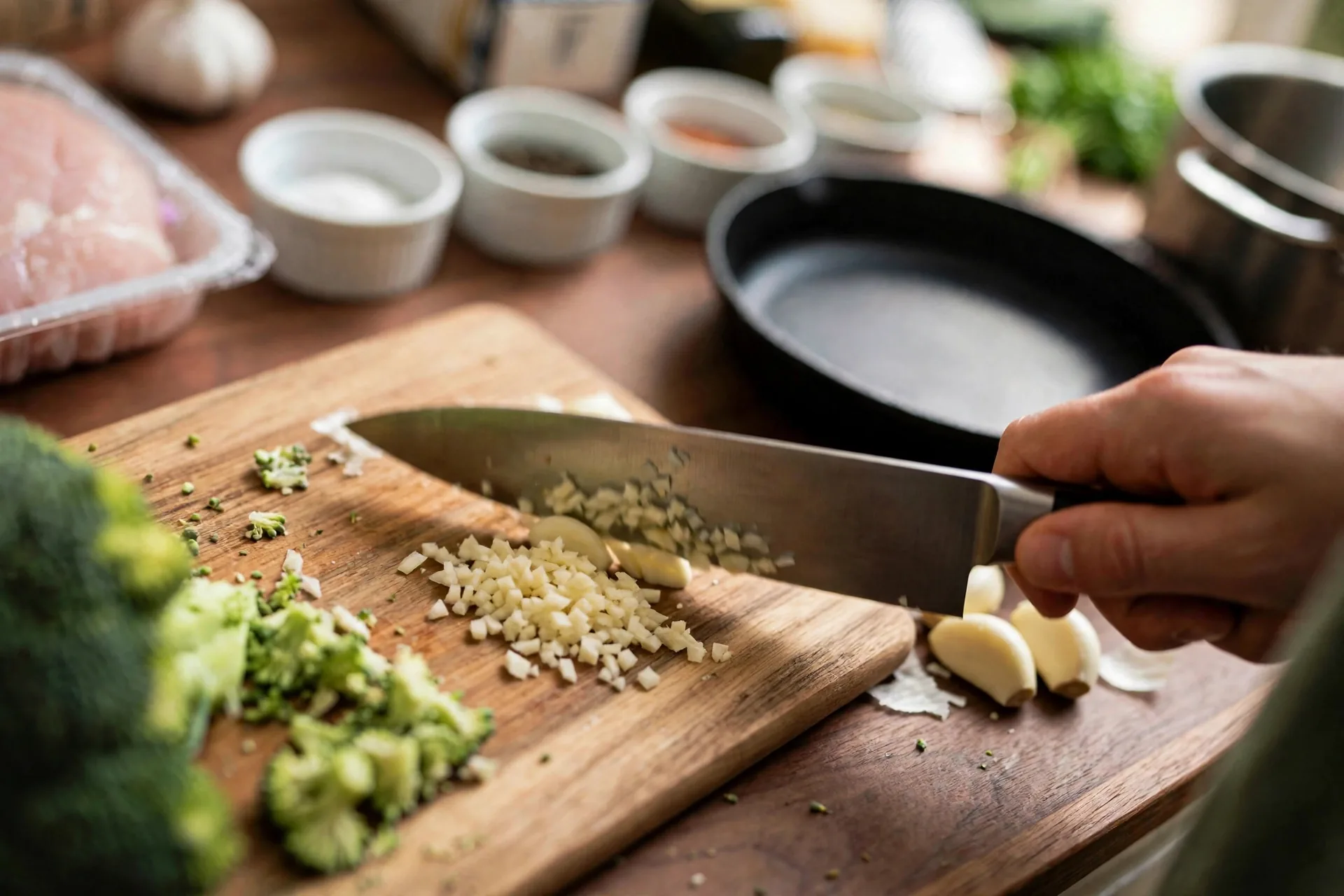
Mince the peeled cloves into a fine pile. Fine mince matters here because large garlic pieces stay raw-tasting in a short simmer, while a fine pile softens and spreads through the sauce.
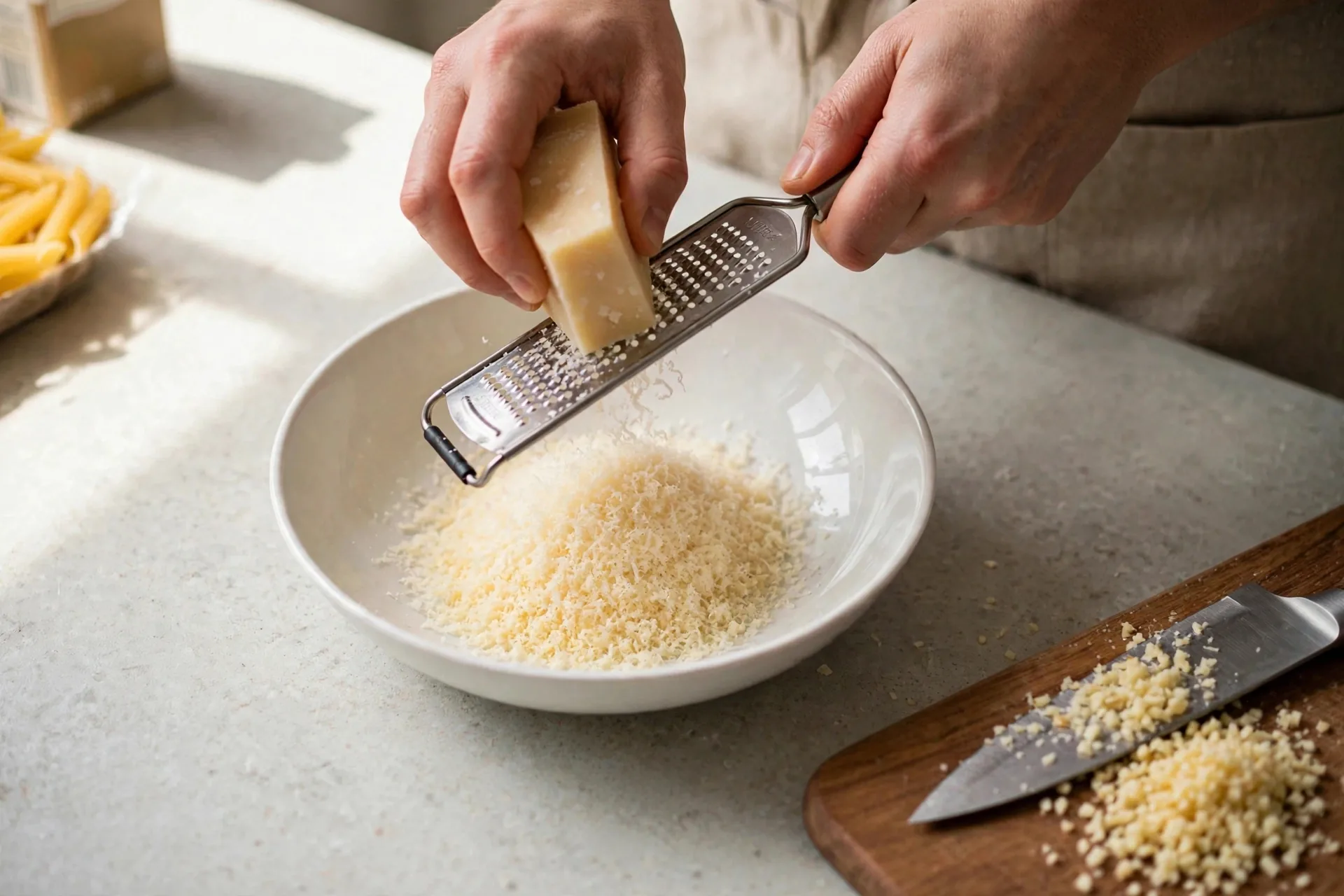
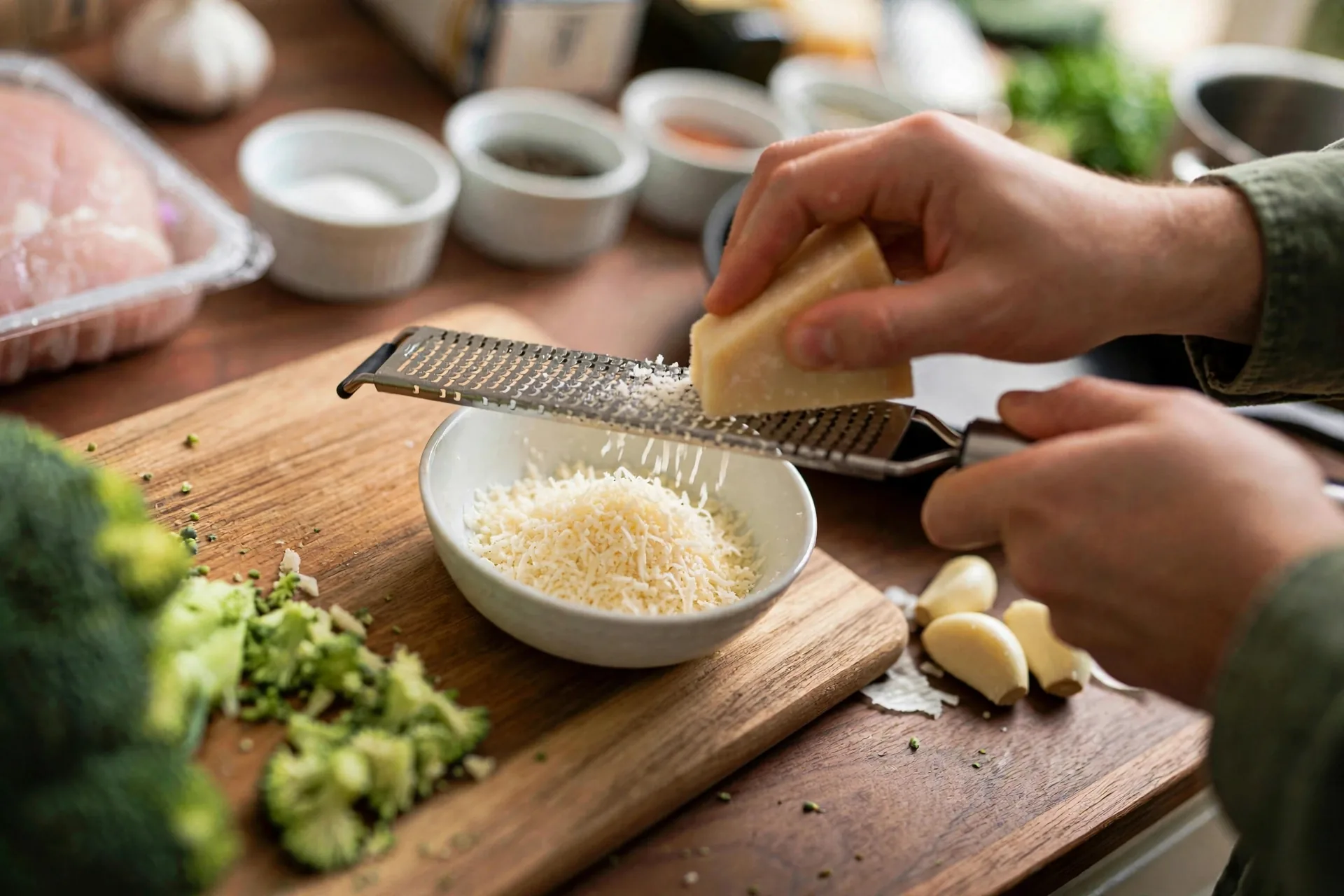
Grate the Parmesan wedge on a fine grater into a fluffy pile. Fine grating melts fast and smooth. Coarse shreds take longer and can turn grainy in cream.
Boil and drain the penne
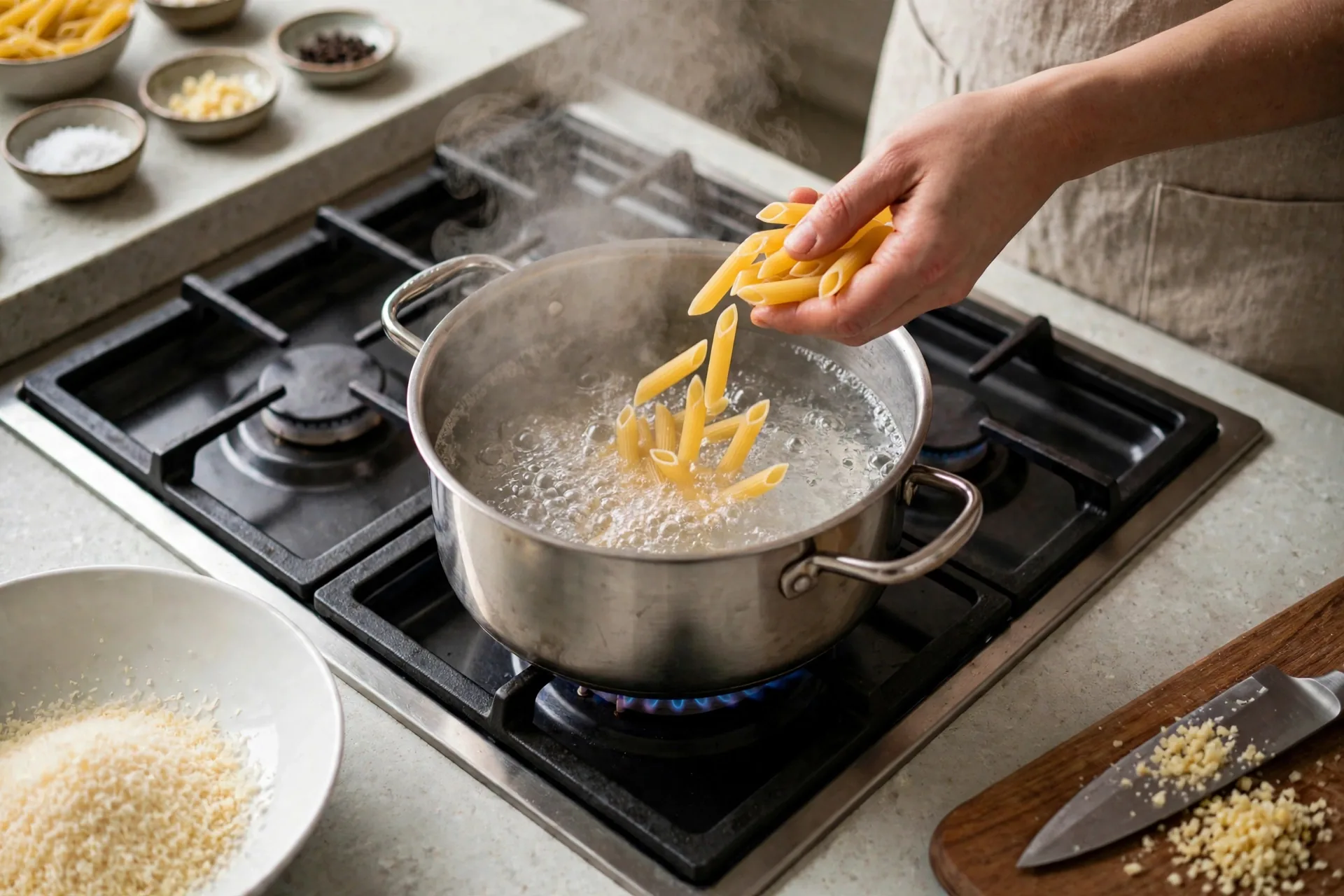
Bring a pot of salted water to a rapid boil and lower the dry penne in. The tubes go in stiff and pale yellow.
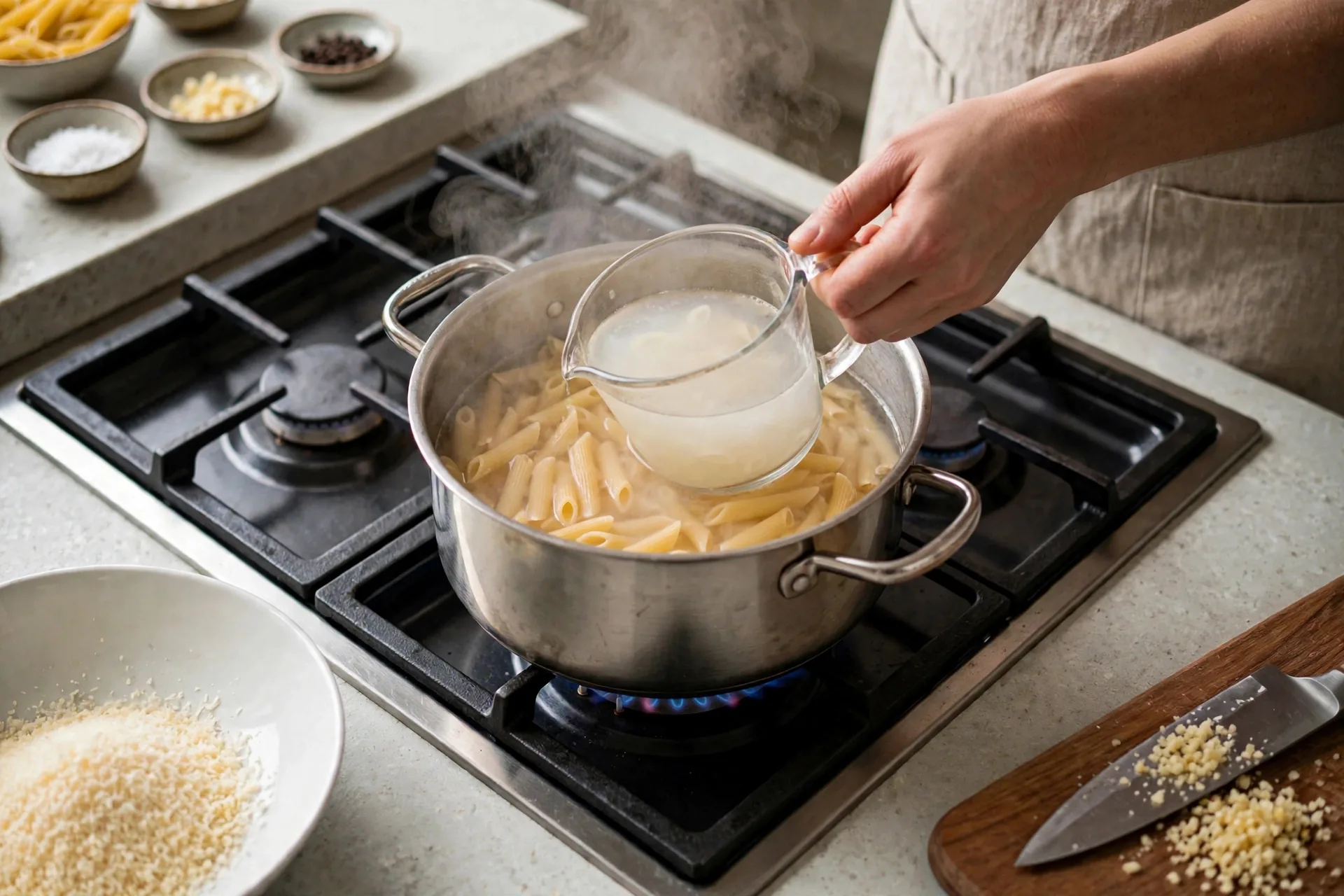
Scoop out a cup of the cloudy pasta water before draining. The same starchy water trick applies here: it loosens the cream sauce later and helps it grip the penne.
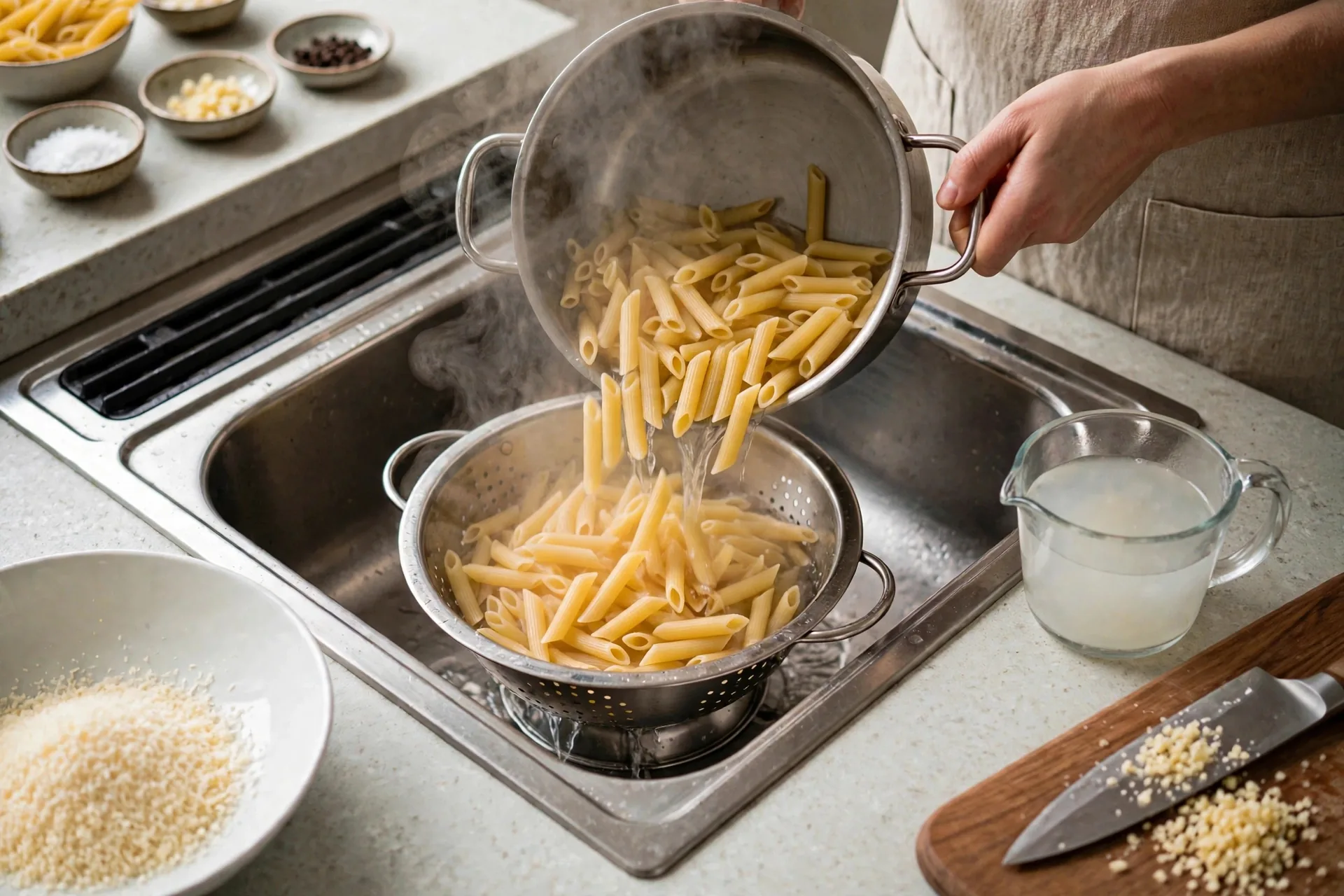
Drain the penne when it reaches al dente, firm at the center when bitten, and keep the reserved water cup close.
Brown the turkey
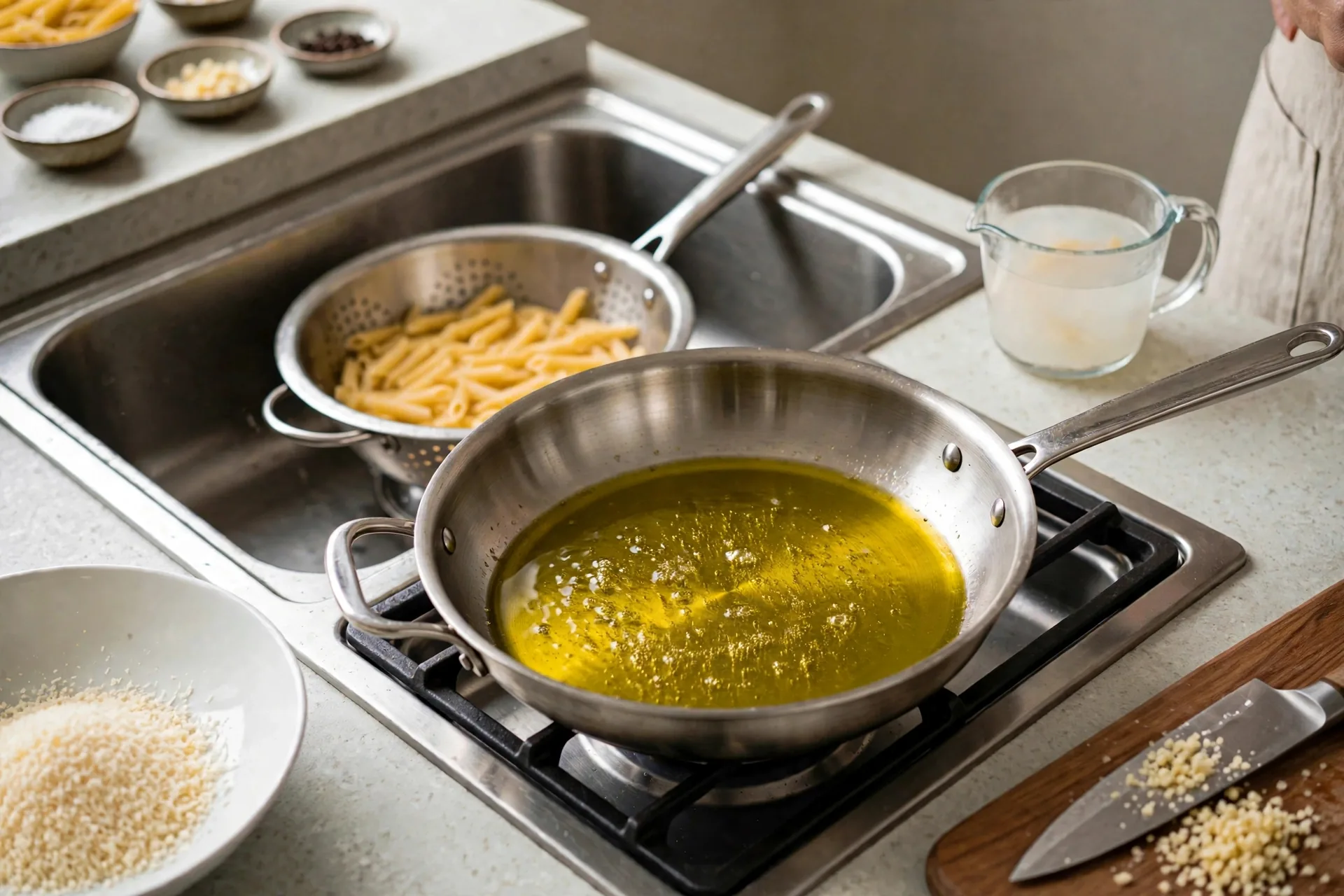
Warm olive oil in the wide skillet until it shimmers across the bottom. A wide skillet browns turkey well because the crumbles spread out instead of stacking and steaming.
Add the ground turkey to the hot oil. It goes in pale pink and in one piece.
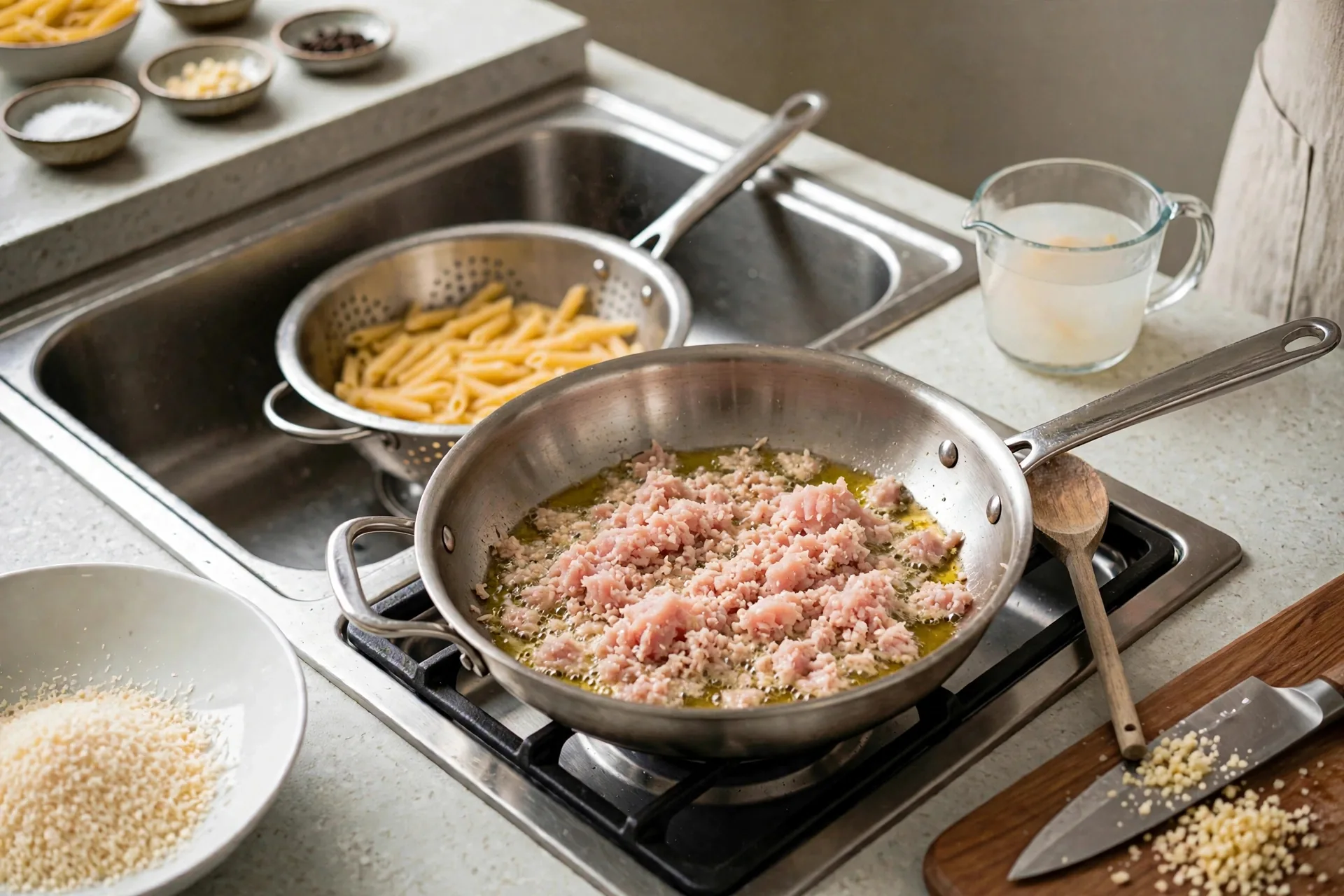
Break it up with a wooden spoon into crumbles. A few pieces will still look pink at this point and some will turn pale tan. That is the middle of browning, not the end of it.
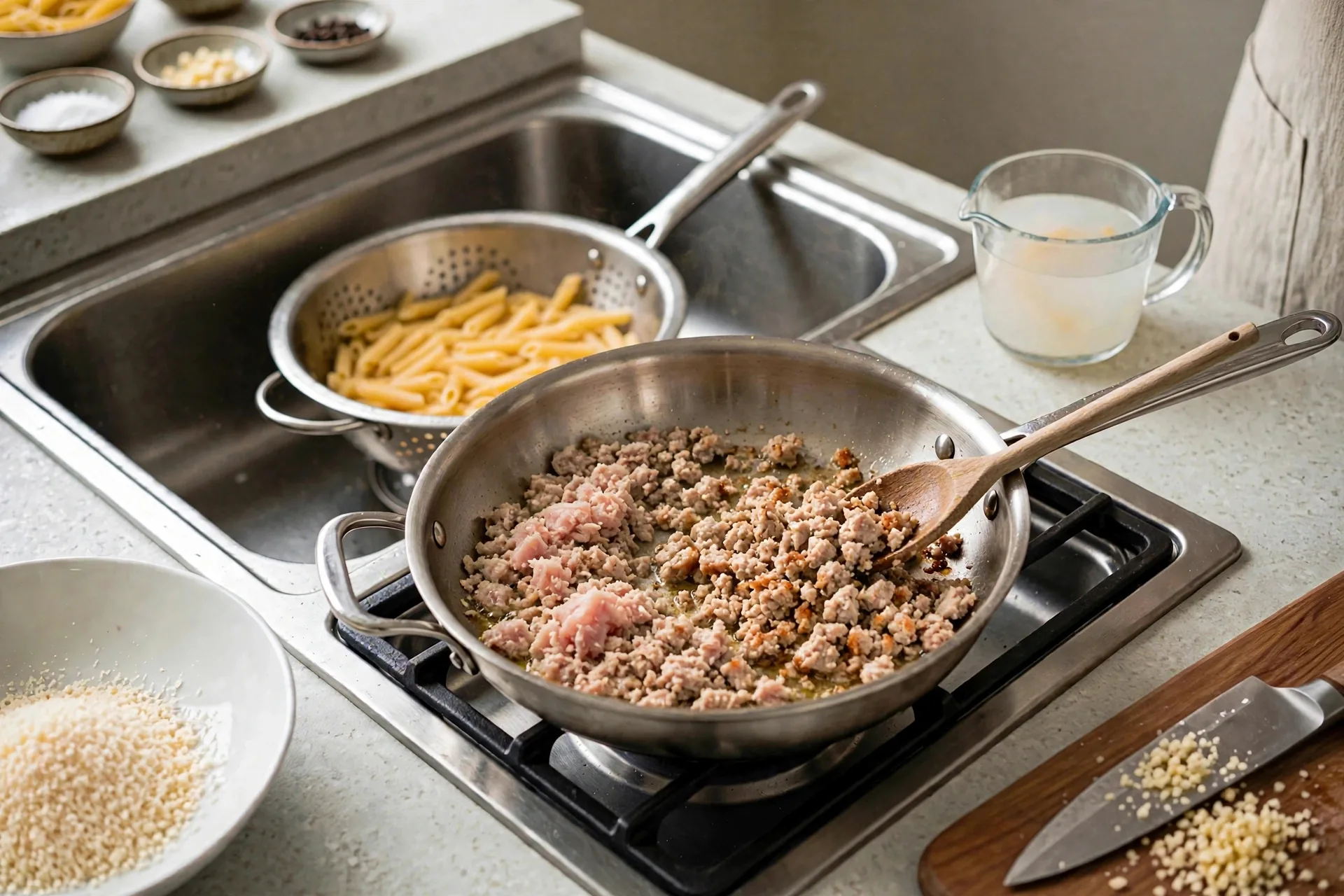
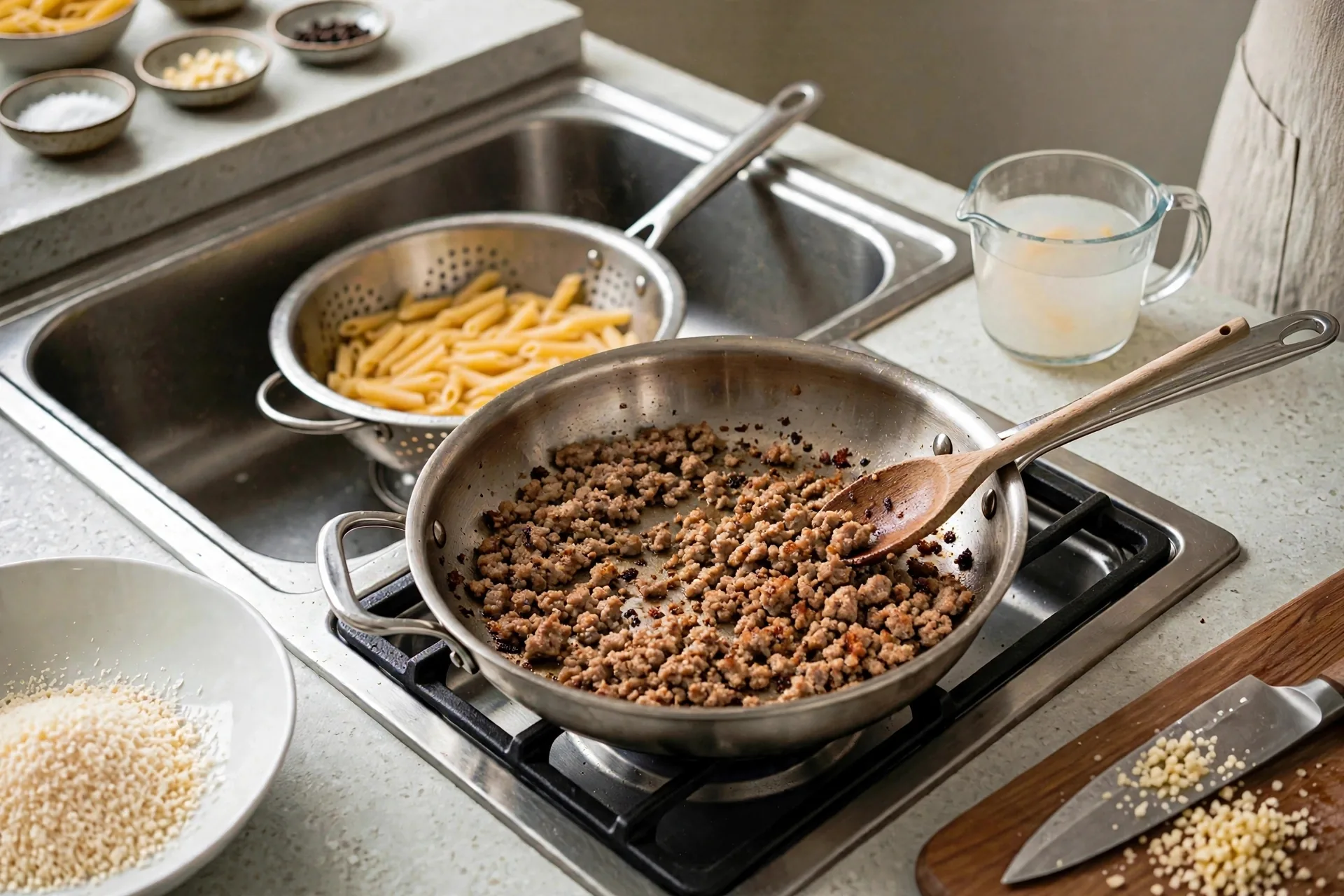
Cook until the crumbles are golden-brown at the edges with no pink left and browned bits clinging to the pan. As with the first recipe, ground turkey must cook fully through before the sauce starts.
Build the cream sauce
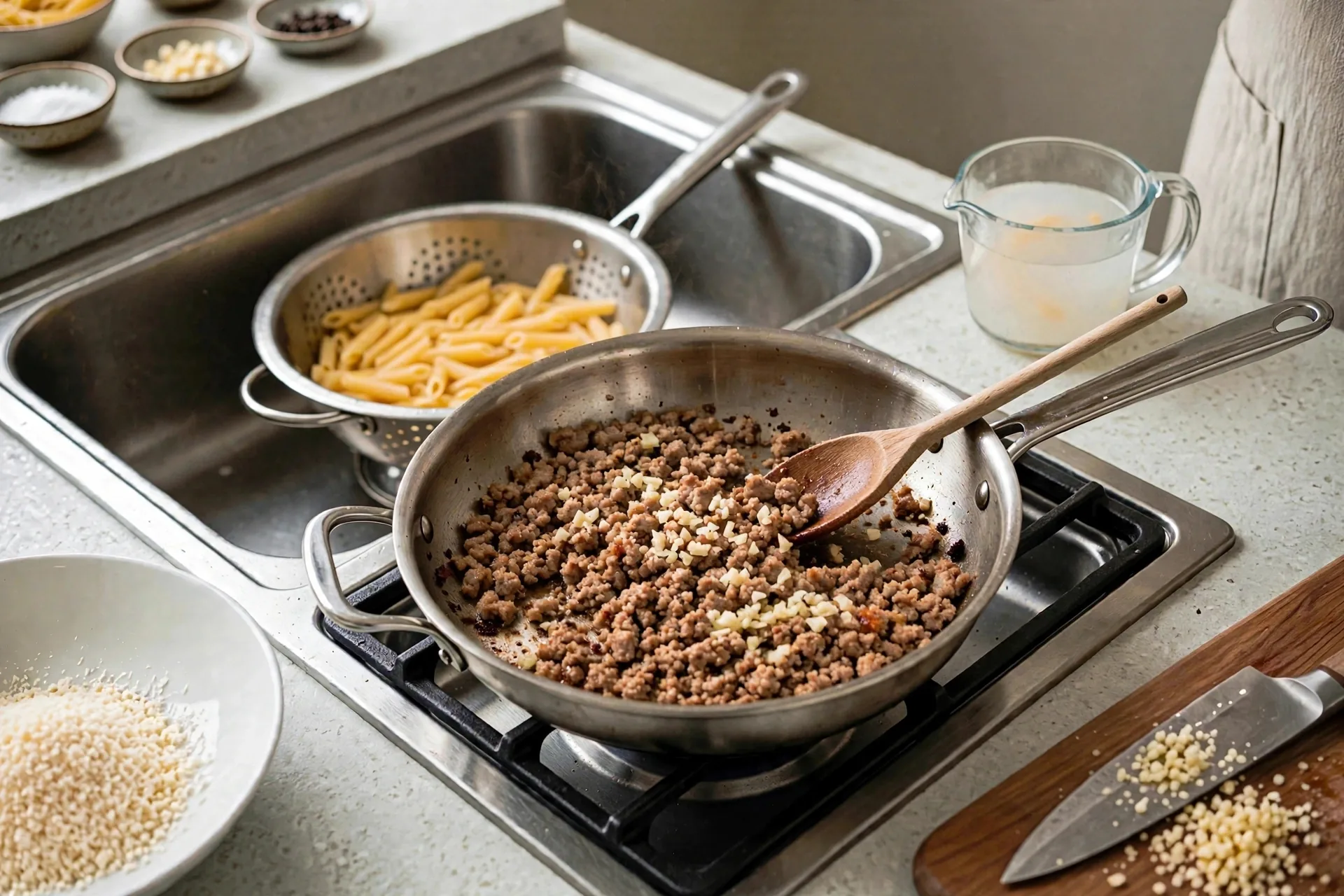
Add the minced garlic to the browned turkey and stir. The garlic should smell fragrant and stay pale. Garlic that turns golden here will taste bitter once the cream goes in, so this step is short.
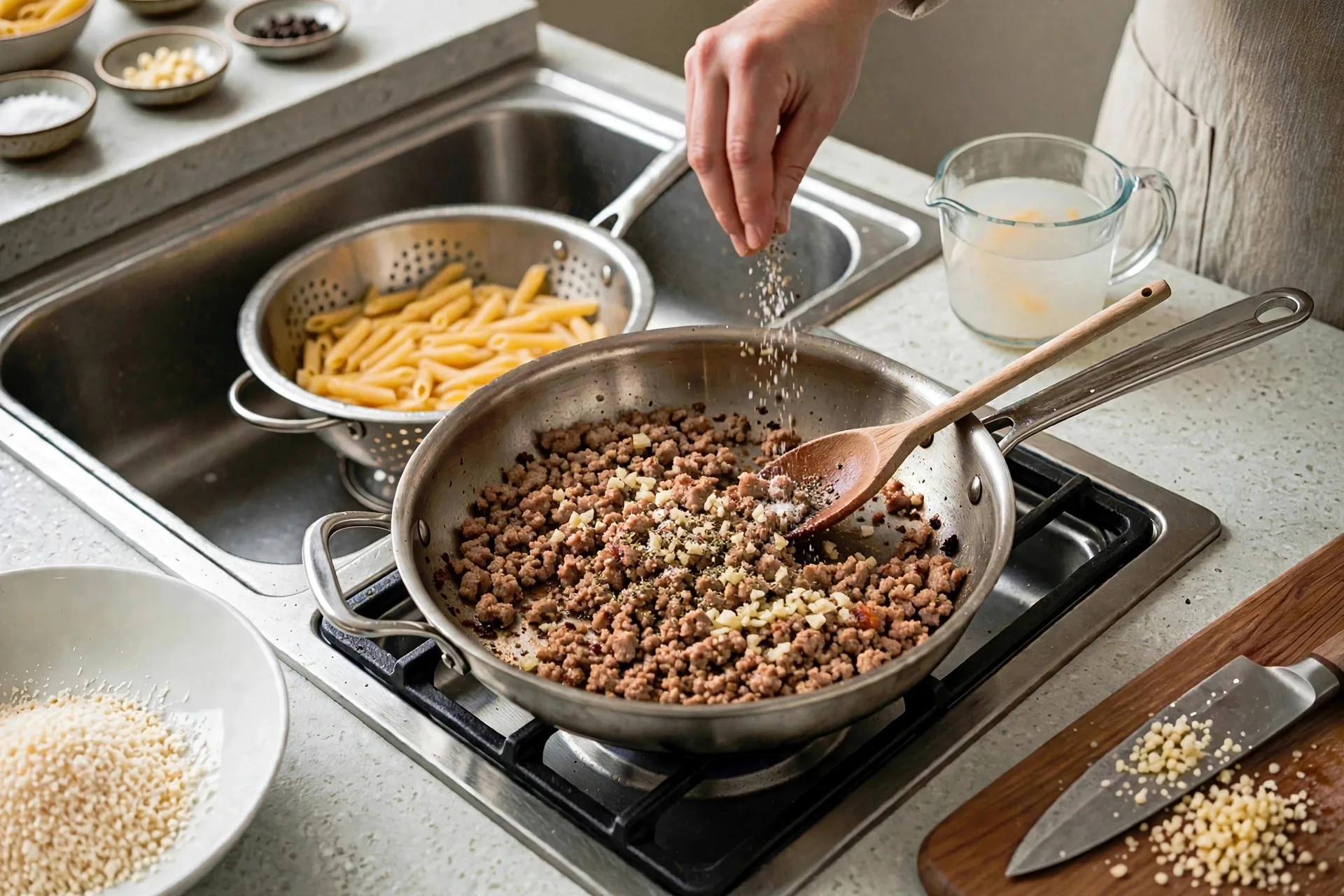
Sprinkle salt, black pepper, and dried Italian seasoning over the turkey and garlic. Seasoning the meat before the liquid goes in keeps the flavor in the crumbles instead of only in the sauce.
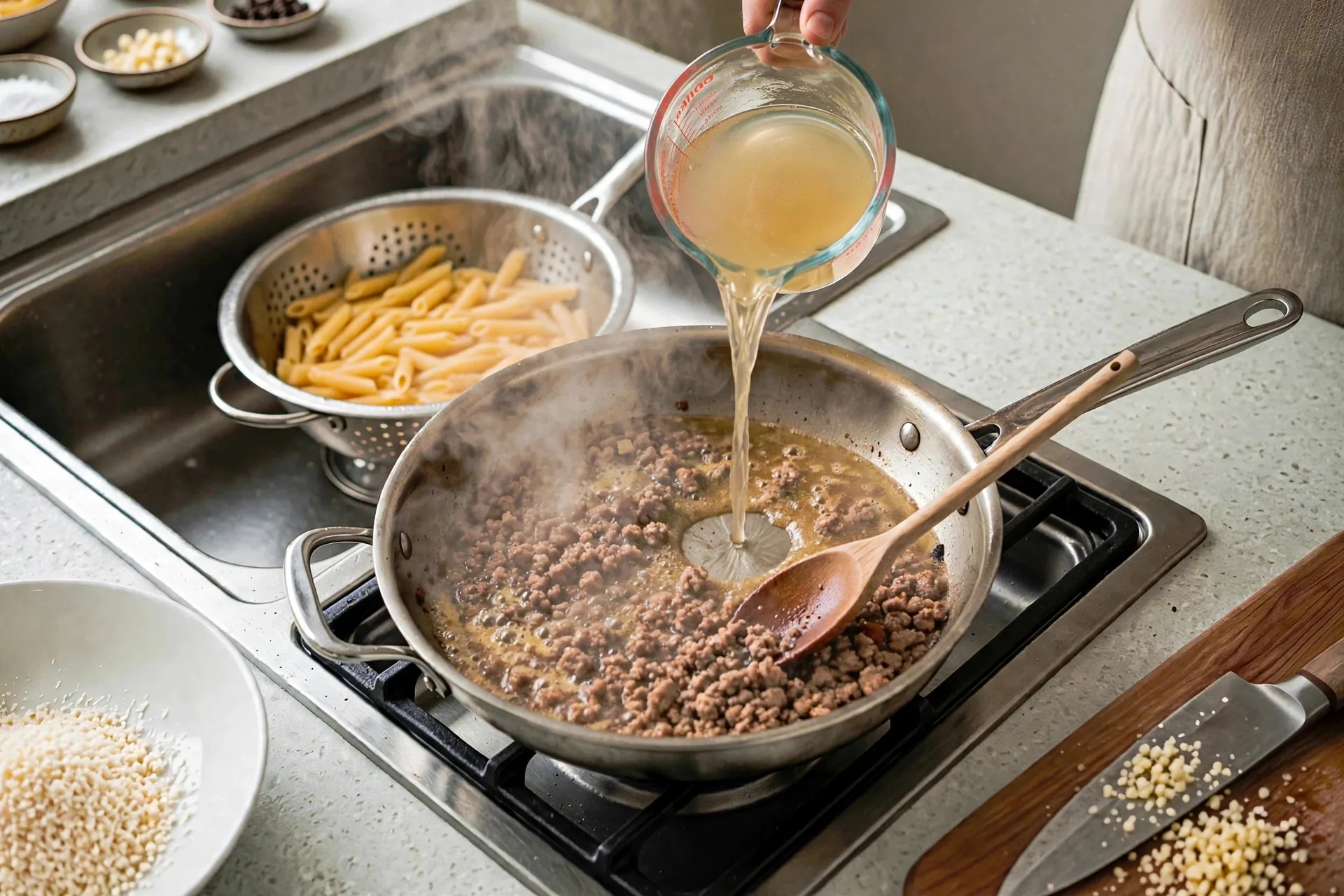
Pour in the chicken broth. It hits the hot pan with steam and lets you scrape the browned bits off the bottom. Those bits dissolve into the broth and deepen the sauce.
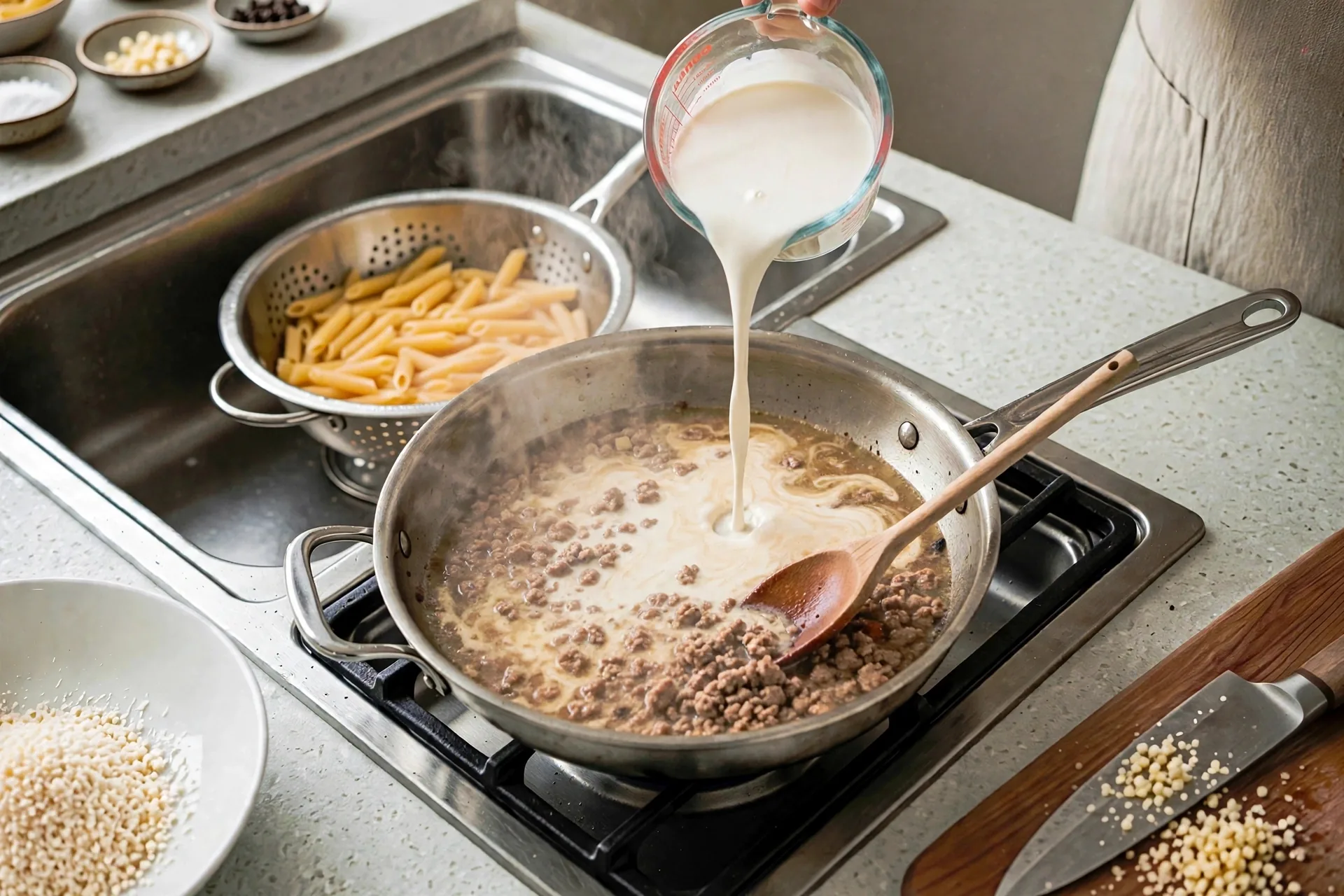
Pour in the heavy cream. The liquid turns pale ivory where cream meets broth.
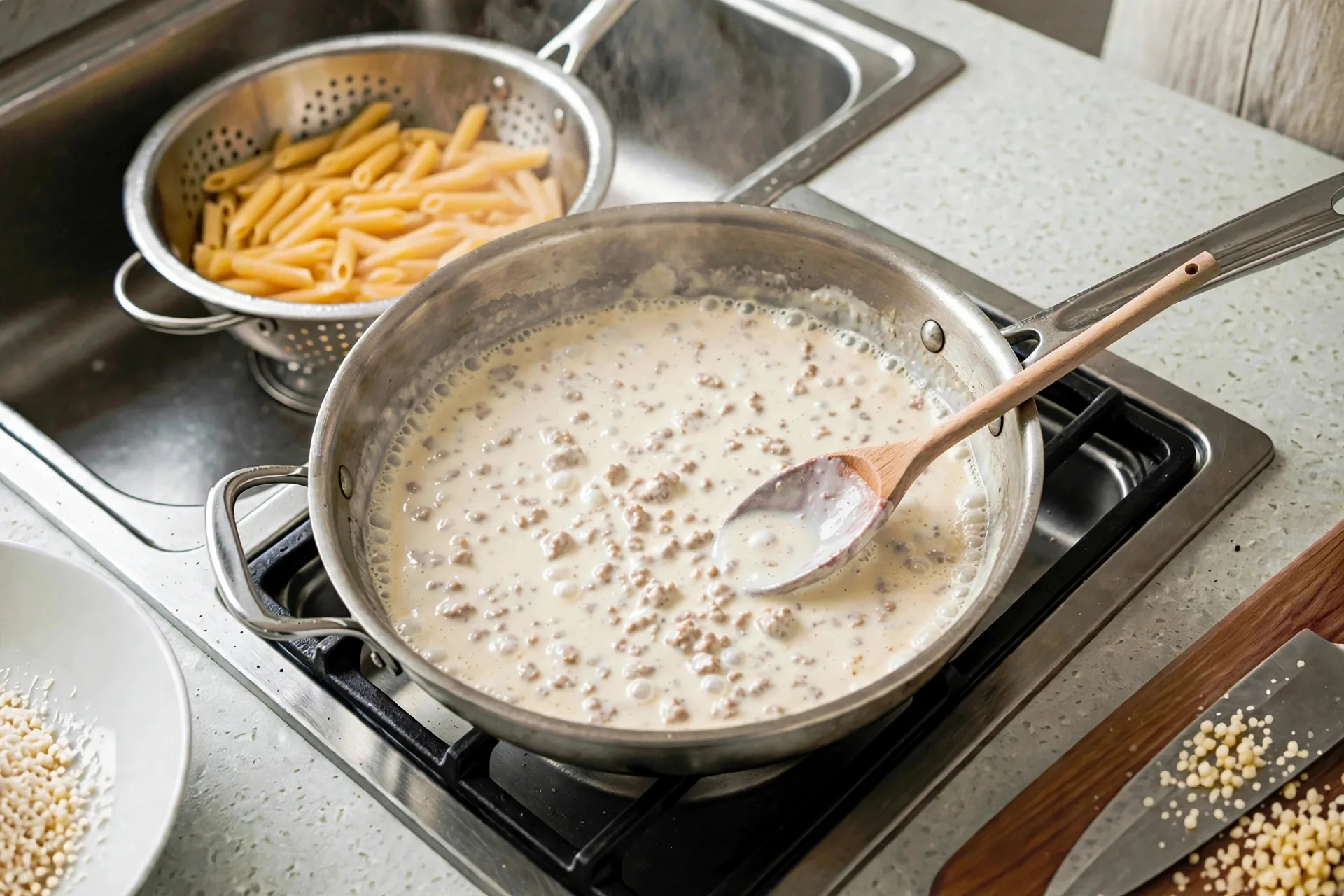
Let the sauce simmer gently until it thickens just enough to coat a spoon. Small bubbles at the edges are right. A hard boil is not: cream sauces that boil hard can separate, and a broken sauce will not come back together by stirring alone. If the sauce looks thin, give it more time at a gentle simmer rather than more heat.
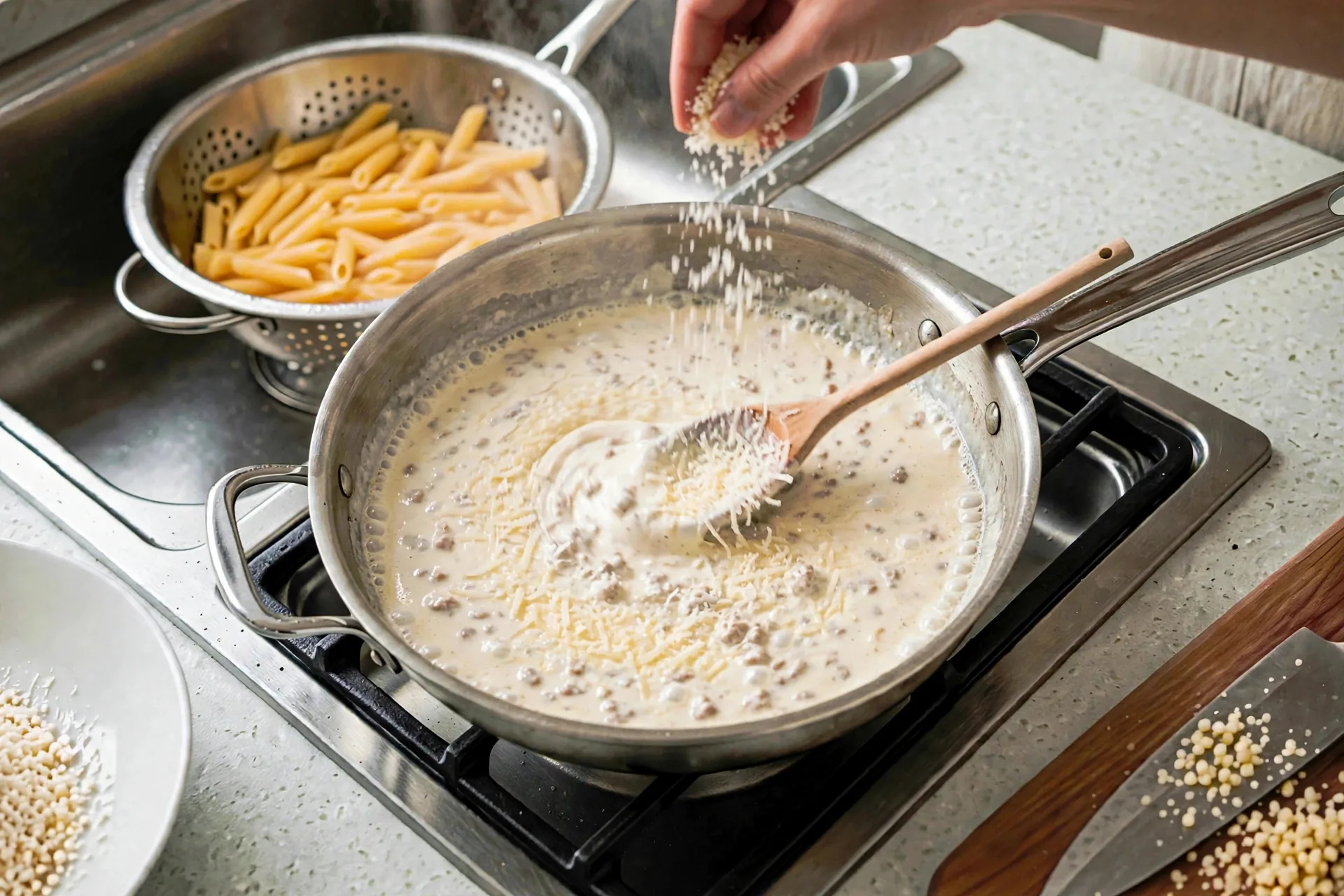
Sprinkle the grated Parmesan in small amounts while stirring. Let each addition melt before the next goes in. Dumping the whole pile at once drops the sauce temperature and leaves grainy clumps. Melted in slowly, Parmesan thickens the sauce and salts it at the same time, so taste before adding more salt later.
Wilt the spinach and toss the pasta
Add the spinach on top of the sauce. The leaves sit raw and bright green for a moment.
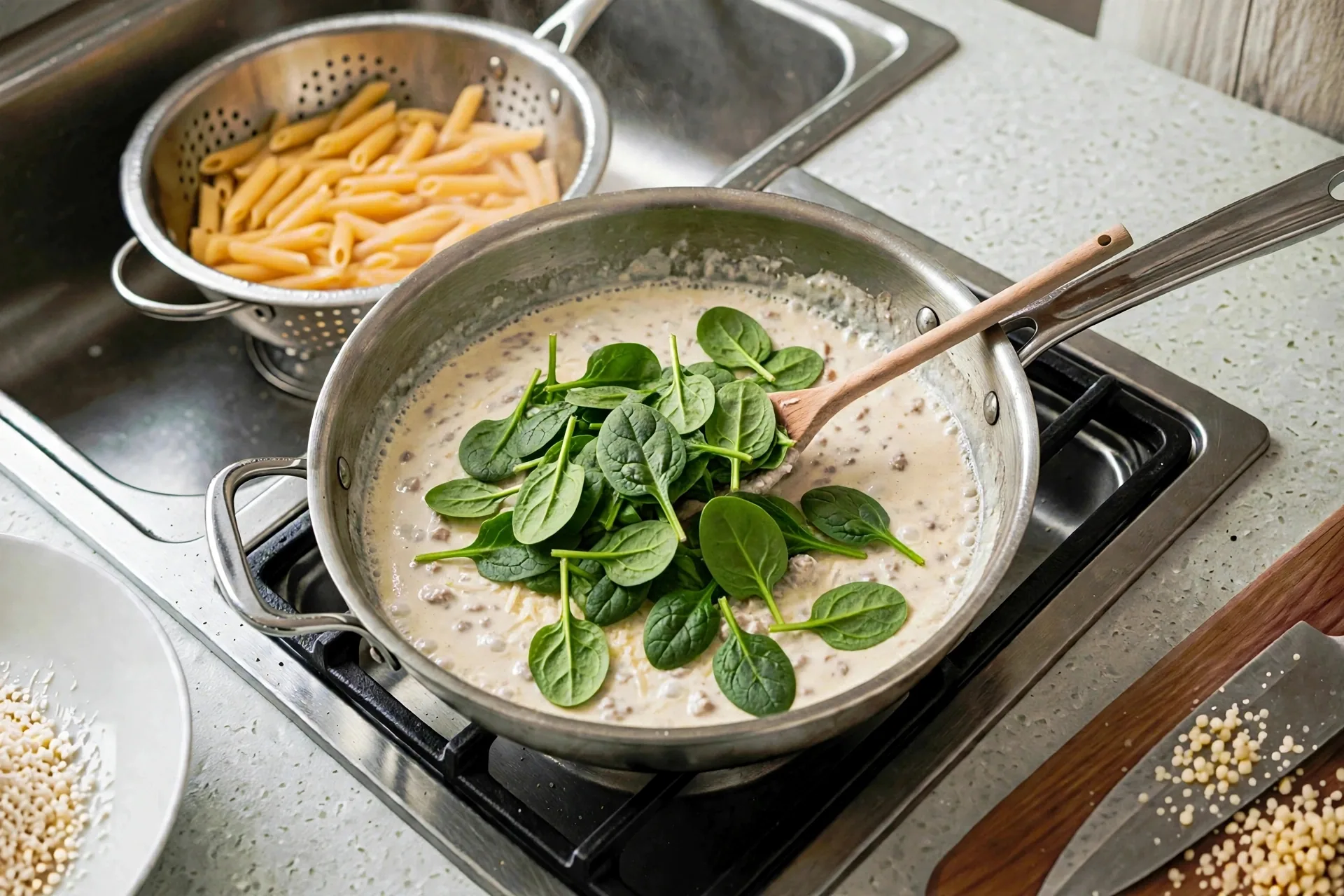
Stir until the spinach wilts into dark-green strands coated in ivory sauce. The color change from bright to dark green tells you the spinach is done. It needs no extra cooking after that point.
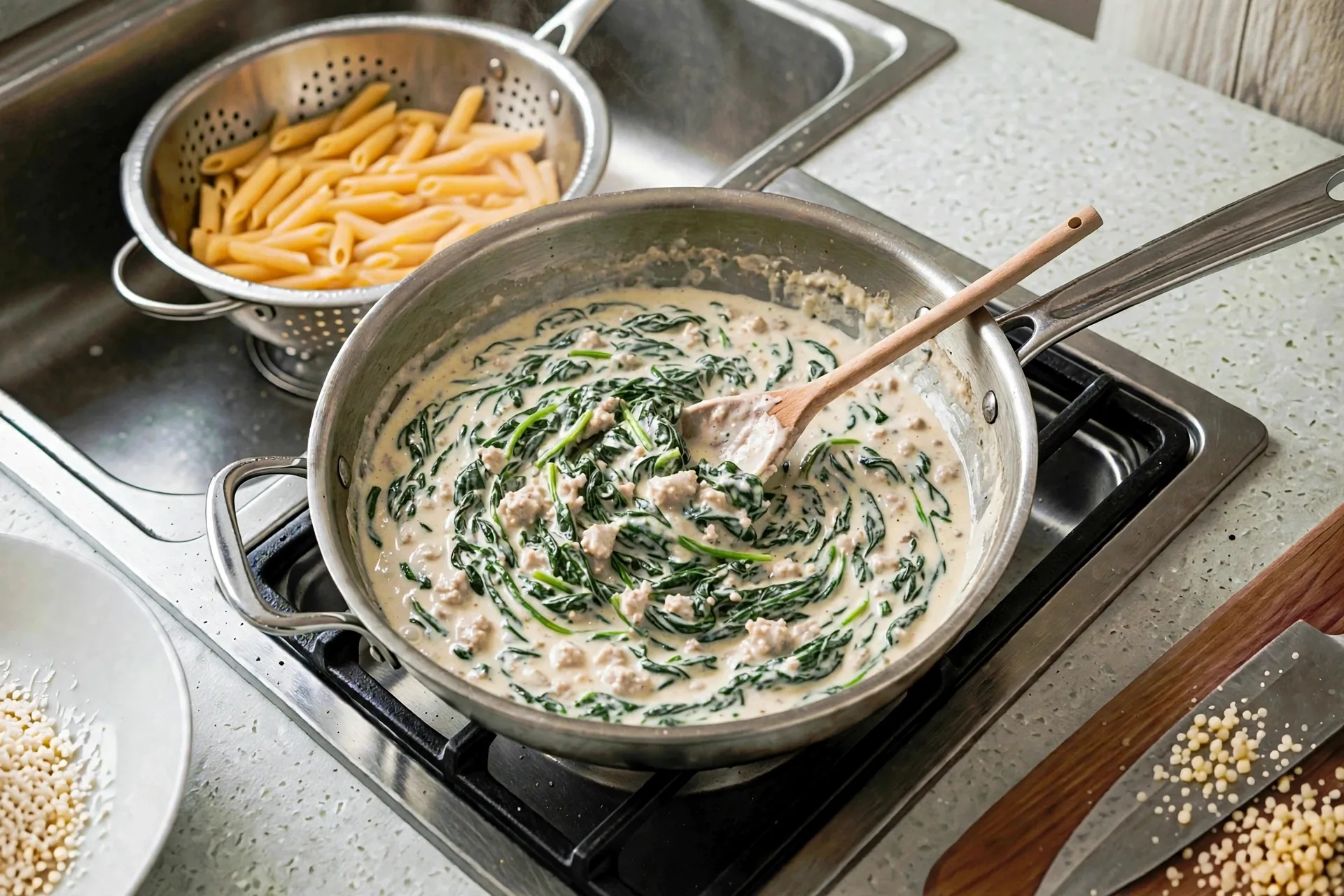
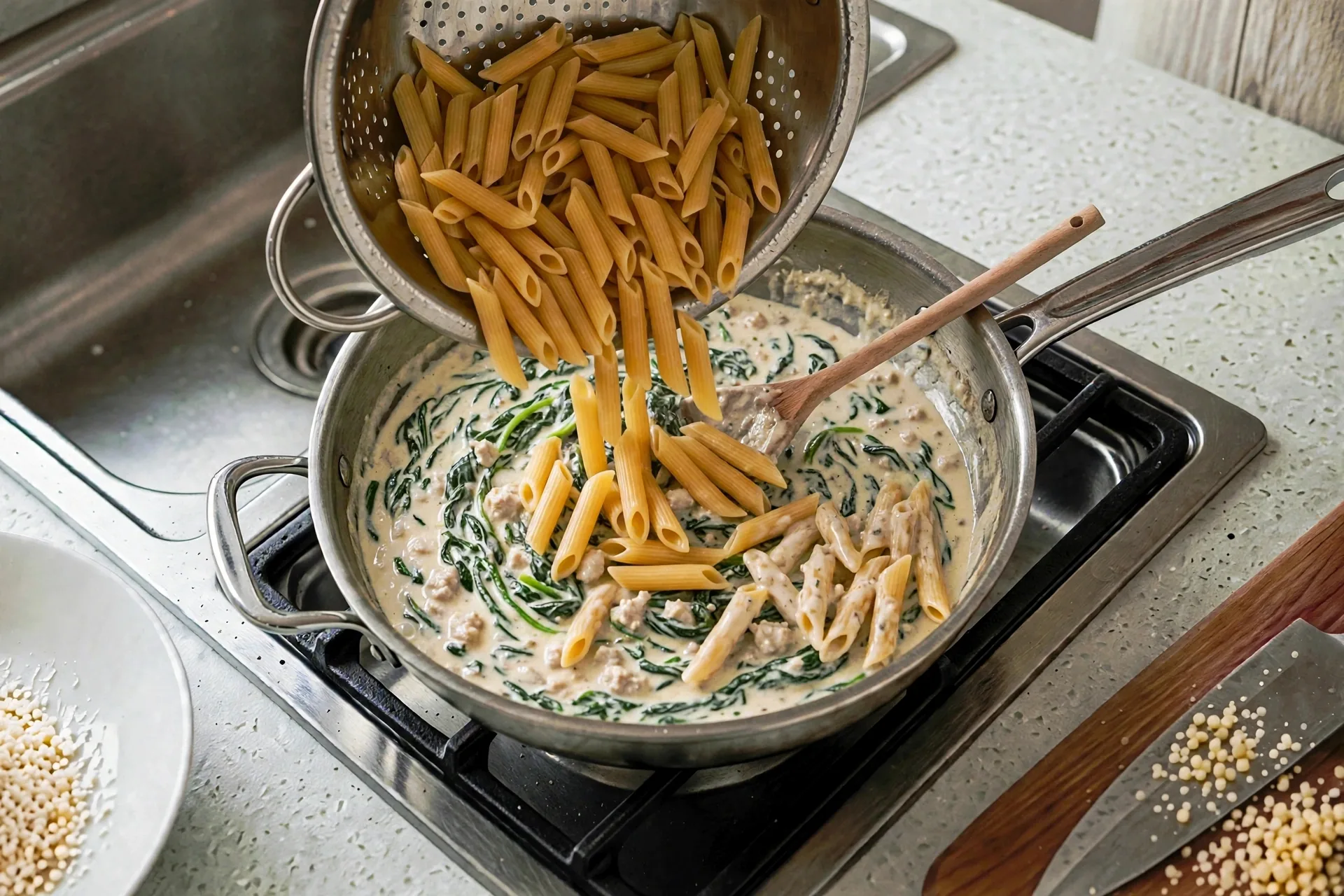
Tip the drained penne into the skillet. The first tubes coat right away and the rest wait on top.
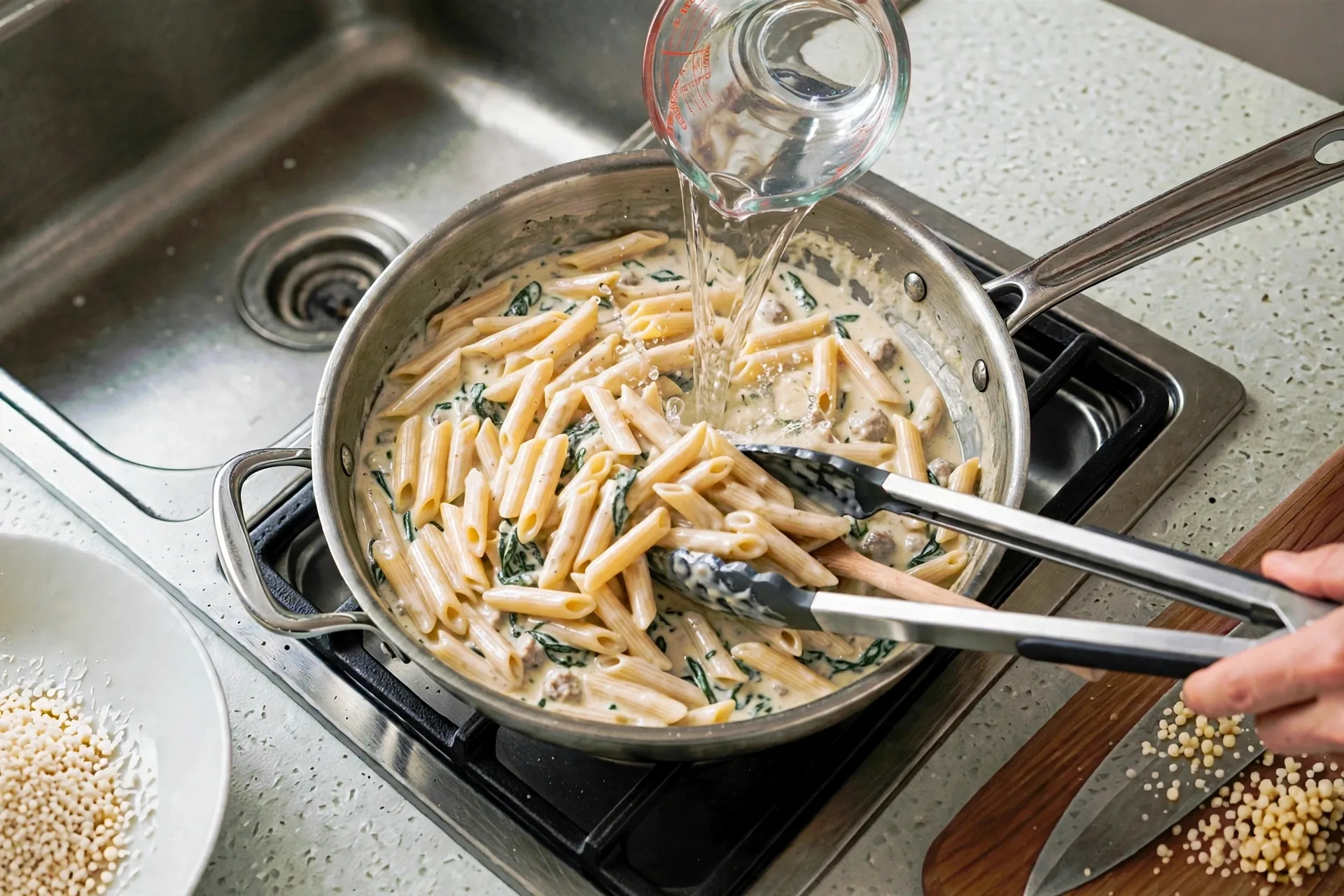
Toss with tongs until every tube carries glossy ivory sauce. Add a splash of reserved pasta water when the sauce feels too tight. The finished pasta should look coated and glossy, not dry and not swimming.
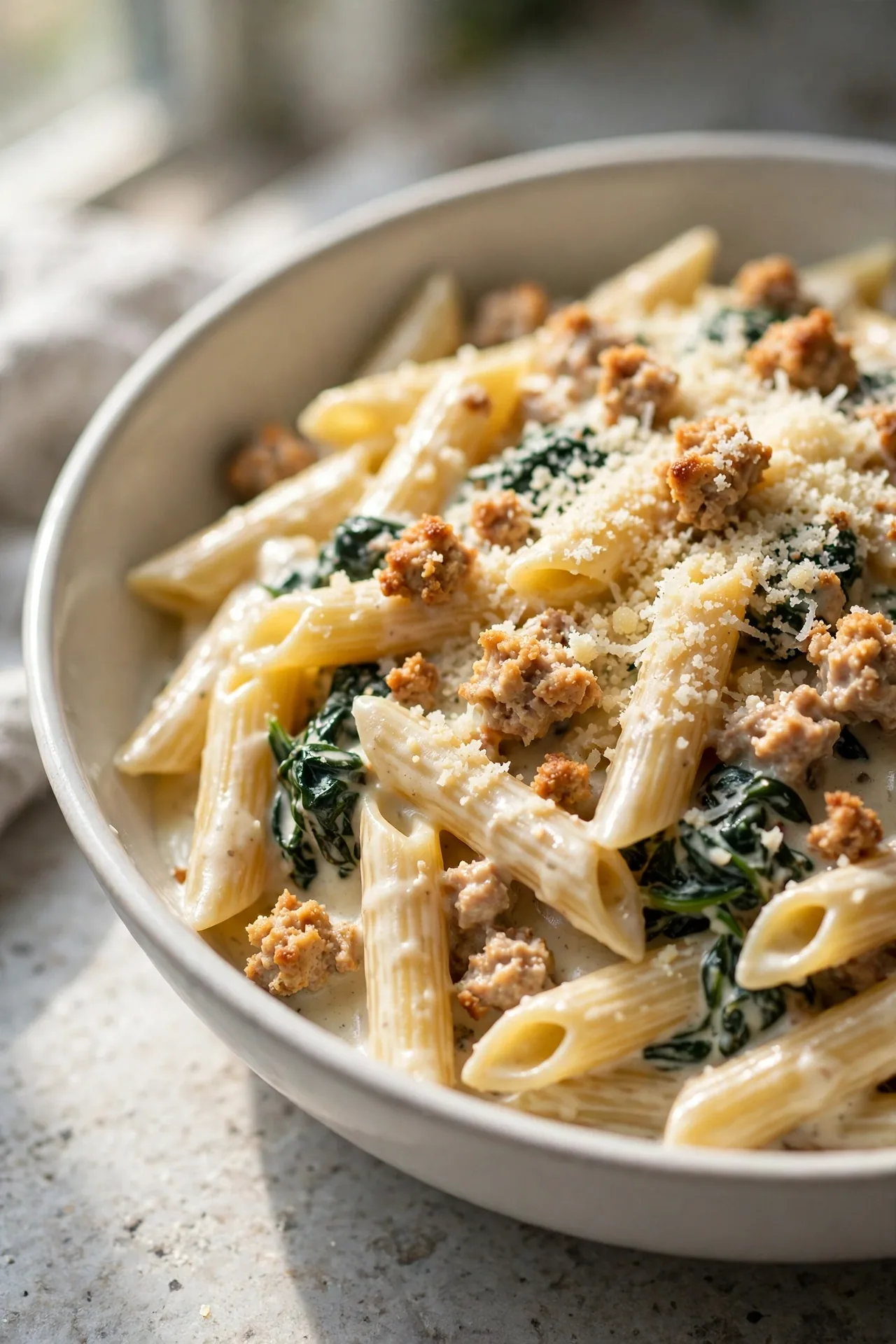
Lift portions into wide bowls and dust with a final grating of Parmesan. Serve while the sauce is still glossy, since cream sauces set as they cool.
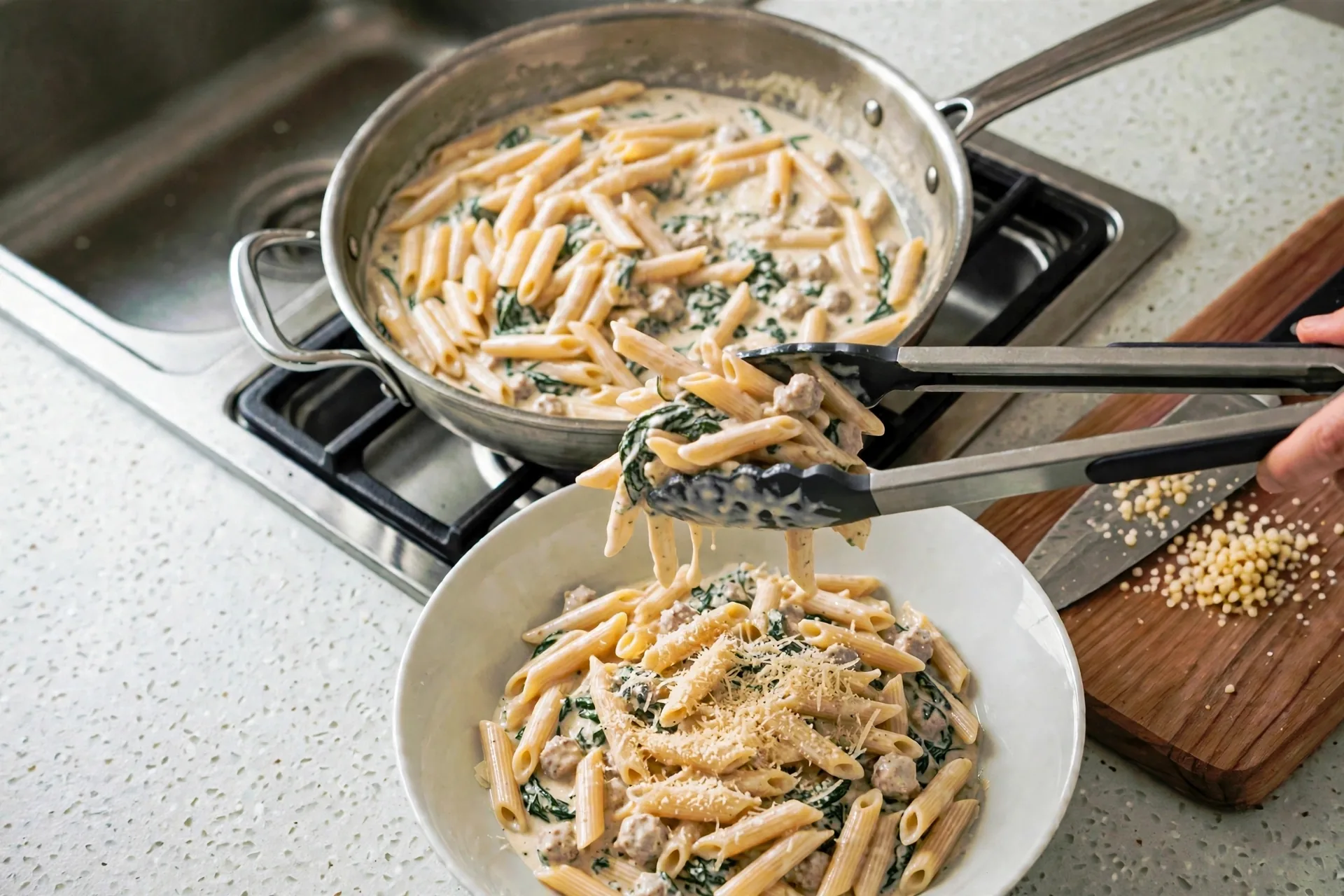
Watch for: a sauce that goes grainy. The usual cause is Parmesan added all at once to a sauce that is too hot or too cool. Small additions, steady stirring, and a gentle simmer keep it smooth.
Ground Turkey Broccoli Pasta
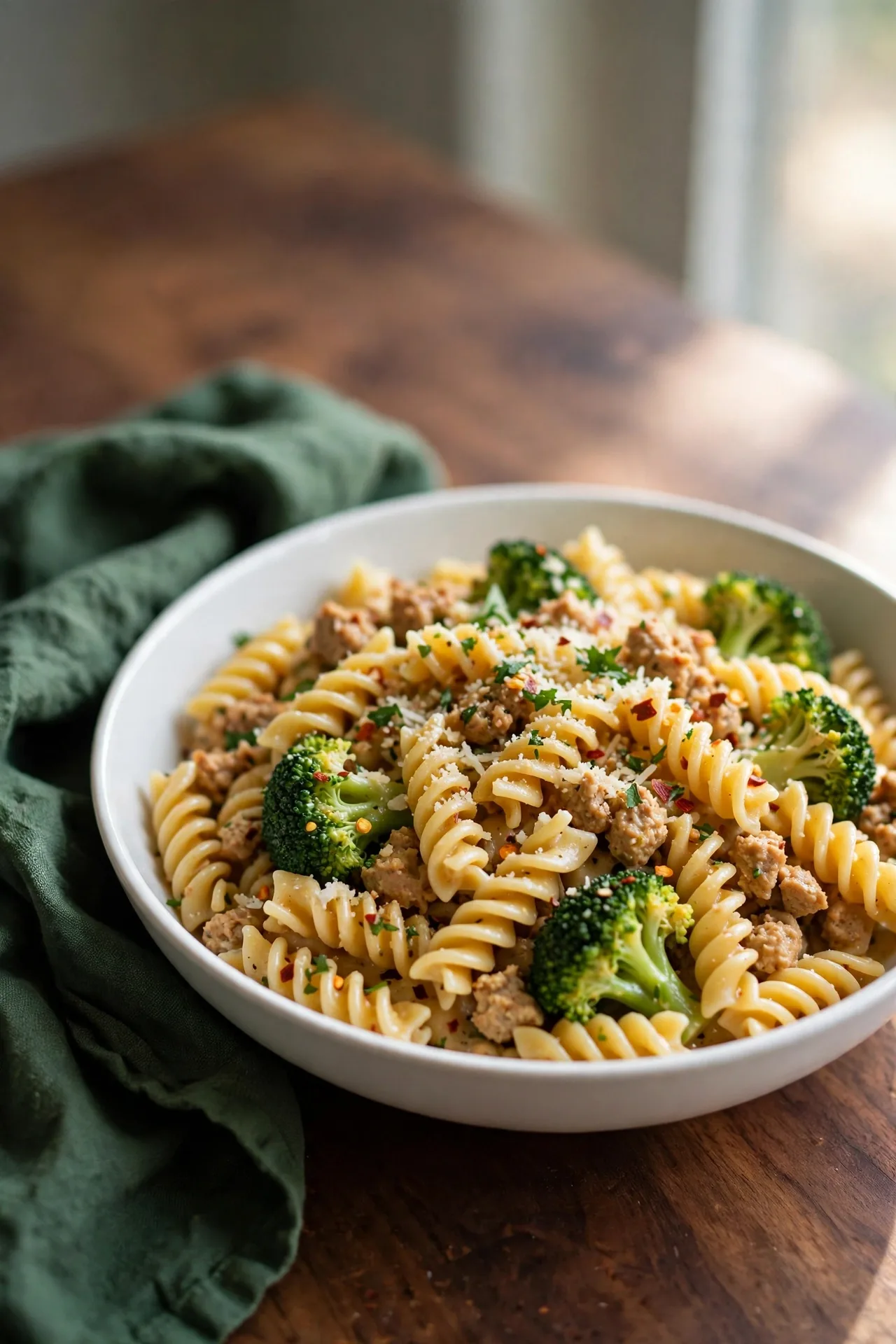
The third recipe trades the cream sauce for a lighter garlicky one. Rotini spirals and broccoli cook in the same pot, turkey browns in a cast-iron skillet, and broth plus Parmesan pull everything into a glossy coating. Red pepper flakes give a mild warmth in the background. The broccoli step is the part worth learning: it goes into the pasta water for the last two minutes, so it cooks without a second pot and stays firm. Ground meat shows up in a different form in the teriyaki meatballs, if you want another way to use a pound of ground meat for dinner.
Ingredients
For the pasta and broccoli
- 12 oz rotini
- 1 large broccoli head (about 3 cups florets)
- Olive oil
For the turkey and sauce
- 1 lb ground turkey
- 3 garlic cloves
- Chicken broth
- Parmesan, finely grated
- Fresh parsley, chopped
- Red pepper flakes
- Dried Italian seasoning
- Salt
- Black pepper
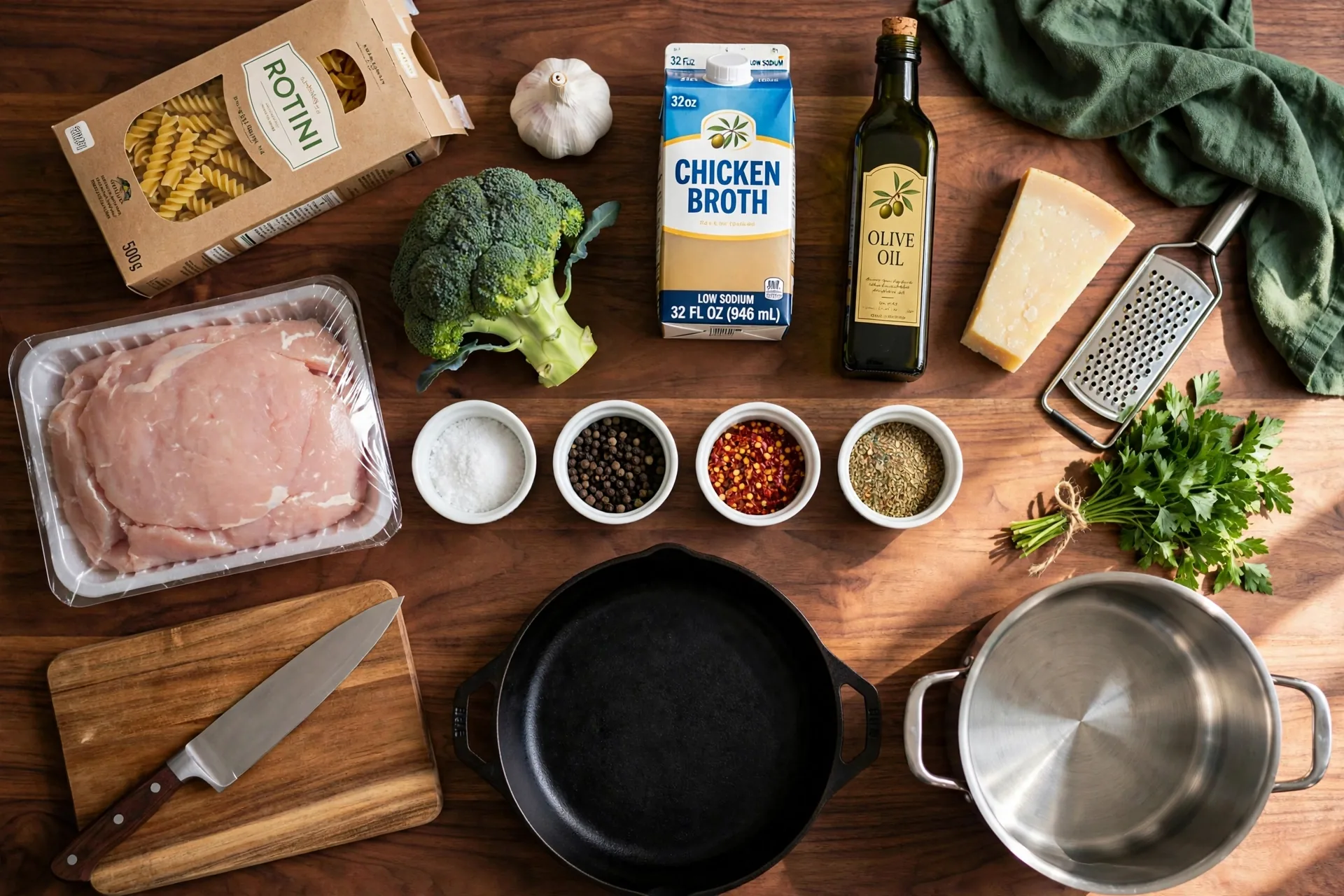
The rotini, turkey, broccoli head, and garlic carry stated quantities. The broth, Parmesan, parsley, and seasonings go in by the pour, the sprinkle, and the handful, so no exact amounts are listed for them here or in the card below. This recipe contains wheat and dairy.
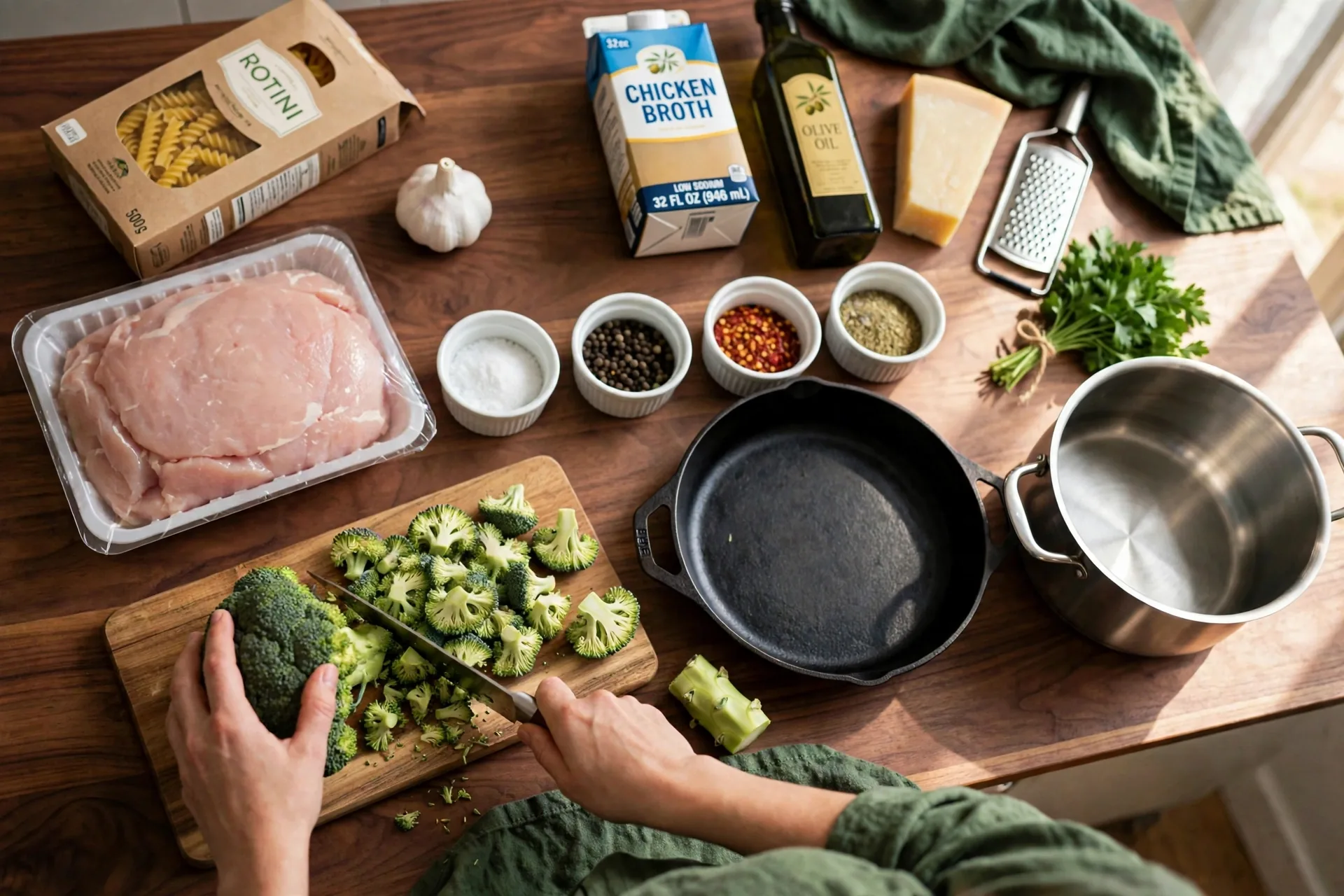
Prep the vegetables and the cheese before the pasta water boils. Broccoli, garlic, Parmesan, and parsley all need to be ready at different points, and the last part of this recipe moves too fast to prep between steps.
How to make Ground Turkey Broccoli Pasta
Prep the broccoli, garlic, Parmesan, and parsley
Cut the broccoli head into bite-size florets. Keep the florets roughly the same size so they cook at the same rate. A pile of mixed large and tiny florets gives you soft mush next to raw crunch in the same pot.
Peel the garlic cloves. Three peeled cloves are what this sauce needs.
Mince the peeled cloves into a fine pile. Fine mince spreads through the broth sauce instead of sitting in chunks.
Grate the Parmesan wedge on a fine grater into a fluffy pile. The same fine-grate rule from the spinach recipe applies: fine Parmesan melts into a sauce, coarse shreds clump.
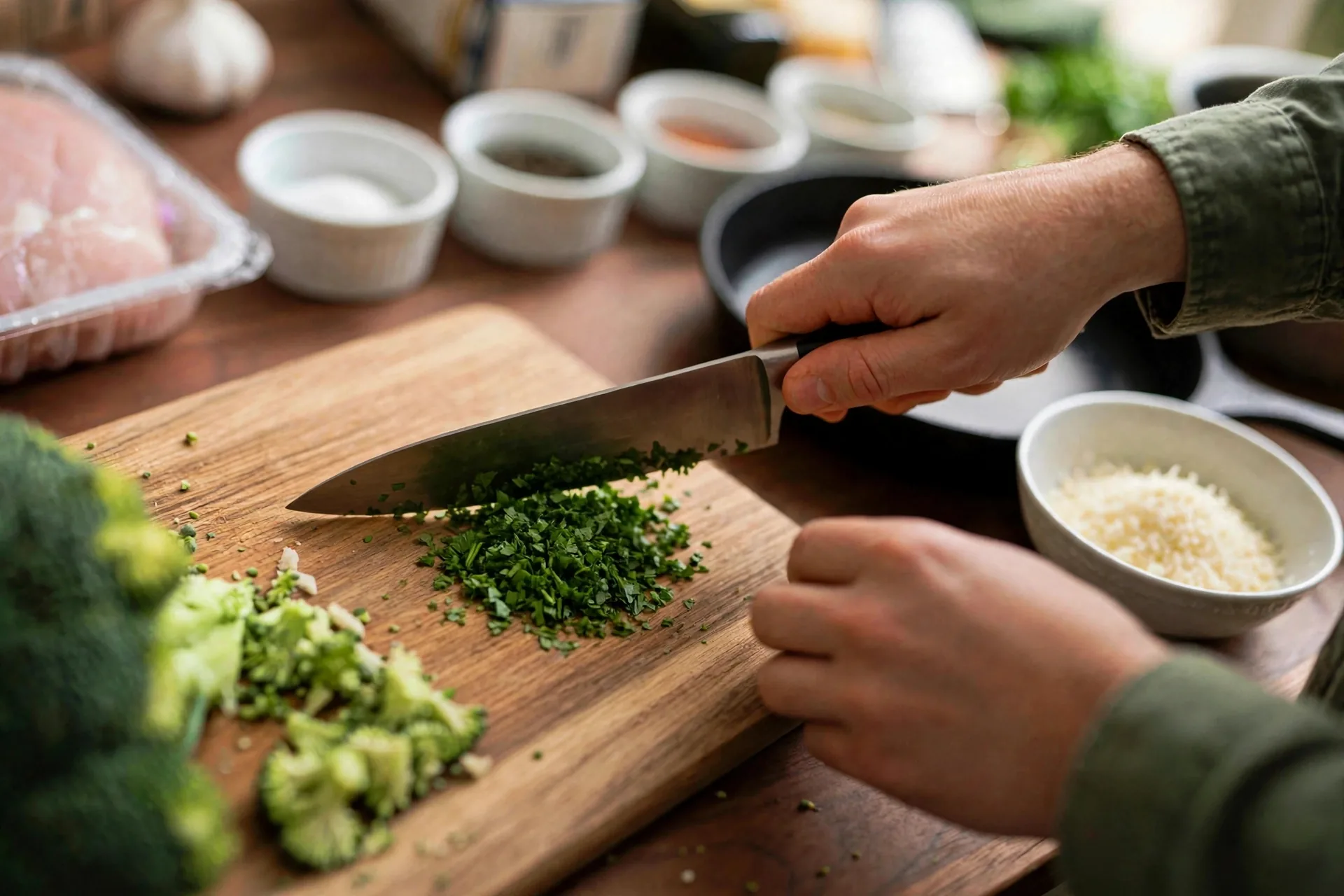
Chop the fresh parsley into a small mound of bright-green pieces. Parsley goes in last as a garnish, so chop it now and set it aside.
Boil the rotini and broccoli together
Bring a pot of salted water to a rapid boil and lower the dry rotini in. The spirals go in stiff and pale yellow.
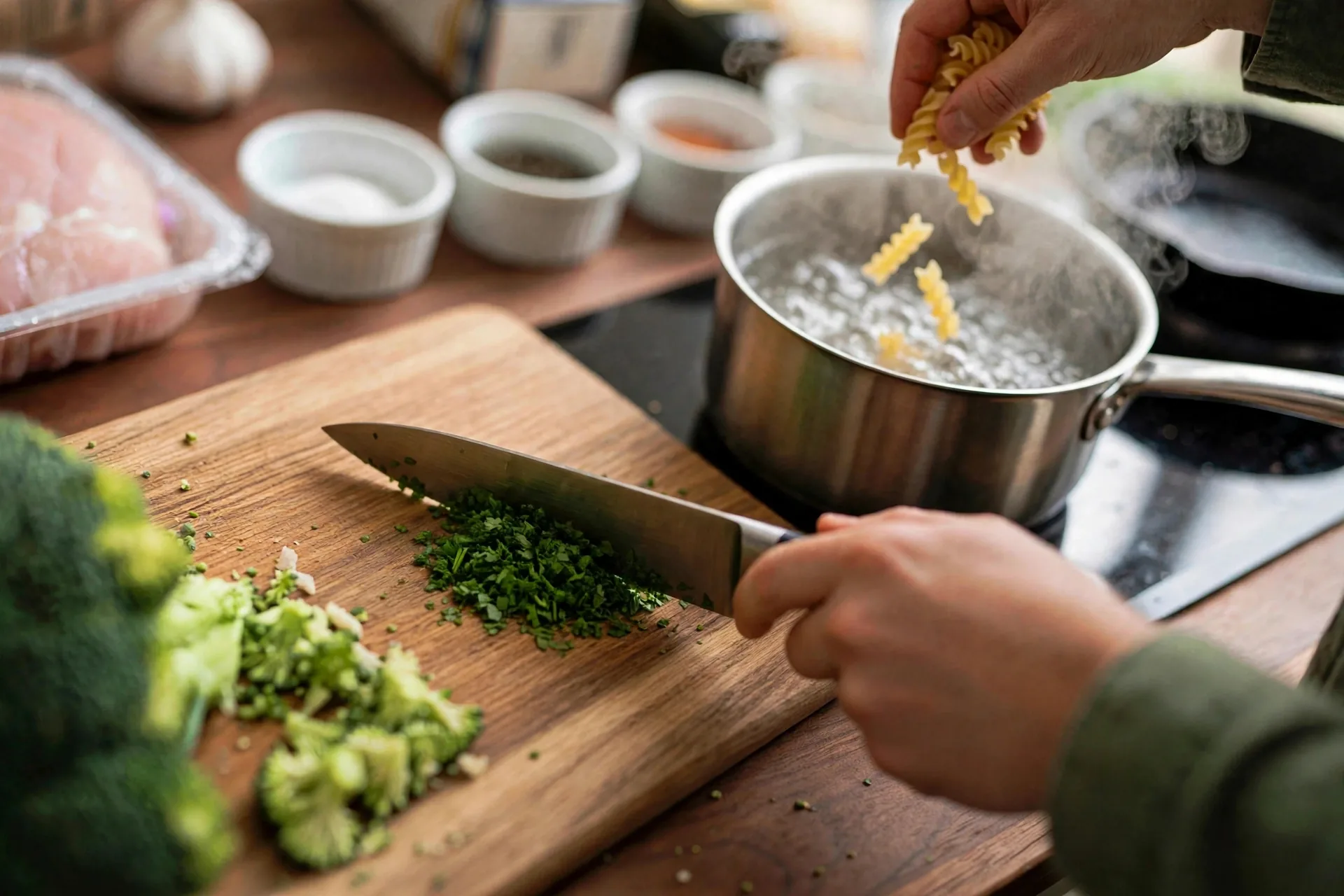
During the last two minutes of the pasta cooking, tip the raw broccoli florets into the same pot. The florets sit pale green on the surface at first, then brighten as they cook in the bubbling water. Two minutes keeps them bright green and tender-crisp. Longer turns them soft and dull, and no later step brings the color back.
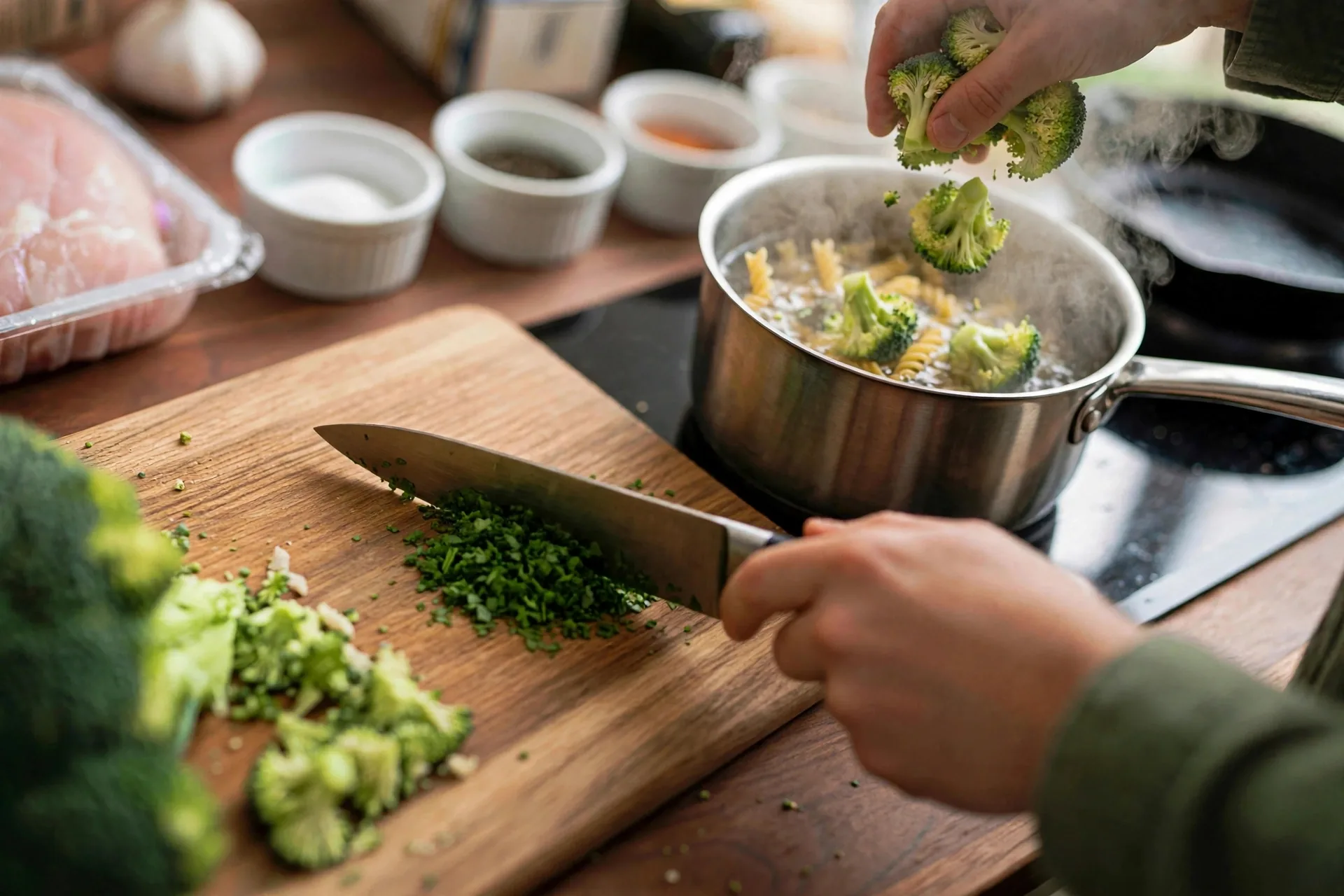
Scoop out a cup of the cloudy pasta water before draining. Keep it close for the final toss.
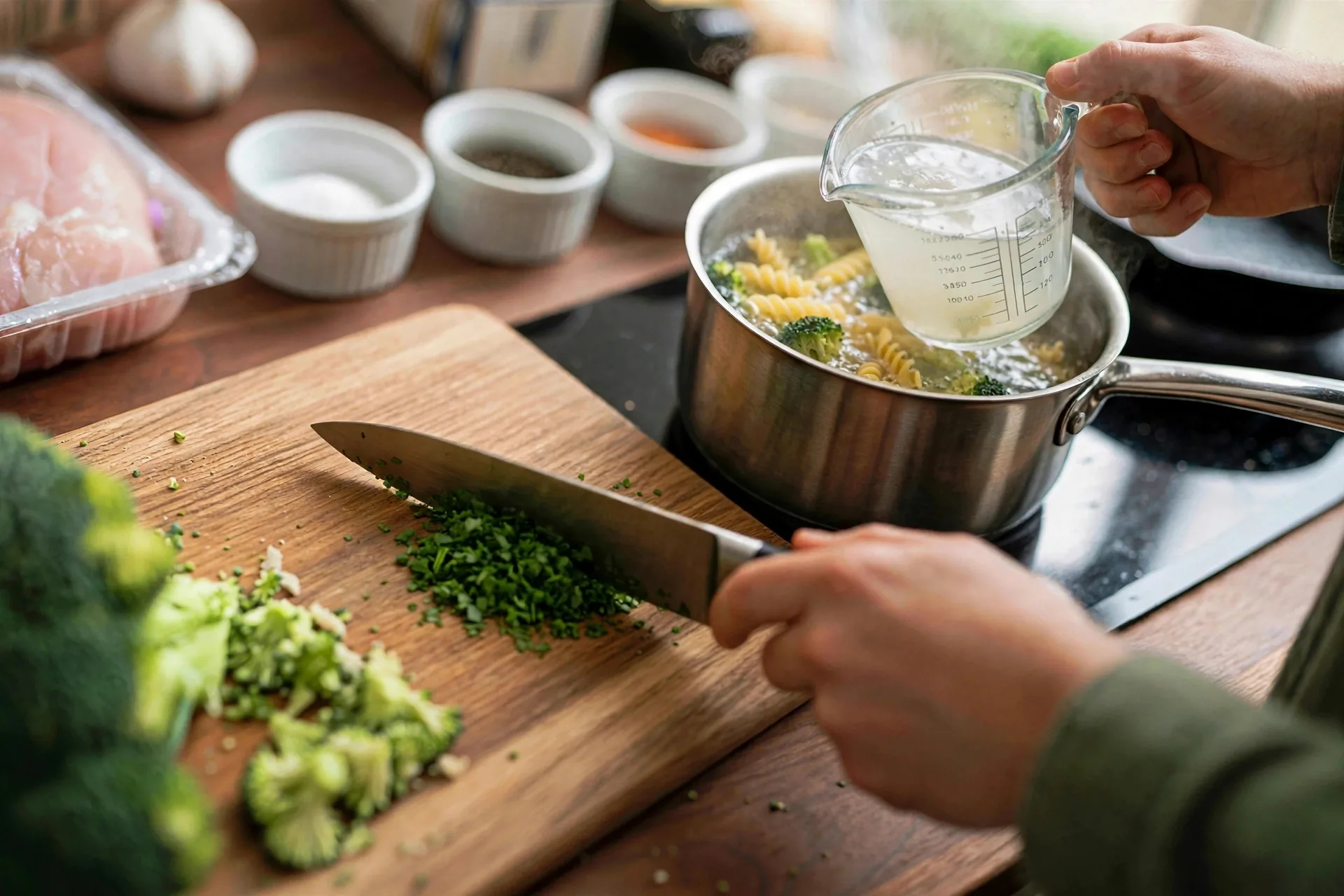
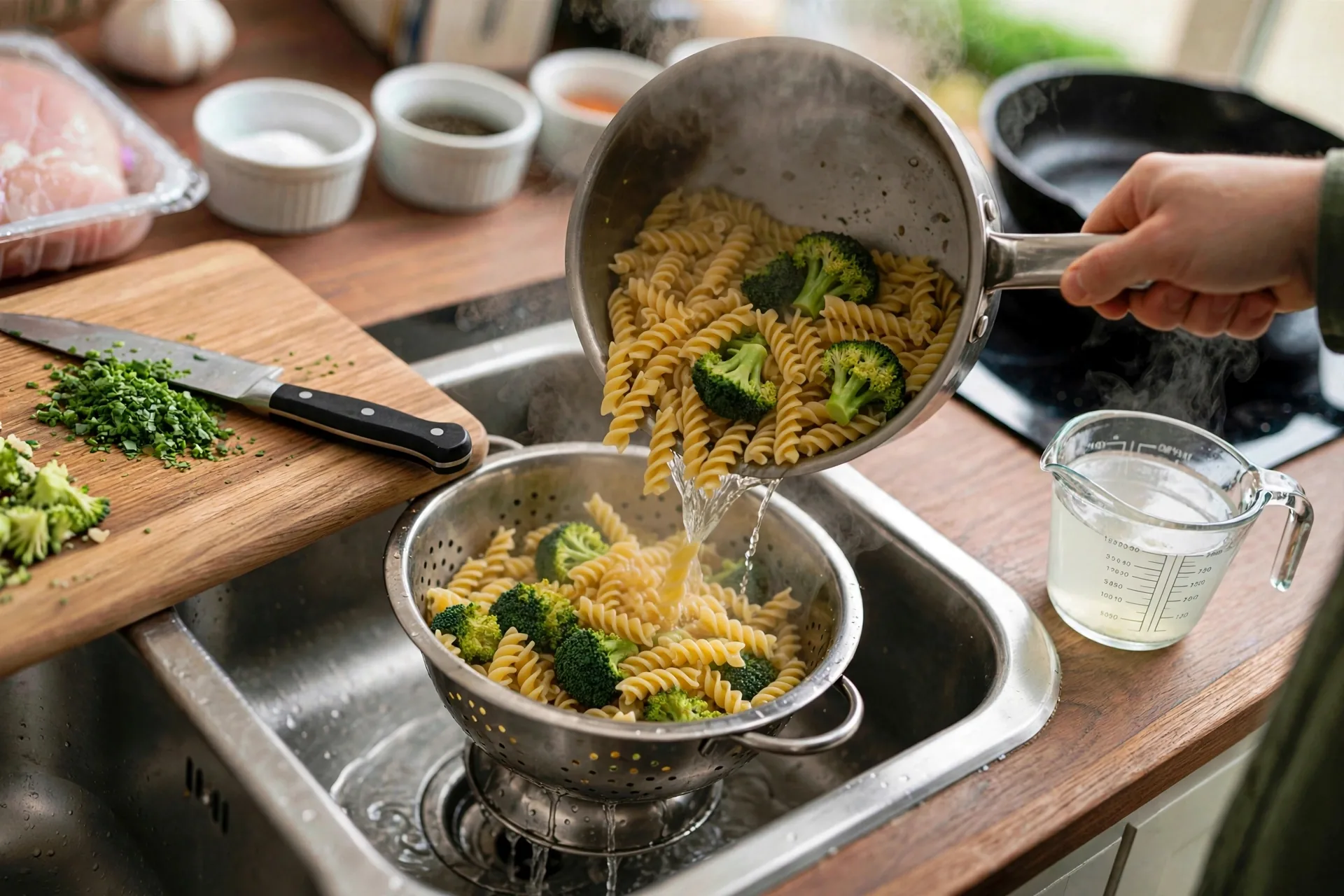
Drain the rotini and the bright green broccoli together in a colander. The broccoli should still look vivid green, not olive or gray.
Brown the turkey
Warm olive oil in the 12-inch cast-iron skillet until it shimmers across the bottom. Cast iron holds heat well, which helps the turkey brown instead of steam.
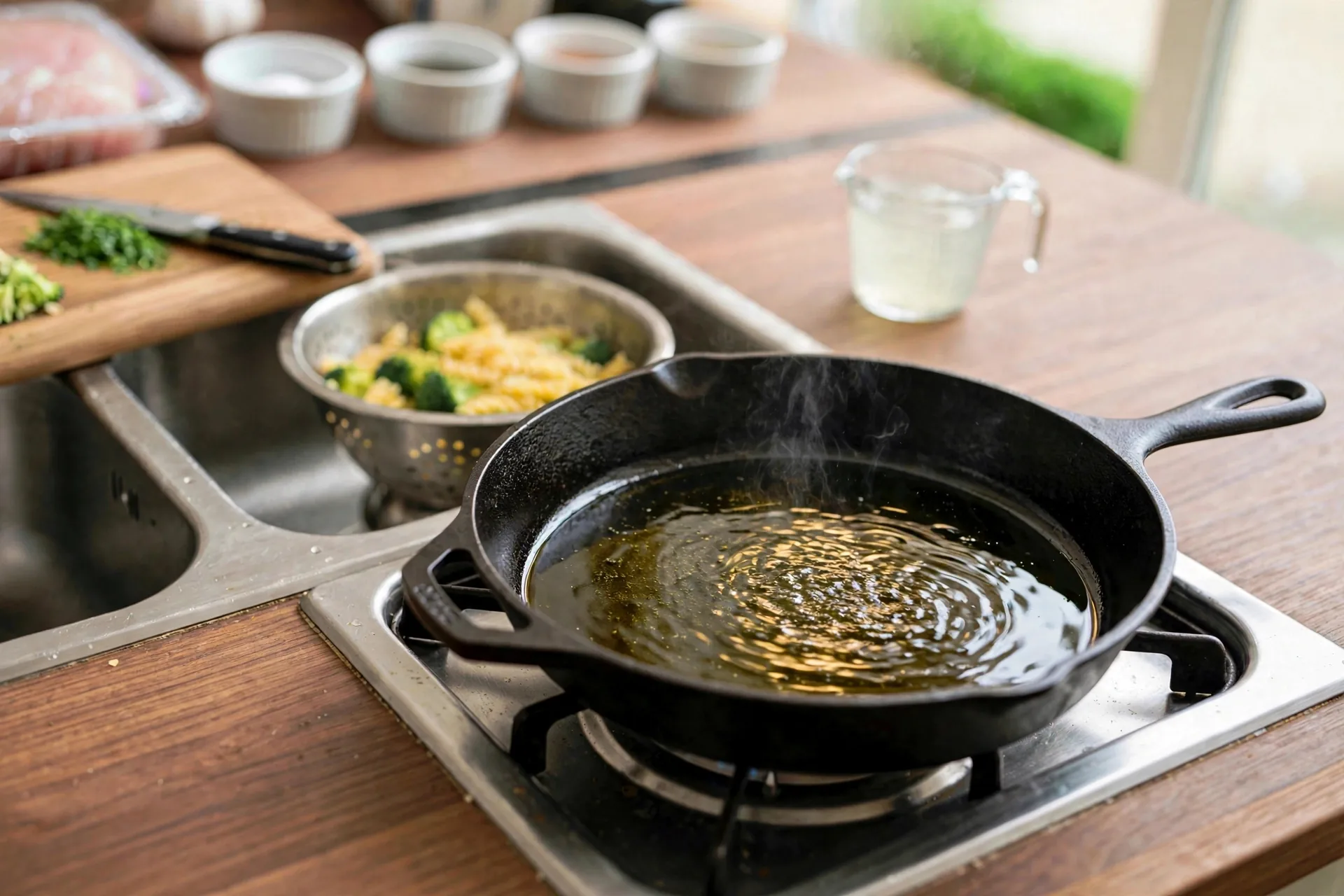
Add the ground turkey to the hot oil. It goes in pale pink and in one piece.
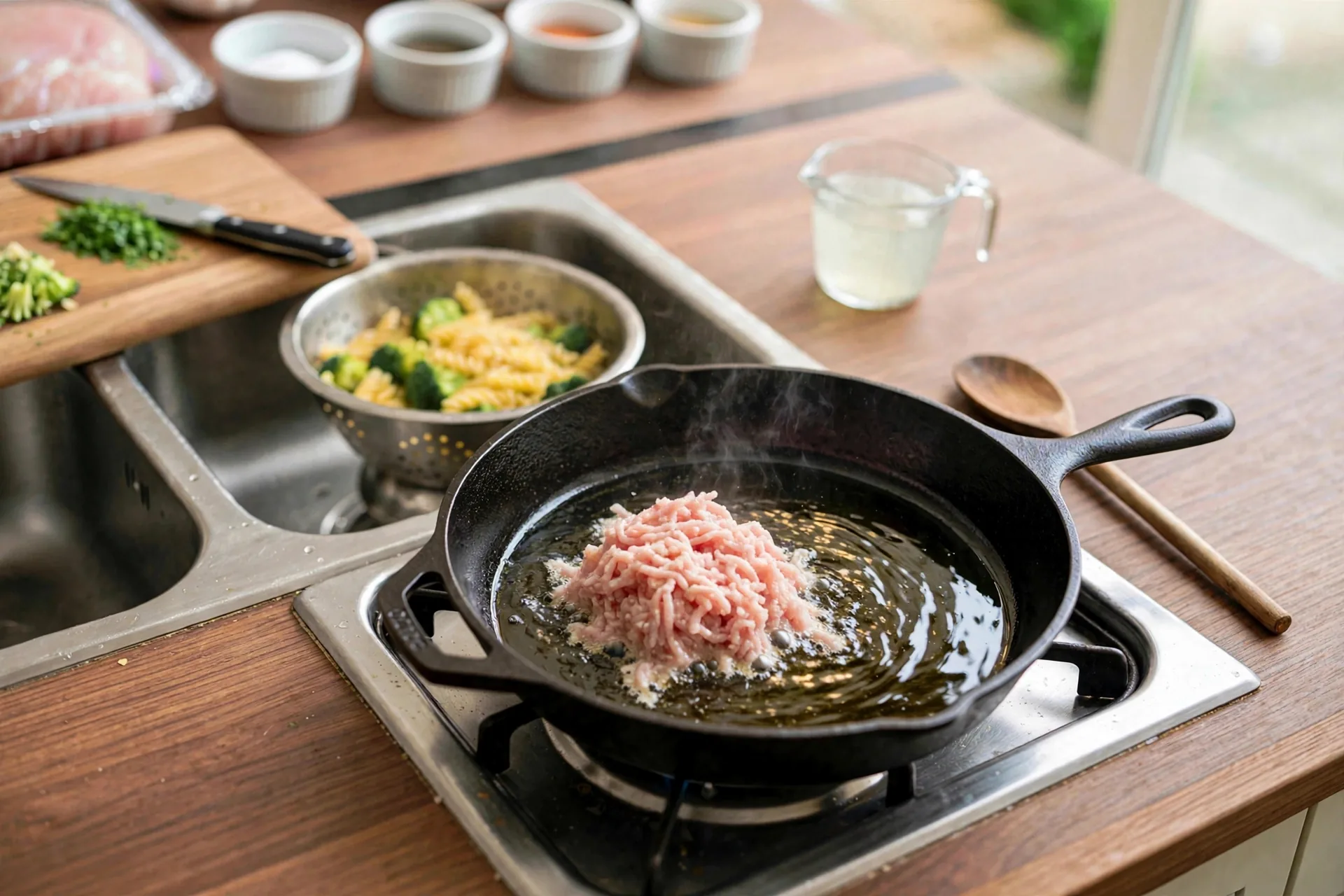
Break it up with a wooden spoon into crumbles. Some pieces turn pale tan while a few stay pink. That split is the middle of browning.
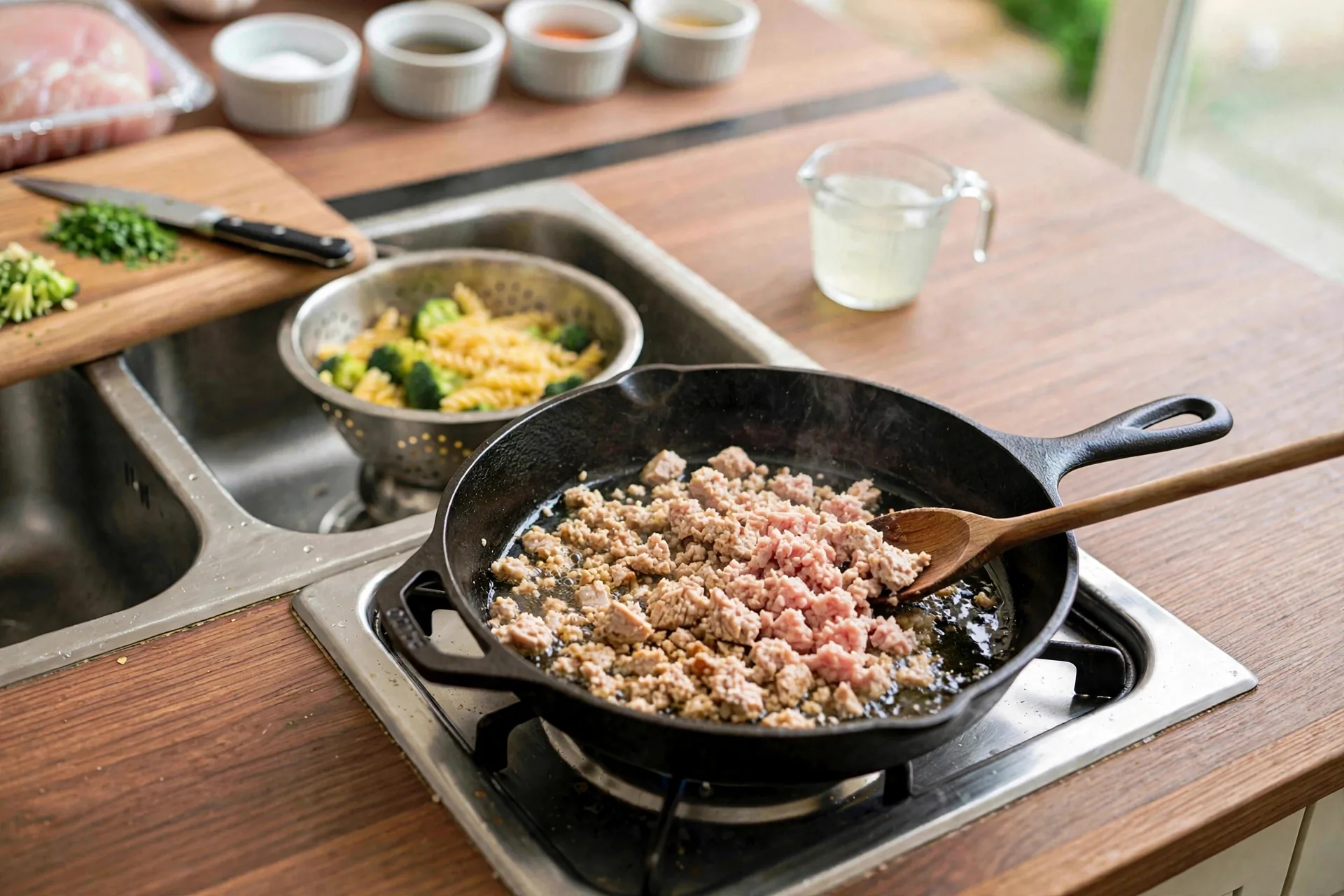
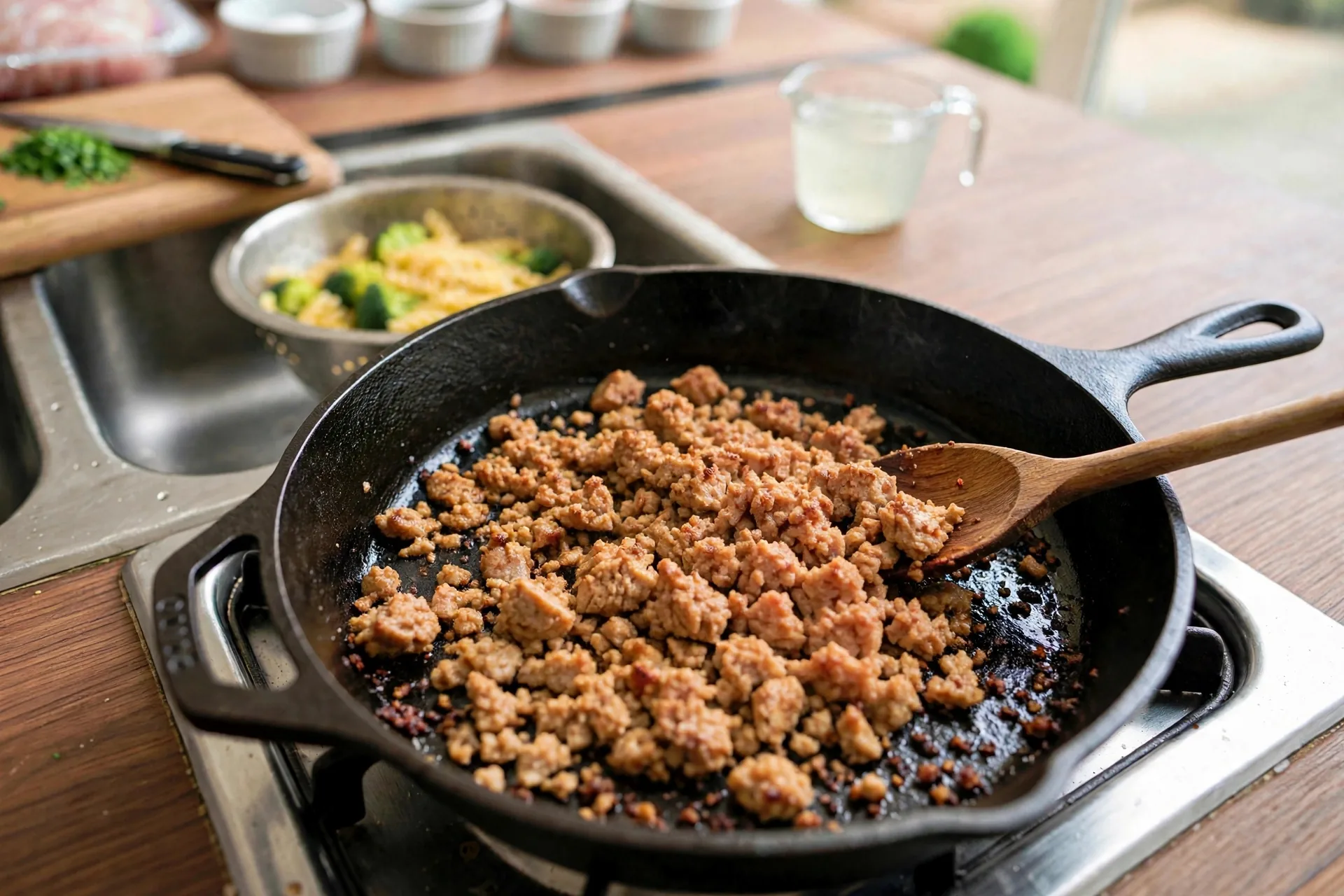
Cook until the crumbles are golden-brown at the edges with no pink left and browned bits on the cast iron. Ground turkey must cook fully through here too, before garlic and seasoning go in.
Build the garlicky broth sauce
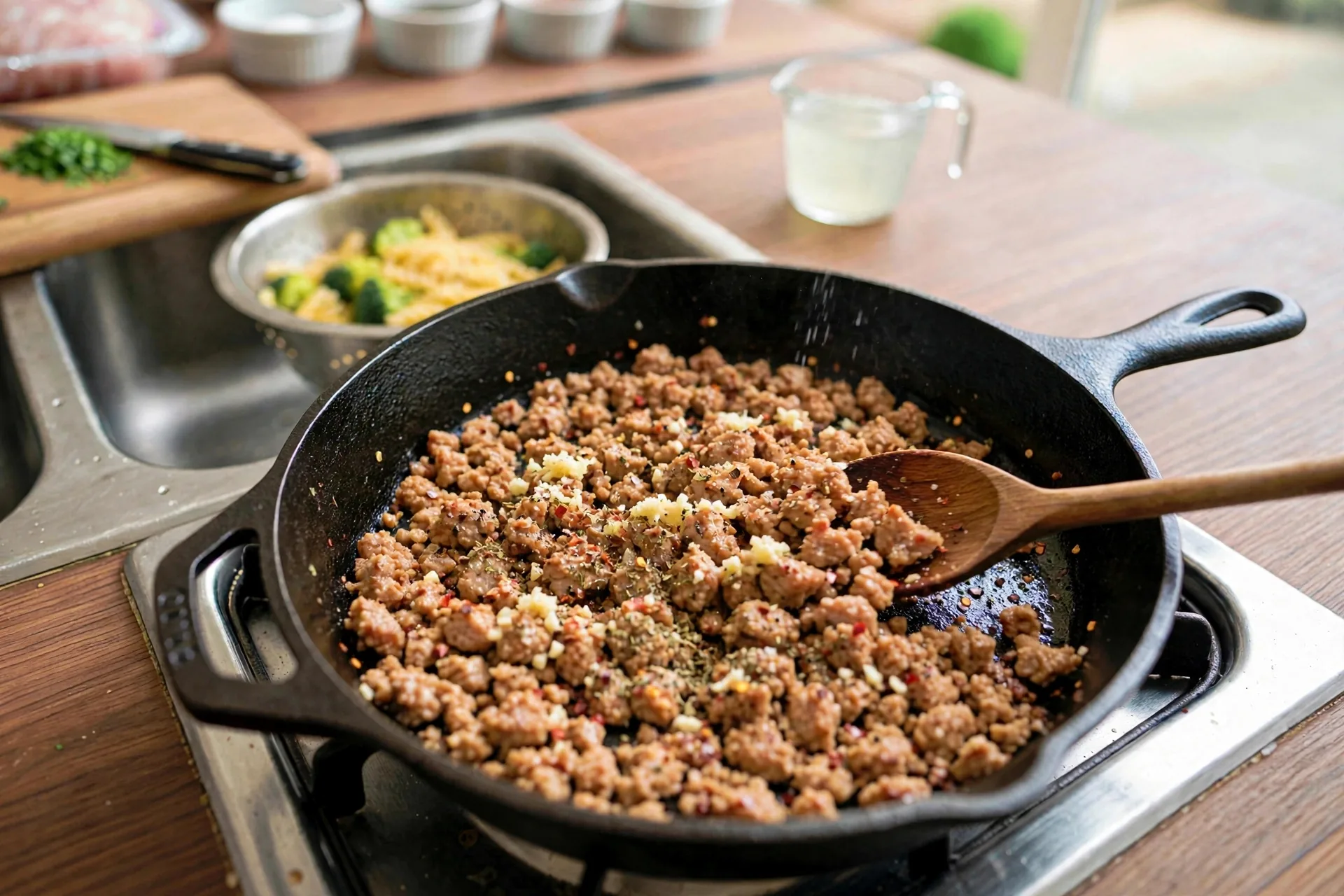
Add the minced garlic, red pepper flakes, dried Italian seasoning, salt, and black pepper over the browned turkey and stir. The garlic stays pale at this point. Red pepper flakes bloom in the hot oil and give the finished dish its mild warmth, so they go in with the garlic and not at the table.
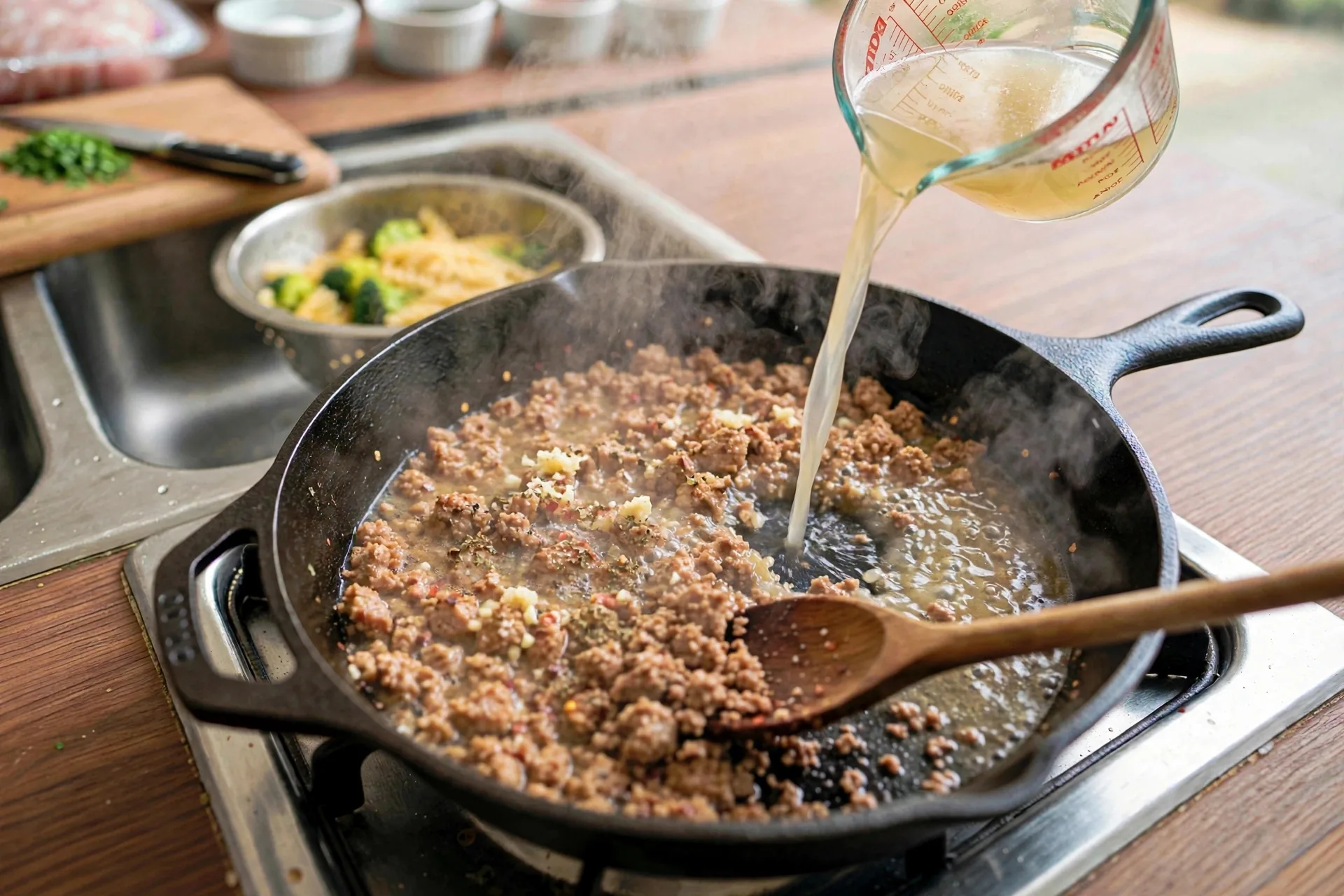
Pour in the chicken broth. Steam rises as it hits the hot pan, and the spoon scrapes the browned bits off the bottom into the liquid.
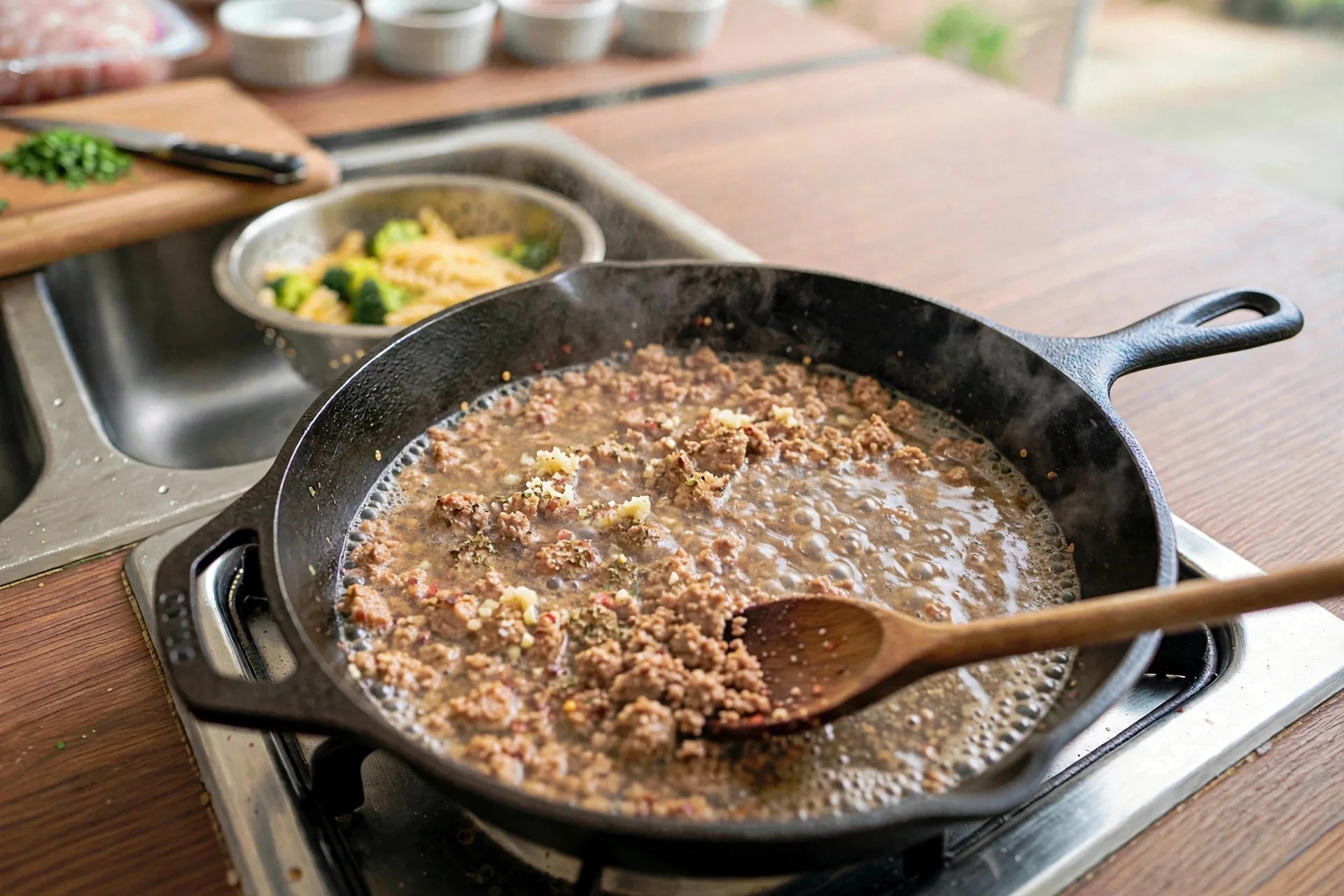
Let the broth simmer gently around the turkey until it reduces slightly, with small bubbles at the edges. A slight reduction concentrates the flavor so the finished pasta tastes seasoned and not watery.
Toss and serve
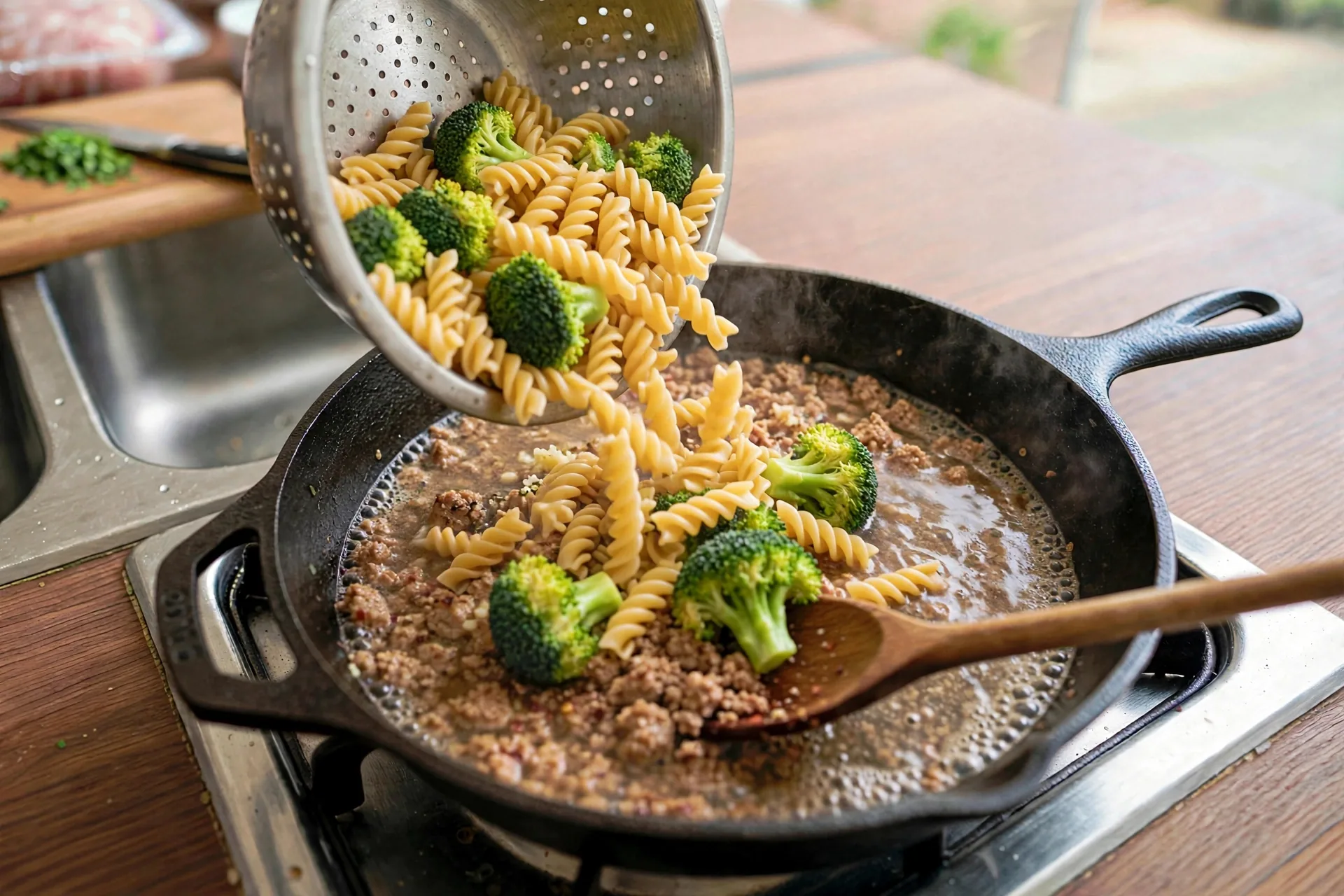
Tip the drained rotini and broccoli into the skillet. They rest on top of the turkey and broth before tossing.
Sprinkle the grated Parmesan over the pasta and toss with tongs. Add a splash of reserved pasta water. The Parmesan melts into the broth and the starch from the water turns it into a light glossy sauce that coats the spirals. Toss until the broccoli stays bright green and every spiral carries sauce.
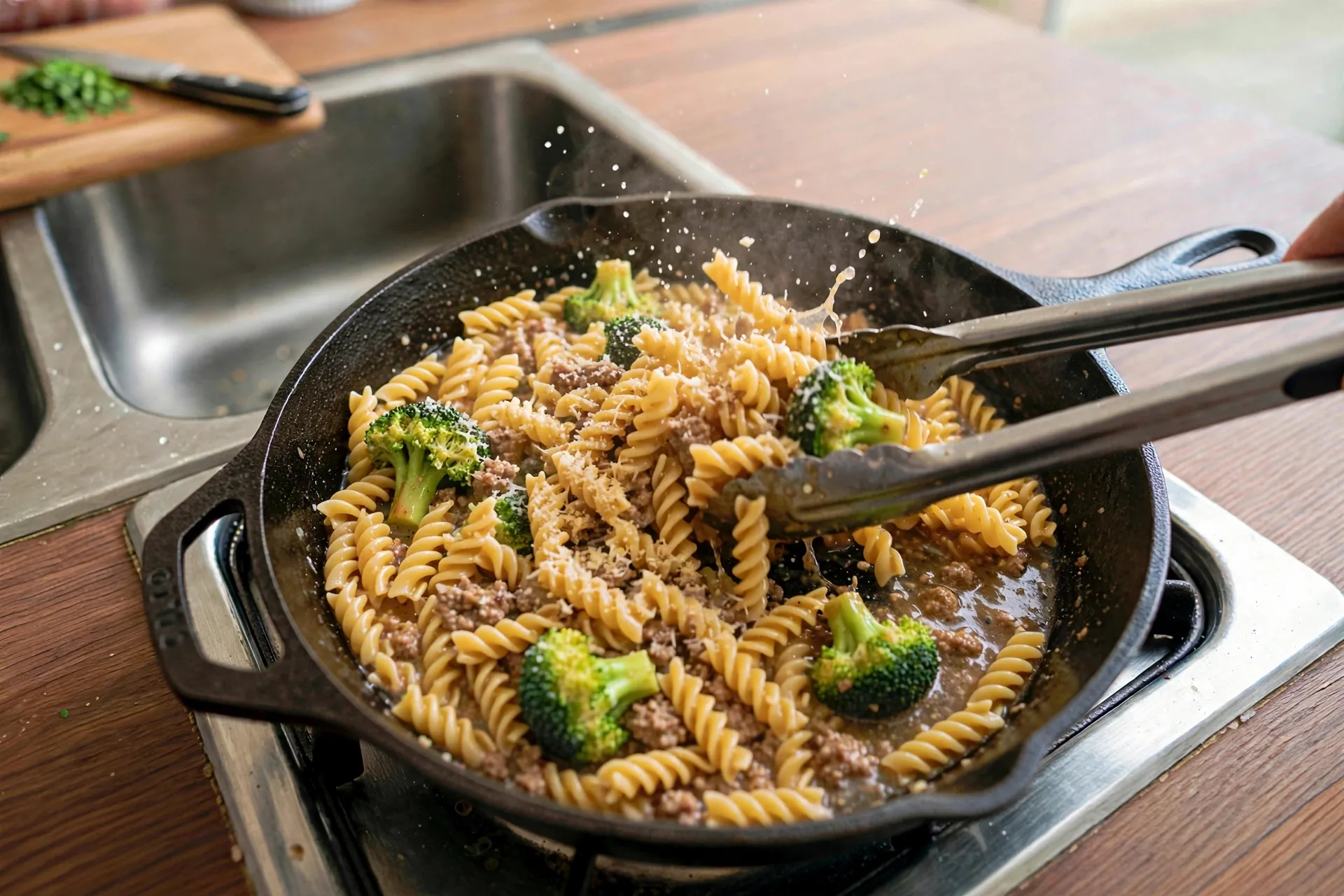
Shower the chopped parsley and a little extra Parmesan over the finished pasta in the skillet. Parsley goes in last so it stays bright and fresh instead of wilting into the hot sauce.
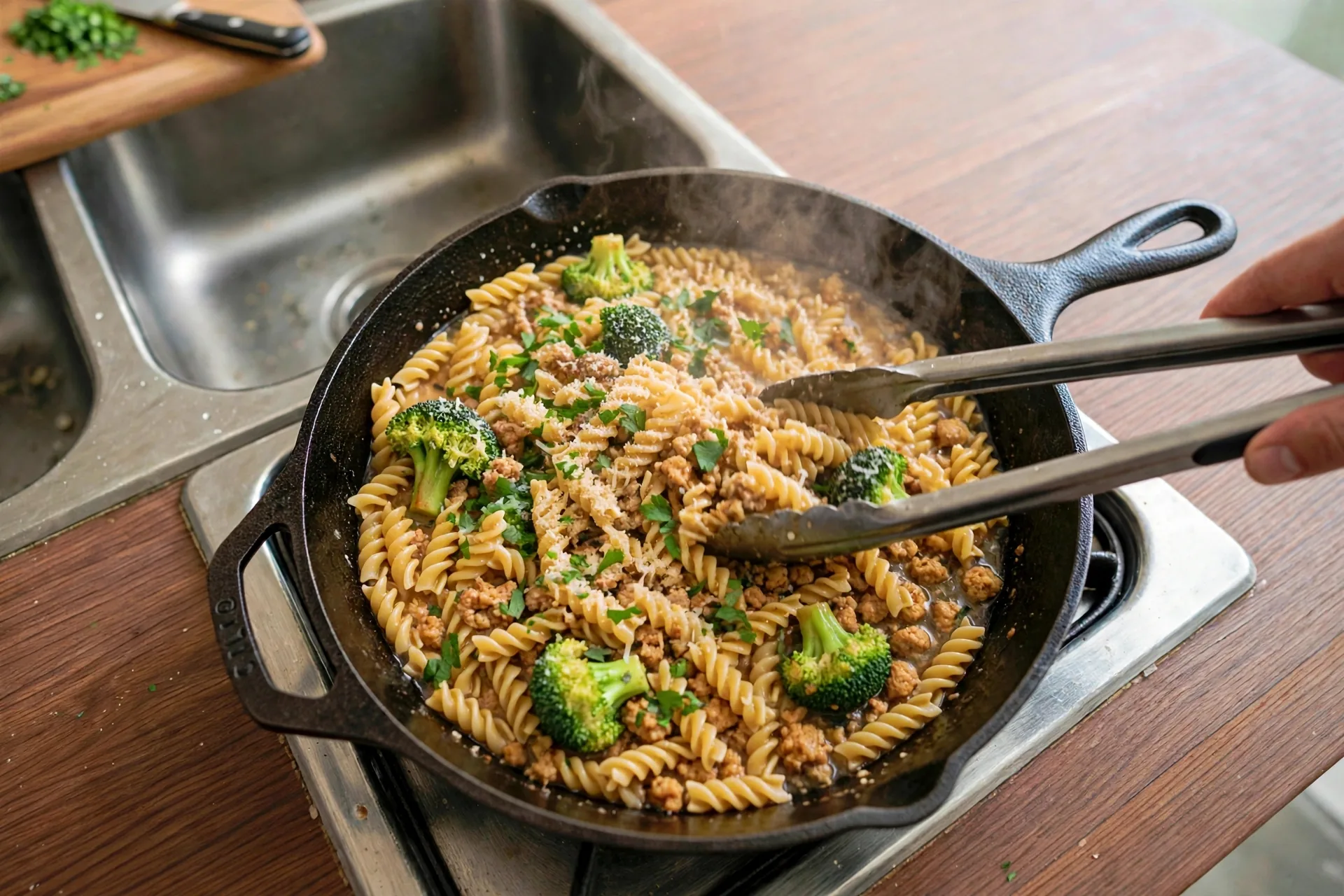
Lift portions into wide bowls with tongs. Keep broccoli florets in each serving. The finished bowl should show golden rotini, bright green broccoli, golden turkey crumbles, and flecks of parsley and red pepper flakes.
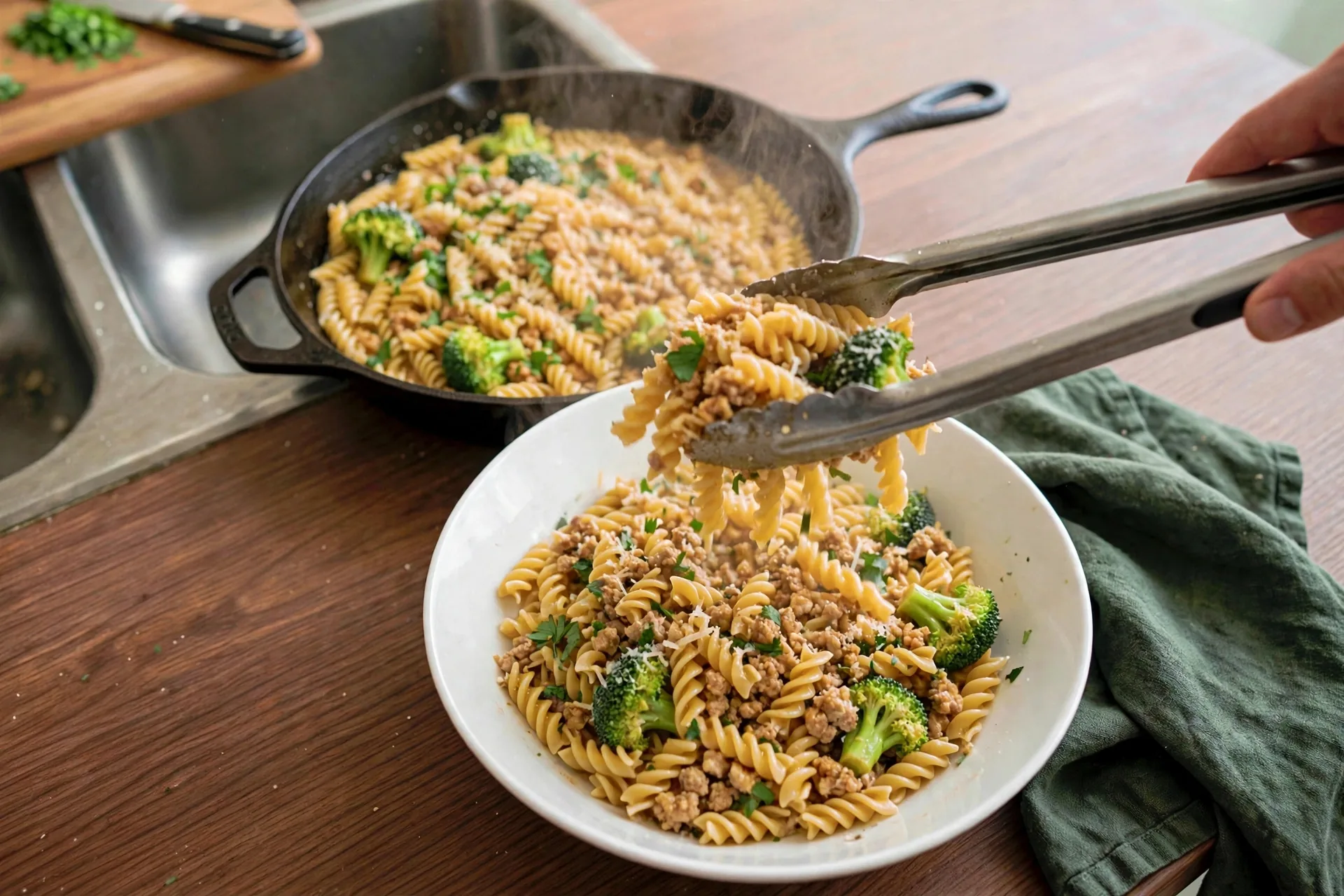
Common mistake: cooking the broccoli with the pasta from the start. Broccoli needs only the last two minutes. In from the beginning, it turns soft and dull before the rotini finishes.
Swapping in what you already have
Pasta shapes swap freely across all three recipes. Regular penne stands in for whole wheat penne, and fusilli or penne stand in for rotini, since the sauce coats tubes and spirals the same way. Ground chicken browns the same way as ground turkey and follows the same no-pink-done rule. For the spinach recipes, kale works in place of baby spinach but needs longer in the pan to wilt, so stir it until the leaves darken and soften fully before the pasta goes in. Half-and-half can replace heavy cream in the spinach recipe, but the sauce stays thinner and will not coat a spoon the same way, so expect a lighter result rather than an equal one. Whole wheat penne in the first recipe can also swap to regular penne with no other change.
Keeping leftovers
Cool leftovers and move them to a sealed container in the refrigerator. Reheat gently on the stove or in the microwave. Add a small splash of water or broth and stir while it warms, since cream and cheese sauces thicken as they chill and need liquid to loosen again. The broccoli pasta reheats the same way, but the broccoli softens a second time, so reheat it only until hot through rather than letting it simmer.
Safety note
Ground turkey is poultry, and poultry must cook fully through before serving. In all three recipes, the visual check is the same: no pink anywhere in the crumbles and golden-brown edges. The USDA safe minimum internal temperature for ground poultry is 165°F, measured with a food thermometer in the thickest part of the meat, for cooks who want a number to confirm what their eyes see.
Facts
- Penne ridges exist for a reason: the ridges and the hollow tube trap sauce, which is why both penne recipes here coat better than a smooth shape would.
- Ground turkey browns differently from ground beef because it is leaner, so it releases less fat into the pan. That is why the recipes start with olive oil in the pan rather than relying on the meat’s own fat.
- Pasta water works as a sauce ingredient because starch from the pasta dissolves into it. That starch is what lets a thin broth or cream sauce cling to the pasta instead of sliding off.
- Broccoli turns bright green in boiling water, then dulls if it cooks too long. The color change comes from heat breaking down the green pigment, which is why the two-minute timing in the broccoli recipe protects both color and texture.
- Parmesan thickens a cream sauce for two reasons at once: the cheese melts into the liquid, and its salt and aged flavor season the sauce, which is why the spinach recipe adds Parmesan before any extra salt at the end.
FAQ
Can I use regular penne instead of whole wheat penne in the savory recipe?
Yes. The method stays the same, and the sauce coats regular penne the same way. Whole wheat penne has a nuttier taste and a firmer bite, so the swap changes flavor slightly but nothing else.
Can I use frozen broccoli in the broccoli pasta?
Frozen broccoli cooks faster than fresh florets and releases more water into the pot. It works, but add it later than fresh florets and drain well, since extra water thins the final sauce. Fresh florets give the bright color and firm bite the recipe is built around.
How do I know the ground turkey is fully cooked?
Look for two things together: no pink anywhere in the crumbles, and golden-brown edges. If any piece still looks pink, keep cooking and break it open to check. A food thermometer reading 165°F in the thickest part confirms it.
Can I make the spinach pasta without Parmesan?
You can leave it out, but the sauce will be thinner and less seasoned, since Parmesan does both jobs in that recipe. If you skip it, let the cream simmer a little longer at a gentle heat until it coats a spoon, and taste for salt before serving.
Do the three recipes share one sauce base?
No. The savory recipe builds a tomato-cream sauce, the spinach recipe builds a broth-cream-Parmesan sauce, and the broccoli recipe builds a light broth-Parmesan coating. The shared part is the method order: pasta first, browned turkey second, sauce third, toss last.
Can I double one of these recipes?
A larger amount of turkey needs a wider pan or two batches, because crowded crumbles steam instead of browning. If the skillet looks full, brown the turkey in two rounds and combine before the sauce starts. Pasta water and sauce amounts scale with the pasta, but brown in batches regardless of the other quantities.
Conclusion
Three pounds of ground turkey, three different dinners, one method order to remember. Start with whichever recipe matches what is already in the kitchen: a jar of marinara points to the savory pot, a carton of cream points to the spinach skillet, and a head of broccoli points to the rotini. The browning step is the one that decides all three, so give the turkey room in the pan and wait for the golden edges before anything else goes in. For another pasta night, the creamy Cajun shrimp pasta uses the same cream-sauce logic with seafood instead of turkey.
Savory Ground Turkey Pasta
Ingredients
Equipment
Method
- Dice the tomatoes into half-inch pieces.
- Boil the penne in salted water. Reserve a cup of pasta water, then drain.
- Heat olive oil in a Dutch oven until shimmering. Add the ground turkey and break into crumbles.
- Cook until no pink remains and edges turn golden-brown.
- Season with salt, garlic powder, and dried Italian herbs.
- Pour in the marinara, then the cream. Stir until the sauce is a uniform light orange-pink.
- Add the diced tomatoes, then pile in the spinach and stir until wilted dark green.
- Tip in the drained penne and toss with a splash of reserved pasta water.
- Sprinkle with shredded mozzarella and stir until melted into stretchy strands. Serve in bowls.
Notes
Creamy Ground Turkey Spinach Pasta
Ingredients
Equipment
Method
- Peel and mince the garlic. Grate the Parmesan.
- Boil the penne in salted water until al dente. Reserve a cup of pasta water, then drain.
- Heat olive oil in a wide skillet until shimmering. Add the ground turkey and break into crumbles.
- Cook until golden-brown at the edges with no pink left.
- Add the minced garlic and stir until fragrant and still pale. Season with salt, black pepper, and dried Italian seasoning.
- Pour in the chicken broth and scrape up the browned bits, then pour in the heavy cream.
- Simmer gently until the sauce thickens enough to coat a spoon.
- Stir in the Parmesan in small amounts until melted.
- Add the spinach and stir until wilted dark green.
- Tip in the drained penne and toss with a splash of reserved pasta water until glossy. Serve in bowls with a final dusting of Parmesan.
Notes
Ground Turkey Broccoli Pasta
Ingredients
Equipment
Method
- Cut the broccoli into bite-size florets. Peel and mince the garlic. Grate the Parmesan. Chop the parsley.
- Boil the rotini in salted water. During the last 2 minutes, tip in the broccoli florets.
- Reserve a cup of pasta water, then drain the rotini and broccoli together.
- Heat olive oil in a 12-inch cast-iron skillet until shimmering. Add the ground turkey and break into crumbles.
- Cook until golden-brown at the edges with no pink left.
- Add the garlic, red pepper flakes, dried Italian seasoning, salt, and black pepper. Stir.
- Pour in the chicken broth and scrape up the browned bits, and simmer gently until slightly reduced.
- Tip in the drained rotini and broccoli. Sprinkle with Parmesan and toss with a splash of reserved pasta water until glossy.
- Garnish with chopped parsley and extra Parmesan. Serve in bowls.