Lemon Cake Mix Cookies (Soft, Chewy Lemon Crinkle Cookies)
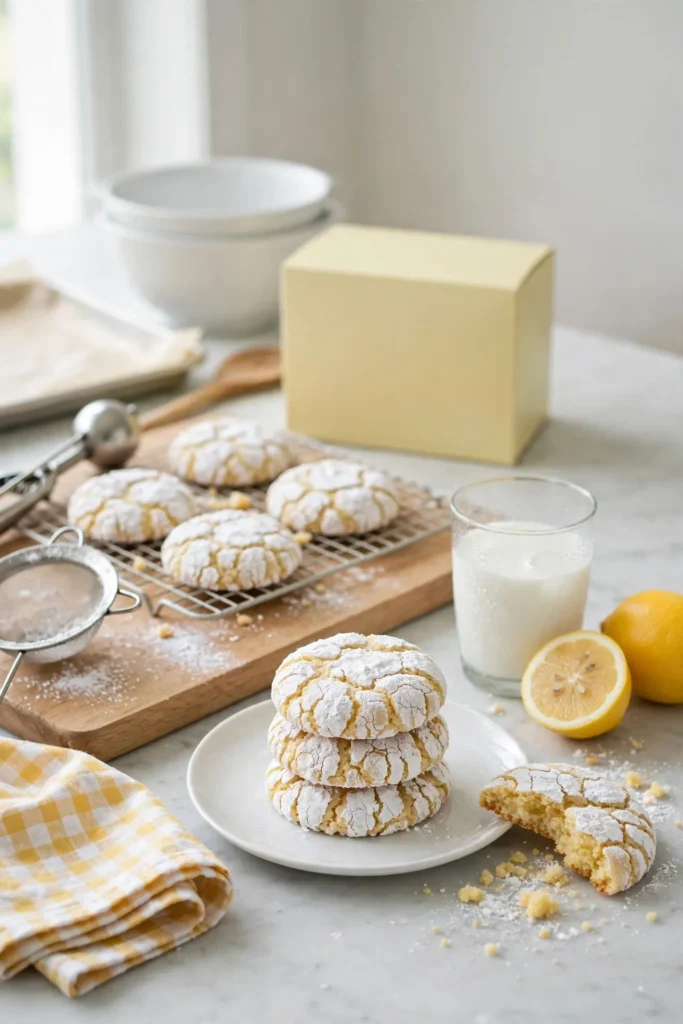
One box of lemon cake mix plus oil, eggs, and fresh lemon bakes into soft crinkle cookies with a cracked sugar coat and a pale, chewy center.
 Pin it
One box of lemon cake mix, oil, eggs, and fresh lemon zest and juice turn into soft, chewy crinkle cookies with almost no measuring. The dough comes together in one bowl, chills just long enough to scoop cleanly, and rolls in powdered sugar that cracks open in the oven to show golden-yellow underneath. The cookies stay pale on purpose. Browned edges would mean they baked too long, and the soft center is the whole point.
Recipe Overview
- Prep time: 15 minutes
- Chill time: 20 minutes
- Cook time: 10 minutes per batch
- Total time: 45 minutes
- Yield: about 24 cookies
- Difficulty: Easy
Ingredients
- 1 box (15.25 ounces) lemon cake mix, dry powder only
- 1/3 cup vegetable oil
- 2 large eggs
- 1 tablespoon fresh lemon zest
- 2 tablespoons fresh lemon juice
- 1/2 cup powdered sugar, for rolling
- Extra powdered sugar, for dusting
Equipment
- Two baking sheets lined with parchment paper
- A cookie scoop
- A fine-mesh sieve
- A wire cooling rack
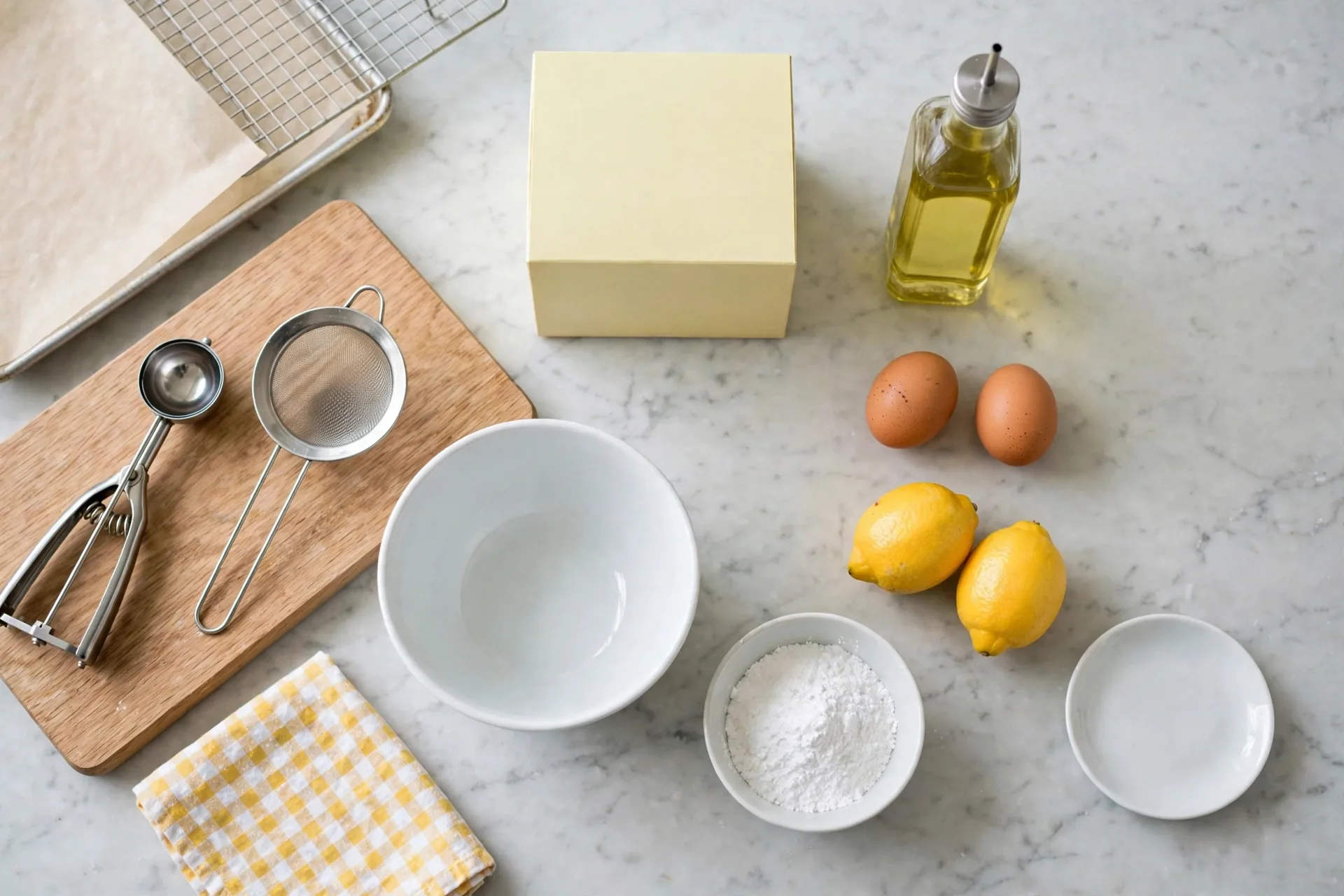
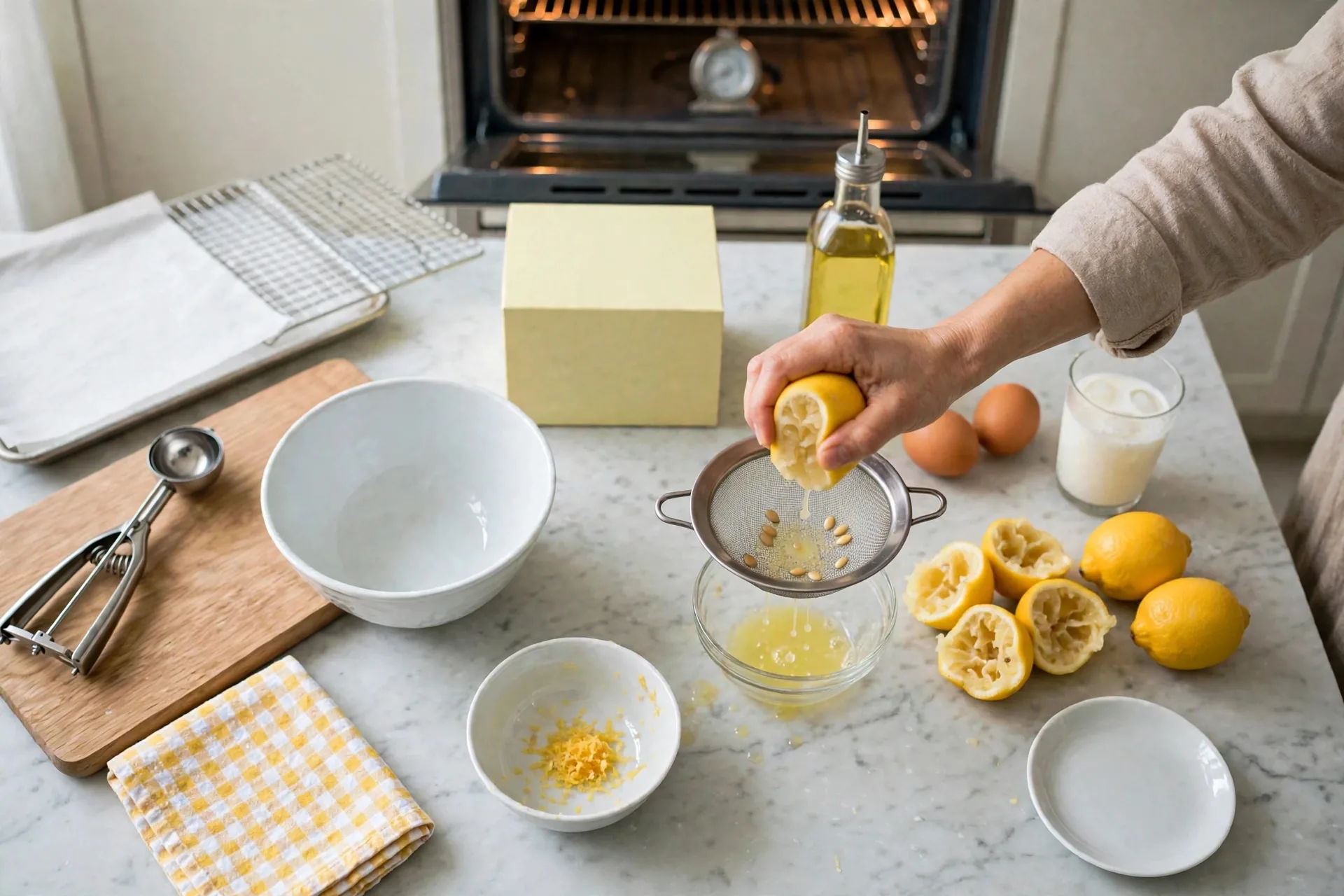
Everything laid out before mixing keeps this recipe fast. A pale-yellow cake mix box, oil, two brown eggs, two lemons, a bowl of powdered sugar, a mixing bowl, a scoop, lined sheets, and a rack.
Prep
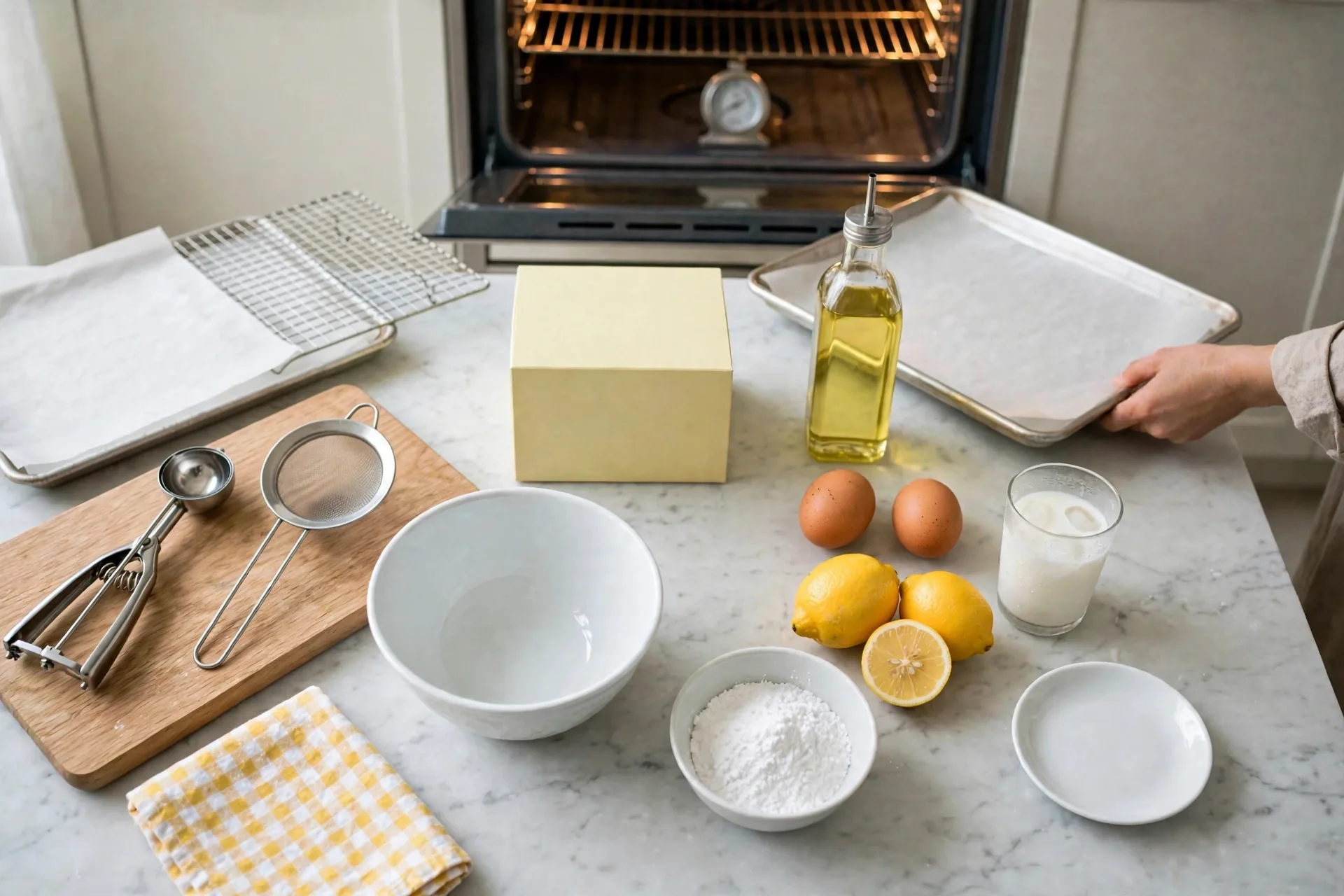
Heat the oven to 375°F and line the pans first. The dough chills for 20 minutes, and the oven should be ready the moment the trays are loaded.
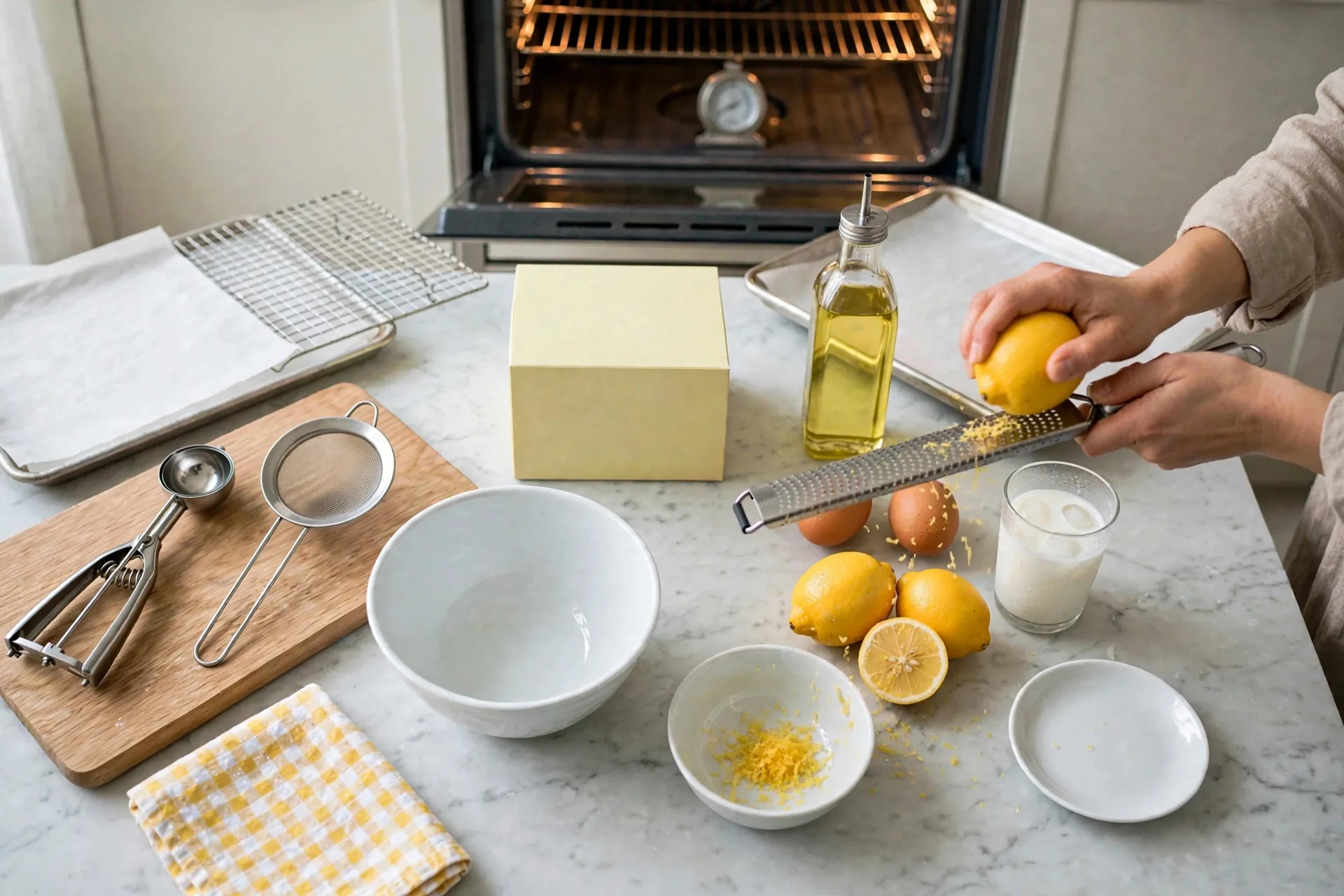
Zest one lemon over a small bowl with a fine grater until a small pile of bright yellow zest builds up. Zest only the yellow skin. The white pith underneath tastes bitter and has no place in the dough.
Squeeze the lemon halves over a small glass bowl through a sieve. Pale-yellow juice drips through while the seeds stay caught in the sieve.
Make the Dough
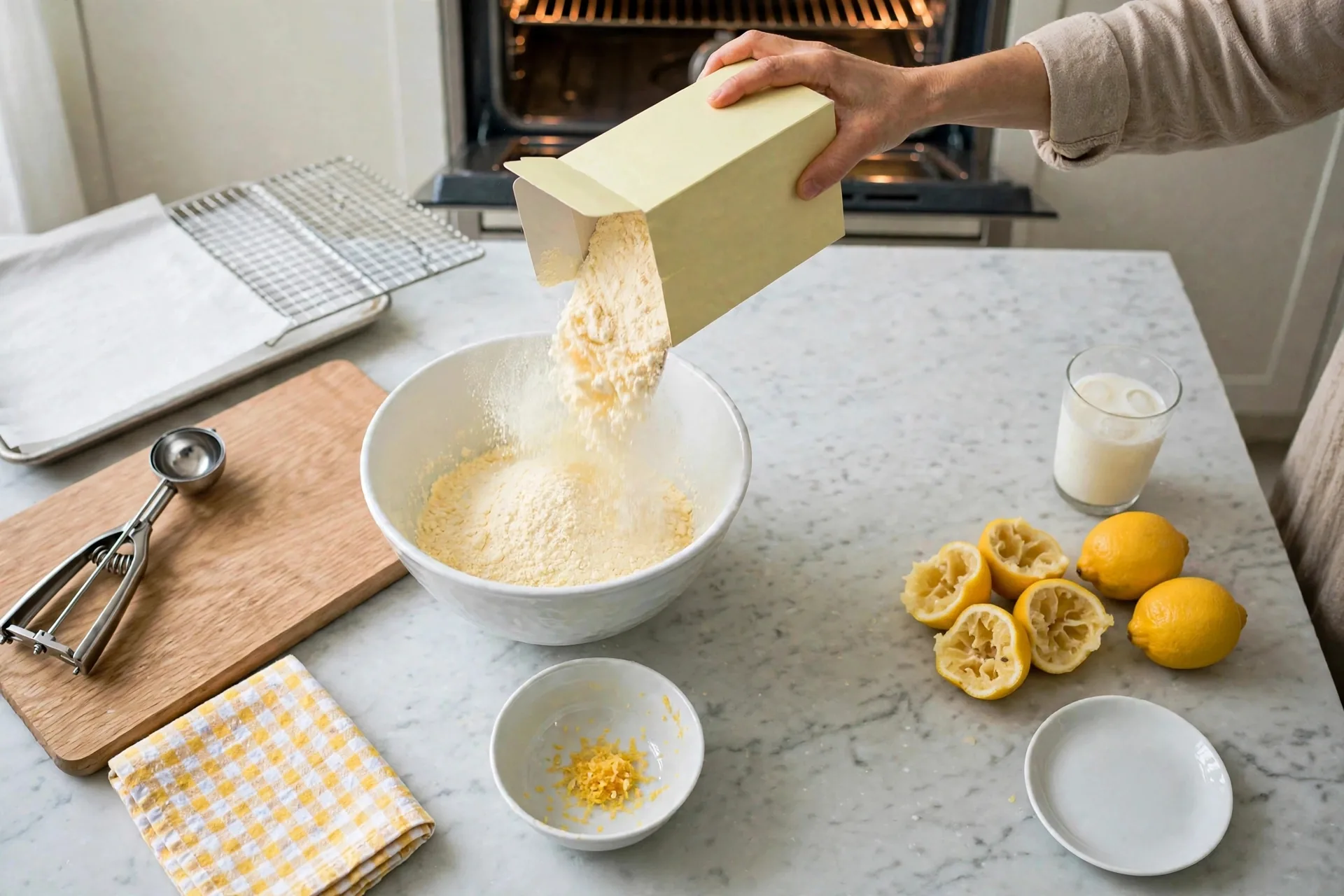
Pour the dry lemon cake mix powder from the box into a large mixing bowl. A soft cloud of pale-yellow powder falls, and a mound of dry mix sits at the bottom. Use only the dry powder. Prepared cake batter has no place here.
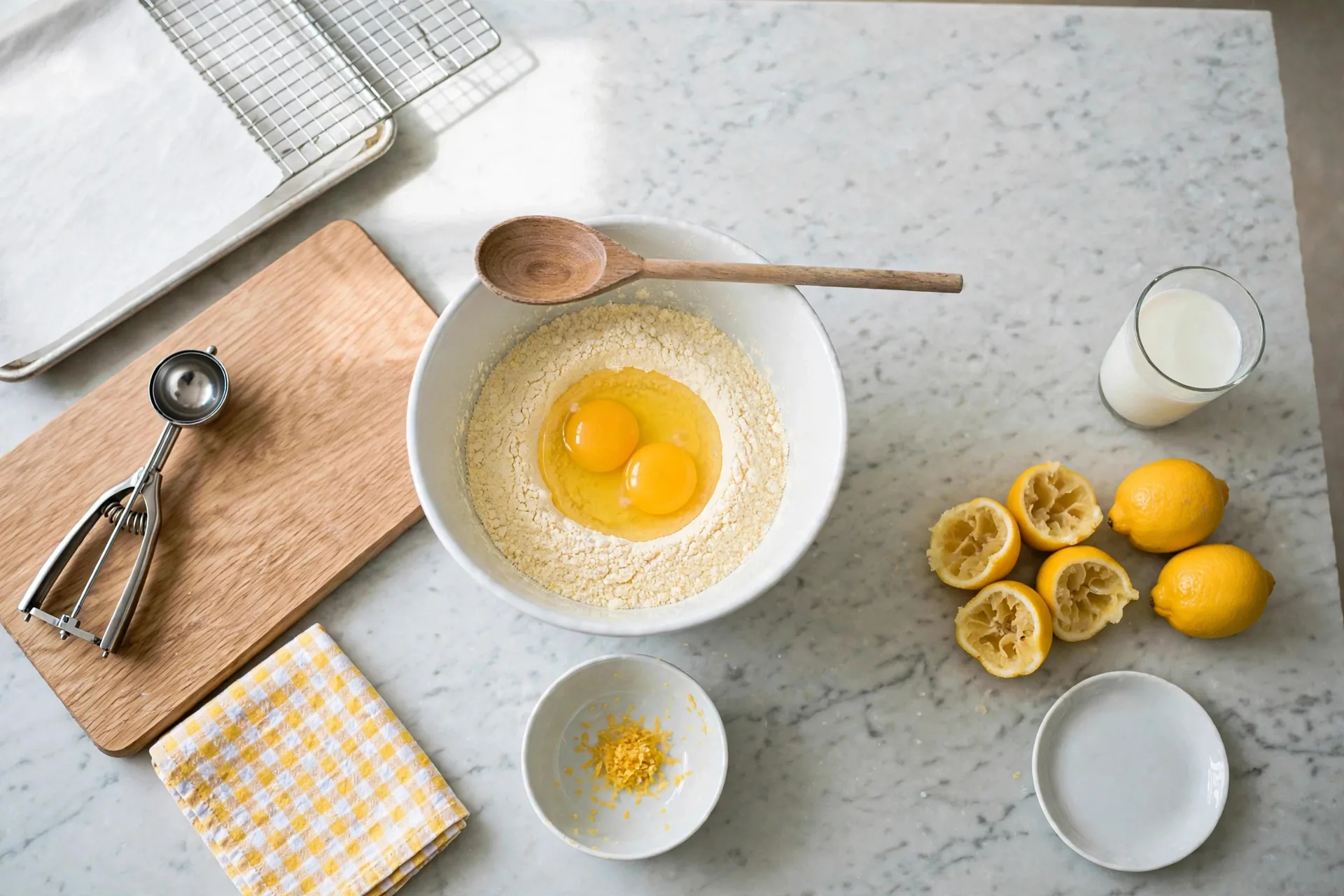
Pour the oil into a well in the center of the dry mix and crack the two eggs on top, yolks intact and sitting separately, not yet mixed. A wooden spoon rests across the rim, ready.
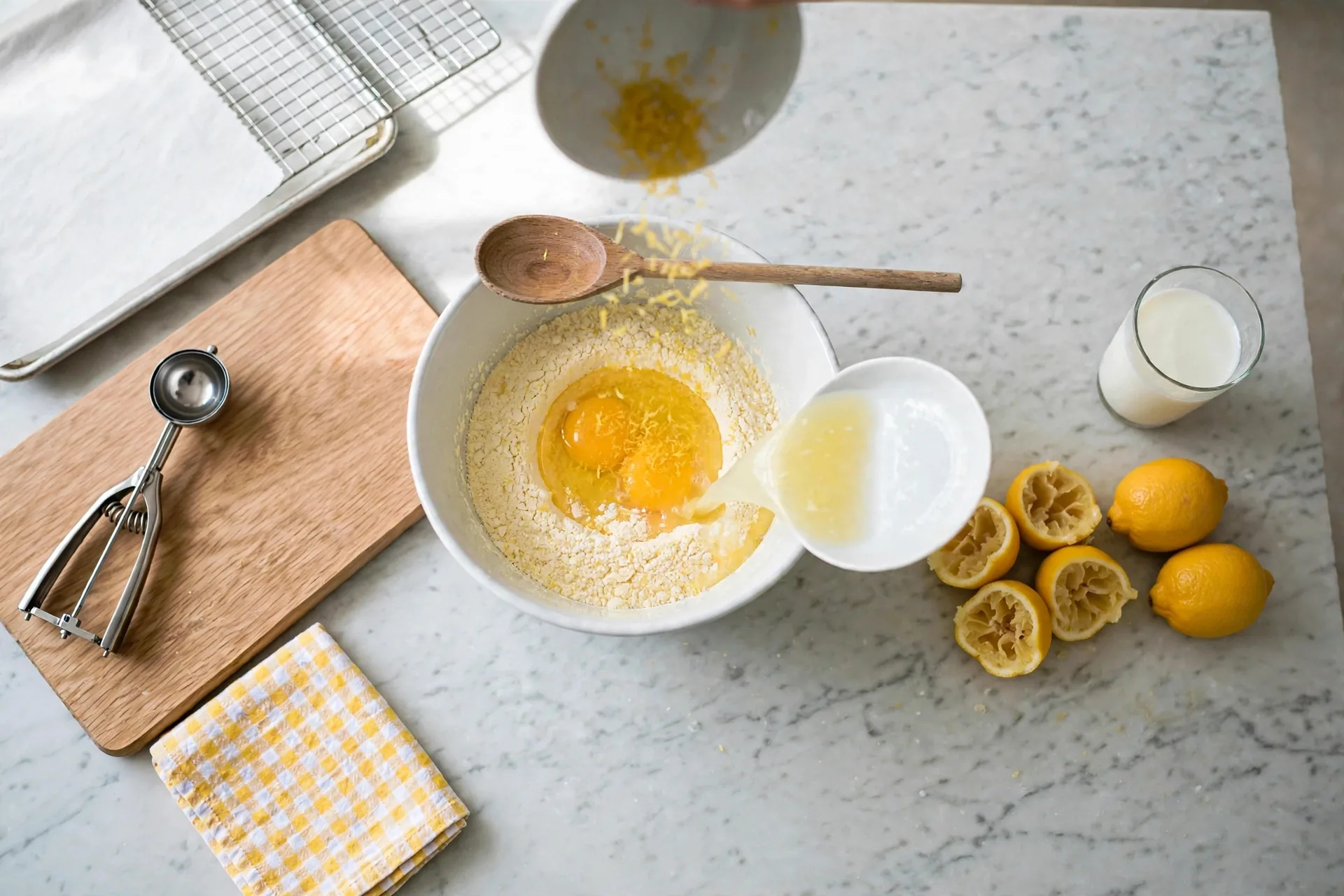
Add the lemon zest and lemon juice from the small bowls into the mixture. Bright yellow zest falls onto the pale mixture. Everything still sits separate, not stirred.
Stir with the wooden spoon until a thick, pale-yellow dough pulls away from the sides of the bowl, with flecks of lemon zest throughout. A few streaks of dry mix at the edge are fine at this stage. Keep stirring just until they disappear. Overmixed dough bakes tougher.
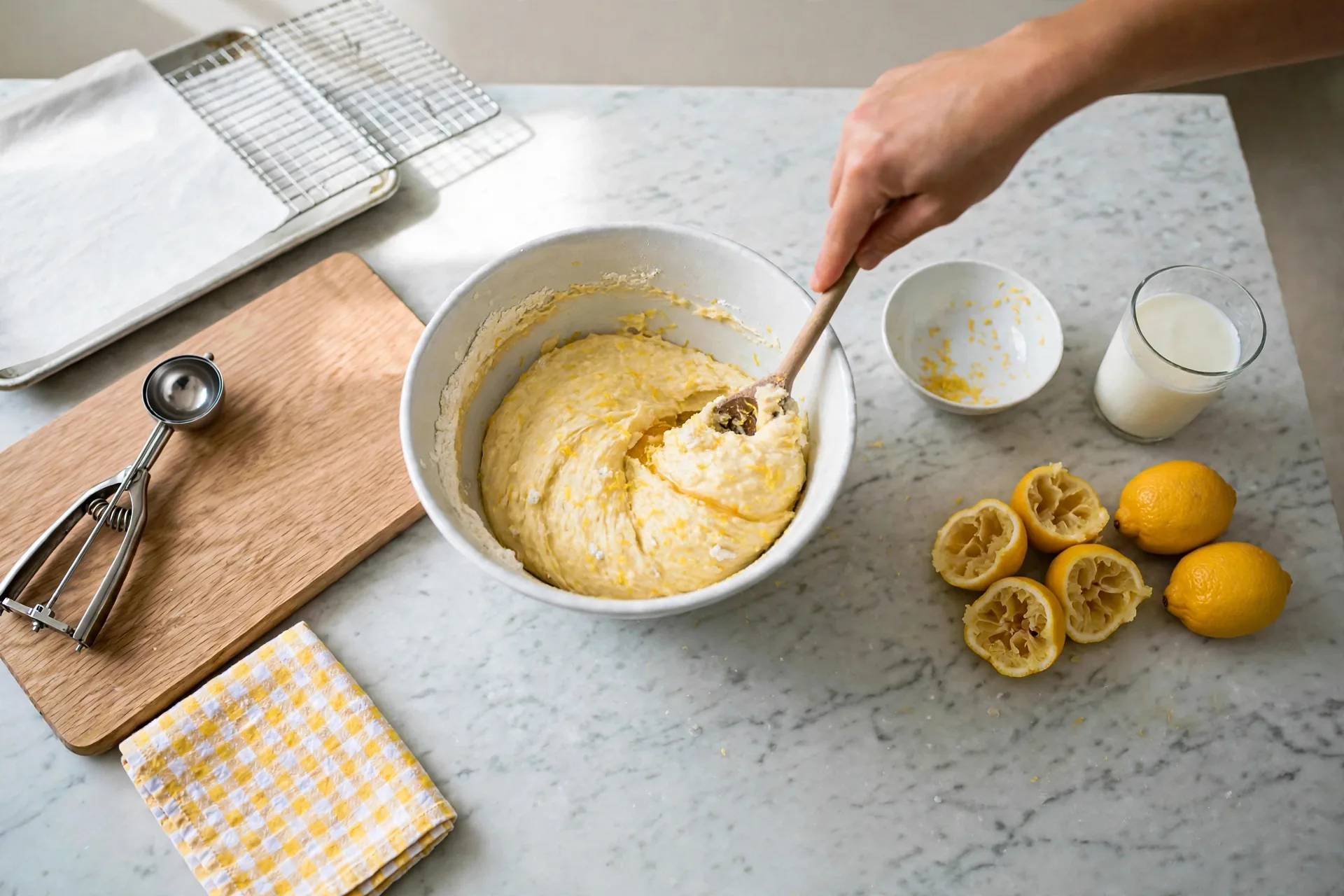
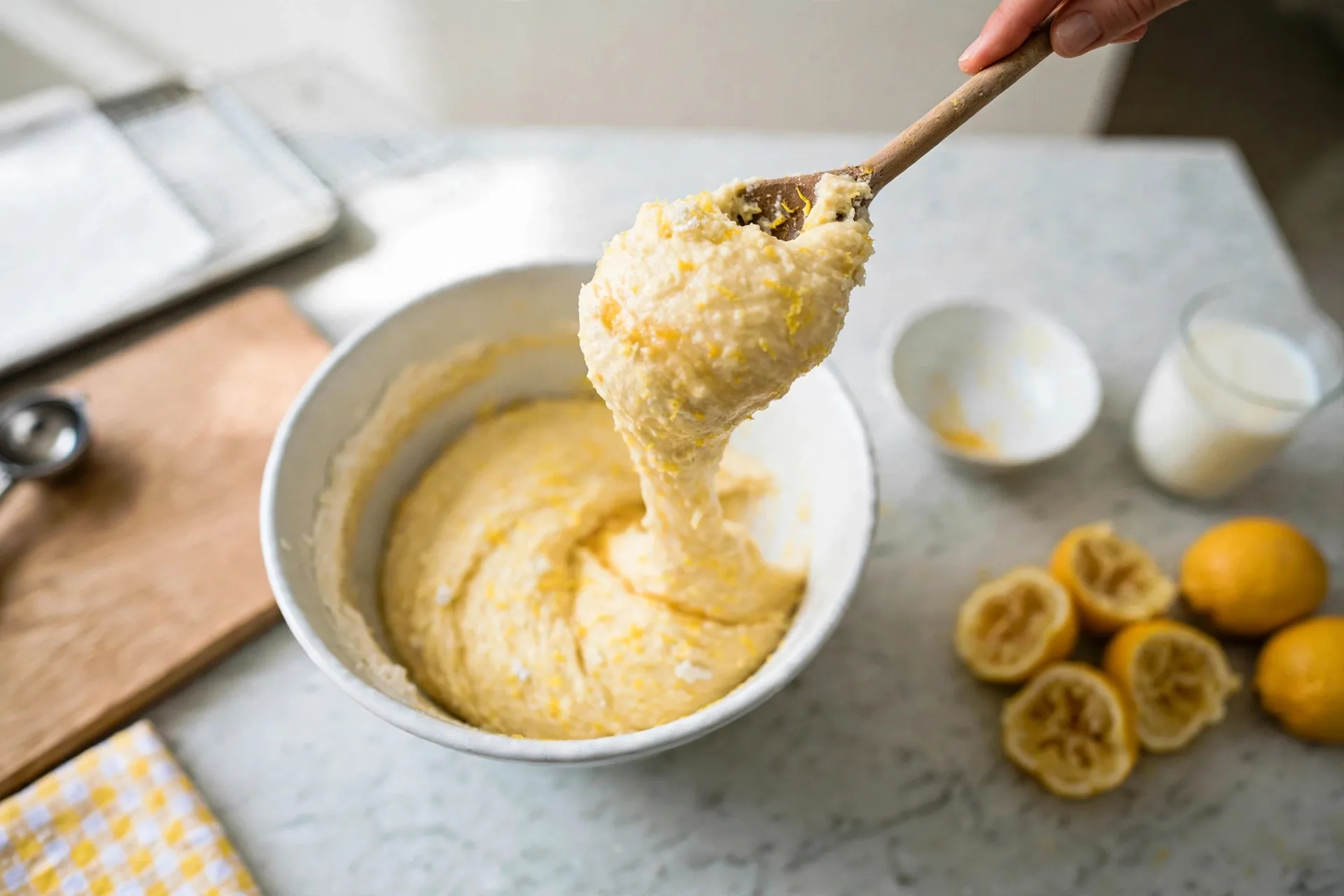
Texture Check: lift the spoon. A thick, slightly sticky mound of pale-yellow dough should cling to it and form a stretchy peak. Thick enough to scoop, not runny. Runny dough means the oil or juice ran long, and chilling longer is the fix, not more cake mix.
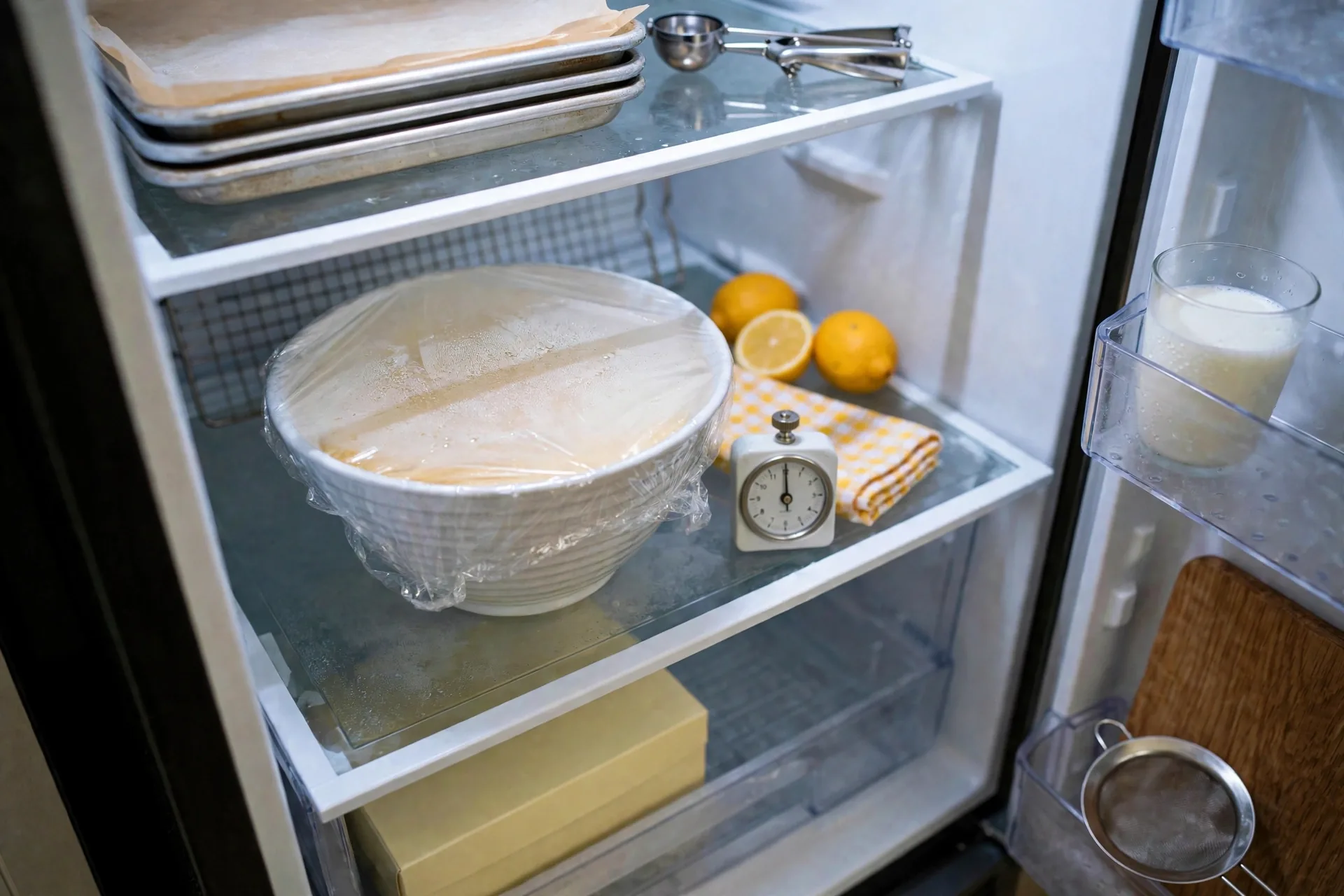
Cover the bowl tightly with plastic wrap and set it on a fridge shelf for about 20 minutes. Chilling firms the dough so it scoops cleanly and holds its shape instead of spreading flat. Skip the chill and the cookies bake wide and thin.
Shape and Coat
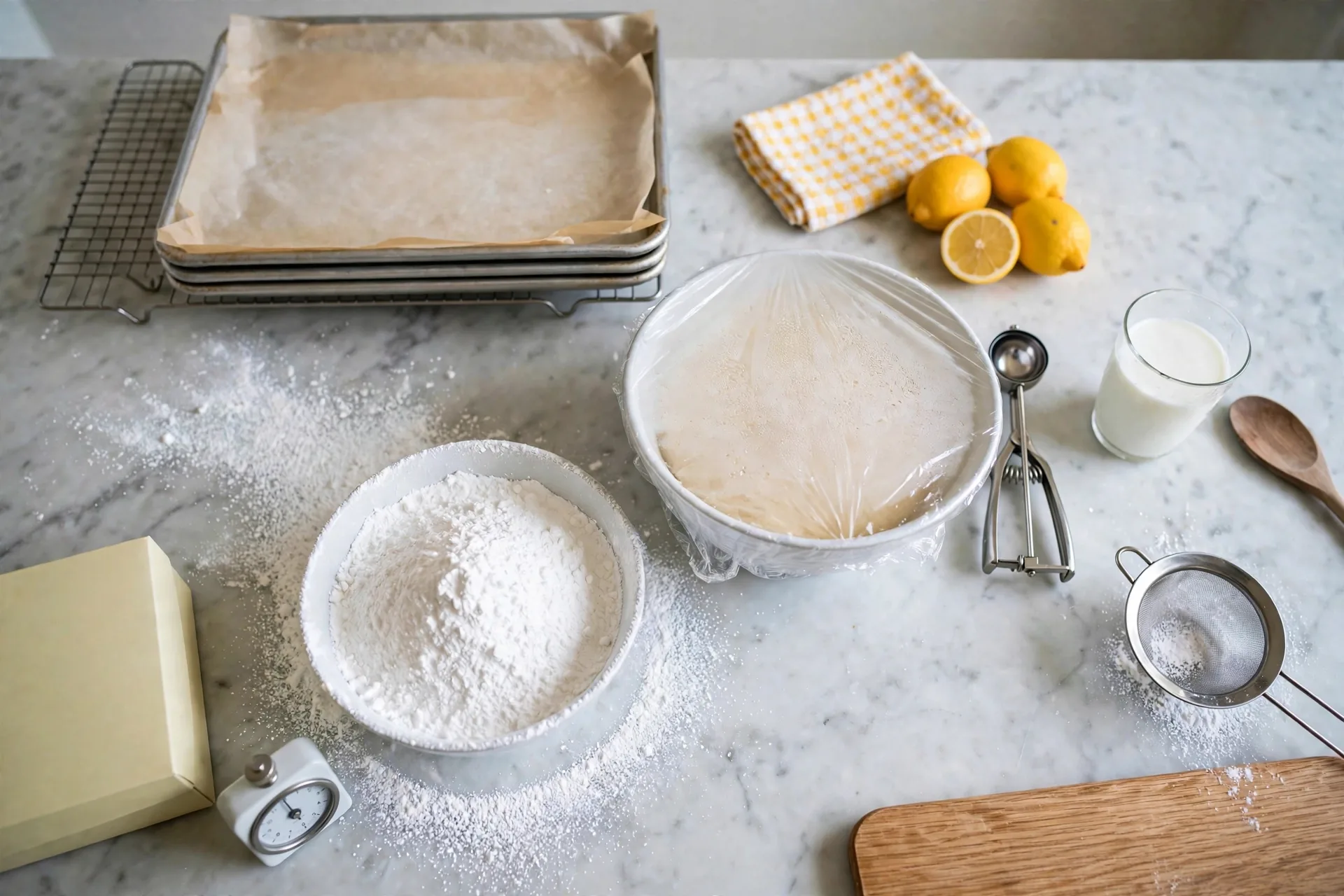
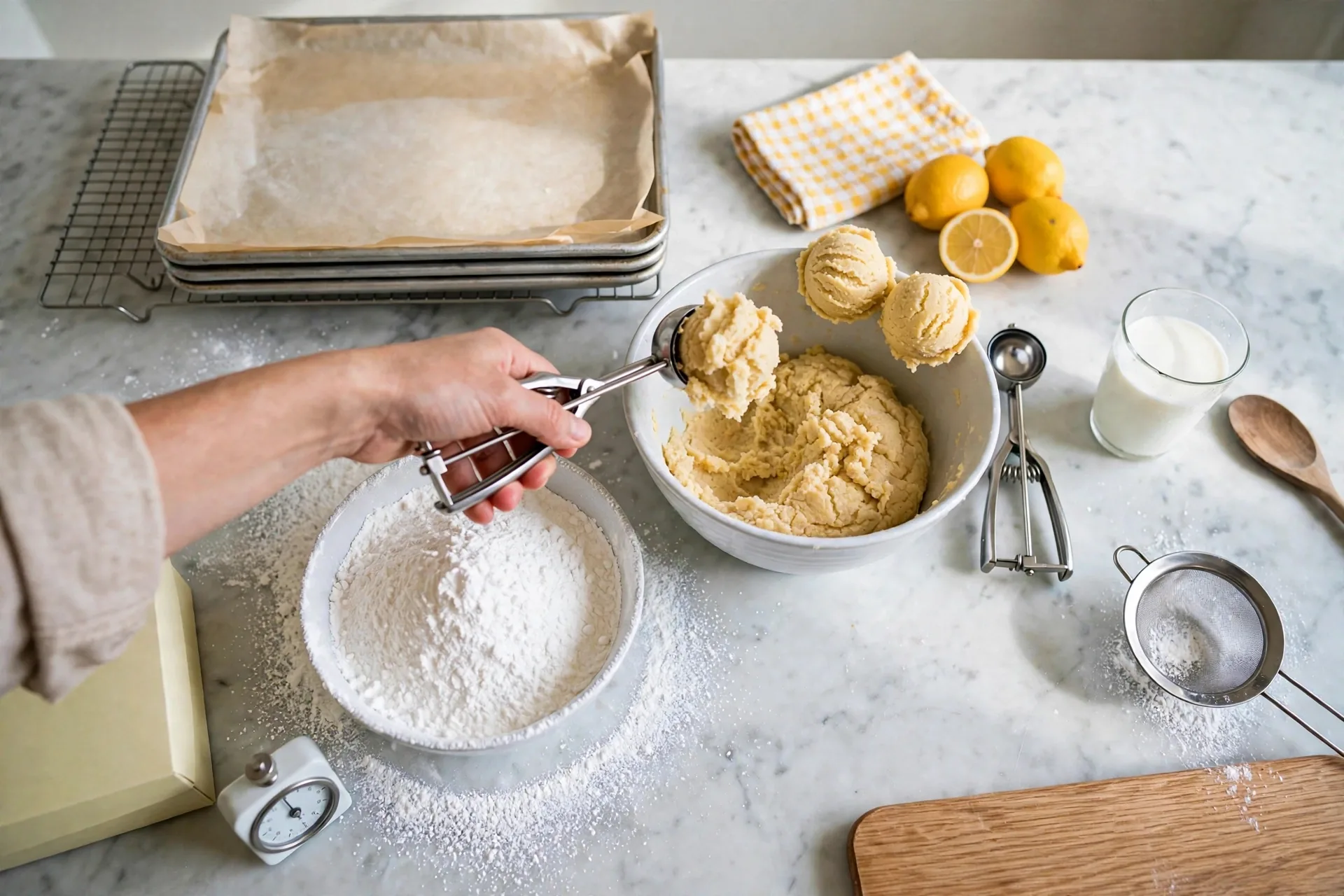
Set out a shallow bowl filled with a deep layer of powdered sugar, with a fine dusting on the counter around it. The chilled dough bowl and cookie scoop wait beside it, and a parchment-lined baking sheet sits at the top of the frame.
Press the cookie scoop into the chilled dough and lift a rounded scoop of pale-yellow, slightly sticky dough. The dough feels wet and sticky at this stage. That is normal, and it bakes up round and fluffy.
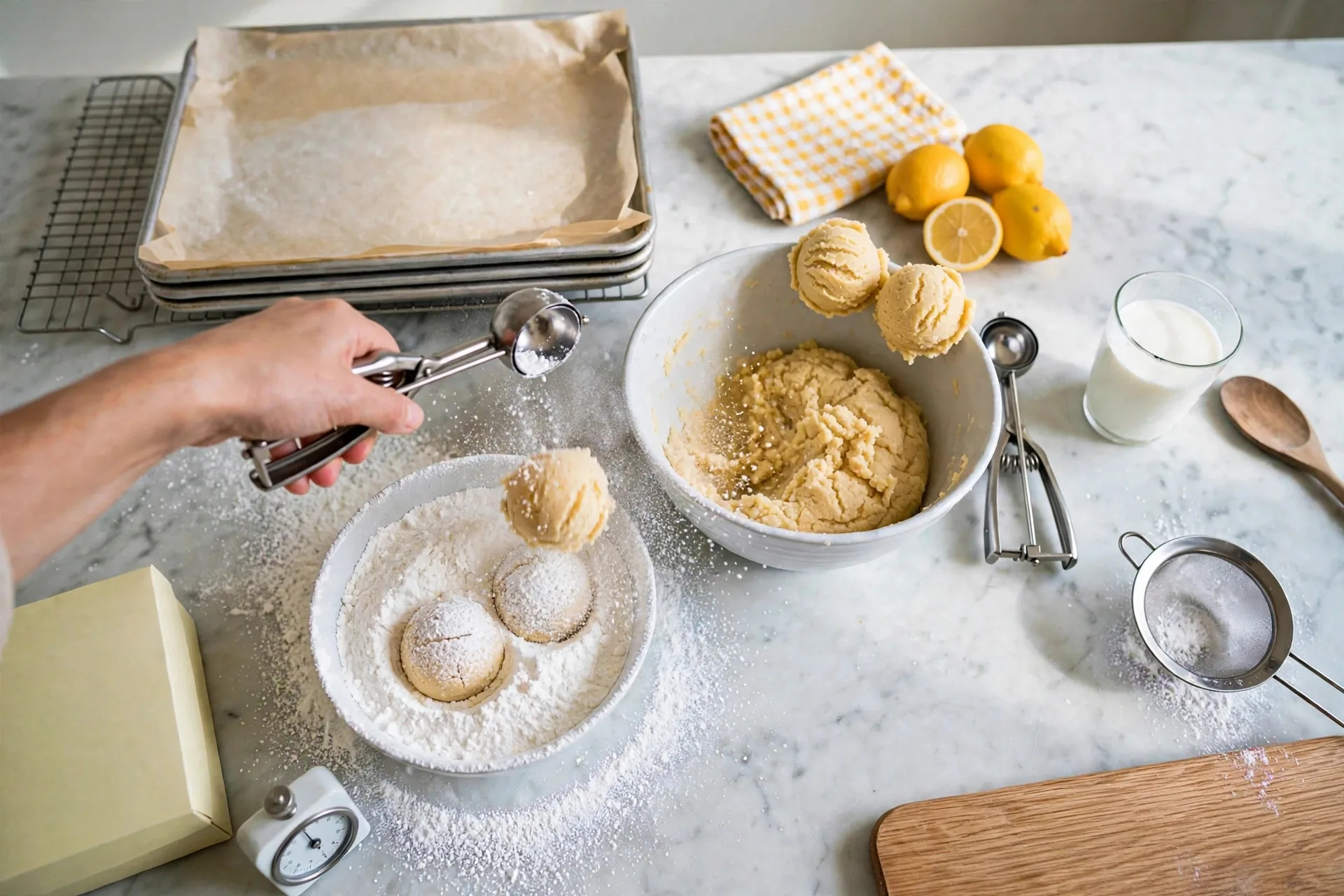
Drop the scoop into the bowl of powdered sugar. A small puff of white sugar rises, and one or two dough balls already sit half buried in the sugar.
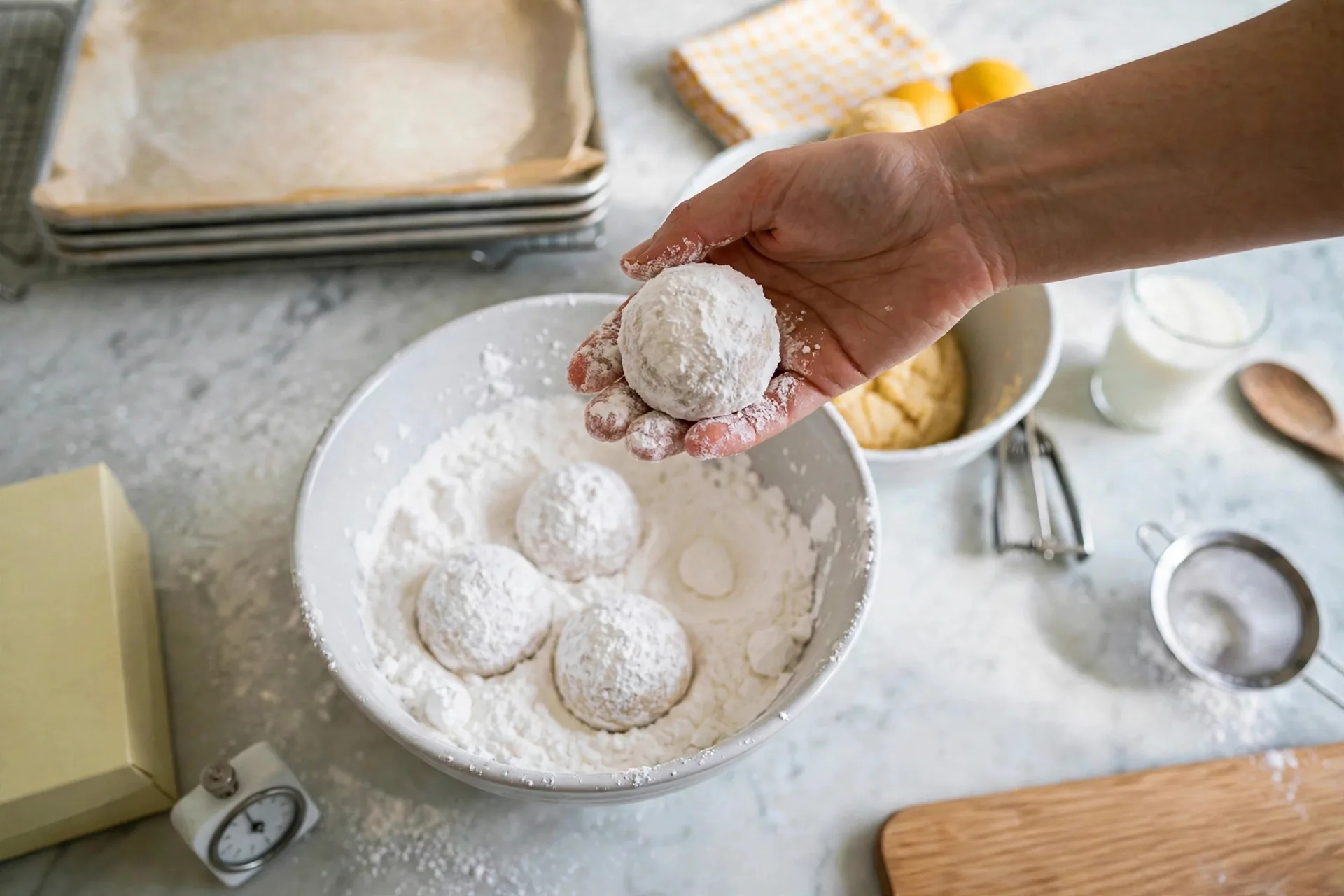
Roll the ball in the powdered sugar until it wears a thick, snowy white coat all the way around. A finished white ball sits in the palm. The sugar coat is what cracks into the crinkle pattern as the cookie puffs, so a thin or patchy coat gives a weak crackle.
Common Mistake: rolling with wet hands. Wet hands dissolve the sugar coat before it reaches the oven. Keep hands dry and let the sugar do the work.
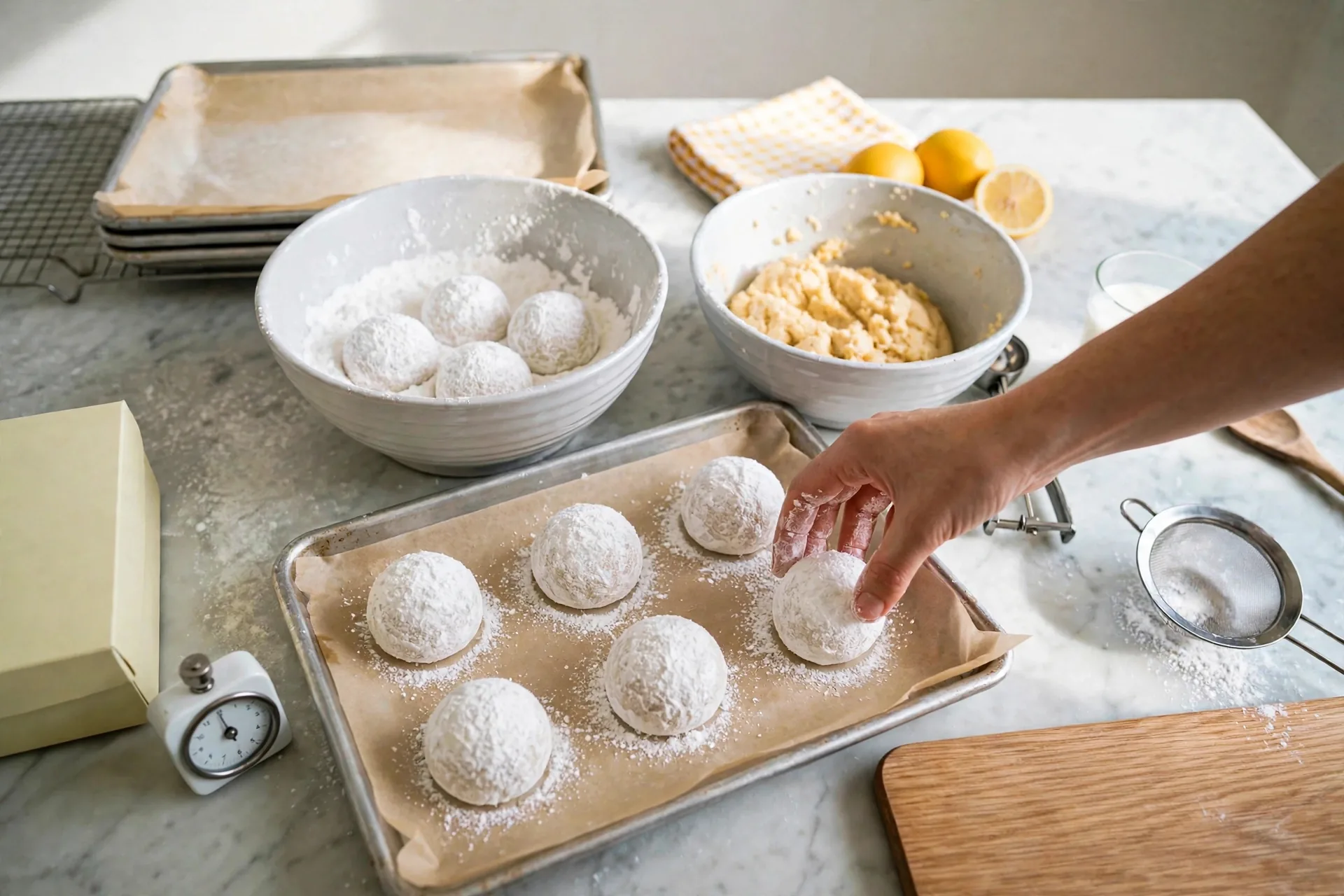
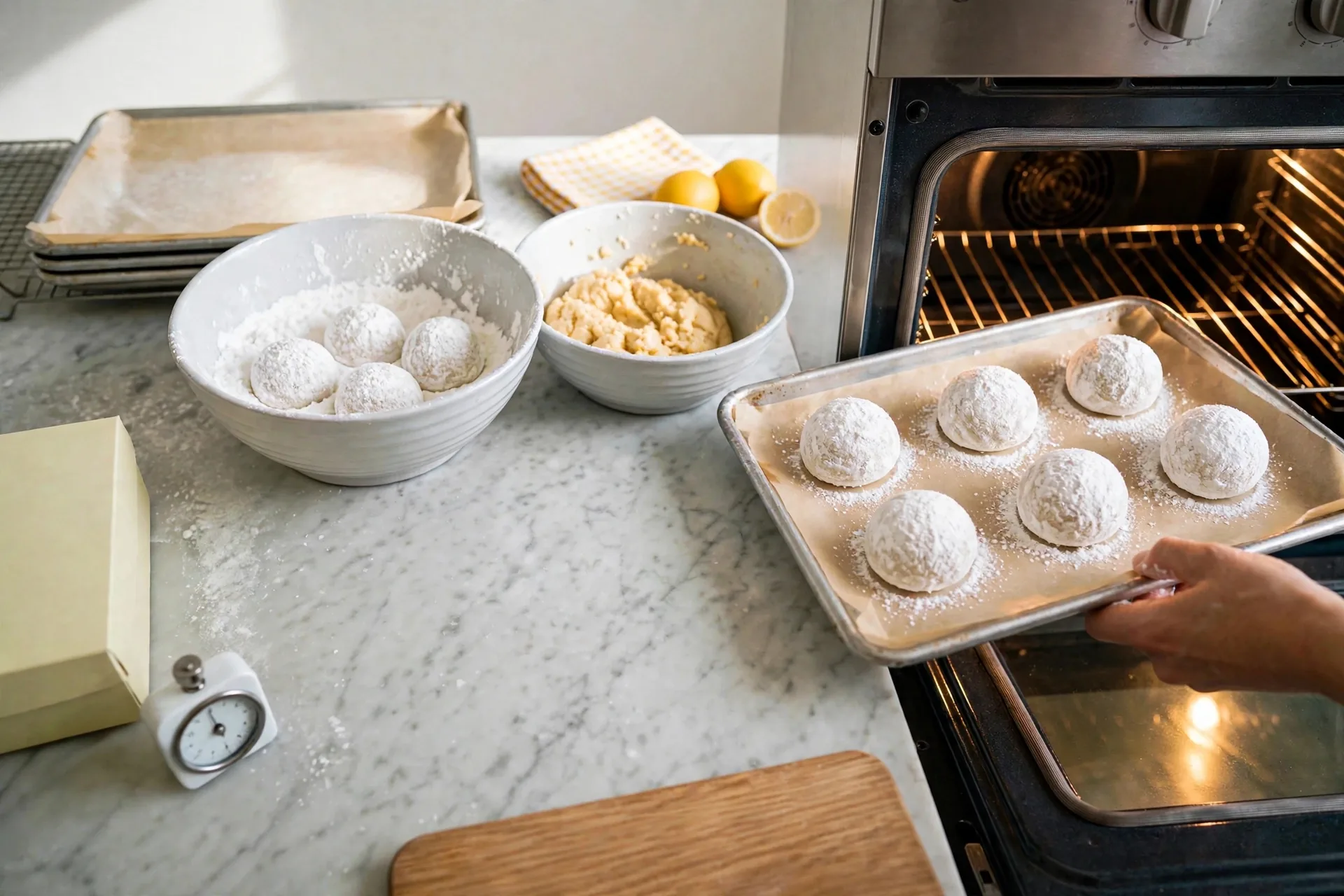
Place the fully coated white dough balls on the parchment-lined baking sheet, evenly spaced about two inches apart, in neat rows. White powdered sugar dust on the parchment marks where each ball landed.
Slide the tray of white sugar-coated dough balls into the preheated oven. The balls sit perfectly round and snowy white, and the oven light glows behind them.
Bake and Cool
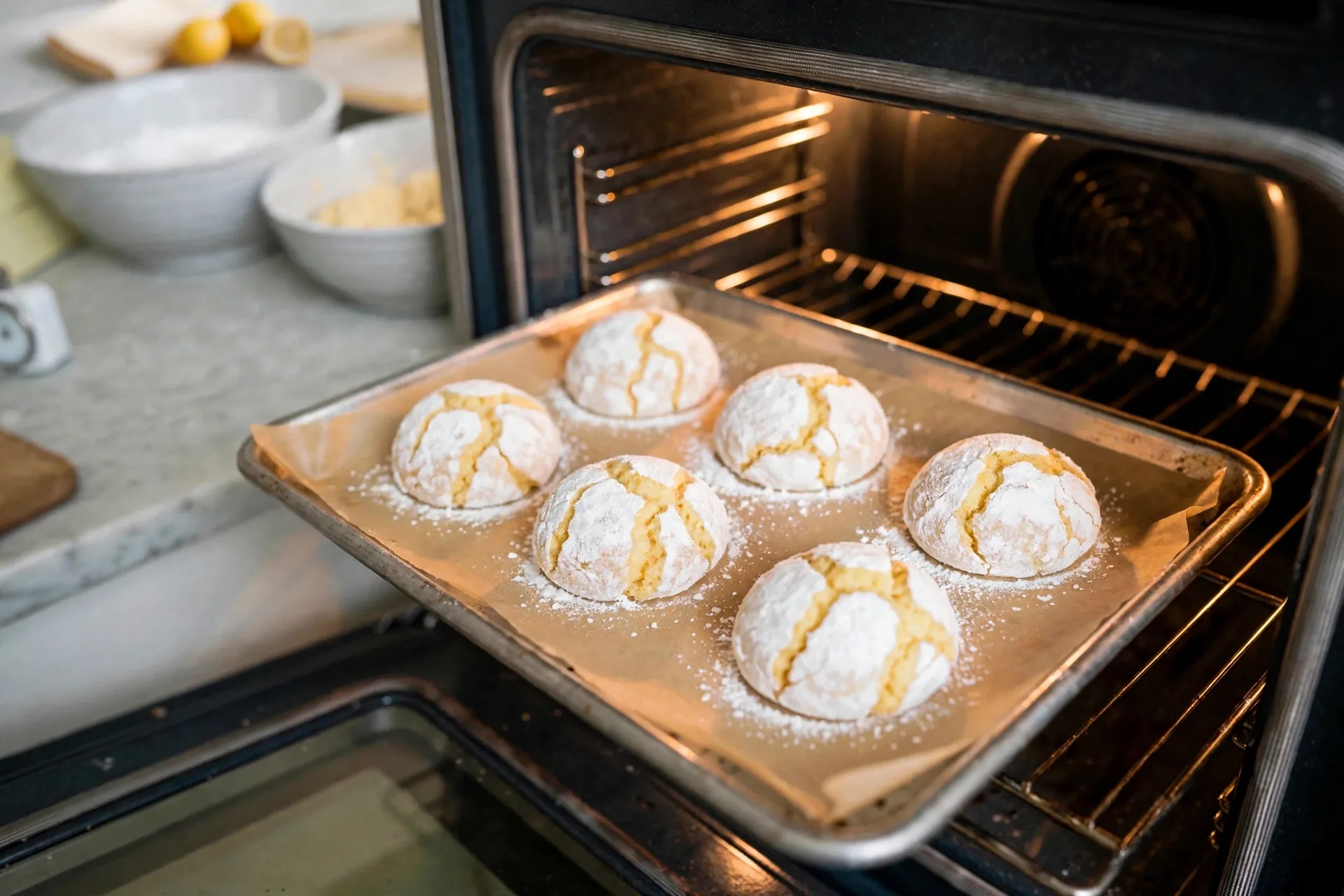
Watch the tray mid-bake. The cookies puff and begin to crack, with golden-yellow showing through white cracks in the sugar coating. The oven light glows softly. No browning should appear anywhere.
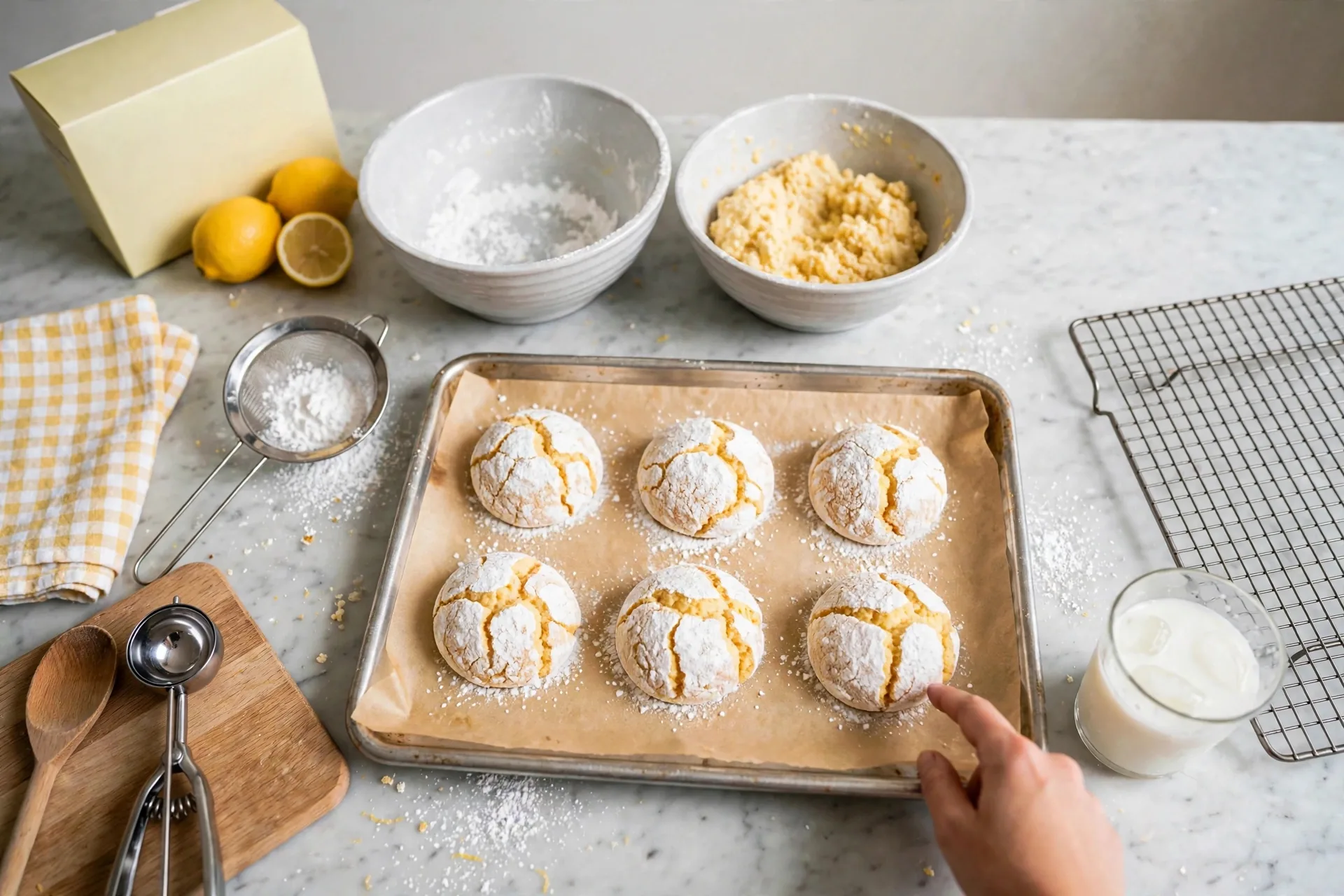
Doneness Check: the tray comes out with cookies puffed and crackled, white sugar split open over pale golden-yellow, edges just set and not browned. A finger gently touching the edge of one cookie finds it set, not wet. Lemon cookies are done when the tops are set and cracked and the edges feel just firm. They keep baking on the hot tray for a minute after leaving the oven, so pulling them pale is correct.
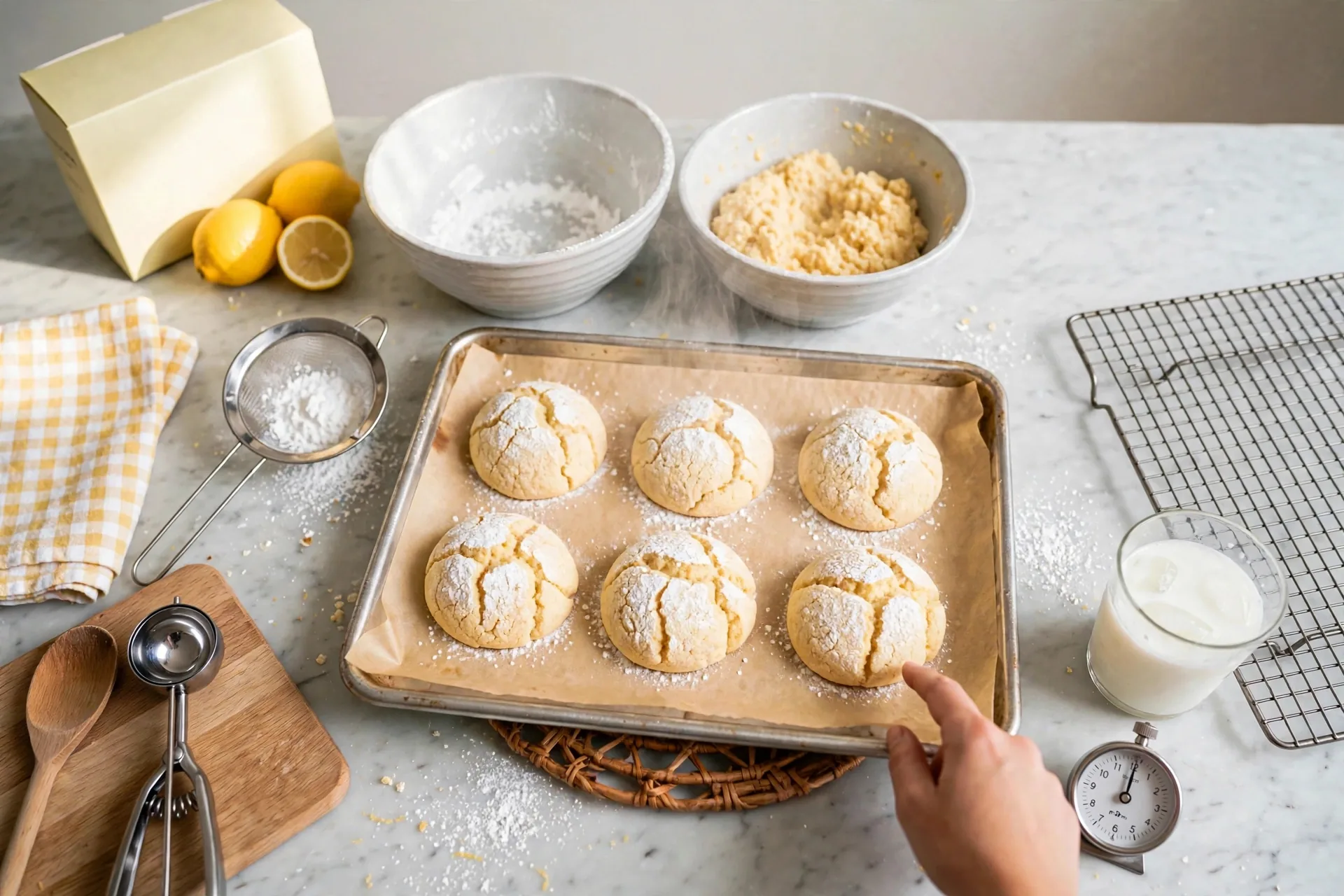
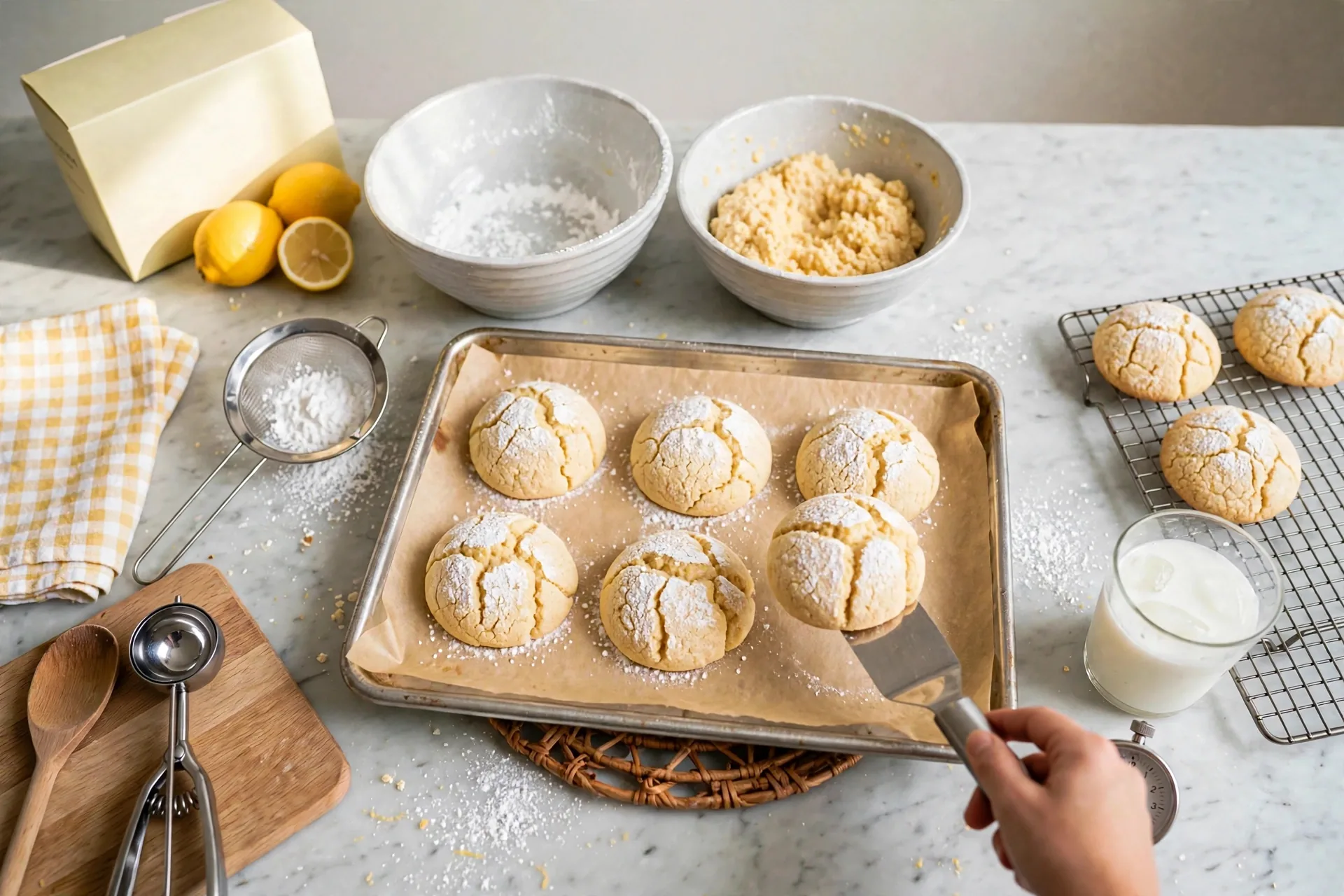
Rest the cookies on the hot tray for a couple of minutes. They arrive slightly soft and pillowy, still on the pan with a little steam rising, and they firm up as they sit. Moving them too early breaks the soft centers.
Lift each cookie with a thin spatula onto the wire cooling rack. A few cookies already sit on the rack, cracked white and pale yellow, and they hold their shape firmly.
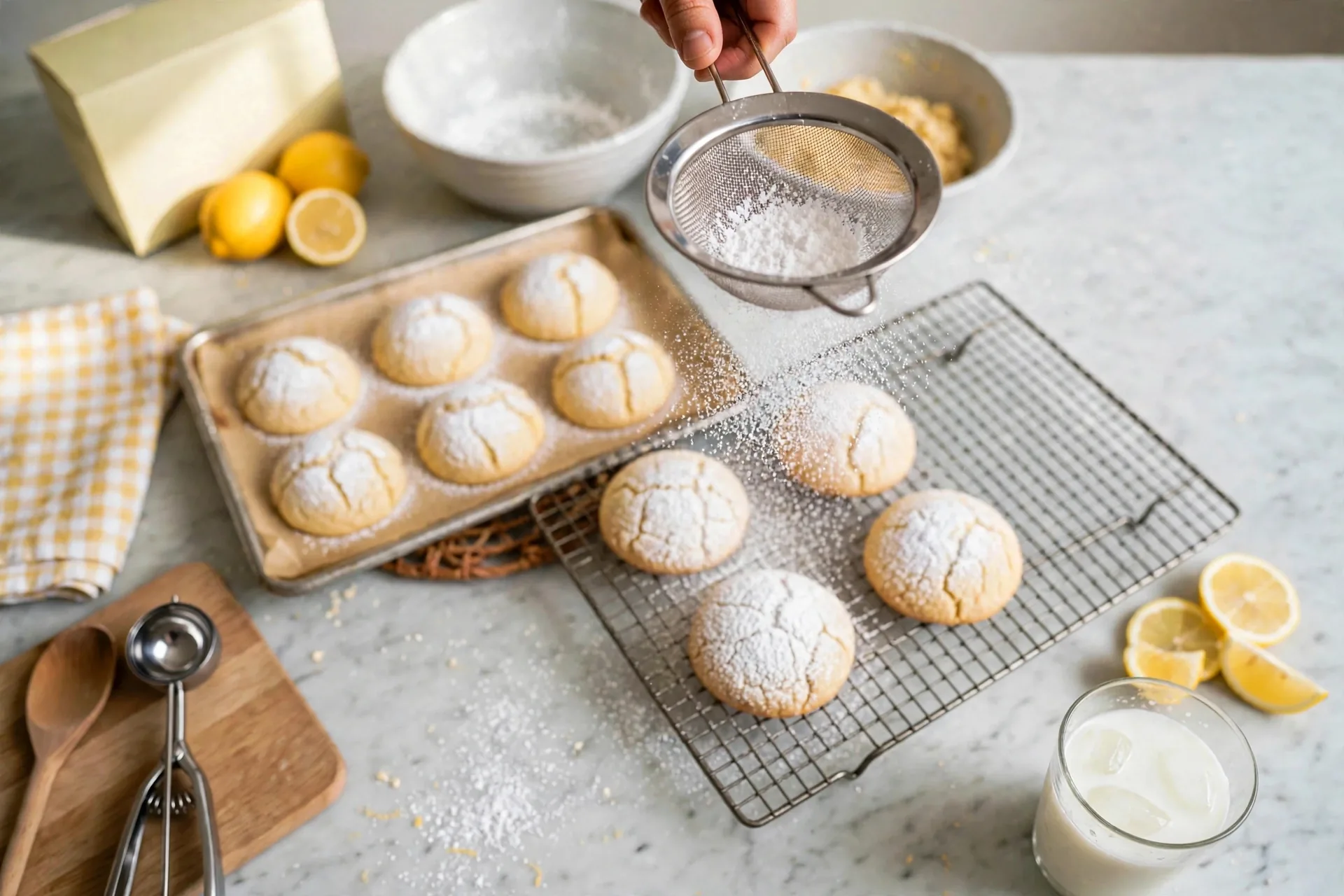
Dust fine powdered sugar over the cooled cookies through a small sieve. A soft white shower of sugar falls and settles over the cracks. A few lemon slices beside the rack keep the scene fresh.
Serve and Store
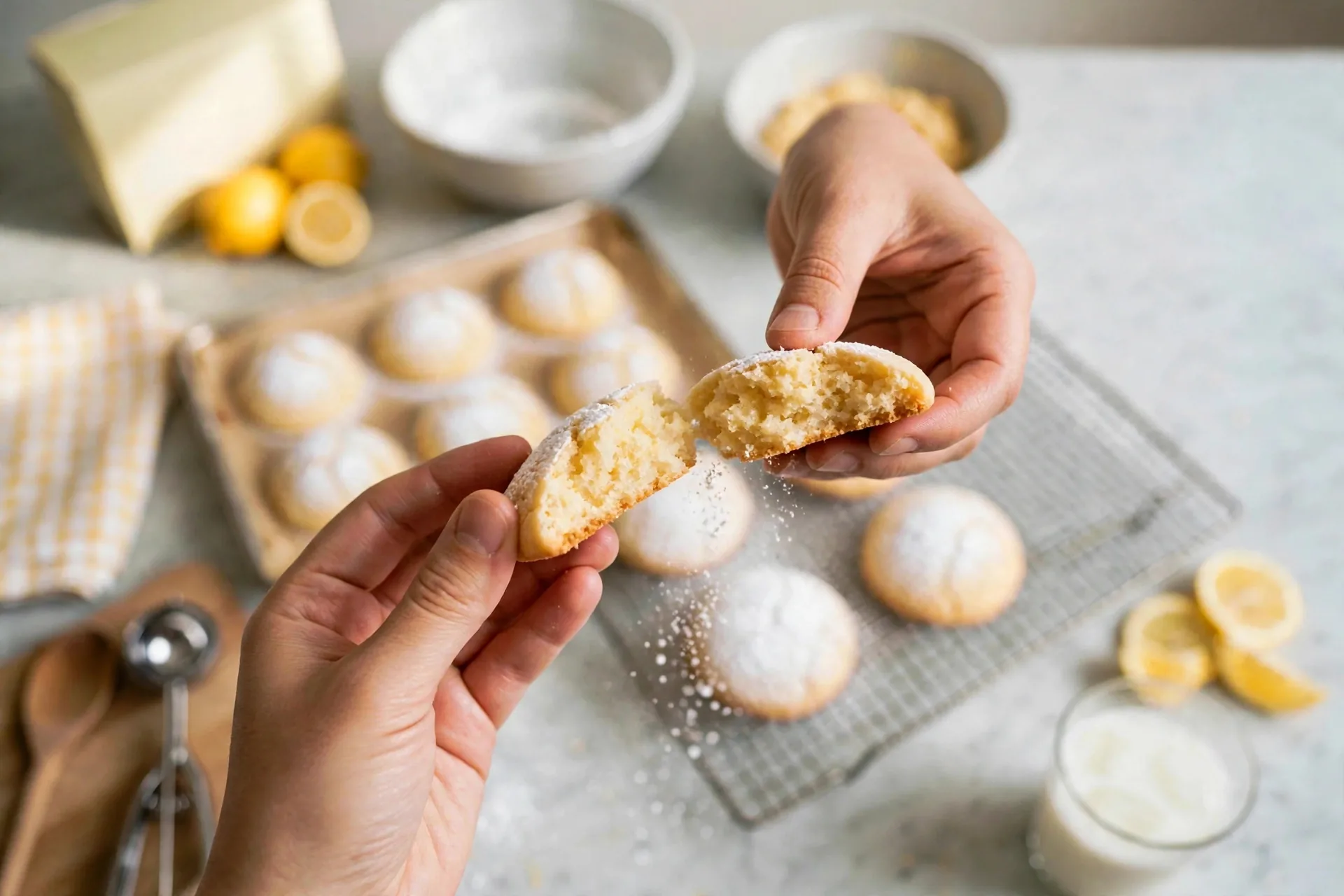
Pull one cookie apart with both hands. A soft, chewy, pale-yellow interior shows through a thin cracked sugar crust, with a little powdered sugar falling from the break.
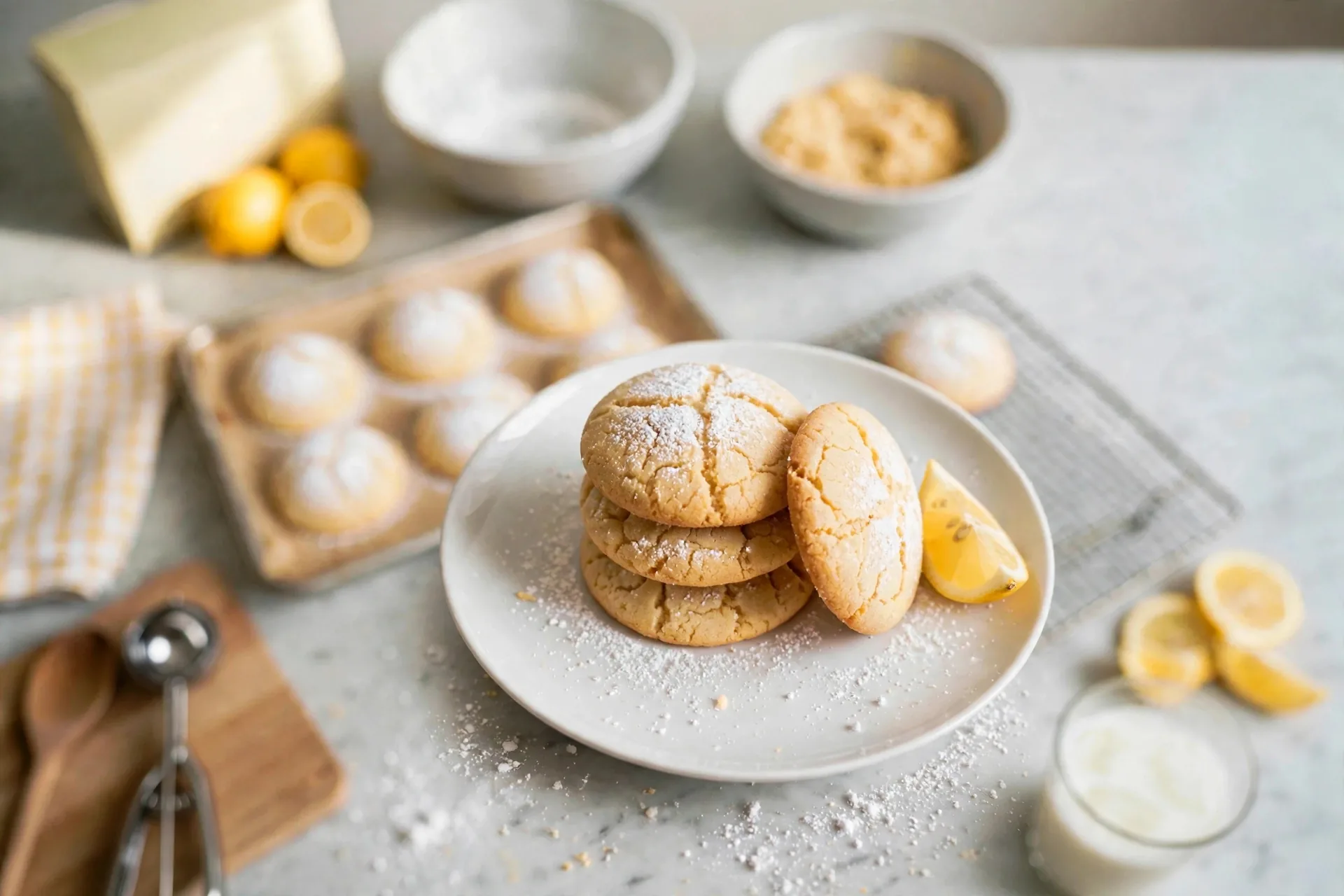
Stack three cookies on a white plate with a fourth leaning against the stack, the crackle pattern clearly visible, a lemon wedge on the side of the plate, and fine sugar dusting on the plate.
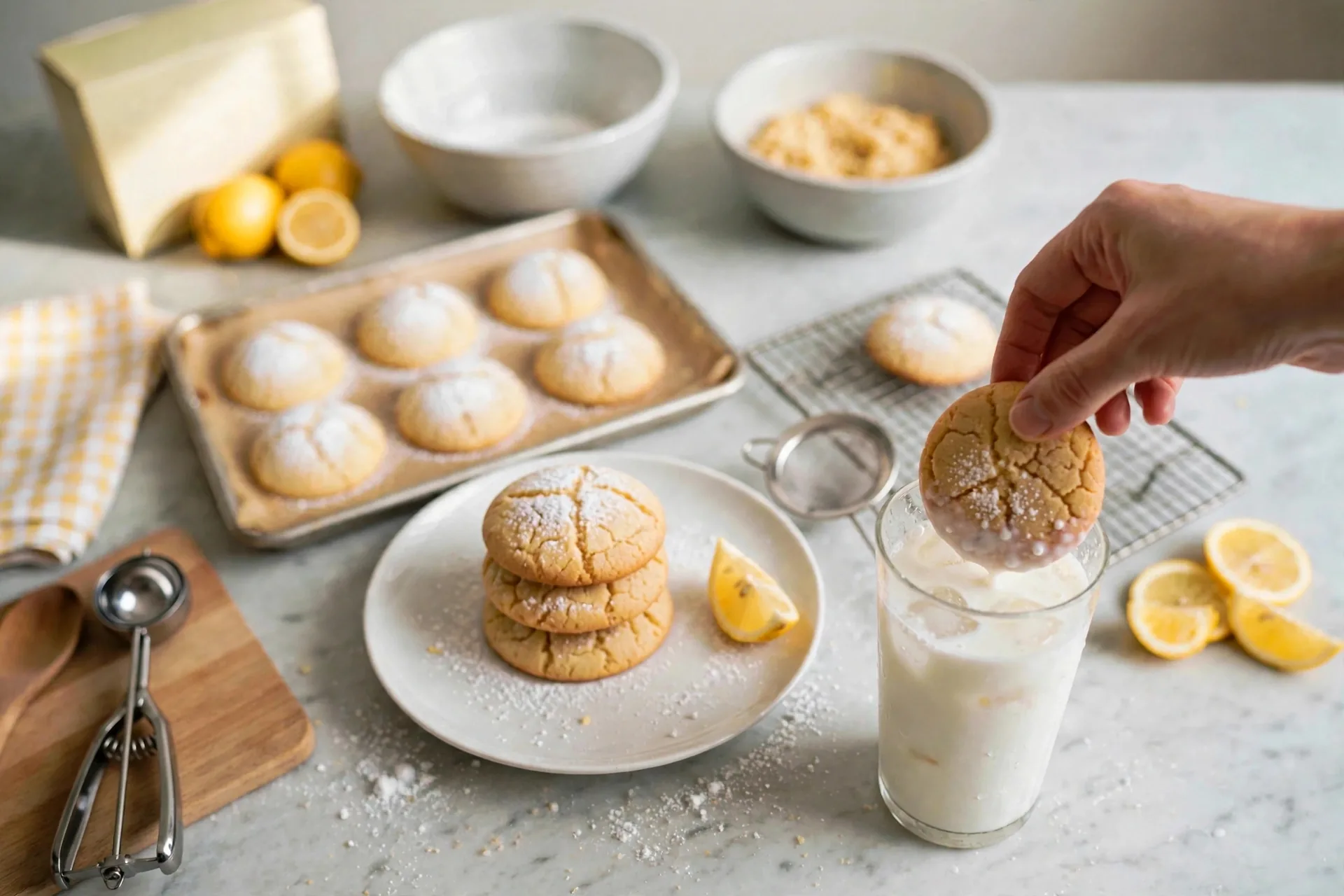
Dip a cookie halfway into a tall glass of cold milk. A plate of cookies beside it and a halved lemon in the background make the obvious pairing: cold milk against a soft lemon cookie.
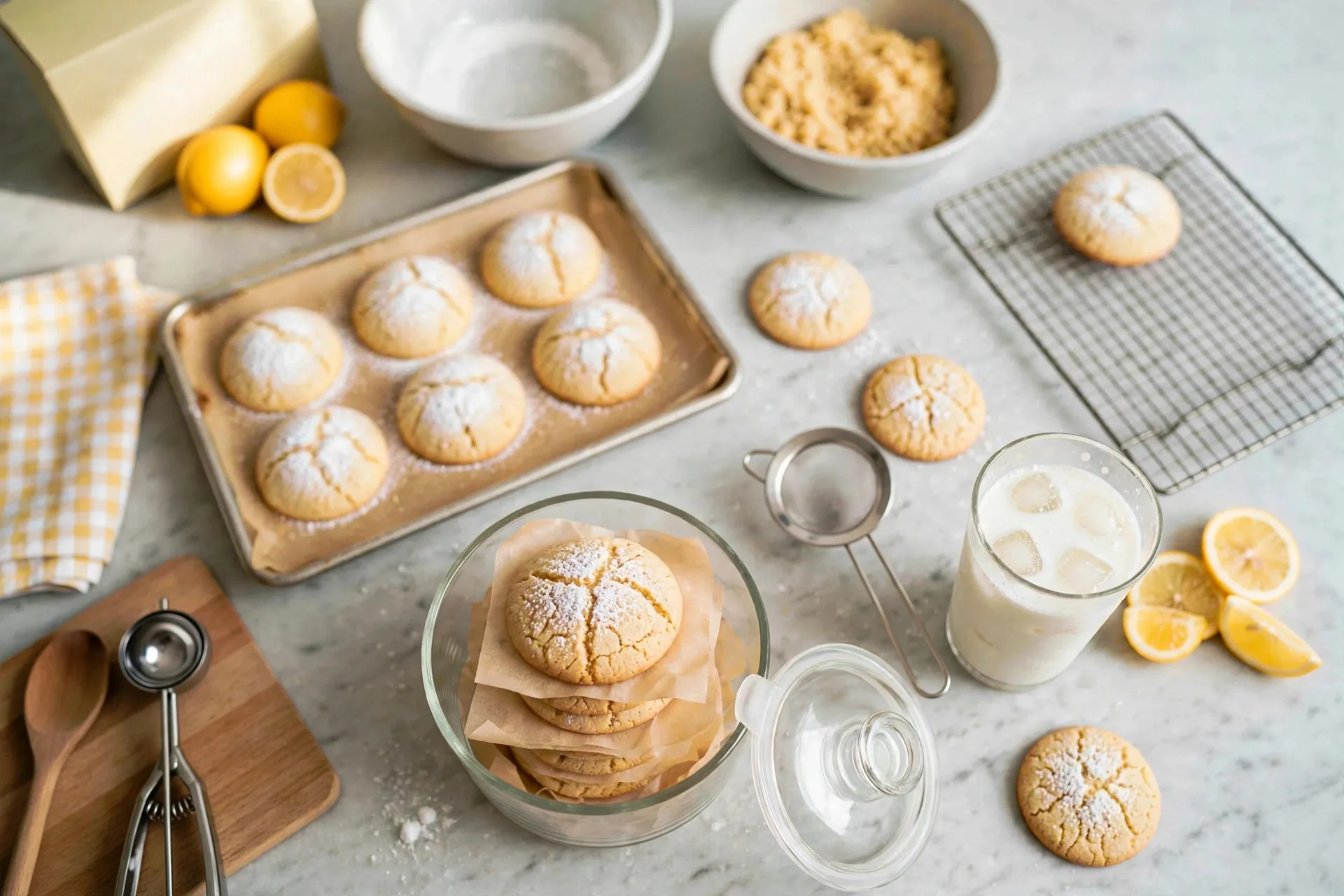
Layer cooled cookies in an airtight glass container with parchment paper between the layers, the lid resting beside it. The cracked white surfaces stay intact that way. The cookies keep at room temperature for several days, or freeze for longer storage. Thaw frozen cookies at room temperature before serving.
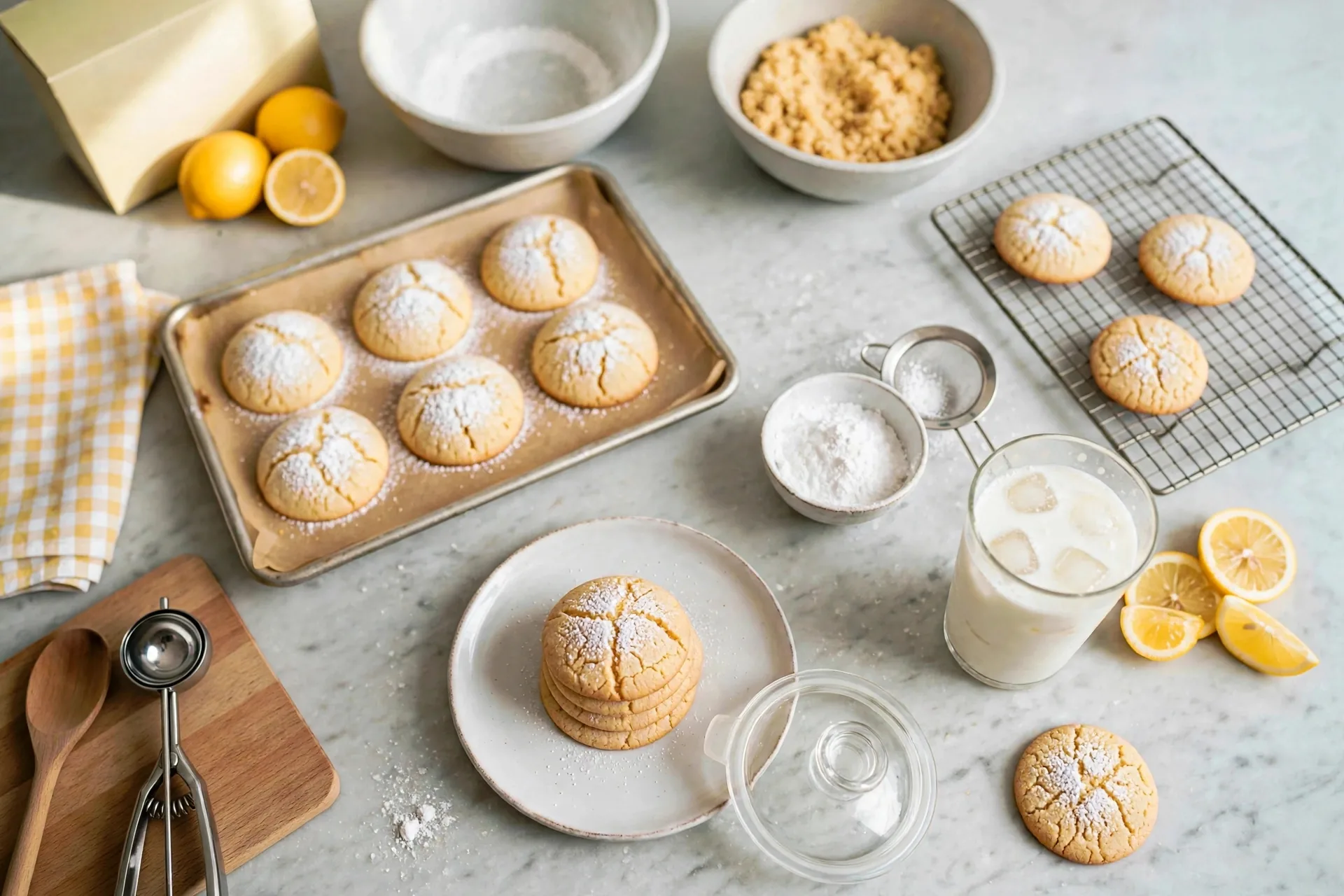
A plate of lemon cookies, a glass of milk, halved lemons, a wire rack with a few cookies, and a small bowl of powdered sugar arranged on the counter with the gingham towel make the final scene: a wider view than the hero shot, and the recipe done.
Where Lemon Cookies Usually Go Wrong
Cookies spread flat. Warm dough is the usual cause. Chill the full 20 minutes and keep the trays cool between batches. A hot tray melts the dough before the oven sets it.
Weak crackle pattern. A thin sugar coat cracks weakly. Roll each ball until fully white, with no yellow showing through, and keep hands dry while rolling.
Browned edges. The oven ran hot or the batch stayed in too long. Pull the tray when the tops are set and cracked and the edges feel just firm, even if the centers look soft. They set on the tray.
Tough cookies. Overmixing after the dough comes together builds toughness. Stir just until the dry streaks disappear, then stop.
If You Are Out of Something
- No fresh lemons: bottled lemon juice gives the liquid, but the zest carries most of the fresh lemon flavor, so the result tastes flatter without it.
- No vegetable oil: any neutral oil works. Olive oil changes the flavor and is better skipped here.
- No wire rack: cool the cookies fully on the tray, though the bottoms stay softer that way.
- No cookie scoop: two spoons shape rough balls, rolled the same way in sugar, though sizes vary and bake times shift slightly.
Facts
- Cake mix cookies work because the mix already carries flour, sugar, leavener, and flavoring in fixed proportions, so oil and eggs are enough to turn it into dough.
- The crinkle pattern comes from the powdered sugar coat: the dough puffs under it in the oven and the dry sugar layer splits open along the cracks.
- Lemon zest holds the aromatic oils of the fruit, which is why zest adds more fresh lemon character than juice alone.
- Chilling cookie dough firms the fat and hydrates the flour, which slows spreading and keeps the baked cookie thick instead of flat.
- Powdered sugar dusted over cooled cookies stays put, while sugar dusted over hot cookies melts into the surface and disappears.
FAQ
Why did my cookies come out brown instead of pale?
The oven ran hot or the batch baked past done. Lemon cookies finish when the tops are set and cracked and the edges feel just firm. Pull the tray pale and let the cookies set on the tray.
Can I skip the chill time?
The dough scoops and holds its shape far better after chilling. Skipping it gives wide, thin cookies with a weak crackle.
Can I use a different cake mix flavor?
Yes, the same method works with other flavors, but the lemon zest and juice belong to this version. A different mix changes the cookie into a different recipe.
How long do they keep?
Several days in an airtight container at room temperature. For longer storage, freeze them in layers with parchment between, and thaw at room temperature.
Can I double the batch?
Yes. Mix two boxes with doubled oil, eggs, zest, and juice in a large bowl, and bake in batches so trays stay spaced and the oven temperature stays steady.
Conclusion
A box mix, two eggs, and a lemon turn into a cookie that tastes fresh rather than boxed, as long as the dough chills, the sugar coat stays thick, and the tray comes out pale. Bake a batch for the week, keep the container sealed, and save a few for dunking in cold milk.
Ingredients
Method
- Heat the oven to 375°F and line baking sheets with parchment paper.
- Stir the dry cake mix, oil, eggs, lemon zest and lemon juice together until a thick, pale-yellow dough forms.
- Cover and chill the dough for about 20 minutes, until firm enough to scoop cleanly.
- Scoop the dough, roll each ball in powdered sugar until fully white, and space about 2 inches apart on the prepared sheets.
- Bake at 375°F for about 10 minutes per batch, until the tops are set and cracked and the edges are just firm. Do not brown.
- Rest the cookies on the hot tray for a couple of minutes, move to a wire rack, and dust with powdered sugar once cooled.