Strawberry Lemonade (Fresh, From Scratch)
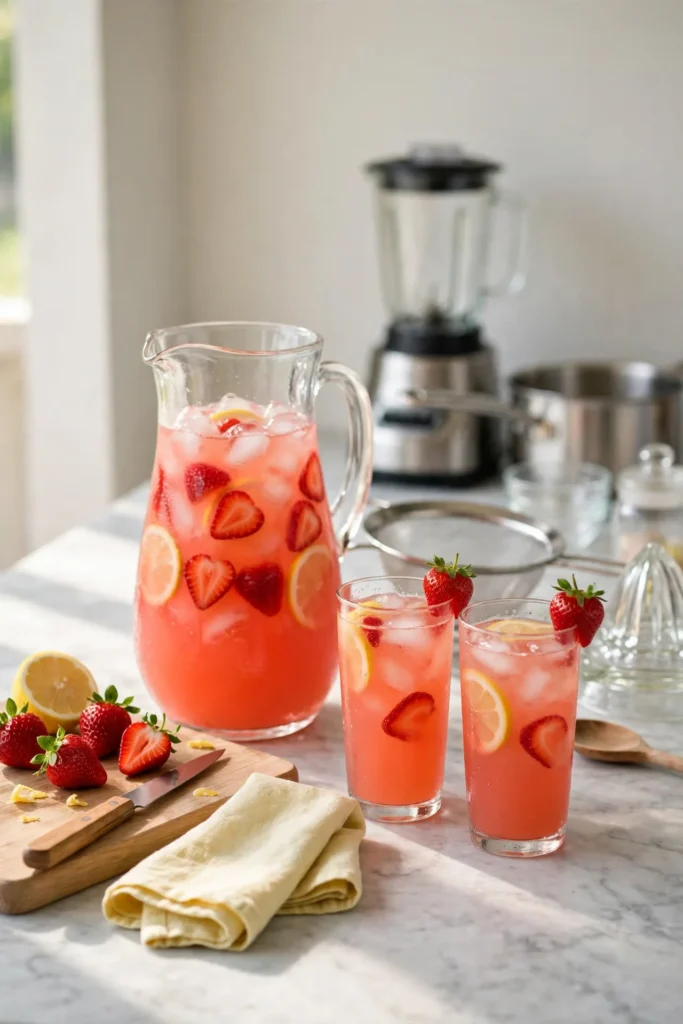
Three parts, one pitcher: fresh lemon juice, strawberry puree, and simple syrup with cold water, served over ice and garnished with lemon and strawberries.
 Pin it
Fresh strawberry lemonade has three parts, made separately and combined in a pitcher: pale-yellow lemon juice, vivid red-pink strawberry puree, and clear simple syrup, finished with cold water. Nothing canned, nothing powdered. The drink comes out bright coral-pink, cold, and adjustable at the end, since sweetness gets tuned by tasting rather than fixed by a rigid formula.
Recipe Overview
- Prep time: 20 minutes
- Cook time: 5 minutes (simple syrup)
- Cooling time: 15 minutes (syrup)
- Total time: 40 minutes
- Yield: about 2 quarts (8 glasses)
- Difficulty: Easy
Ingredients
- 1 cup fresh lemon juice (from 4-8 lemons, depending on size)
- 1 pound ripe strawberries, hulled
- 1 cup granulated sugar
- 1 cup water, for the syrup
- 3-4 cups cold water, to fill the pitcher
- Ice, lemon wheels, and halved strawberries, for serving
Equipment
- A large clear glass pitcher
- A blender with a clear jar
- A fine-mesh sieve
- A glass citrus juicer
- A stainless steel saucepan
- Tall drinking glasses
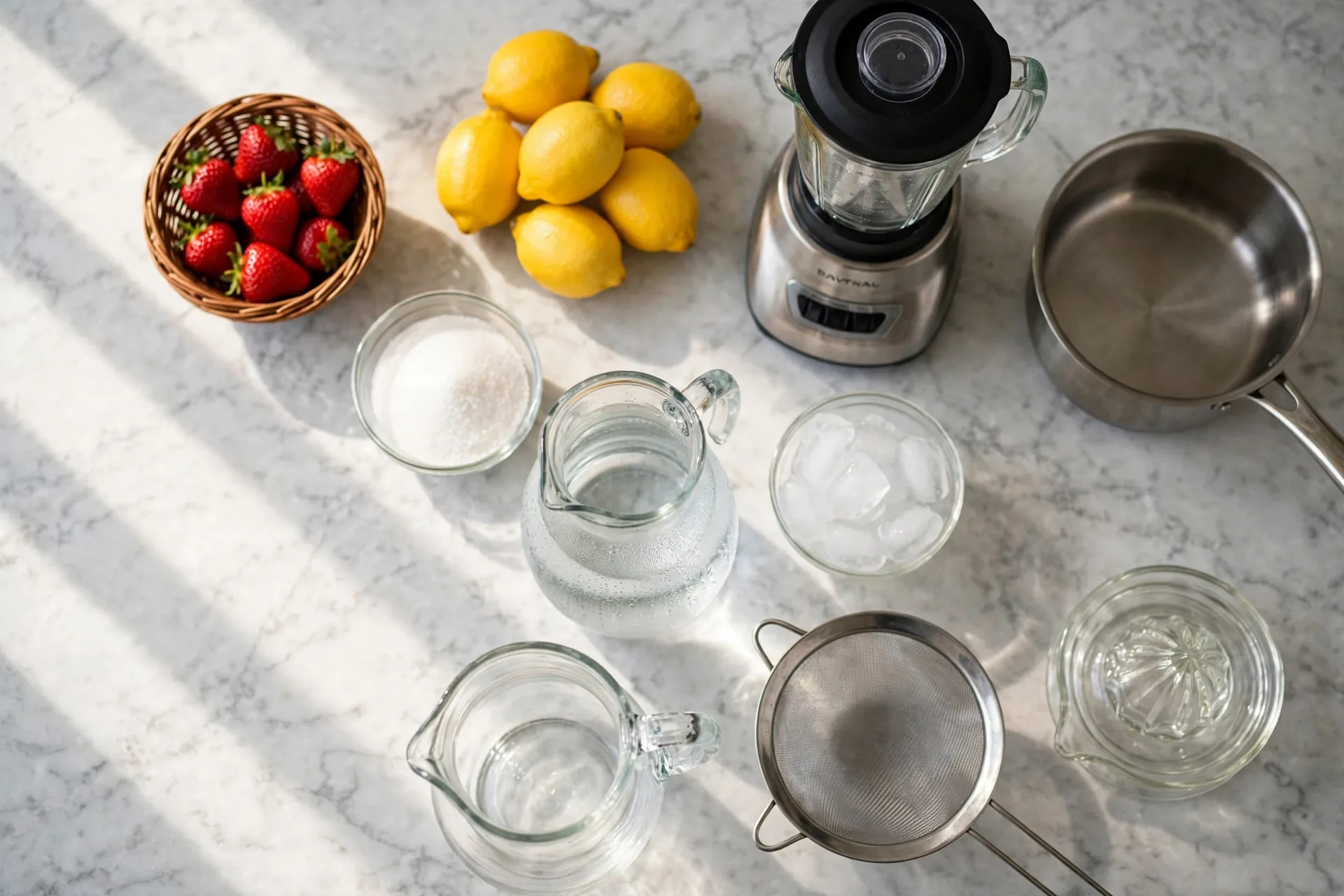
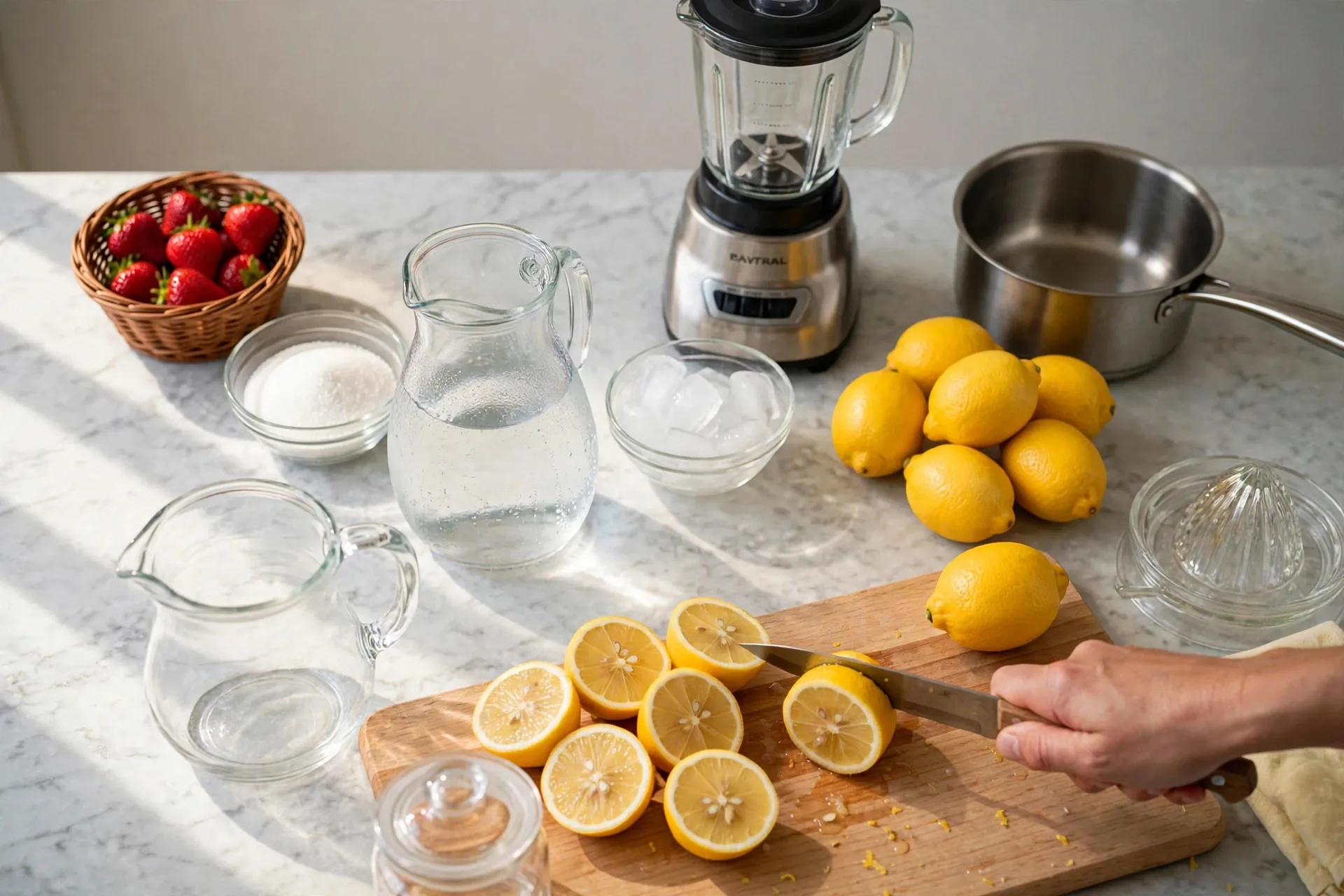
Everything laid out before starting keeps the three parts in order. A pile of bright yellow lemons, a basket of ripe red strawberries, a bowl of sugar, a jug of cold water, ice, an empty pitcher, a blender, a sieve, a juicer, and a saucepan. Nothing cut, squeezed, or cooked yet.
Squeeze the Lemon Juice
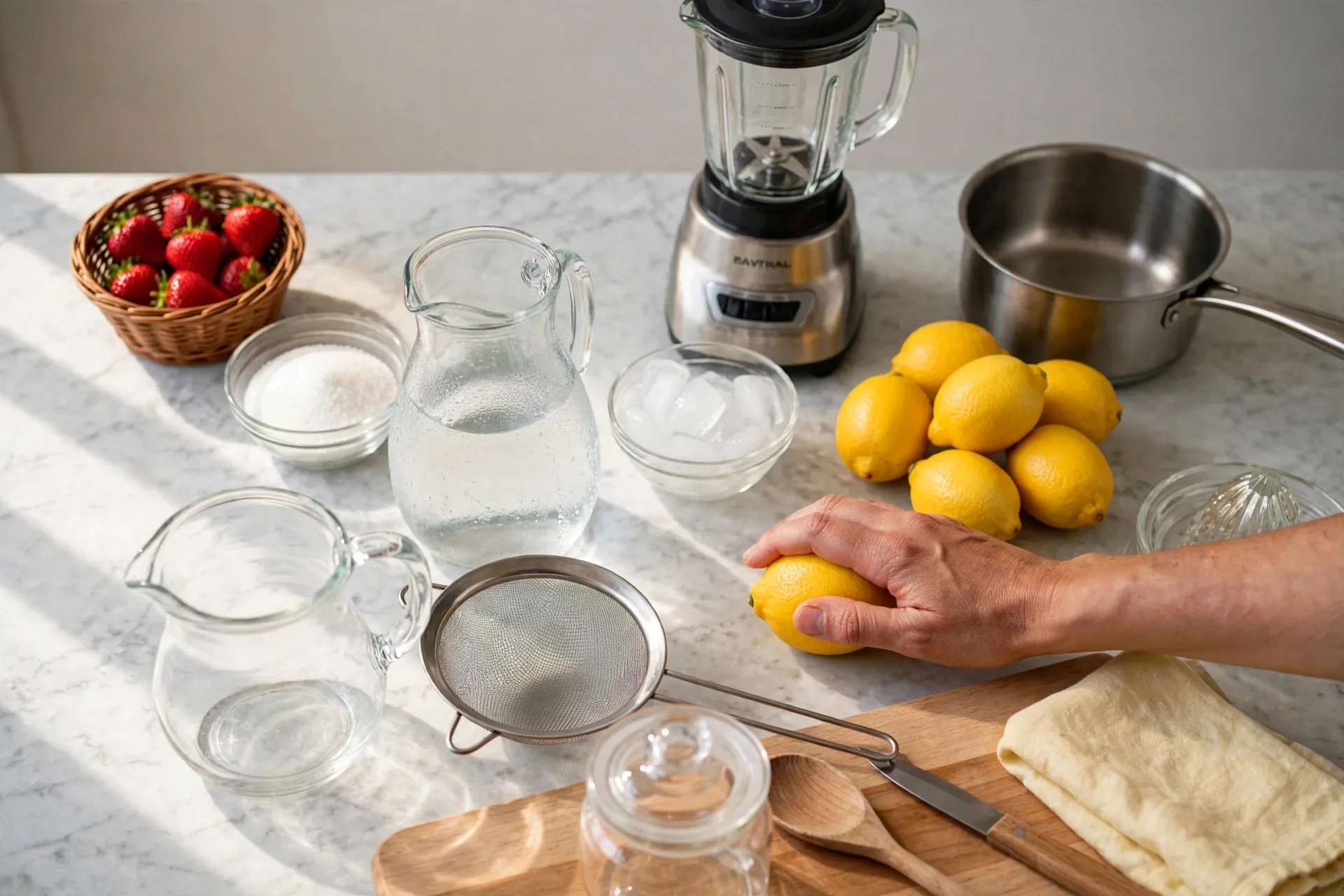
Lemons juice better at room temperature. Cold lemons from the fridge give less juice and fight the juicer, so set them out first or roll them firmly to loosen the juice inside.
Press a palm down and roll a whole yellow lemon firmly across the counter to loosen the juice. Several whole lemons wait beside it at room temperature, bright yellow skin with a little shine.
Cut the lemons in half on the board with a knife. Halved lemons, cut side up, show juicy pale-yellow flesh with seeds visible. A few whole lemons still wait for their turn.
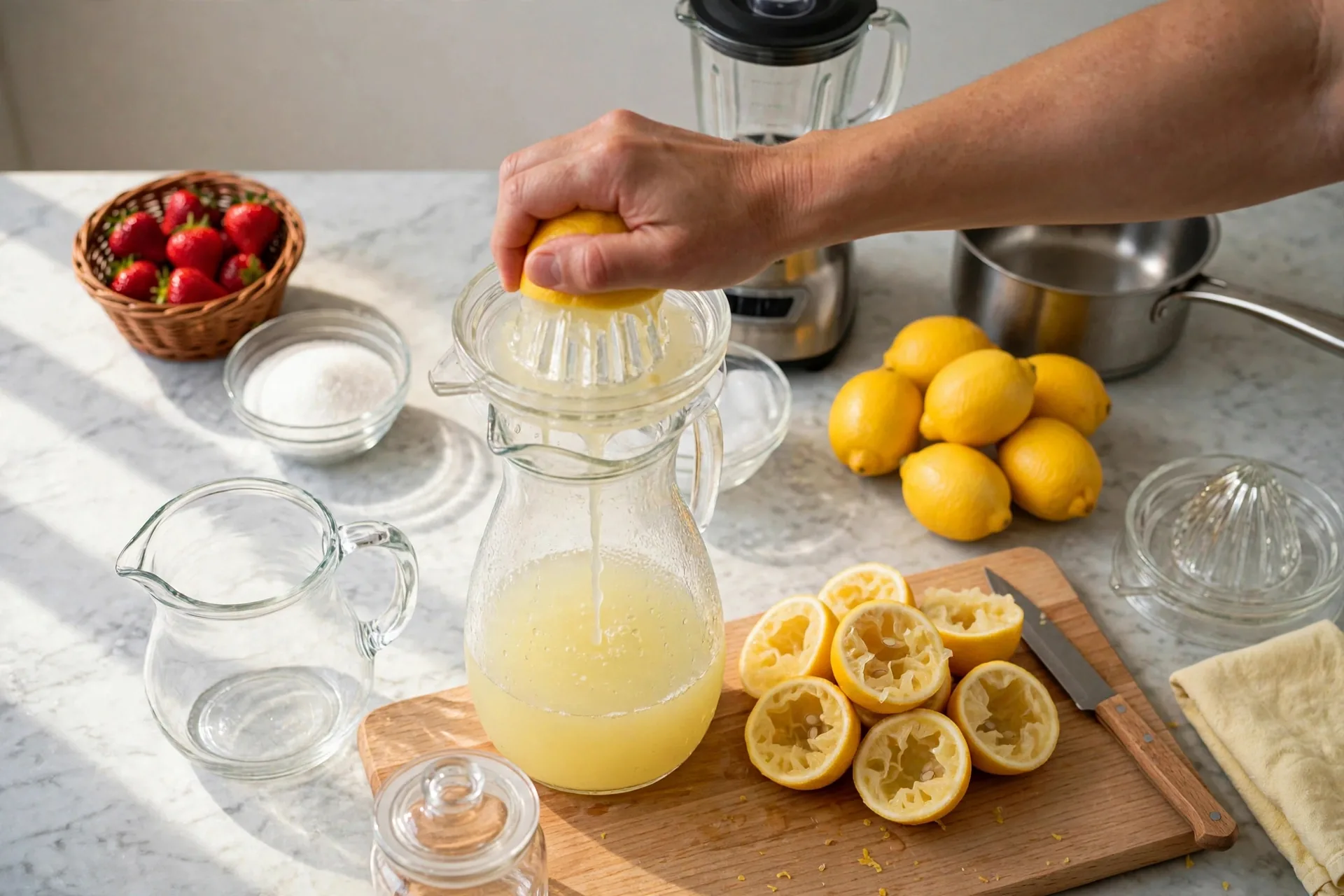
Press a lemon half onto the glass juicer over a clear glass jug. Pale-yellow juice runs down, and the jug partly fills. Squeezed lemon halves pile on the side as each one gives up its juice.
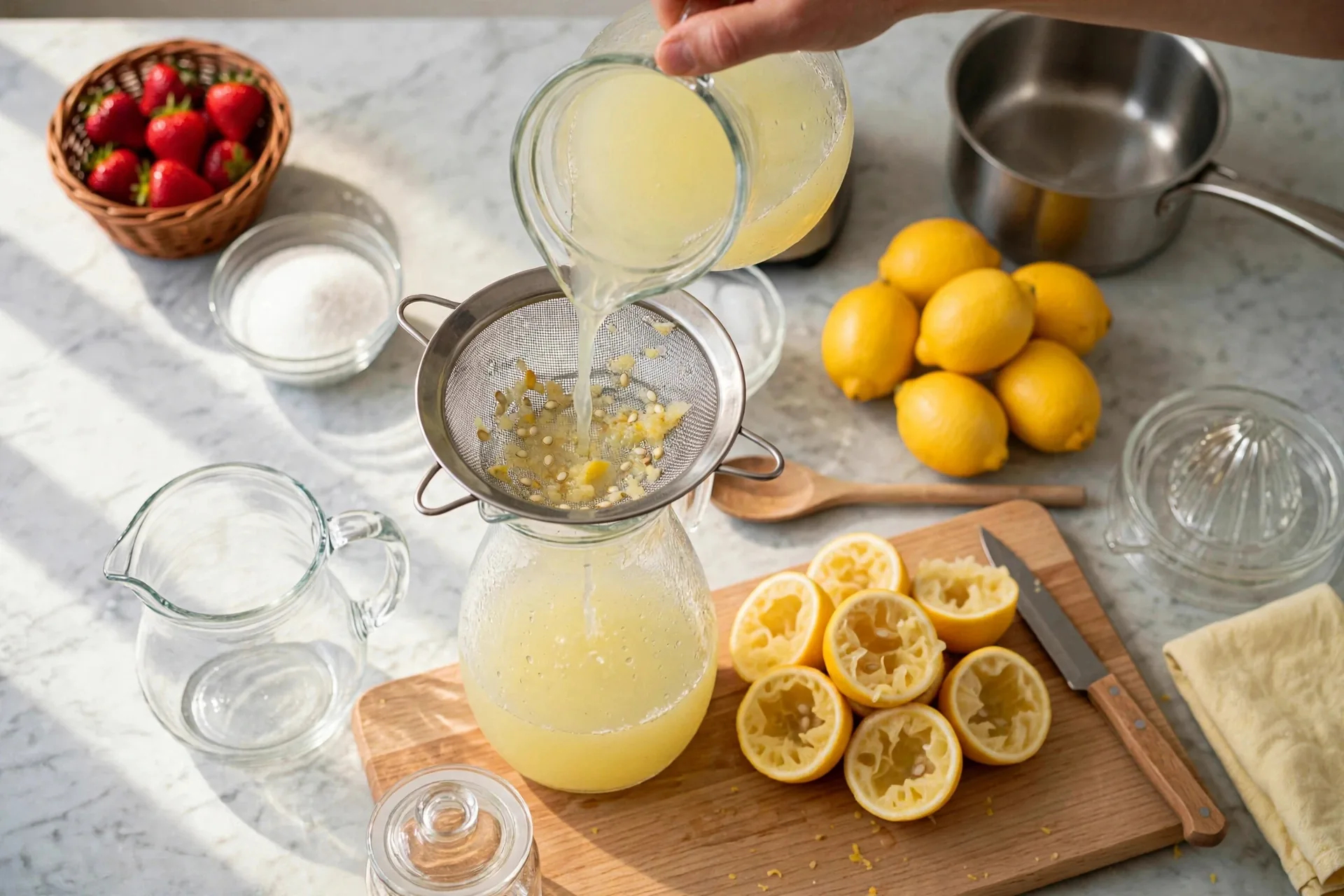
Pour the juice through the fine-mesh sieve into a clean glass jug. The sieve catches seeds and a little pulp, and a jug of clean pale-yellow juice sits below. Seeds in the pitcher would end up in glasses, so this pass matters even though it takes a minute.
Blend the Strawberry Puree
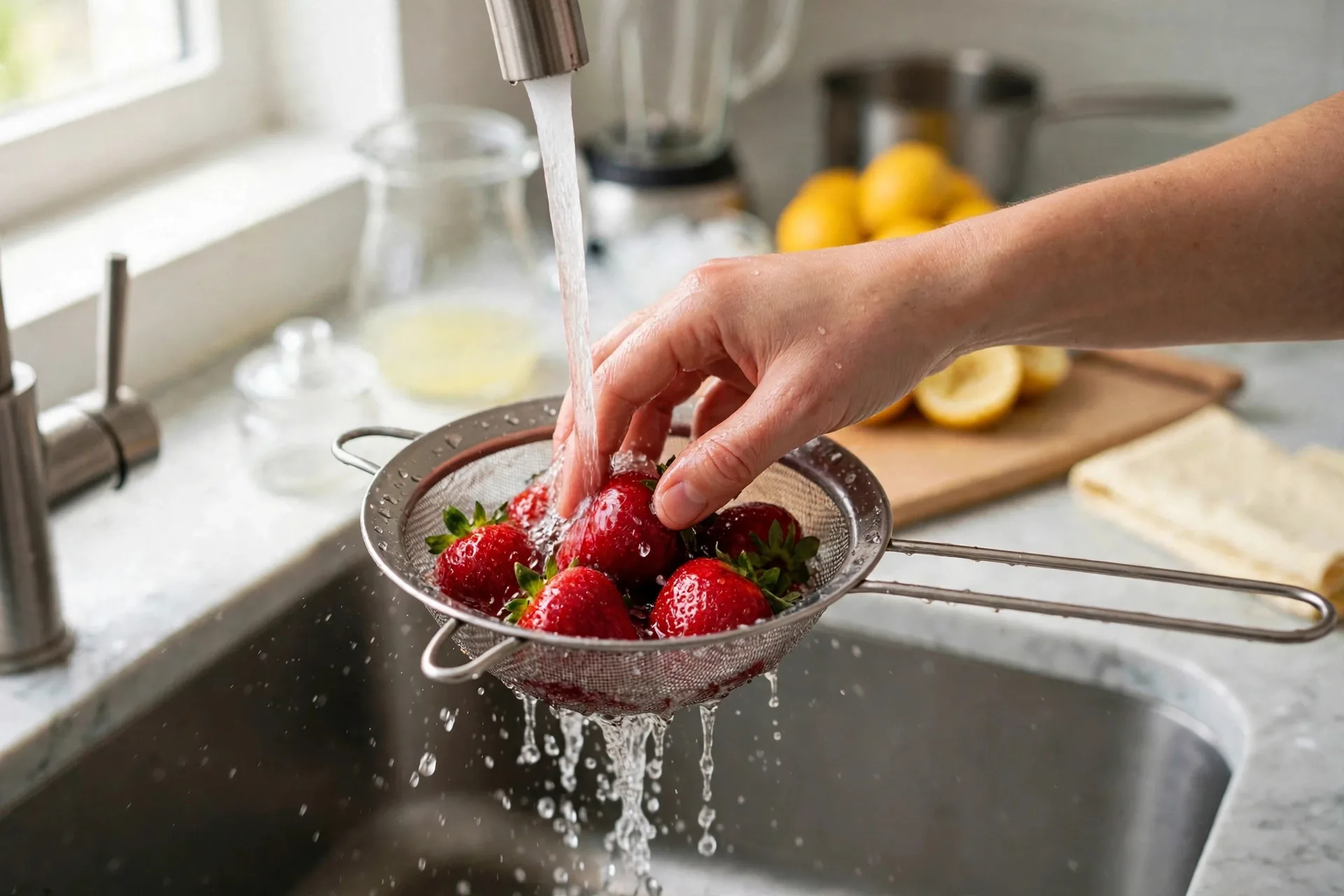
Rinse the ripe red strawberries in the sieve under a thin stream of running water at the sink and turn them by hand. Water droplets glisten on the red berries, green tops still on.
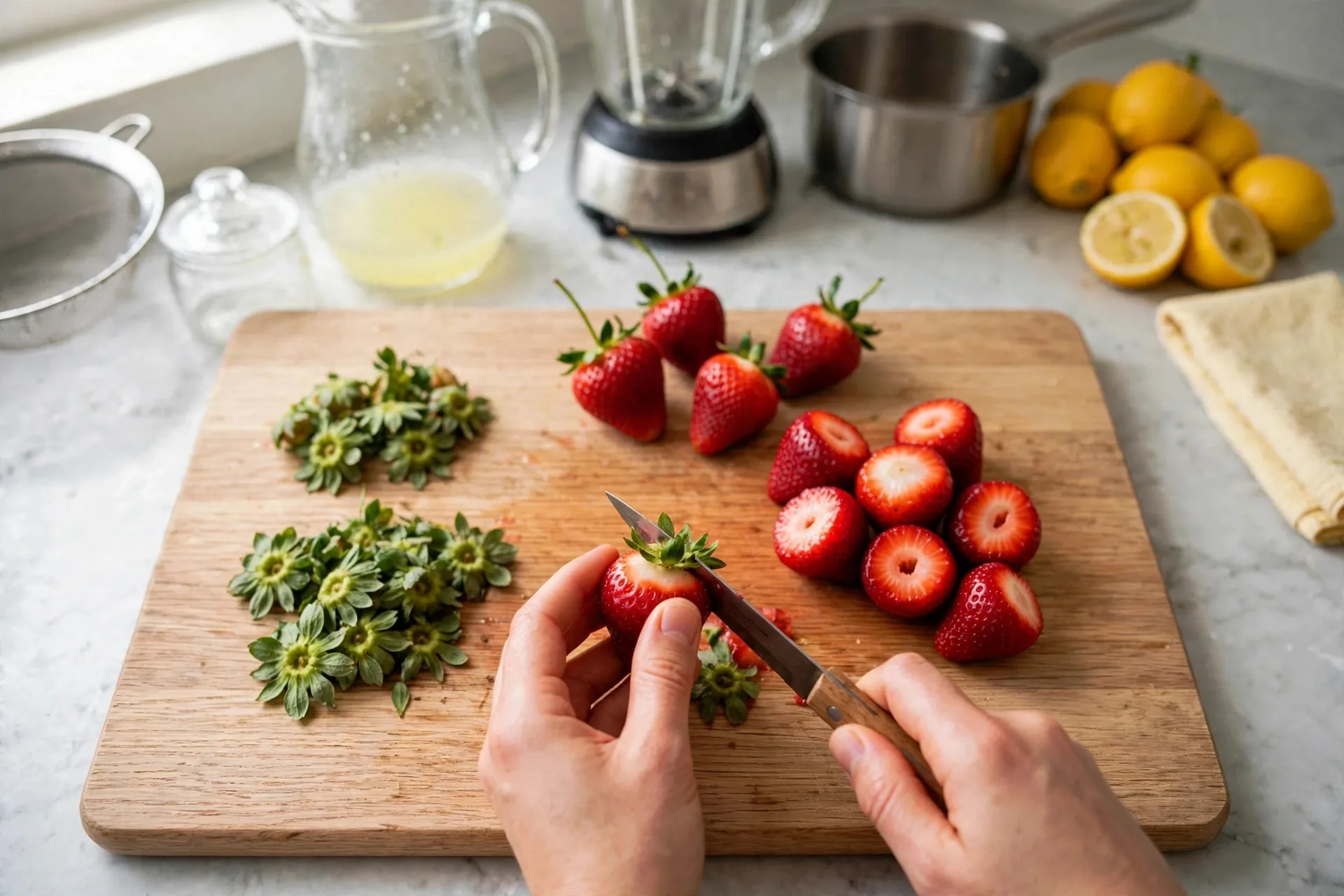
Remove the green tops with a paring knife on the board. Hulled strawberries pile beside a small pile of green tops. Cut berries show red flesh with a white core.
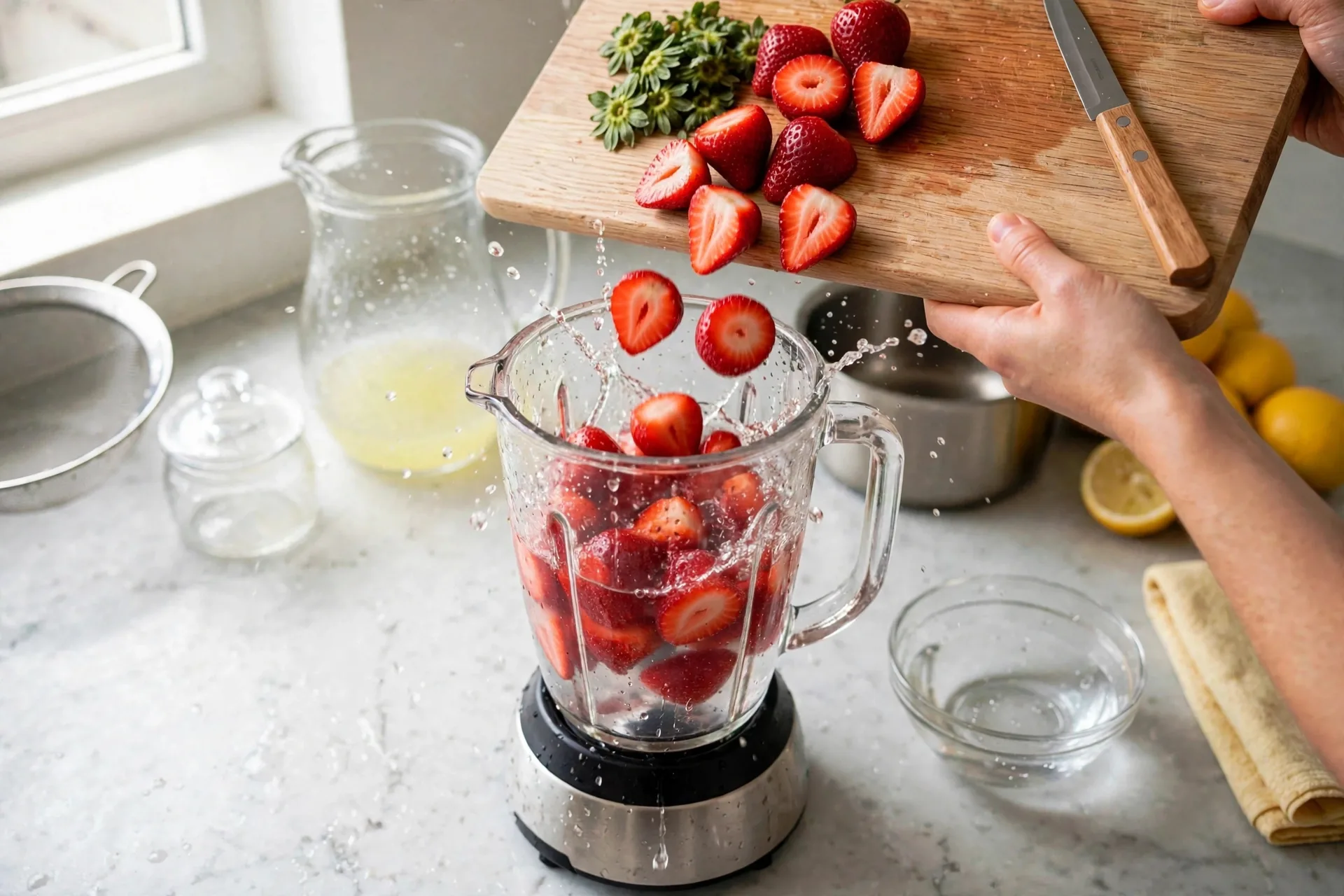
Tip the hulled strawberry halves from the board into the clear blender jar, with a splash of cold water added. Red berries fill the jar, and the lid stays off for now.
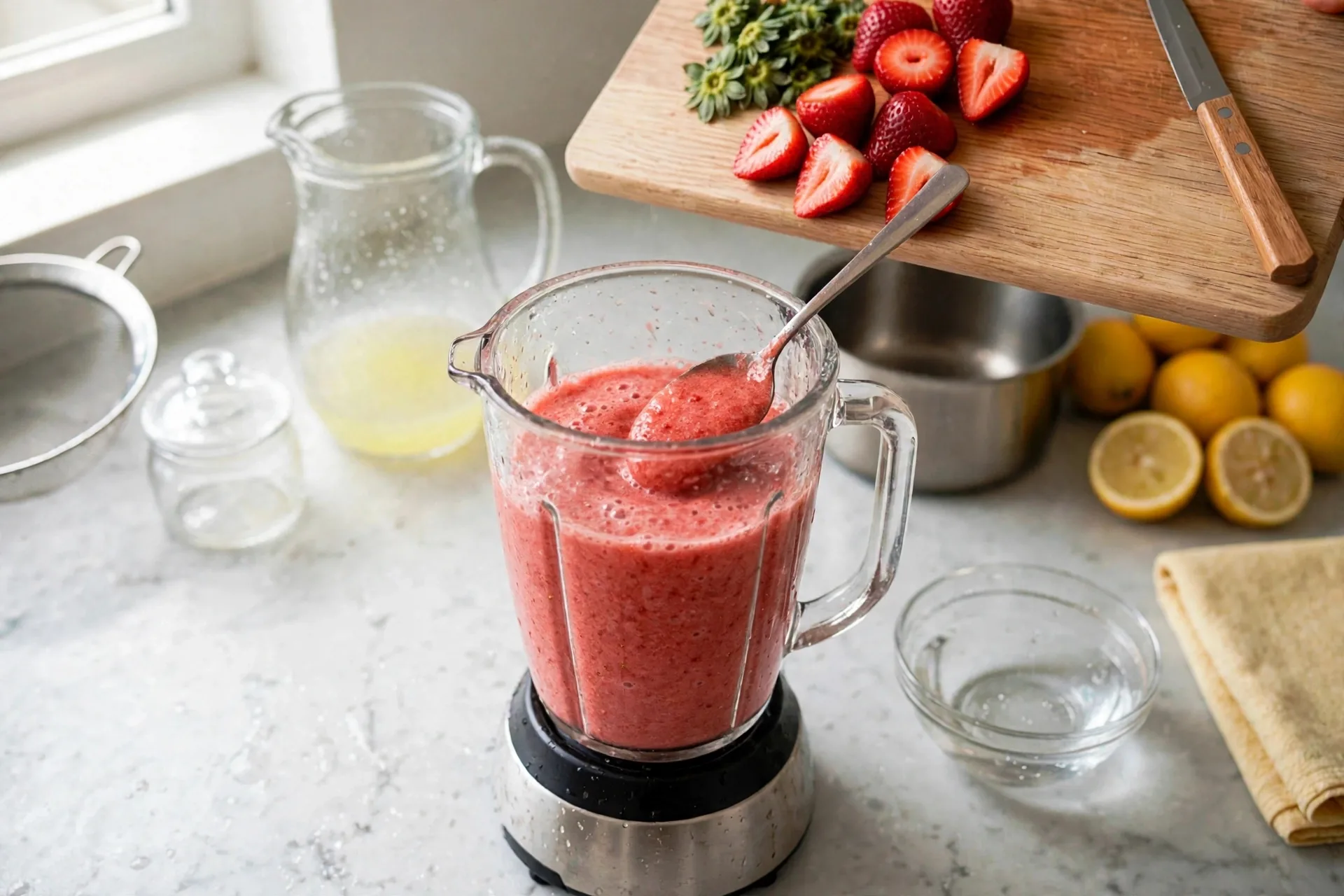
Blend until the jar holds vivid red-pink puree, thick and smooth with a few tiny seeds visible and a little foam on top. A spoon dipped in the puree shows a thick coat. Thin, watery puree means too much water went in with the berries.
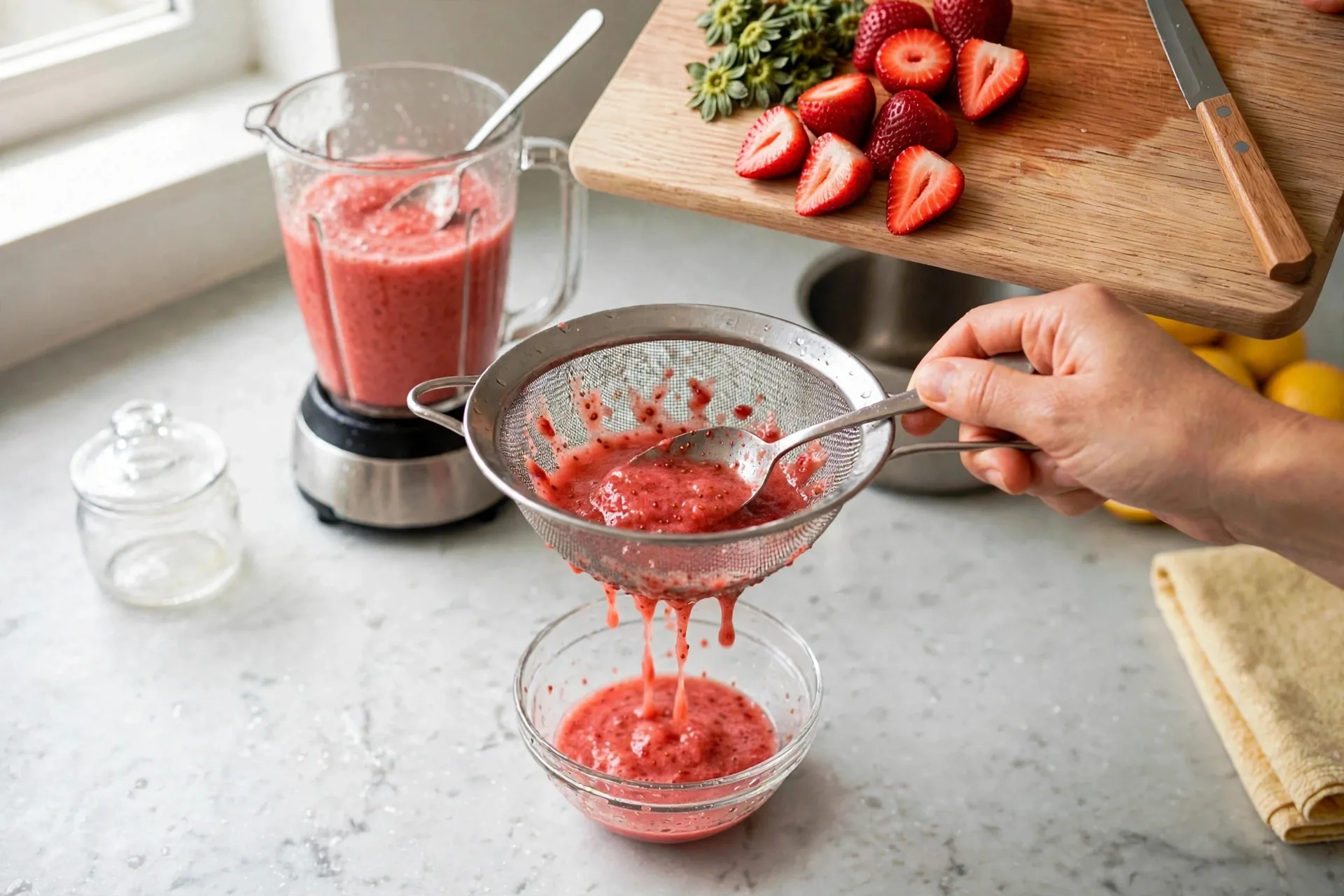
Optional step: press the puree through the fine-mesh sieve into a glass bowl with the back of a spoon. Smooth red-pink puree drips below while seeds stay in the sieve. Straining gives a smoother drink. Leaving it unstrained gives a more rustic drink with seeds and pulp. Both versions taste right, so pick the texture you prefer.
Make the Simple Syrup
Set the saucepan on the stove with granulated sugar and water in it. The mixture looks cloudy white, with sugar still undissolved at the bottom, and the burner sits on low-medium.
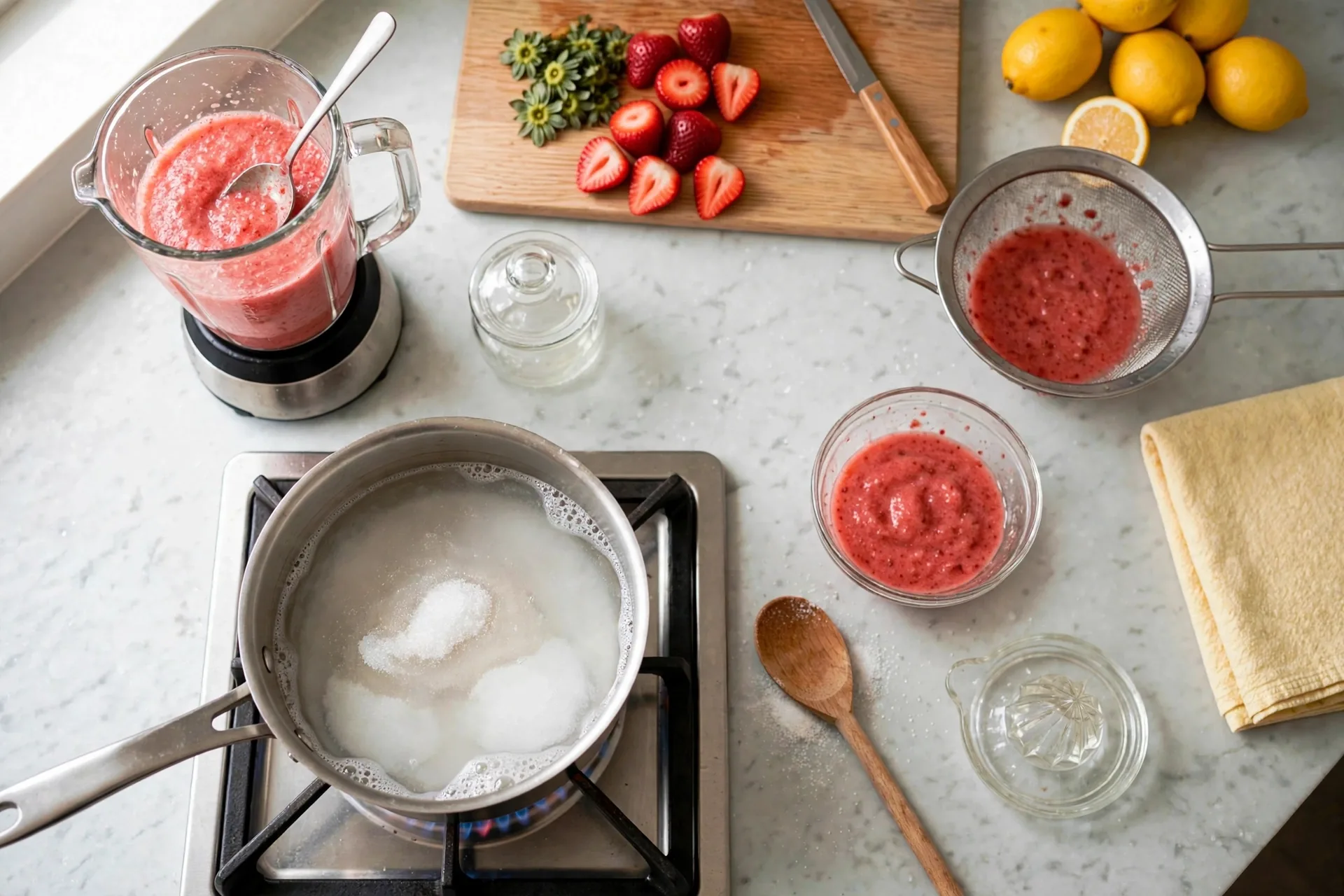
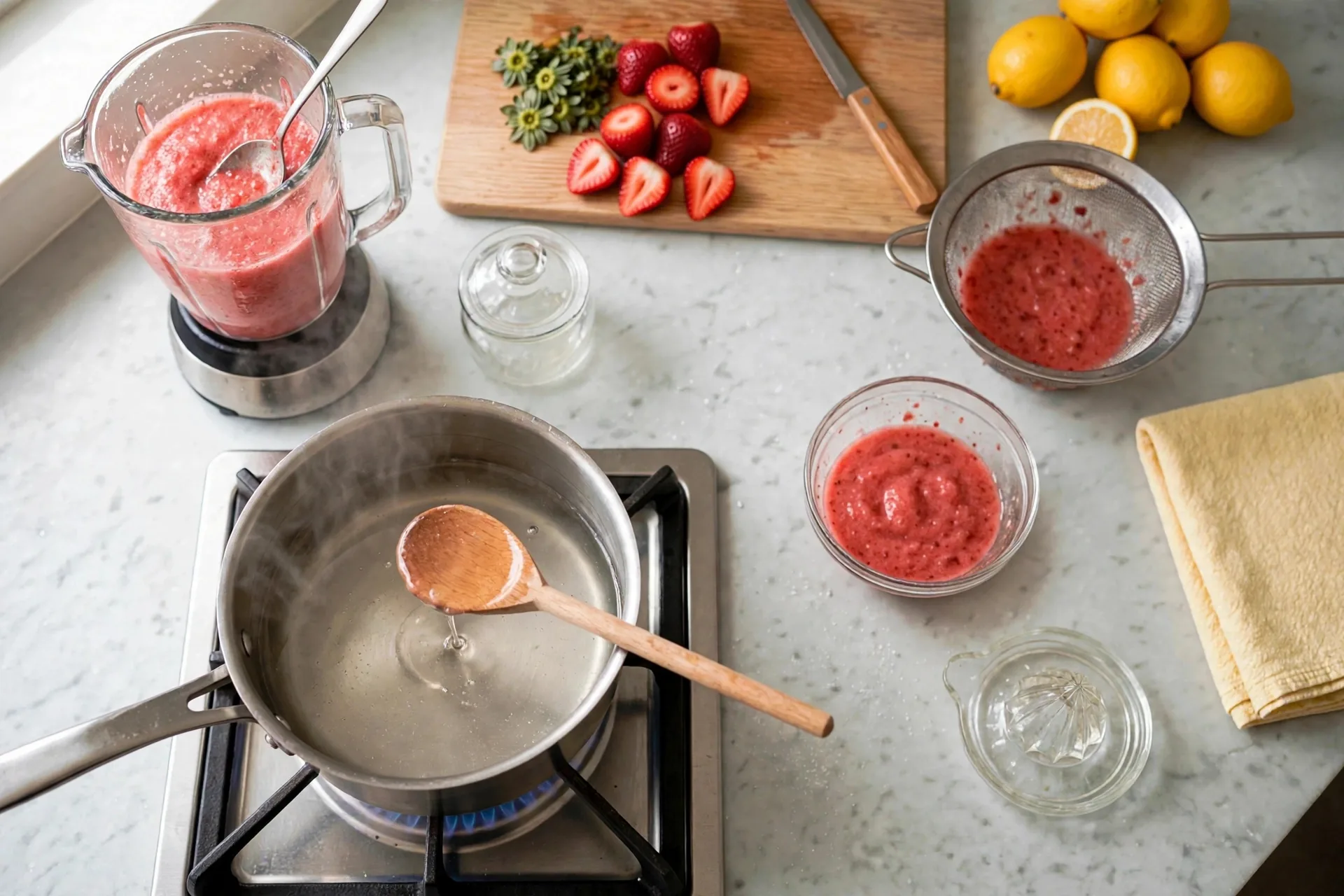
Heat gently and stir until the sugar fully dissolves. The liquid turns clear with a faint sheen, gentle steam rises, and no bubbling boil appears. The syrup only needs to dissolve. Boiling it down changes the ratio and makes the drink sweeter than planned.
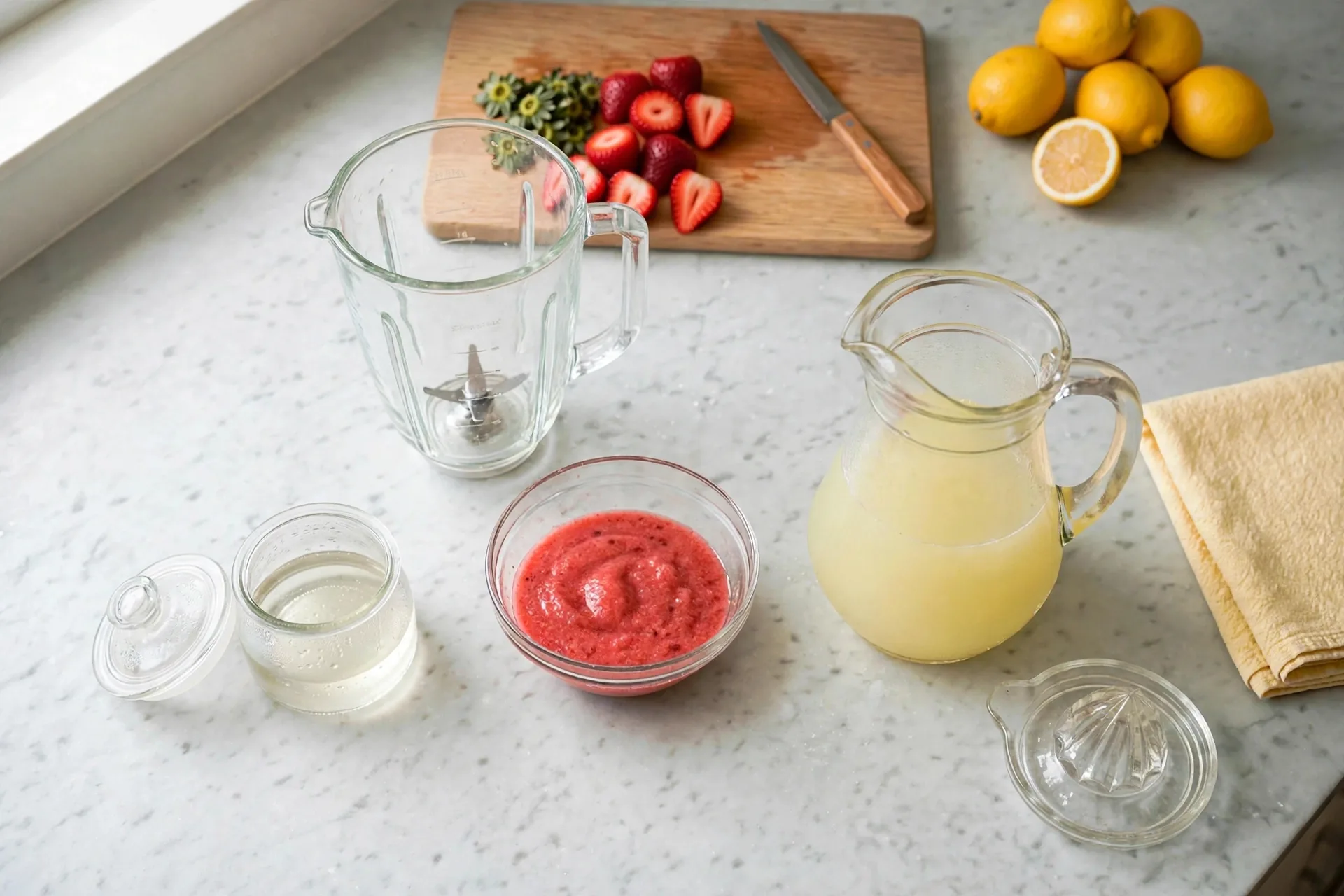
Cool the syrup before it goes near the pitcher. Hot syrup melts the ice and dulls the fresh flavors. Line up the three components on the counter: a glass jar of clear cooled syrup, a glass bowl of vivid red-pink strawberry puree, and a jug of pale-yellow lemon juice, with the empty pitcher standing behind them.
Combine in the Pitcher
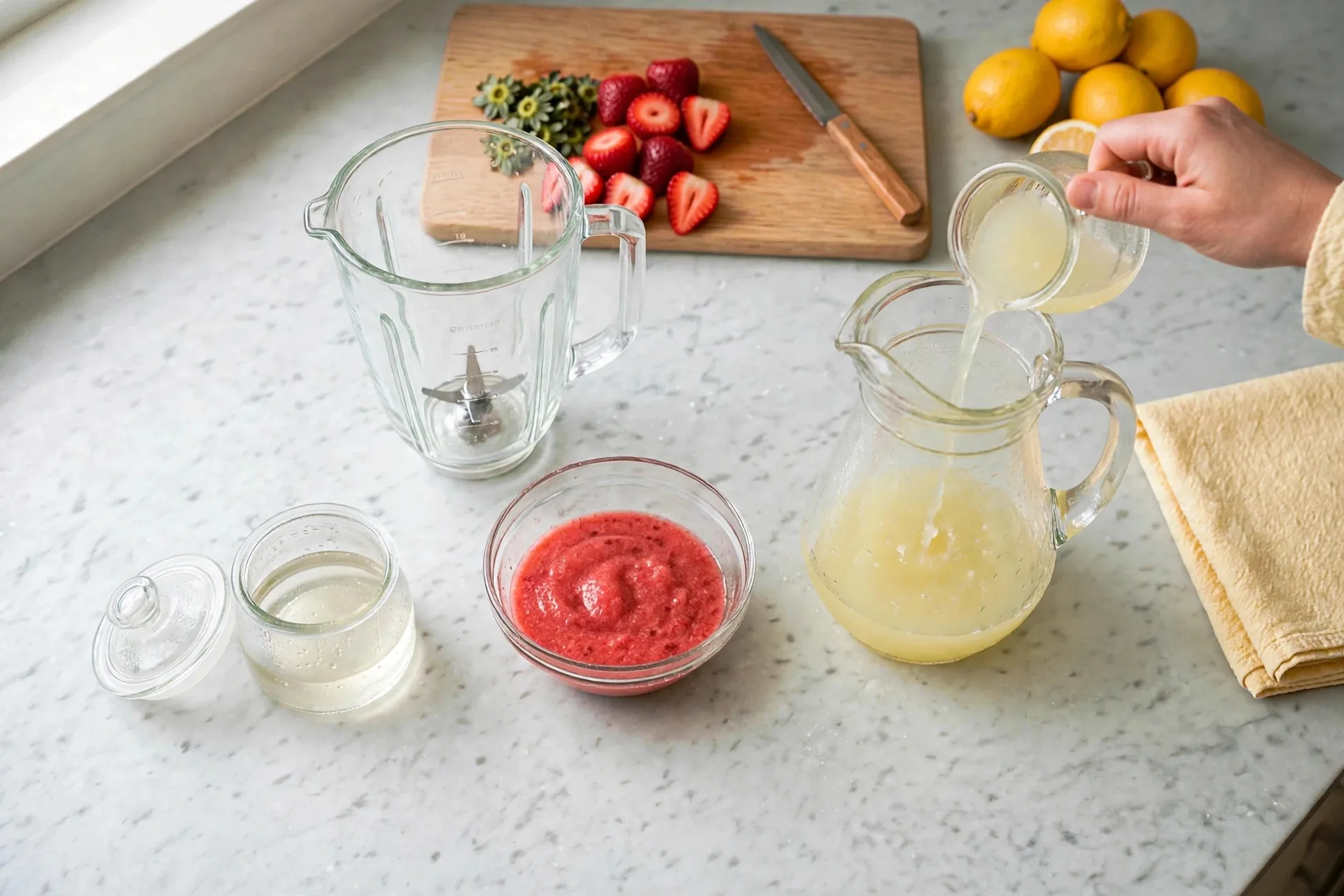
Pour the pale-yellow lemon juice from the jug into the empty large glass pitcher. The pitcher is clear and clean, and the juice pools at the bottom. No puree or syrup joins it yet.
Pour the strawberry puree into the pitcher over the lemon juice. Red-pink puree swirls into the pale yellow juice, partly mixed, and the coral marbling already looks like the finished drink.
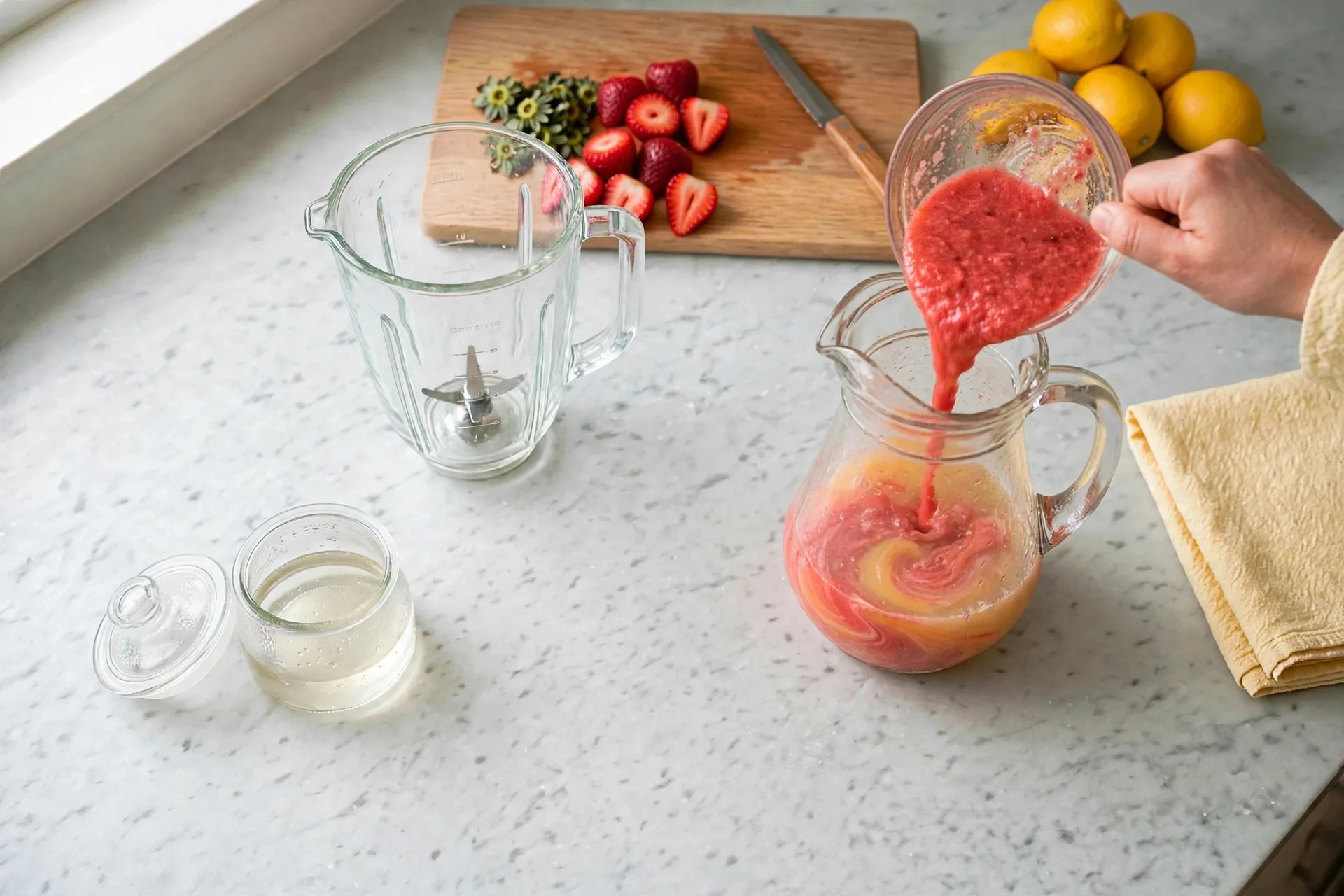
Pour the clear simple syrup from the jar into the pitcher in a thin stream. The liquid turns a soft coral-pink with streaks of syrup visible. Add about three quarters of the syrup first and hold the rest back for tasting.
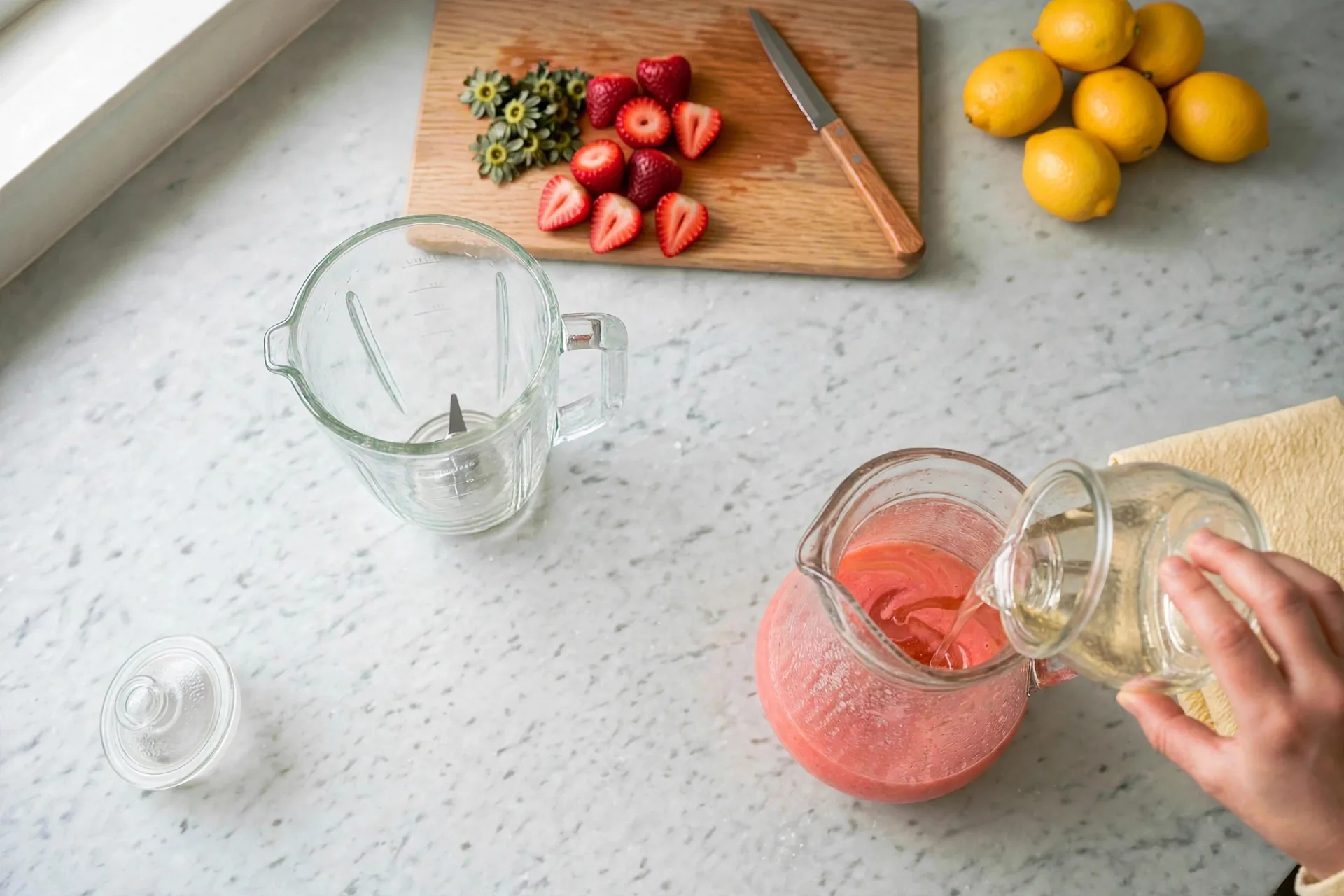
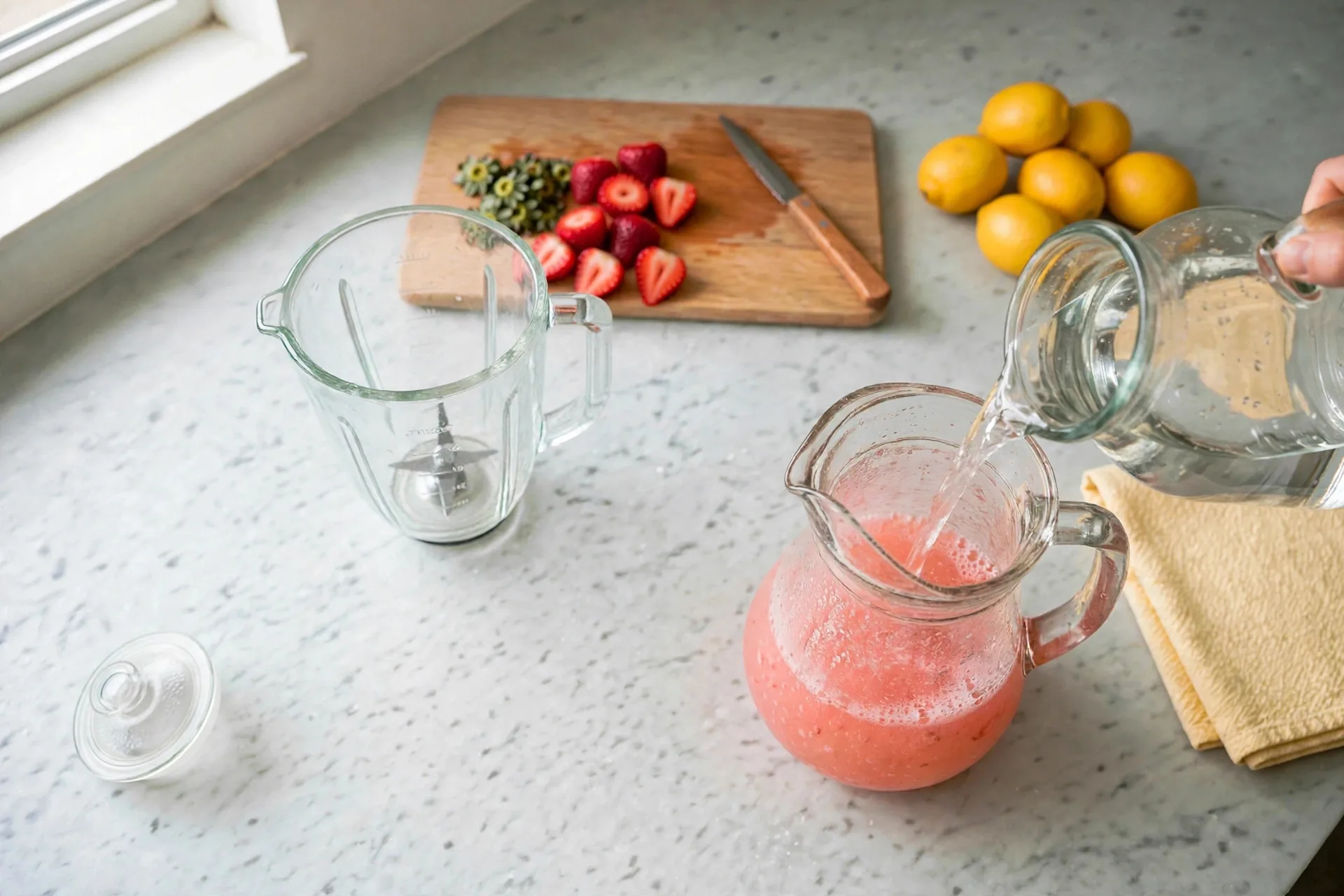
Pour cold water from the glass jug into the pitcher. The mixture rises toward the top and turns lighter coral-pink, with small bubbles forming at the surface.
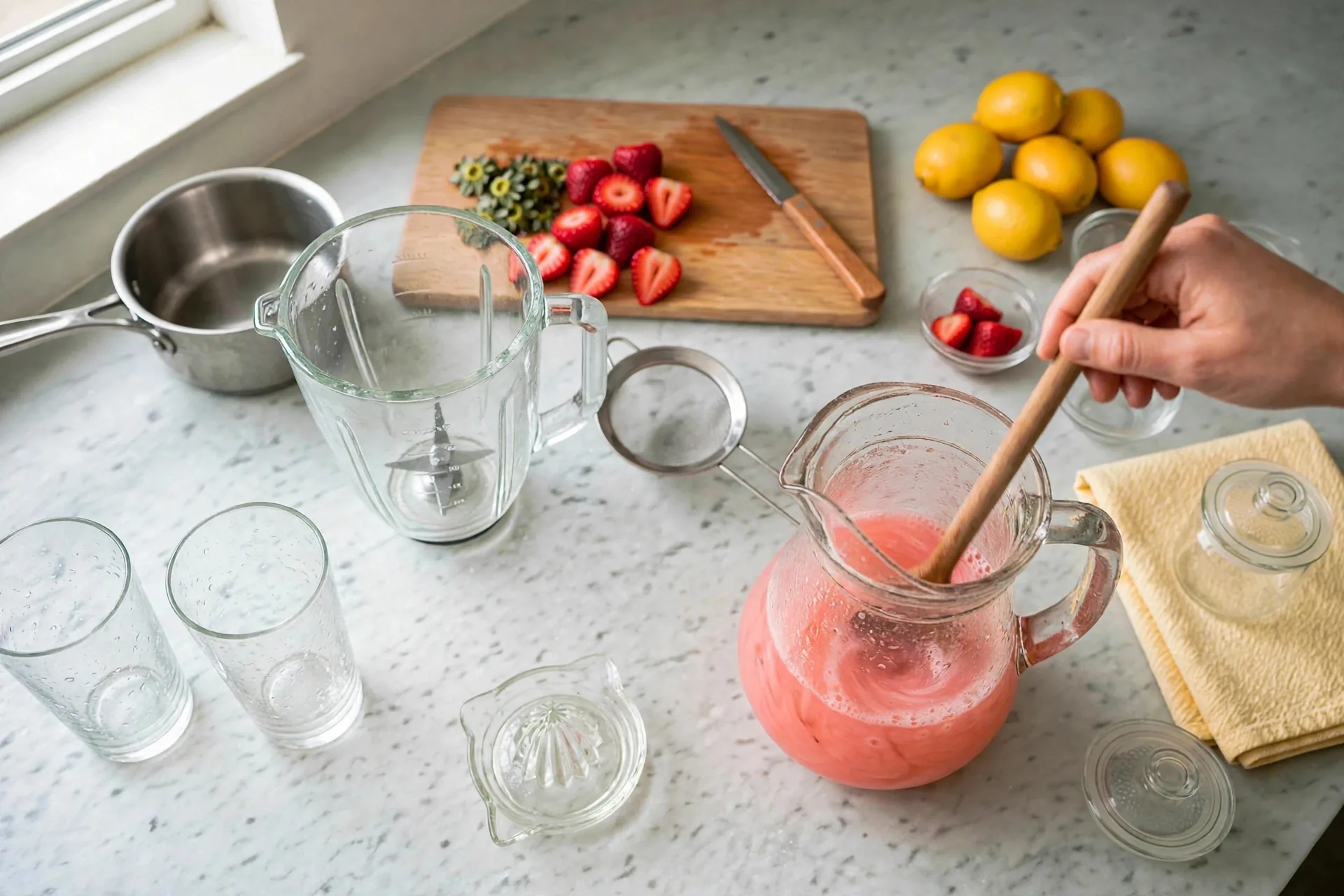
Stir with a long wooden spoon until the lemonade turns an even bright coral-pink with a swirl in the center and a little foam on the surface. No streaks should remain.
Taste and adjust: fill a small tasting glass from the pitcher and hold it up to the light to check its coral-pink color. Taste it. Too tart means more syrup from the held-back jar. Too sweet means more cold water. The recipe gives a starting ratio, and the final adjustment belongs to the person drinking it.
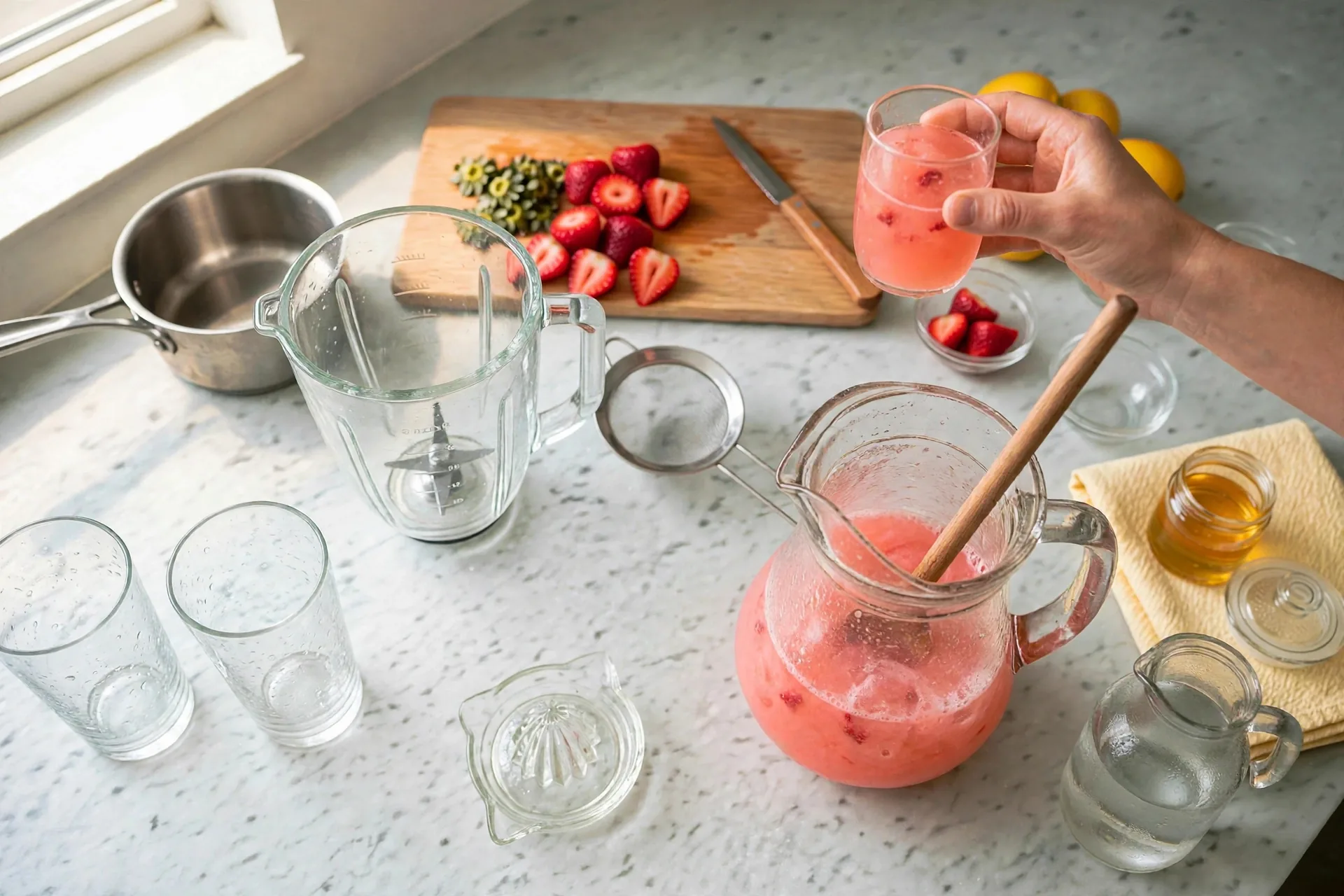
Garnish and Serve
Slice a lemon into thin wheels beside a pile of strawberries sliced in half. Lemon wheels and strawberry slices pile on the board, bright colors and clean cuts.
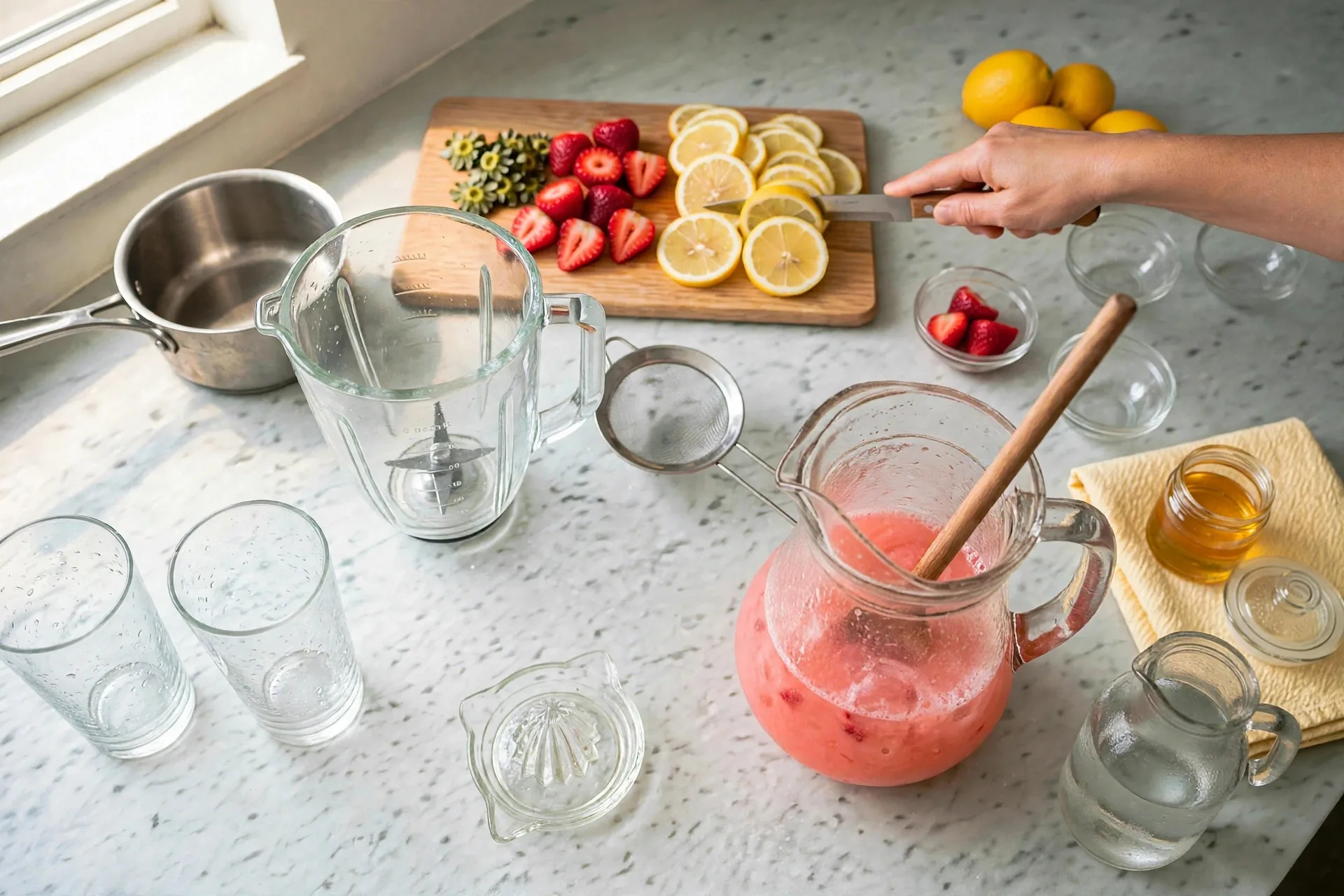
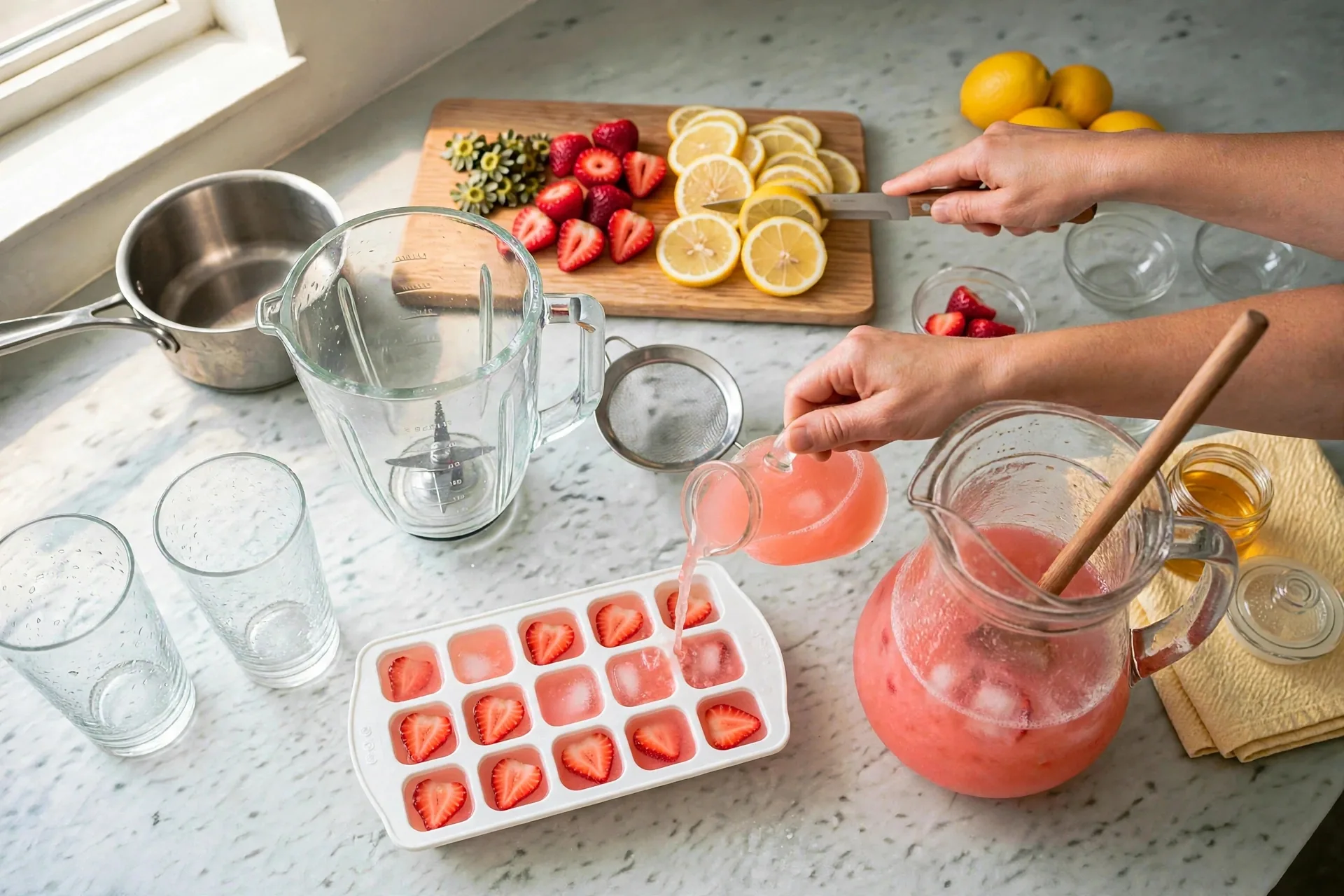
Tip that keeps the drink cold: fill an ice cube tray with coral-pink lemonade from a small jug and drop a thin strawberry slice into each cube. Frozen lemonade cubes chill the glass without watering the drink down the way plain ice does.
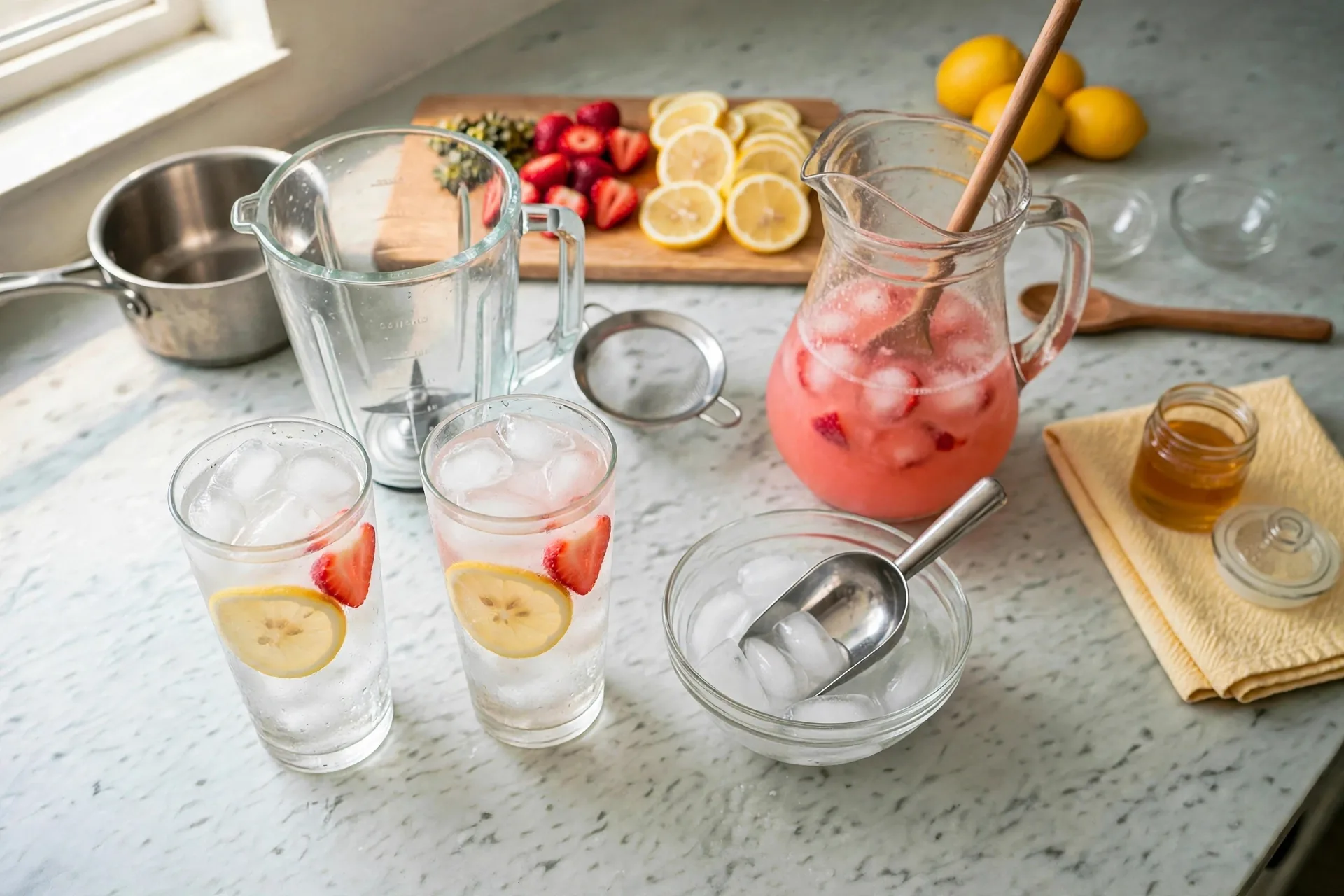
Fill tall clear glasses with ice cubes and press a lemon wheel and a strawberry slice against the inside of each glass. A scoop rests in the ice bowl beside them, and the pitcher waits behind, ready.
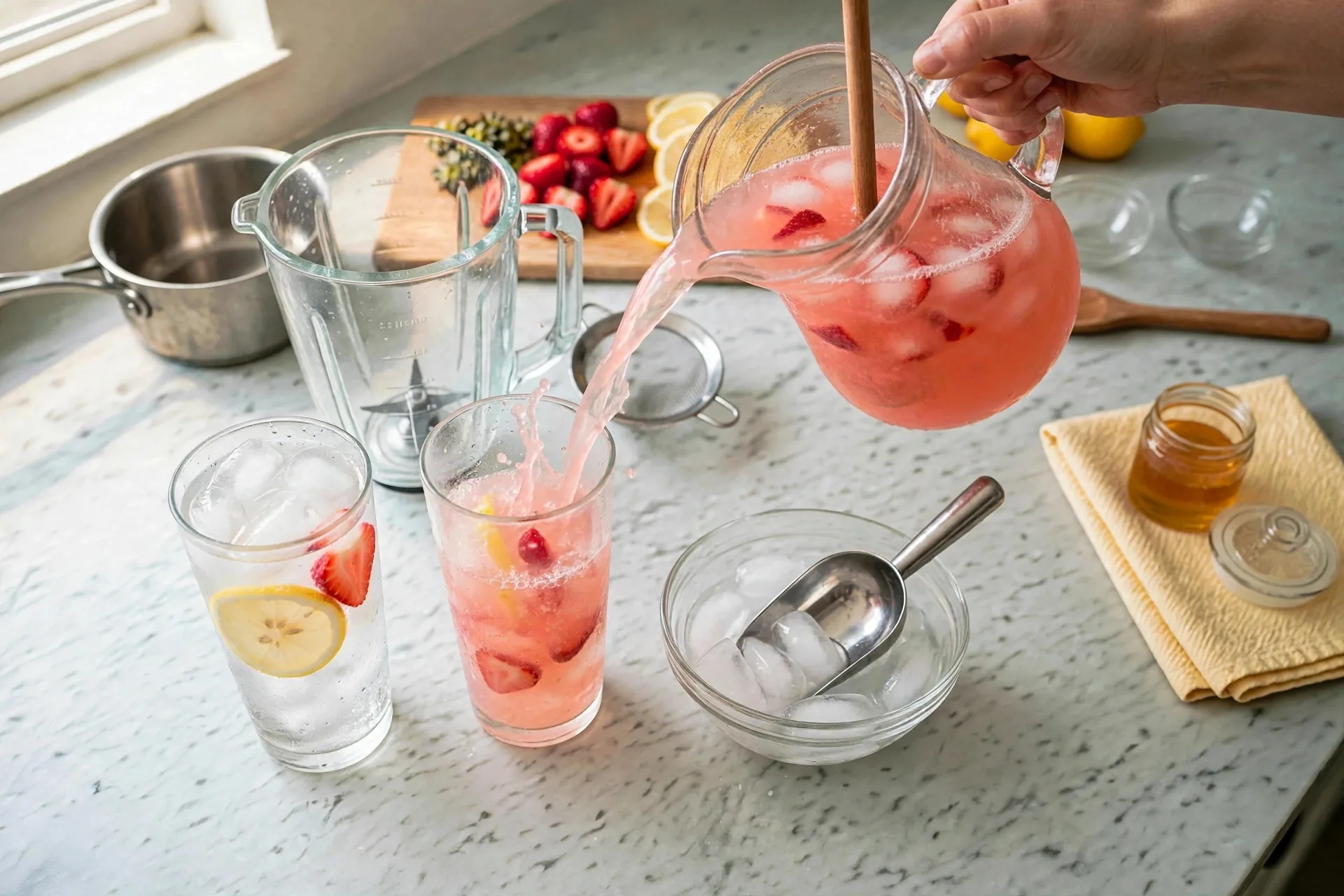
Pour the coral-pink lemonade from the pitcher into an ice-filled tall glass. A stream hangs mid-air, ice cubes shift, fruit slices swirl in the glass, and condensation forms on the glass.
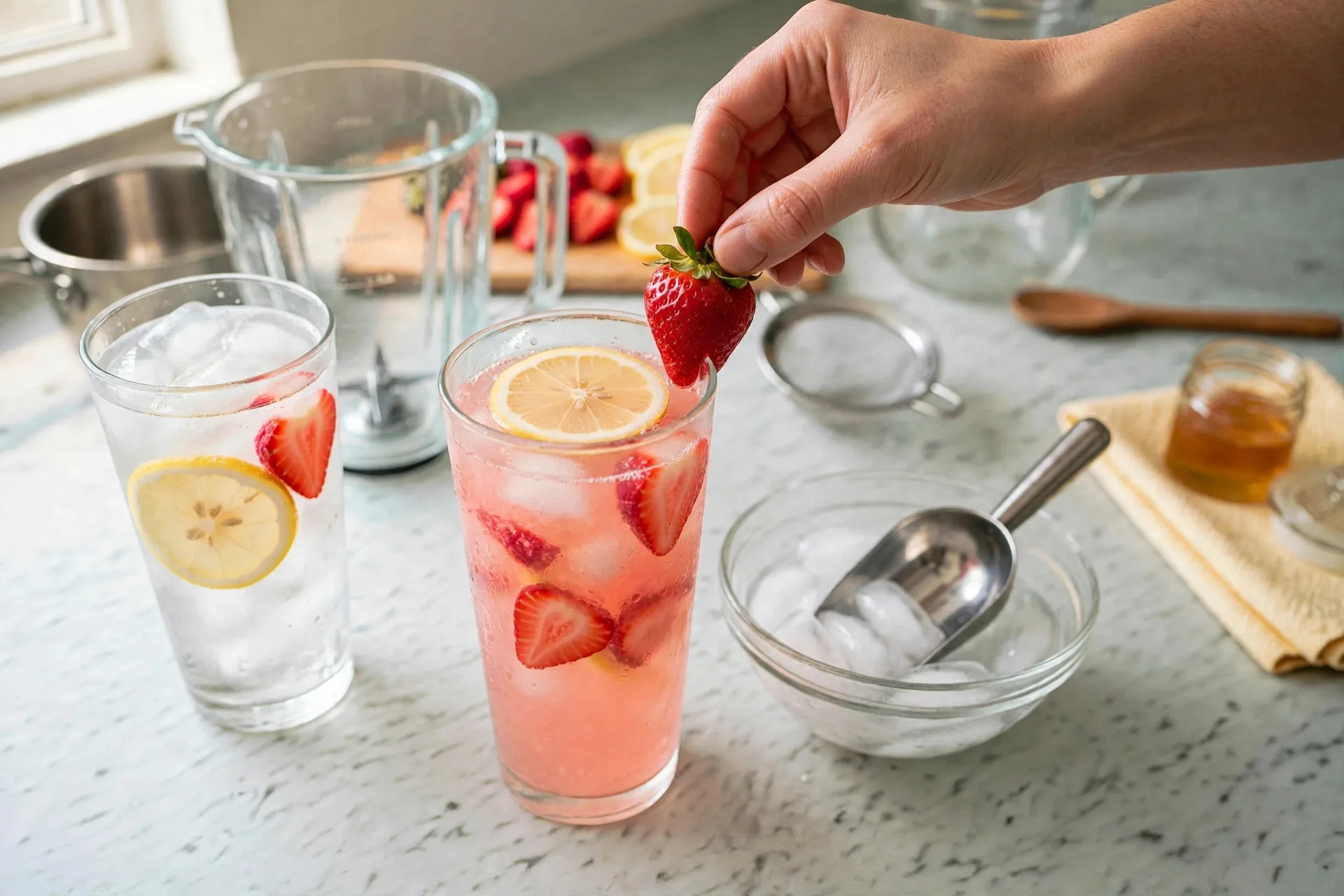
Place a fresh strawberry on the rim of the glass, with a lemon wheel already floating in the drink. Ice, lemon, and berries show through the glass.
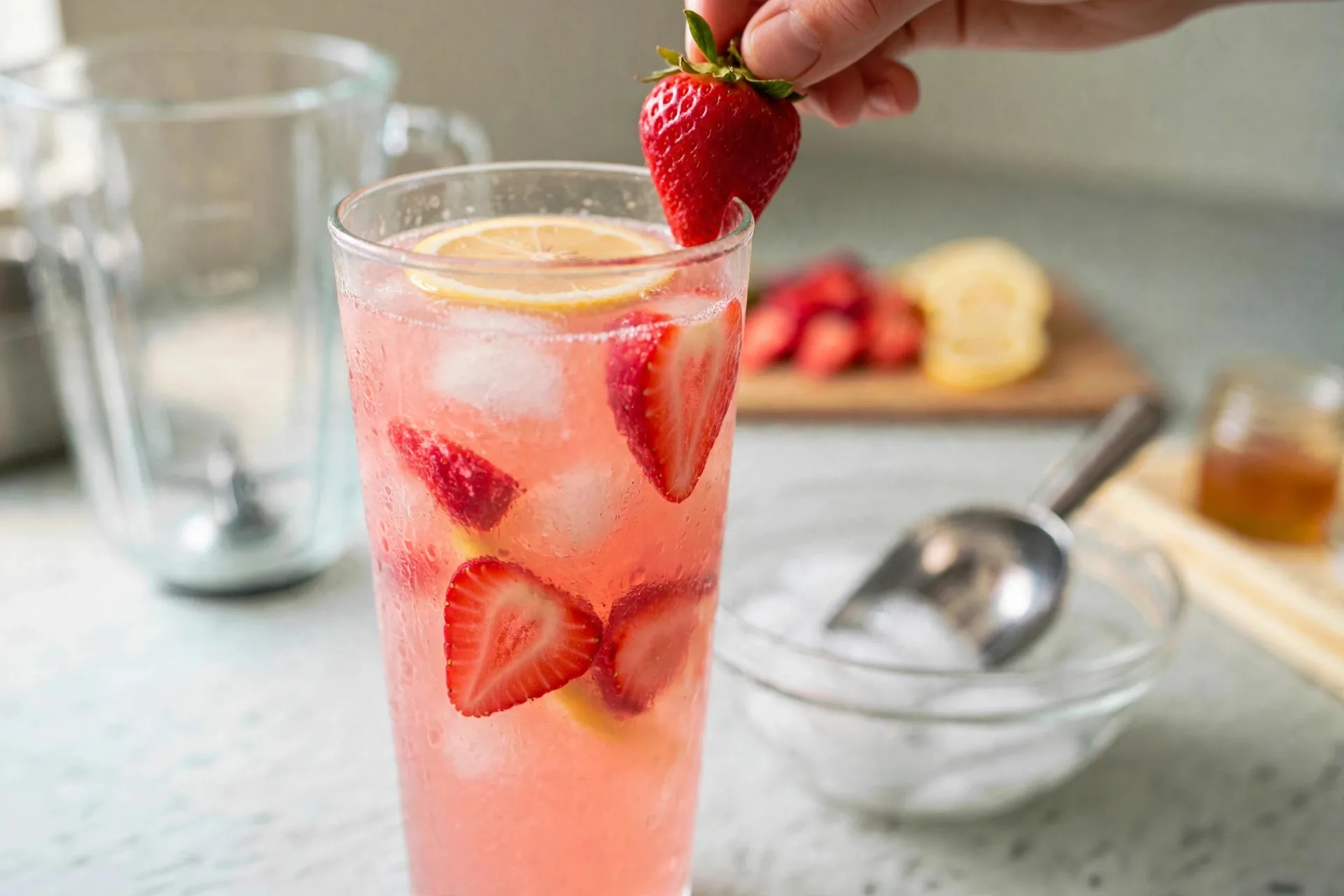
A single tall glass, close enough to show condensation, ice, a lemon slice, and a floating strawberry, glows coral-pink in the daylight with the pitcher softly blurred behind. This is the drink at its best: cold, bright, and freshly garnished.
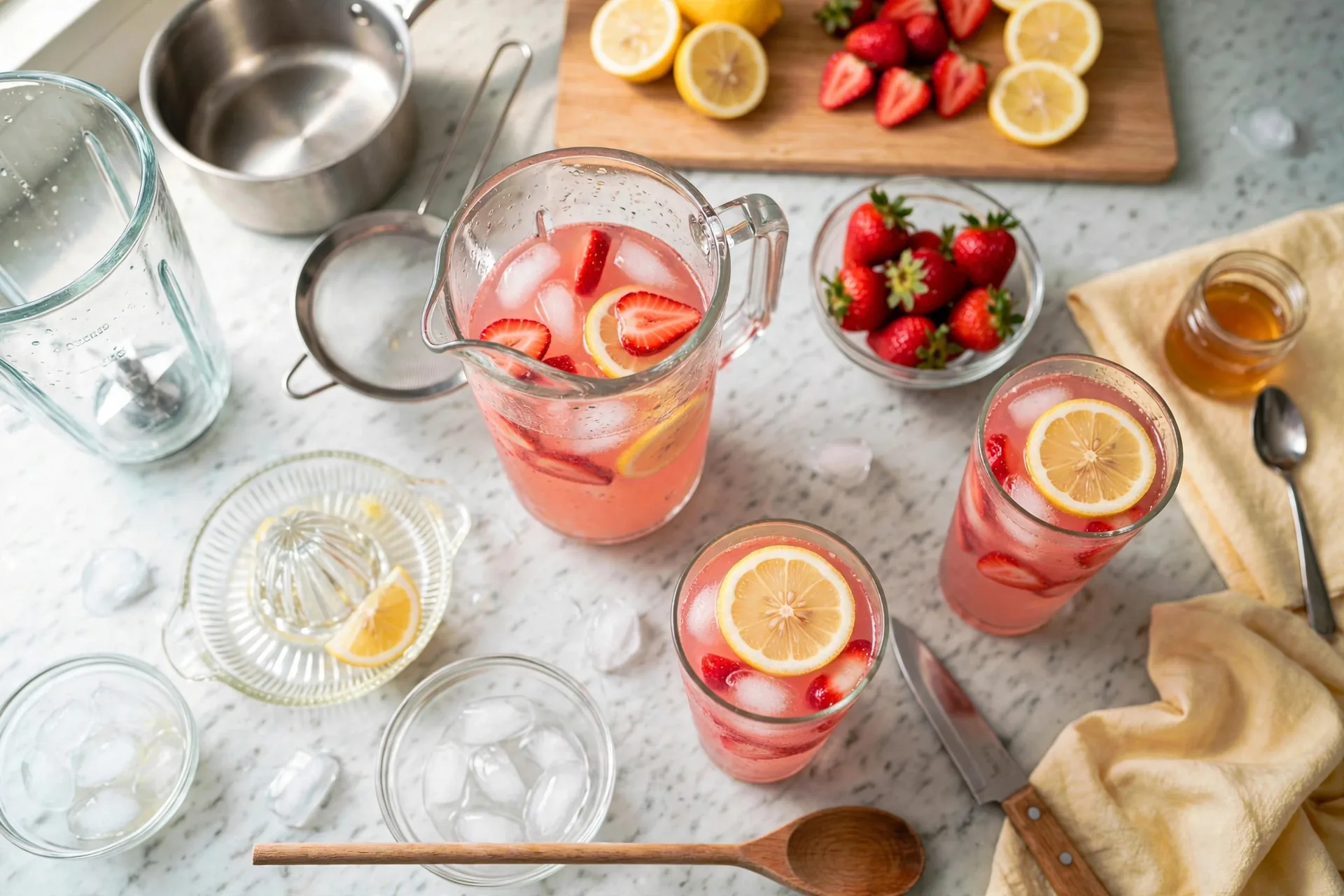
The pitcher and two tall glasses on the counter, with a bowl of strawberries, halved lemons, a small jar of syrup, and a pale-yellow linen towel around them, make the final scene: a wider view than the hero shot, and the recipe done.
Where Strawberry Lemonade Usually Goes Wrong
Pale or dull color. Too much water or too little puree washes the coral-pink out. Hold back some cold water at first, stir, and check the color before topping the pitcher up.
Gritty or seedy glasses. Skipped straining leaves seeds in the drink. Strain the lemon juice always, and strain the puree too if a smooth drink matters to you.
Too sweet or too tart. Syrup added all at once locks in the sweetness before tasting. Hold back a quarter of the syrup, taste, and adjust with syrup or cold water.
Warm, flat drink. Hot syrup poured straight into the pitcher melts the ice and flattens the flavor. Cool the syrup fully first, and serve over plenty of ice.
Watered-down second glass. Plain ice melts into the pitcher and the glasses. Freeze a tray of lemonade cubes for the second round.
If You Are Out of Something
- No fresh strawberries: frozen strawberries, thawed and drained, blend into a workable puree, though the color runs a little deeper.
- No fine-mesh sieve: a clean thin cloth over a bowl strains juice and puree, more slowly.
- No blender: mash the berries thoroughly with a fork and press through a sieve. The puree stays rougher, and straining matters more.
- No glass pitcher: any large jug works, though a clear pitcher shows the coral-pink color that sells the drink.
Keeping Leftovers and Prepping Ahead
The parts keep better separately than the finished drink does. Simple syrup keeps about a week in a covered jar in the fridge. Strawberry puree keeps about 2 days. The finished lemonade keeps in the fridge for several days when covered, though the color fades slightly and the flavor softens after the first day. Stir before serving again, since the puree settles.
For a party, make the syrup and puree a day ahead, squeeze the lemons the morning of, and combine everything an hour before guests arrive so the pitcher goes out cold and freshly stirred.
Facts
- Lemonade in its simplest form, lemon juice, water, and sugar, has been served for centuries, and fruit versions like strawberry lemonade follow the same three-part logic with puree added.
- Rolling a lemon on the counter before cutting breaks down the membranes inside and gives more juice from the same fruit.
- Simple syrup dissolves sugar fully into water, which sweetens cold drinks evenly. Granulated sugar stirred straight into a cold pitcher sinks and sweetens unevenly.
- Strawberry color comes from the same pigments that stain fingers and cutting boards, and the coral-pink of the finished drink is the lemon juice diluting that red.
- Ice made from the drink itself, rather than plain water, is an old bar trick for keeping a second glass as strong as the first.
FAQ
Can I use bottled lemon juice?
Fresh juice tastes brighter, and this drink has few ingredients to hide behind. Bottled juice works in a pinch, but the flavor flattens noticeably.
Do I have to strain the puree?
No. Straining gives a smoother drink, and skipping it gives a rustic one with seeds and pulp. Strain the lemon juice either way, since seeds in a glass are unpleasant in both versions.
How sweet should it be?
Sweet enough that the tartness rounds off without disappearing. Add three quarters of the syrup, taste, and adjust. Lemons vary in acidity, so a fixed amount never fits every batch.
Can I make it ahead for a party?
Yes. Syrup keeps a week, puree two days, and the finished drink several days covered in the fridge. Combine the pitcher an hour before serving so it goes out cold.
Can I cut the sugar?
Yes, down to about three quarters of a cup of sugar to one cup of water for the syrup, which lets the lemons stand out more. Taste and adjust from there.
Conclusion
Three parts, one pitcher, and a tasting glass at the end. Squeeze the lemons, blend the berries, dissolve the sugar, and let the final taste decide the sweetness. Serve it over lemonade ice cubes and the last glass stays as bright as the first.
Strawberry Lemonade
Ingredients
Method
- Roll, halve and squeeze the lemons, then strain the juice into a jug.
- Rinse, hull and blend the strawberries until smooth; strain the puree if a smoother drink is preferred.
- Heat the sugar and water gently until the sugar dissolves, then cool the syrup completely.
- Pour the lemon juice into the pitcher, add the strawberry puree, then add 3/4 of the syrup first.
- Top up with cold water, stir until evenly coral-pink, then taste and adjust with the remaining syrup or more water.
- Serve over ice with lemon wheels and halved strawberries.