Chicken Fried Steak (Country Fried Steak) With Cream Gravy
 ""
 Pin it
In this post
This chicken fried steak recipe is a complete guide to crispy cubed steak, peppery cream gravy, and the ground beef variation, with temperature and doneness tips throughout. Use the links below to jump to any section.
- Chicken Fried Steak vs. Country Fried Steak vs. Fried Cubed Steak
- Recipe Overview
- Ingredients
- Equipment
- How to Make Chicken Fried Steak
- Step 1: Season the Steaks
- Step 2: Make the Buttermilk Dip
- Step 3: Mix the Seasoned Flour
- Step 4: Set Up the Dredging Station
- Step 5: First Flour Coat
- Step 6: Dip in Buttermilk
- Step 7: Second Flour Coat
- Step 8: Rest the Breaded Steaks for 10 Minutes
- Step 9: Heat the Oil to 350°F (175°C)
- Step 10: Fry the First Side
- Step 11: Flip and Fry the Second Side
- Step 12: Check the Internal Temperature
- Step 13: Drain and Keep Warm
- Step 14: Reserve the Drippings
- How to Make the Cream Gravy
- Step 15: Cook the Flour in the Drippings
- Step 16: Whisk in the Milk Gradually
- Step 17: Simmer Until Thick
- Step 18: Season With Pepper and Salt
- Serving
- Ground Beef Chicken Fried Steak (Budget Variation)
- Common Mistakes and How to Fix Them
- Substitutions
- Make-Ahead, Storage, and Reheating
- FAQ
- Final Thoughts
- Recipe Card
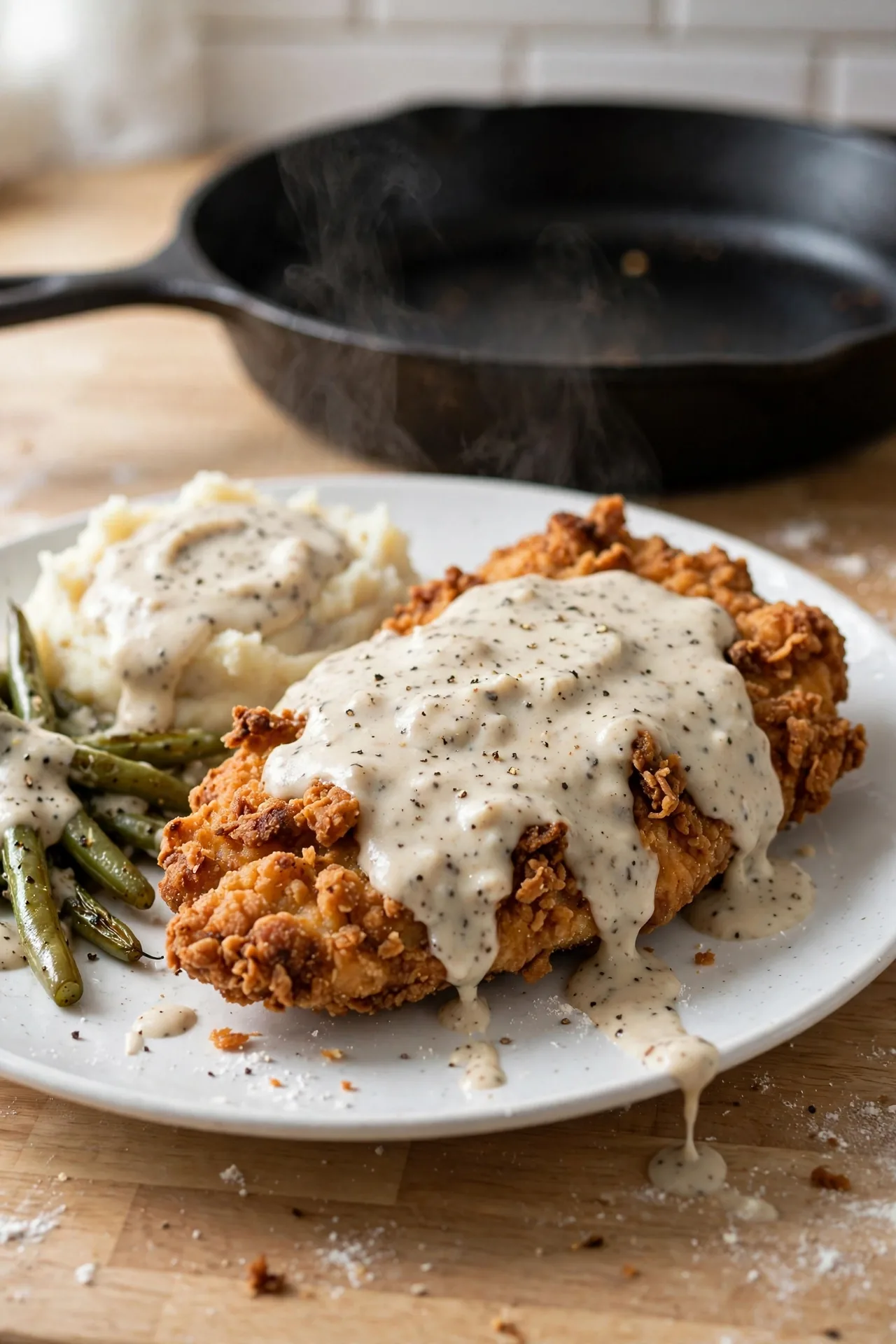
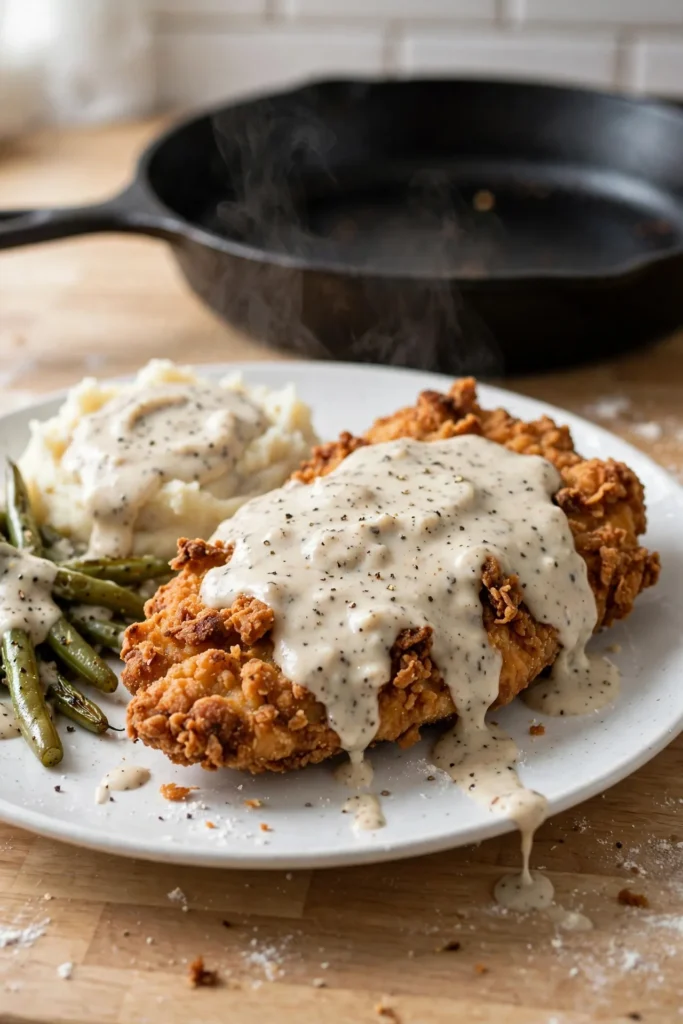
Chicken fried steak is a cubed beef steak that gets seasoned, dipped in buttermilk and egg, coated twice in flour, and pan-fried until the crust is deep golden and crackly. It is then buried in a peppery white gravy made from the same skillet. The beef inside is tender, the crust stays crisp under the gravy, and the whole thing comes together in about an hour with ingredients most kitchens already have.
This one recipe covers the four ways people search for it: chicken fried steak, country fried steak, fried cubed steak, and the budget-friendly ground beef chicken fried steak. The method is shared. The only real difference is what goes in the dredge station, and the ground beef version has its own short section below with a different doneness temperature.
Chicken Fried Steak vs. Country Fried Steak vs. Fried Cubed Steak
These names overlap, and regional or restaurant usage varies, so here is the practical breakdown rather than a strict rule:
- Chicken fried steak: A beef steak breaded and fried the way fried chicken is, then served with white cream gravy. This is the name most common in Texas and across the South.
- Country fried steak: Often used for the same dish. On some menus it refers to a version served with brown or onion gravy, or a lighter coating. If a menu or older recipe uses it that way, the steak itself is still made exactly like this one.
- Fried cubed steak: Describes the cut and the method, not the gravy. Cubed steak is a thin cut (often top round or similar) that has been mechanically tenderized, which is why it fries up tender in minutes.
- Ground beef chicken fried steak: Seasoned ground beef shaped into flat patties, then breaded and fried the same way. It is cheaper and needs no tenderizing, but it must reach a higher internal temperature (see the ground beef section).
Everything below uses cubed steak. Jump to the ground beef variation if that is what you have.
Recipe Overview
| Prep time | 20 minutes |
| Resting time | 10 minutes (breaded steaks) |
| Cook time | 30 minutes (fry + gravy) |
| Total time | About 1 hour |
| Servings | 4 |
| Difficulty | Easy, with one step that needs attention (oil temperature) |
Ingredients
For the steaks
- 4 beef cubed steaks (about 5 to 6 oz / 140 to 170 g each, roughly 1½ lb total)
- ½ teaspoon kosher salt
- ½ teaspoon black pepper
For the buttermilk dip
- 1 cup (240 ml) buttermilk
- 2 large eggs
- 1 teaspoon hot sauce (optional)
For the seasoned flour
- 1½ cups (190 g) all-purpose flour
- 1 teaspoon kosher salt
- 1 teaspoon black pepper
- 1 teaspoon garlic powder
- 1 teaspoon onion powder
- 1 teaspoon paprika
- ¼ teaspoon cayenne pepper (optional)
For frying
- Neutral oil with a high smoke point (vegetable, canola, or peanut), enough for about ½ inch depth in a 12-inch skillet (roughly 2 cups)
For the cream gravy
- ¼ cup (60 ml) reserved frying oil and drippings
- ¼ cup (30 g) all-purpose flour
- 2½ cups (600 ml) whole milk
- ½ to ¾ teaspoon kosher salt, to taste
- 1 teaspoon coarsely ground black pepper, or more to taste
Allergens present: wheat (gluten), milk, eggs.
Ingredient Notes
Cubed steak. The cube-shaped indentations come from a tenderizing machine that breaks up the muscle fibers. Ask the butcher counter for cubed steak or tenderized top round if the pre-packed kind is not available. If your steaks are thicker than about ½ inch, pound them with a meat mallet to roughly ¼ to ⅜ inch so they cook through before the crust over-browns.
Buttermilk. The acidity loosens the surface of the meat slightly and gives the egg dip a thicker, clingier texture, which helps the second flour coat grab on. If you have none, stir 1 tablespoon of lemon juice or white vinegar into 1 cup of whole milk and let it sit 5 minutes. It works, though the dip is a little thinner.
Whole milk for the gravy. Fat in the milk gives the gravy body. Low-fat milk works but thickens with less richness, so expect a slightly thinner, paler result.
Equipment
- 12-inch cast-iron skillet or heavy-bottomed deep skillet (cast iron holds oil temperature better when cold steaks go in)
- Instant-read thermometer for both the oil and the meat
- Wire rack set over a baking sheet
- Three shallow dishes for dredging
- Whisk and a flat spatula or tongs
The thermometer matters more than any other tool here. Oil that is too cool makes a greasy, pale crust, and oil that is too hot browns the outside before the beef is done.
How to Make Chicken Fried Steak
Step 1: Season the Steaks
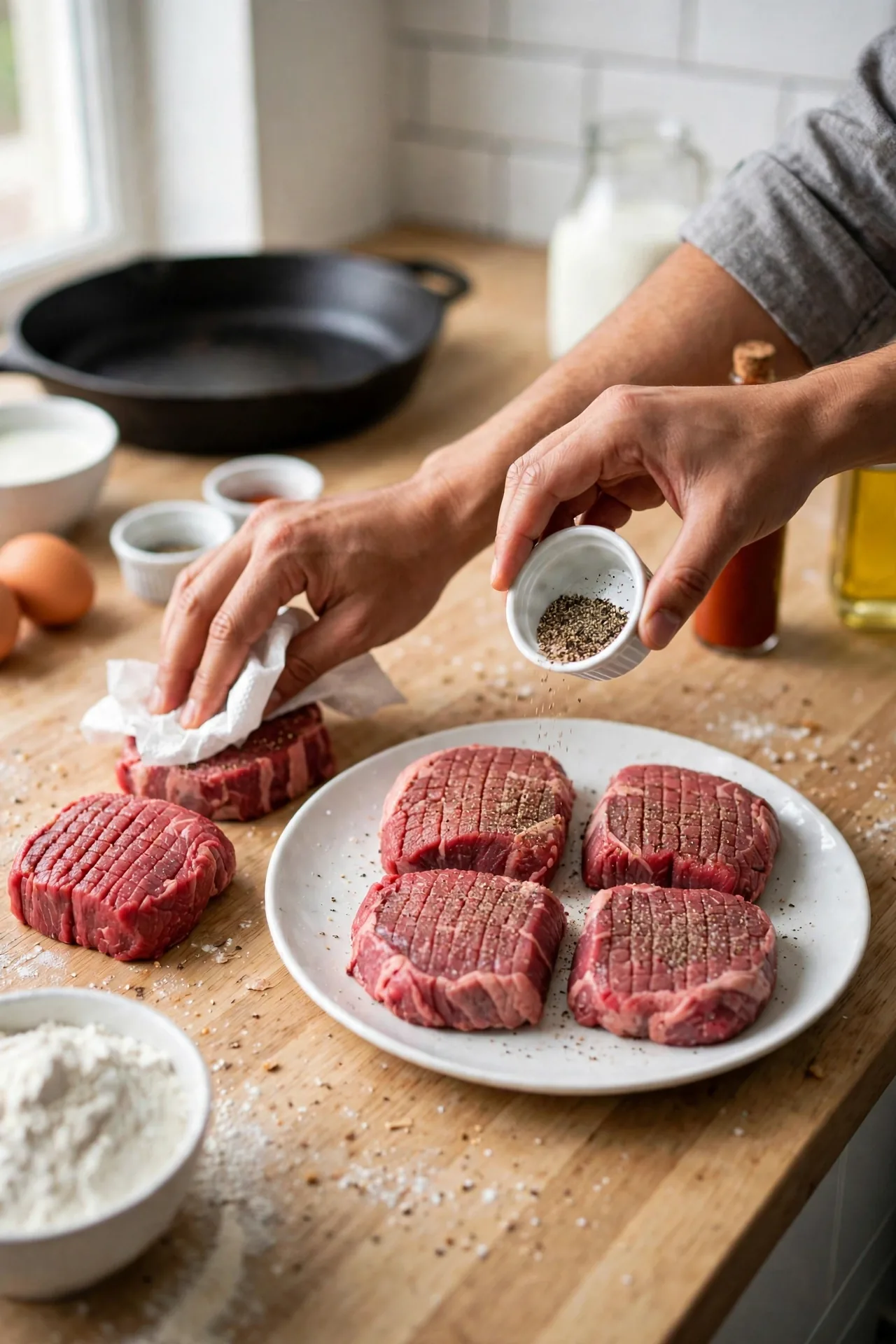
Pat each steak completely dry with paper towels. Surface moisture steams under the coating and makes the crust slip off later.
Sprinkle both sides of each steak with the ½ teaspoon salt and ½ teaspoon pepper from the steak list. Keep this seasoning light, because the flour coating and gravy carry most of the salt.
Step 2: Make the Buttermilk Dip
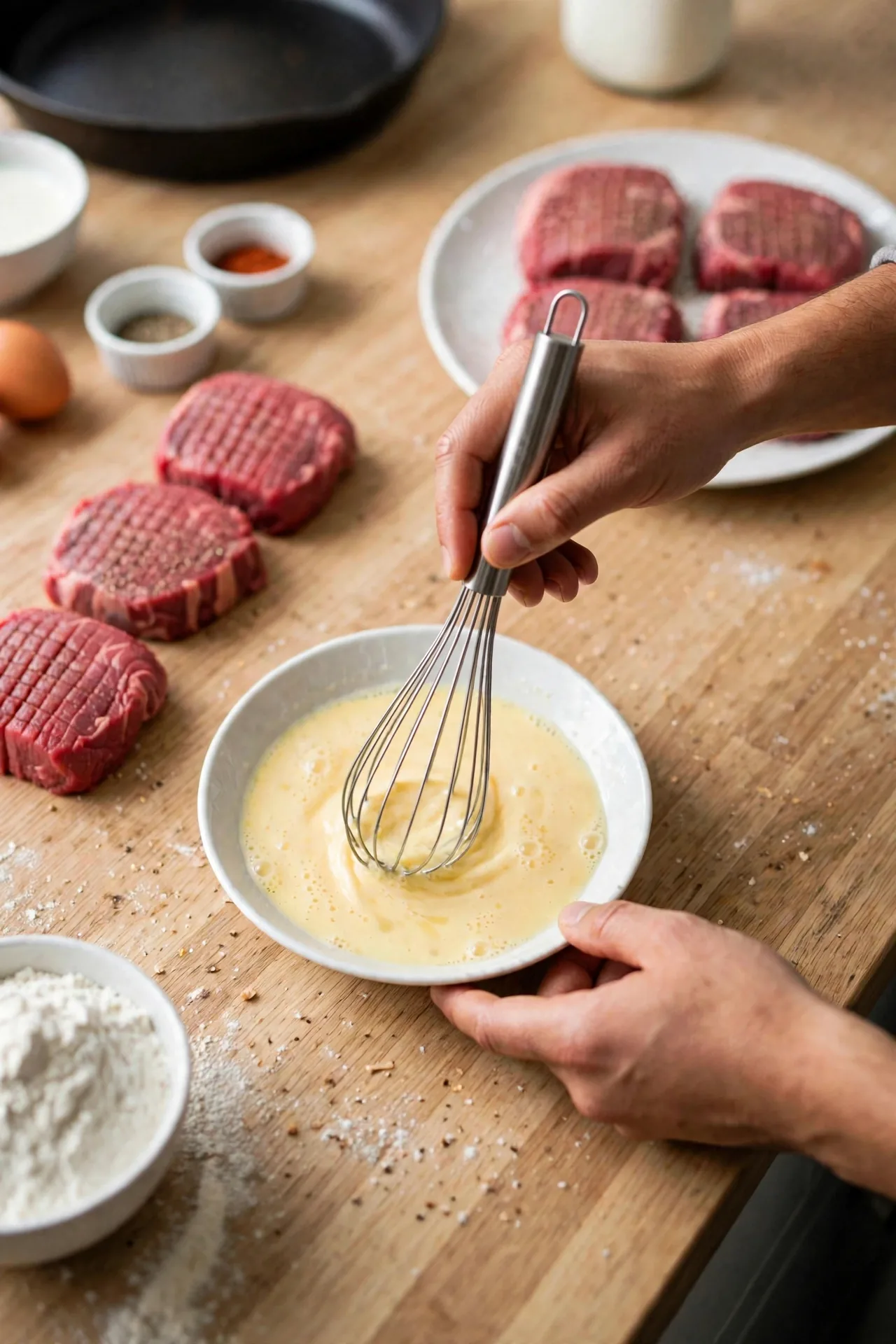
Whisk the buttermilk, eggs, and hot sauce in a shallow dish until the eggs are fully broken up and no streaks of yolk remain.
Step 3: Mix the Seasoned Flour
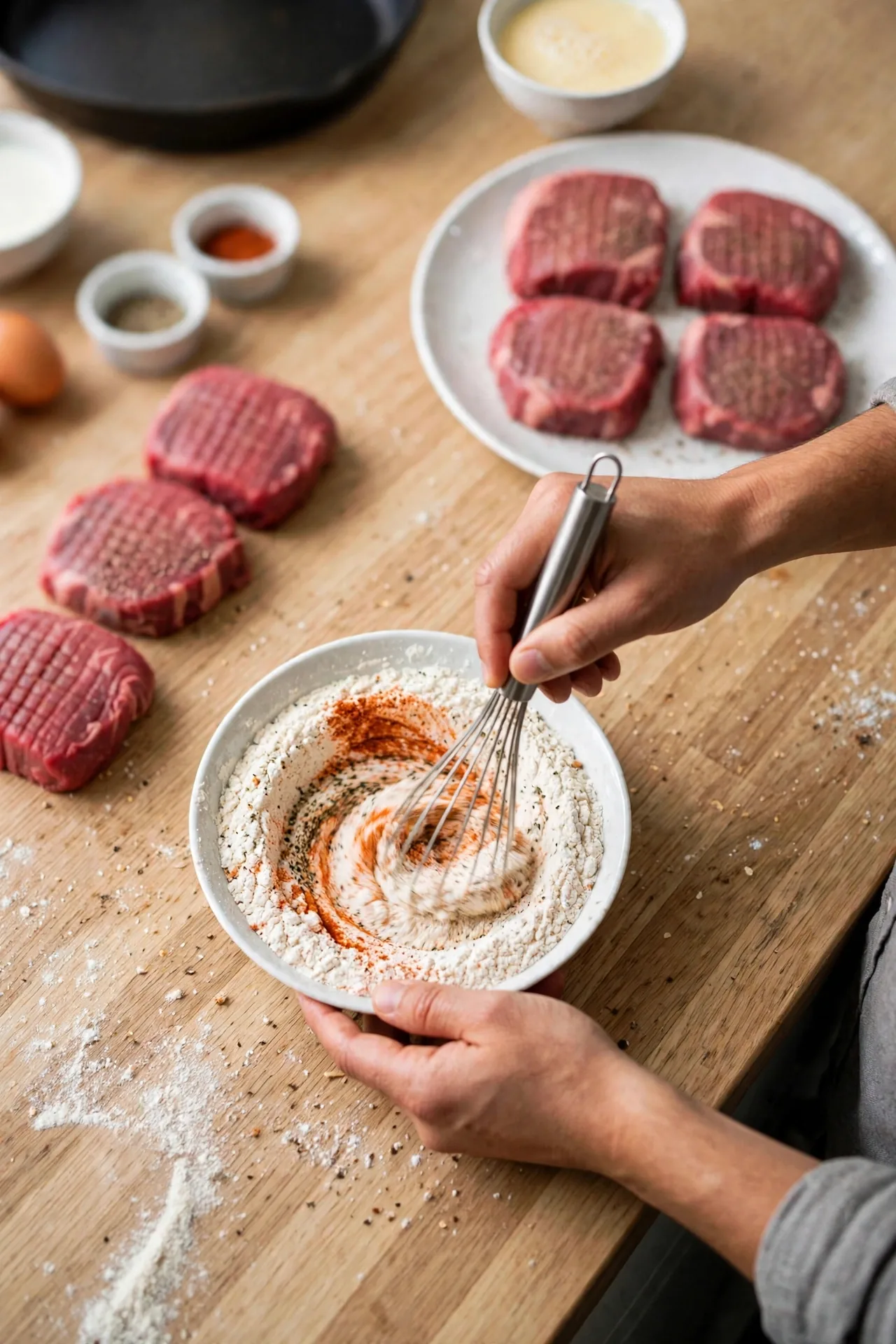
In a second shallow dish, whisk together the flour, salt, pepper, garlic powder, onion powder, paprika, and cayenne. Whisking, rather than stirring with a spoon, spreads the spices evenly so no bite is bland or overly salty.
Step 4: Set Up the Dredging Station
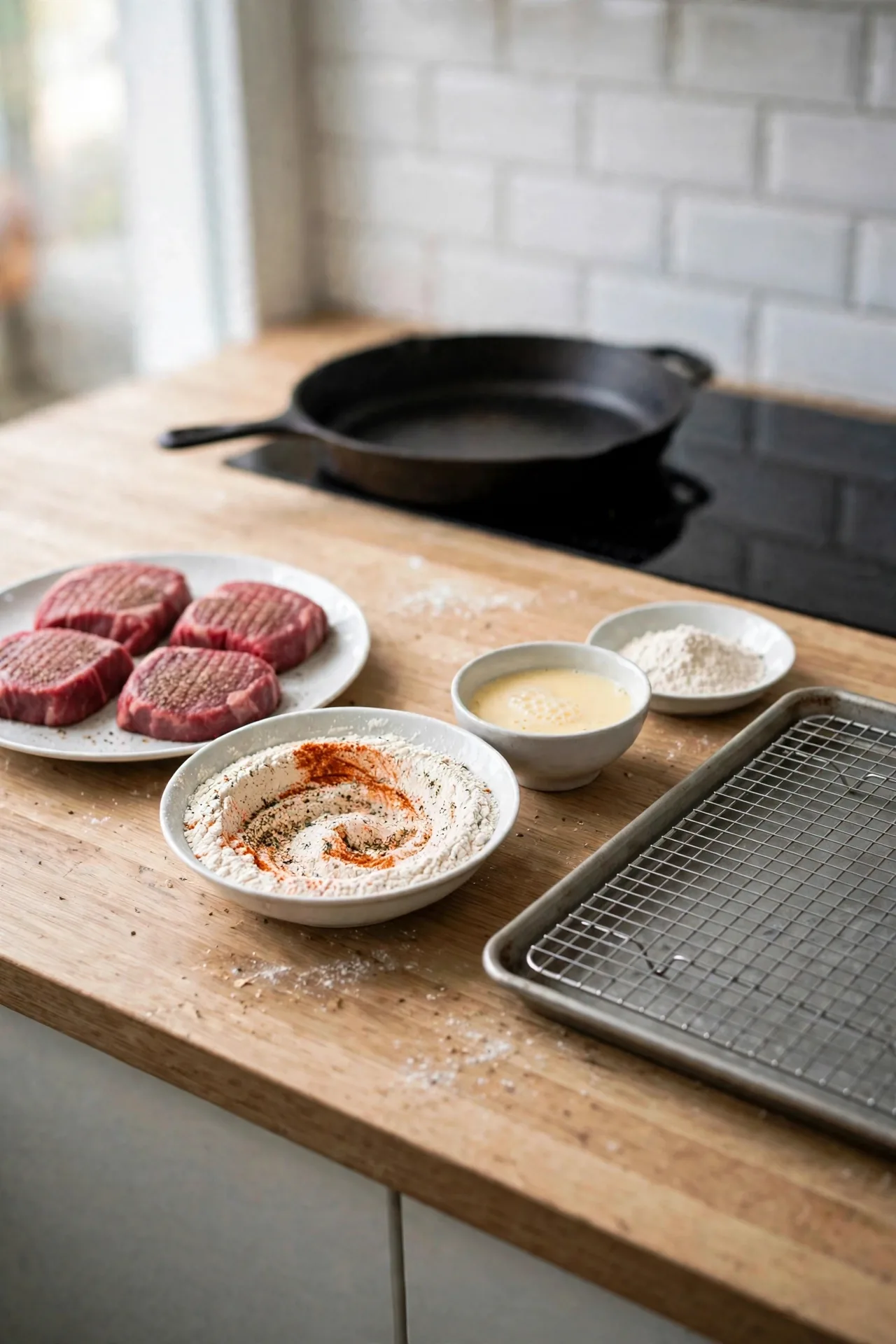
Line up the dishes in the order you will use them: seasoned steaks, then flour, then buttermilk dip, then the same flour again (spoon a little extra flour into a third dish if the first gets clumpy), then a wire rack over a baking sheet at the end.
Keep one hand for dry (flour) and one for wet (buttermilk). This avoids the club-shaped, flour-and-egg glove that makes dredging messy.
Step 5: First Flour Coat
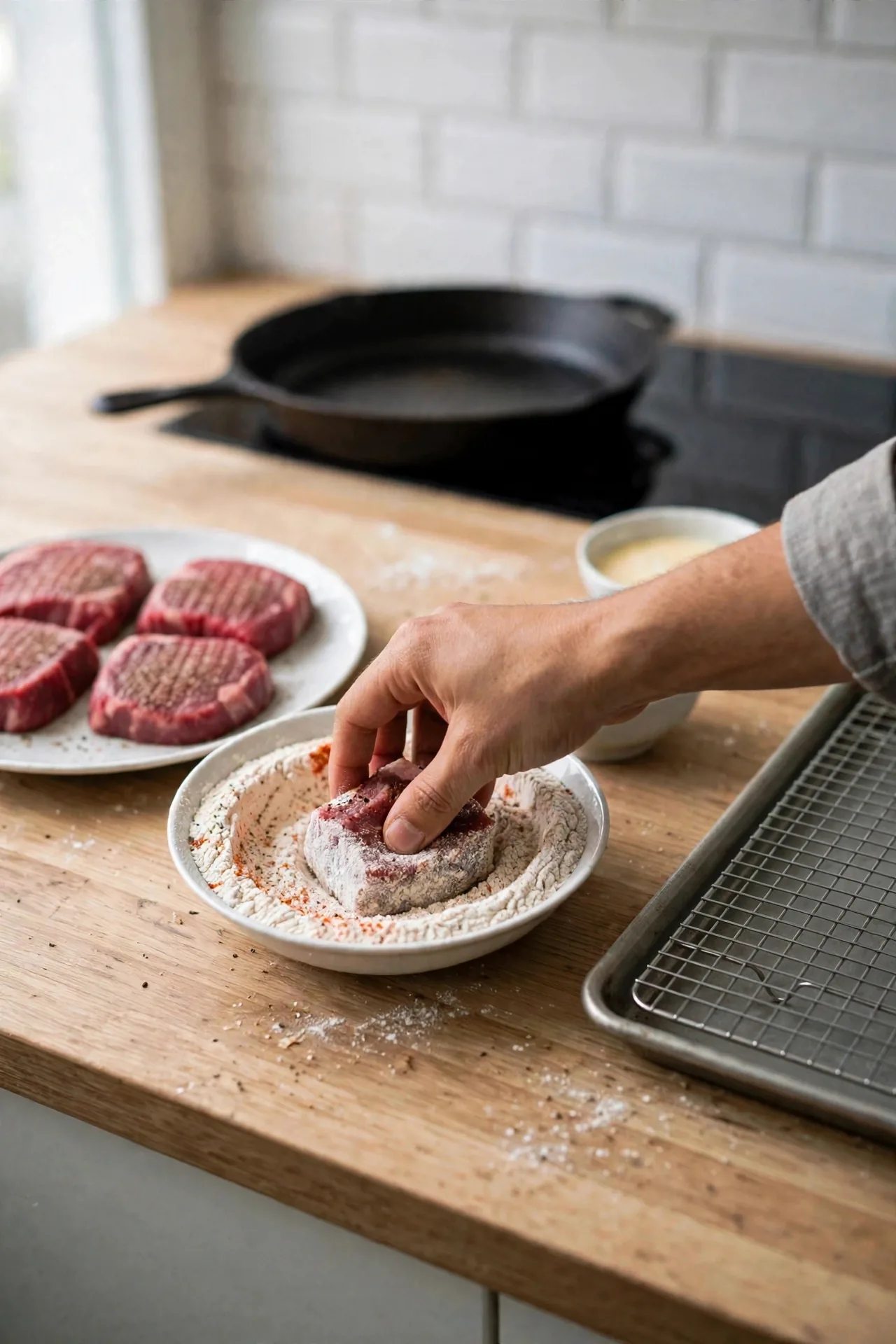
Press one steak into the flour, turn it, and press again so every surface is coated. Shake off the excess. The goal is a thin, even dusting, not a thick blanket.
Step 6: Dip in Buttermilk
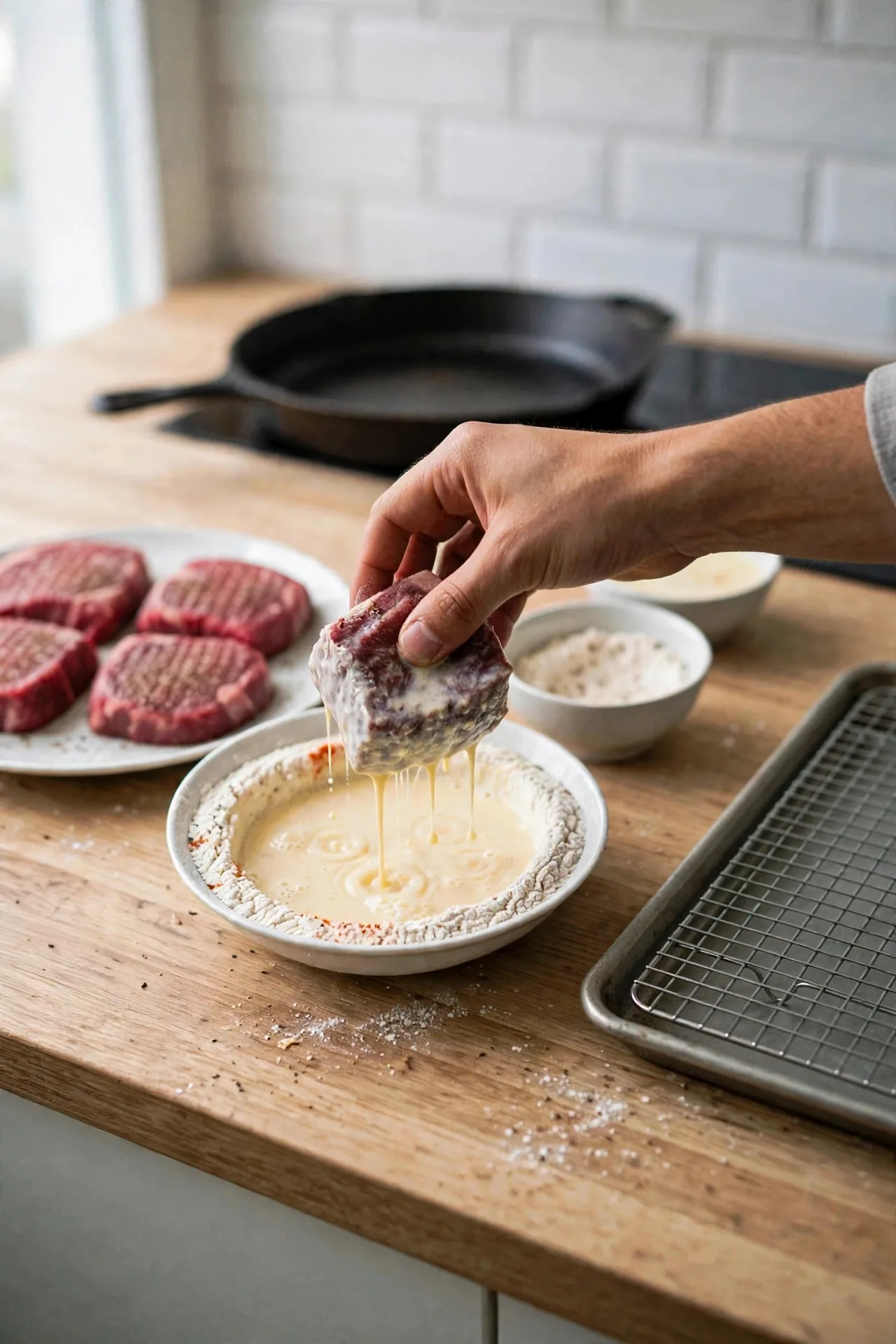
Lift the floured steak, let it drip for a second, and lower it into the buttermilk mixture. Turn it once so the whole surface is wet, then lift and let the excess run off.
Step 7: Second Flour Coat
Return the steak to the flour and press firmly on both sides, including the edges. This second coat is what builds the thick, craggy crust. Pinch and press any bare spots so the coating is solid before the steak goes on the rack.
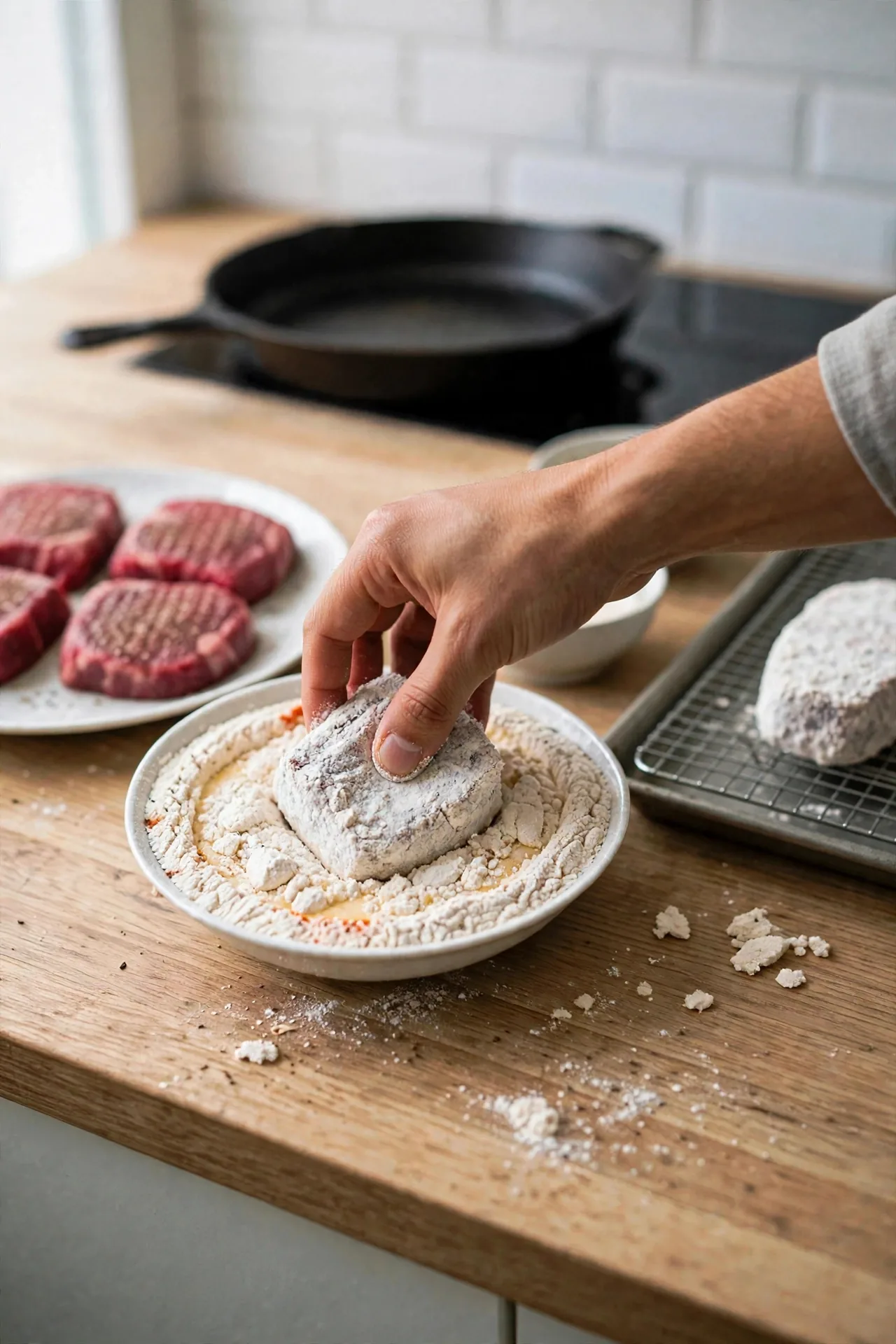
Step 8: Rest the Breaded Steaks for 10 Minutes
Set each breaded steak on the wire rack and repeat with the remaining steaks. Let them sit about 10 minutes while you heat the oil. During this time the flour hydrates and bonds to the surface, which helps the crust stay attached when the steak hits hot oil.
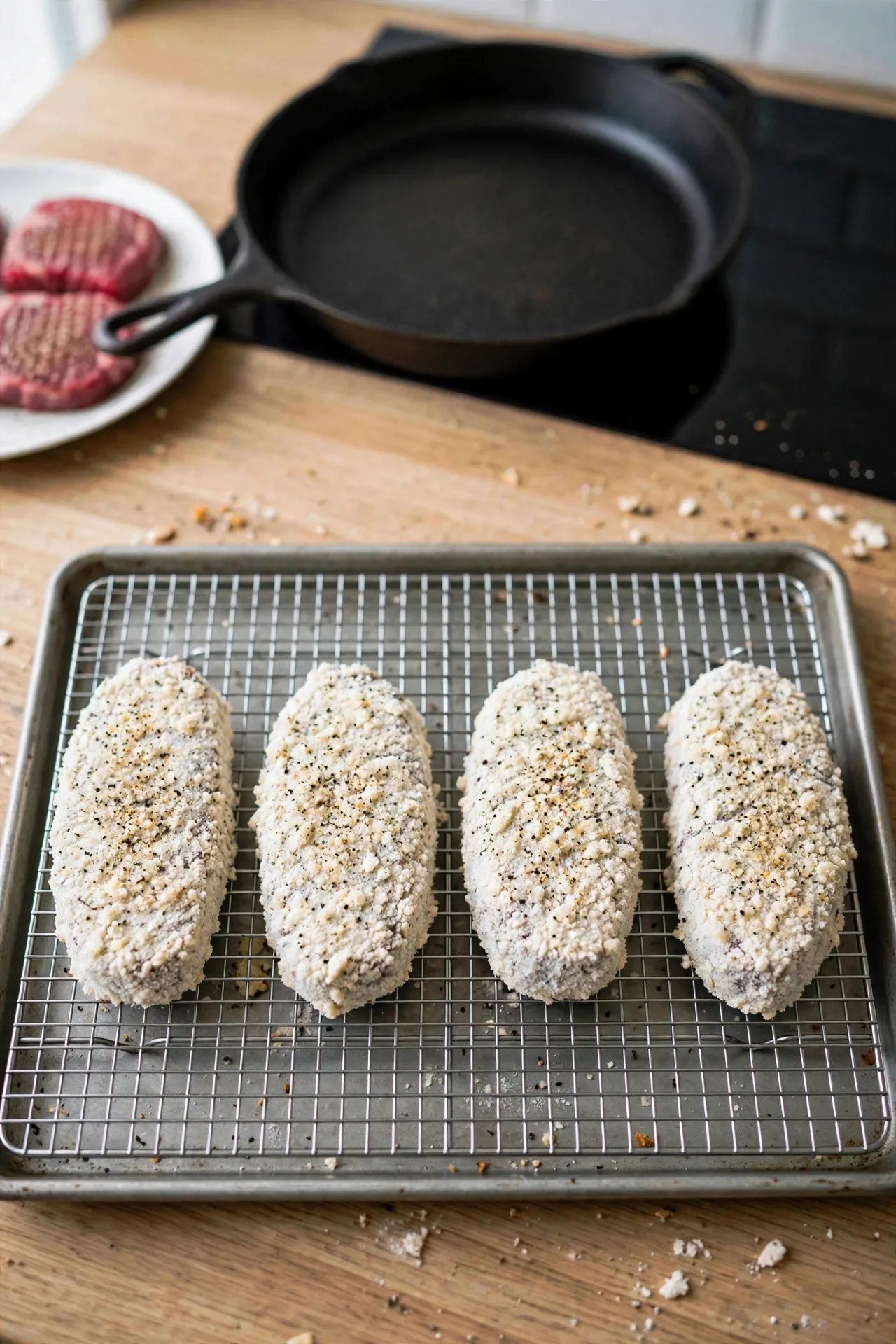
Why the crust falls off: The most common reasons are wet meat (skipped the paper towel step), skipping the rest, or moving the steak around in the pan too soon. Press the coating on firmly, rest it, and then leave the steak alone for the first 2 minutes of frying.
Step 9: Heat the Oil to 350°F (175°C)
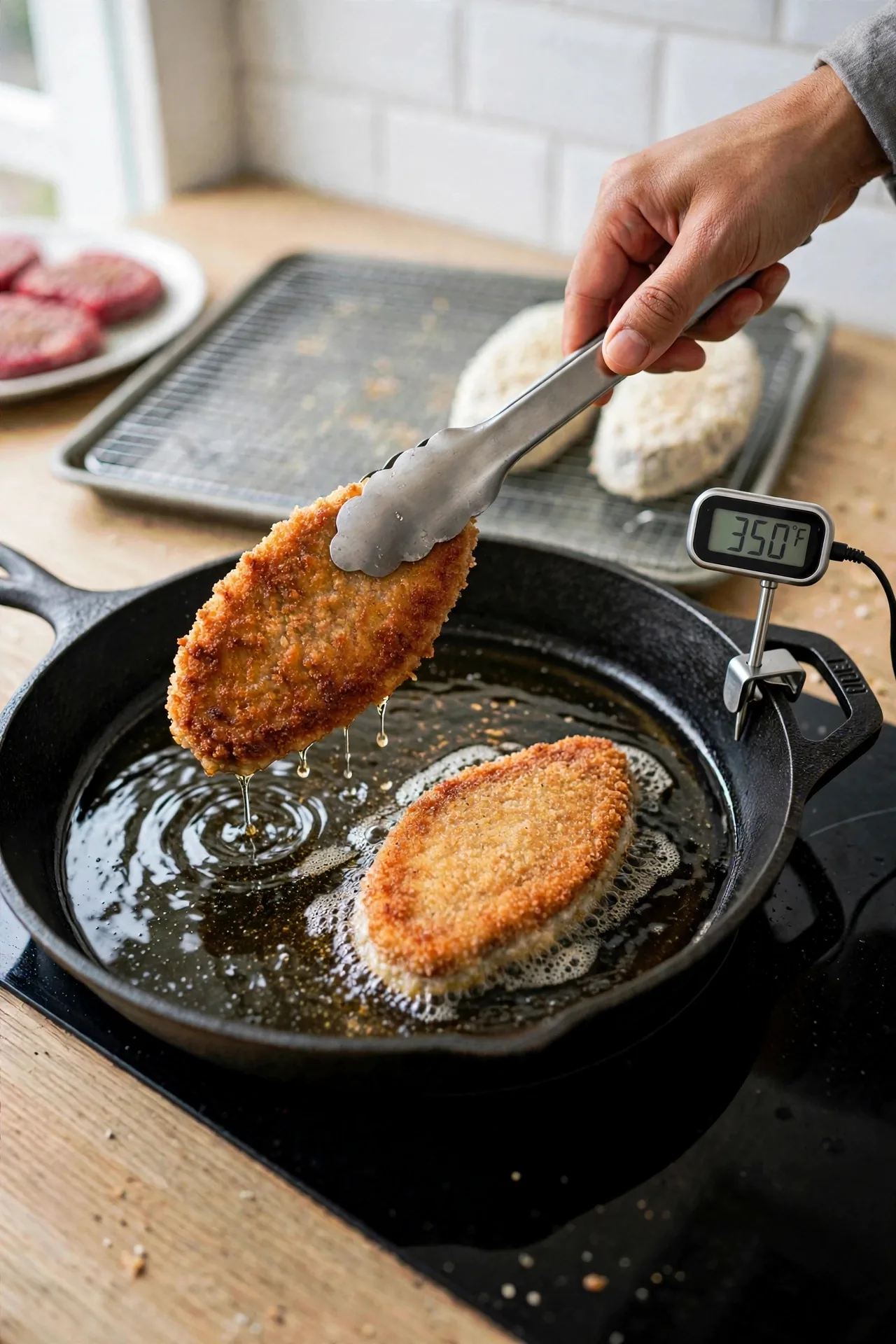
Pour about ½ inch of oil into the skillet and heat over medium to medium-high. Clip or rest a thermometer in the oil and wait until it reads 350°F (175°C). If the oil is shimmering but under 325°F, the crust will soak up fat. If it is smoking or above about 375°F, the crust will darken before the beef is done.
While it heats, set a second wire rack over a baking sheet and preheat the oven to 200°F (95°C) to keep finished steaks warm without softening the crust.
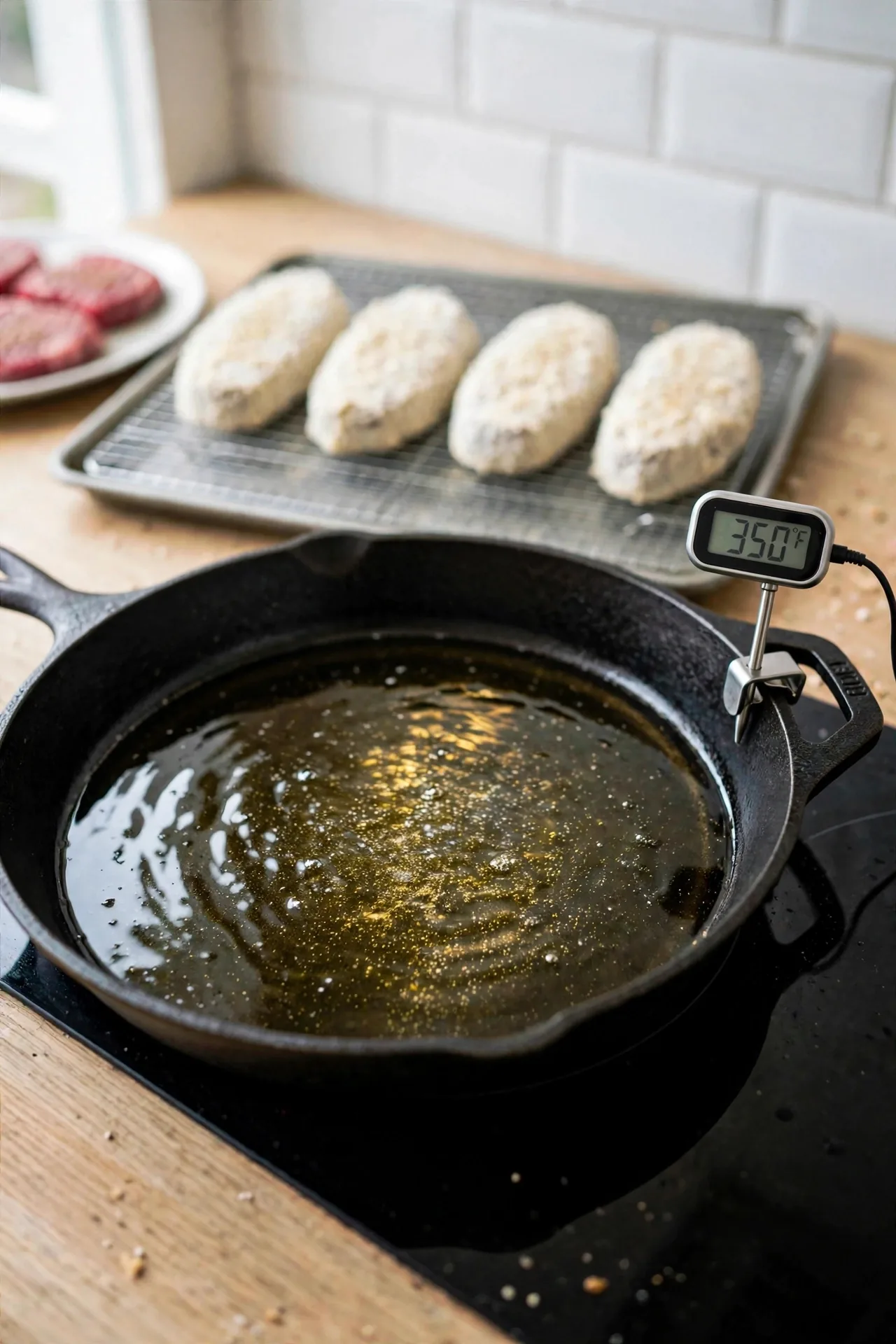
Step 10: Fry the First Side
Lay two steaks in the oil, placing them away from you so the oil does not splash toward your hand. Fry only two at a time. Crowding drops the oil temperature fast and steams the crust instead of crisping it.
The oil temperature will dip toward 325°F when the steaks go in. Adjust the heat to hold it around 325 to 350°F during frying. Fry for 3 to 4 minutes, until the underside is deep golden brown.
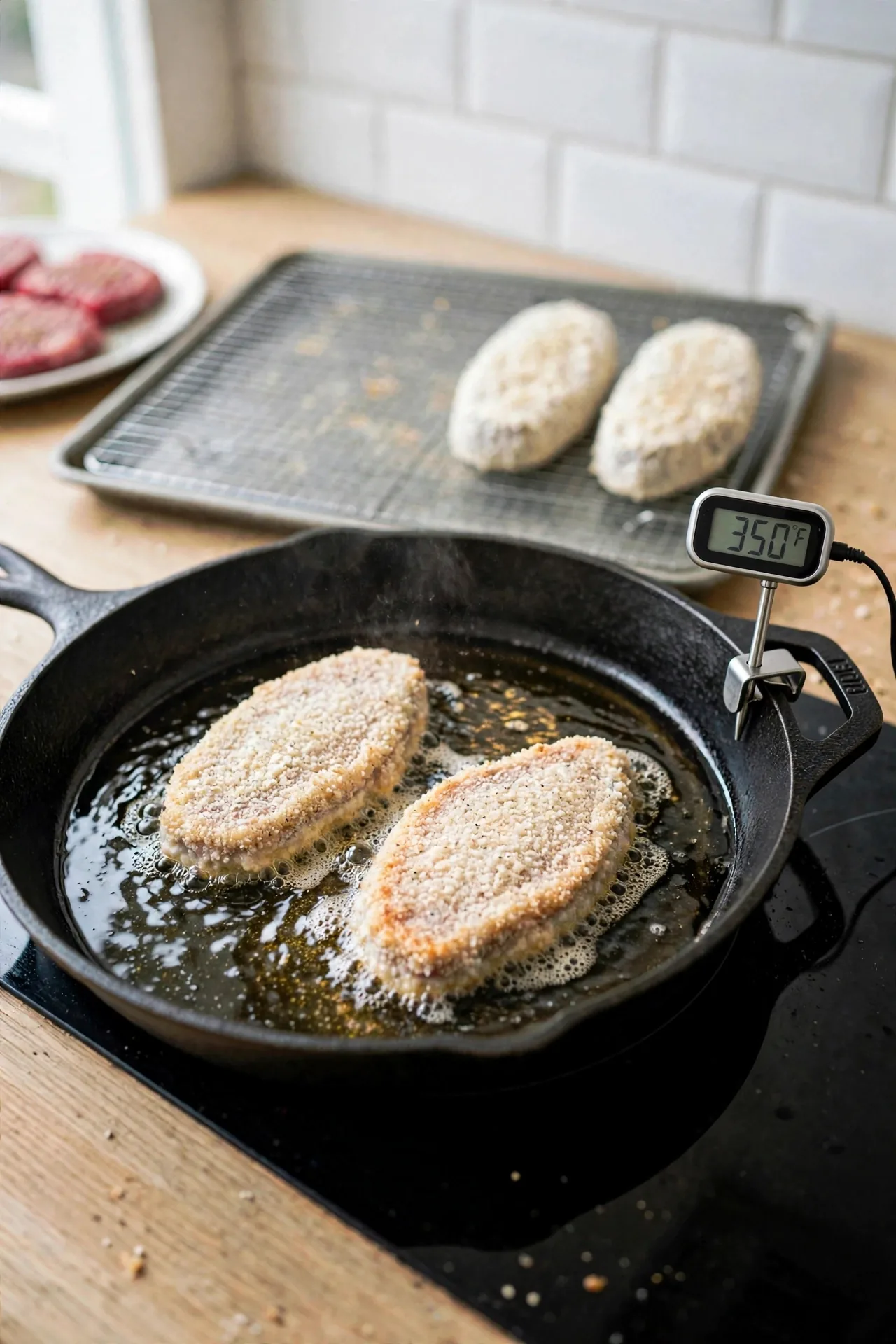
Step 11: Flip and Fry the Second Side
Turn each steak once with tongs or a flat spatula, being careful not to puncture the crust. Fry another 3 minutes, until the second side matches the first.
Step 12: Check the Internal Temperature
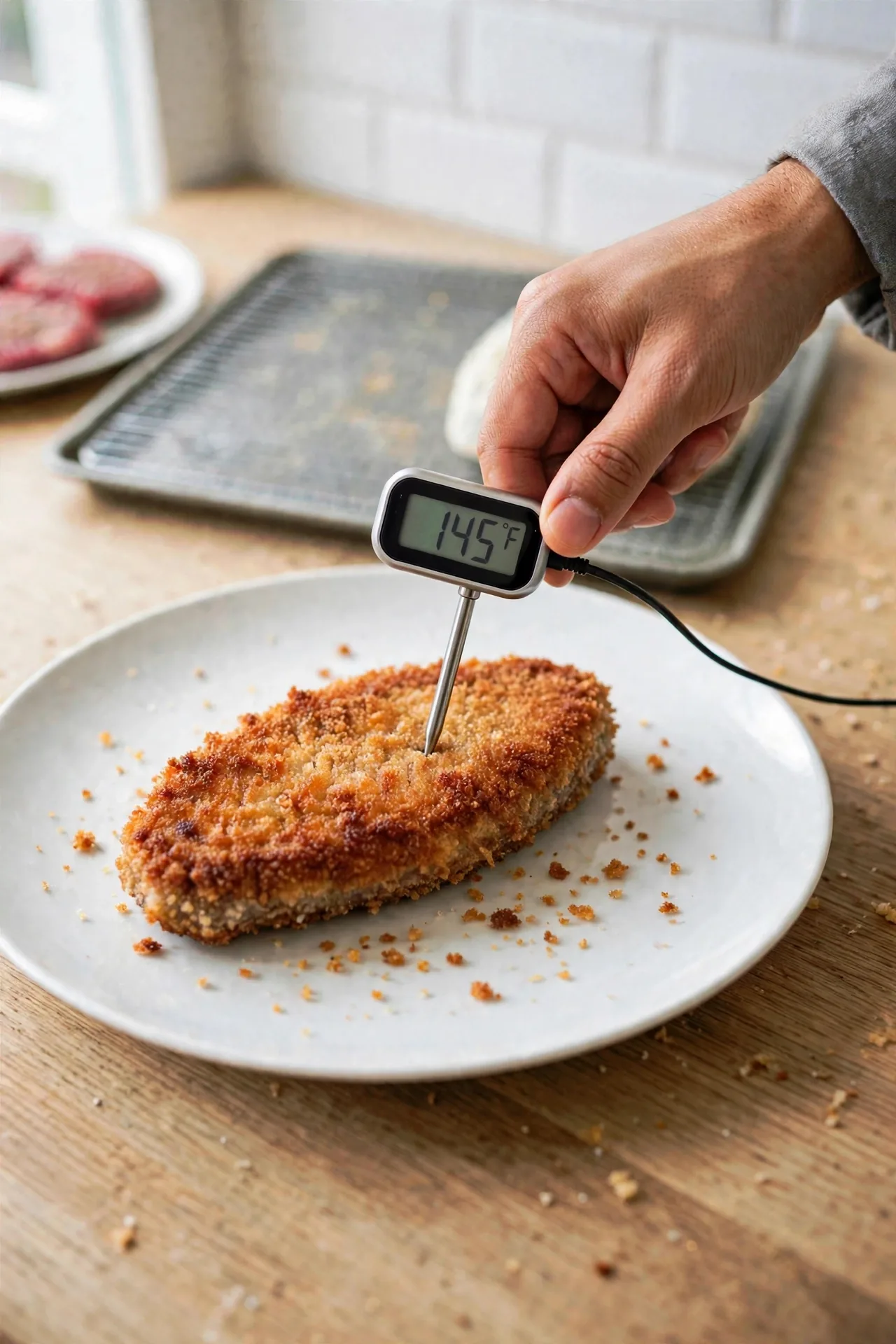
Insert an instant-read thermometer sideways into the thickest part of the steak, since cubed steaks are thin. The USDA’s safe minimum for whole cuts of beef is 145°F (63°C) with a 3-minute rest, and mechanically tenderized beef follows the same guideline. Cubed steak is tenderized by machine, so check it rather than guessing from color.
If it reads lower, give it another minute in the oil.
Step 13: Drain and Keep Warm
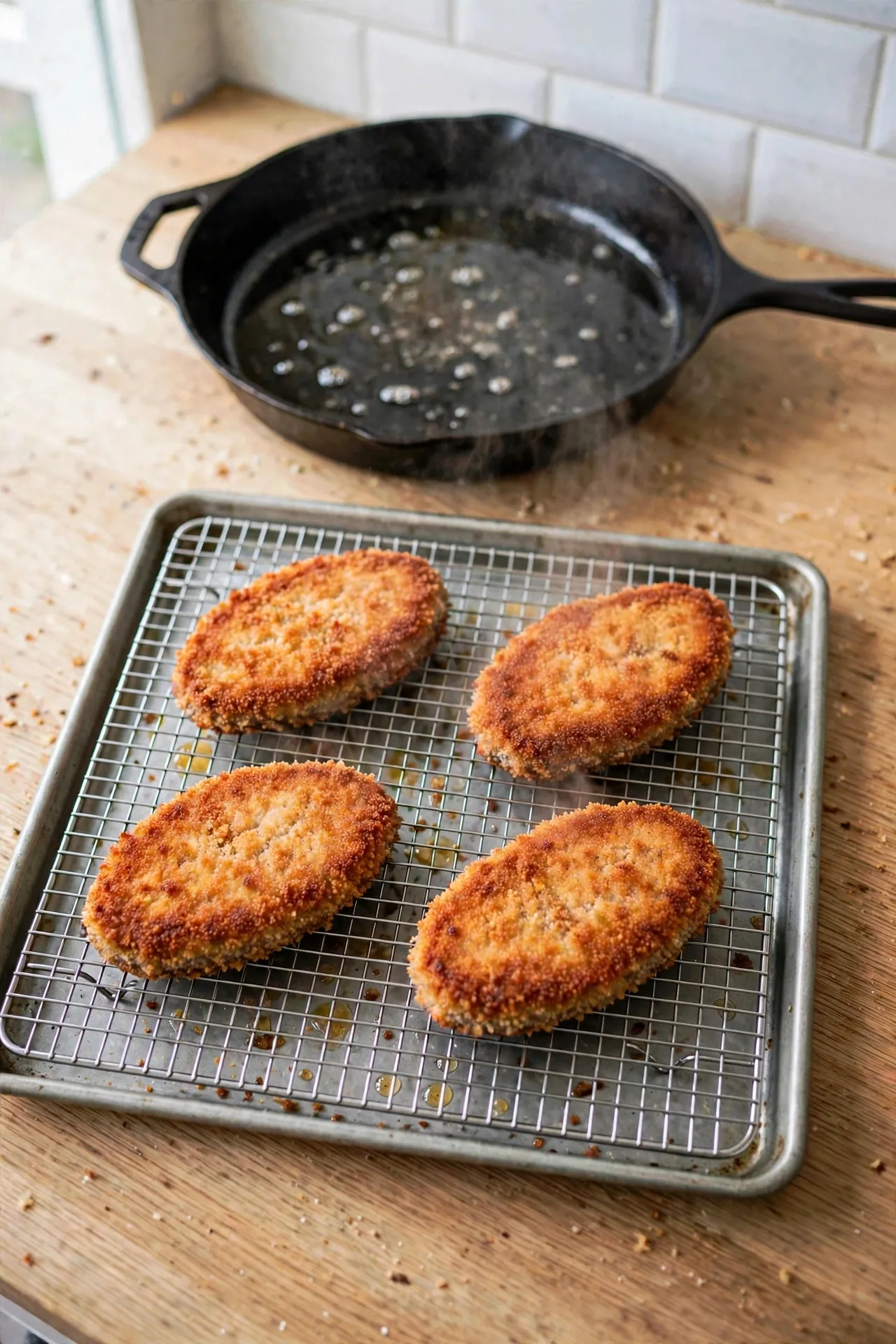
Move finished steaks to the wire rack and slide the rack into the 200°F oven. A rack lets air circulate under the steak, which keeps the bottom crisp. A paper-towel-lined plate traps steam and makes it soggy.
Fry the remaining two steaks the same way, topping up or re-checking the oil temperature between batches.
Step 14: Reserve the Drippings
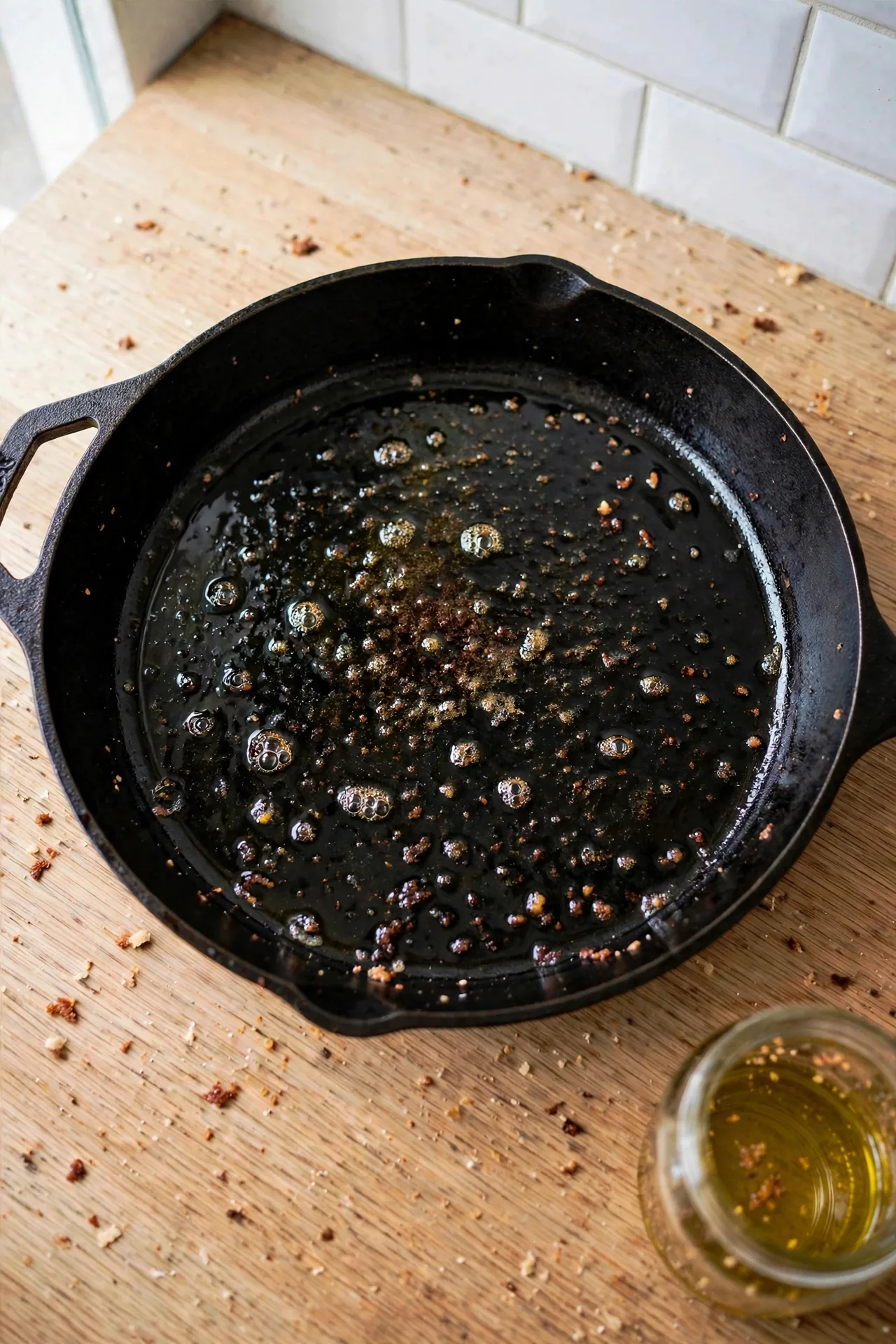
Carefully pour off the hot oil into a heatproof container, leaving about ¼ cup (60 ml) of oil and all the browned bits in the skillet. Those bits are the flavor base of the gravy. Return the skillet to medium heat.
Safety note: Let the discarded oil cool completely before disposing of it, and never pour it down the drain.
How to Make the Cream Gravy
Step 15: Cook the Flour in the Drippings
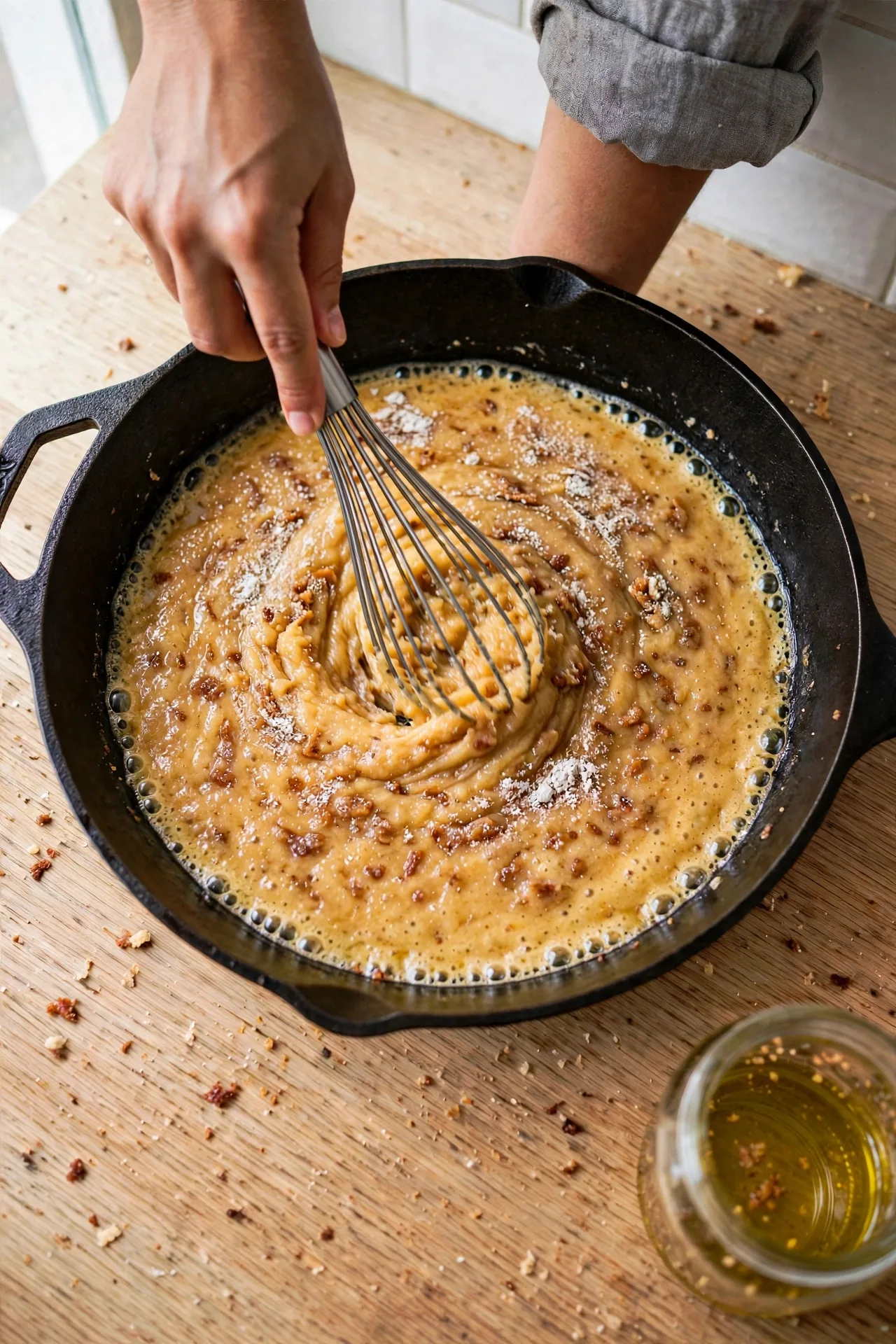
Sprinkle the ¼ cup flour over the hot drippings and whisk constantly. Cook for 1 minute, scraping the browned bits up as you go. The paste should look blond and smell lightly toasty. Cooking the flour briefly removes the raw taste.
Step 16: Whisk in the Milk Gradually
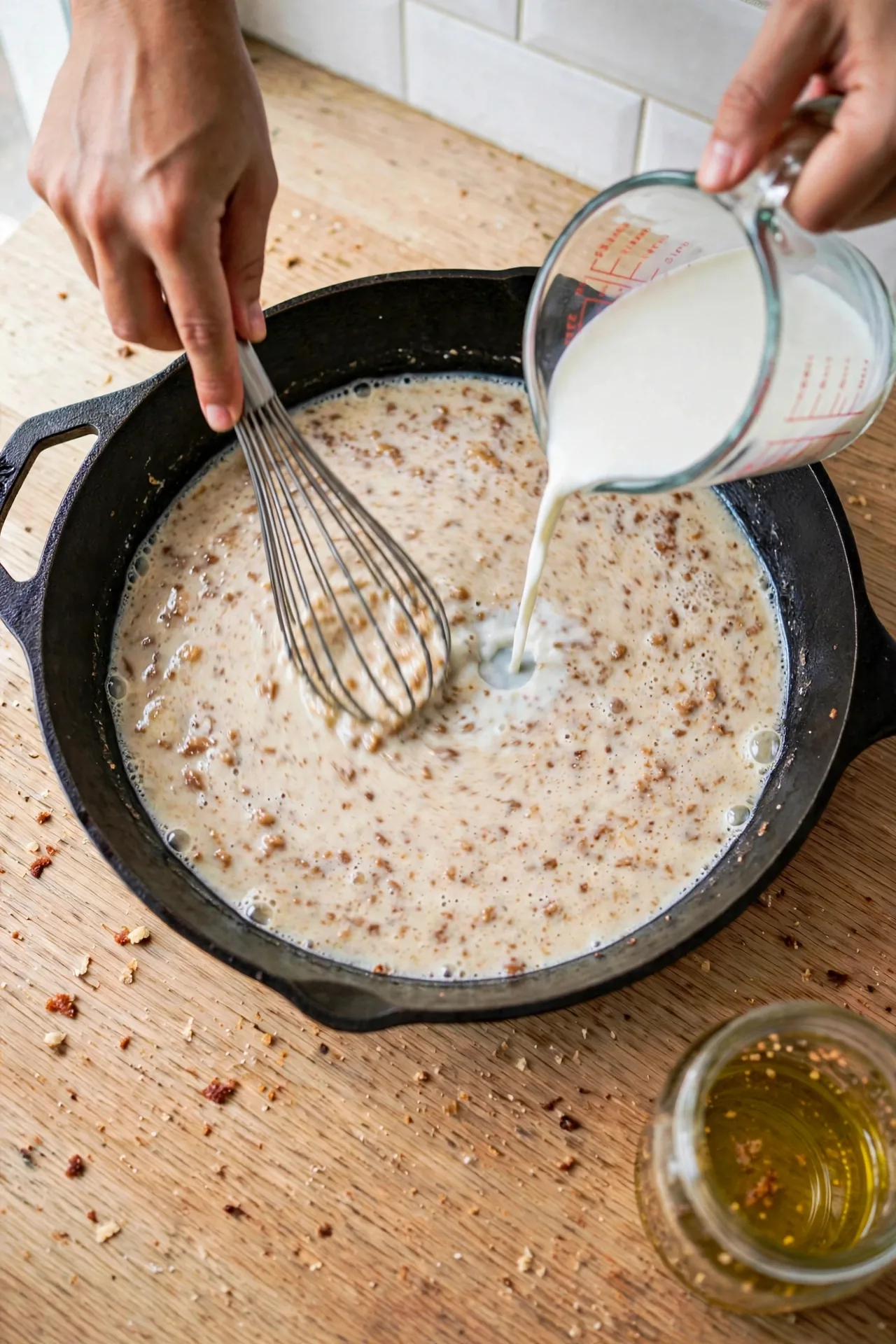
Pour in the milk in a slow stream while whisking nonstop. Start with just a splash, whisk until smooth, then add more. Adding all the milk at once is the usual cause of lumps.
Step 17: Simmer Until Thick
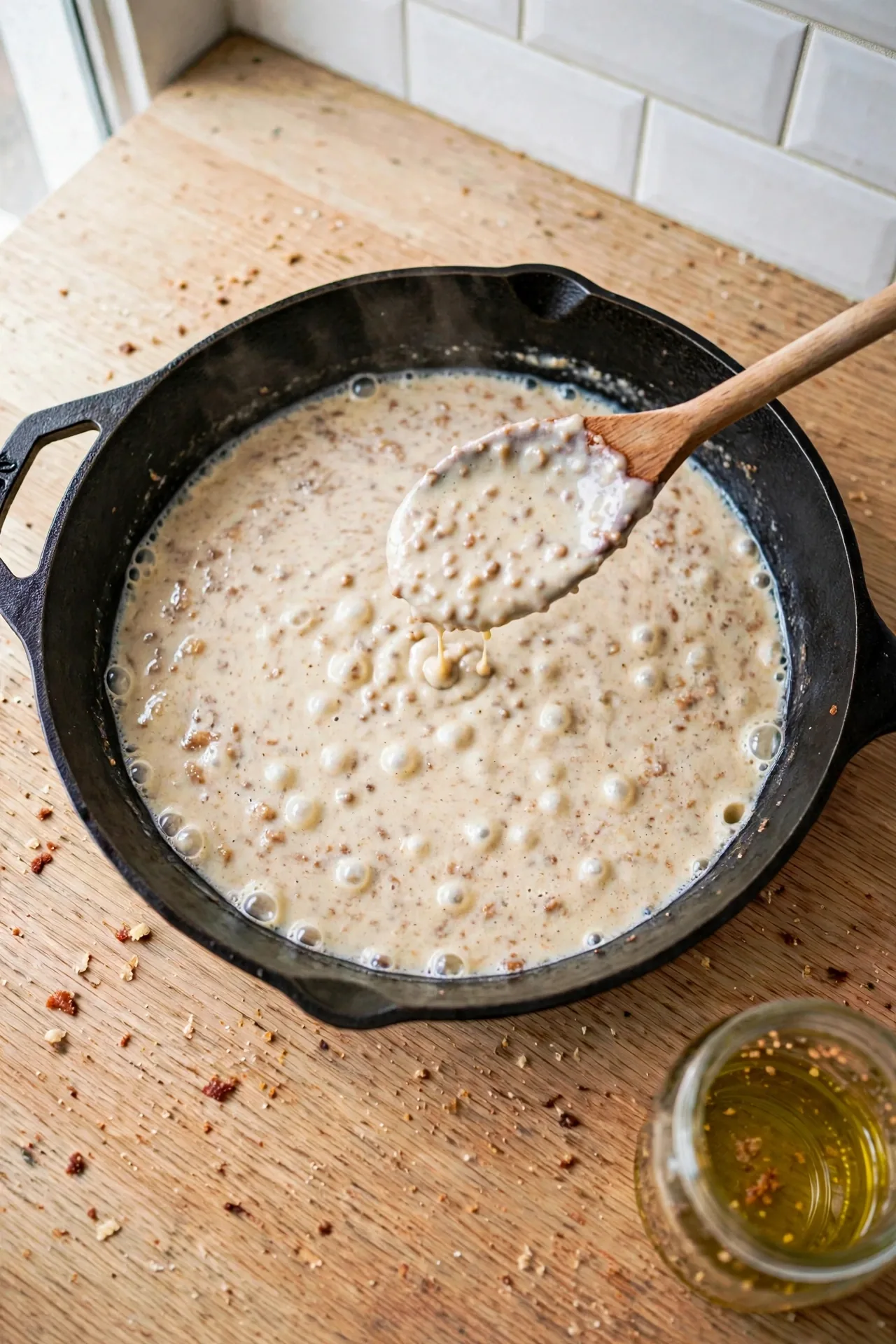
Bring the gravy to a gentle simmer over medium heat, stirring often, for 4 to 6 minutes. It is done when it coats the back of a spoon and a finger drawn through it leaves a clean line. The gravy keeps thickening as it cools, so stop when it is slightly looser than you want to serve it.
If it is too thick, whisk in milk a tablespoon at a time. If it is too thin, simmer a minute or two longer.
Step 18: Season With Pepper and Salt
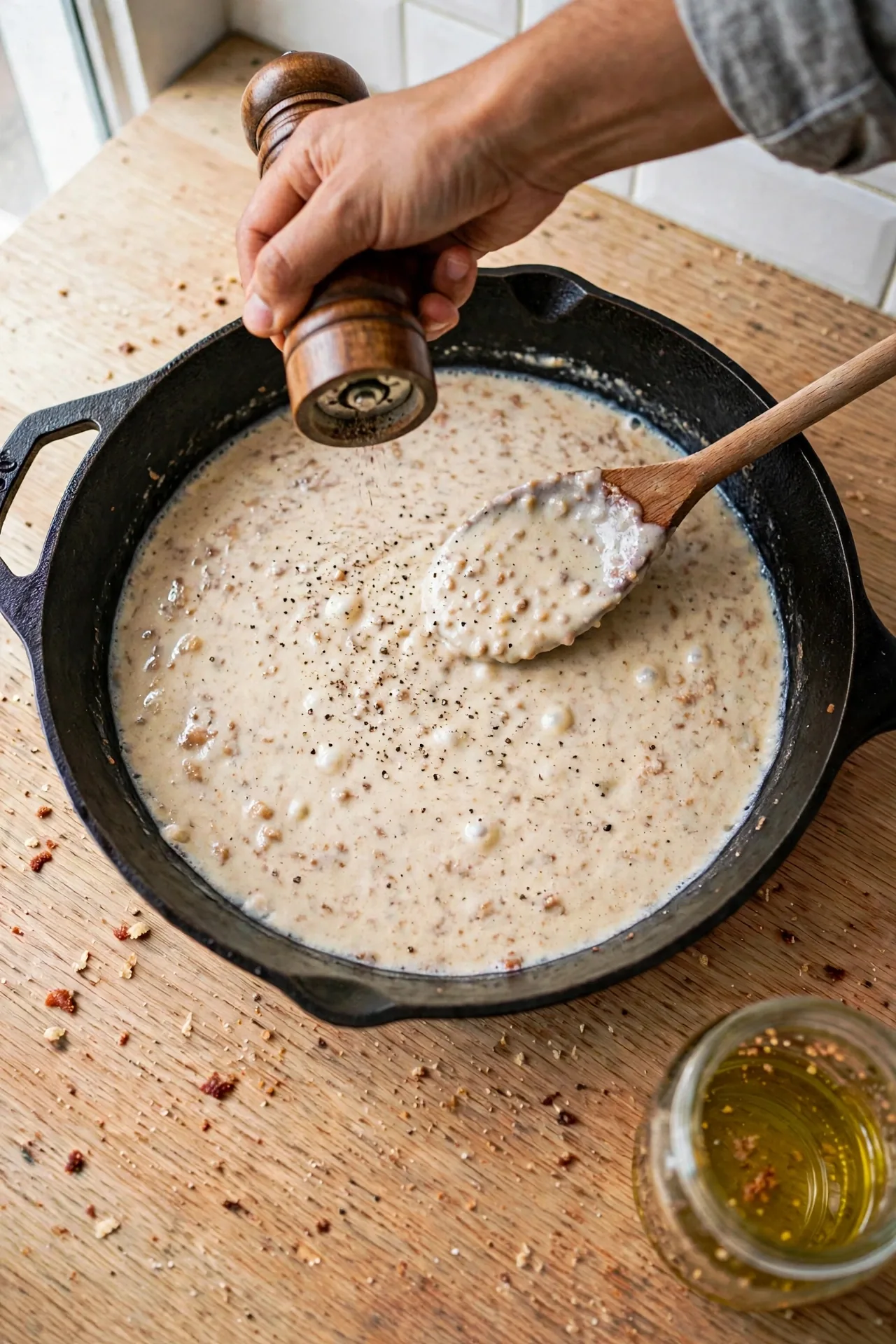
Stir in the black pepper and ½ teaspoon salt, then taste. Cream gravy is traditionally peppery, so add more pepper until it has a clear bite. Add salt in small pinches. The pan bits and the seasoned crust may already be salty enough.
Serving
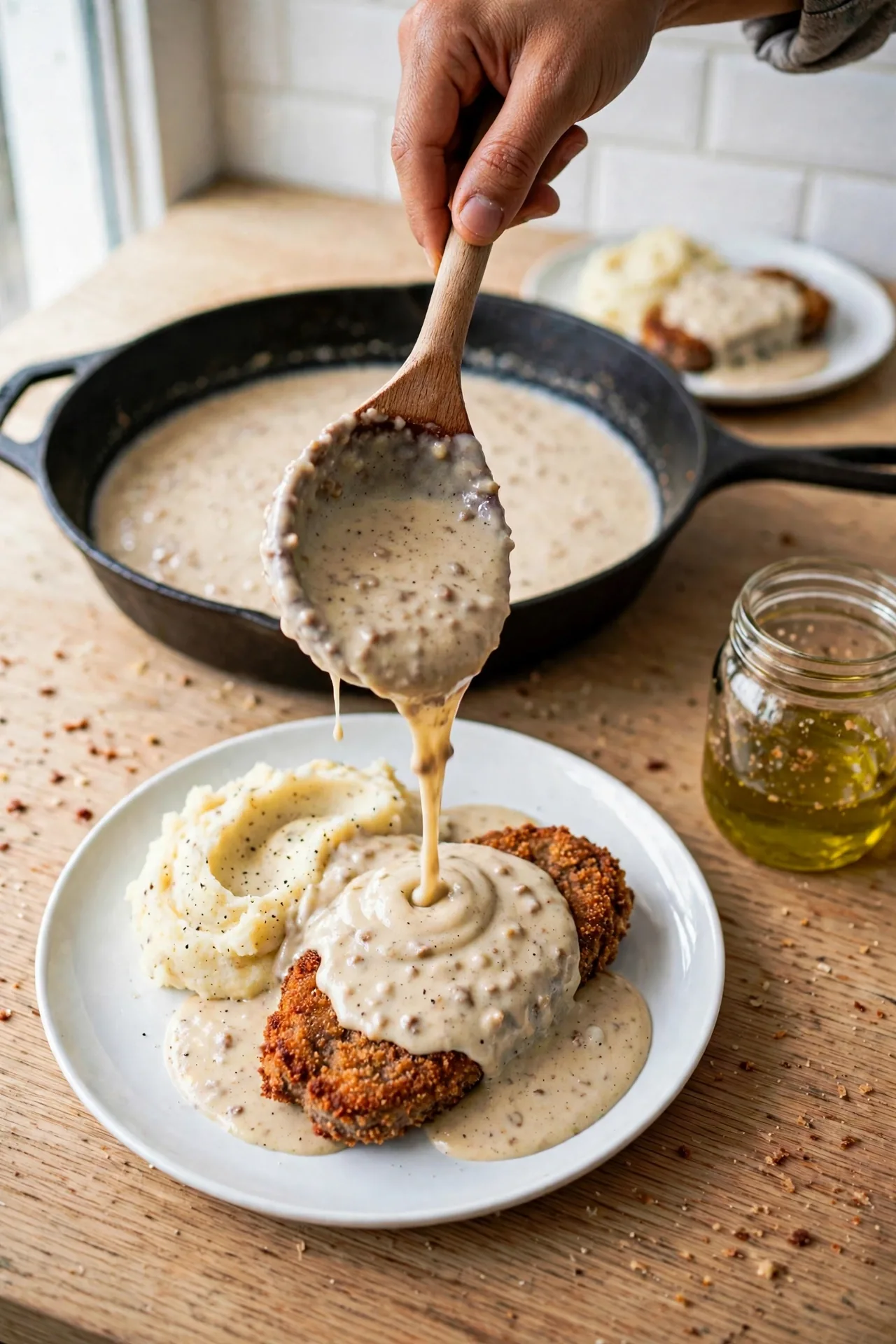
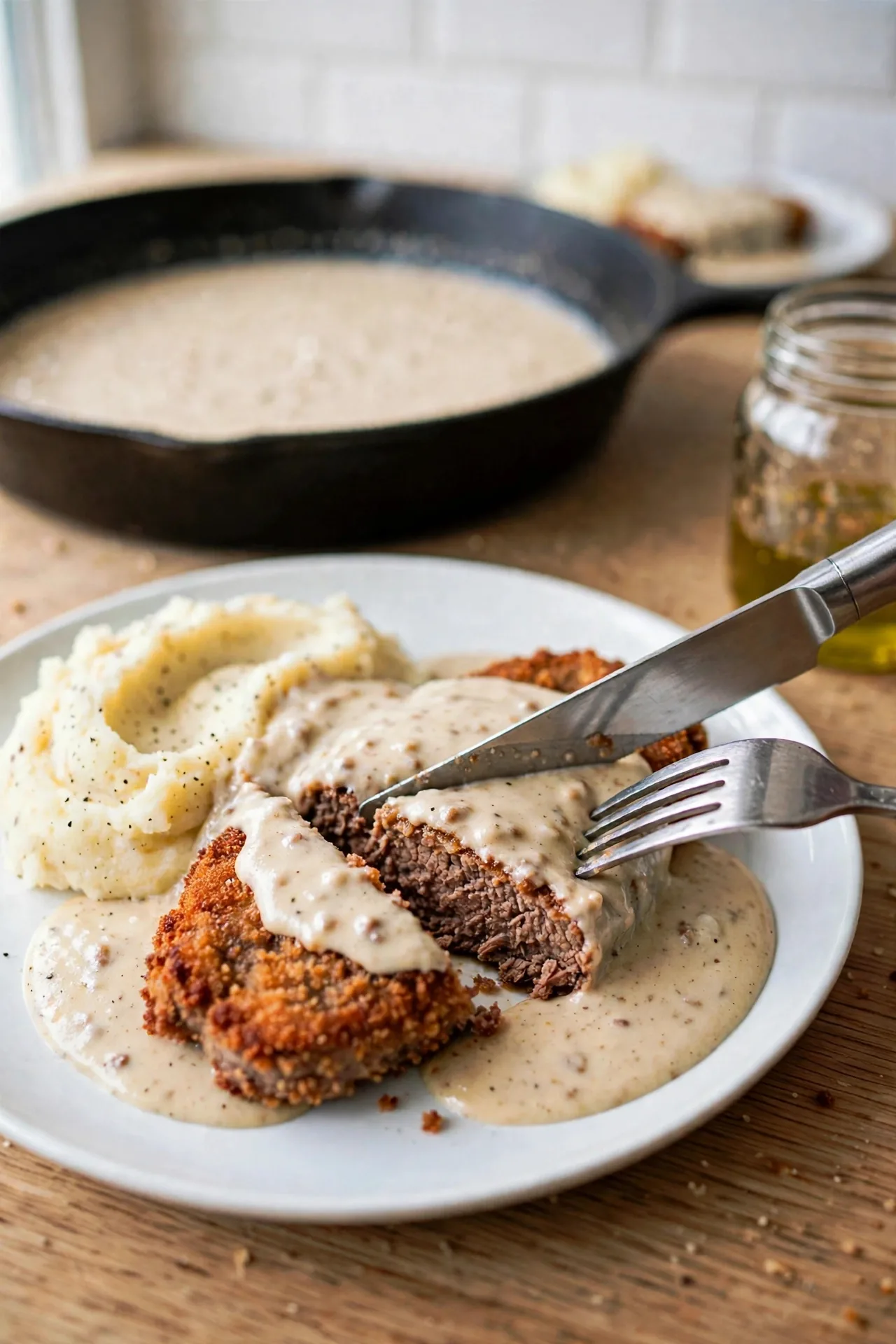
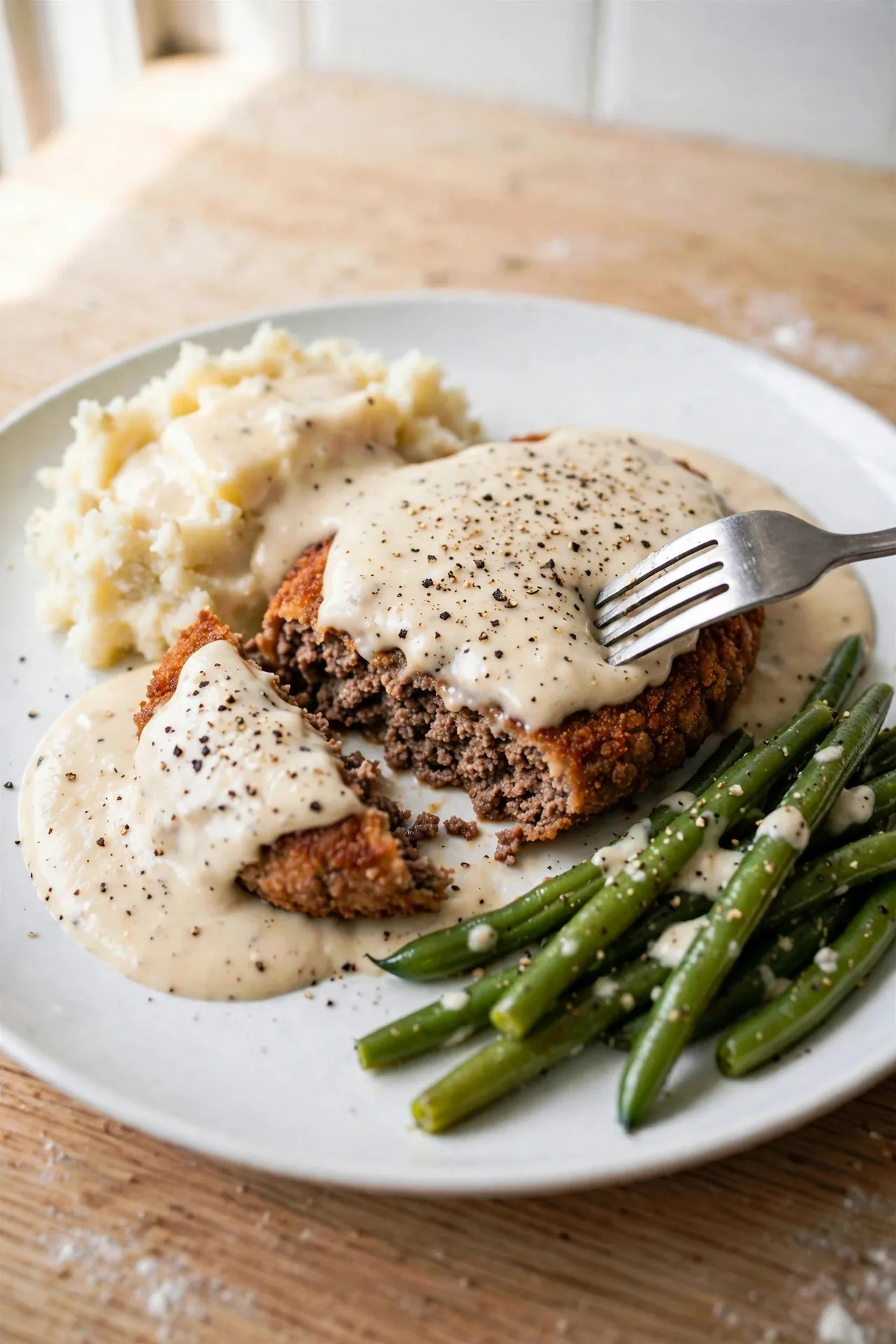
Set a steak on each plate and ladle gravy over the top, or serve the gravy on the side if you want to keep the crust as crisp as possible. Mashed potatoes soak up the extra gravy well, and green beans, corn, or buttered biscuits round out the plate.
Ground Beef Chicken Fried Steak (Budget Variation)
Ground beef makes a patty-style version that needs no tenderizing and costs less per serving. It follows the same dredge, fry, and gravy steps, with three differences: the shaping, a lower frying temperature, and a higher safe internal temperature.
Additional ingredients (serves 4)
- 1½ lb (680 g) ground beef, 80/20
- 1 teaspoon kosher salt
- ½ teaspoon black pepper
- ½ teaspoon garlic powder
- 1 teaspoon Worcestershire sauce
If you are making both versions at once, double the buttermilk dip and seasoned flour.
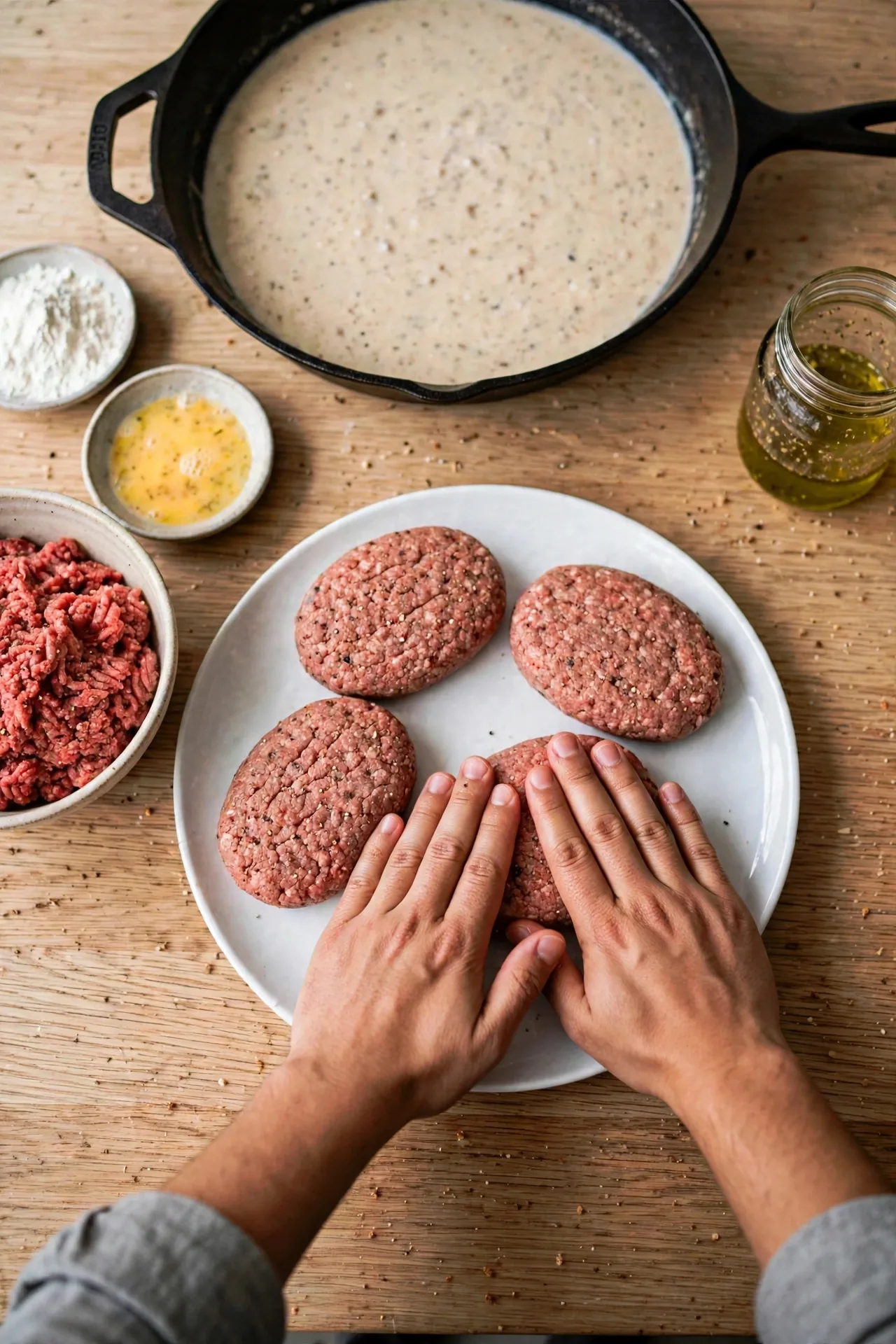
Step A: Shape the patties. Gently mix the beef with the salt, pepper, garlic powder, and Worcestershire. Overmixing makes the meat tight and dense, so stop as soon as the seasoning is distributed. Divide into 4 portions and press each into an oval patty about ½ inch thick, the shape of a cubed steak. Chill on a plate for 15 minutes so they hold their shape in the coating.
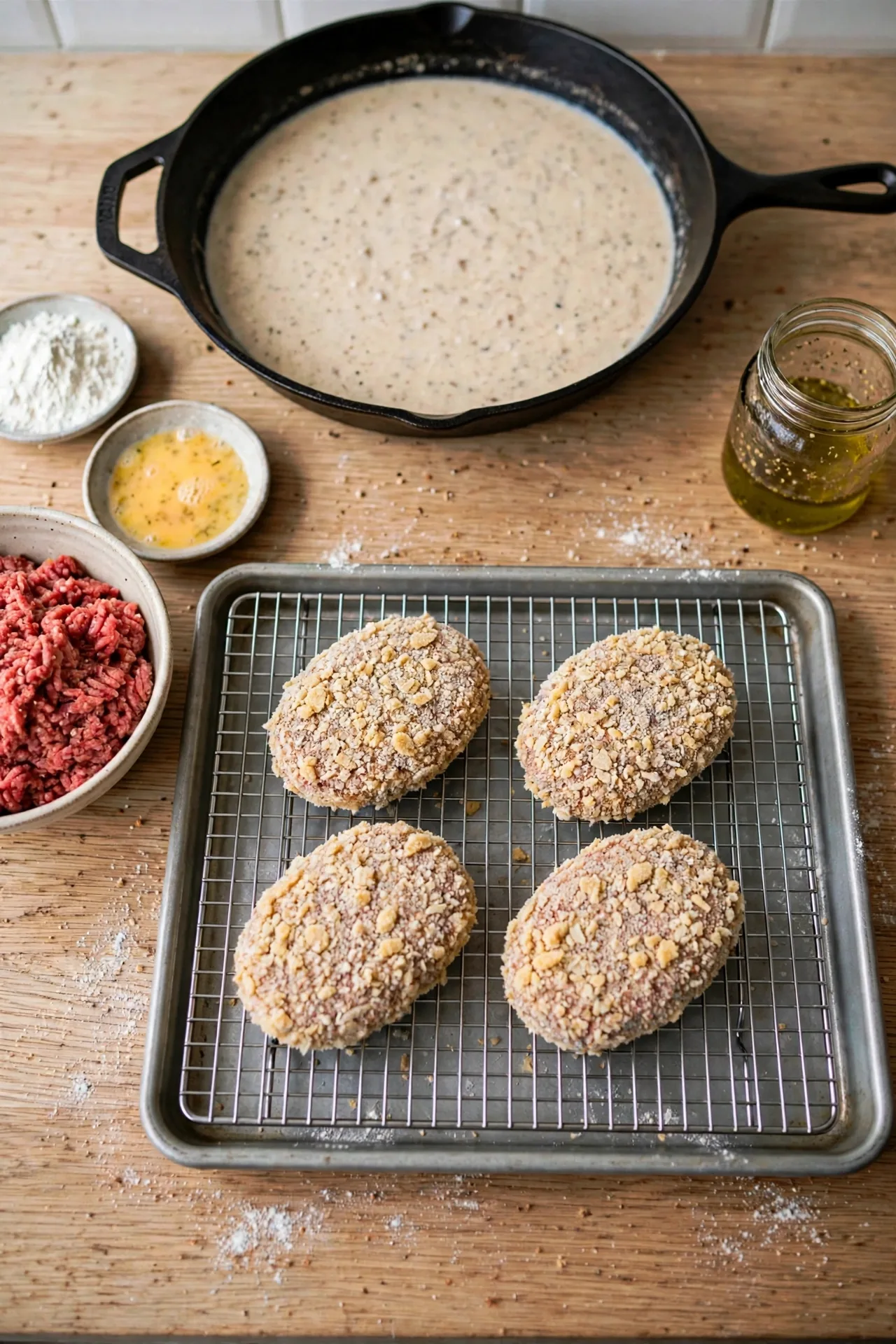
Step B: Bread the patties. Follow Steps 5 to 8: flour, buttermilk dip, flour again, then rest on the rack for 10 minutes. Handle the patties gently since ground beef is more fragile than a steak.
Step C: Fry at a slightly lower heat. Heat the oil to 325°F (165°C) so the crust does not darken before the center is done. Fry 4 to 5 minutes per side, until deep golden brown.
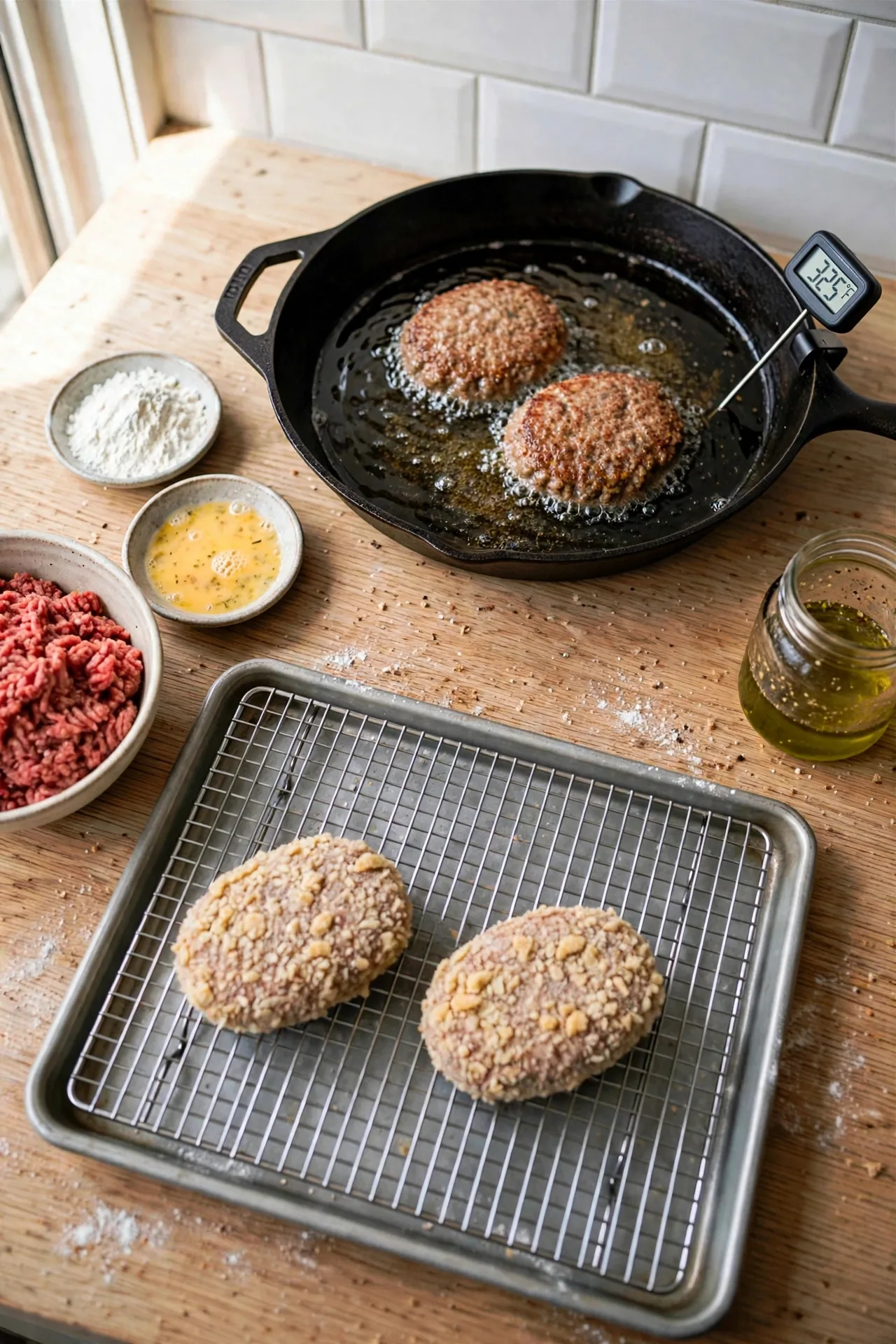
Step D: Check for 160°F. Ground beef must reach 160°F (71°C) in the center, according to the USDA. Check each patty with an instant-read thermometer inserted into the thickest part from the side. Do not rely on color, because ground beef can look brown before it is safely cooked. Drain on a rack, then make the gravy as in Steps 14 to 18.
Common Mistakes and How to Fix Them
The crust slides off in the pan. The steak was likely damp, the breading was not pressed on firmly, or the steak was flipped too early. Next time, dry it thoroughly, press the second flour coat firmly, rest 10 minutes, and leave it alone for the first 2 minutes. A crust that has already come off cannot be reattached. Spoon extra gravy over bare spots, and fry any loose crust separately as crispy bits.
The crust is pale and greasy. Oil under about 325°F is the usual cause, often because too many steaks went in together. Fry two at a time and let the oil climb back to 350°F between batches.
The crust is dark but the inside is underdone. The oil was too hot. Lower the heat, and finish a pale or underdone steak in a 350°F oven on a wire rack until it hits the safe temperature.
The gravy is lumpy. Milk was added too fast or the flour was not whisked in. Pour the gravy through a fine strainer, or blend it with an immersion blender for a few seconds, then return to the skillet and reheat.
The gravy is too thin or too thick. Simmer a few more minutes if thin. If thick, whisk in a splash of milk until it loosens.
The steak is tough. Cubed steak is thin and cooks fast, so overcooking dries it. Pull it as soon as the thermometer confirms 145°F and the crust is deep golden. Skipping or breaking the tenderizing step on very thick steaks can also leave them chewy, so pound steaks thicker than ½ inch.
Substitutions
- Buttermilk: Whole milk plus 1 tablespoon lemon juice or white vinegar, rested 5 minutes.
- All-purpose flour in the dredge: Works as written. Replacing part of it with cornstarch (about ¼ cup per 1¼ cups flour) gives a lighter, crunchier crust, though the crust browns a bit faster.
- Gravy milk: Half-and-half makes a richer gravy. Plant-based milks tend to thin the gravy and change the taste, so season carefully.
- Brown gravy (country style): Skip the milk. Whisk 2 cups of beef broth into the flour-and-drippings paste, simmer until it coats a spoon, and season with salt and pepper.
- Gluten-free: Use a 1-to-1 gluten-free flour blend in both the dredge and the gravy. Texture will differ slightly, and check labels on hot sauce and Worcestershire sauce, since gluten-free status depends on the brand.
Make-Ahead, Storage, and Reheating
Fridge: Store leftover steaks and gravy in separate airtight containers for up to 3 to 4 days. Keeping them apart protects the crust.
Freezer: Cool the fried steaks fully, freeze on a tray, then transfer to a freezer bag for up to about 2 to 3 months for best quality. Gravy can be frozen too, though it may separate and need a whisk (and a splash of milk) when reheated.
Reheating: Warm steaks on a wire rack in a 375°F (190°C) oven until heated through, about 10 to 15 minutes depending on thickness. Reheat leftovers to 165°F (74°C). A microwave works but softens the crust. Rewarm gravy gently over low heat, stirring.
Make-ahead: Bread the steaks up to a few hours ahead and keep them refrigerated on the rack, uncovered or loosely covered. Fry just before serving for the best crust.
FAQ
Can I bake chicken fried steak instead of frying it? You can, but the crust will not be the same. Place breaded steaks on a wire rack over a baking sheet, spray generously with oil, and bake at around 425°F (220°C) until browned and the meat reaches 145°F. Expect a drier, less blistered crust than pan-frying.
Can I make it in an air fryer? Yes, with similar trade-offs. Spray the breading well with oil so no dry flour remains, cook in a single layer, and check the internal temperature. Times vary by air fryer model, so rely on the thermometer and a deep golden color.
Is chicken fried steak made with chicken? No. It is beef. The name comes from the fact that the breading and frying method is the same one used for fried chicken.
What cut of beef is best? Cubed steak, usually top round or a similar lean cut that has been mechanically tenderized, is the traditional choice. Thin-cut round steak pounded to about ¼ inch also works.
Can I use the same oil twice? Strained and cooled, it can be reused once or twice for savory cooking, though the gravy drippings should come from the freshly fried batch for the best flavor.
Final Thoughts
Three things decide whether this turns out well: dry meat and a firm second flour coat, oil held near 350°F, and a gravy built from the pan drippings with the milk added slowly. Fry two steaks at a time, check the temperature instead of guessing, and keep the gravy slightly looser than you want it because it thickens as it sits. Serve it with mashed potatoes or buttered biscuits, and keep leftover gravy separate so the crust holds up for tomorrow.
Recipe Card
Chicken Fried Steak (Country Fried Steak) With Cream Gravy
Ingredients
Equipment
Method
- Pat the steaks dry and season both sides with ½ tsp salt and ½ tsp pepper.
- Whisk the buttermilk, eggs, and hot sauce in a shallow dish.
- Whisk the flour with the salt, pepper, garlic powder, onion powder, paprika, and cayenne in a second dish.
- Press each steak into the flour, dip in the buttermilk mixture, then press into the flour again so it is thickly coated.
- Rest the breaded steaks on a wire rack for 10 minutes. Preheat the oven to 200°F (95°C).
- Heat the oil to 350°F (175°C) in a 12-inch skillet.
- Fry two steaks at a time, 3 to 4 minutes per side, holding the oil at 325 to 350°F, until deep golden.
- Check that the steaks reach 145°F (63°C), then rest 3 minutes. Keep warm on a wire rack in the oven.
- Pour off the oil, leaving about ¼ cup with the browned bits. Whisk in the ¼ cup flour and cook 1 minute.
- Slowly whisk in the milk and simmer 4 to 6 minutes, until the gravy coats the back of a spoon.
- Season with the pepper and salt to taste. Serve the gravy over or beside the steaks.
Notes
Emily Hart
Hi, I'm Emily! I develop cozy, doable recipes for busy home cooks — clear steps, honest ingredients, and flavors the whole table will love. Follow on Pinterest
Follow on Pinterest
Leave a Reply