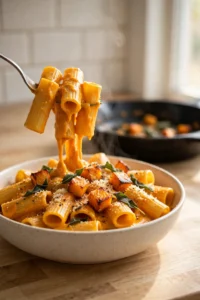
Creamy Cajun Shrimp Pasta (Easy One-Skillet Dinner)
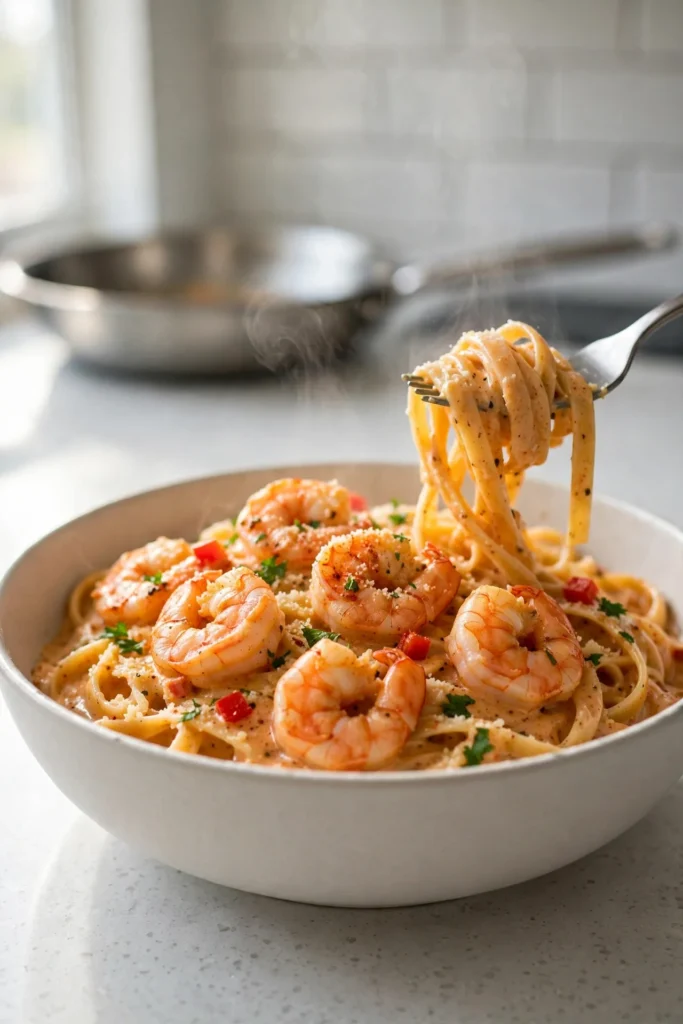
Seared Cajun-spiced shrimp and fettuccine tossed in a smoky Parmesan cream sauce with sweet red bell pepper — one skillet, 35 minutes.
 Pin it
This is the kind of dinner that tastes like you fussed over it and cooks like you didn’t. Plump shrimp get a heavy Cajun-spice crust and a fast sear, then fettuccine gets tossed through a smoky Parmesan cream sauce built in the same skillet — sweet red bell pepper softened in the leftover spiced butter, garlic, cream, and just enough starchy pasta water to make the sauce cling. One skillet, one pot, about 35 minutes, and the whole thing lands in that sweet spot between weeknight-easy and company-worthy.
Ingredients
Everything is grouped by when it goes into the pan, so you can prep in order and never go hunting mid-cook.
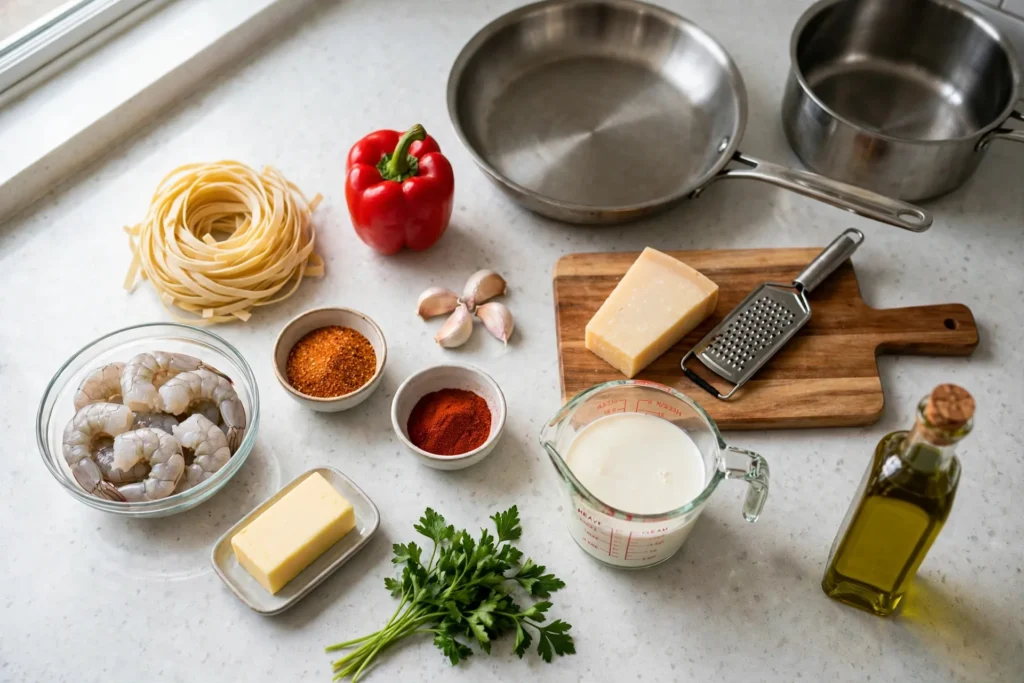
Here is the full lineup before anything gets touched.
For the shrimp and pasta
- 1 lb large shrimp, peeled and deveined, tails removed
- 1 tablespoon Cajun seasoning, plus more for the sauce
- 1 tablespoon olive oil
- 12 oz (340 g) fettuccine
- Kosher salt, for the pasta water
For the sauce
- 2 tablespoons unsalted butter
- 1 red bell pepper, diced small
- 4 garlic cloves, minced
- 1 cup heavy cream
- 1 tablespoon Cajun seasoning
- 1 teaspoon smoked paprika
- ¾ cup finely grated Parmesan, plus more for serving
To finish
- ½ cup reserved pasta water, plus more as needed
- ¼ cup chopped fresh parsley
- Black pepper, to taste
You will also need: a 12-inch stainless-steel skillet, a large pot, a colander, tongs, and a whisk.
Allergens: shellfish, dairy (milk), gluten (wheat).
Step 1: Season the Shrimp
Dry shrimp sear; wet shrimp steam. Press the peeled shrimp firmly between paper towels until no surface moisture remains — the spice crust only sticks to dry shrimp, and a dry surface is what lets the edges pick up color in the hot pan instead of just turning gray.

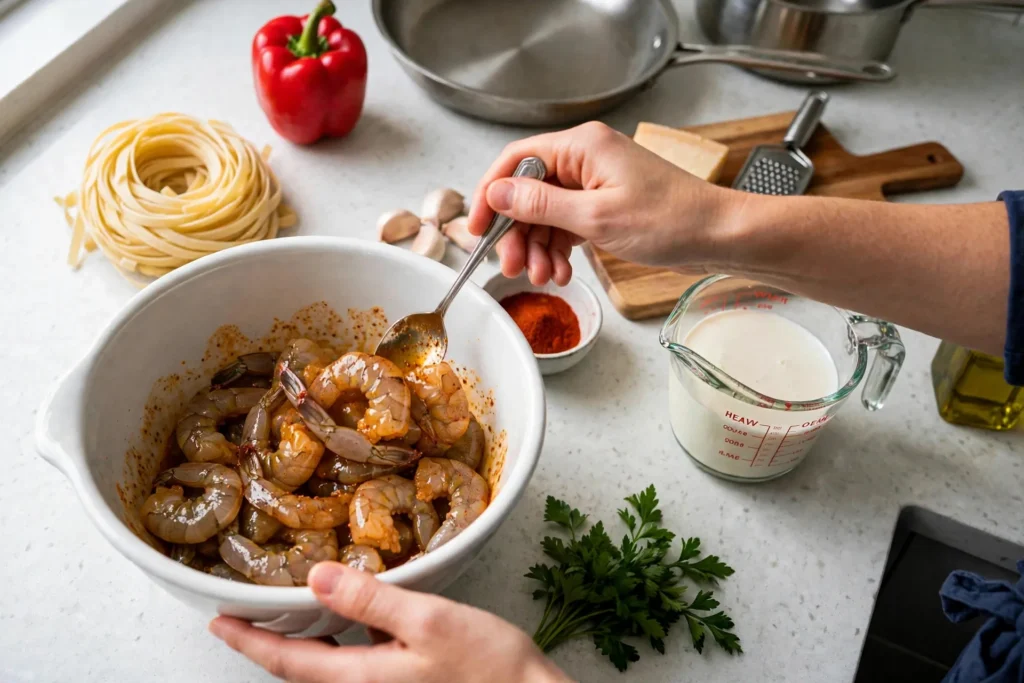
Drop the dried shrimp into a medium bowl, drizzle over the olive oil, and shower over the tablespoon of Cajun seasoning.
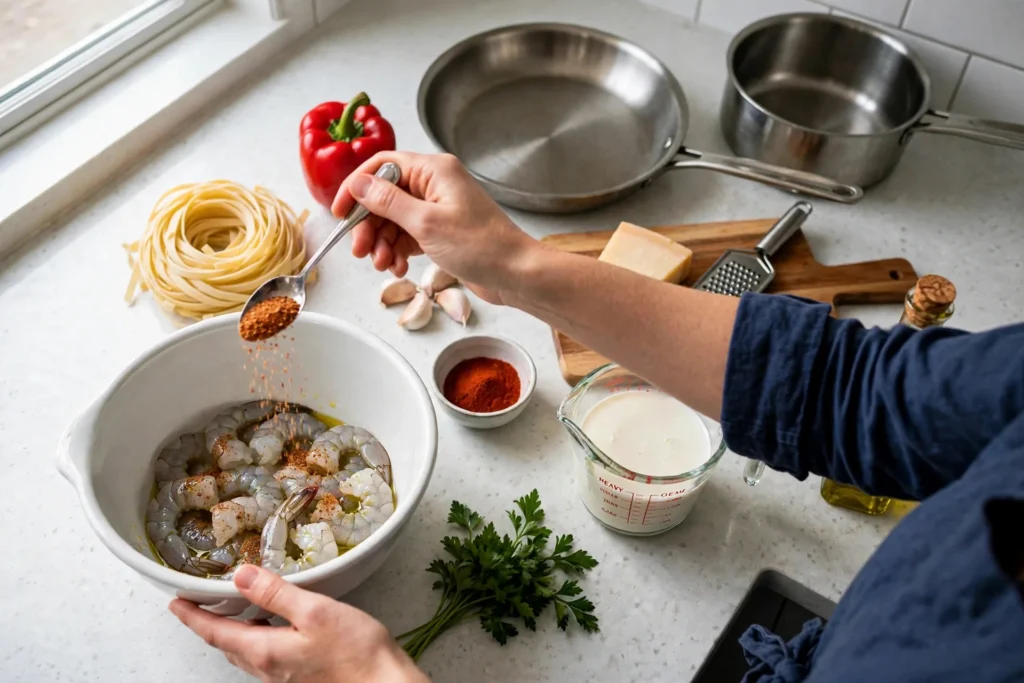
At this point the seasoning sits in patches on top — that is fine, it has not been mixed yet.
Toss until every shrimp is evenly coated in a deep orange-red layer with a light oil sheen and no dry patches. The shrimp are still raw and translucent underneath the spice. Set the bowl aside — the shrimp go into the pan later, after the pasta water is on.
Step 2: Prep the Vegetables and Cheese
With the shrimp seasoned, get everything else ready before any heat goes on. Once the skillet is hot, this recipe moves fast — peppers, garlic, and cream follow each other within minutes, and there is no time to chop between additions.
Dice the red bell pepper into small, even cubes, about ¼ inch.
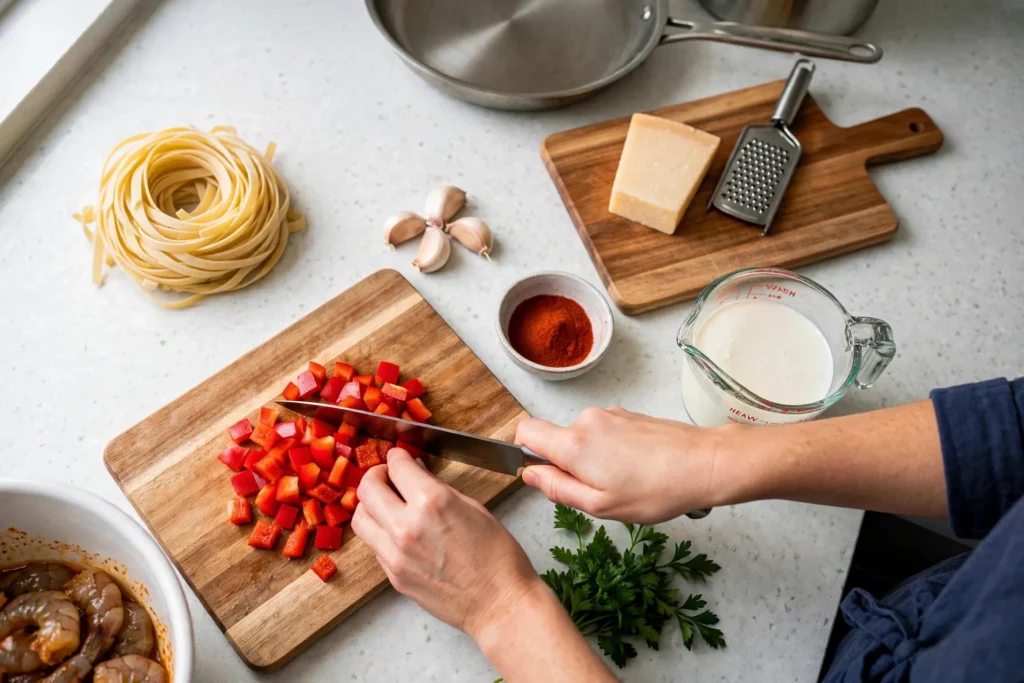
Small pieces soften quickly and distribute through the sauce instead of sitting in big chunks.
Peel the garlic cloves, pressing lightly with the flat of the knife to loosen the papery skins.
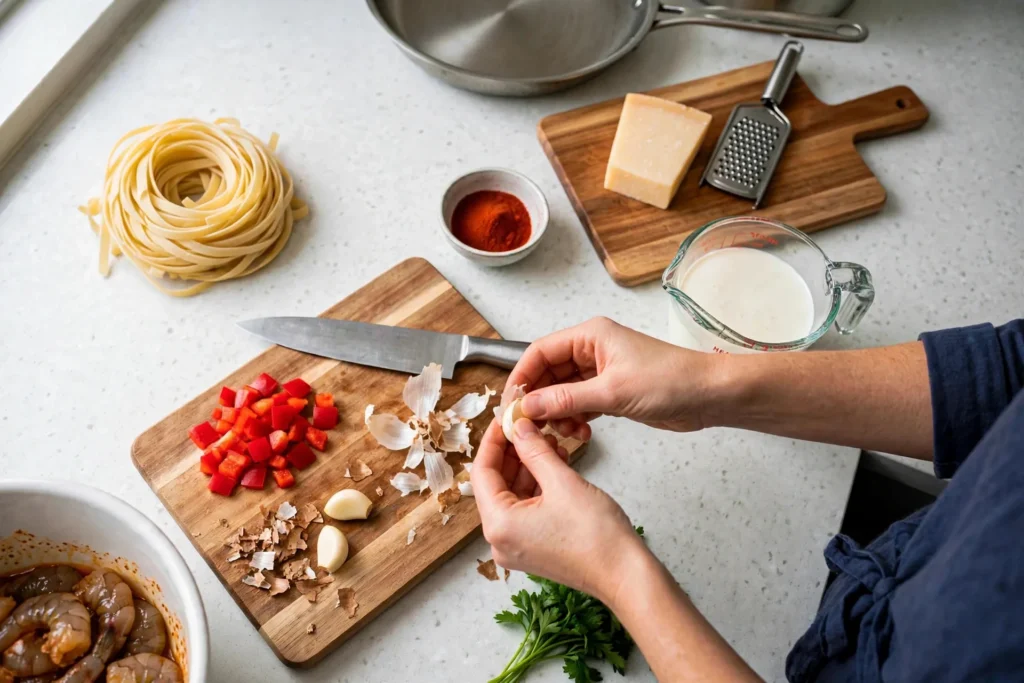
Mince the peeled cloves fine with a rocking motion.
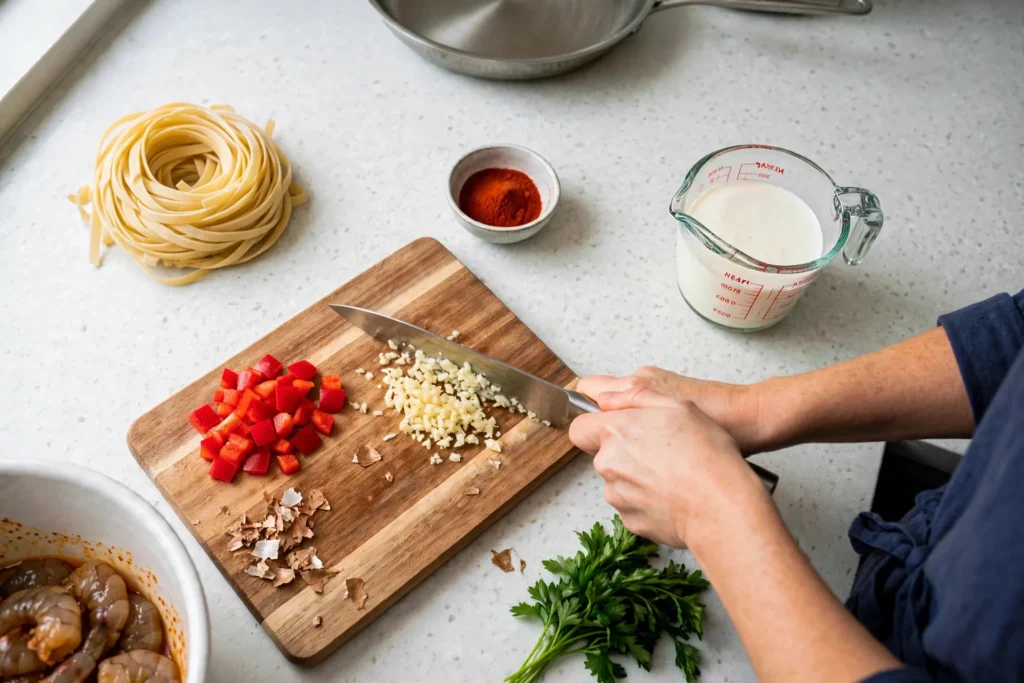
Fine mince matters here — large pieces of garlic can scorch in the minute they get before the cream goes in.
Grate the Parmesan fresh on the small holes of a box grater.
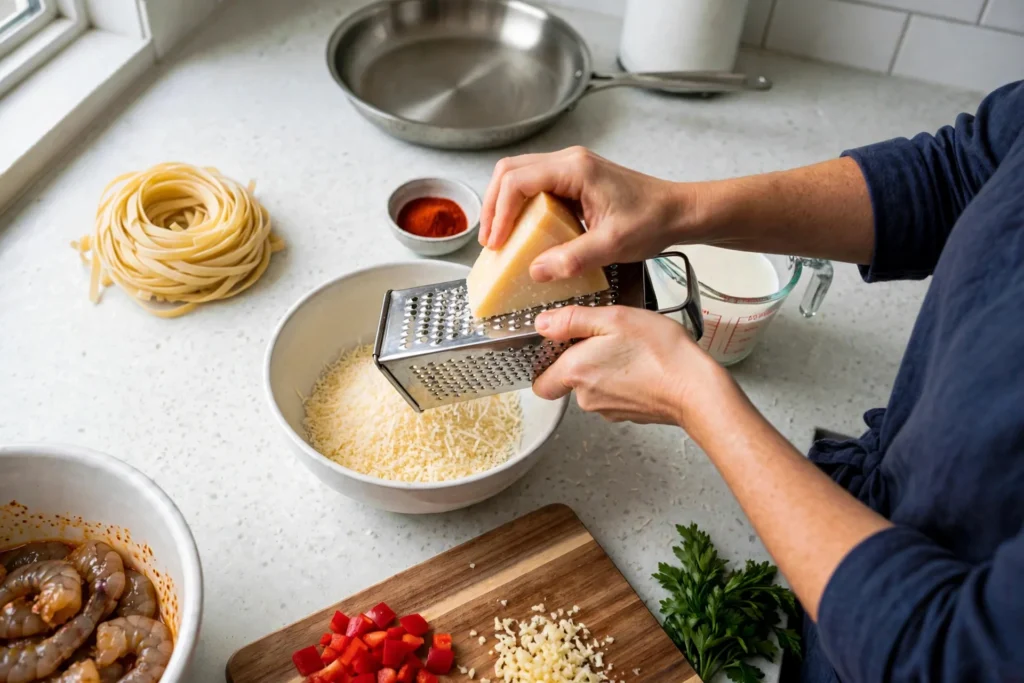
Pre-shredded cheese is coated to resist clumping, which also makes it melt grainy — freshly grated Parmesan melts into the cream smoothly, which is the whole difference between a silky sauce and a gritty one.
Mise en place check: before you turn on the stove, you should have seasoned shrimp, diced pepper, minced garlic, and grated Parmesan all within arm’s reach. The next three steps overlap, so this is the moment that decides whether the cook feels calm or chaotic.
Step 3: Cook the Fettuccine
Bring a large pot of water to a rolling boil and salt it generously — it should taste like the sea. The pasta water seasons the fettuccine from the inside, and no amount of sauce salt later fully makes up for bland pasta.
Lower the fettuccine in, fanning the strands so they don’t clump.

The ends will stick up stiff at first; give them a minute and they’ll soften enough to push under.
Cook until just shy of al dente — about a minute less than the package says. The pasta finishes in the sauce, and that last minute of cooking in the skillet is where it absorbs flavor instead of just getting coated.
Before draining, dip a measuring cup in and scoop out about a cup of the cloudy, starchy water.

This is liquid gold for the sauce: the dissolved starch helps the cream cling to every strand instead of sliding off.
Drain the fettuccine in a colander.
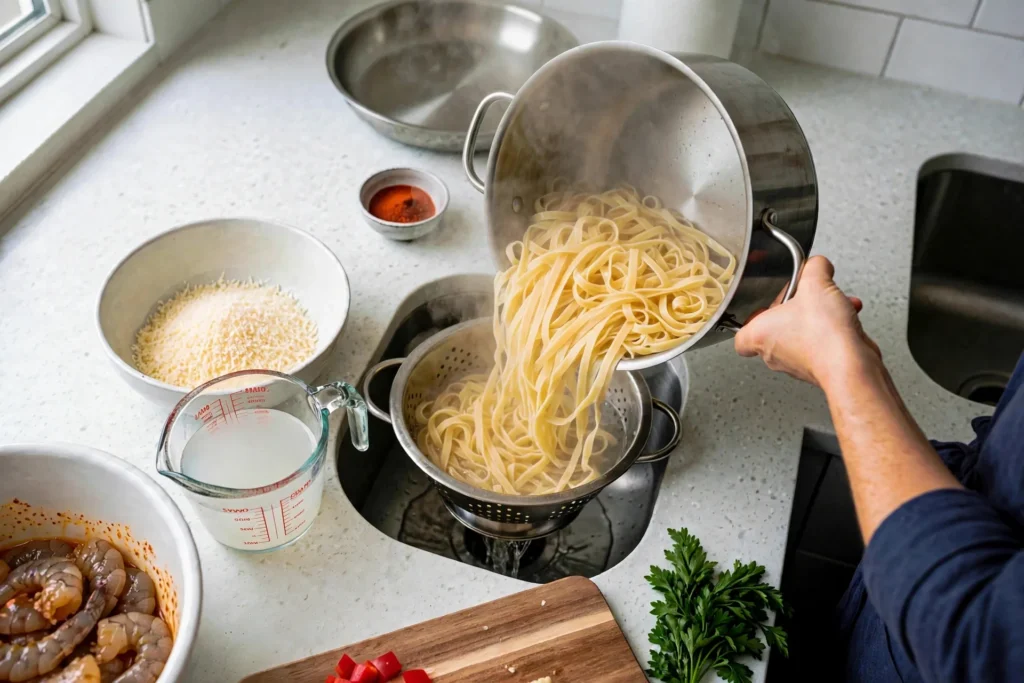
Don’t rinse it — the surface starch is what grabs the sauce. Leave it in the colander while you sear the shrimp; it waits happily for a few minutes.
Step 4: Sear the Shrimp
Set the skillet over medium-high heat and add the olive oil plus the butter.

You want the butter foaming and just starting to smell nutty — if it browns, the heat is too high and the Cajun spices will scorch instead of bloom.
Lay the seasoned shrimp in a single layer with space between them.
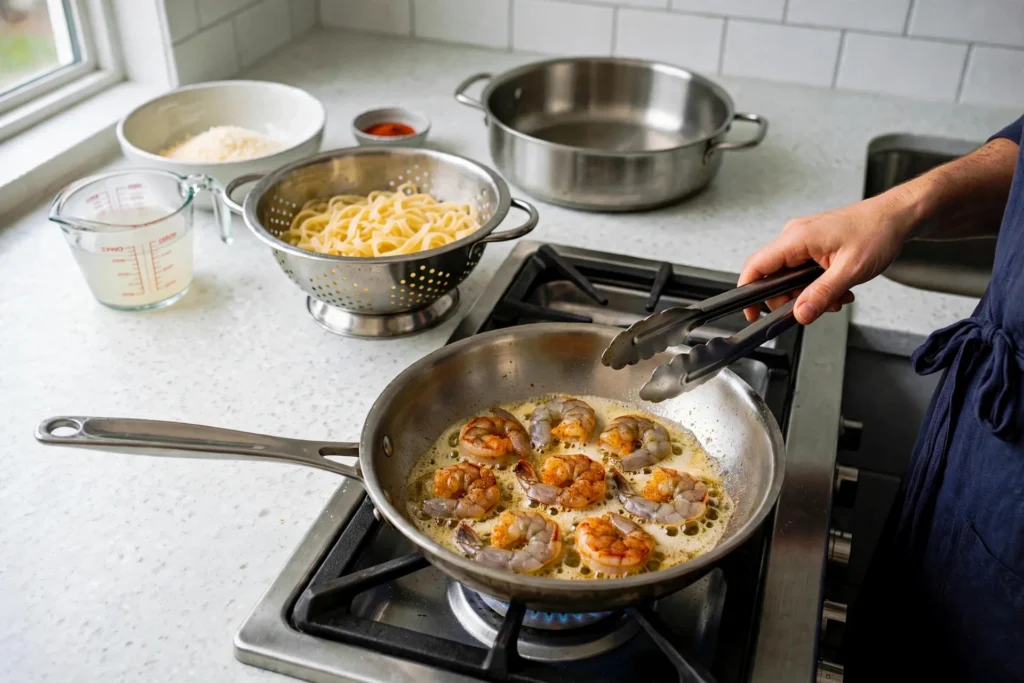
Crowding drops the pan temperature and the shrimp steam in their own juice instead of searing — work in two batches if your skillet can’t fit them all without touching.
After about 90 seconds to 2 minutes, the bottom edges turn pink-orange. Flip each shrimp with tongs — the cooked side should show a light spice crust, while the tops are still grayish-pink and translucent.
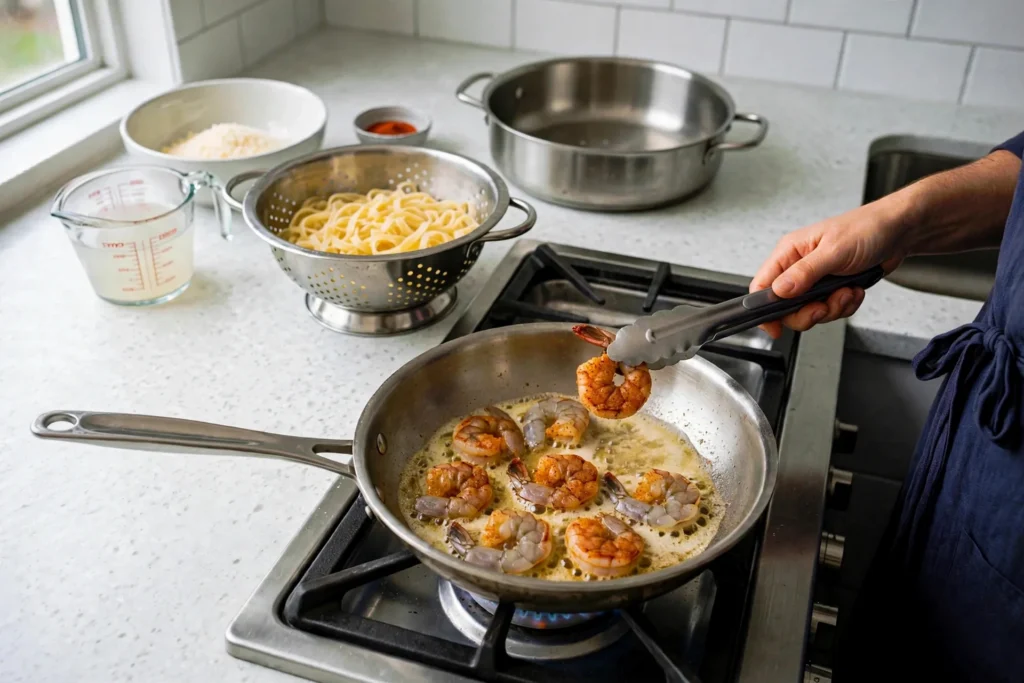
Doneness check: shrimp are done when they’re opaque, pink-orange, and curled into a loose C shape. A tight O means they’ve gone too far — pull them at C, because carryover heat keeps cooking them off the burner. You’re looking at roughly 1 more minute on the second side.
Transfer the shrimp to a plate the moment they’re done.
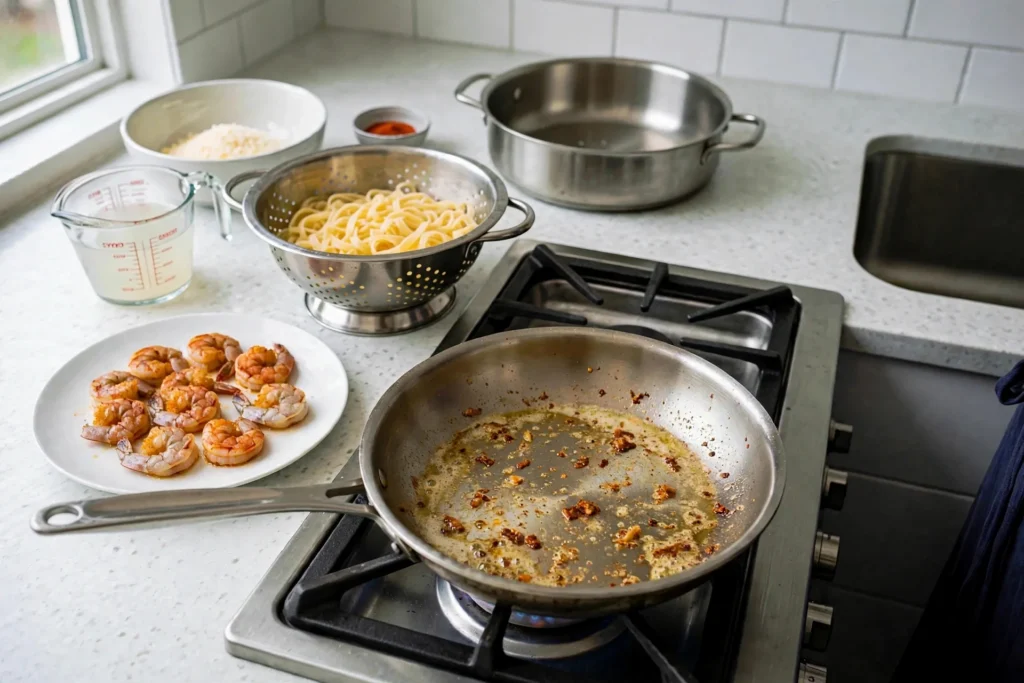
Leave every bit of the spiced butter and browned bits in the skillet — that’s the flavor base for the sauce, and it’s the reason you sear the shrimp first.
Common mistake: leaving the shrimp in the pan “while the sauce comes together.” They’ll overcook into rubber. Out of the pan, onto the plate, no exceptions.
Step 5: Build the Cajun Cream Sauce
Lower the heat to medium.
The skillet is holding a lot of residual heat plus all that spiced butter — add the diced bell pepper and let it sizzle, stirring with a wooden spoon.
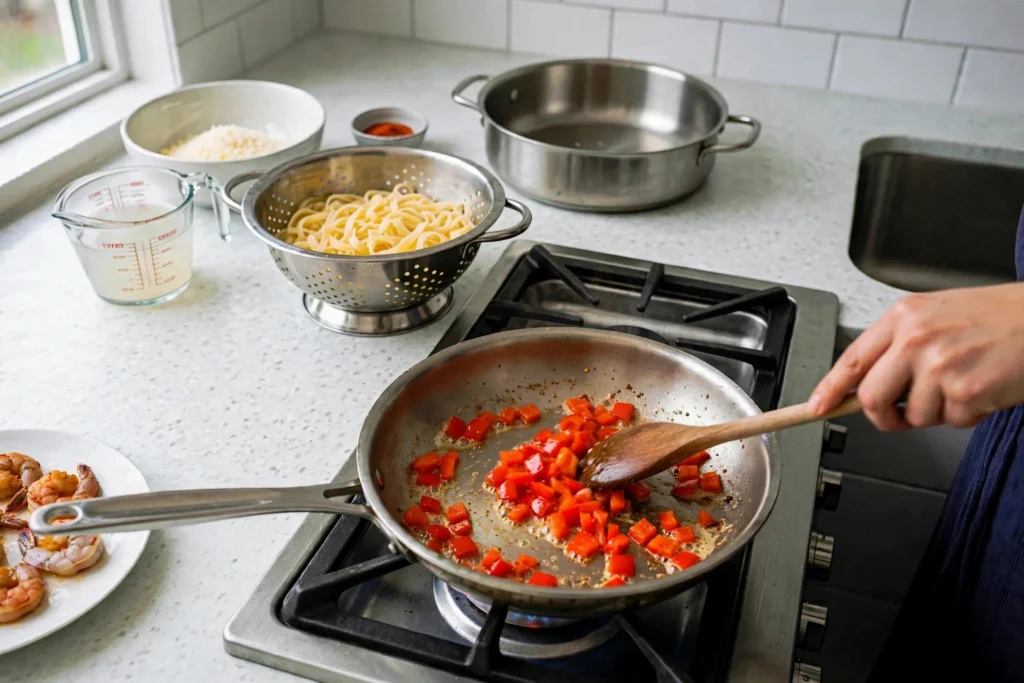
The peppers pick up the Cajun fond from the pan as they soften, about 3 to 4 minutes, until the edges just start to give.
Stir in the minced garlic and cook for 30 seconds to a minute, just until fragrant.
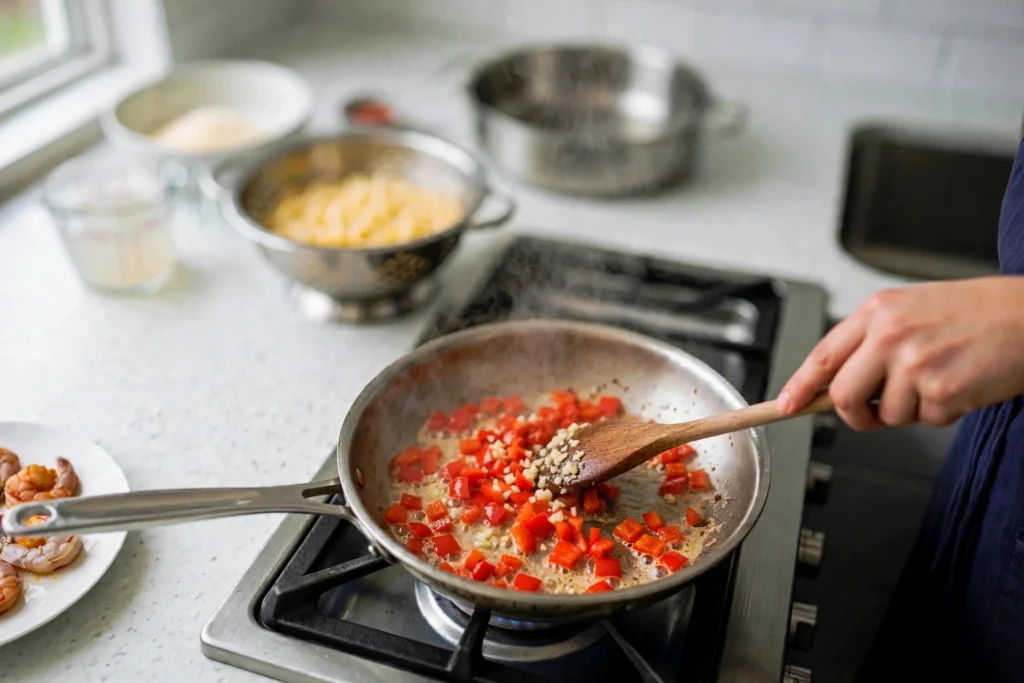
Garlic goes from fragrant to bitter fast in a hot pan, so have the cream measured and ready before the garlic goes in.
Pour in the heavy cream, scraping the bottom of the skillet as it hits — the cream deglazes the pan, dissolving all those browned, spiced bits into the sauce.
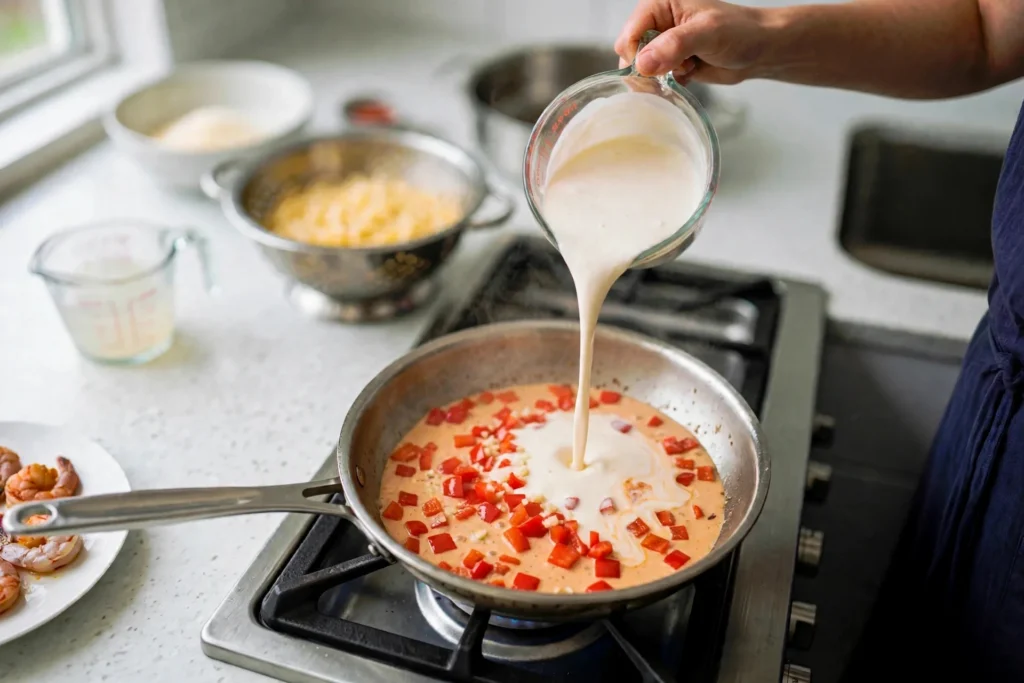
It’ll turn pale orange where it meets the butter.
Whisk in the remaining tablespoon of Cajun seasoning and the smoked paprika.
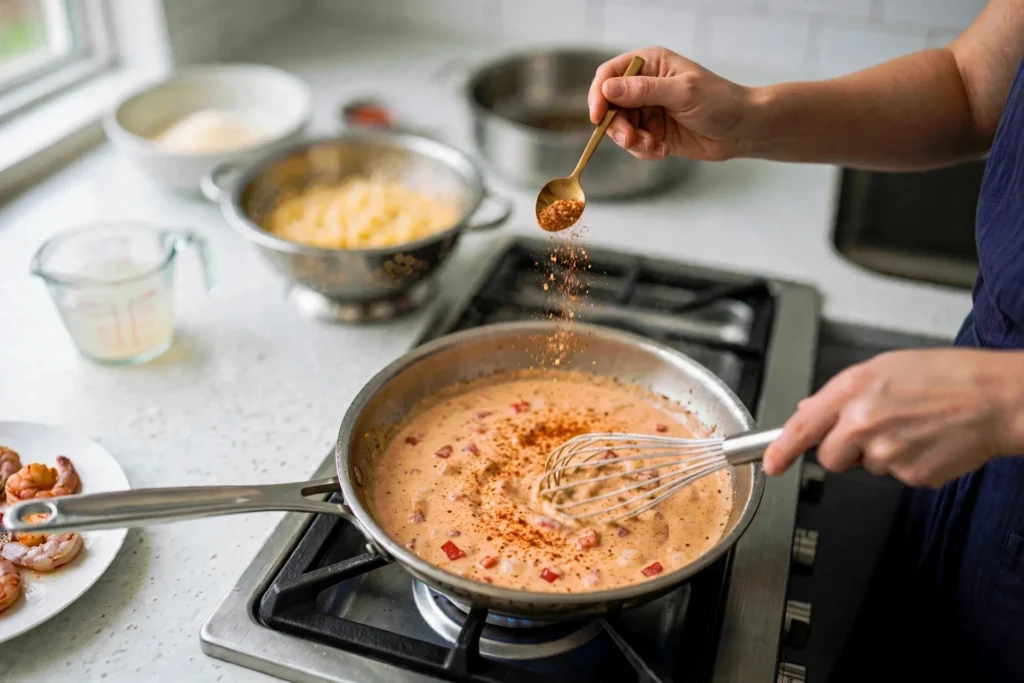
Taste the heat level in your head as you go: Cajun blends vary wildly in salt and cayenne, so if yours runs hot, start with half and adjust at the end.
Let the sauce come to a gentle simmer — small bubbles around the edges, not a rolling boil.
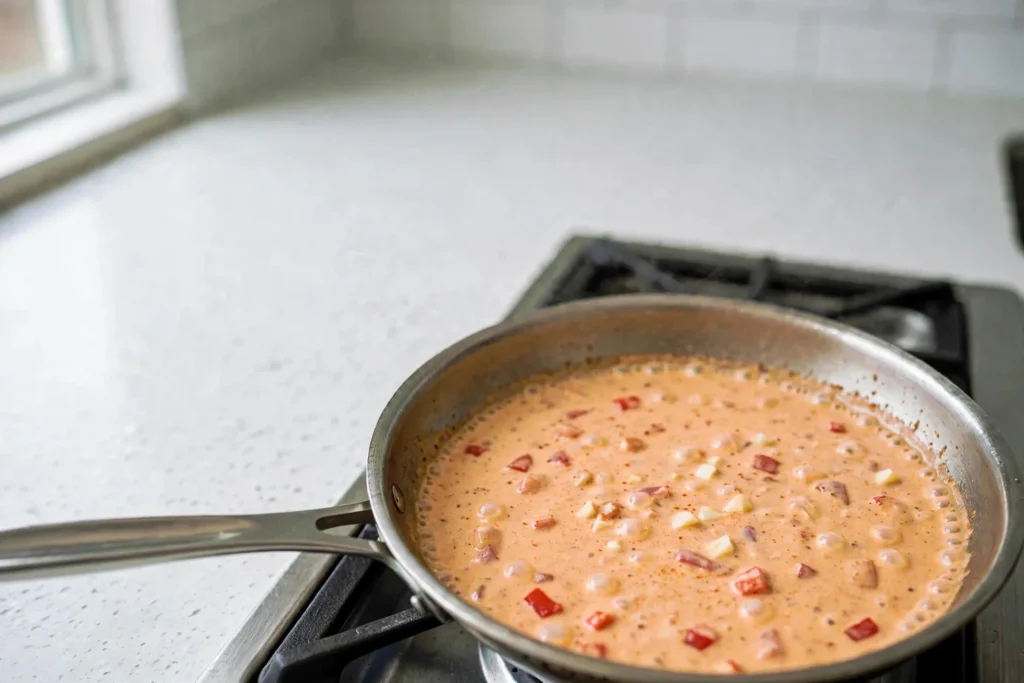
Boiling hard can make cream sauces separate, and it cooks off the fresh garlic flavor you just built. Two to three minutes is enough for the flavors to marry.
Texture check: at this point the sauce should still look a little thin. That’s correct — the Parmesan and the pasta water are what bring it to coating consistency.
Sprinkle in the grated Parmesan a small handful at a time, whisking constantly, letting each addition melt before the next goes in.
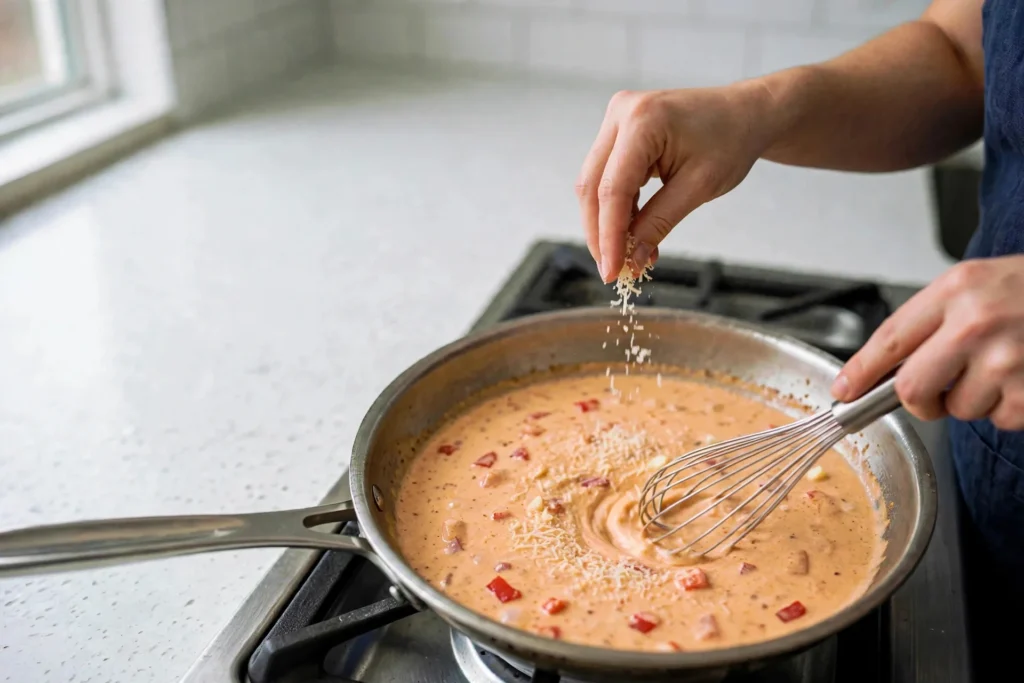
Dumping it all at once is the most common reason this sauce turns grainy — gradual melting keeps it smooth.
Lift the spoon and check: the sauce should coat the back of it thickly enough that a finger drawn through leaves a clean line that holds.
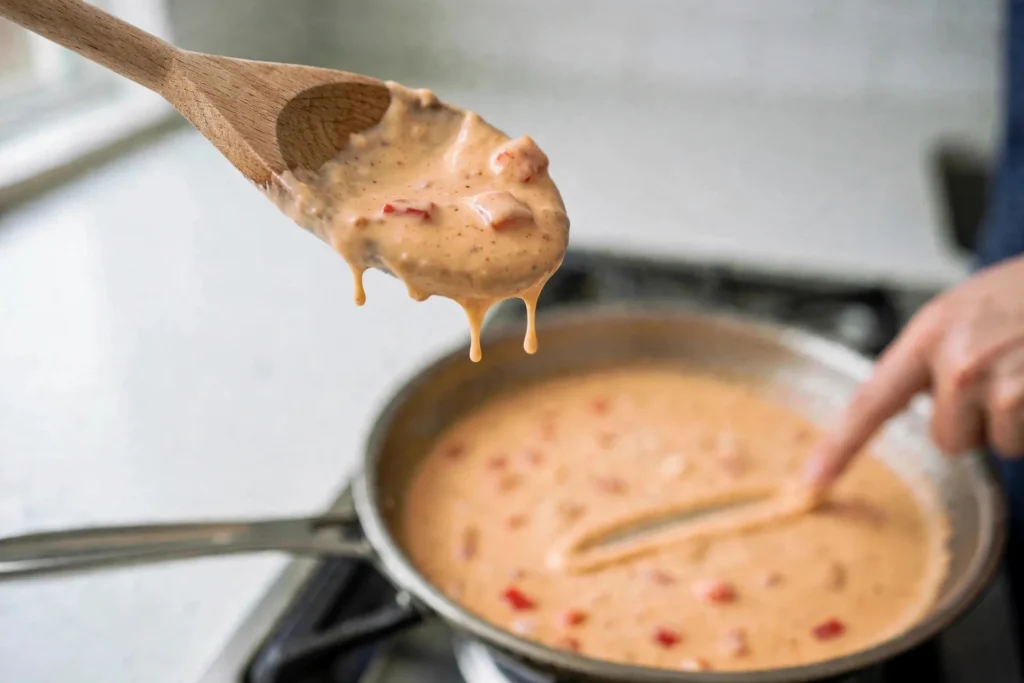
If it runs straight back together, simmer another minute. If it’s already thick and paste-like, you’ll loosen it with pasta water in the next step.
Step 6: Bring It All Together
Add the drained fettuccine straight into the skillet, using tongs to nestle it into the sauce.
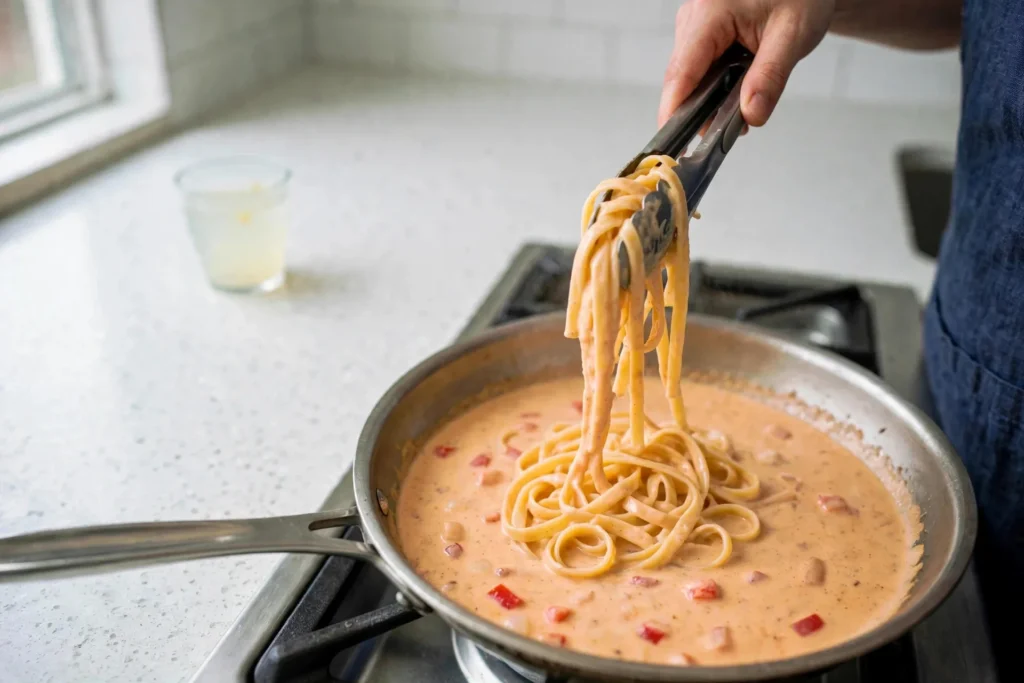
Toss until every strand is glossed orange, splashing in reserved pasta water a few tablespoons at a time.
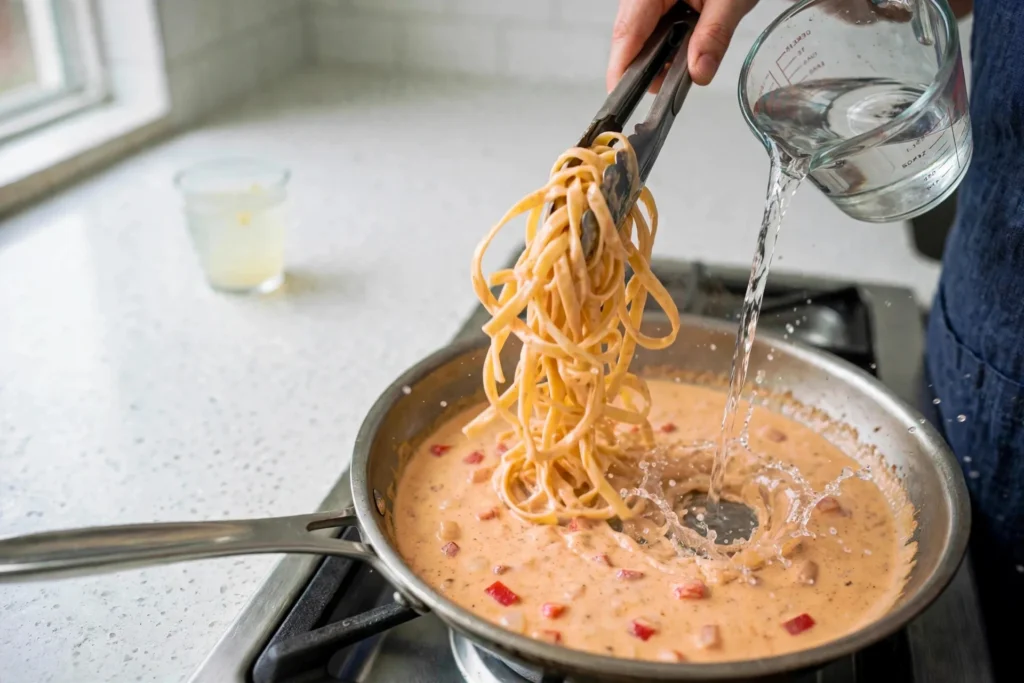
The starch in the water emulsifies with the cream and cheese, turning a good sauce into one that actually clings instead of pooling at the bottom of the skillet. You’re aiming for strands that look lacquered, not swimming.
Tip the cooked shrimp back in from the plate, right on top of the pasta.
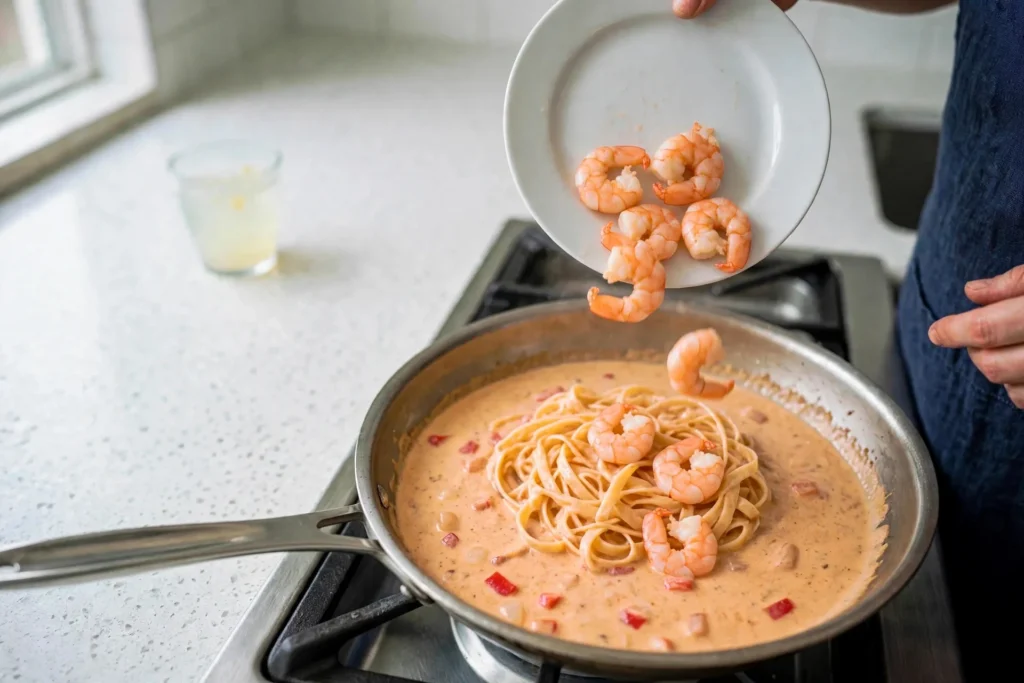
Toss once or twice, just enough to warm them through — 30 seconds. Any longer and you’re back in overcooked territory.
Off the heat, shower over the chopped parsley and an extra pinch of Parmesan.

The residual heat wilts the parsley just enough to release its flavor without turning it dark.
Serve straight from the skillet into wide, shallow bowls, twirling the pasta into a nest with tongs so the shrimp sit on top.
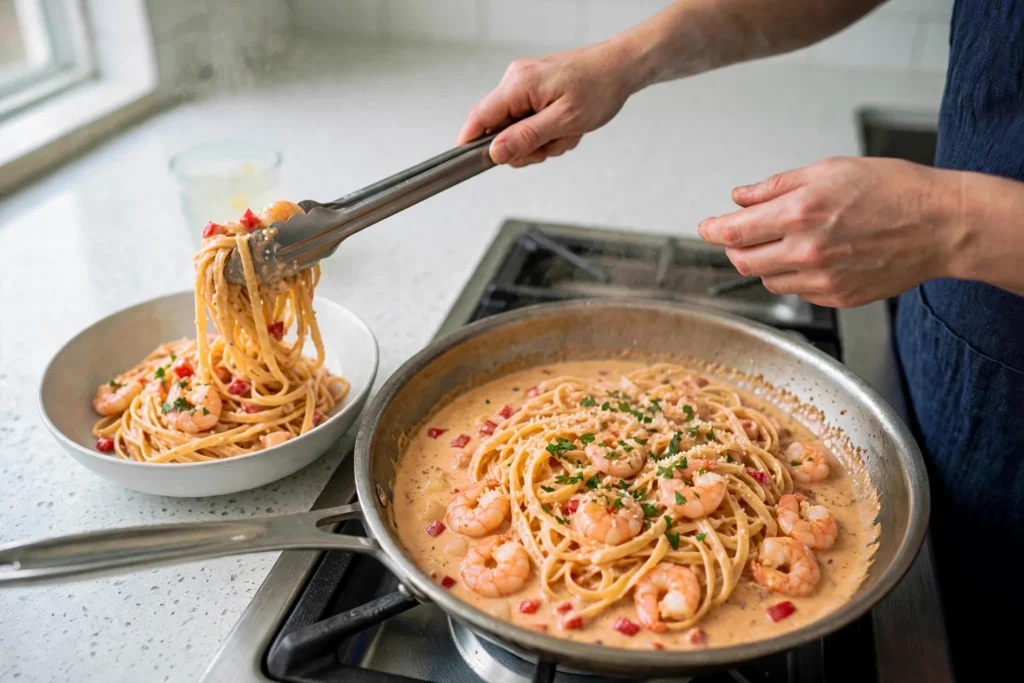
A final crack of black pepper over each bowl wakes everything up.
Keeping the Sauce Silky
Three things decide whether this sauce stays smooth or turns on you, and they’re all in the five minutes between the cream going in and the pasta going in.
- Simmer, don’t boil. Once the cream is in, keep it at lazy edge-bubbles. A hard boil can split a cream sauce, and there’s no real fix once the fat separates — prevention is the whole game.
- Cheese goes in gradually, off high heat. A handful at a time, whisking, letting each melt. If the sauce looks grainy, it almost always means the cheese hit too-hot liquid too fast.
- The pasta water is not optional. That cloudy cup is starch and salt, and it’s what binds cream, cheese, and pasta into one glossy coating. Add it in splashes — you can always add more, but you can’t take it back.
If You’re Out of Something
- No heavy cream: half-and-half works, but the sauce will be thinner and more likely to split — keep the heat lower and don’t skip the pasta water. Milk alone isn’t rich enough to carry this; the sauce will taste thin no matter what you do.
- No fettuccine: linguine or tagliatelle behave the same. Penne works too, though the sauce clings differently to short shapes — still good, just a different bite.
- Shrimp swap: this is a shrimp dish at heart, but sliced chicken breast (seared the same way, cooked through) or andouille sausage (browned first, then removed like the shrimp) both fit the Cajun profile. If you use sausage, cut the added salt — it’s already salty.
- Dairy-free: honestly, this isn’t the recipe to force it — cream and Parmesan are structural here, not garnish. A coconut-cream version is a different dish entirely.
- Heat control: Cajun blends differ more than people expect. If yours is mild and you want kick, add cayenne ¼ teaspoon at a time with the paprika. If yours is fiery, halve the sauce seasoning and let people add hot sauce at the table.
Storing and Reheating
Refrigerate leftovers within two hours in a sealed container, up to 3 days. The pasta will absorb sauce overnight — that’s normal, not a flaw.
Reheat gently in a skillet over low heat with a splash of cream or water, stirring until just warmed through. The microwave works in a pinch at 50% power in short bursts, but the skillet gives you a much better texture. Don’t freeze this one: cream-based sauces tend to separate and turn grainy when thawed, and the shrimp go rubbery on the second cook.
Facts
- Shrimp tell you when they’re done by their shape: a loose C means tender and just cooked; a tight O means overcooked. It’s one of the most reliable visual doneness cues in seafood cookery.
- Shrimp are done at 145°F (63°C) internal temperature, per FDA guidance for fish and shellfish — at that point the flesh turns opaque and pearly. With shrimp this size, the C-shape cue usually gets you there before a thermometer is practical.
- “Cajun” seasoning isn’t a single fixed recipe — it’s a Louisiana-style blend built on paprika, cayenne, garlic, onion, and herbs. Bottled blends vary a lot in salt and heat, which is why tasting and adjusting matters more here than in most recipes.
- The starchy pasta water trick works because dissolved starch acts as an emulsifier, helping fat (cream, butter, cheese) and water stay in a stable, glossy suspension instead of separating into an oily slick.
- Parmesan does double duty in this sauce: it adds salty, savory depth, and its proteins help thicken and stabilize the cream — which is also why freshly grated melts in smoothly while pre-shredded can turn grainy.
FAQ
Can I use frozen shrimp?
Yes — thaw them fully first, overnight in the fridge or under cold running water, then pat them very dry. Shrimp seared from frozen release too much water and steam instead of browning, and the seasoning won’t stick.
How spicy is this, really?
Medium, as written — warm and smoky rather than fiery. But Cajun blends vary enormously, so start with half the sauce seasoning if you’re unsure, taste, and adjust. You can always add heat; you can’t take it out.
My sauce came out thin. What went wrong?
Usually one of three things: the Parmesan went in before the sauce had simmered enough, the cheese was pre-shredded (it doesn’t melt as cleanly), or the pasta water got skipped. Simmer a minute longer, add cheese gradually, and don’t skip the starchy water — it does real thickening work.
My sauce looks grainy or split. Can I save it?
If it’s just slightly grainy from cheese added too fast, take it off the heat and whisk in a splash of warm pasta water — sometimes it comes back together. If the fat has fully separated from boiling hard, it won’t fully recover; keep it as a lesson for next time and keep the simmer gentle.
Can I make any of this ahead?
You can prep ahead: season the shrimp, dice the pepper, mince the garlic, and grate the Parmesan up to a day in advance, refrigerated separately. Cook it fresh, though — this dish is at its best in the 10 minutes after it leaves the skillet, and reheated cream sauce is never as silky.
What should I serve with it?
Something simple and green — a crisp salad with a sharp vinaigrette cuts the richness — plus warm crusty bread for the sauce left in the bowl. That’s the whole spread; this pasta doesn’t need much company.
Conclusion
The real trick of this dish isn’t any single ingredient — it’s the order of operations. Sear the shrimp first so the pan holds all that spiced fond, build the sauce in it, and let starchy pasta water do the quiet work of pulling everything into one glossy coating. Get those three things right and the recipe is nearly impossible to mess up. And if you only remember one cue from the whole post, make it the shrimp: pull them at a loose C, every time.
Creamy Cajun Shrimp Pasta
Ingredients
Equipment
Method
- Pat the shrimp very dry, toss with olive oil and 1 tablespoon Cajun seasoning until evenly coated.
- Dice the bell pepper, mince the garlic, and grate the Parmesan. Keep everything within reach.
- Boil the fettuccine in well-salted water until 1 minute shy of al dente. Reserve 1 cup pasta water, then drain (do not rinse).
- Heat the skillet over medium-high with the butter until foaming. Sear the shrimp in a single layer, 90 seconds to 2 minutes per side, until opaque, pink-orange, and curled in a loose C. Transfer to a plate.
- Lower to medium heat. Sauté the bell pepper 3–4 minutes until softened, stir in garlic for 30–60 seconds until fragrant.
- Pour in the cream, scraping up the browned bits. Whisk in 1 tablespoon Cajun seasoning and the smoked paprika. Simmer gently 2–3 minutes — do not boil hard.
- Add Parmesan a handful at a time, whisking until smooth. The sauce should coat a spoon thickly.
- Add the fettuccine and toss, loosening with pasta water a few tablespoons at a time until every strand is glossed.
- Return the shrimp to the skillet, toss 30 seconds to warm through. Off the heat, add parsley and extra Parmesan. Serve in wide bowls with black pepper.