Creamy Butternut Squash Pasta (Easy Fall Dinner)
Roasted butternut squash blended silky-smooth with Parmesan, crispy sage and a pinch of nutmeg, tossed with rigatoni.
 Pin it
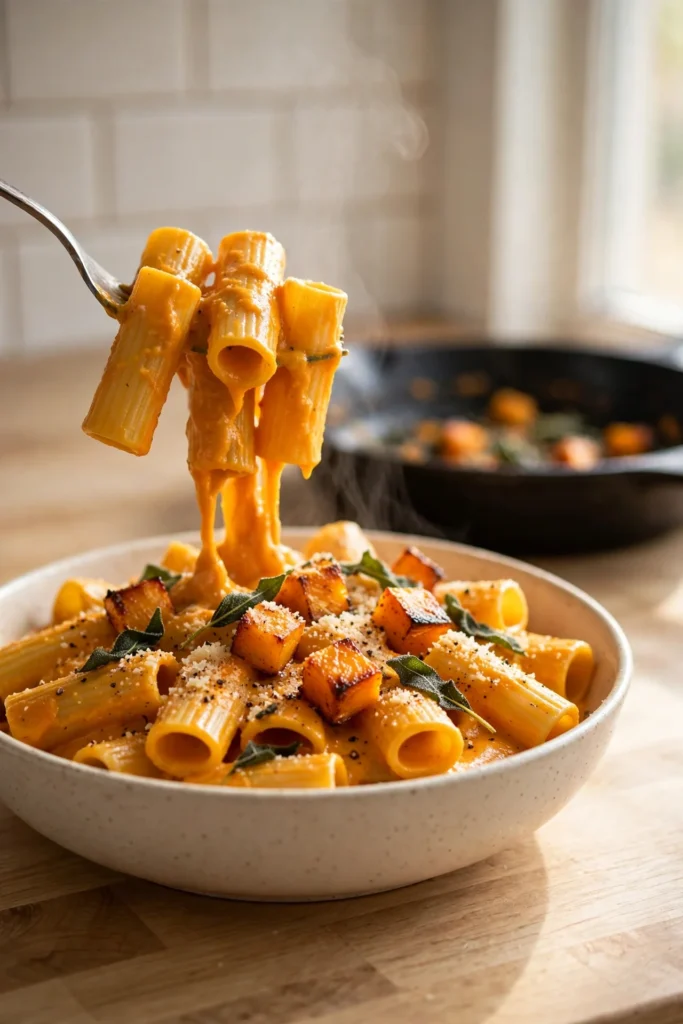
There is a particular kind of October evening — the light going gold early, a chill in the kitchen — that asks for exactly this bowl. Roasted butternut squash, caramelized at the edges until sweet, blended into a sauce so smooth it coats rigatoni like velvet. Crispy sage leaves fried in butter. Parmesan. A pinch of nutmeg. Nothing complicated, nothing fussy, just a pan of orange-gold comfort that tastes like fall decided to cook dinner.
The method matters here more than the ingredient list. Boiled squash makes a dull sauce; roasted squash makes this one. High heat concentrates the sugars, the edges catch and brown, and the blender does the rest. Cream and vegetable stock loosen it, Parmesan melts in, and the whole thing comes together in one skillet while the pasta boils.
Why This One Works
- Roasting does the heavy lifting. Cubed squash, shallots, and whole garlic cloves share one sheet pan at 425°F. The caramelization is where the flavor lives — sweet, nutty, a little toasty at the edges.
- The sauce is naturally thick. Butternut squash has enough body that a modest amount of cream gives you a sauce that clings instead of pools.
- Crispy sage is not a garnish afterthought. Fried in butter until the edges darken, the leaves turn savory and crackly — the crunch the soft pasta needs.
- Nutmeg belongs here. A quarter teaspoon sounds like nothing; it ties the sweet squash to the salty Parmesan.
Ingredients
For roasting:
- 1 medium butternut squash (about 2½ lb), peeled, seeded, and cut into 1-inch cubes
- 2 tablespoons olive oil
- 1 teaspoon kosher salt, plus more to taste
- ½ teaspoon freshly ground black pepper
- 2 shallots, peeled and sliced into rough pieces
- 3 garlic cloves, peeled and left whole
For the sauce and pasta:
- 12 oz rigatoni
- ¾ cup heavy cream
- ½ cup vegetable stock
- ¾ cup freshly grated Parmesan, plus more for serving
- ¼ teaspoon ground nutmeg
- ½ cup reserved pasta water, as needed
For the crispy sage:
- 8 to 10 fresh sage leaves
- 2 tablespoons butter
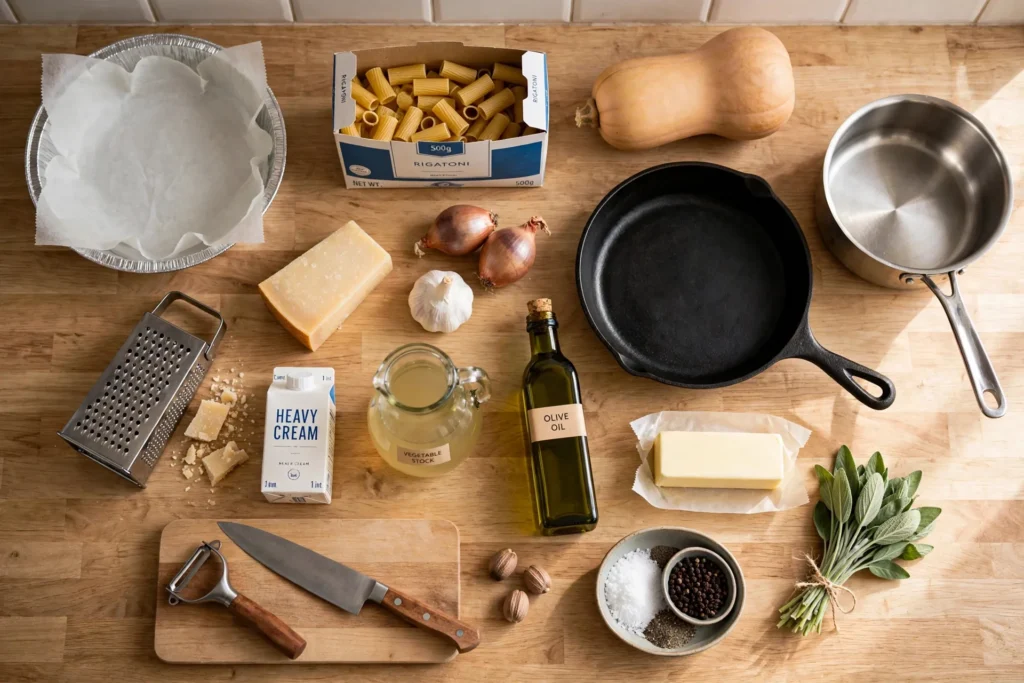
Pick a squash that feels heavy for its size with unblemished tan skin — that is the one with the dense, sweet flesh you want. Freshly grated Parmesan melts cleanly; the pre-shredded kind can turn the sauce grainy.
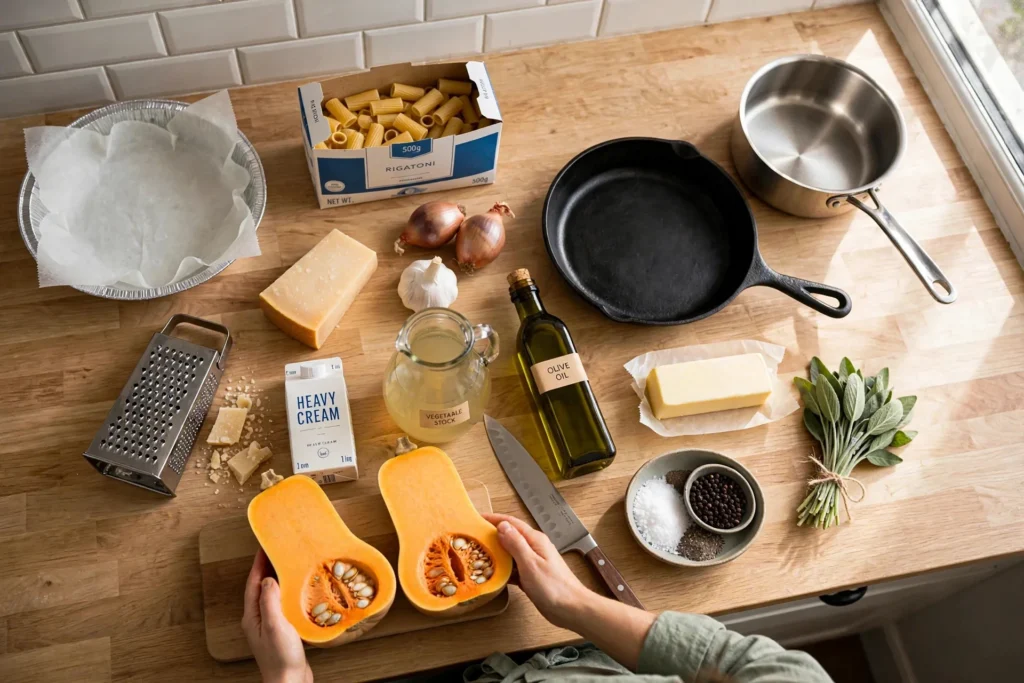
Step 1: Peel, Halve, Seed, and Cube the Squash
Butternut squash has an awkward shape and a thick skin, so set yourself up: trim both ends so it stands steady, then peel downward in long strips with a sharp vegetable peeler.
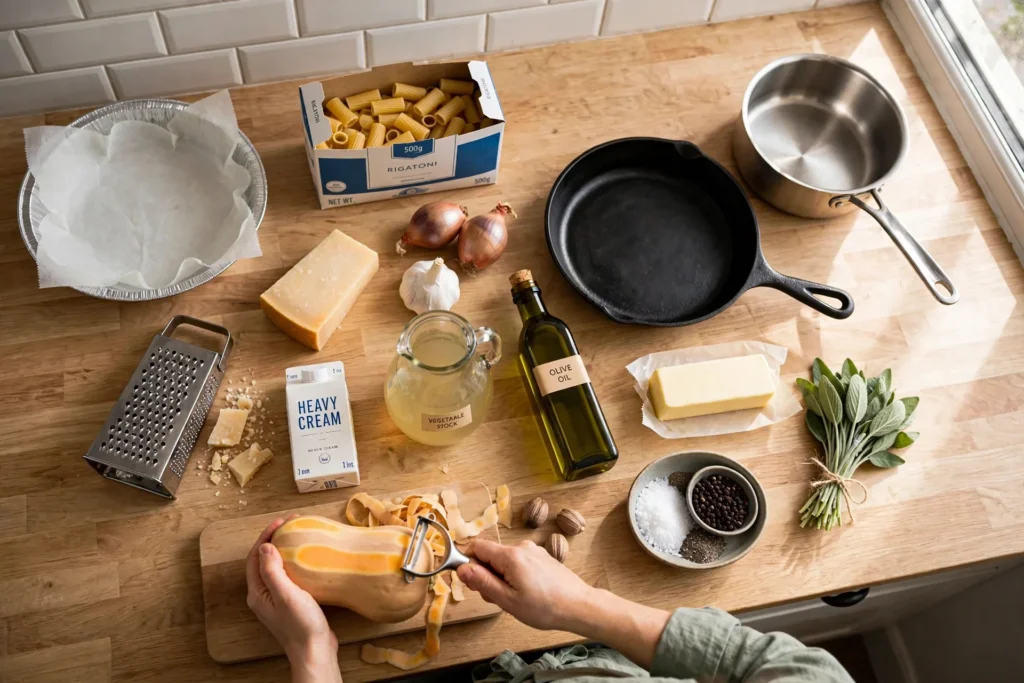
Stand the peeled squash upright and cut it in half lengthwise with a heavy chef’s knife. The bulb end holds the seeds — scoop them out with a metal spoon, strings and all, until the cavity is clean.
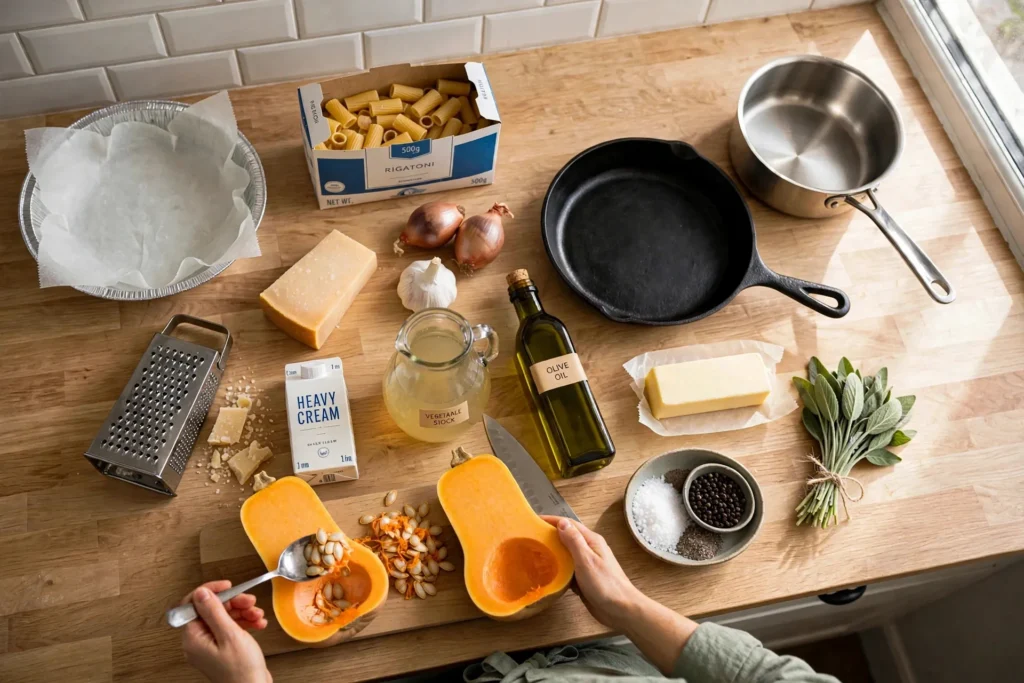
Cut the neck and bulb into even 1-inch cubes. Even matters: small pieces burn before the big ones soften, so take the extra minute to keep them uniform.
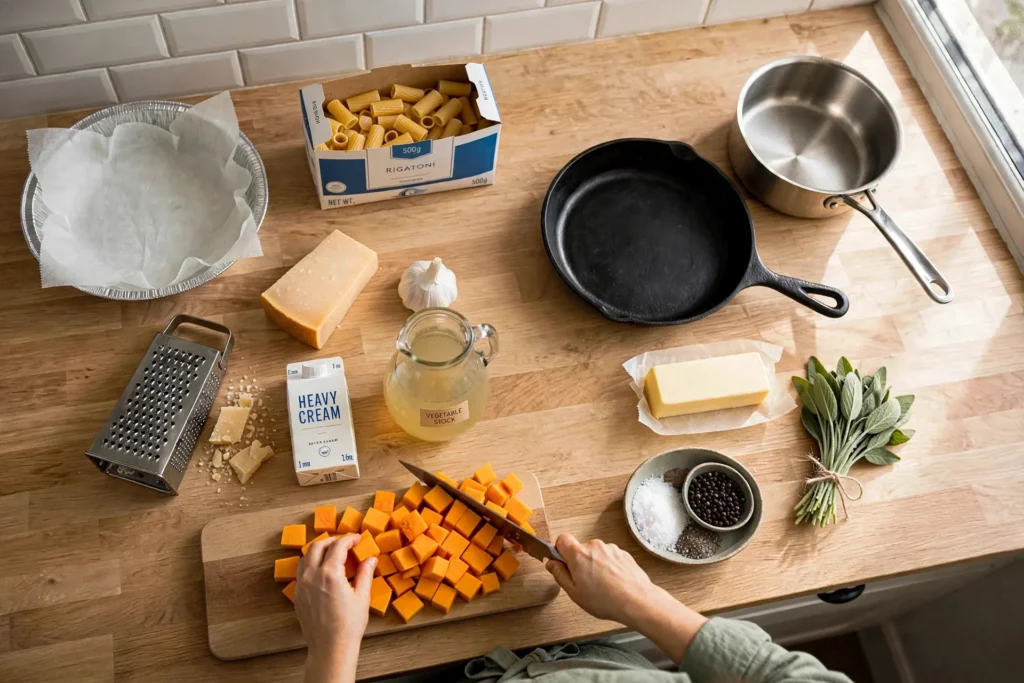
Step 2: Roast the Squash, Shallots, and Garlic
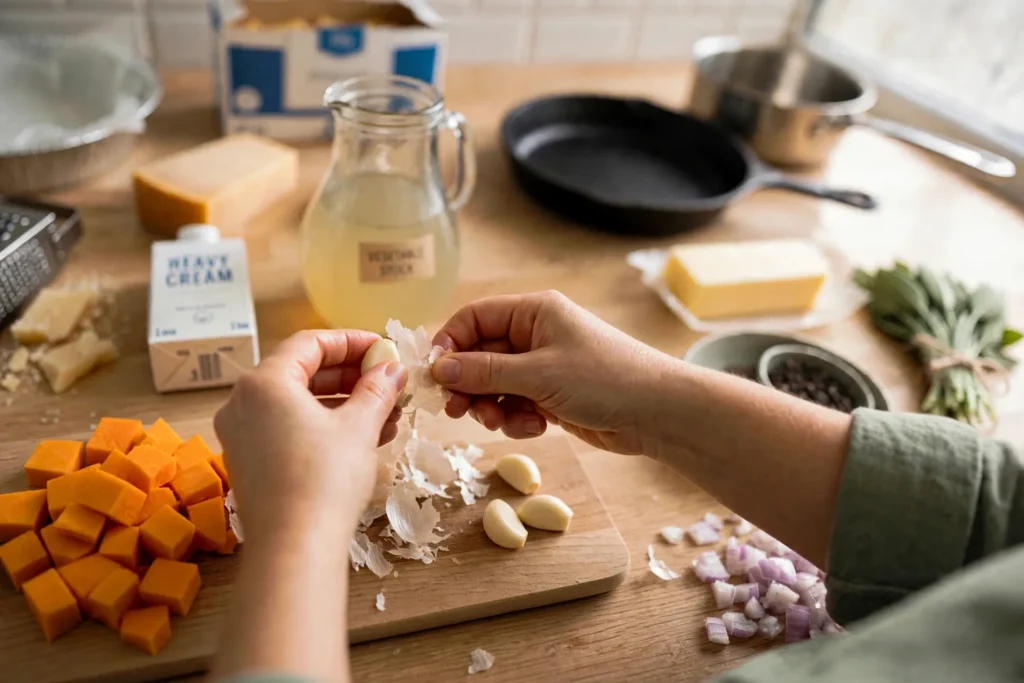
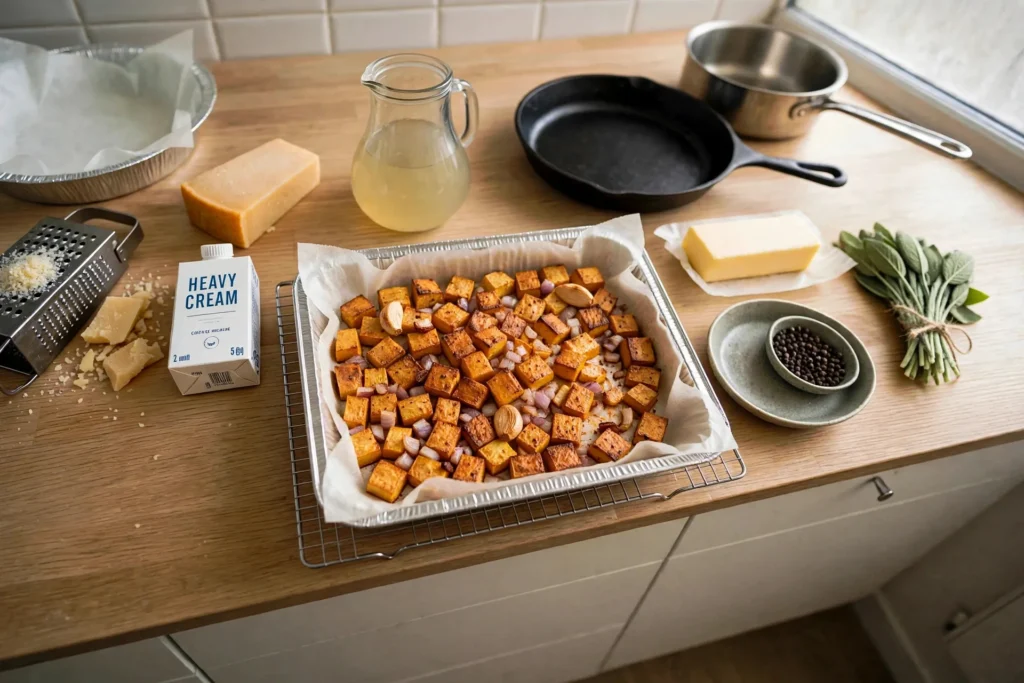
Heat the oven to 425°F (220°C) and line a half-sheet pan with parchment. Slice the shallots into rough pieces and peel the garlic cloves.
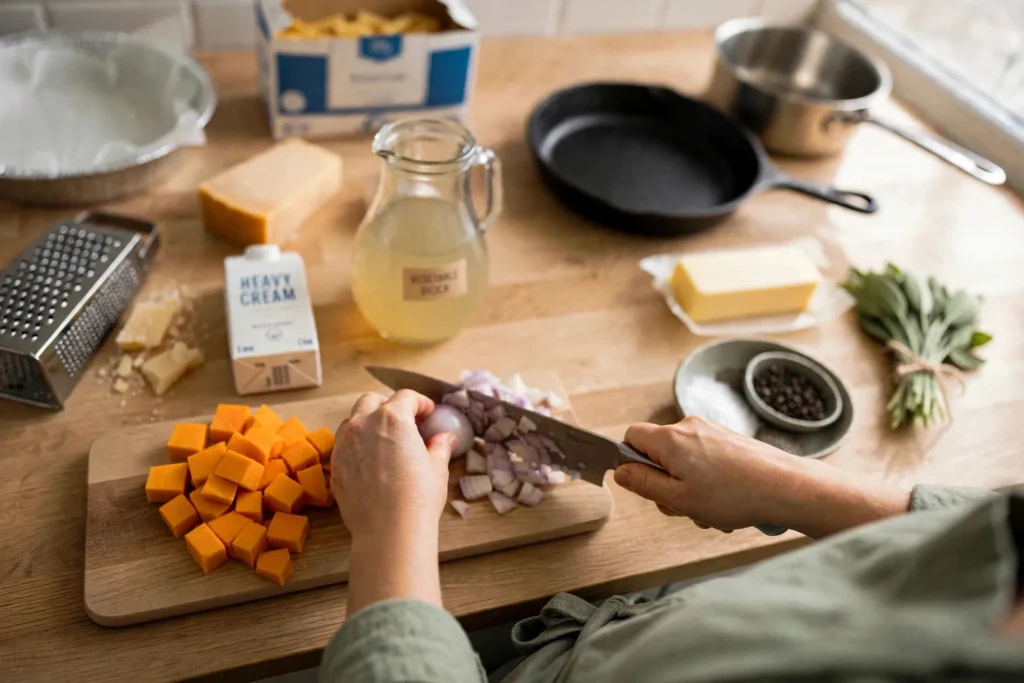
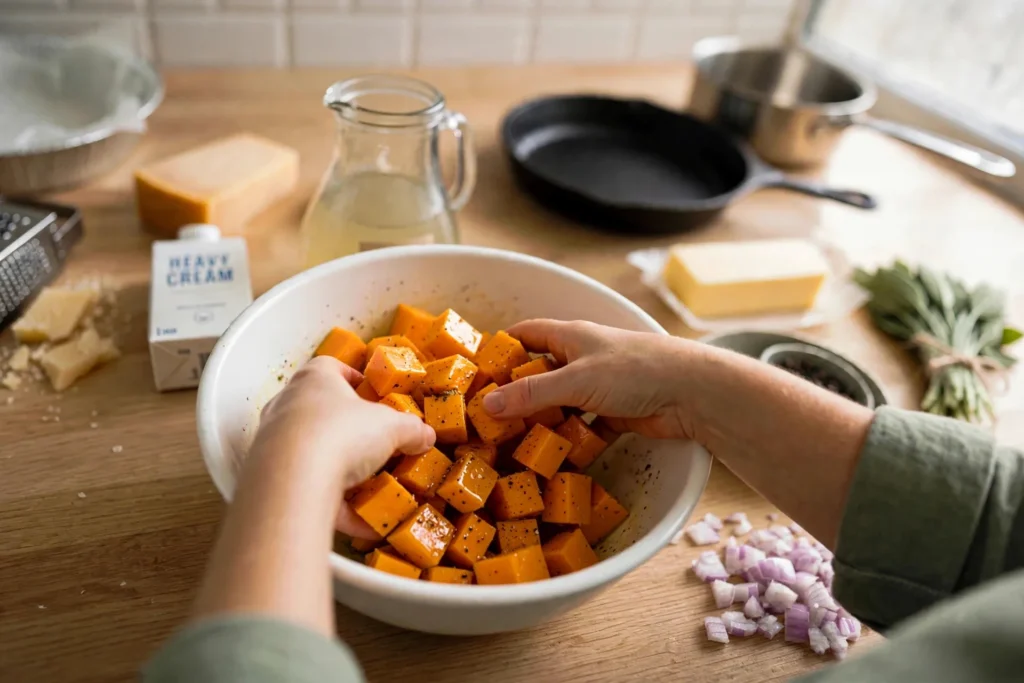
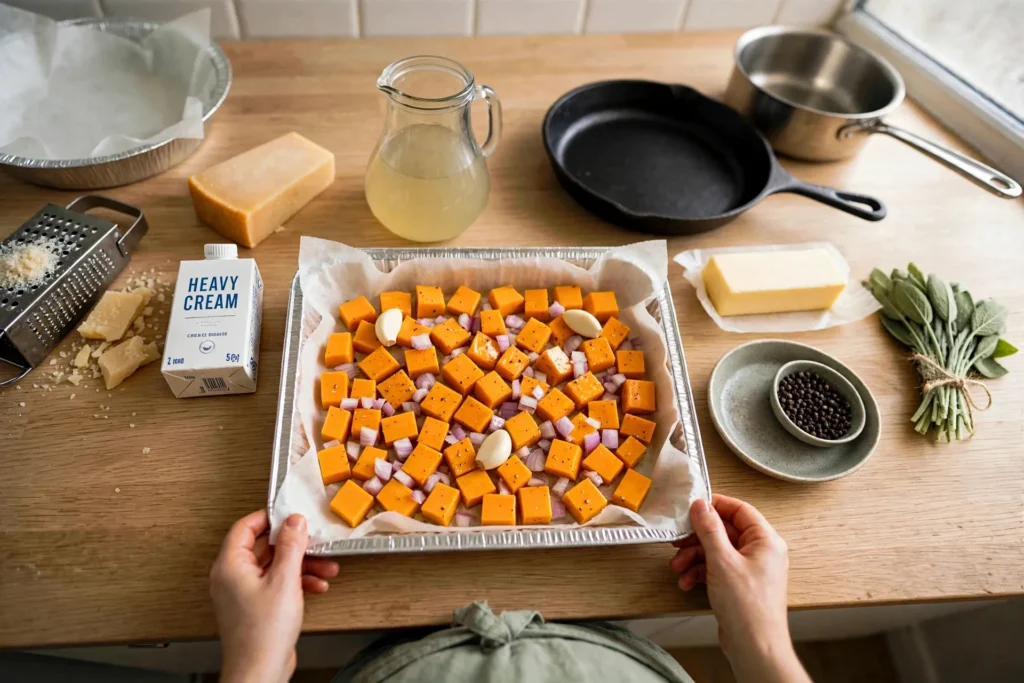
Toss the squash cubes in a large bowl with the olive oil, salt, and pepper until every cube glistens. Spread them on the sheet pan in a single layer — crowding steams instead of roasts — and tuck the shallot pieces and whole garlic cloves among them.
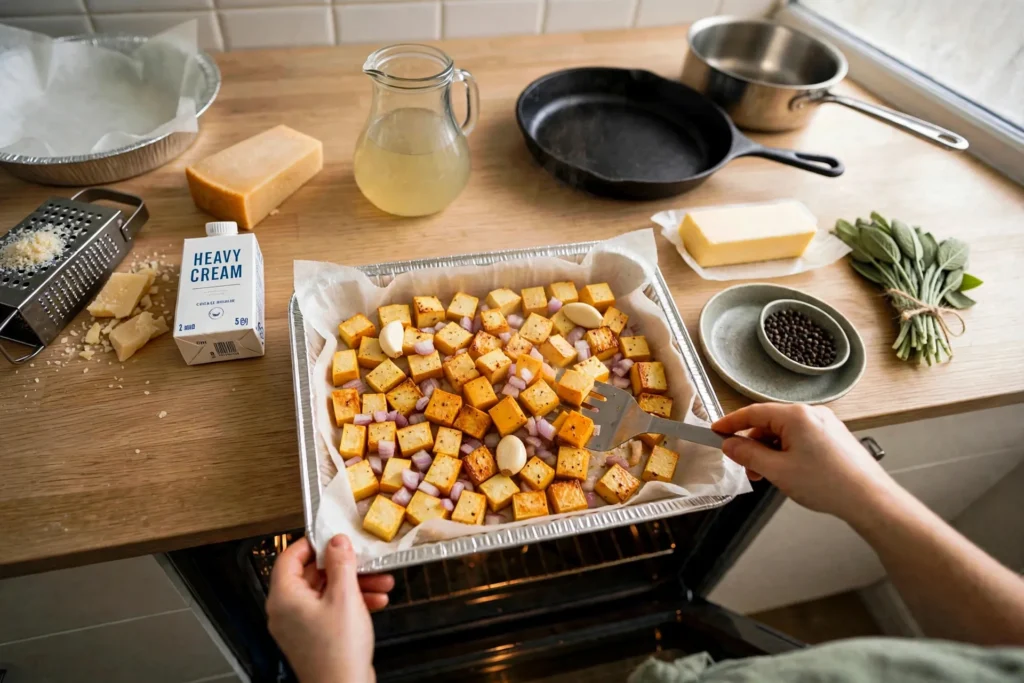
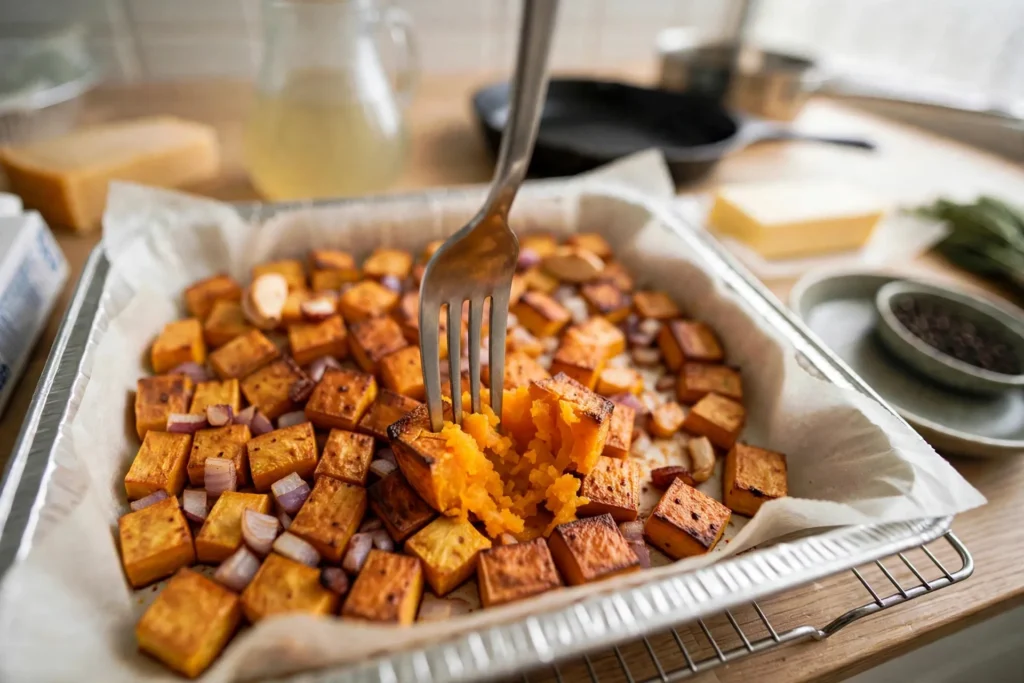
Roast for 30 to 35 minutes, pulling the pan out halfway through to turn the cubes with a spatula. You are looking for dark golden-brown edges and cubes that give easily when pressed with a fork. The shallots will soften and sweeten; the garlic turns mild and creamy inside its skin.
Step 3: Blend It Silky
Scrape the roasted squash, shallots, and garlic into a blender jar — a spatula gets the sticky caramelized bits off the parchment, and those bits are flavor, so don’t leave them.
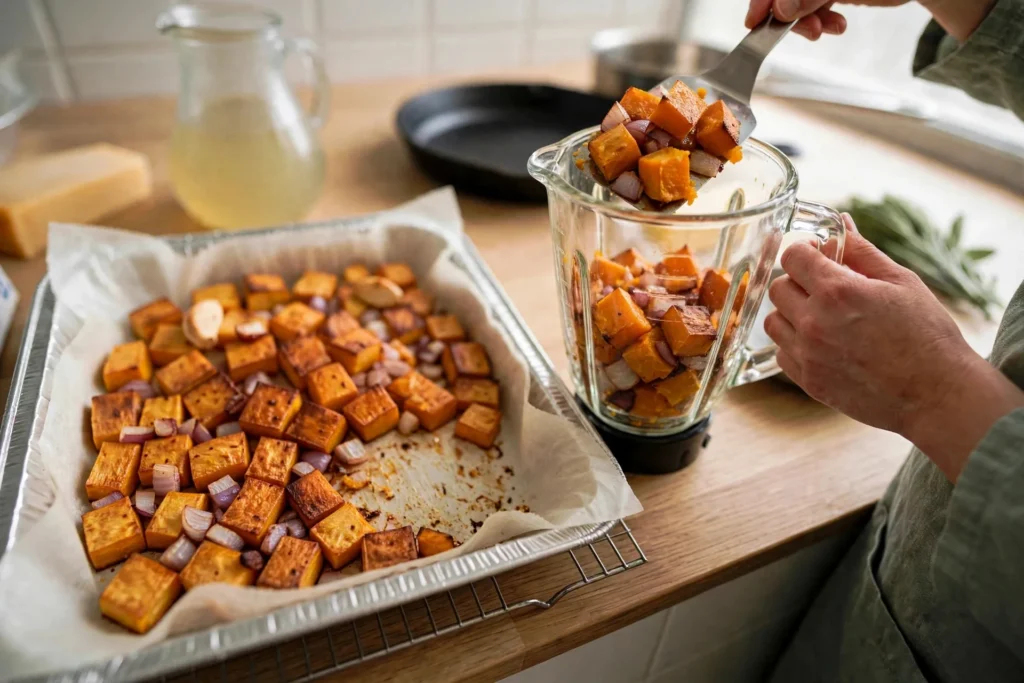
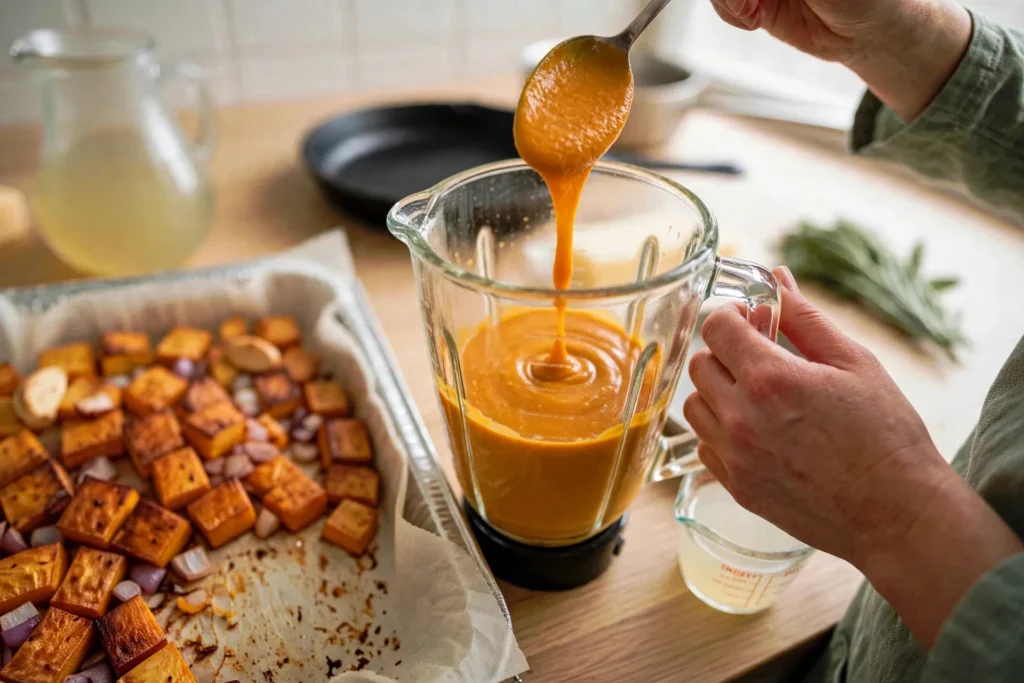
Pour in the heavy cream and the vegetable stock. Blend on high until the sauce is completely smooth and pours in a thick ribbon off a spoon, with no flecks or chunks remaining. A high-speed blender takes about a minute; stop and scrape down the sides once if needed.

Step 4: Cook the Rigatoni and Grate the Parmesan
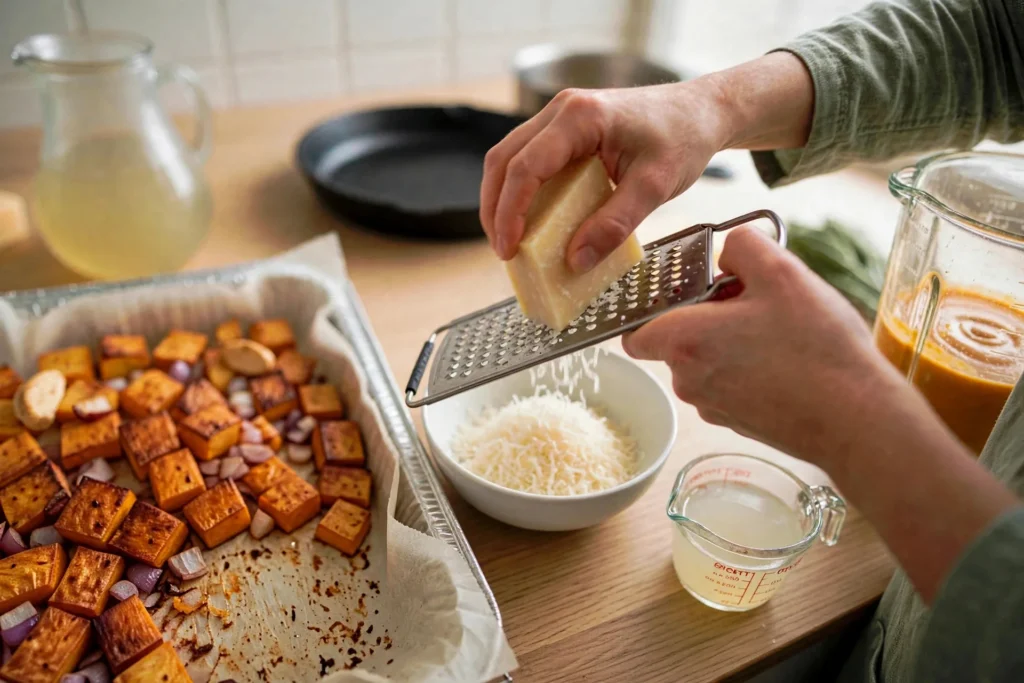
While the squash roasts, grate the Parmesan — do it fresh, by hand, and keep the fluffy pile covered so it doesn’t dry out.
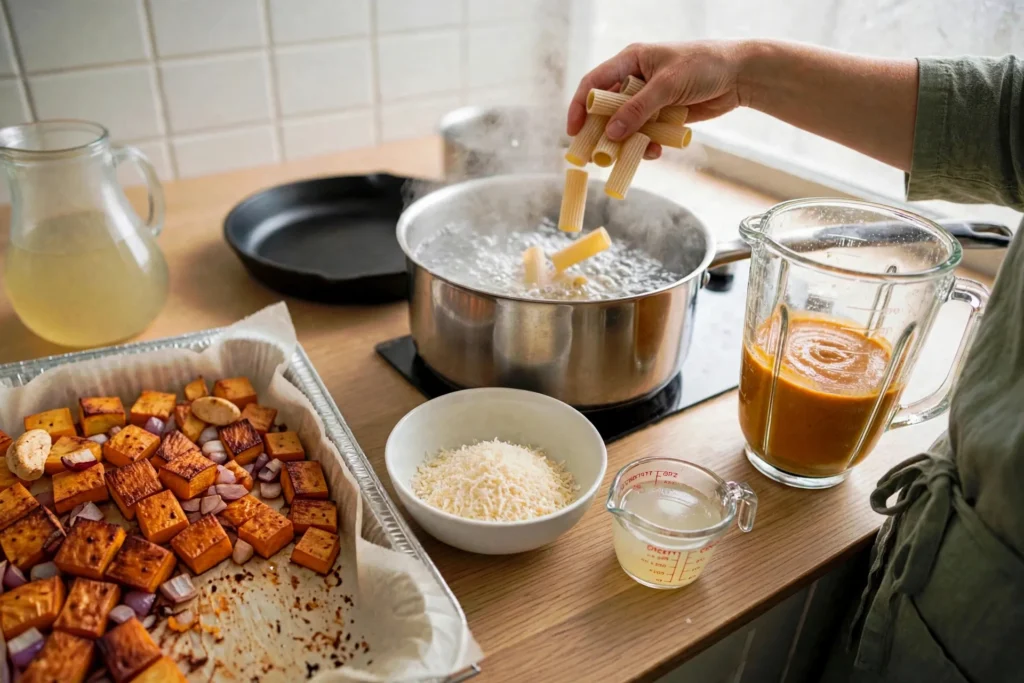
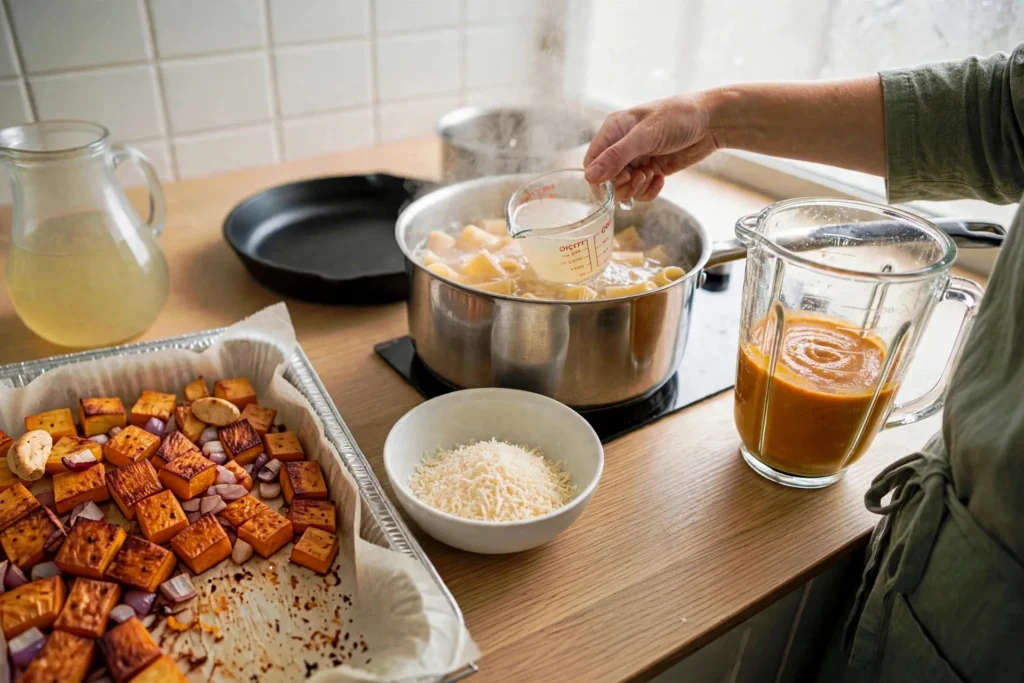
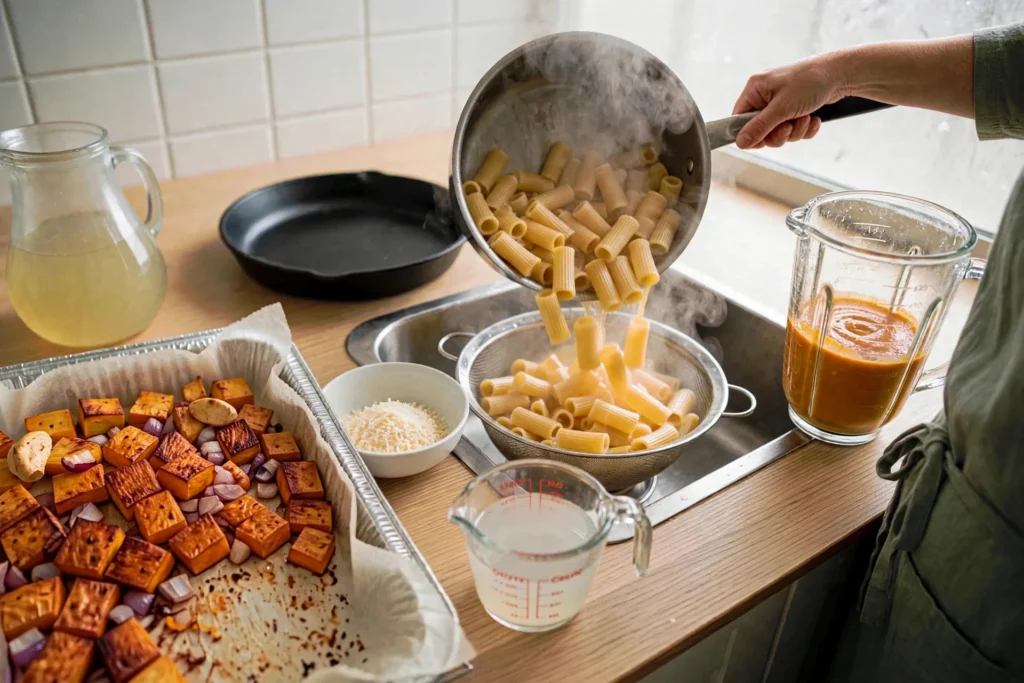
Bring a large pot of generously salted water to a rolling boil and cook the rigatoni until just shy of al dente, about a minute less than the package says. Before draining, scoop out at least a cup of the cloudy pasta water — the starch in it is what will make the sauce glossy. Drain the pasta.
Step 5: Warm the Sauce and Toss the Pasta
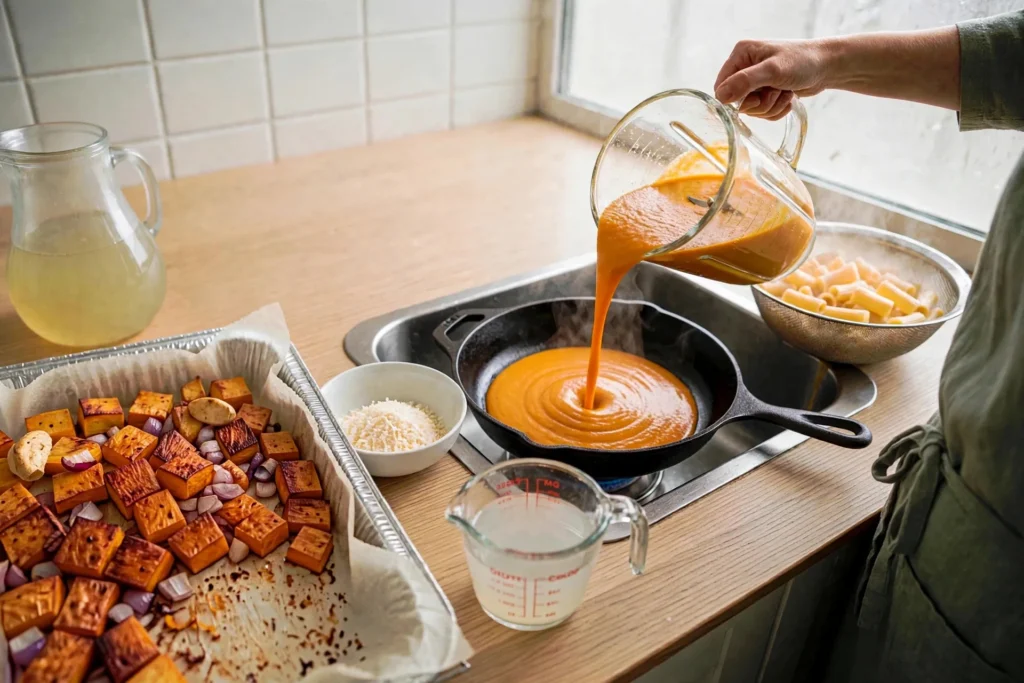
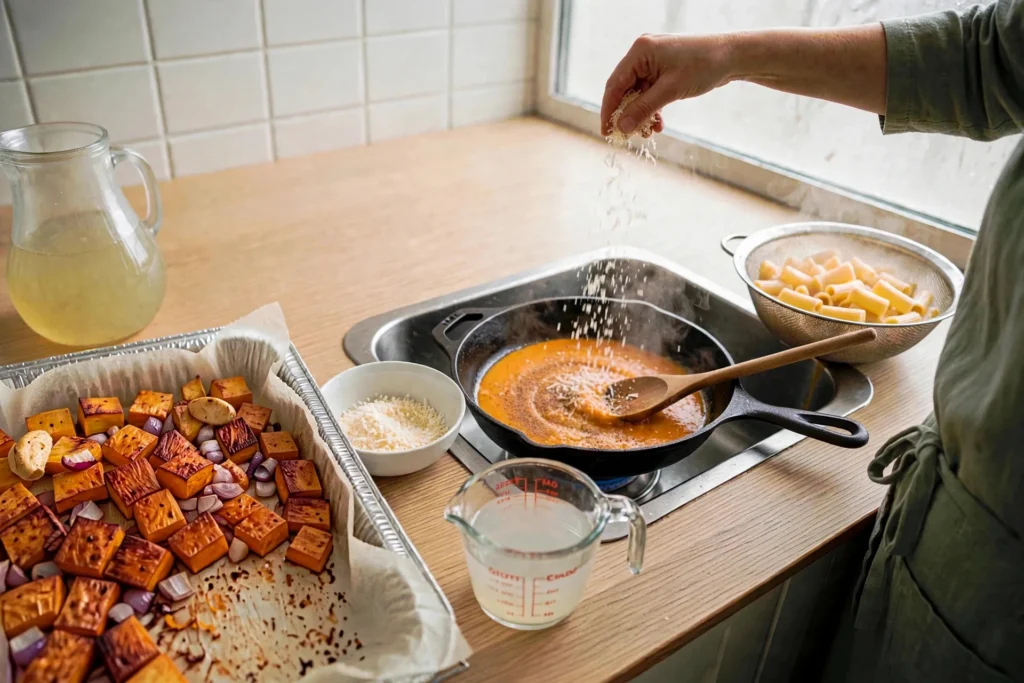
Pour the blended sauce into a large skillet over low heat — a matte black cast-iron skillet holds the warmth beautifully. Stir in the grated Parmesan a handful at a time, letting each addition melt before adding more, then the nutmeg. Keep the heat gentle; a hard boil can make a cheese sauce grainy.
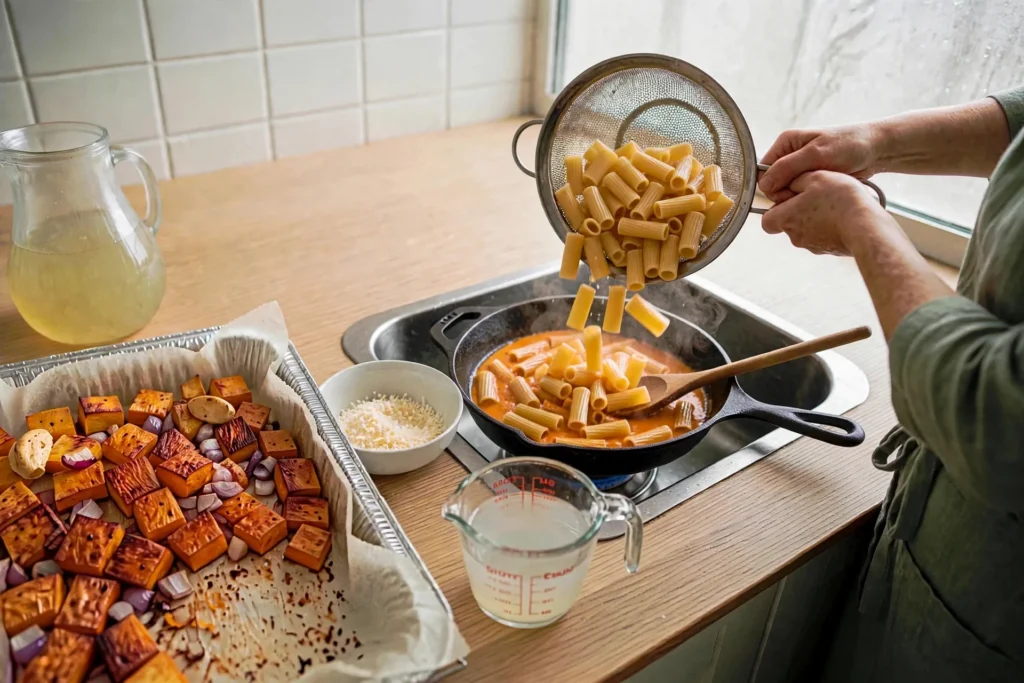
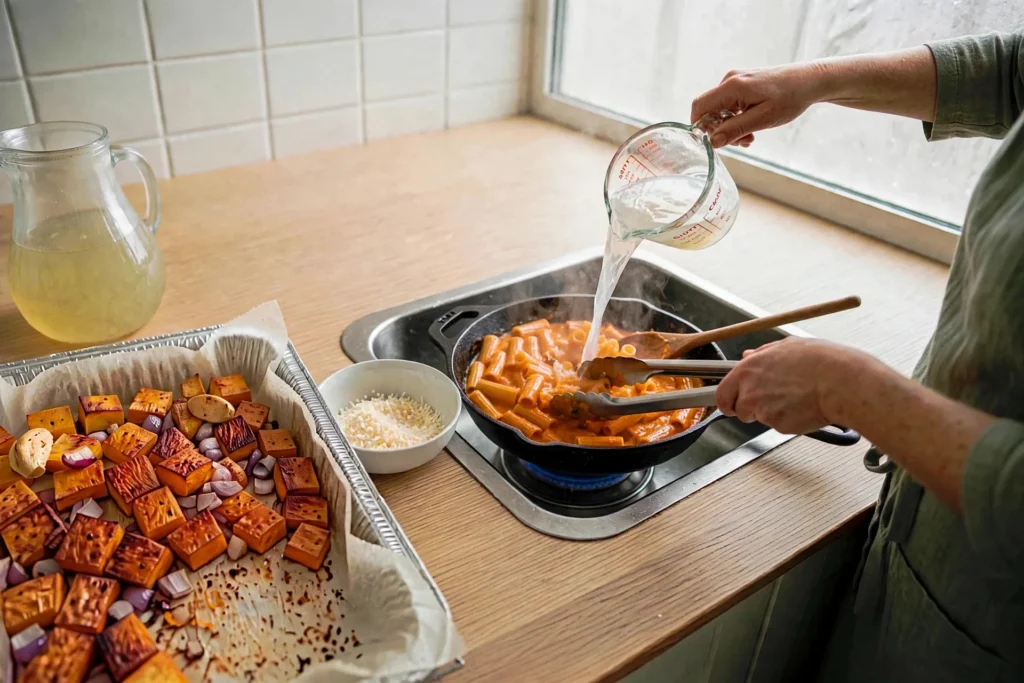
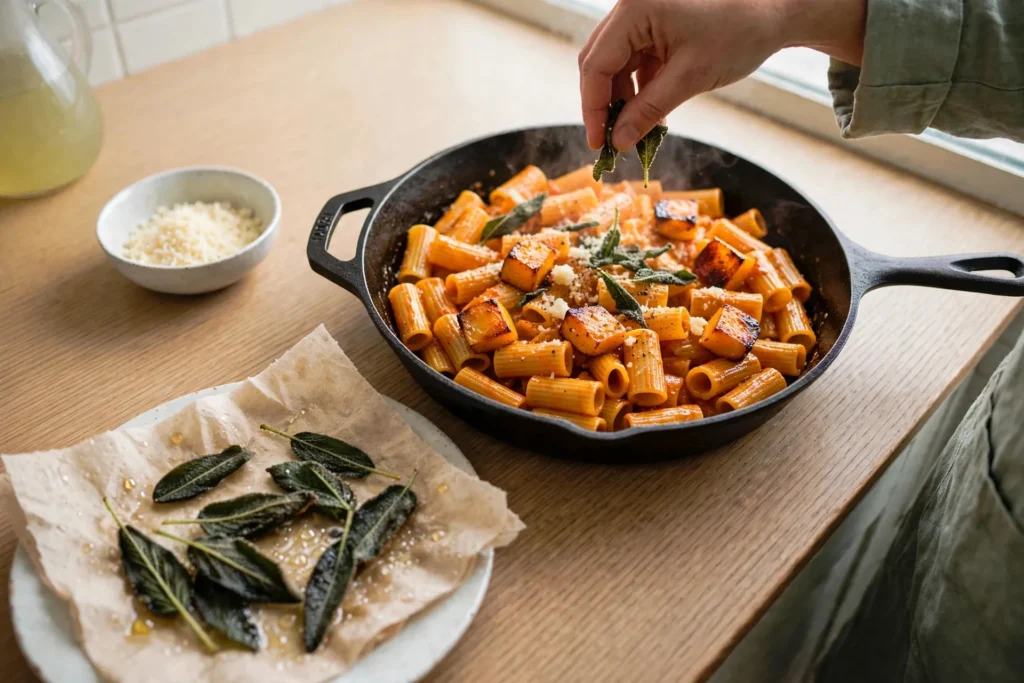
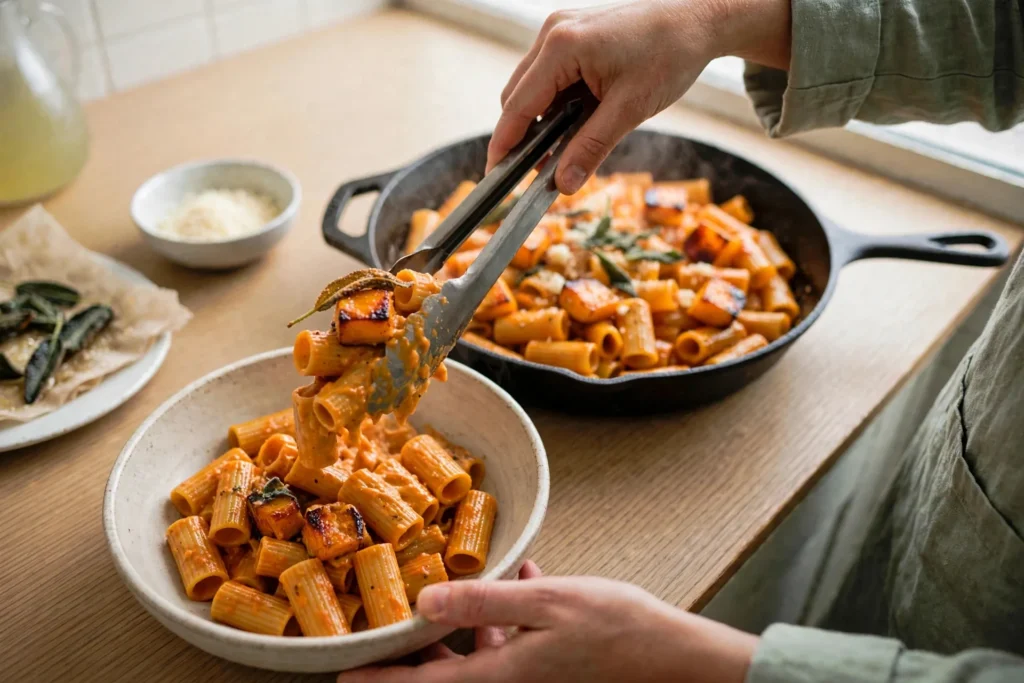
Tip the drained rigatoni into the skillet and toss with tongs until every tube is coated. Splash in reserved pasta water a little at a time until the sauce turns glossy and clings — it should coat the pasta, not sit under it.
Step 6: Fry the Sage and Serve
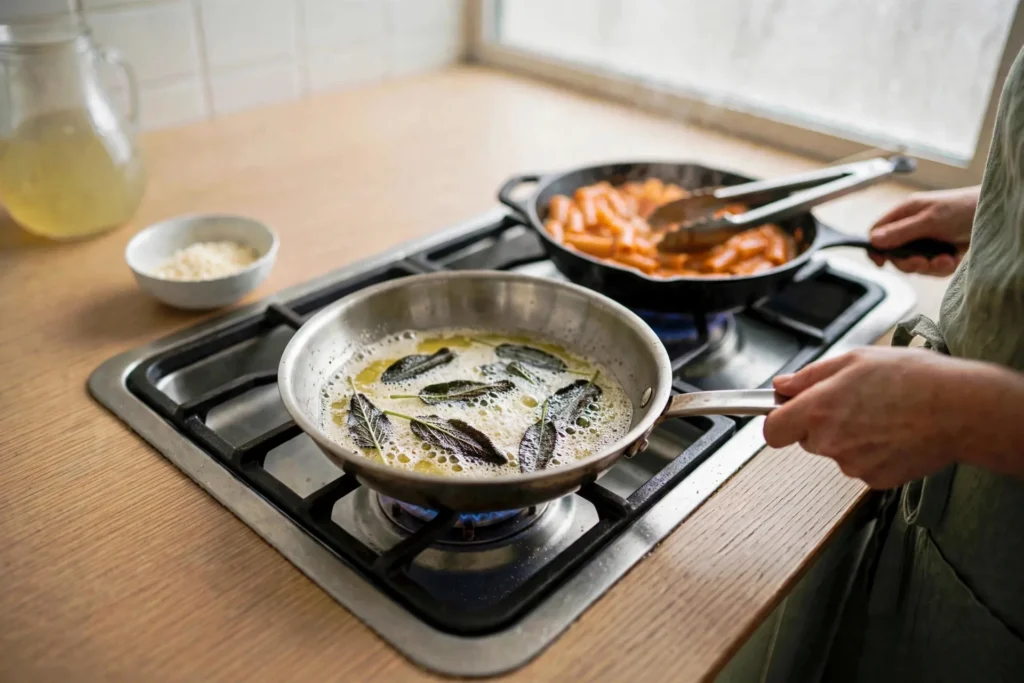
Melt the butter in a small pan over medium heat. When it foams, lay in the sage leaves in a single layer. They crisp fast — about 30 to 60 seconds per side — and are done when the edges darken and the sizzling quiets. Lift them onto a paper towel.
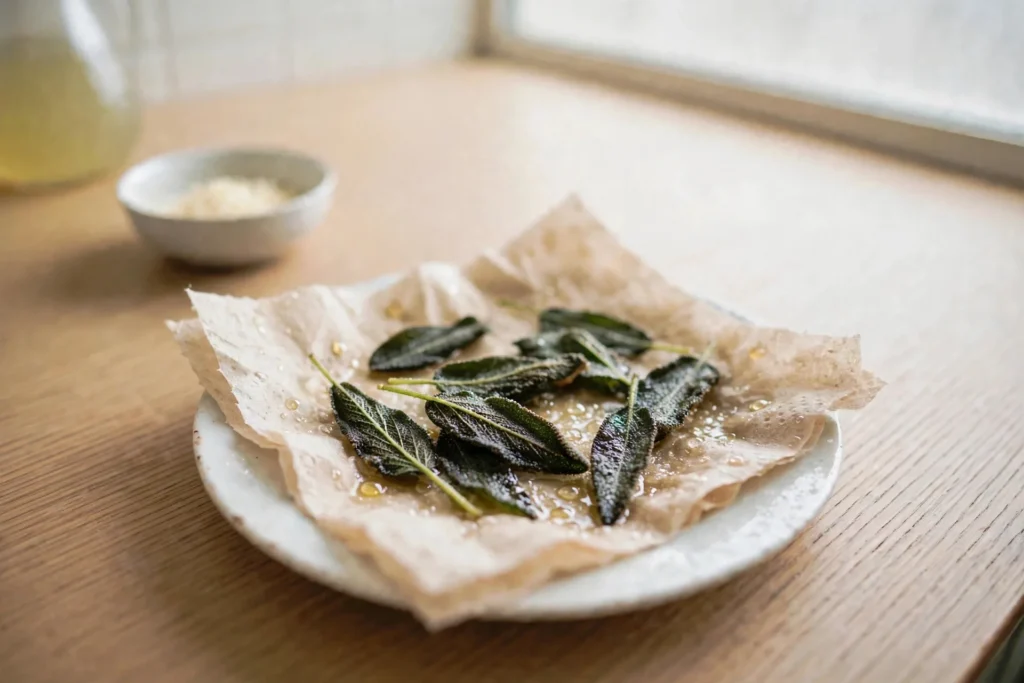
Scatter the crispy sage over the pasta along with extra Parmesan, cracked black pepper, and a few of the reserved caramelized squash cubes if you set any aside. Serve straight from the skillet into warm bowls.
Keeping the Sauce Silky
The two things that decide the texture happen before the blender. First, roast until the cubes are genuinely caramelized instead of merely soft — pale squash blends into a flat-tasting sauce. Second, blend longer than feels necessary. Thirty extra seconds takes it from “smooth-ish” to the velvet ribbon you see in the photos.
Temperature discipline in the skillet matters too. Parmesan added over low heat melts into the sauce; Parmesan added to a bubbling sauce can seize into tiny grains. If the sauce ever looks too thick, pasta water fixes it — the dissolved starch loosens without thinning the flavor the way plain water would.
Leftovers thicken in the fridge as the starch sets. Reheat gently in a skillet with a splash of water or stock, stirring, and it comes back to glossy.
If You’re Out of Something
- No shallots: half a small yellow onion, sliced, roasts just as well.
- No heavy cream: half-and-half works, though the sauce will be a touch less rich. Whole milk is the floor — anything leaner risks a thin sauce.
- No rigatoni: penne, fusilli, or orecchiette all catch the sauce nicely.
- No fresh sage: skip the fried-sage step and finish with thyme leaves, or a pinch of red pepper flakes for contrast.
- Vegetable stock: the reserved pasta water can stand in for all of it in a pinch.
Storing and Reheating
Refrigerate leftovers in an airtight container for up to 4 days. Reheat in a skillet over medium-low heat with a splash of water or stock, stirring until glossy and hot through — about 5 minutes. The microwave works in a pinch (stir halfway), but the stovetop gives you back the texture. Freezing is possible for up to 2 months, though the sauce can separate slightly on thawing; a vigorous stir while reheating brings most of it back.
Five Things Worth Knowing
- Butternut squash sweetens as it roasts. The dry heat converts starches to sugars, which is why roasted squash tastes almost honeyed compared to boiled.
- Whole roasted garlic is mild. An hour would be overkill, but 30 minutes at 425°F turns sharp raw cloves sweet and spreadable — no harsh bite in the finished sauce.
- Nutmeg and squash are a classic pairing because nutmeg’s warm, woody notes sit right alongside the squash’s sweetness without adding actual sweetness.
- Rigatoni’s ridges exist for sauce. The ridged tubes grip a thick sauce far better than smooth penne — a small detail with a noticeable payoff.
- Sage crisps because of its low moisture. Unlike basil, which wilts, sage leaves fry into sturdy, savory chips that stay crisp on top of hot pasta.
Frequently Asked Questions
Can I use pre-cut butternut squash?
Yes — about 5 to 6 cups of 1-inch cubes. It roasts a little faster since the pieces are often smaller, so start checking at 25 minutes.
Do I have to peel the squash?
For cubes, yes. The skin stays tough even after roasting and won’t blend smooth. (If you ever roast halves, you can scoop the flesh out and skip peeling.)
Can I make the sauce ahead?
The blended sauce keeps 3 days refrigerated. Warm it gently in the skillet, then toss with freshly cooked pasta — don’t cook the pasta ahead, as it goes gummy.
Is there a dairy-free version?
Use olive oil instead of butter for the sage, swap the cream for full-fat coconut milk or cashew cream, and use a hard dairy-free Parmesan-style cheese. The squash itself supplies most of the creaminess.
My sauce looks orange but tastes flat. What happened?
Almost always under-roasting. The cubes need real color — dark golden edges rather than mere softness. Next time, give them the full 35 minutes and don’t skip turning them halfway.
Can I add protein?
Italian sausage or shredded rotisserie chicken both work. Brown the sausage separately and fold it in when you toss the pasta.
A Bowl That Earns Its Place
Some fall recipes are decoration — pretty on the table, forgettable by November. This one cooks the way the season feels: squash sweet from the oven, sage crackling in butter, pasta glossy with sauce. Make it once and the method sticks; after that it’s just a squash, a sheet pan, and whatever evening needs warming up.
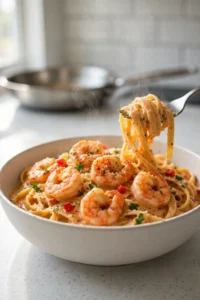
If creamy pasta is your thing, the Creamy Cajun Shrimp Pasta takes the same one-skillet approach in a spicier direction.
Ingredients
Equipment
Method
- Peel, halve, seed and cube the squash.
- Roast at 425°F (220°C) for 30–35 min with shallots and garlic, turning halfway, until deeply caramelized.
- Blend roasted vegetables with cream and stock until completely silky.
- Cook rigatoni to just shy of al dente; reserve 1 cup pasta water; drain. Grate Parmesan.
- Warm sauce in skillet over low heat; melt in Parmesan a handful at a time, then nutmeg; toss pasta with splashes of pasta water until glossy.
- Fry sage leaves in foaming butter 30–60 seconds per side; drain on paper towel; garnish pasta with sage, Parmesan, pepper and serve.