Lettuce Wraps Three Ways: Chicken, Beef, and Vegetarian From One Shared Base
One prep session, three fillings. The chicken version is the base recipe, and ground beef and pressed tofu branch off the same mushroom and water chestnut base, all served in crisp butter lettuce cups.
 Pin it
In this post
Read the shared base first. The lettuce cups, the two sauces, and the mushroom and water chestnut mixture are the same for all three versions, and they sit above the recipes below. Each version builds on that base: the chicken filling is the base recipe itself, and the beef and vegetarian versions branch off from the same set-aside vegetables.
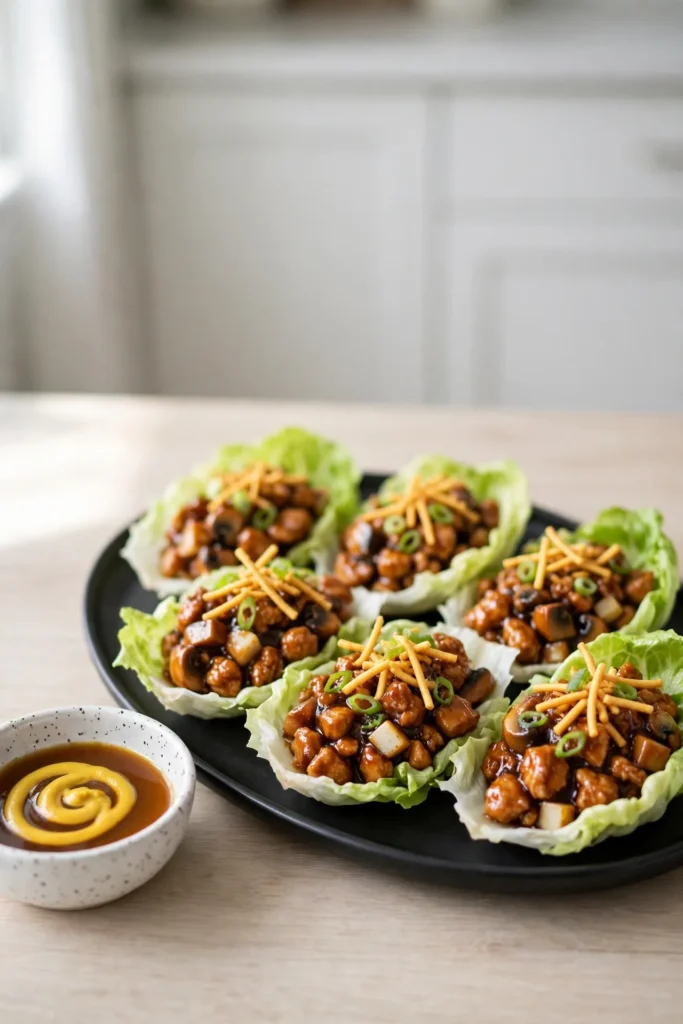
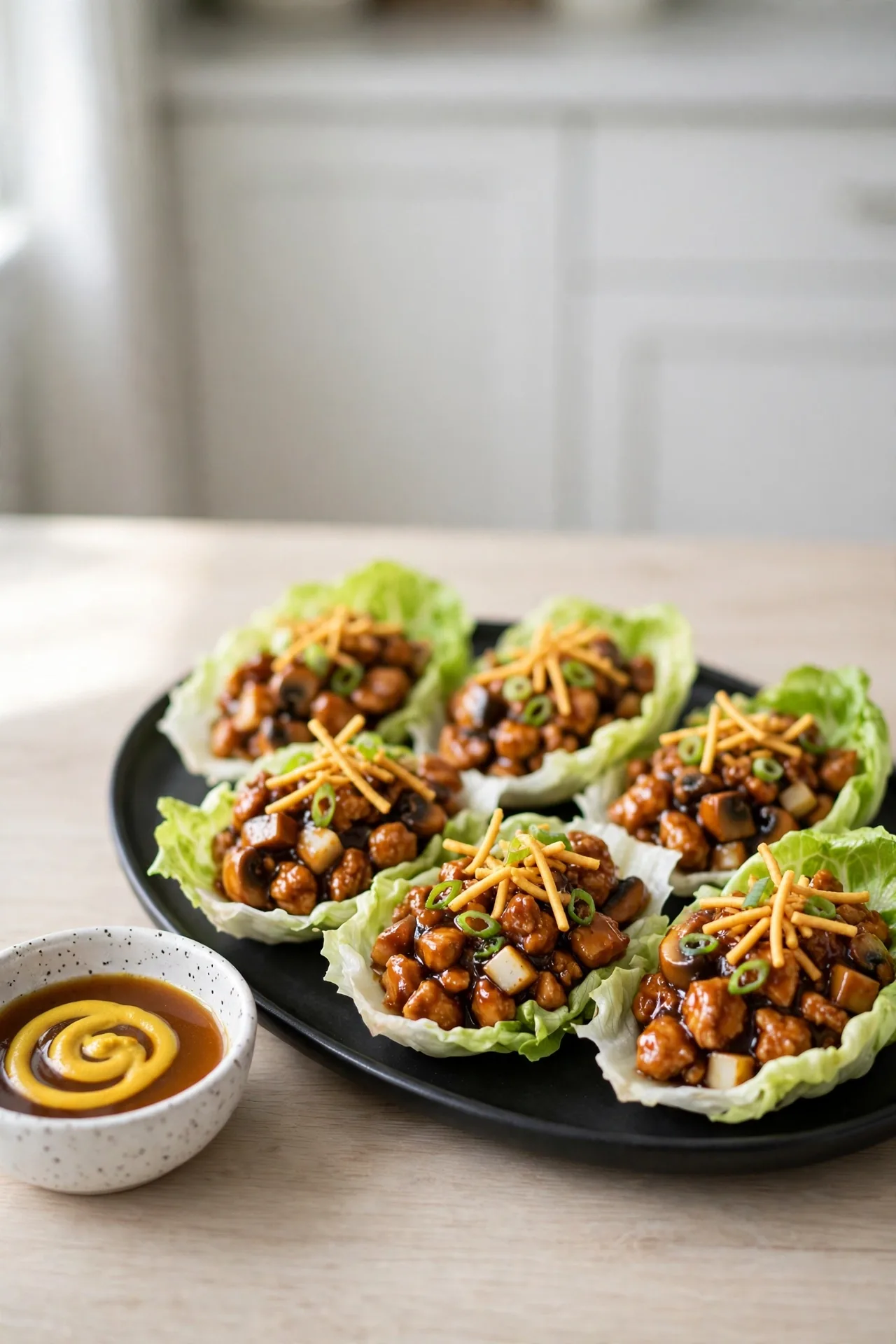
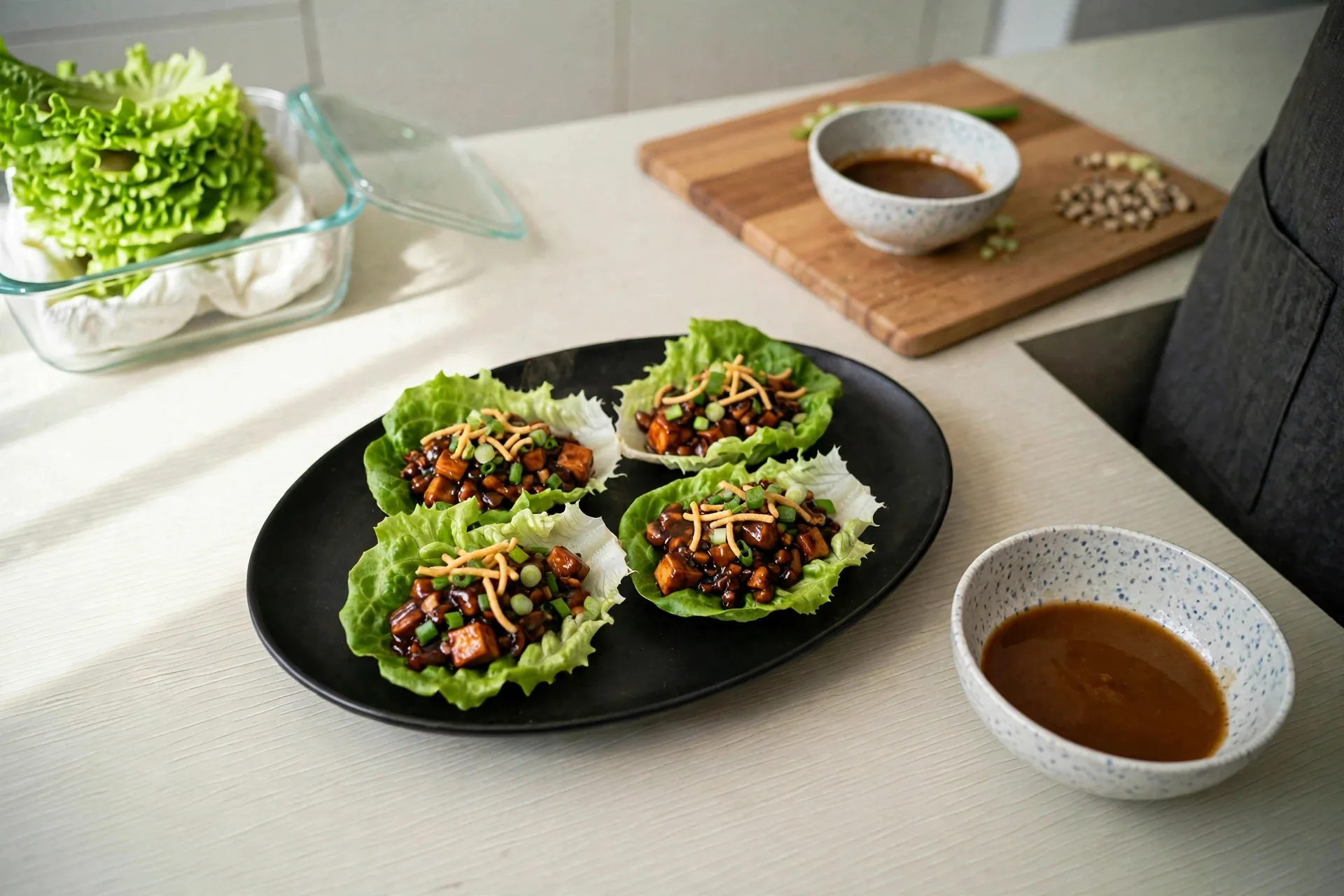
Six crisp butter lettuce cups, glossy hoisin-glazed filling, and a small bowl of amber dipping sauce — that platter is the whole idea of this post.
Introduction
One prep session makes three different lettuce wraps. The chicken version travels under three names — Chicken Lettuce Wraps, Asian Chicken Lettuce Wraps, and PF Chang’s-style Chicken Lettuce Wraps — and here they are one recipe, not three. The same filling, the same sauces, the same cups. Ground beef and vegetarian versions use the same base too, with only the protein step changed.
The eating experience is hands-on. A crisp lettuce cup holds a warm, savory filling, and the contrast does the work: soft leaves against crunchy water chestnuts and crispy chow mein noodles, a salty-sweet hoisin glaze against a sharp dipping sauce. Nothing here needs special equipment beyond a large wok and a cutting board, and the method stays the same for one version or all three.
Recipe Overview
This post teaches one shared base and three fillings built from it. The shared work covers the lettuce cups, the minced vegetables, and two sauces. The chicken filling is the base recipe. The beef version swaps in ground beef and adds one step for pouring off fat. The vegetarian version swaps in pressed, crumbled tofu and keeps everything else the same.
Equipment used: a large carbon steel wok, a wooden spatula, a chef’s knife, a wooden cutting board, a fine mesh sieve, a microplane, small bowls, a clean kitchen towel, and a matte-black oval platter for serving. A heavy skillet earns its place in the vegetarian version, where it presses the tofu.
Ingredients
For the shared base
- 1 head butter (Boston) lettuce
- 8 oz cremini mushrooms, finely minced
- 1 can (8 oz) water chestnuts, drained and minced
- 3 garlic cloves, peeled and minced
- 1 tbsp fresh ginger, peeled and grated
- 4 green onions, sliced into thin rings
- Salt, a pinch (for the mushrooms)
- Cooking oil, for the wok
- Crispy chow mein noodles, for topping
For the stir-fry sauce
- Hoisin sauce
- Soy sauce
- Rice vinegar
- Sesame oil
- Sriracha
- Water, a splash
For the dipping sauce
- Soy sauce
- Rice vinegar
- Brown sugar
- Hot mustard, a spoon
For the chicken version (the base recipe)
- 1 lb ground chicken
For the beef version
- 1 lb ground beef
For the vegetarian version
- 14 oz extra-firm tofu, pressed and crumbled
- A few extra mushrooms, finely minced
Ingredient Notes
Butter lettuce earns its place because its leaves already form cups. The outer leaves are broad and sturdy enough to hold a scoop of filling, and the smaller inner leaves work for smaller bites. Leaves that tear still have a use: nest a torn leaf inside a whole one and fill that instead.
Water chestnuts keep their crunch after cooking, and that crunch is the point of the filling. Mince them small so they mix through the filling instead of sitting in chunks, but do not chop them to a paste. The filling needs pieces you can feel.
Mushrooms are minced fine for the same reason. At 8 oz they look like a lot raw, and they cook down to much less. That is expected. The vegetarian version adds a few extra mushrooms because the tofu needs the same savory, browned base the chicken and beef versions get from meat.
The sauce ingredients are listed without amounts. Whisk both sauces before the wok gets hot, and taste them at that point. The balance is easier to set in a bowl than in a pan of cooked filling. The stir-fry sauce should come out glossy and dark brown. The dipping sauce should taste sweet and sharp, with the hot mustard visible as a yellow swirl.
Tofu must be extra-firm. Softer tofu falls apart into a wet mash in the wok instead of browning into separate crumbles, and no amount of stirring fixes that once the water is in the pan.
Allergens present in the shared base: soy (soy sauce, tofu) and sesame (sesame oil). Check the hoisin sauce and chow mein noodle labels for wheat.
How to Make Lettuce Wraps
Get Everything Ready
Stir-fry cooking moves fast once the wok is hot, so every ingredient gets prepped and lined up before any heat goes on. Raw ingredients go on the counter in the order they will be used: protein, mushrooms, water chestnuts, lettuce, garlic, ginger, green onions, sauces, oil, and noodles.
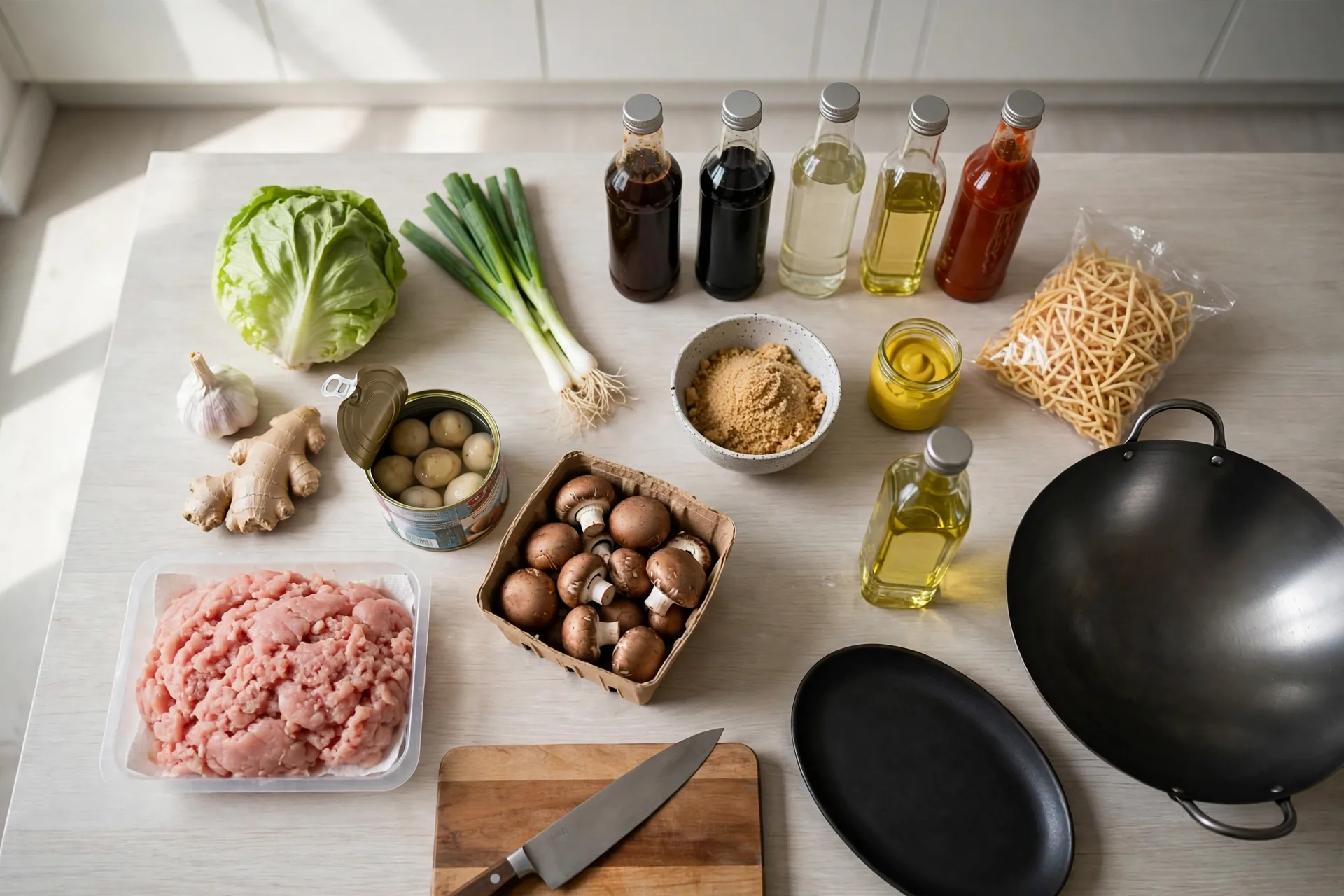
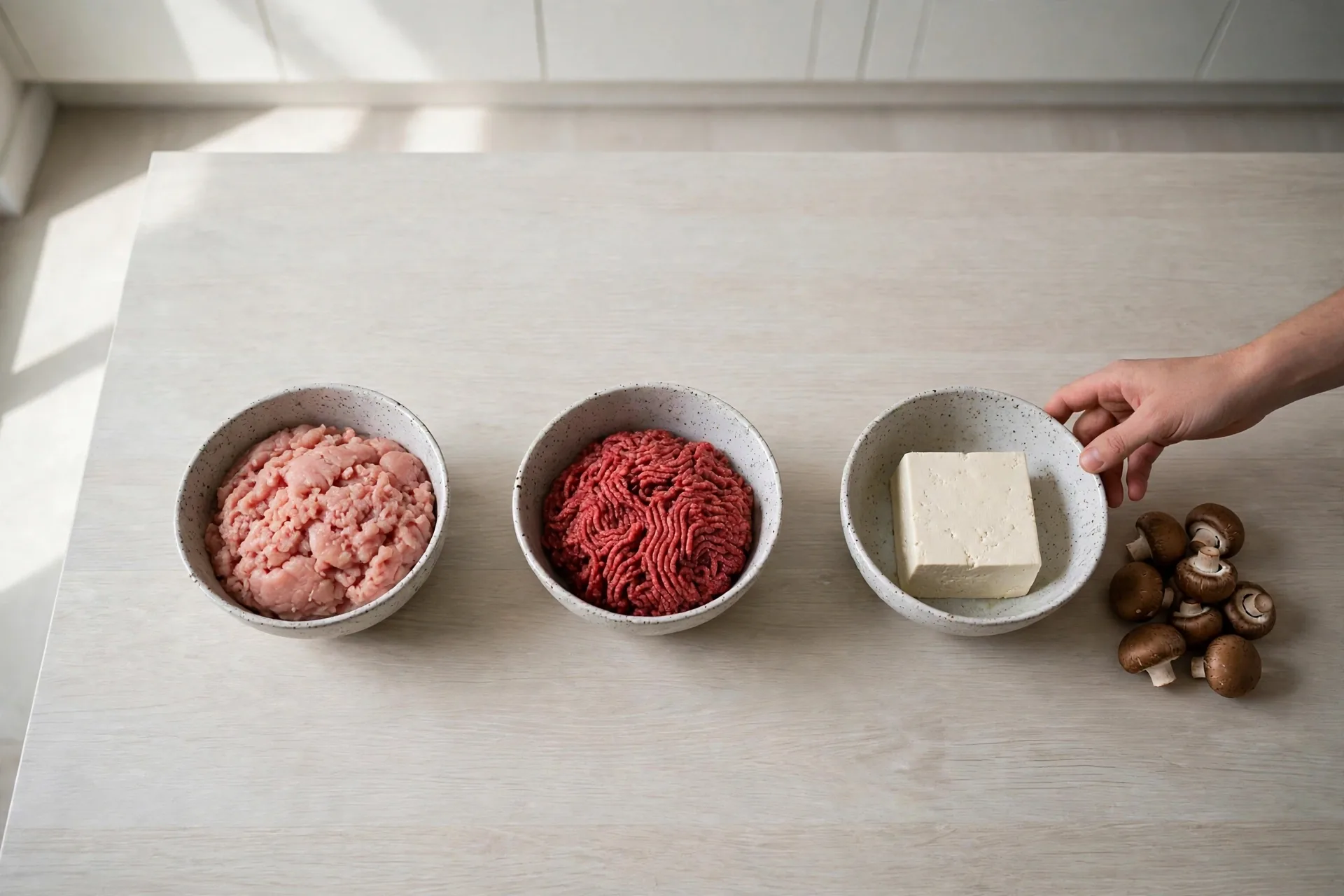
Three protein options sit side by side at this stage: ground chicken, ground beef, and a block of extra-firm tofu with a few extra mushrooms. Picking the protein now decides which branch the recipe takes later. Everything else stays the same.
Shape the Lettuce Cups
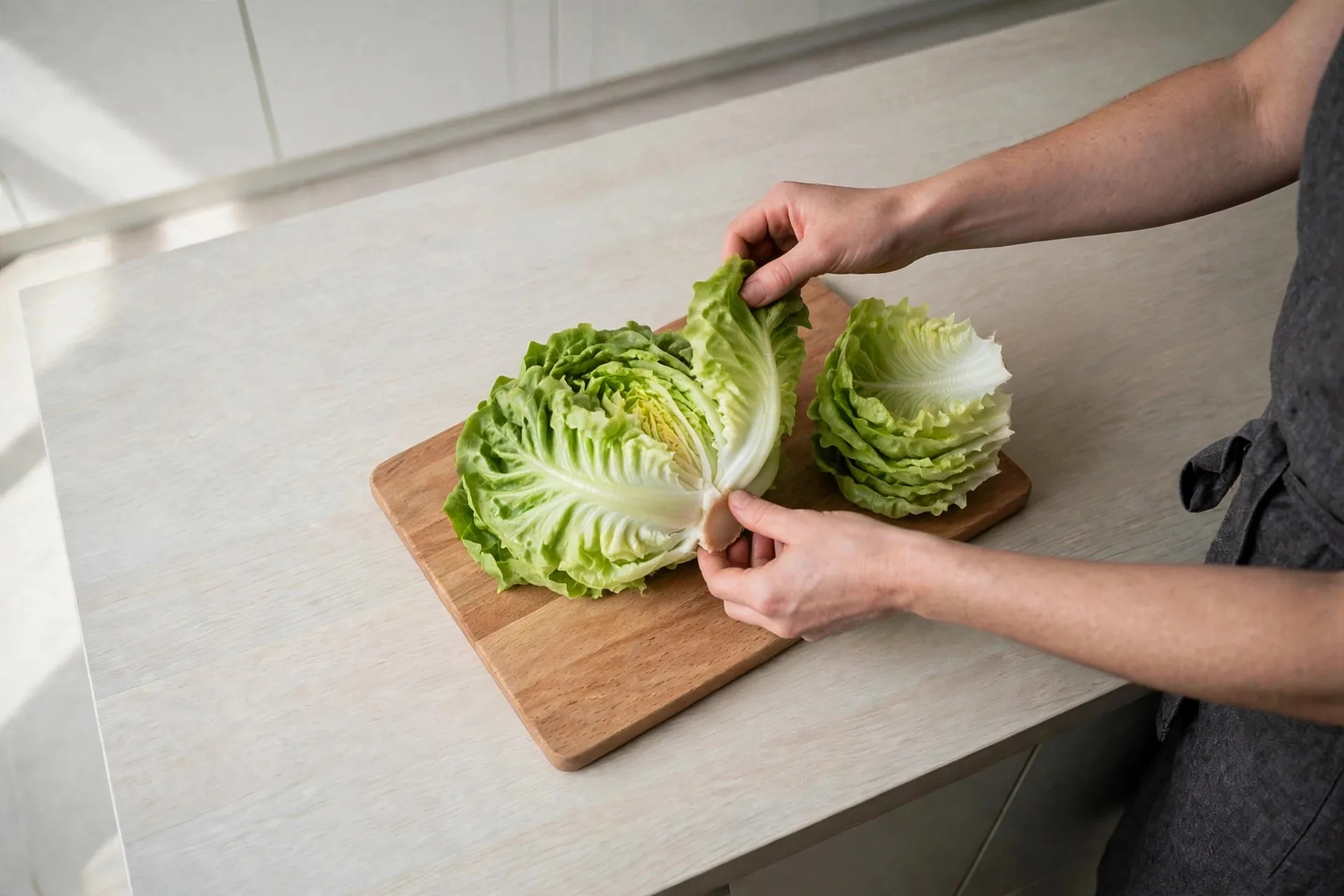
Cut out the white core of the butter lettuce head with a paring knife. The leaves loosen as the core comes out, and the head starts to fan open.
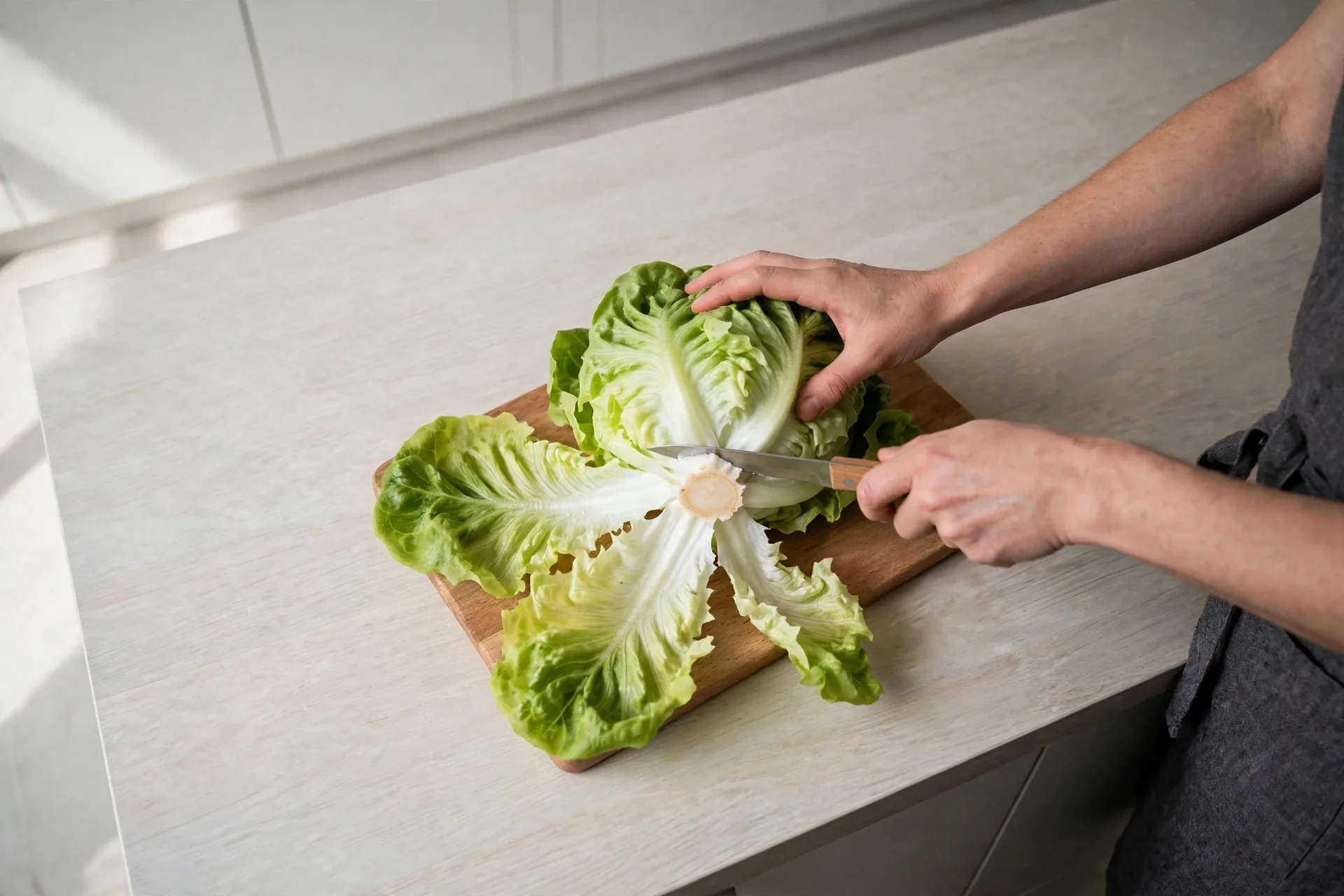
Peel the leaves away whole, one at a time, and stack them cup-side up. Keep the broad outer leaves for the main servings and save the smaller inner leaves for smaller bites.
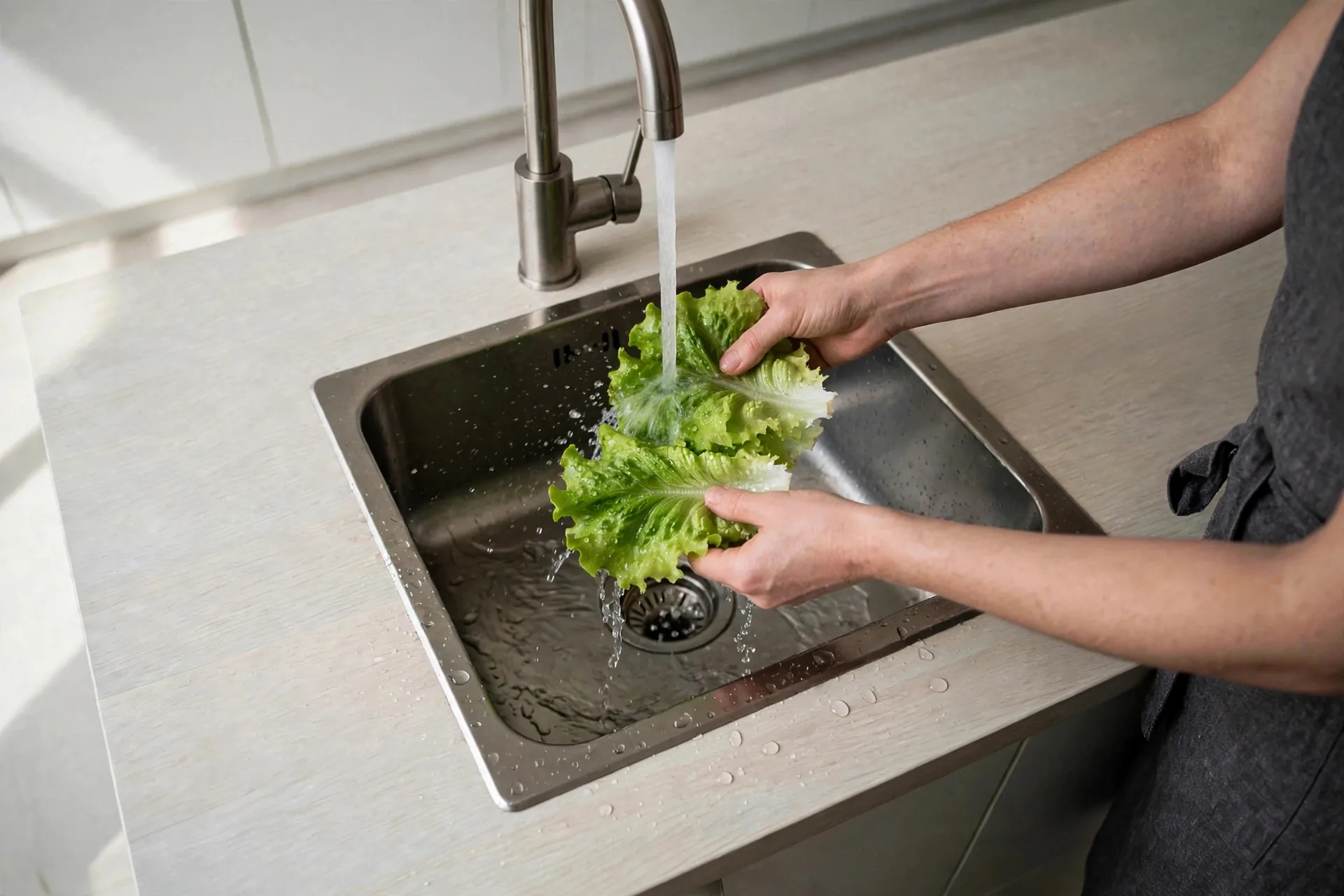
Rinse the leaves under a gentle stream of cool water. Lettuce from the store carries grit in its folds, and a quick rinse takes care of it.
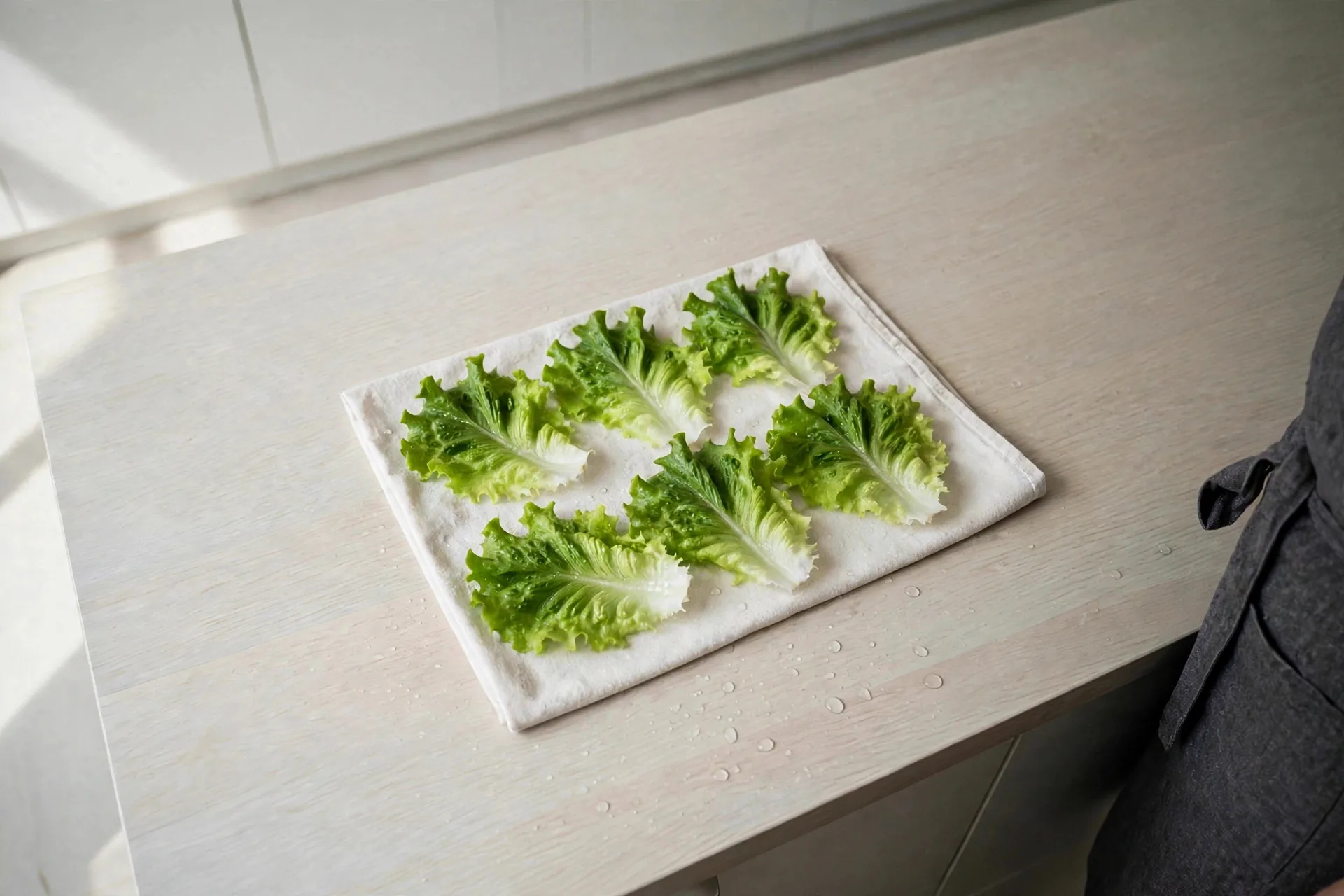
Pat the rinsed leaves dry with a clean kitchen towel, then lay them flat and slightly overlapping. A few drops of water left on the leaves are fine. Puddles are not: wet leaves make soft cups, and soft cups tear when filled.
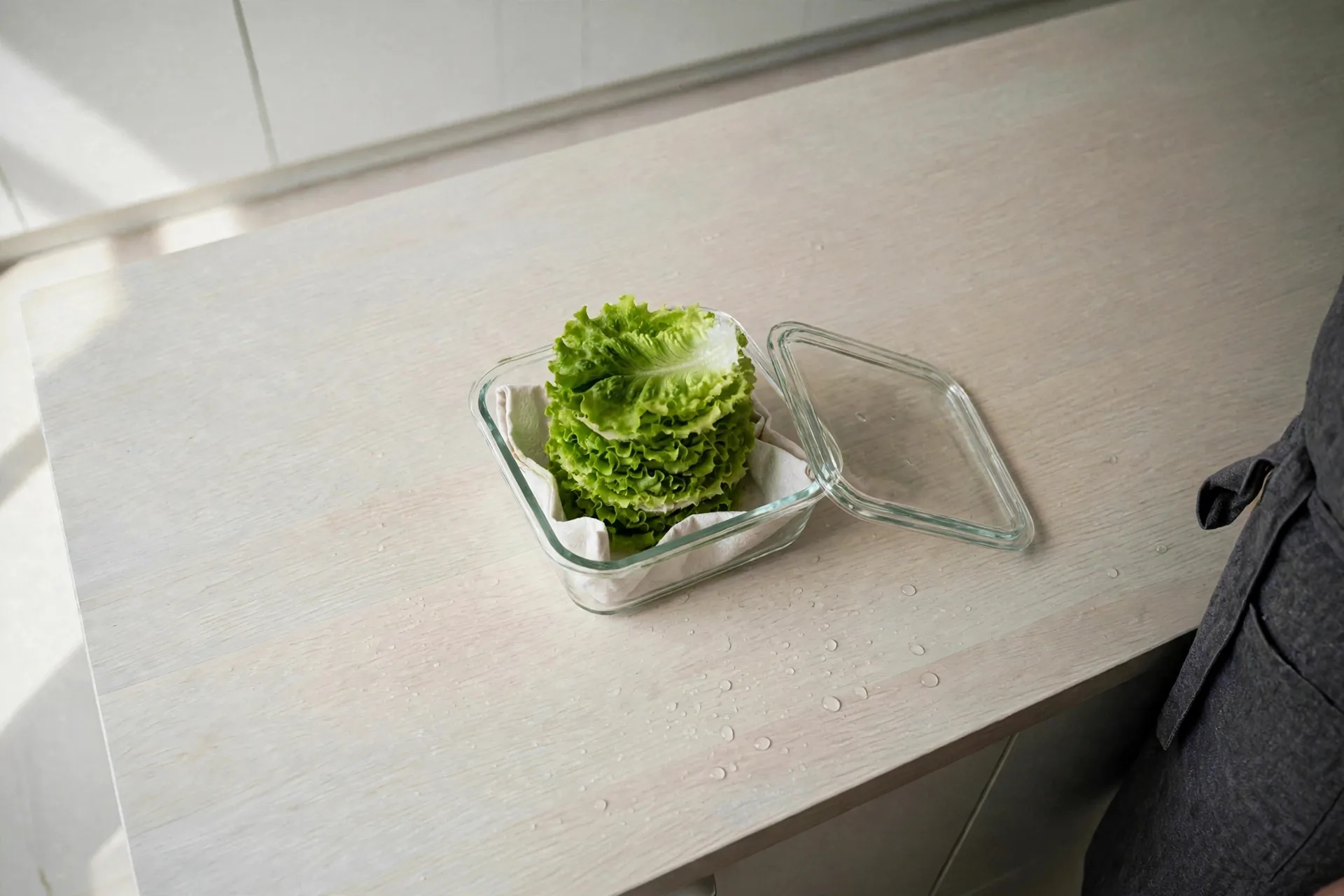
Stack the dry cups in a shallow container lined with a paper towel, with the lid resting beside it. Chilling the cups while the rest of the prep happens keeps them crisp. Do this early so the cups have time in the cold before serving.
Mince the Vegetables and Aromatics
Tip the opened can of water chestnuts into a fine mesh sieve over the sink and let the liquid drain away. The empty can goes on the counter, out of the way.
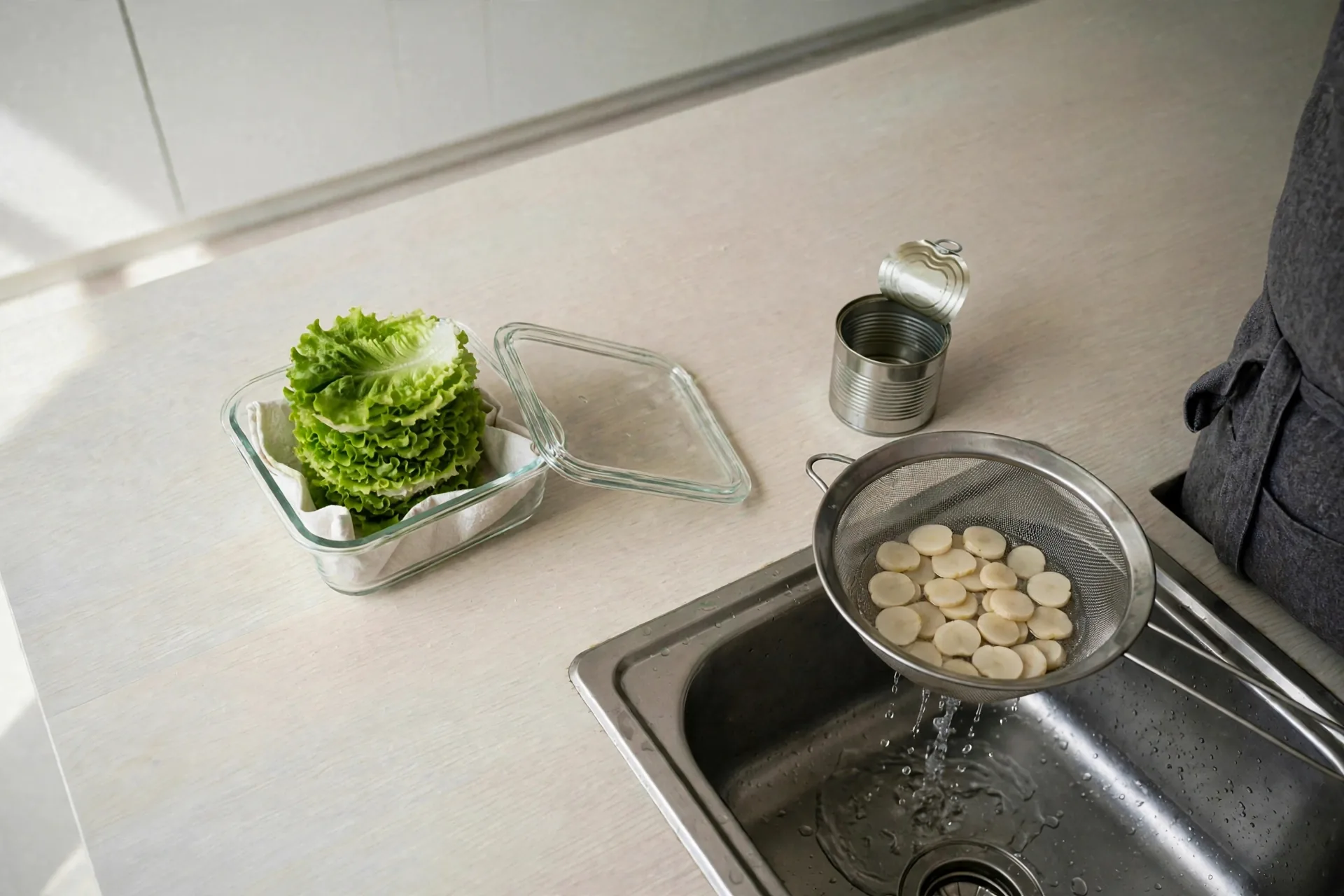
Mince the drained chestnuts on the cutting board into small pale pieces. Keep the pieces small enough to spoon into a cup without falling out, but stop before they turn to mush.
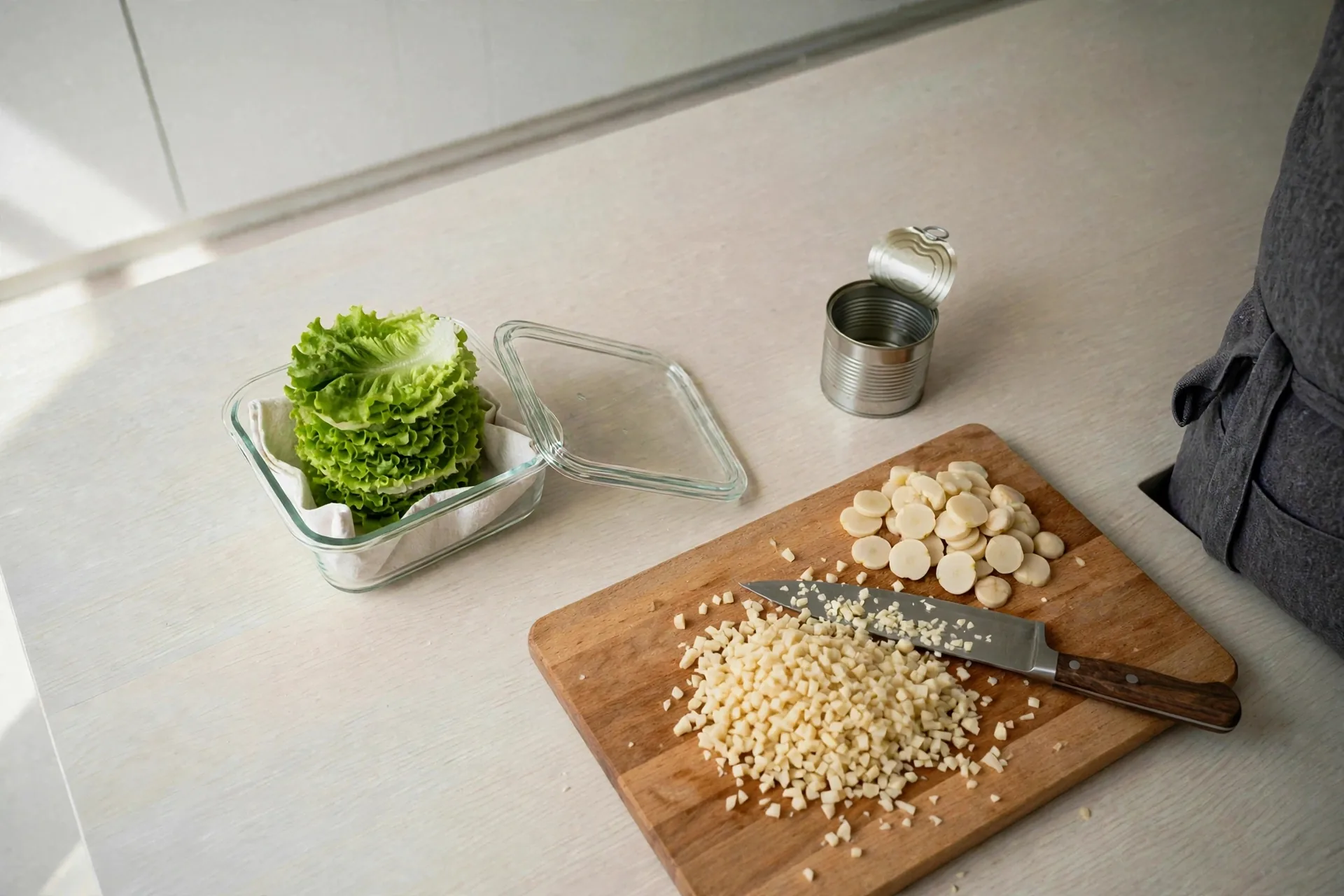
Mince the cremini mushrooms on the same board, into a heap of tiny brown pieces beside the chestnut pile. Fine mincing matters here: the mushrooms need to blend into the filling and brown evenly, and large pieces steam instead of browning.
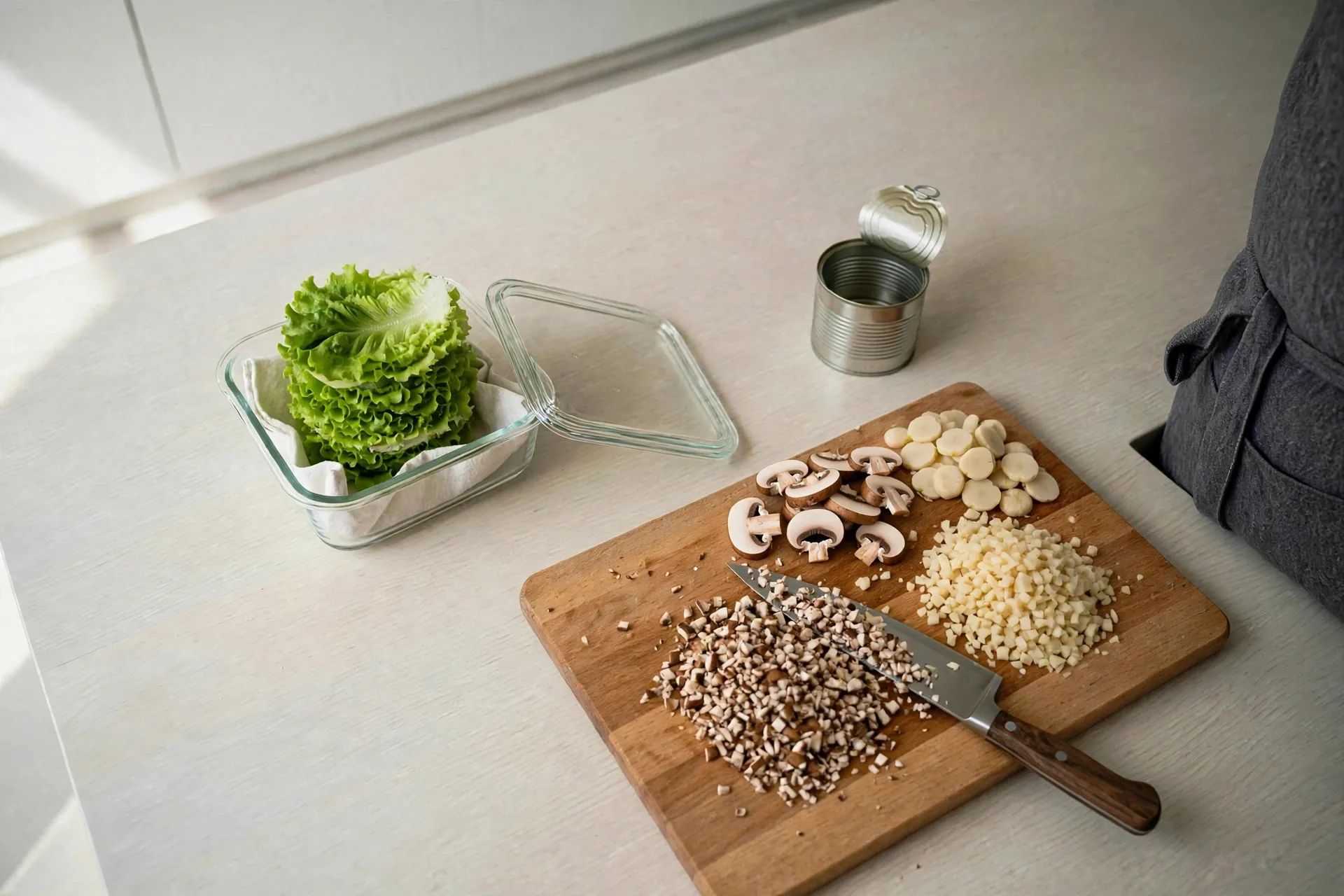
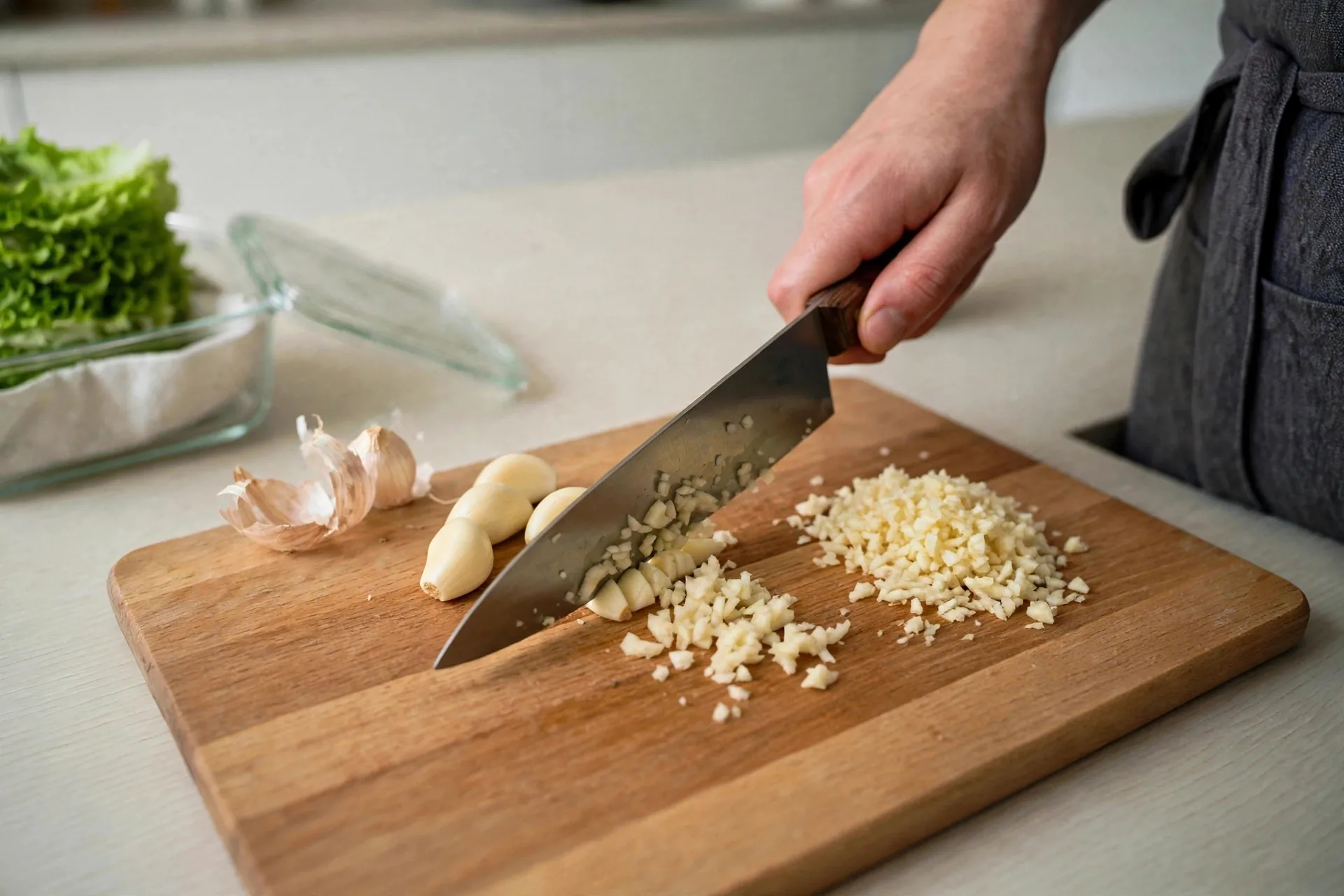
Peel the papery skin from each garlic clove on a clean spot of the board. Three peeled cloves, with the skins pushed aside, are ready for mincing.
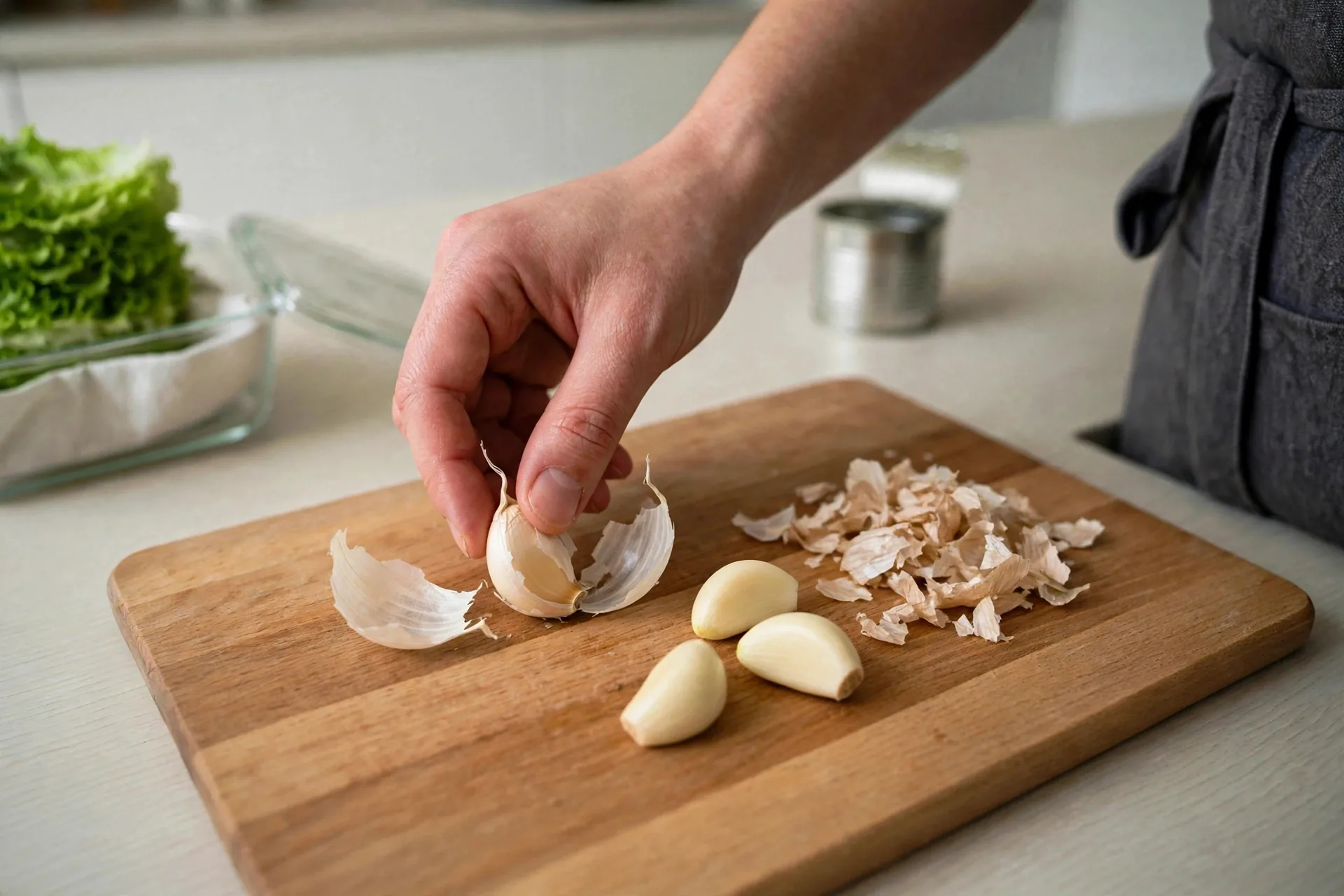
Rock a chef’s knife through the peeled cloves until the garlic is finely minced. Small pieces cook fast in hot oil, which is why the garlic goes in only briefly before the mushrooms follow.
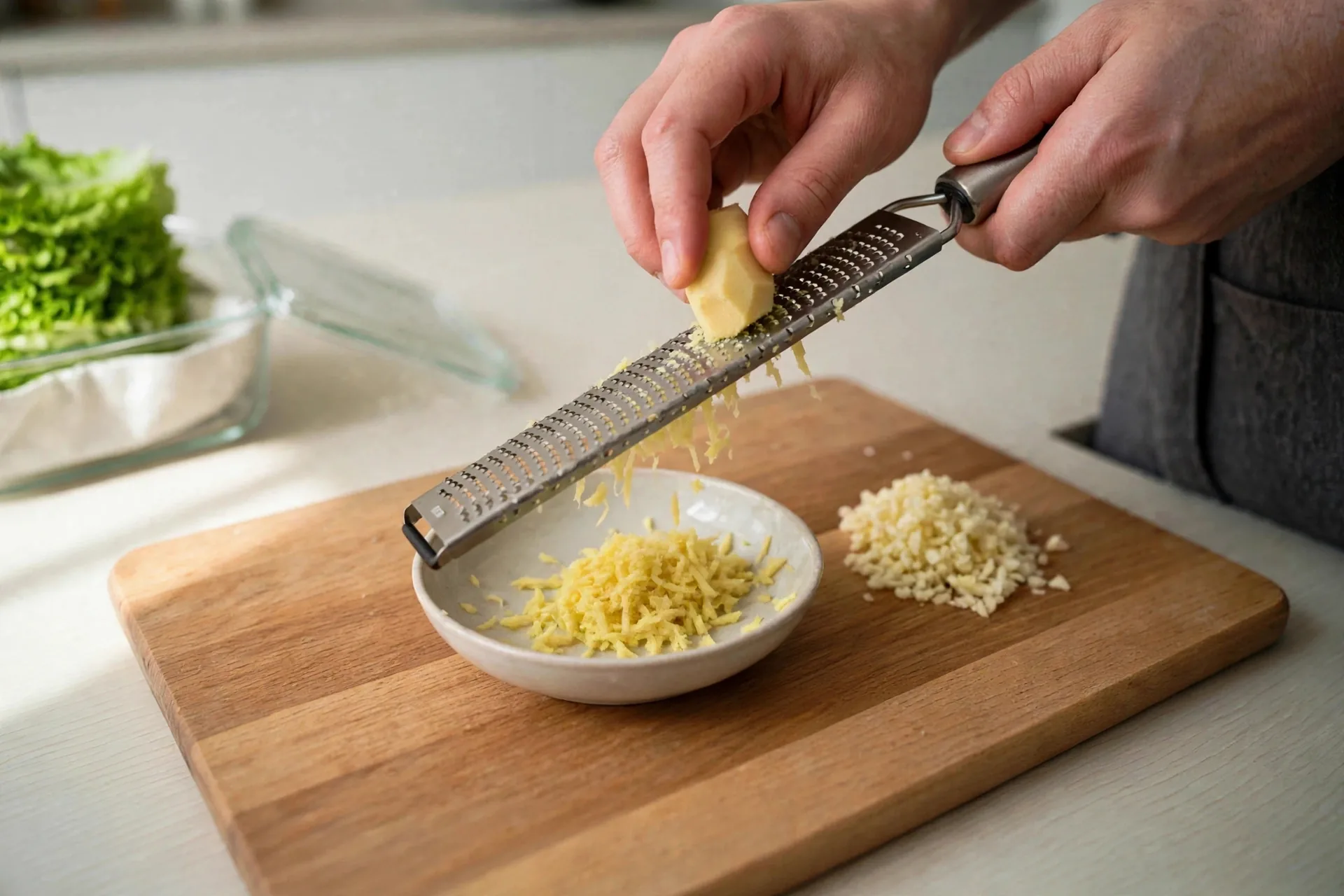
Grate the peeled ginger on a fine microplane over a small bowl. The grated ginger sits beside the minced garlic, ready to go into the wok at the same time.
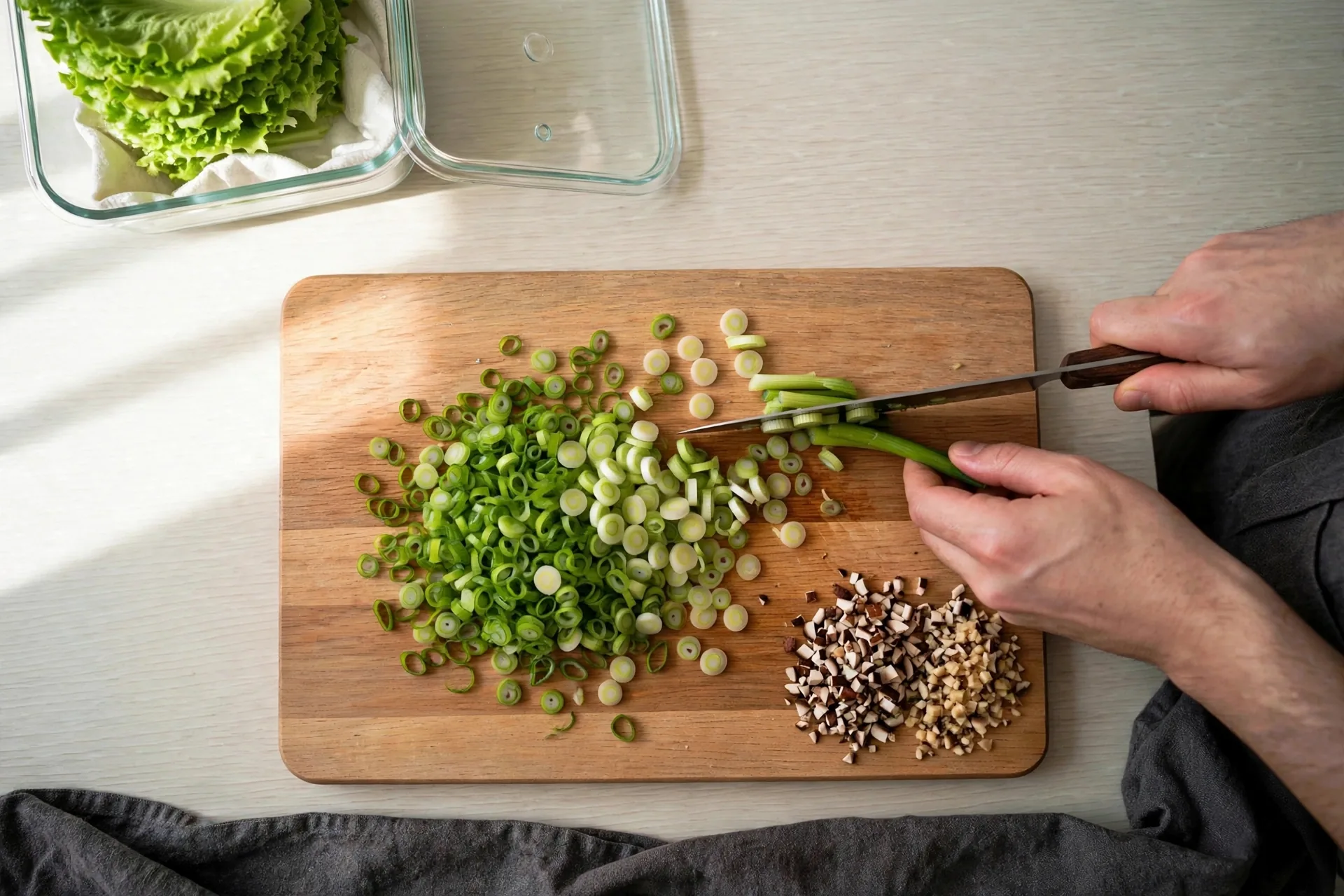
Slice the green onions into thin rings. Half the rings will go into the hot filling at the end, and the rest will top the finished wraps, so keep the mound in one place for now.
Whisk the Two Sauces
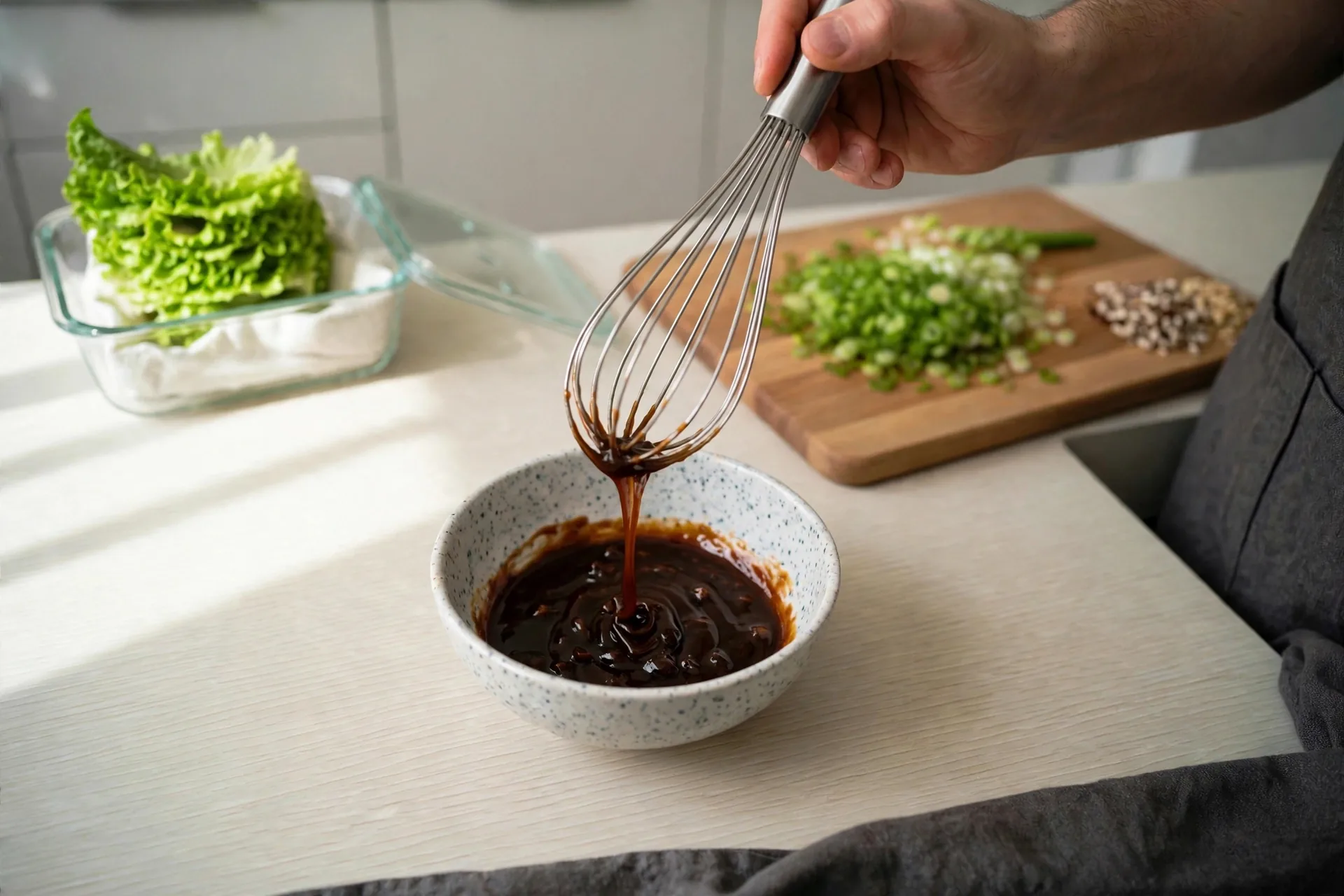
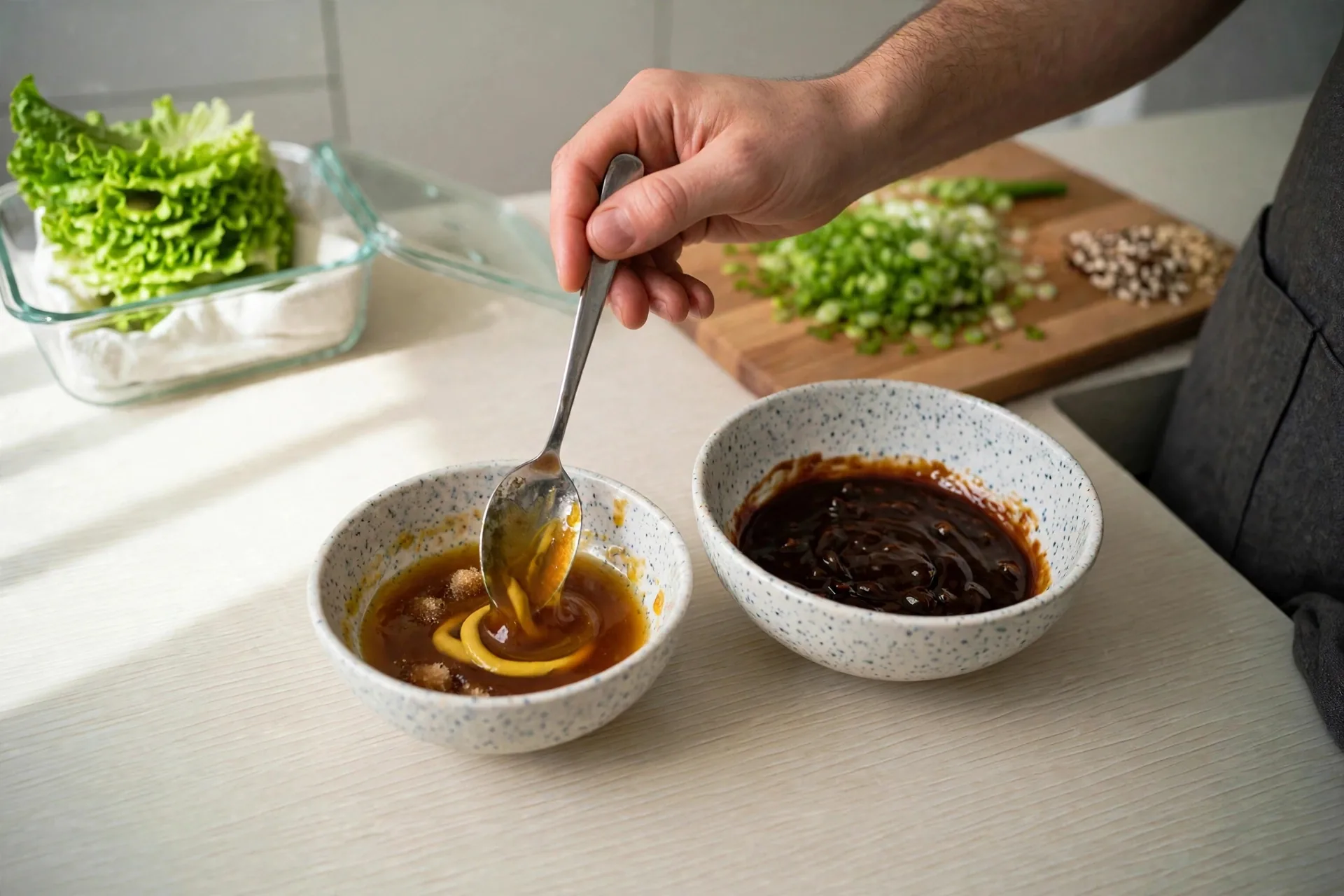
Whisk hoisin sauce, soy sauce, rice vinegar, sesame oil, sriracha, and a splash of water in a small bowl until the mixture turns into a glossy dark-brown sauce. A ribbon falling from the whisk shows the sauce is mixed. Set this bowl by the stove: it goes into the wok after the protein and vegetables come together.
Stir soy sauce, rice vinegar, brown sugar, and a spoon of hot mustard in a second small bowl until the sugar dissolves into an amber dipping sauce. The yellow mustard swirl stays visible on the surface. Put this bowl beside the stir-fry sauce bowl so both sauces are ready before cooking starts. If dipping sauces are a favorite part of the meal, the Thai Peanut Sauce 5 Ways post gives a peanut-based dip that works the same way, served in a small bowl beside the main dish.
Cook the Shared Vegetables
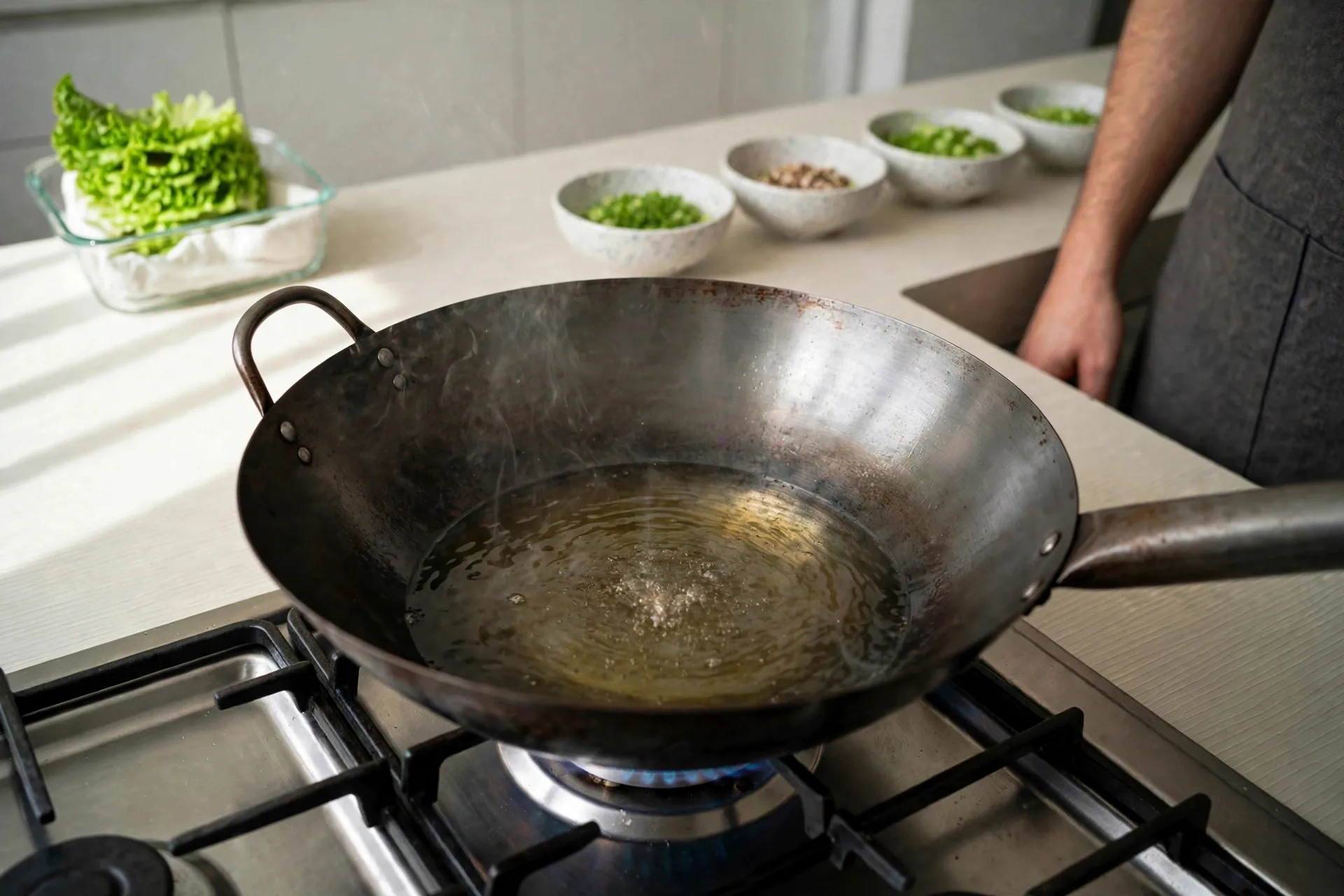
Set the wok on the stove and heat the oil until it shimmers across the bottom, with a light haze above it. Line the prepped bowls of minced ingredients at the edge of the counter so each one is within reach. Hot oil waits for no one, and the next few steps happen in quick succession.
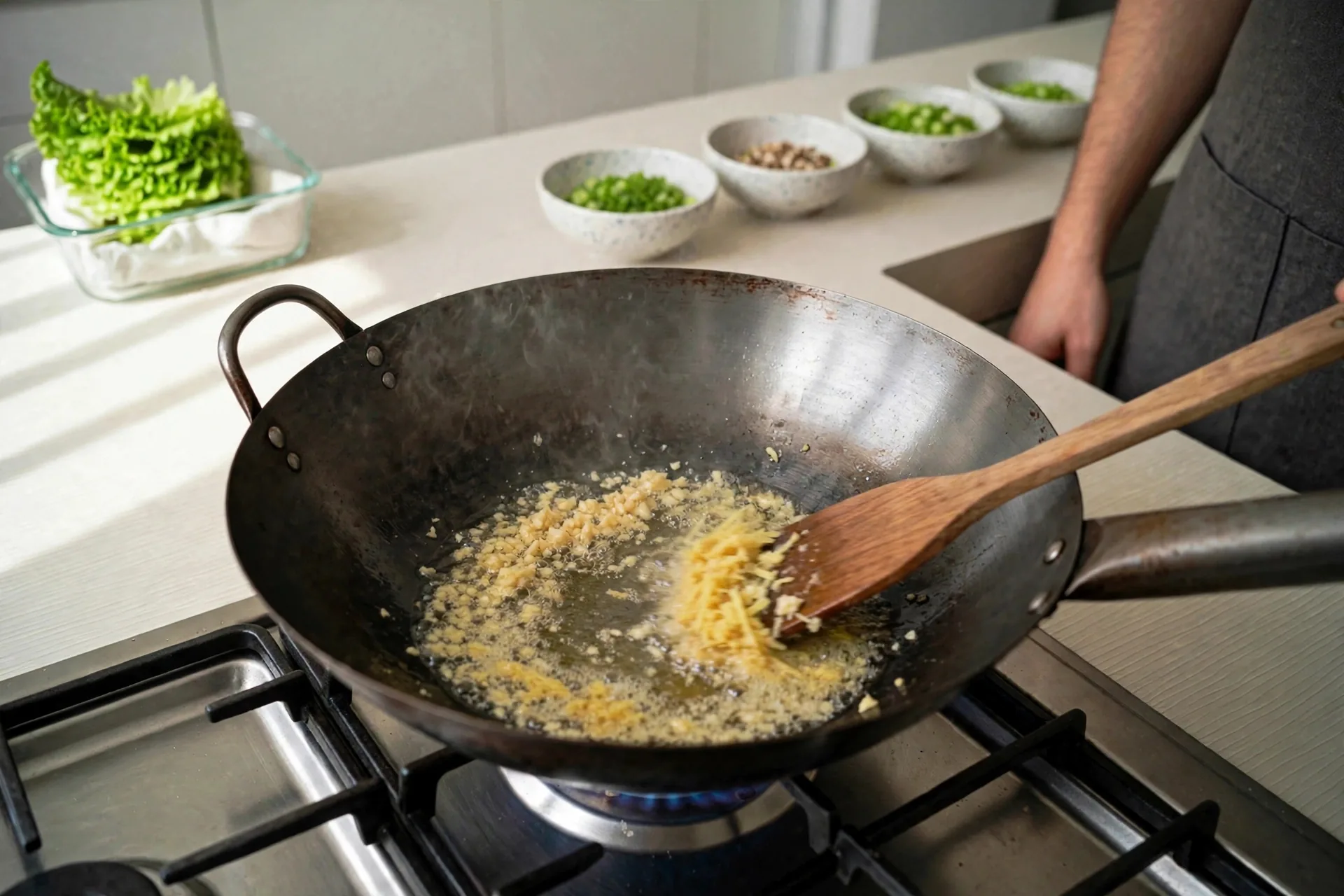
Add the minced garlic and grated ginger to the oil and stir with a wooden spatula. They turn pale gold and fragrant fast. This step is short on purpose: garlic that goes past gold turns bitter, and bitter garlic flavors the whole filling.
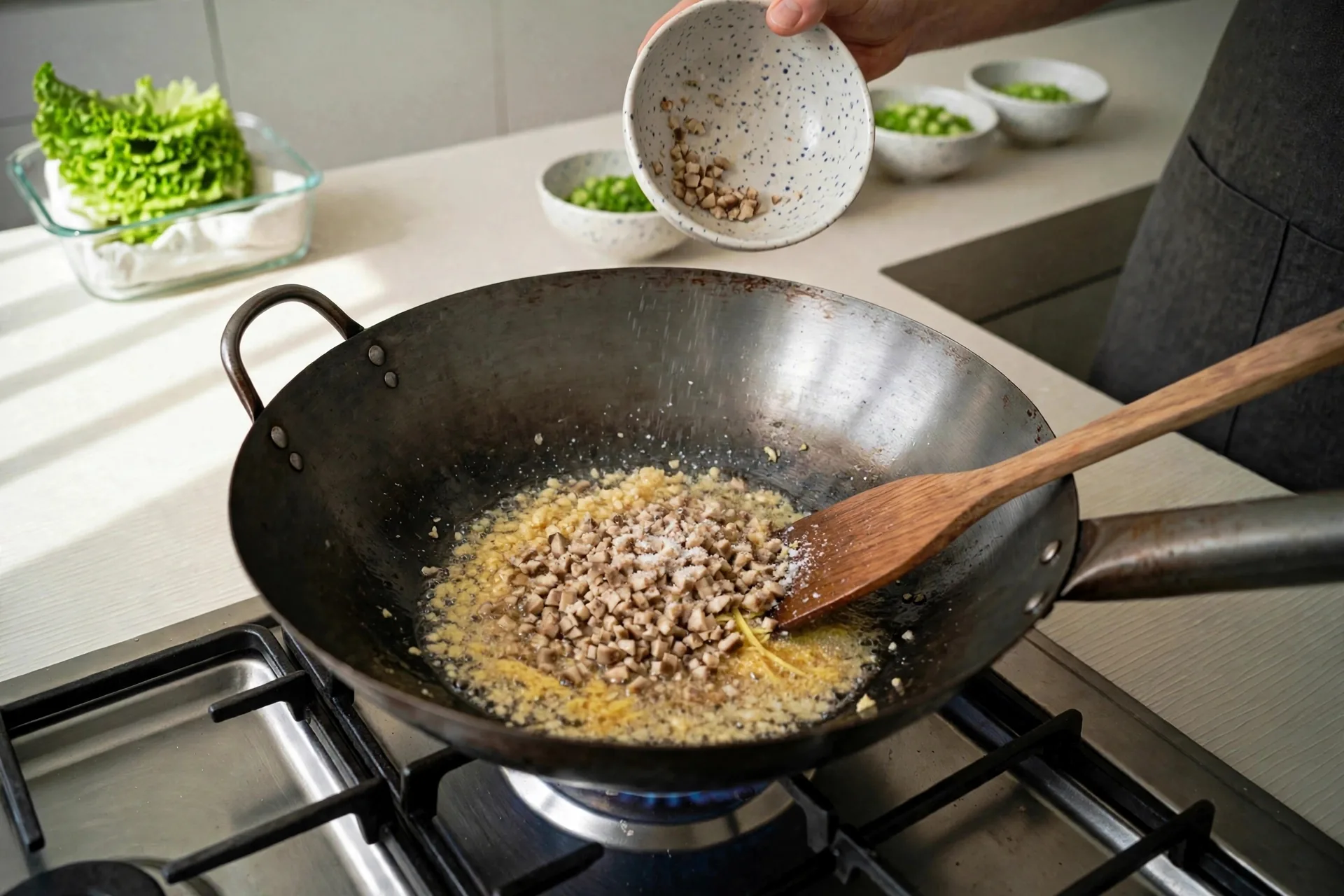
Tip the minced mushrooms into the wok over the garlic and ginger, with a pinch of salt on top. The pile looks pale and moist at first. Salt at this stage pulls water out of the mushrooms, which is exactly what needs to happen next.
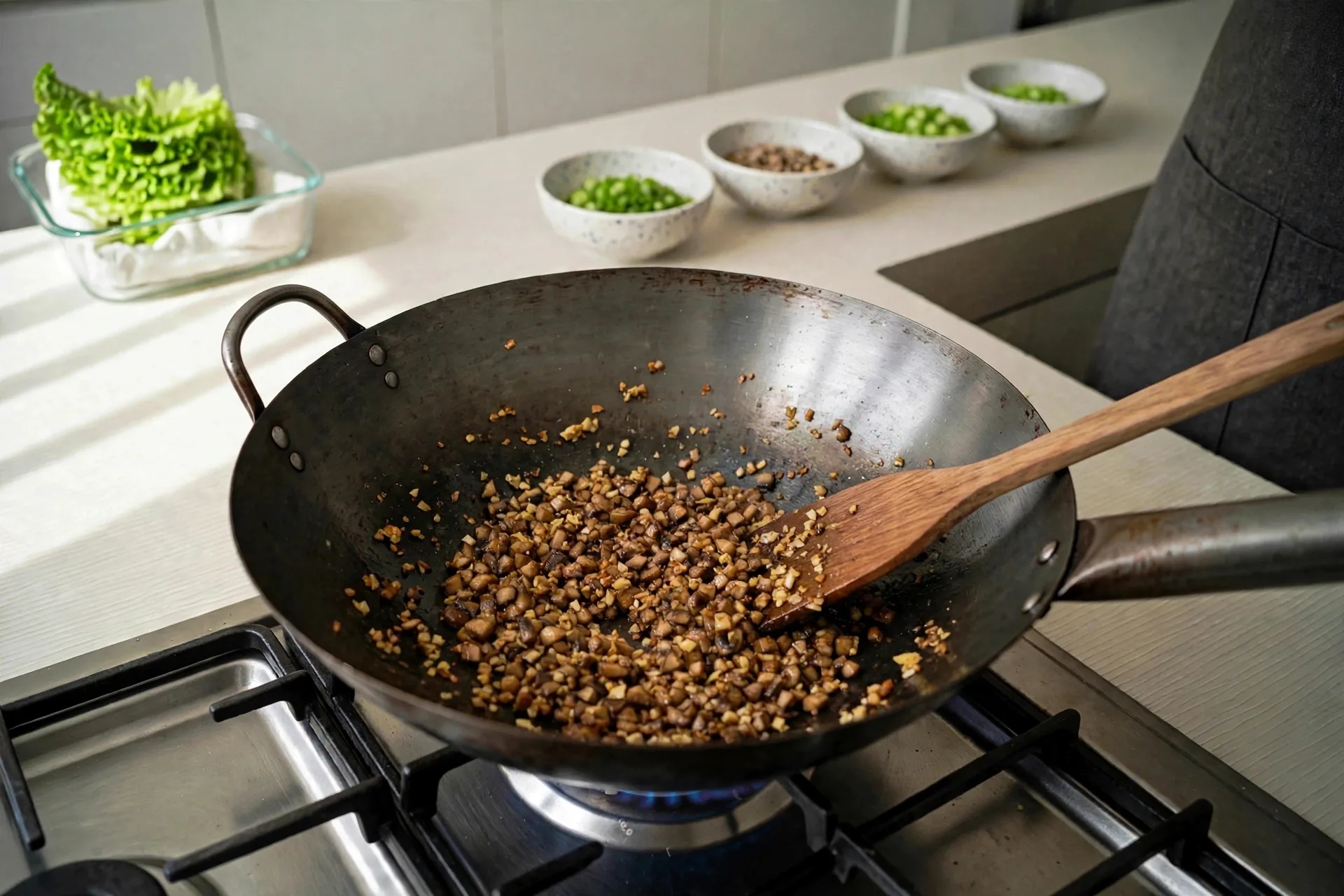
Stir the mushrooms until their moisture cooks off and they turn deep golden-brown, shrunken, and slightly crisp at the edges, with the garlic and ginger mixed through. This is the step that decides the filling’s texture. Mushrooms pulled too early stay wet, and wet mushrooms make a wet filling. Wait for the color change and the shrunken size before moving on.
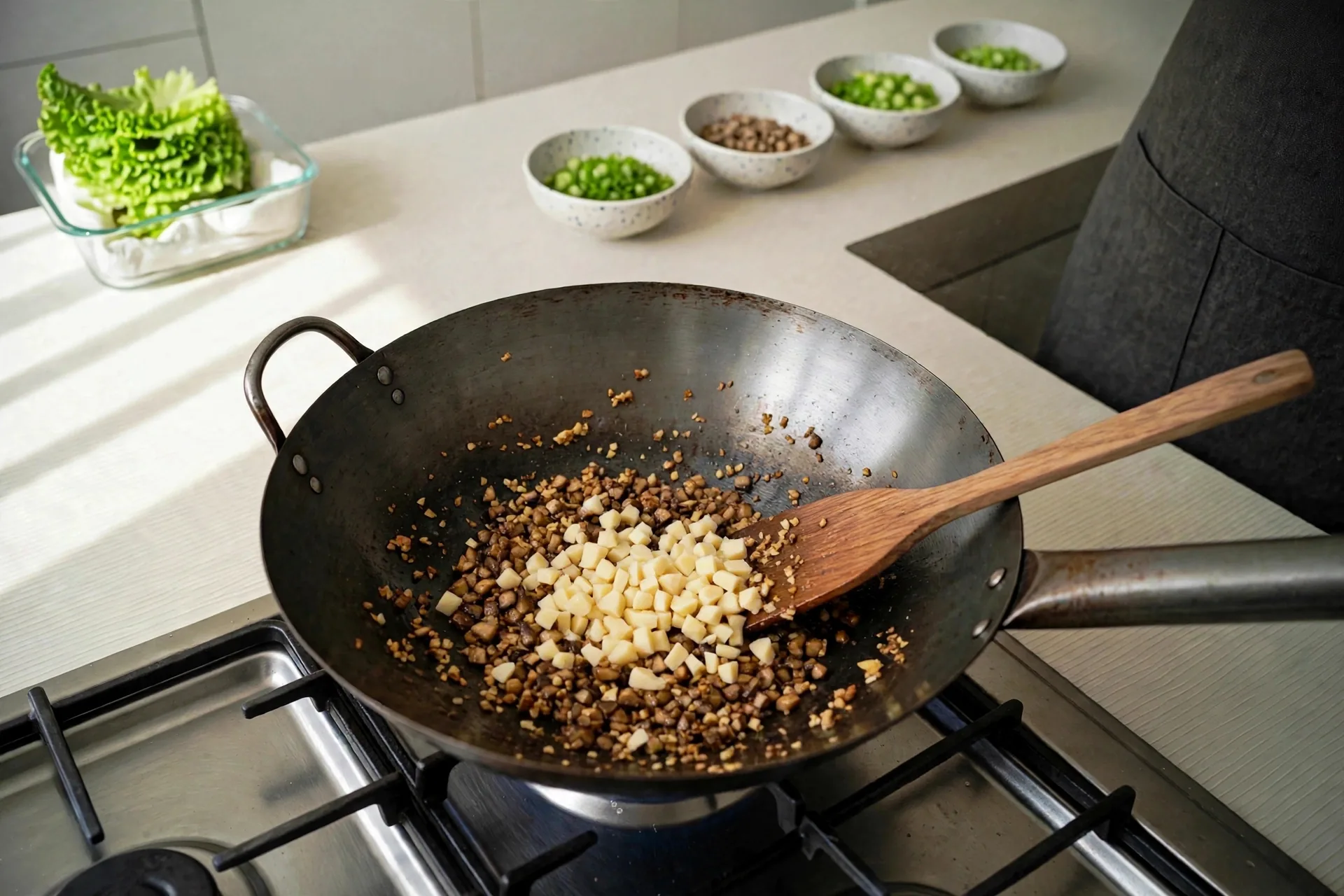
Add the minced water chestnuts to the golden mushrooms. The pale crunchy pieces sit on top before they get tossed in. Chestnuts go in late because they need only a brief toss to warm through, and longer cooking softens the crunch the filling depends on.
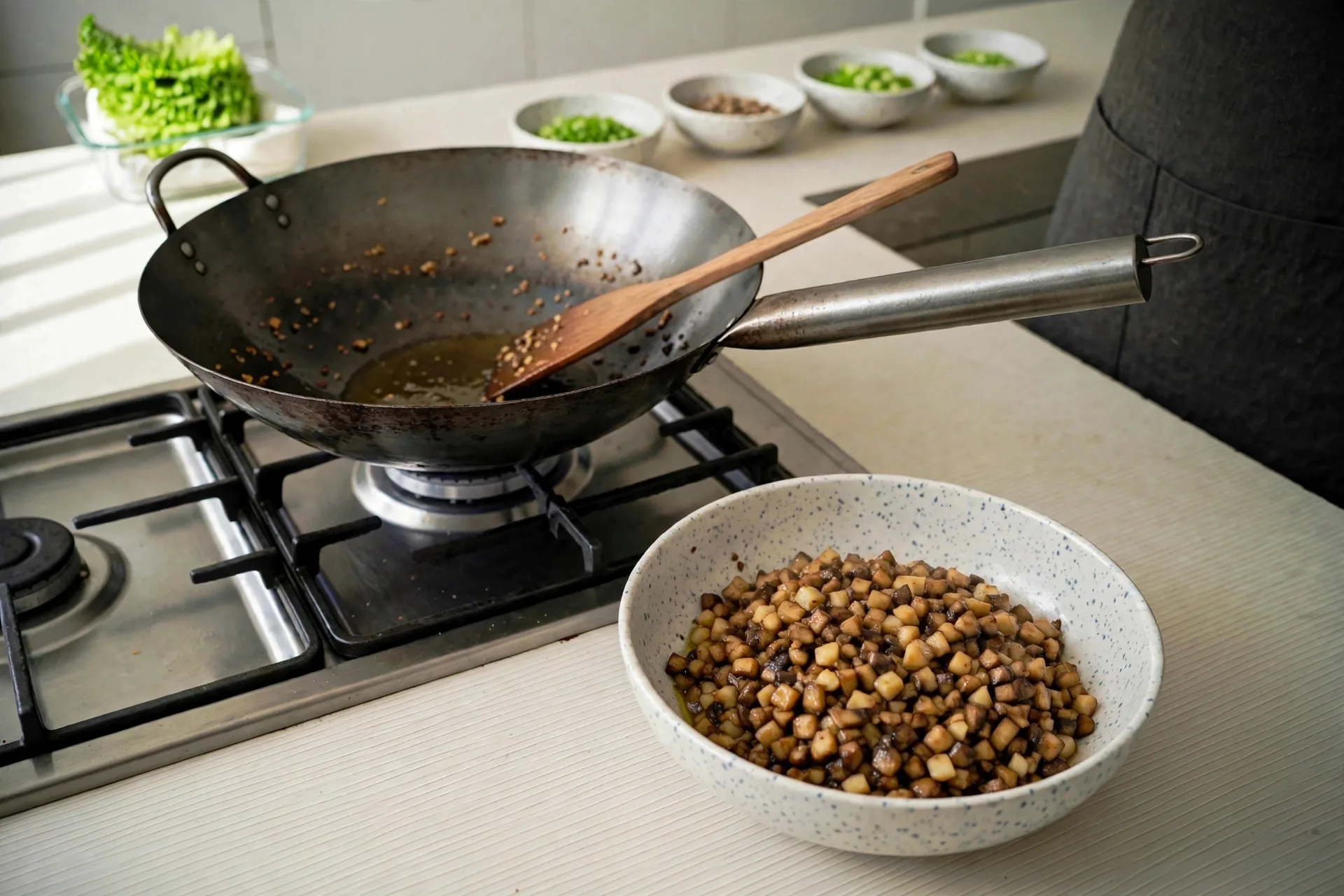
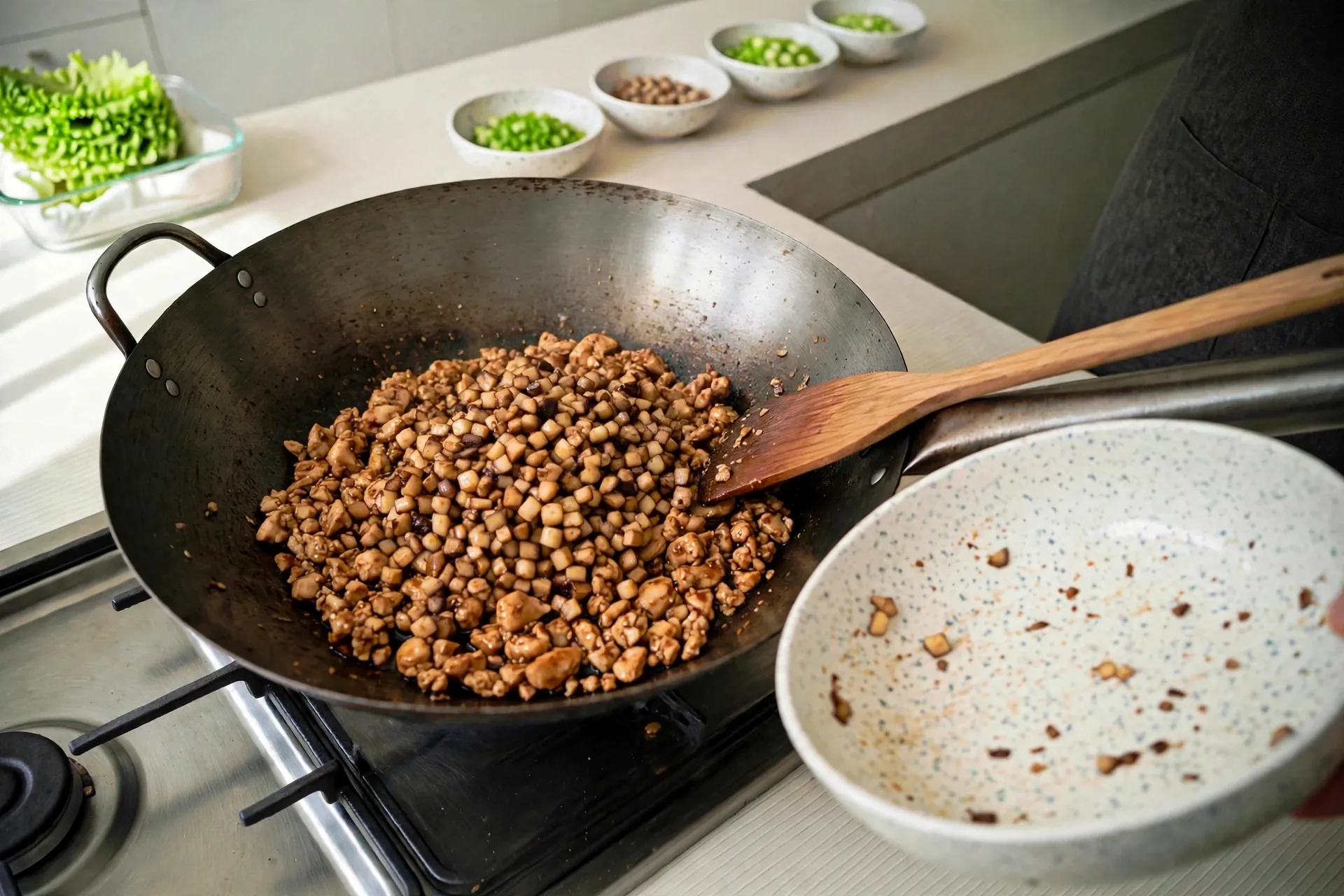
Scoop the mushroom and water chestnut mixture into a white speckled bowl beside the stove. The wok behind it stays empty except for a thin film of oil and a few browned bits. Setting the vegetables aside is what makes the three versions possible: the same bowl of vegetables meets chicken, beef, or tofu in the next step.
Chicken Lettuce Wraps — the Base Recipe
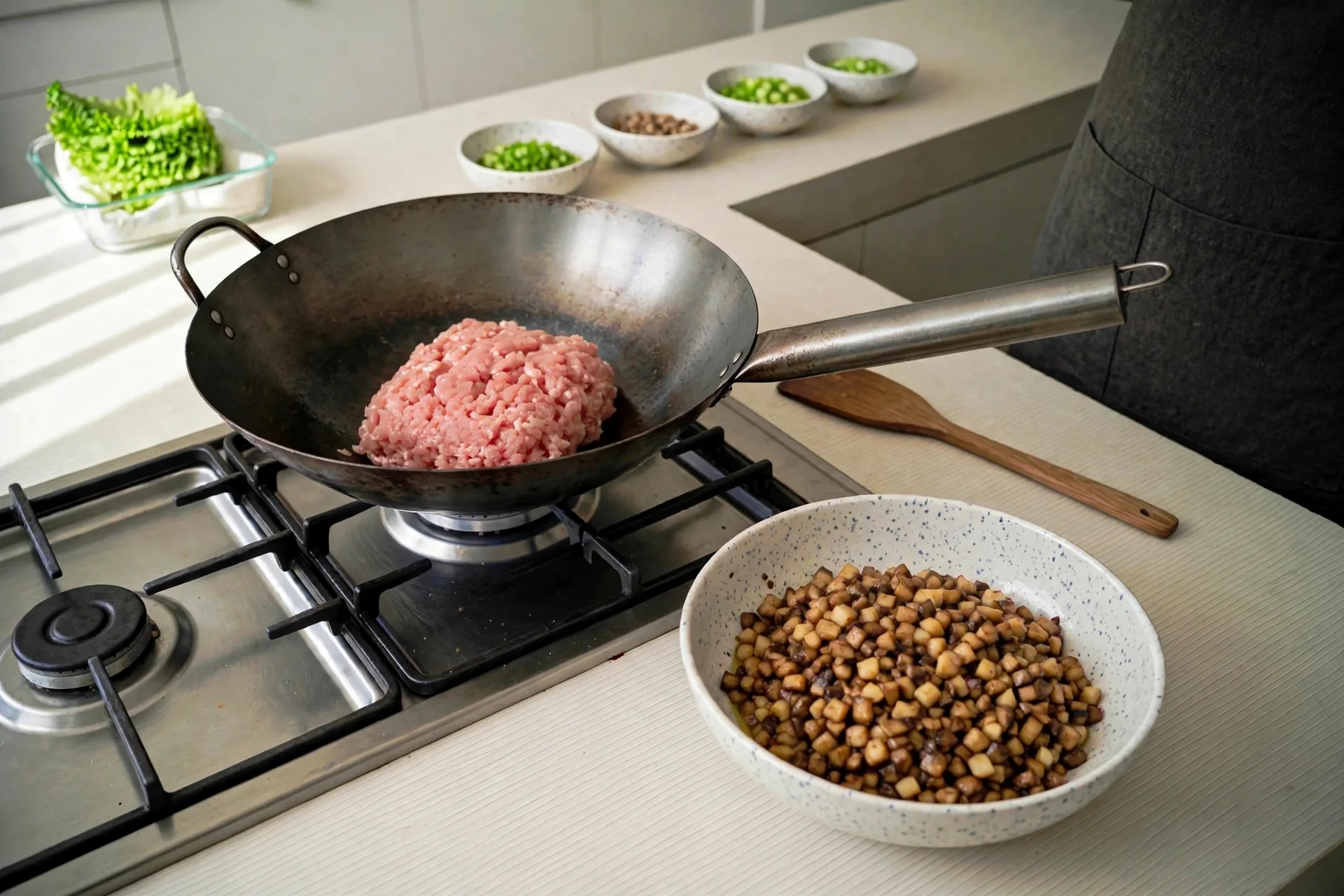
Place the block of raw ground chicken into the hot wok, with the wooden spatula beside it. The wok still holds the thin oil film and browned bits left by the vegetables, and those bits flavor the chicken.
Break the chicken into small crumbles with the spatula while a splash of soy sauce goes over it. Some pieces stay pink and others turn white at this stage, and that mix is normal. Keep breaking the larger clumps apart so the crumbles cook evenly.
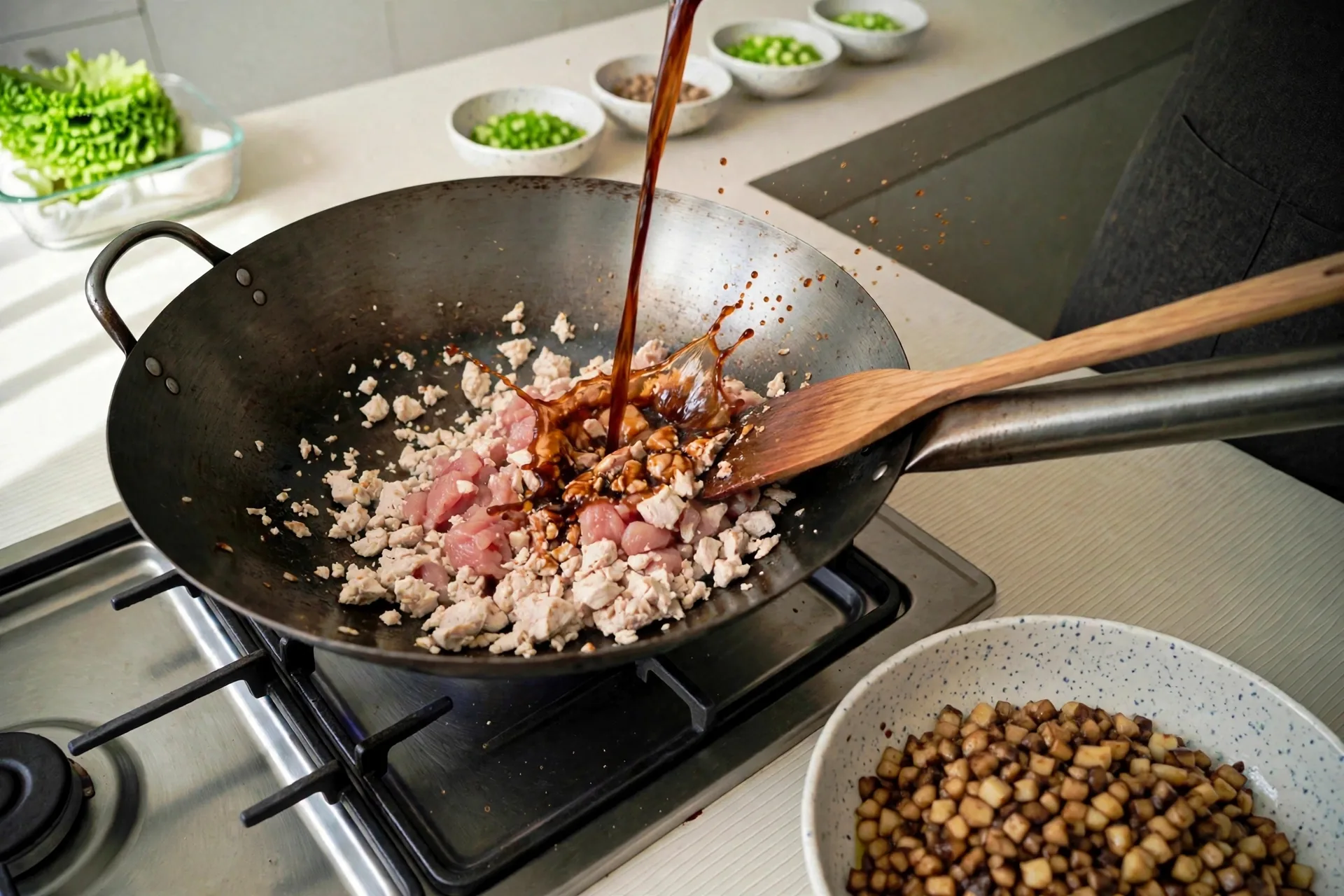
Cook the chicken until the crumbles turn opaque white and lightly golden at the edges, with no pink left anywhere. Glossy soy sauce coats the crumbles. The no-pink check is the doneness cue for ground chicken: cut a thick crumble open if the color is hard to read in the pan.
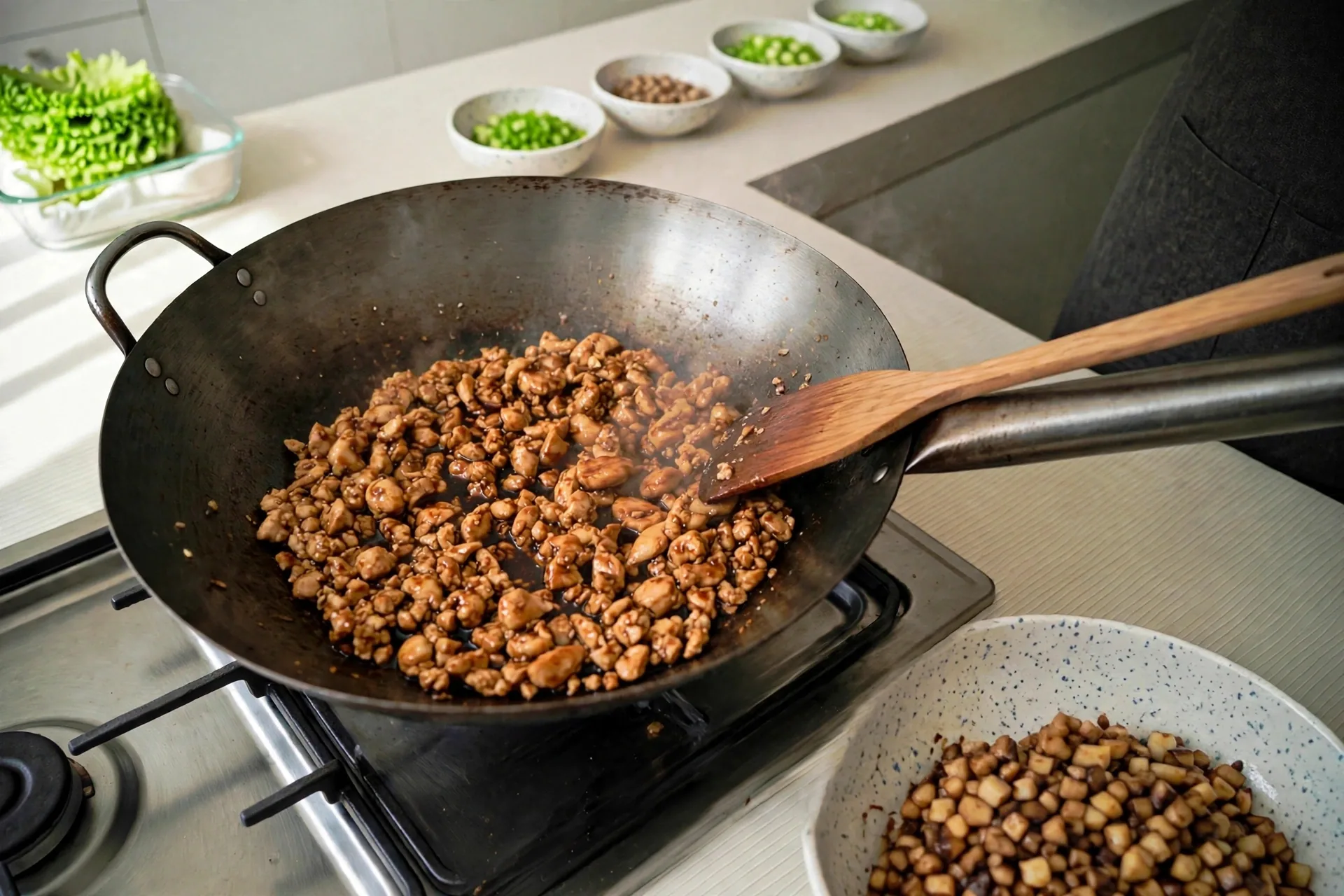
Tip the set-aside mushroom and water chestnut mixture from the bowl back into the wok, on top of the cooked chicken. Golden mushroom pieces sit on the pale chicken before they get tossed together.
Pour the dark glossy hoisin stir-fry sauce from the small bowl over the chicken and vegetables. The sauce pools around the filling at first, then coats everything as it gets stirred through.
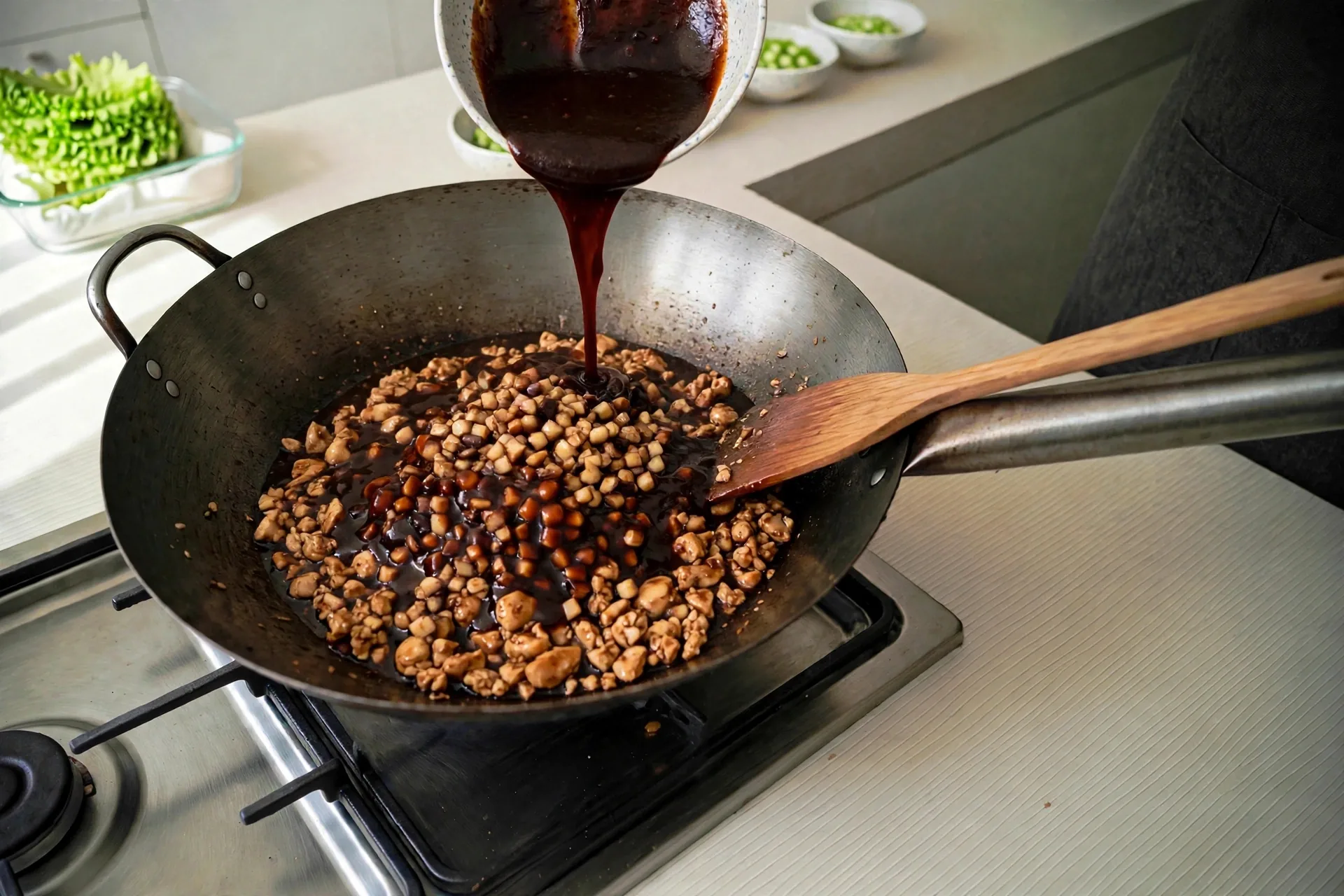
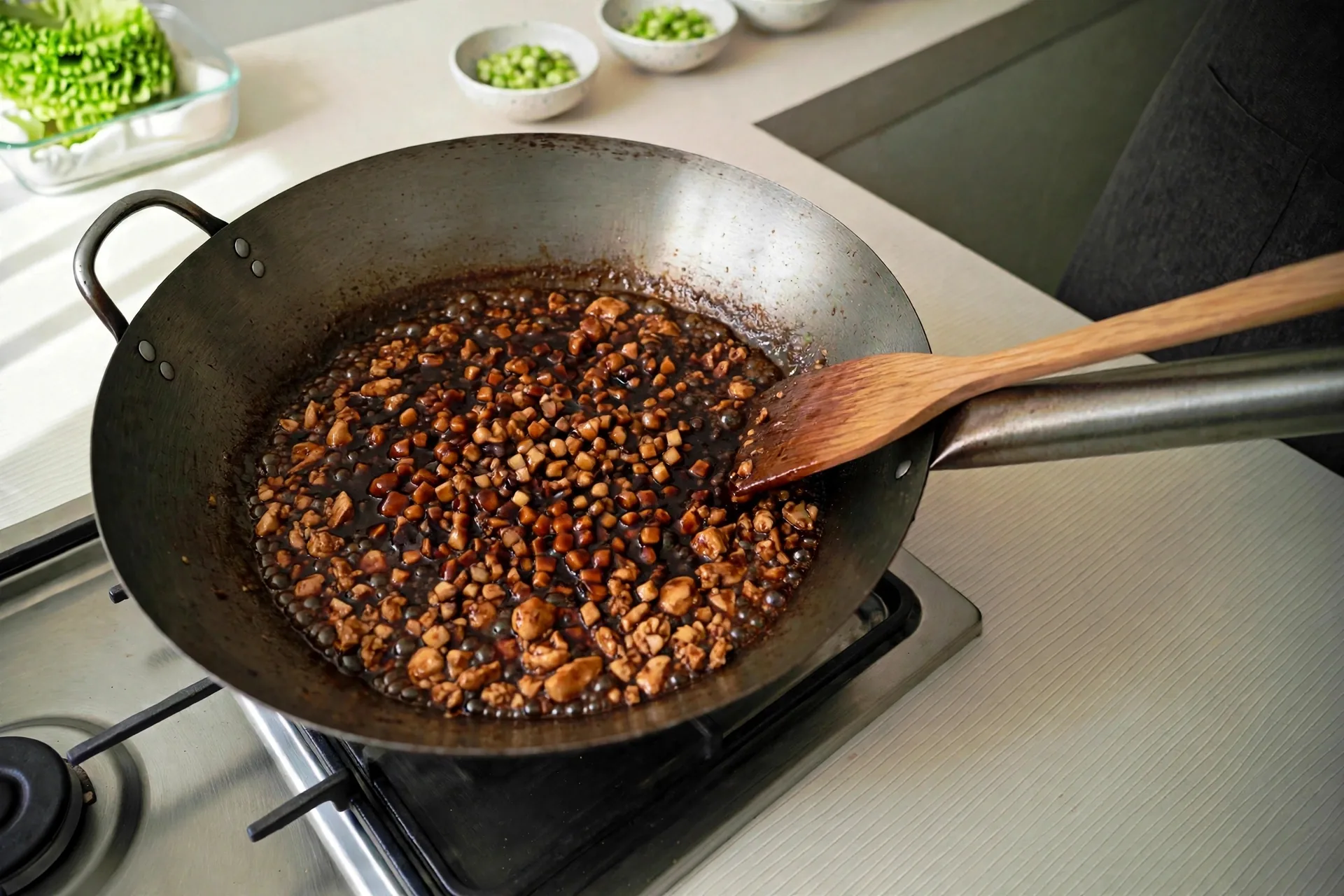
Simmer for a few minutes until the sauce reduces to a thick glossy glaze that clings to the chicken, mushrooms, and water chestnuts, with small bubbles at the edge. The glaze test is simple: drag the spatula through the filling and watch whether the sauce holds its line instead of running back together. A thin sauce makes soggy cups, so give it the time it needs to thicken before moving on.
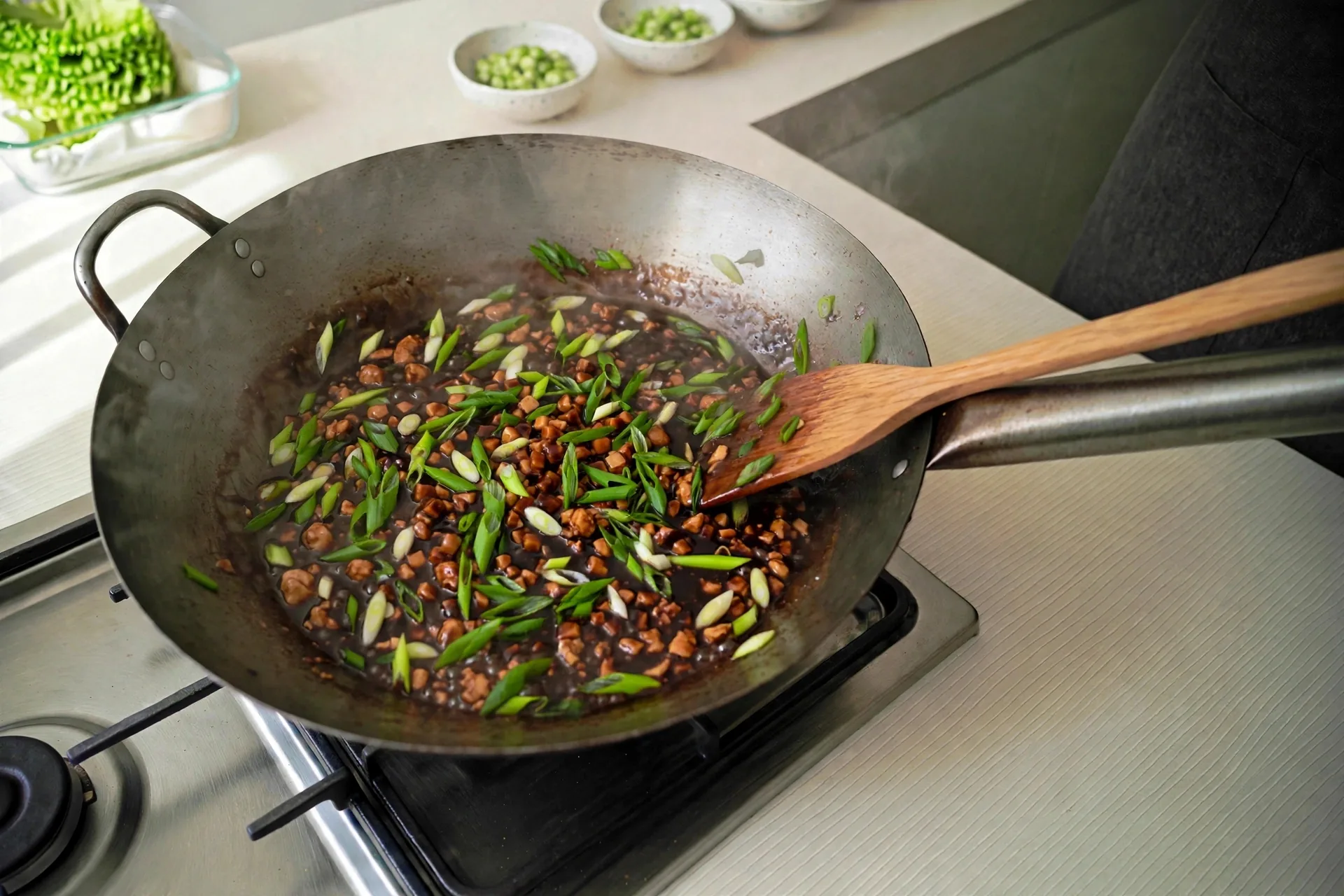
Fold the sliced green onions into the glossy filling, with bright green rings showing on the dark glaze and steam rising. Green onions go in last so they stay green and fresh-tasting instead of cooking down into the sauce.
Fill and Serve the Chicken Wraps
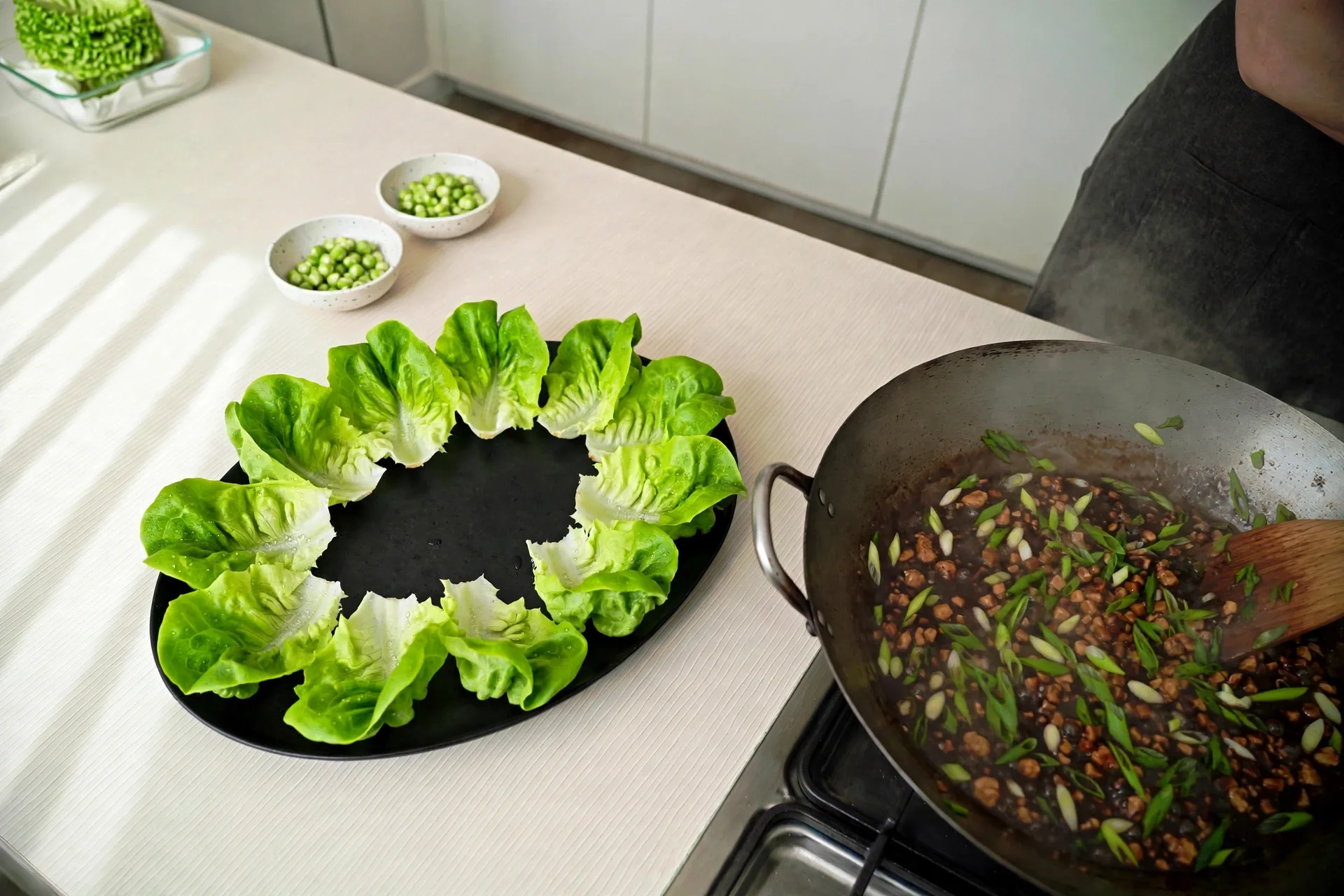
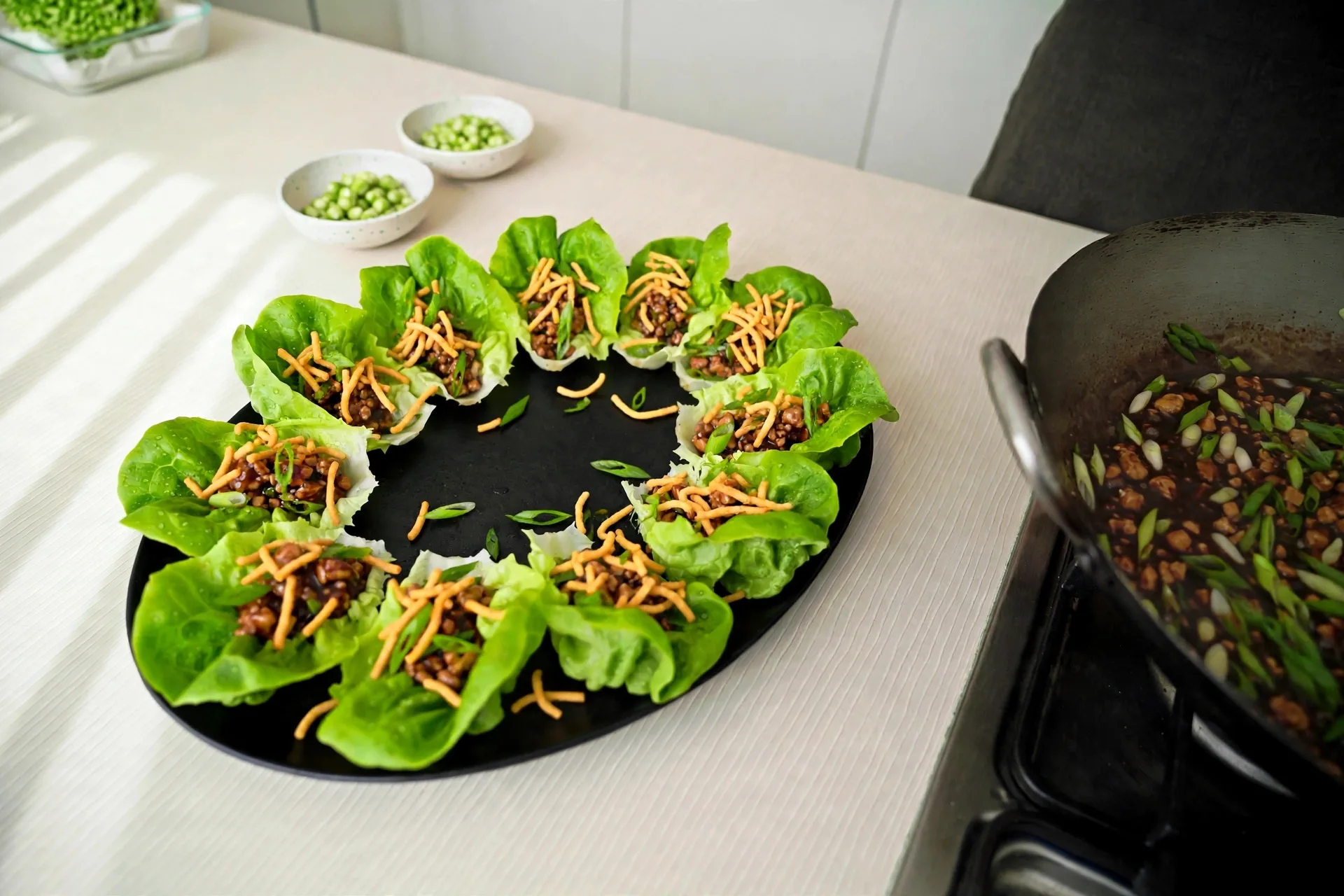
Arrange the chilled butter lettuce cups in a ring on the matte-black oval platter, empty and crisp, with the wok of finished filling at the edge of the frame. Cold cups against warm filling are part of the contrast, so fill the cups at the table or just before serving rather than long ahead.
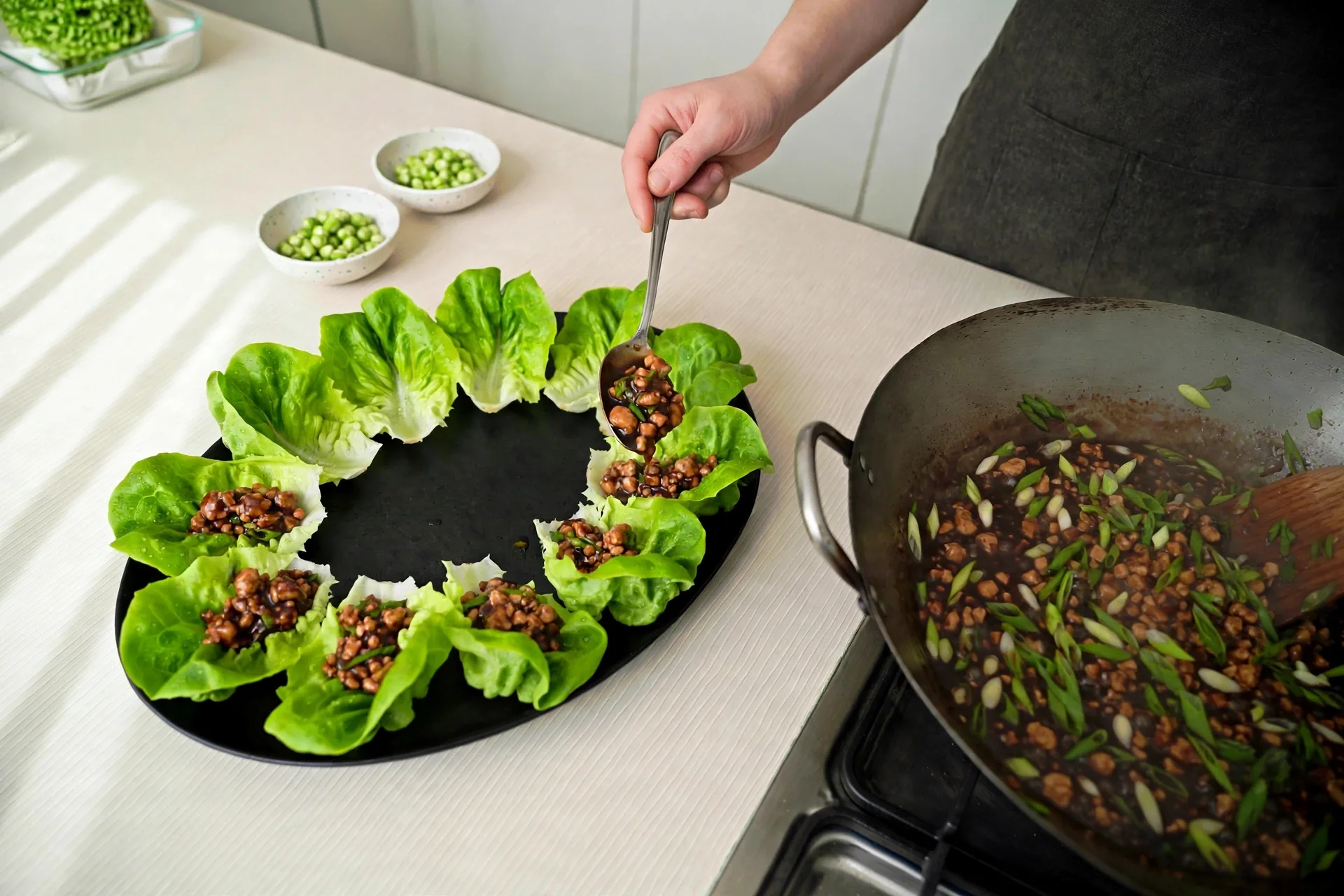
Spoon a scoop of glossy chicken filling into each lettuce cup. A modest scoop works better than a heaped one: overfilled cups split when folded, and the filling slides out the back. A few cups already filled beside the one being spooned show the pace to keep.
Sprinkle crispy chow mein noodles and the remaining sliced green onions over the filled cups. A few noodle pieces land on the glossy filling, and the rest settle around the cups on the platter.
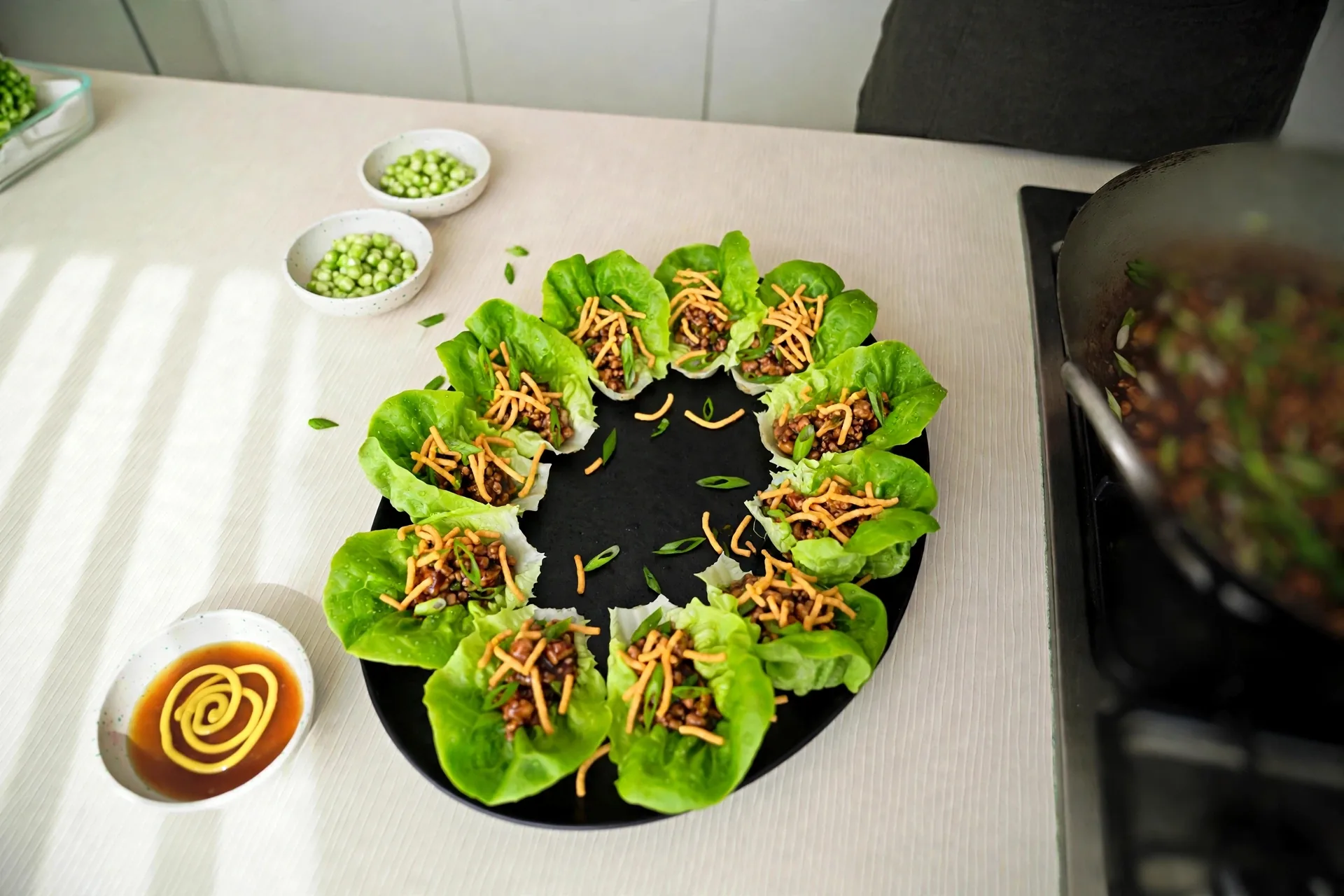
Set the small bowl of amber dipping sauce beside the finished platter, with every cup filled and garnished. The wok blurred at the edge of the frame is a reminder that the filling is still warm while the cups stay cold and crisp.
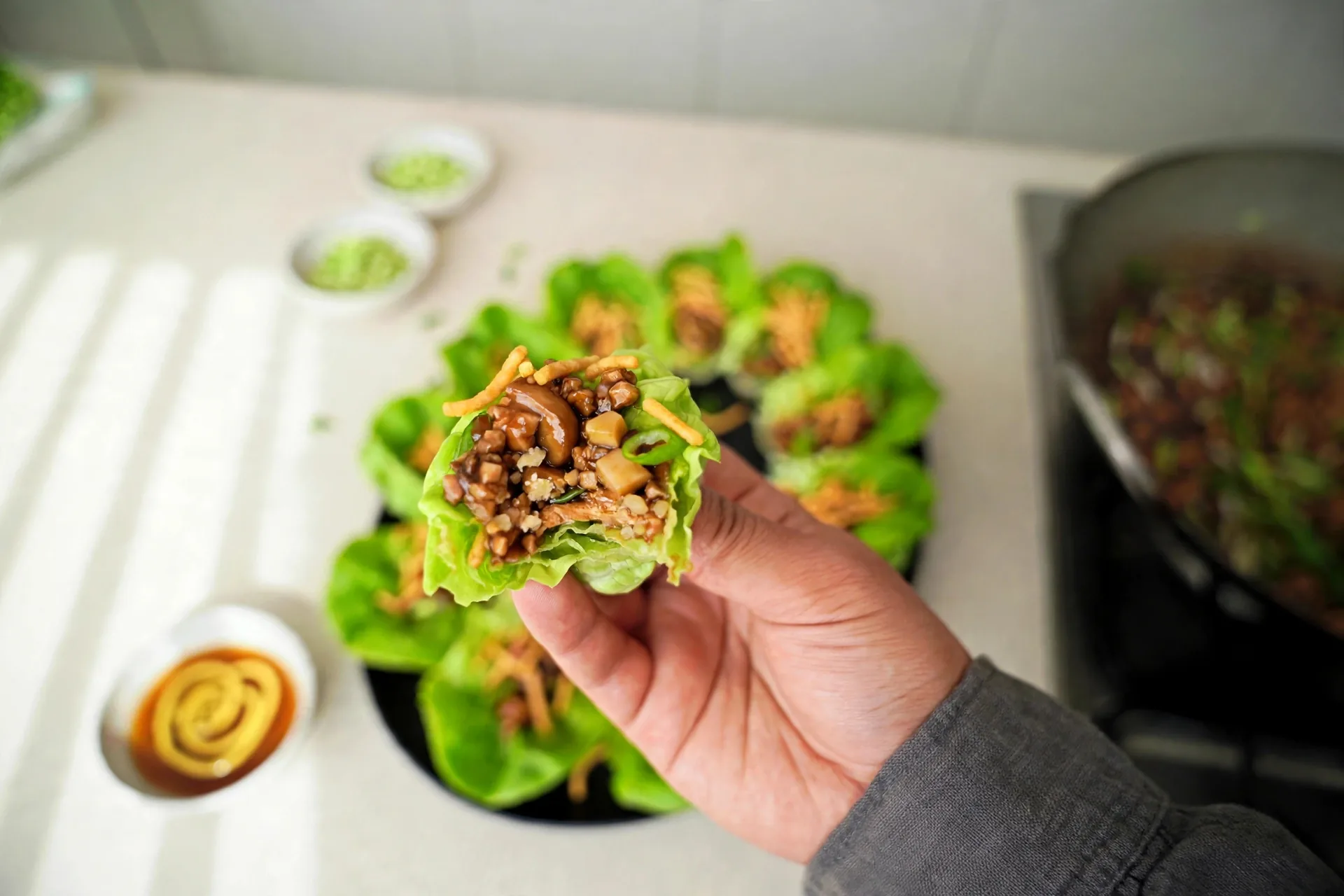
Fold one filled wrap around the filling and eat it by hand. One bite shows the glossy chicken, mushrooms, and water chestnut crunch inside the crisp lettuce. That bite is the quality check: warm filling, cold cup, crunch in every mouthful.
Ground Beef Lettuce Wraps
The beef version starts where the chicken version branches: from the set-aside vegetables at the bowl stage. The lettuce cups, both sauces, and the mushroom and water chestnut mixture are already done. Only the protein step changes, plus one extra step for fat.
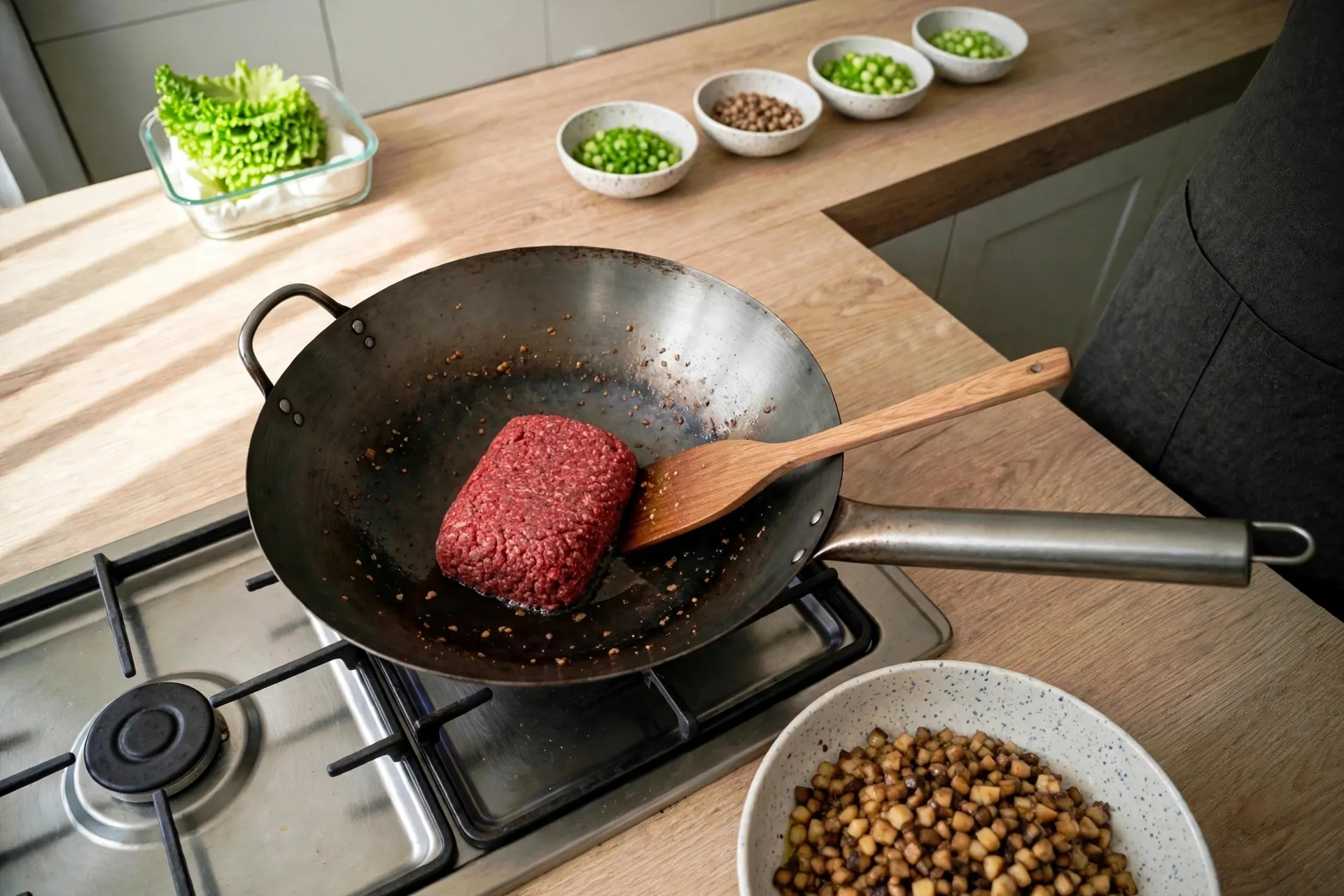
Place the block of raw ground beef into the hot wok, with the wooden spatula beside it and the bowl of cooked vegetables waiting at the edge of the frame.
Break the beef into small crumbles with the spatula, with a soy sauce splash added. The beef turns deep brown with a few pink spots remaining, and fat pools in the pan. Beef renders more fat than chicken, and that fat is the reason for the next step.
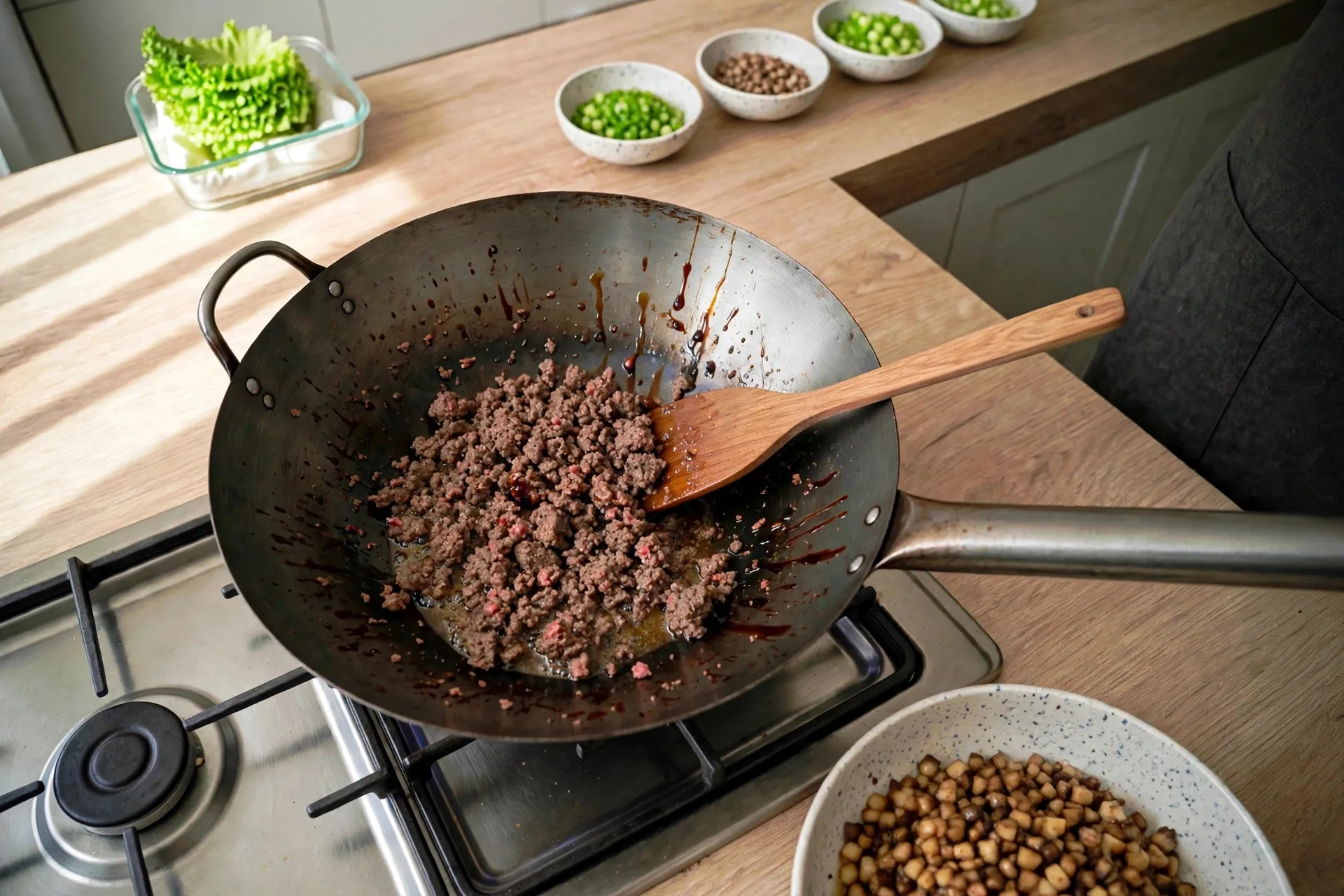
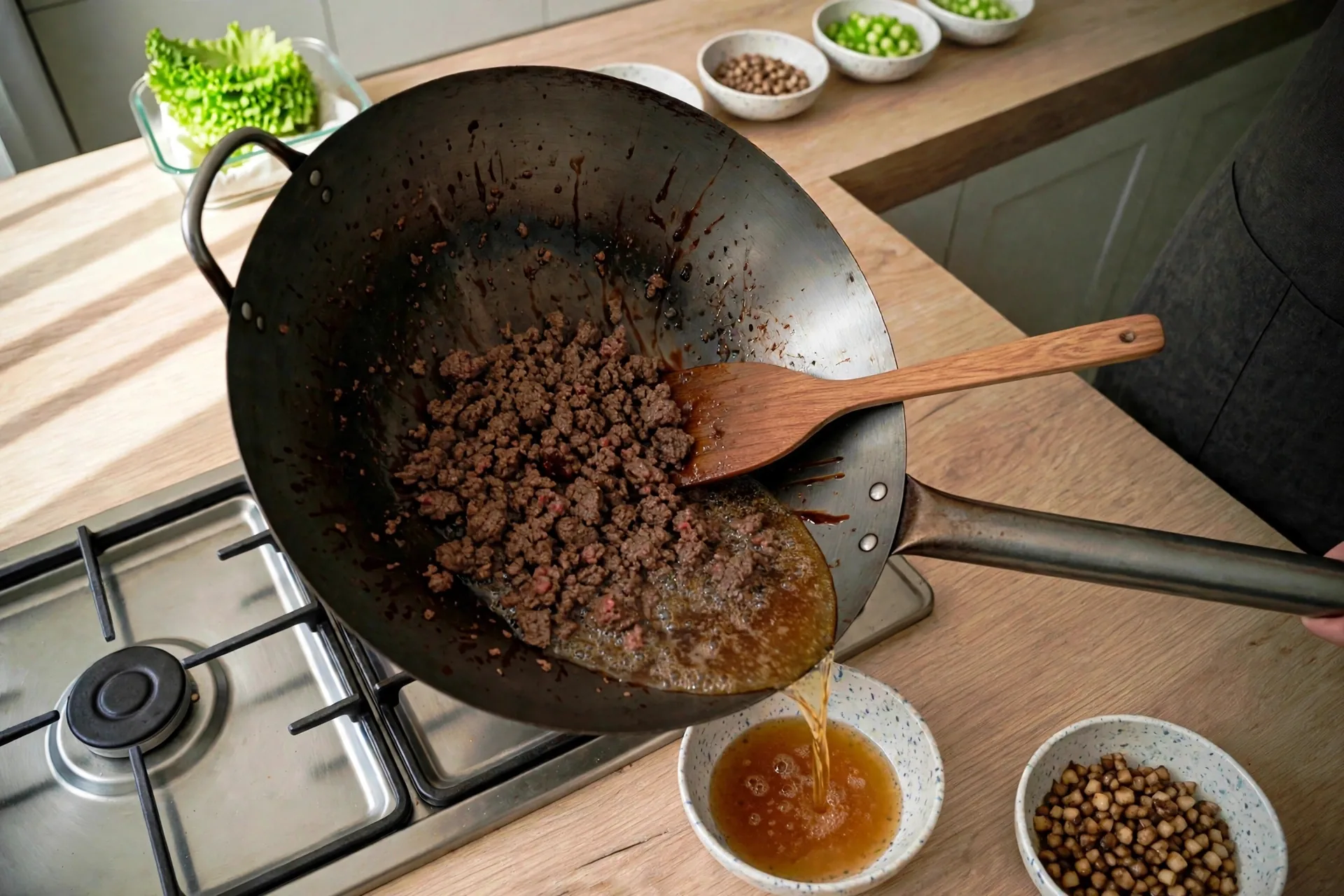
Tilt the wok over a small heatproof bowl and pour off the excess rendered fat. Hold the browned crumbles back with the spatula. No pink should be left in the beef at this point. Skipping this step leaves a greasy filling that soaks through the lettuce cups, so pour the fat off even if the amount looks small.
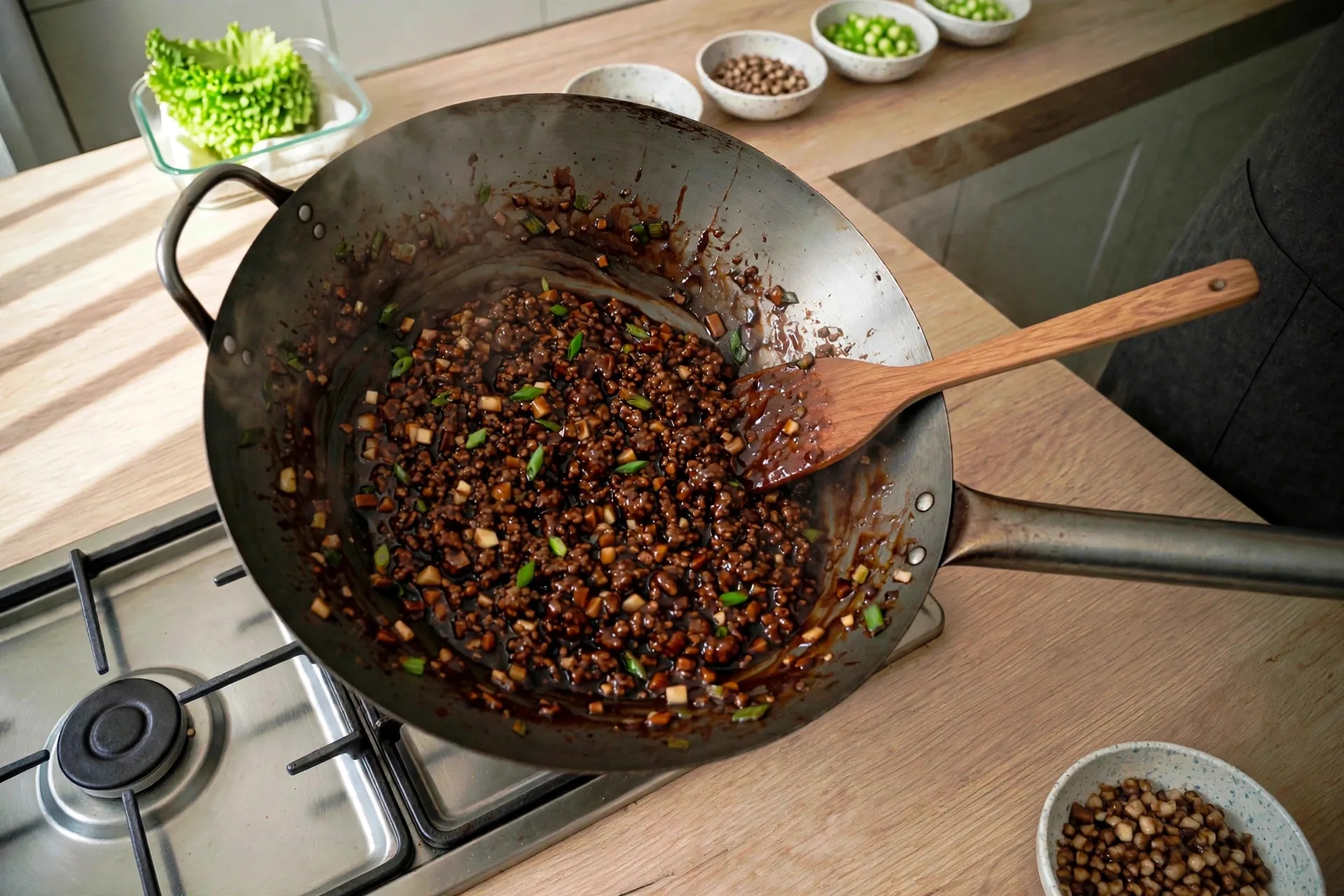
Return the set-aside vegetables to the wok, pour in the stir-fry sauce, and simmer until the sauce reduces to a dark, glossy, thick glaze coating the beef crumbles. Fold the green onions through at the end, the same way as the chicken version. The finished beef filling looks darker than the chicken filling because the browned beef and the glaze share the same deep color.
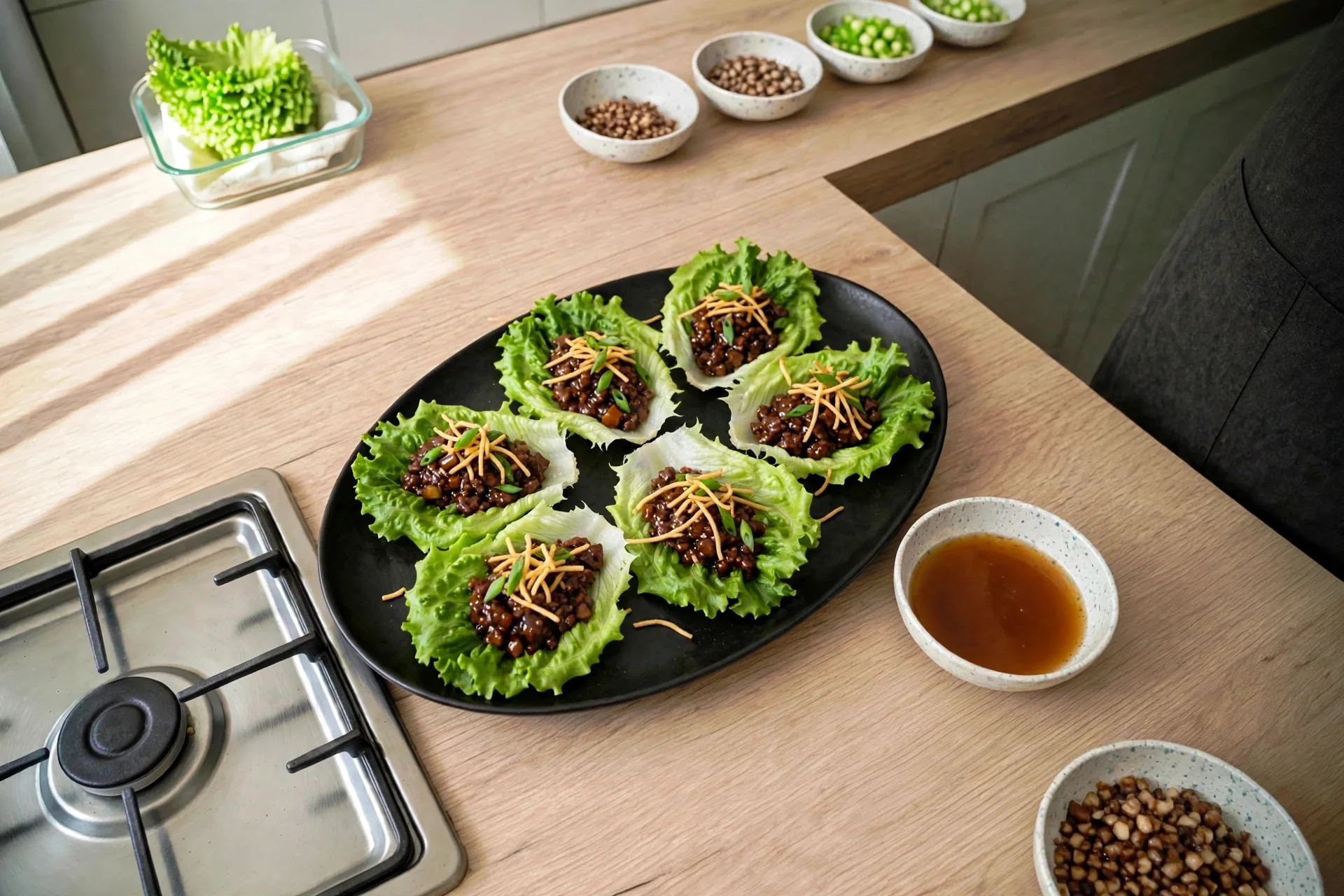
Fill the chilled butter lettuce cups with the beef filling, top with sliced green onions and crispy noodles, and set the small bowl of amber dipping sauce beside the platter. The assembly is identical to the chicken version: cold cups, warm filling, crunch on top.
Vegetarian Tofu Lettuce Wraps
The vegetarian version branches earlier than the beef version: it starts before the wok work, while the sauces are prepped. Pressing tofu takes time, and that time runs alongside the lettuce and vegetable prep instead of holding up the cooking.
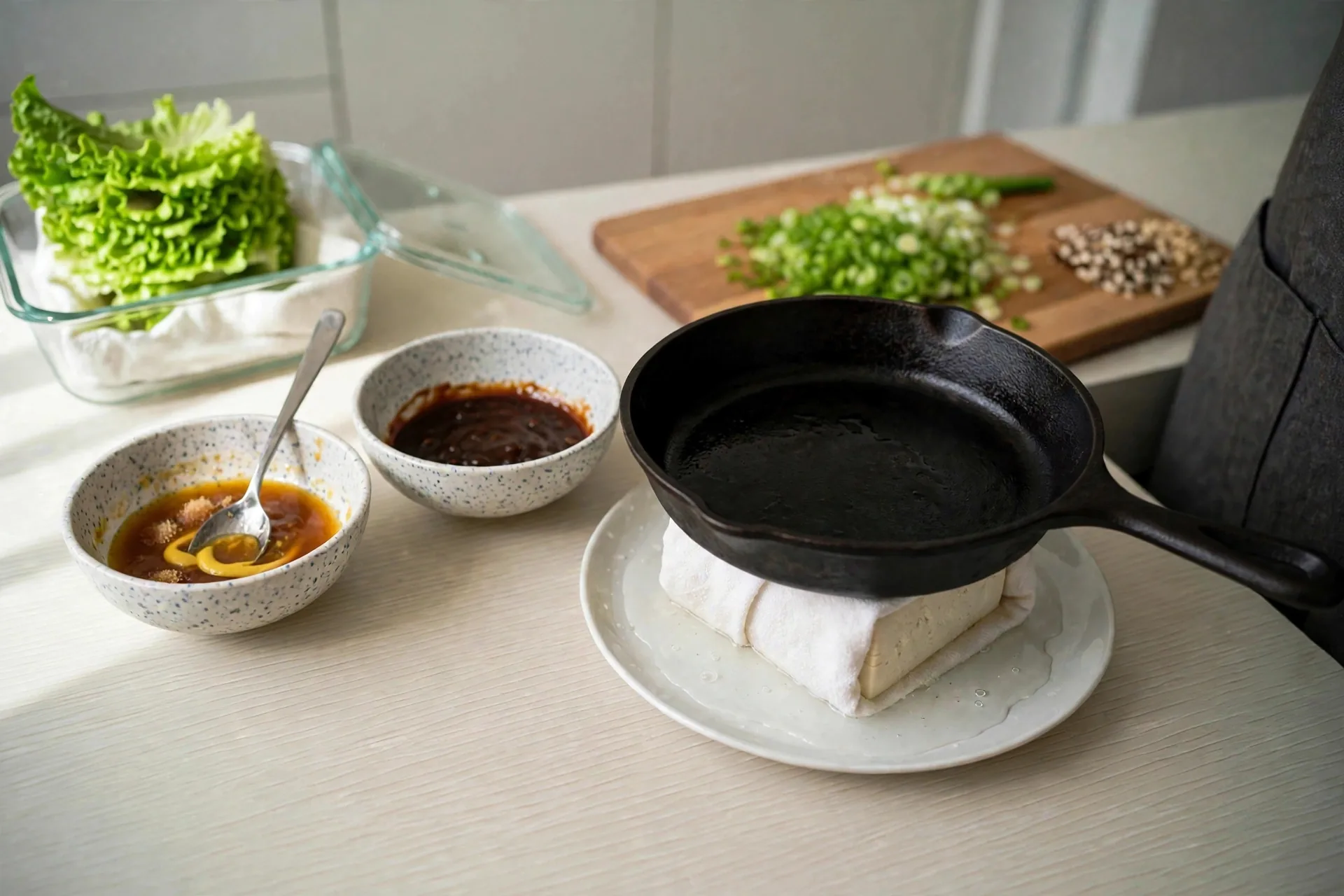
Wrap the block of extra-firm tofu in a clean kitchen towel on a plate, with a heavy skillet weighing it down to press out the water. A little water gathers on the plate as the press works. Pressing matters because unpressed tofu carries its water into the wok, and that water thins the glaze the filling depends on.
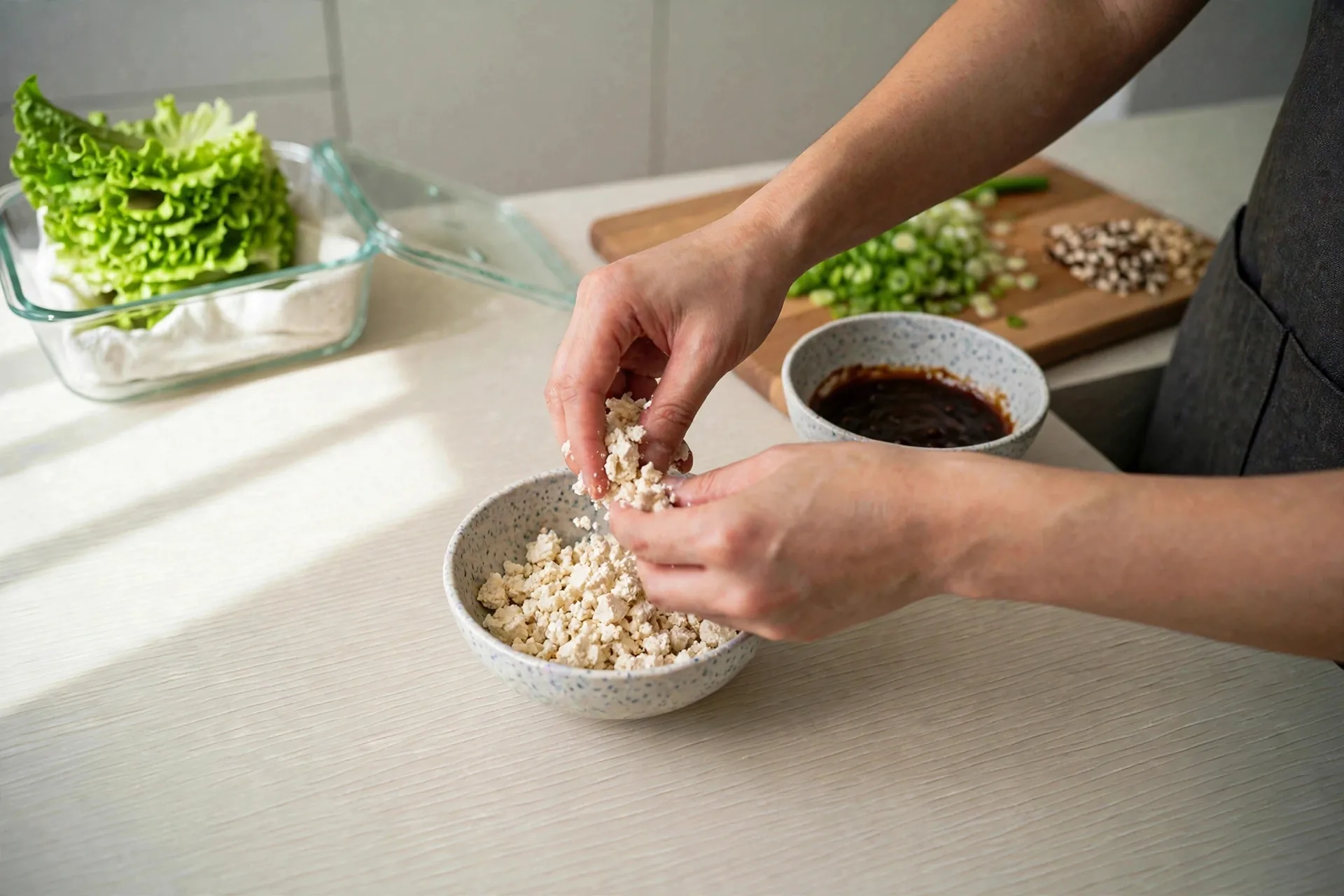
Crumble the pressed tofu by hand into small irregular pieces in a white speckled bowl. Rough, uneven pieces brown better than uniform cubes because their edges catch the heat and crisp. A smooth mash is the wrong texture here: it steams instead of browning.
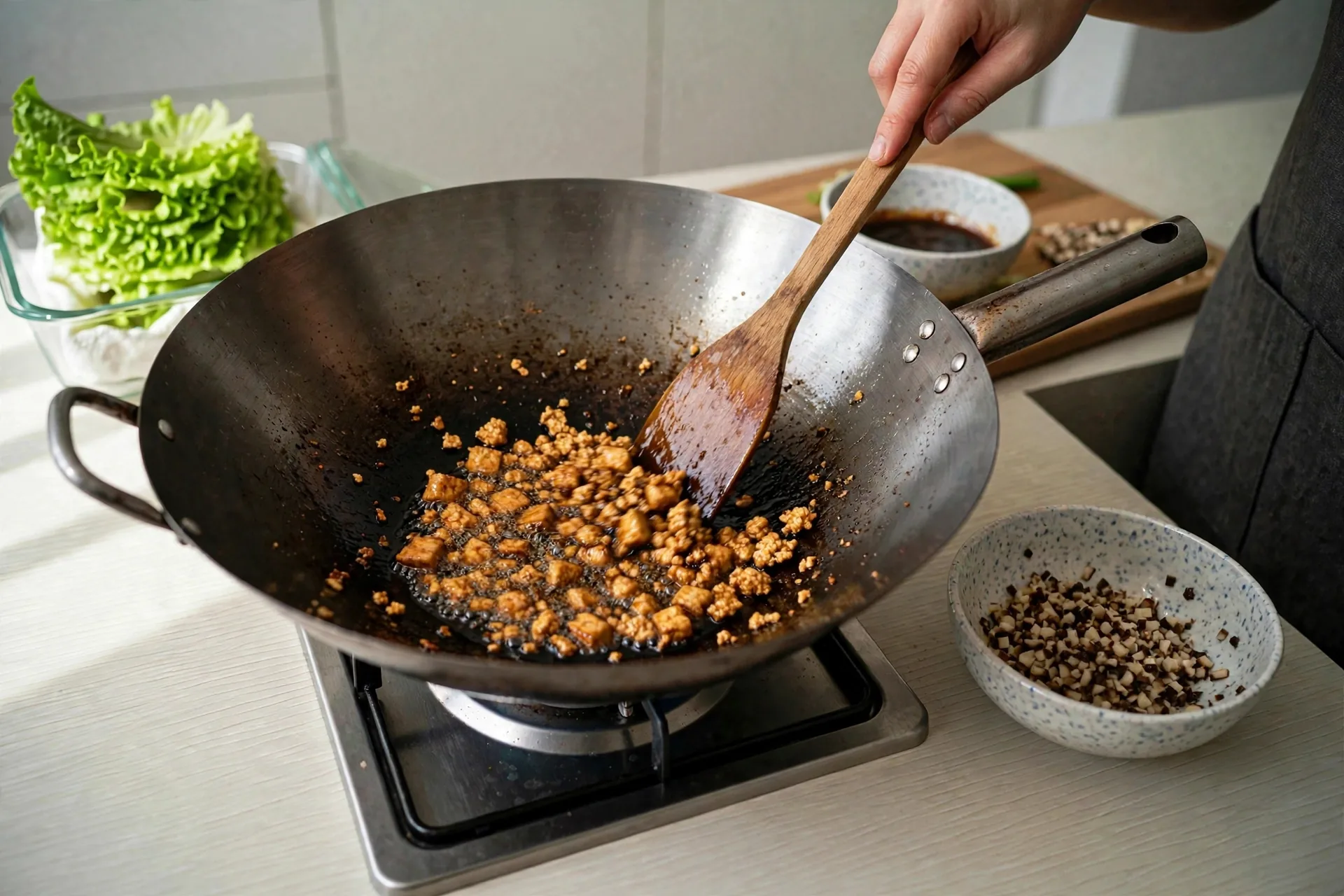
Cook the shared vegetables first, exactly as the base recipe describes, and set them aside in a bowl. Then fry the tofu crumbles in the oiled wok with a splash of soy sauce. Turn them with the wooden spatula until they turn deep golden-brown and slightly crisp at the edges. The bowl of cooked mushrooms and water chestnuts waits nearby for the next step. Tofu that goes into a cold or crowded wok steams and sticks, so the oil needs to be hot and the crumbles need room.
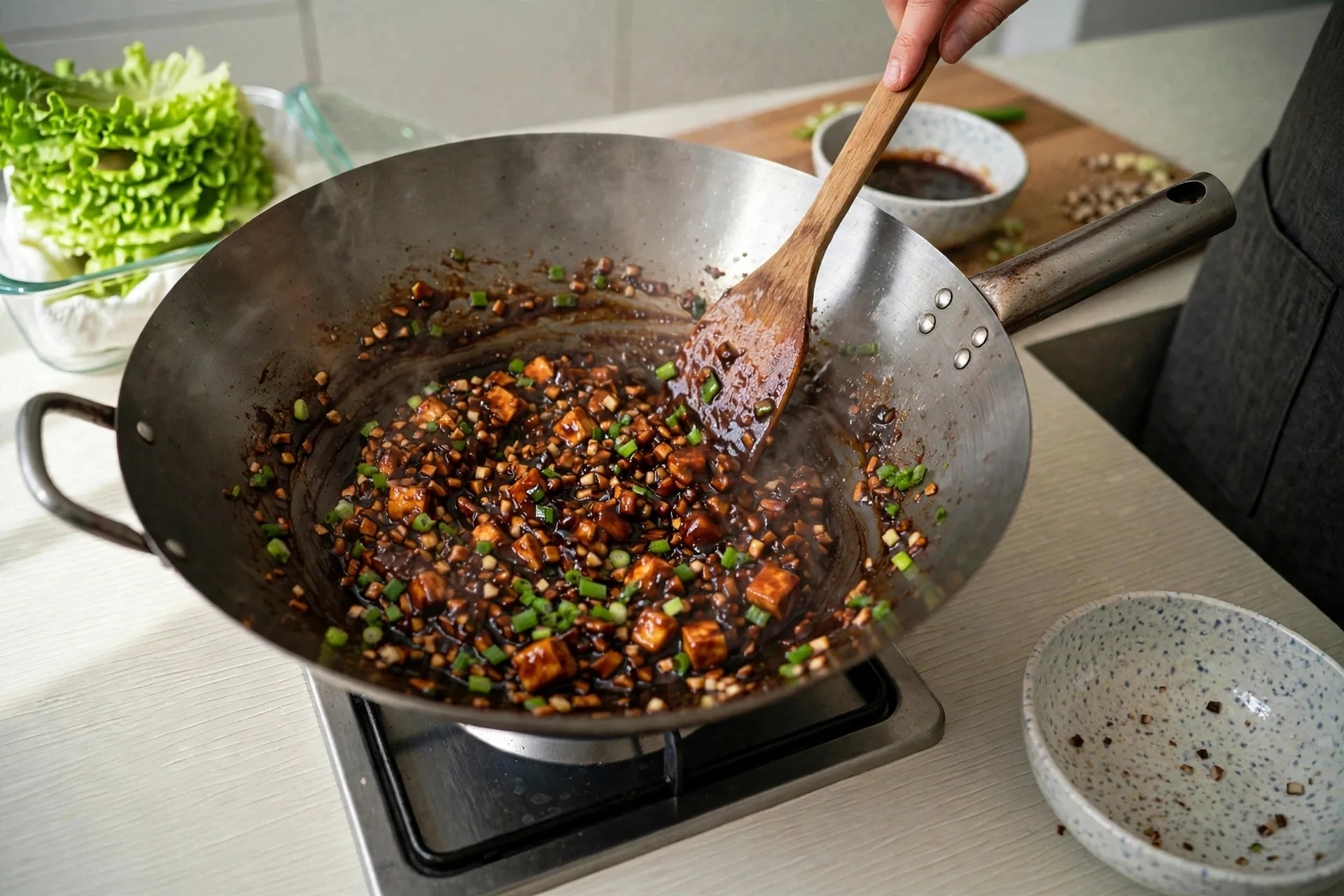
Return the mushrooms and water chestnuts to the wok, pour in the stir-fry sauce, and simmer until the sauce reduces to a thick glossy dark glaze around the golden tofu crumbles and mushrooms. Fold the green onions through at the end. The vegetarian filling should look like the chicken filling in structure — glazed crumbles, visible mushrooms, green onion rings — with golden tofu in place of chicken.
Fill the chilled butter lettuce cups with the tofu and mushroom filling, top with sliced green onions and crispy noodles, and set the small bowl of amber dipping sauce beside the platter. The cups, garnish, and sauce are the same as the other two versions, which is the point: one table, three fillings, no separate setup.
Serving All Three Together
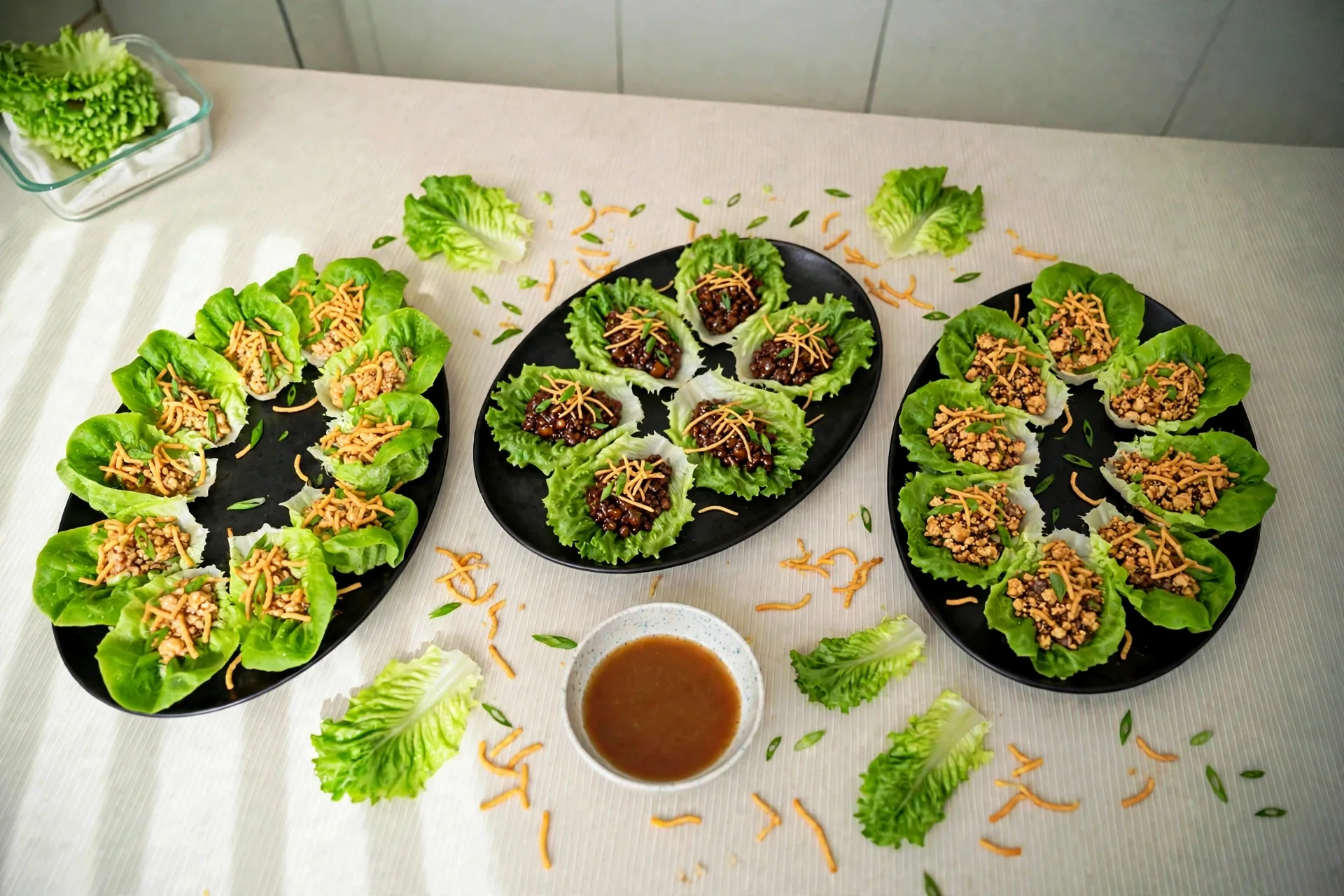
Three small matte-black oval platters sit side by side on the counter: pale-golden chicken, dark glossy beef, and golden tofu-mushroom. A shared bowl of amber dipping sauce sits in the center, with loose lettuce leaves and crispy noodles scattered between the platters. Letting people build their own wraps from the three fillings turns one cooking session into a full spread, and the shared cups, garnish, and sauce keep the table simple.
Where Lettuce Wraps Can Go Wrong
Problem: A cup tears while being filled.
Likely cause: The leaf was thin, or the scoop was too large for it.
Correction: Nest the torn leaf inside a whole leaf and fill the pair. Keep scoops modest and let the cup, not the spoon, set the portion.
Problem: Tofu sticks to the wok and breaks into mush.
Likely cause: The oil was not hot enough, or the crumbles were crowded and steamed.
Correction: Heat the oil until it shimmers before the tofu goes in, and give the crumbles room. Once tofu sticks and mashes, it cannot be un-mashed, so prevention is the whole fix.
Problem: The dipping sauce tastes too sharp or too sweet.
Likely cause: The soy, vinegar, and sugar balance was set by eye and landed off.
Correction: Adjust the dipping sauce in its own bowl before serving: a little more sugar softens sharpness, and a little more vinegar sharpens sweetness. Do not try to fix it after it is poured over the filling.
Swapping Ingredients
Ground turkey stands in for ground chicken with no method change: break it into crumbles, add the soy splash, and cook it until no pink remains. Tamari can stand in for soy sauce with a similar salty depth. If butter lettuce is unavailable, use the largest, most cup-shaped leaves available and expect a less tidy fold.
Water chestnuts have no close swap in this recipe. Their crunch survives cooking, and leaving them out removes the filling’s main texture contrast. If they are skipped, the filling still works, but it reads as softer and less distinct.
Storage and Reheating
Store the filling, the lettuce cups, and the dipping sauce separately. Cups stay in a towel-lined container in the fridge, and the dipping sauce keeps in a small covered container. Stir the sauce before serving, since the mustard settles.
Reheat the filling in the wok or a skillet until hot through, then fill the cups just before eating. Assembled wraps do not hold: warm filling softens cold cups fast, and the crunch goes with it.
Facts
- Butter lettuce is sold under the name Boston lettuce too. The soft, cup-shaped head is the same lettuce, and its leaves fold around filling without cracking the way stiffer leaves do.
- Water chestnuts keep their crunch after cooking. That staying power is why they are minced into the filling rather than cooked down with the mushrooms.
- Mushrooms have to lose their water before they brown. The cooked-down stage, where the pile shrinks and turns deep golden-brown, is what keeps the finished filling from turning wet.
- Pressing tofu is about water, not shape. The water pressed out on the plate is water that would otherwise thin the glaze in the wok.
FAQ
Are Chicken Lettuce Wraps, Asian Chicken Lettuce Wraps, and PF Chang’s-style Chicken Lettuce Wraps three different recipes?
No. They are three names for the same base recipe in this post: ground chicken, mushrooms, water chestnuts, hoisin stir-fry sauce, and butter lettuce cups. The beef and tofu versions are the only real variations, and each changes only the protein step.
Why are the vegetables cooked before the protein?
Mushrooms need time to lose their moisture and brown, and that step would crowd the protein if done together. Cooking the vegetables first and setting them aside keeps both stages clean: browned vegetables, then properly cooked protein, then the two combined with sauce.
Can I cook all three versions in one session?
Yes, and that is how this post is built. Do the shared prep once, cook the shared vegetables once, then branch: chicken, beef, or tofu in turn, with the vegetables returning to each. Keep each finished filling in its own bowl so the versions stay distinct at the table.
My sauce stayed thin. What went wrong?
The simmer was too short. The sauce needs a few minutes until it reduces to a thick glaze that clings to the filling and holds a line when the spatula drags through it. Do not spoon thin filling into cups: it soaks the lettuce before anyone eats.
Do I need a wok?
A large carbon steel wok is used here because its shape gives room to toss. A large skillet works in its place as long as the filling has room to move. A small or crowded pan steams the mushrooms and the tofu instead of browning them.
Can the filling be made ahead?
Cook the filling and let it cool, then store it apart from the cups and the dipping sauce. Reheat the filling in the wok or a skillet until hot through, and fill the cups at serving time so the lettuce stays crisp.
Conclusion
Set out all three fillings with one shared dipping bowl and a platter of cold cups, and let people build their own wraps. That table is the best argument for the shared-base method: one prep session, three distinct fillings, and no extra setup per version. Start with the chicken base, since it teaches the whole method, and branch into beef or tofu the next time the same prep is on the counter. For another ground-meat dish with an Asian-style glaze, Teriyaki Meatballs 3 Ways uses the same kind of savory-sweet coating on a different format.
Chicken Lettuce Wraps
Ingredients
Equipment
Method
- Core the lettuce, separate whole leaves, rinse, pat dry, and chill in a towel-lined container.
- Drain and mince the water chestnuts. Finely mince the mushrooms. Peel and mince the garlic. Grate the ginger. Slice the green onions into thin rings.
- Whisk the stir-fry sauce ingredients in a small bowl until glossy and dark brown. Stir the dipping sauce ingredients in a second bowl until the sugar dissolves.
- Heat oil in a large wok until shimmering. Add garlic and ginger and stir until pale gold and fragrant.
- Add mushrooms with a pinch of salt. Stir until their moisture cooks off and they turn deep golden-brown and shrunken.
- Add water chestnuts and toss briefly, then scoop the vegetables into a bowl and set aside.
- Place ground chicken in the hot wok. Break into small crumbles with a splash of soy sauce. Cook until opaque white, lightly golden at the edges, and no pink remains.
- Return the vegetables to the wok. Pour in the stir-fry sauce. Simmer a few minutes until the sauce reduces to a thick glossy glaze that clings to the filling.
- Fold in the sliced green onions.
- Arrange chilled lettuce cups on a platter. Spoon filling into each cup. Top with crispy chow mein noodles and remaining green onions. Serve with the dipping sauce.
Notes
Ground Beef Lettuce Wraps
Ingredients
Equipment
Method
- Complete the shared prep: lettuce cups, minced vegetables, both sauces, and the cooked set-aside vegetables, exactly as the chicken version describes.
- Place ground beef in the hot wok. Break into small crumbles with a splash of soy sauce. Cook until deep brown with no pink left.
- Tilt the wok over a heatproof bowl and pour off the excess rendered fat. Hold the crumbles back with the spatula.
- Return the vegetables to the wok. Pour in the stir-fry sauce. Simmer until the sauce reduces to a dark, glossy, thick glaze coating the beef.
- Fold in the sliced green onions.
- Fill chilled lettuce cups, top with crispy chow mein noodles and remaining green onions, and serve with the dipping sauce.
Notes
Vegetarian Tofu Lettuce Wraps
Ingredients
Equipment
Method
- Wrap the tofu in a clean kitchen towel on a plate. Weigh it down with a heavy skillet to press out the water. Crumble into small irregular pieces in a bowl.
- Complete the shared prep: lettuce cups, minced vegetables, both sauces, and the cooked set-aside vegetables, exactly as the chicken version describes.
- Fry the tofu crumbles in the oiled wok with a splash of soy sauce. Turn the crumbles until deep golden-brown and slightly crisp at the edges.
- Return the vegetables to the wok. Pour in the stir-fry sauce. Simmer until the sauce reduces to a thick glossy dark glaze around the tofu and mushrooms.
- Fold in the sliced green onions.
- Fill chilled lettuce cups, top with crispy chow mein noodles and remaining green onions, and serve with the dipping sauce.