Mashed Cauliflower 3 Ways (Creamy, Garlic & Potato)
Silky, garlicky, or fluffy with potato — three mashed cauliflower recipes from one prep.
 Pin it
In this post
Start with the shared cauliflower prep at the top – every recipe below uses it. Then jump straight to the one you want:
- The Cauliflower, Done Once
- Recipe 1: Creamy Mashed Cauliflower
- Recipe 2: Garlic Mashed Cauliflower
- Recipe 3: Cauliflower Mashed Potatoes
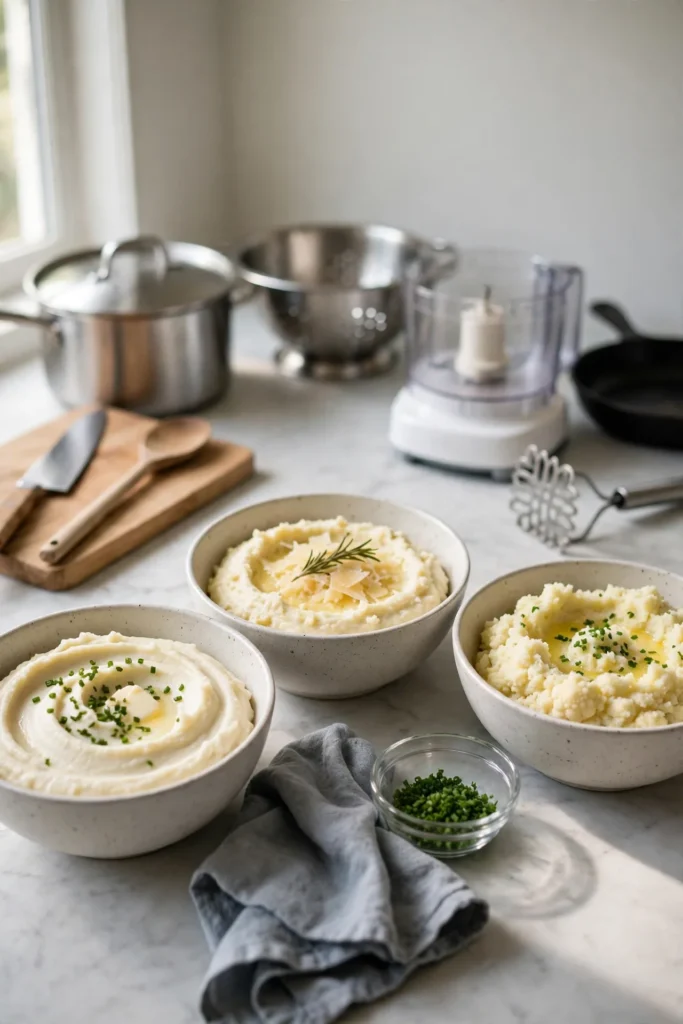
One vegetable, three mashes, none of them sad. The cauliflower gets prepped once — cut even, boiled until knife-tender, drained hard and steamed dry — then divided into three bowls. From there: one goes silky with cream cheese and sour cream, one goes savory with garlic butter and Parmesan, and one meets real potatoes for a fluffy hand-mashed hybrid.
The shared prep is the whole game. Watery cauliflower is the reason most mash turns soupy, so the drying step isn’t optional — it’s the difference between spoonable and sad.
The Cauliflower, Done Once
Two heads of cauliflower feed all three recipes. Cut the florets even so they cook at the same rate — uneven pieces mean some turn to mush while others stay crunchy.
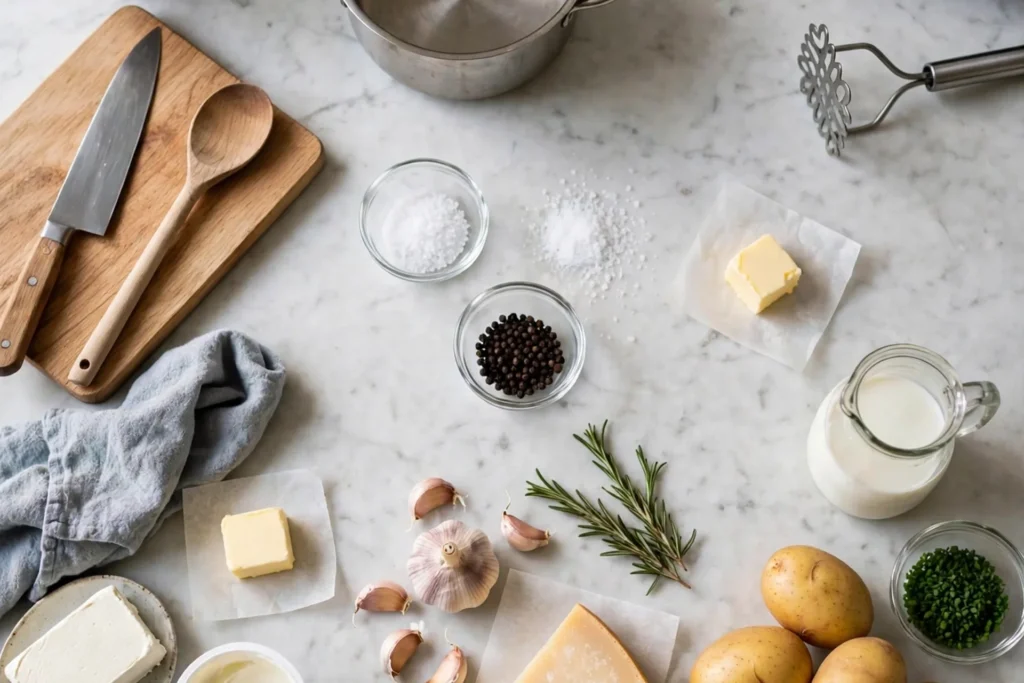
You need:
– 2 medium heads cauliflower (about 4 lb total)
– Plenty of salt for the water
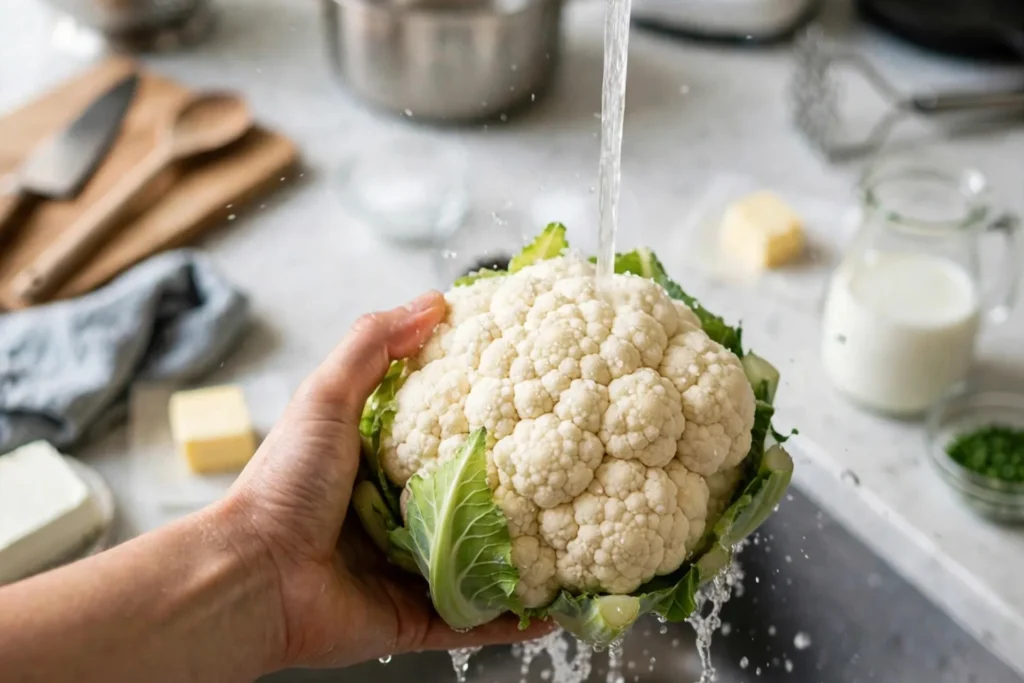
Rinse the heads under running water, turning them so the water gets between the florets.
Pull off the green leaves and cut out the thick core at the base, splitting the head into halves.
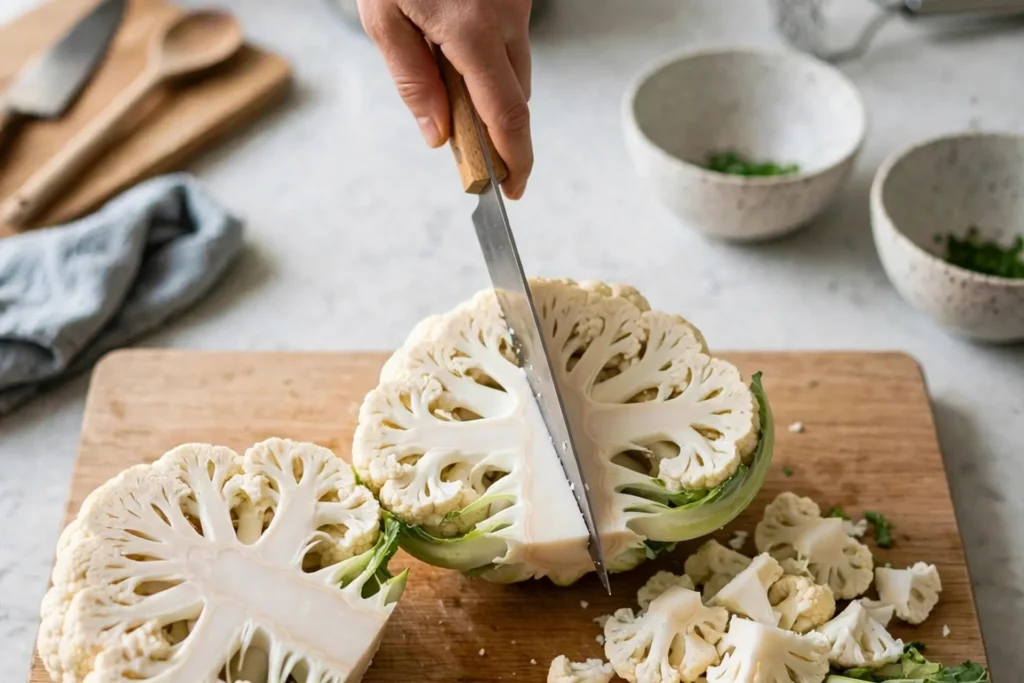
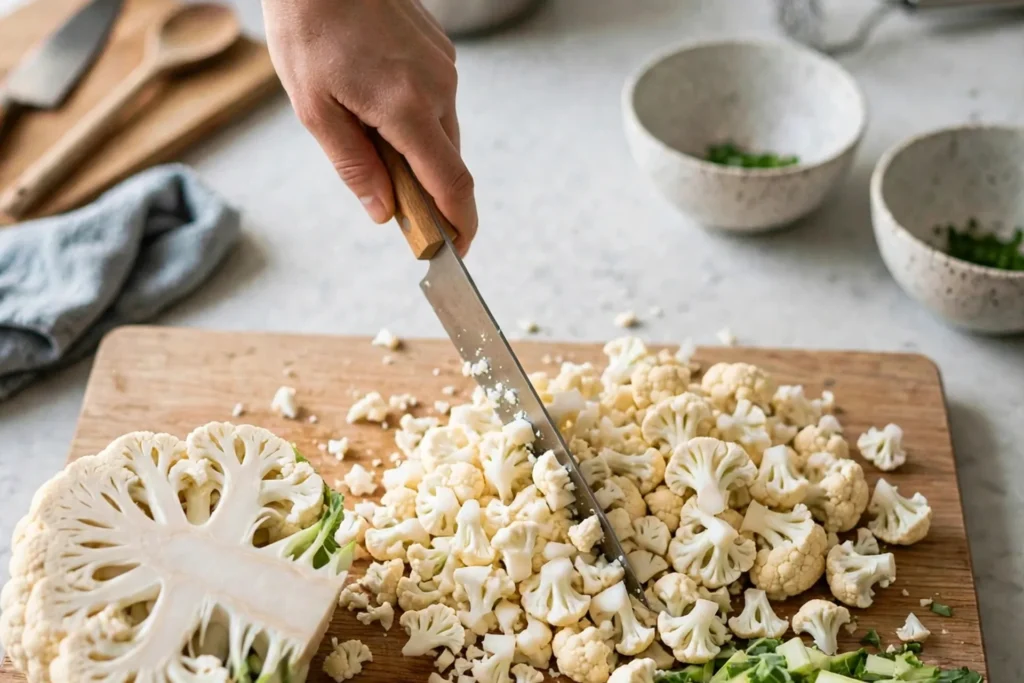
Cut into small, even florets, keeping the stalks cut small too — they cook at the same rate as the florets when sized alike.
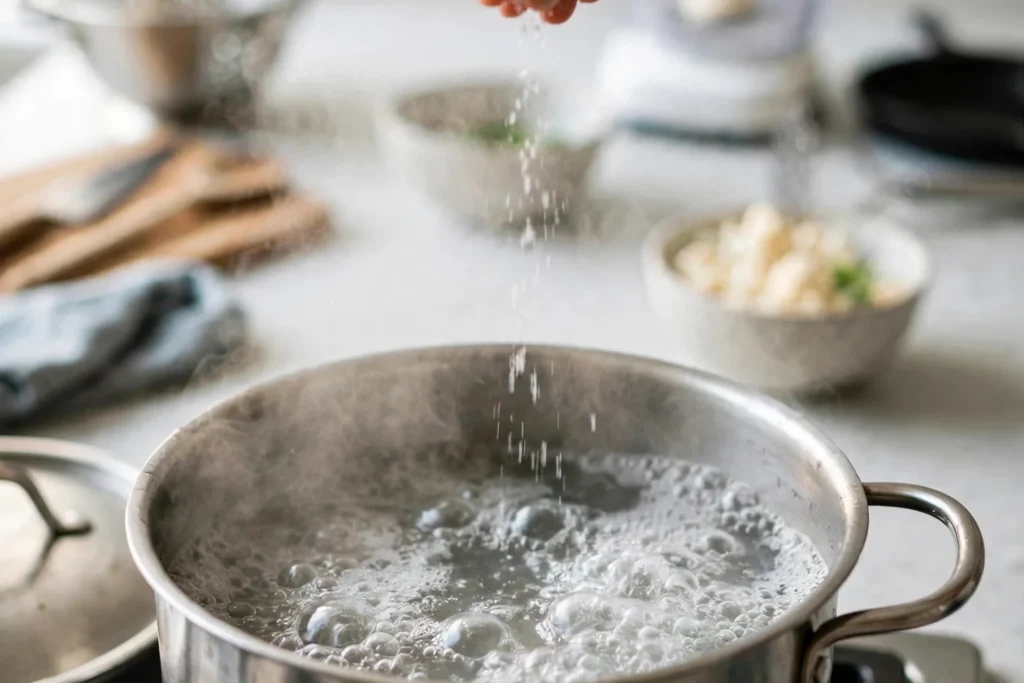
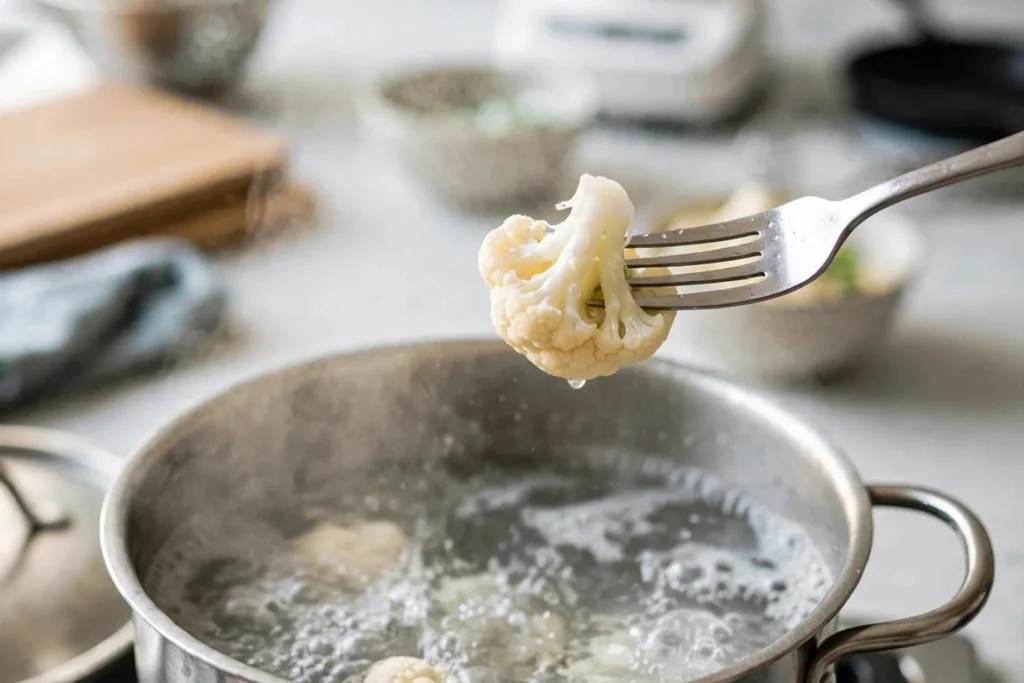
Bring a large pot of well-salted water to a rolling boil. Salt it like pasta water; the cauliflower only gets this one chance to absorb seasoning.
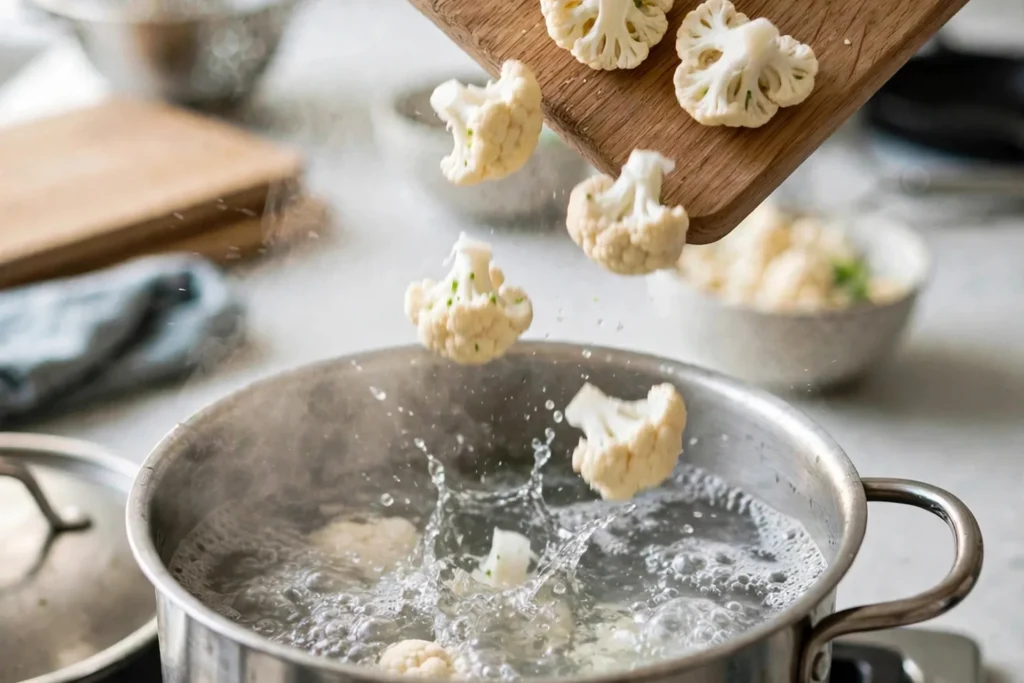
Slide the florets in and cook 8 to 12 minutes, until a fork slides in with zero resistance. Start checking at 8 — overcooked is better than undercooked here, since it’s all getting mashed.
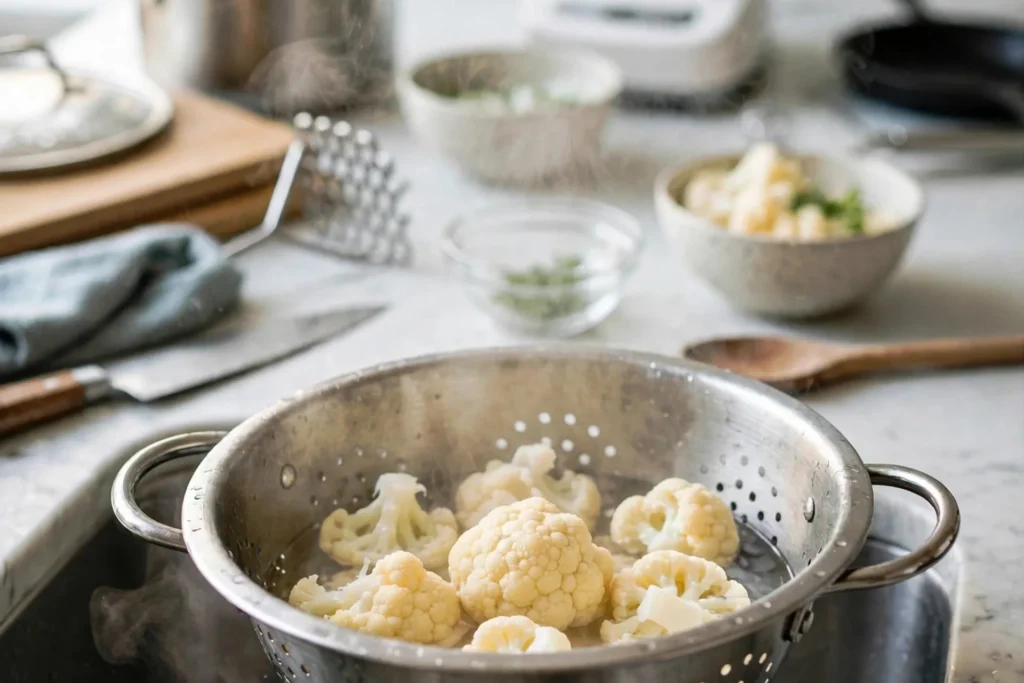
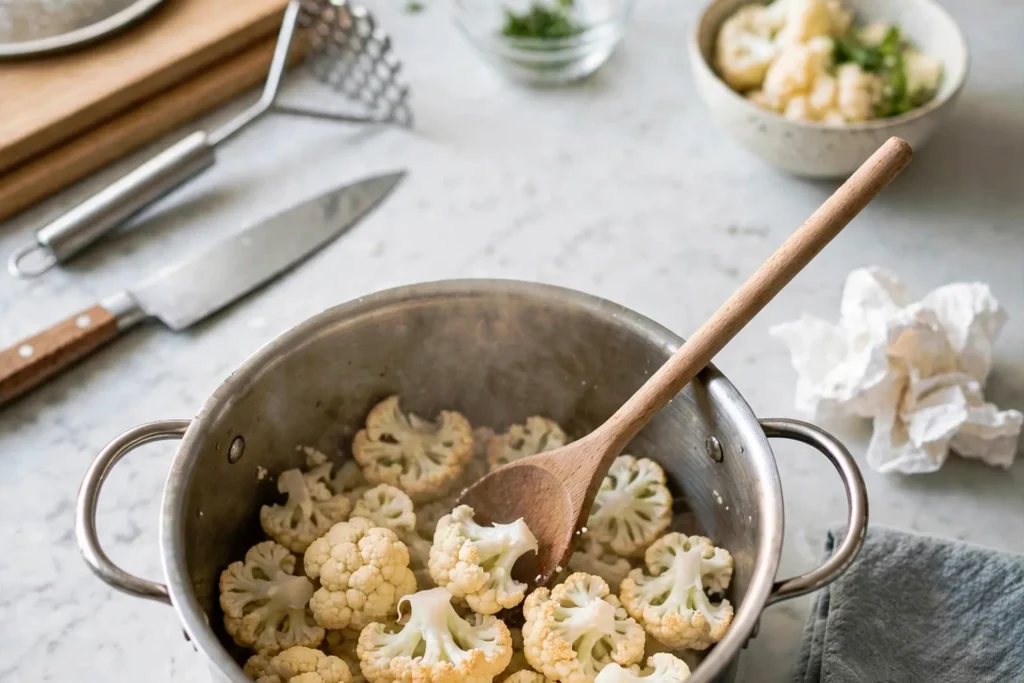
Drain into a colander and let the steam rise off for a minute. Then — the step that decides everything — return the florets to the warm empty pot over low heat and stir gently for 2 to 3 minutes, letting the excess moisture steam away. They should look slightly drier and fluffier, not wet.
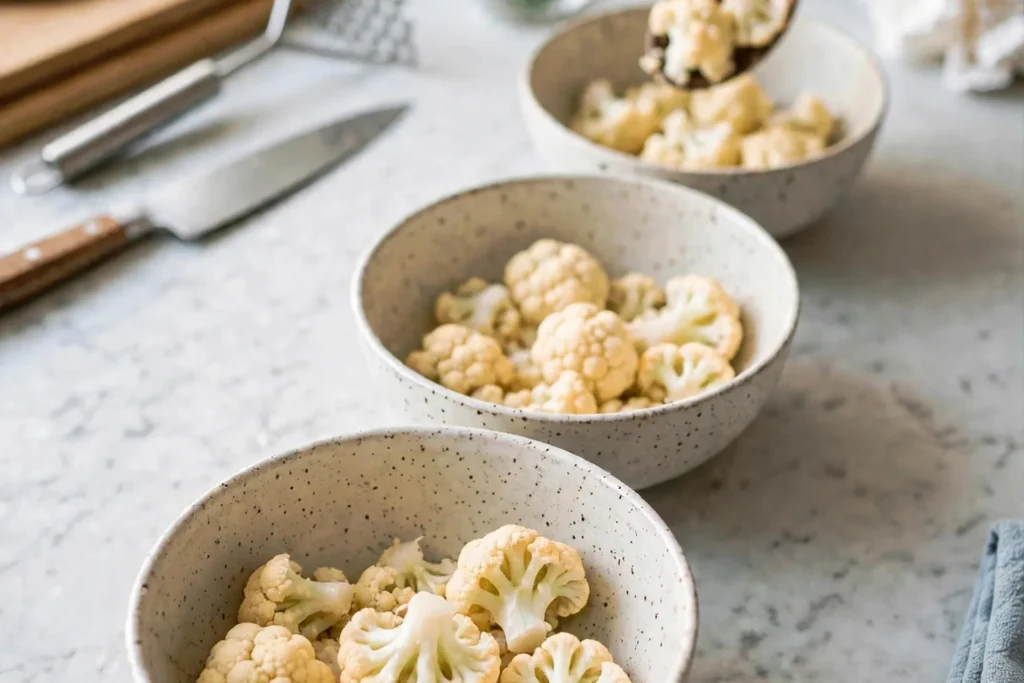
Divide evenly among three bowls. Each bowl is one mash.
Recipe 1: Creamy Mashed Cauliflower
The silky one. Cream cheese, sour cream and butter go into the food processor with the hot cauliflower and come out as a perfectly smooth, pale ivory purée. This is the version that makes people ask what the secret ingredient is.
You need, for one bowl of cauliflower (about ⅓ of the batch):
– 4 oz cream cheese, softened and cubed
– ¼ cup sour cream
– 3 tablespoons butter, plus a pat to finish
– ¾ teaspoon kosher salt
– ¼ teaspoon white or black pepper
– 2 tablespoons chopped fresh chives
Tip the hot cauliflower into the food processor bowl. Hot matters — it melts the dairy on contact and blends smoother than cooled florets.
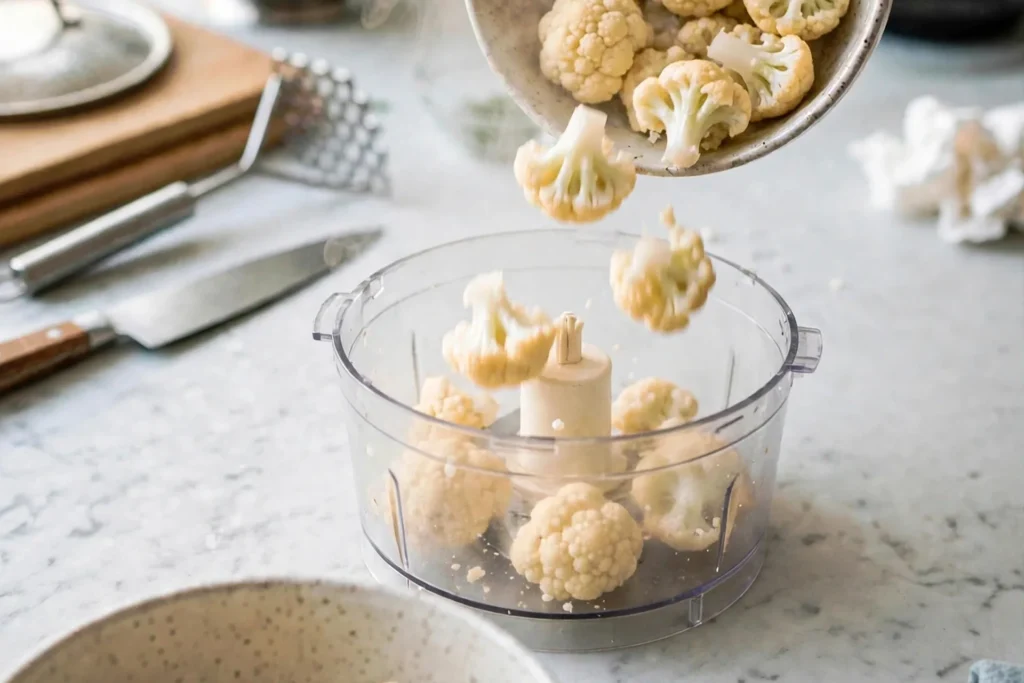
Add the cream cheese cubes, sour cream, butter, salt and pepper on top, sitting separately for now.
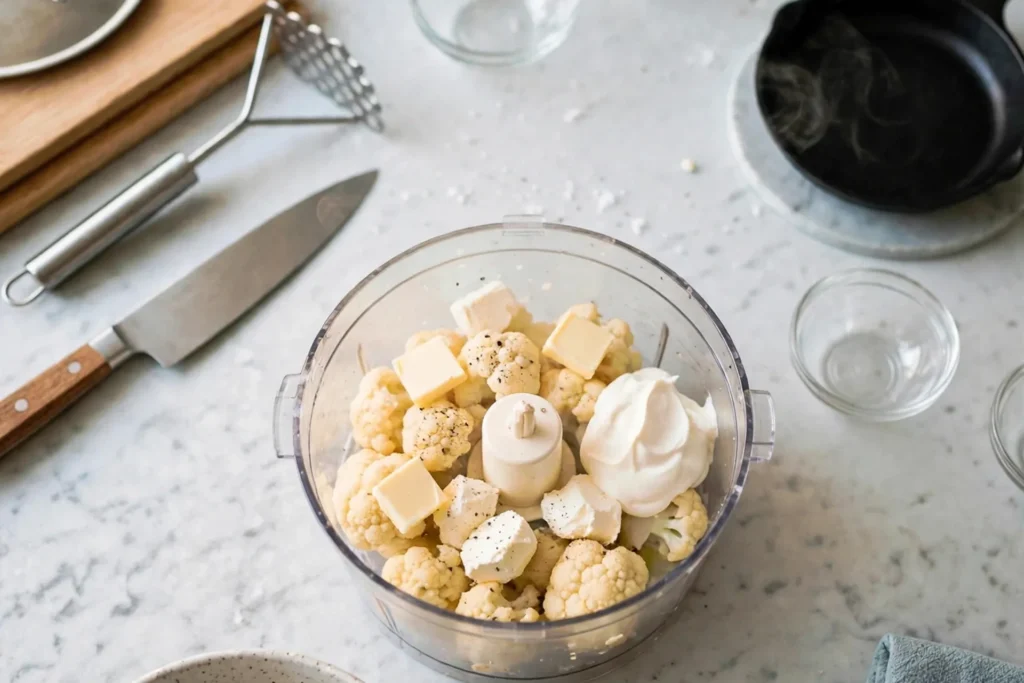
Pulse a few times first. It’ll look like coarse crumbs with streaks of cream cheese — that’s normal, not a failure.
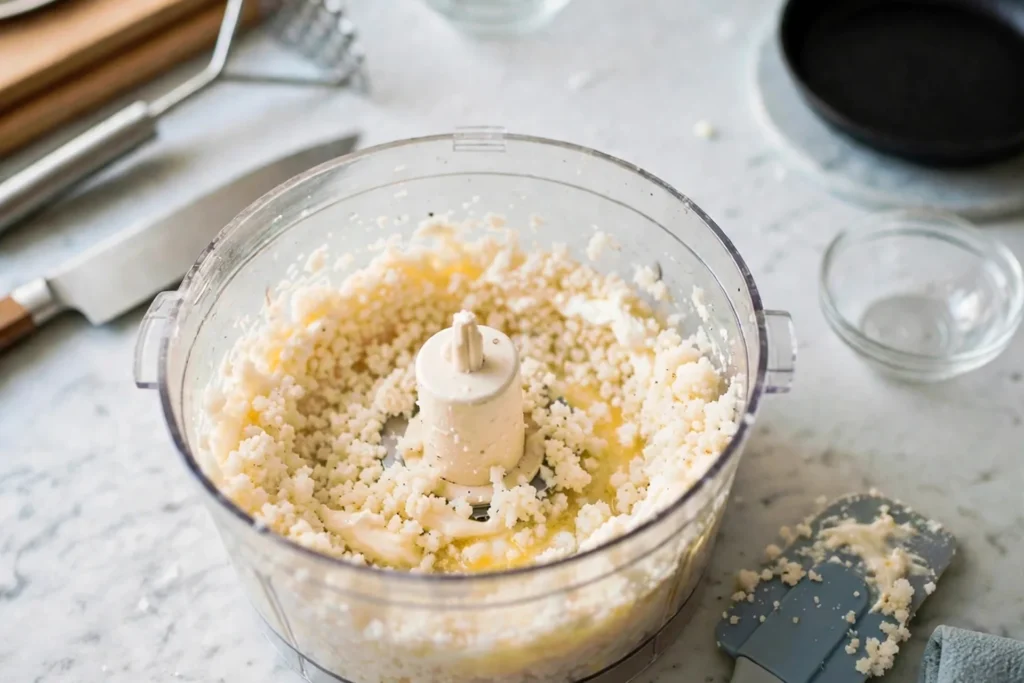
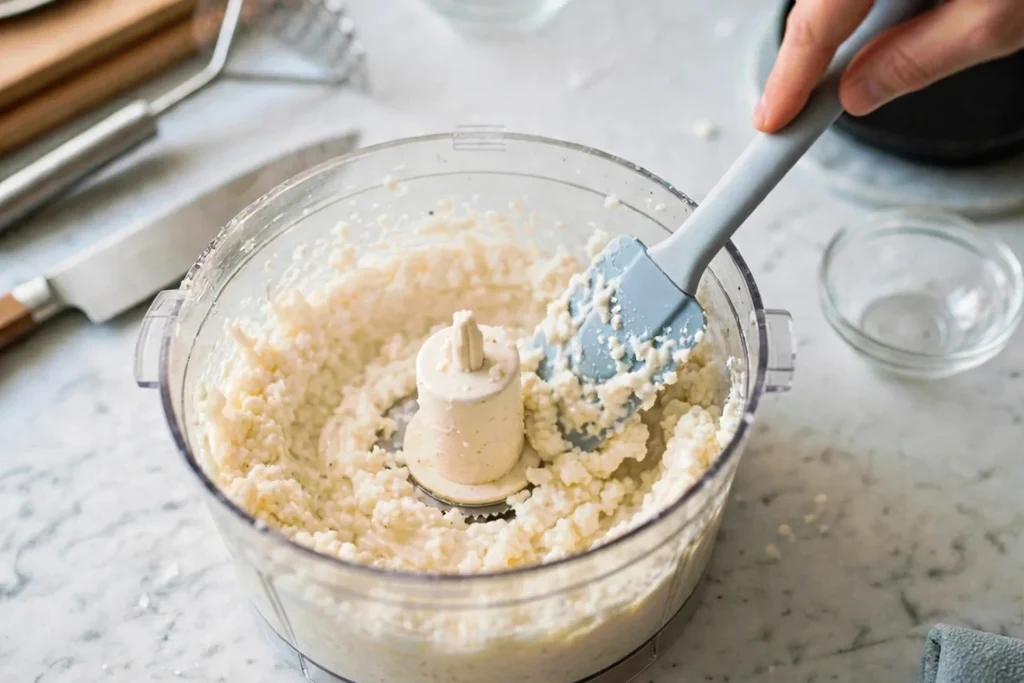
Scrape down the sides with a spatula, pulling the clinging bits toward the middle, then blend continuously until perfectly smooth. The finished purée should be thick enough that a spatula stands in it, with a soft sheen and no lumps.
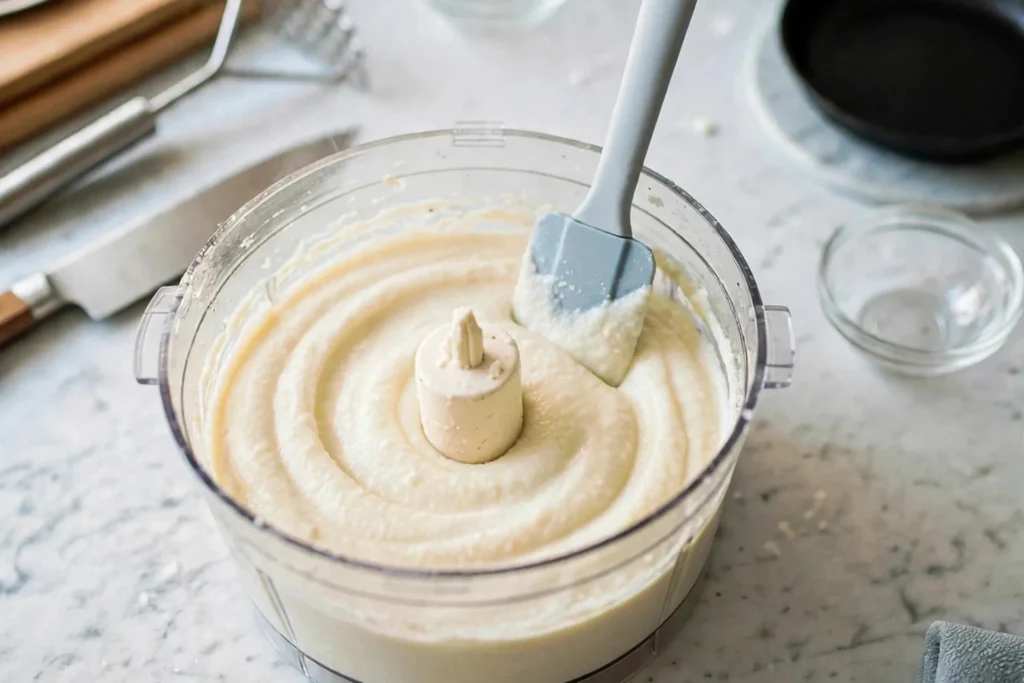
Scoop into a bowl and swoosh the surface with the back of a spoon — the wave catches the butter you’ll add next.
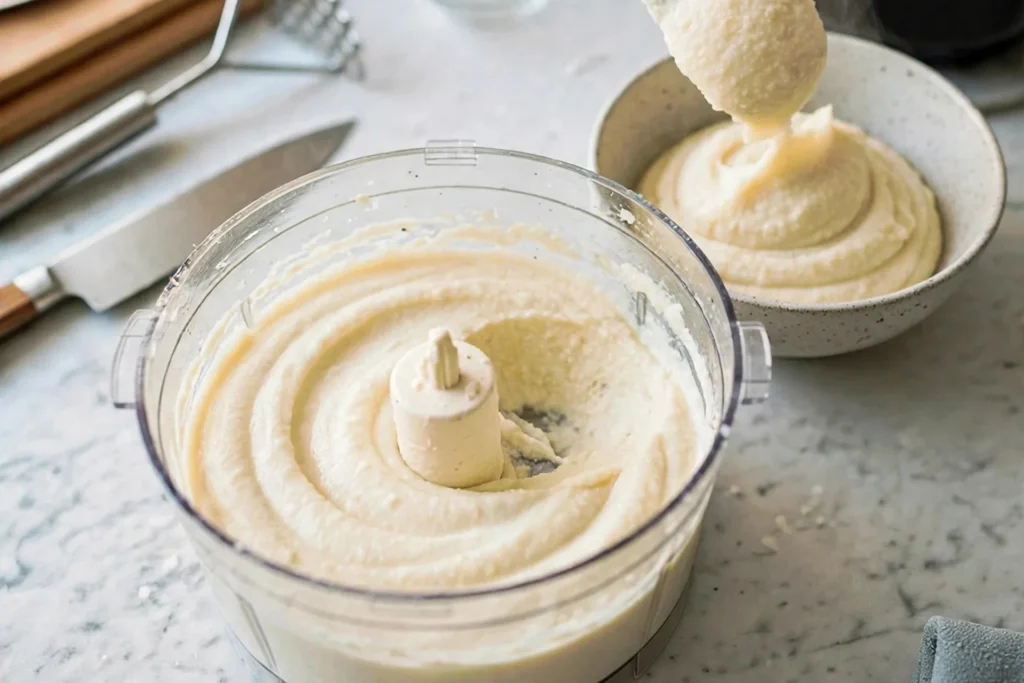
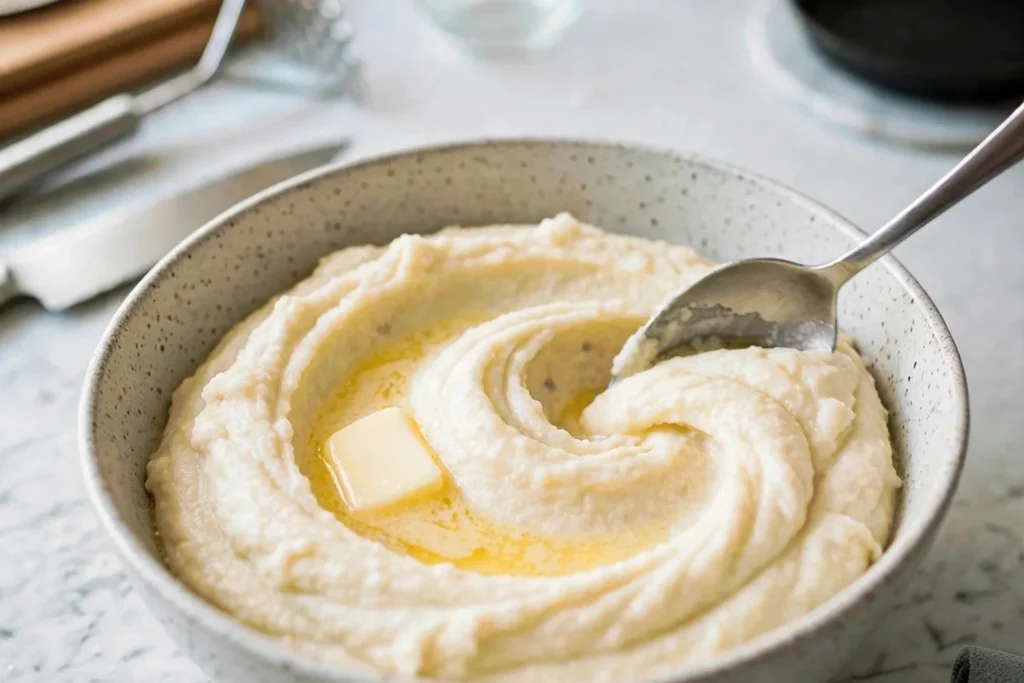
Set a pat of butter in the swoosh and scatter the chives over. The butter melts into a golden pool as it sits.
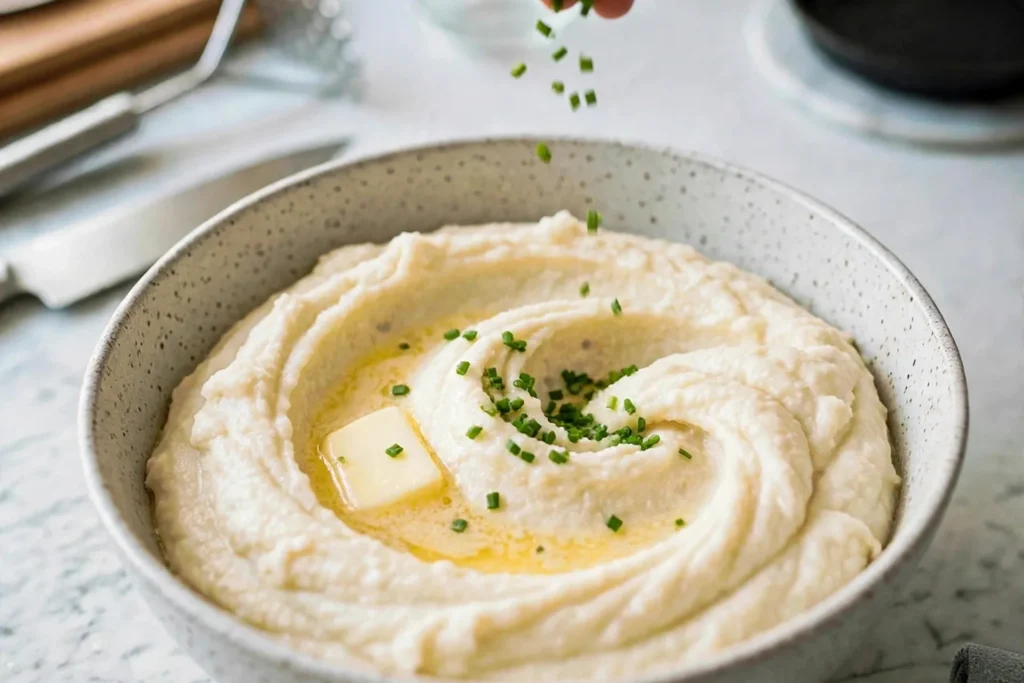
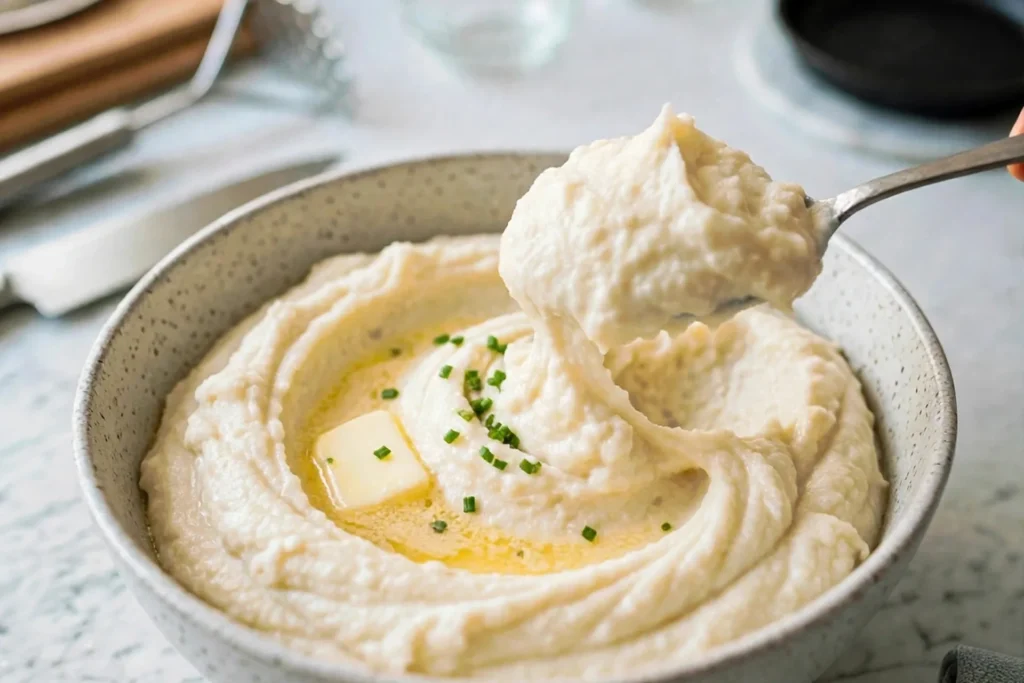
Serve it hot. This one cools into stiffness faster than the others, so don’t let it wait.
Ingredients
Equipment
Method
- Cook the cauliflower: bring a large pot of salted water to a boil; cook the florets 8–12 minutes until fork-tender; drain; return to the warm pot and steam-dry 2–3 minutes.
- Tip the hot cauliflower into a food processor; add the cream cheese, sour cream, butter, salt and pepper.
- Pulse a few times, scrape down the sides, then blend continuously until perfectly smooth.
- Scoop into a bowl and swoosh the surface with the back of a spoon.
- Set a pat of butter in the swoosh and scatter the chives over. Serve hot.
Notes
Recipe 2: Garlic Mashed Cauliflower
The savory one. Garlic cooked gently in butter until pale golden — never browned — then blended with the cauliflower and a pile of Parmesan. Finished with a rosemary sprig like it means business.
You need, for one bowl of cauliflower (about ⅓ of the batch):
– 5 tablespoons butter, divided
– 4 garlic cloves, minced
– ½ cup finely grated Parmesan, plus shavings to finish
– ¾ teaspoon kosher salt
– ¼ teaspoon black pepper
– 1 fresh rosemary sprig, plus ½ teaspoon finely chopped rosemary
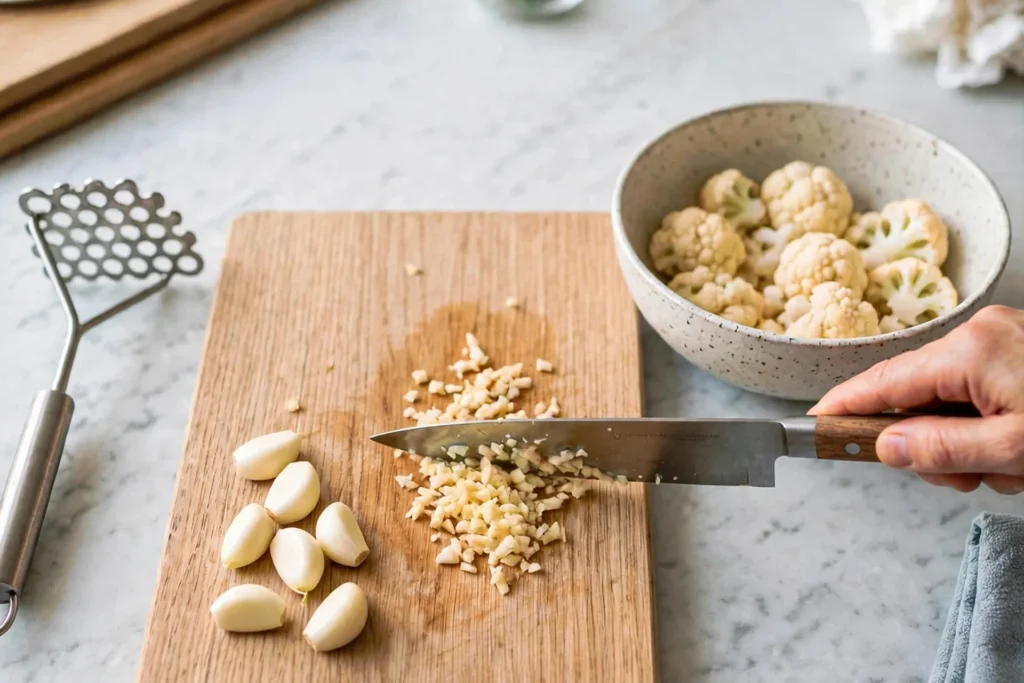
Peel and mince the garlic fine — big chunks won’t blend smooth and will bite.
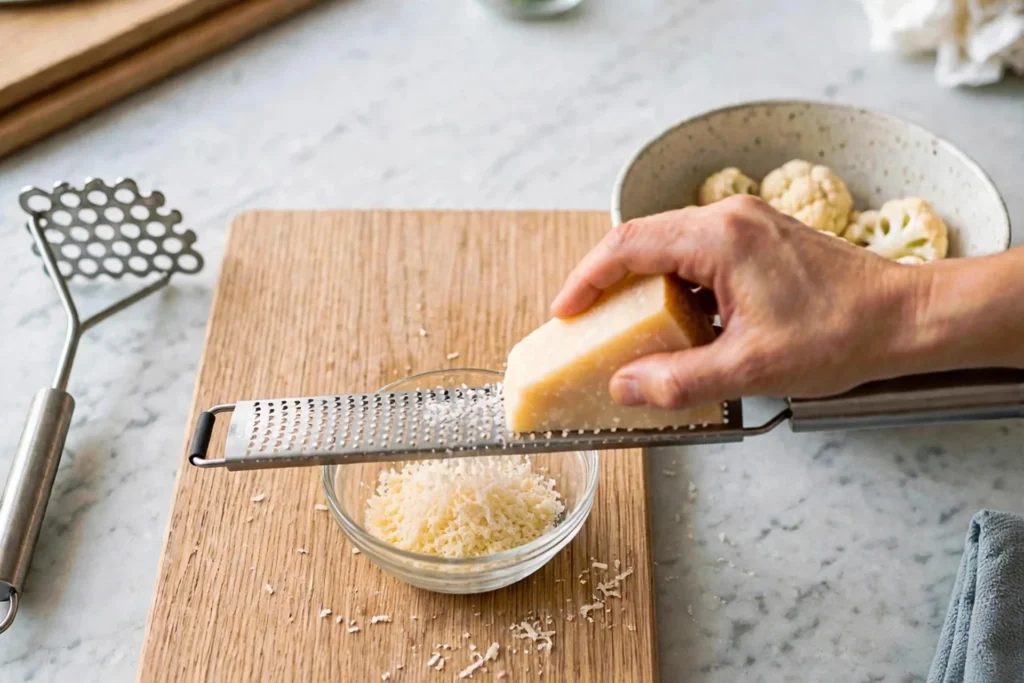
Grate the Parmesan on the fine side. Coarse shreds leave stringy bits in the purée.
Melt 4 tablespoons of the butter in a small skillet over low heat until it foams gently.
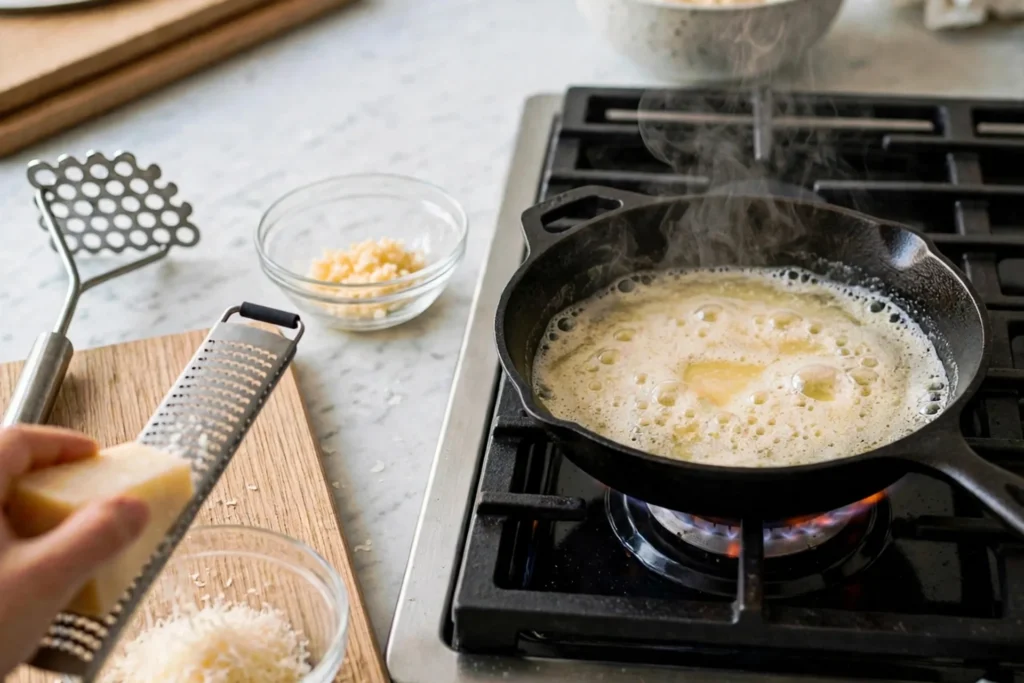
Add the garlic and cook, stirring, until fragrant and pale golden with golden edges — about 2 minutes. Browned garlic turns bitter; if it colors past gold, start that bit over.
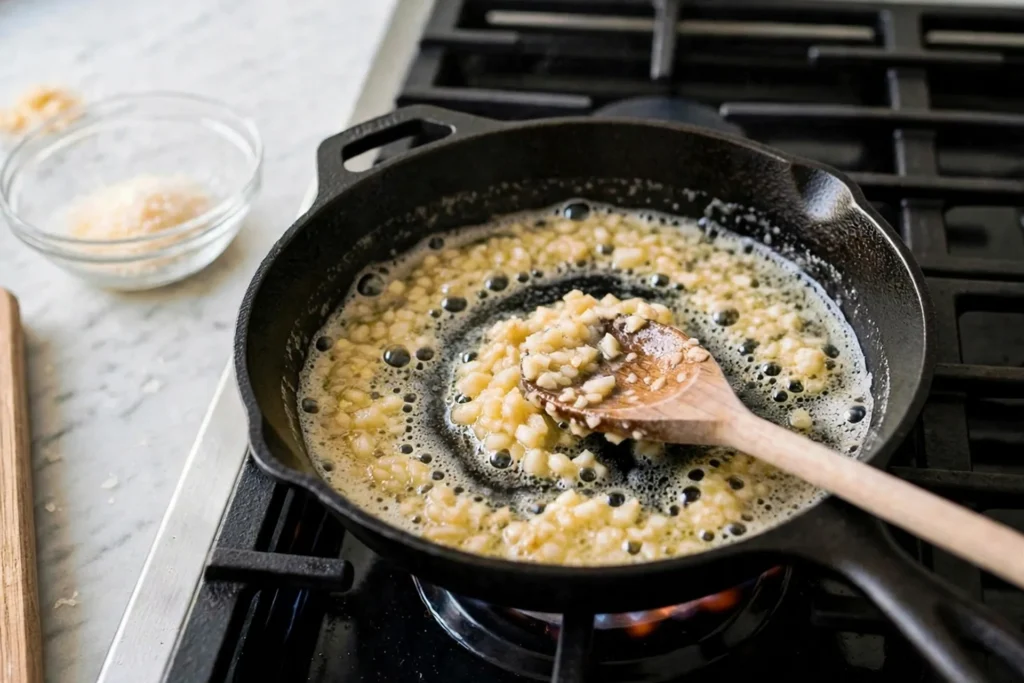
Tip the hot cauliflower into the food processor, pour the warm garlic butter over it, and add the grated Parmesan, salt and pepper.
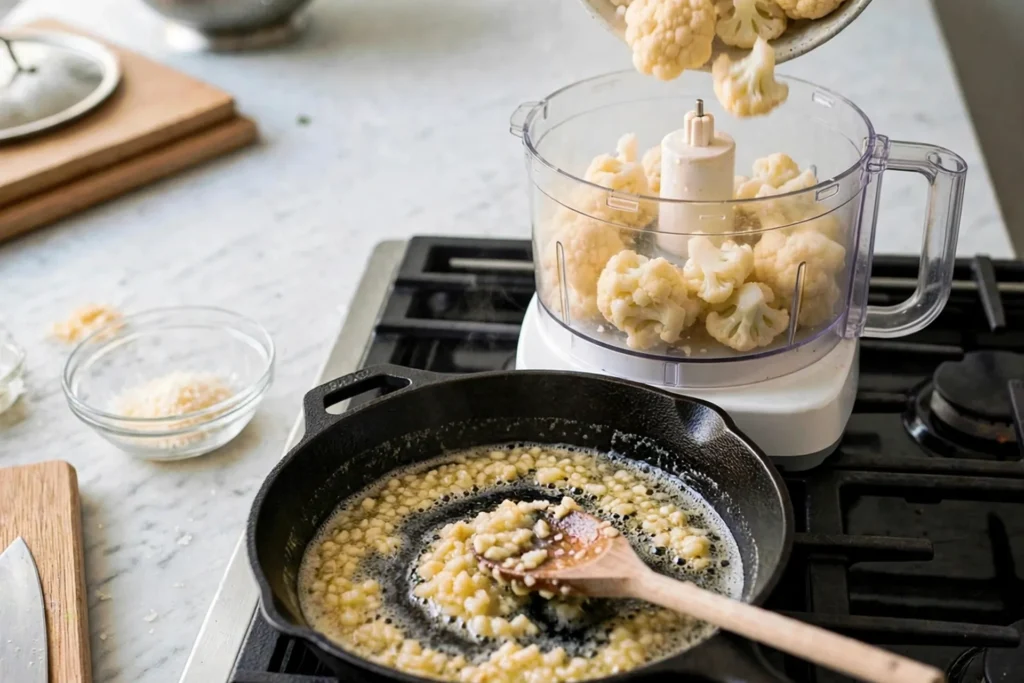
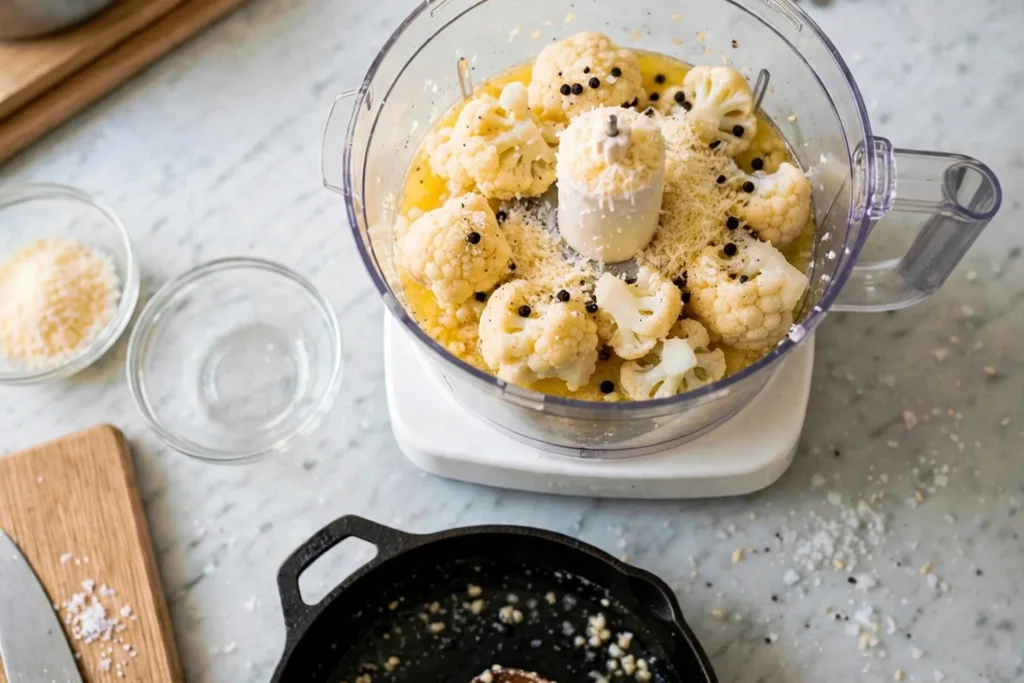
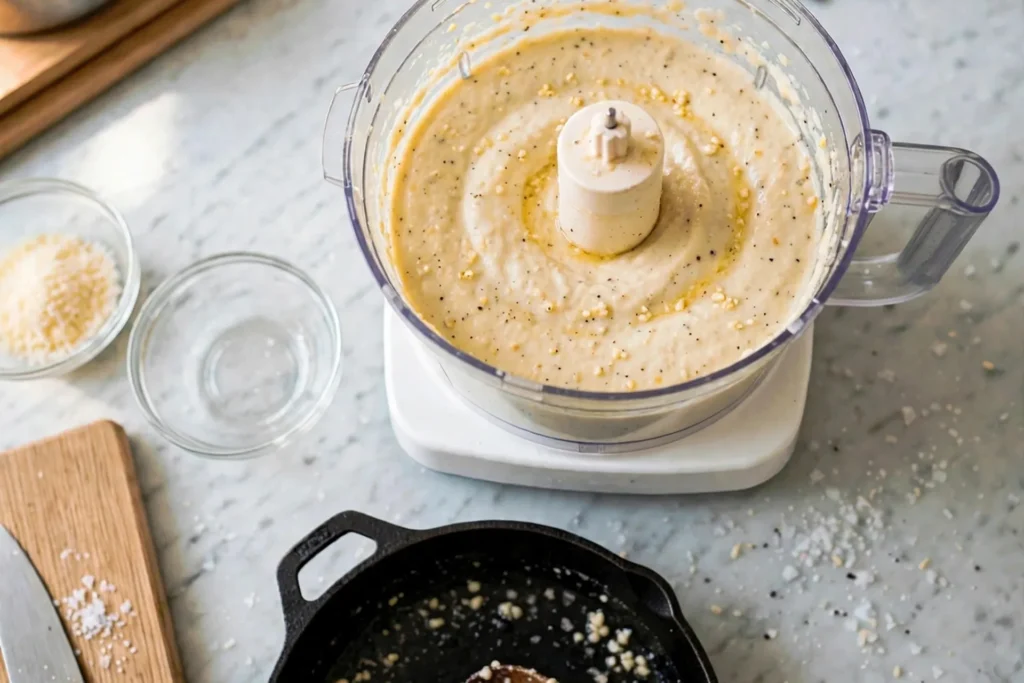
Blend until smooth and thick, warm cream-colored with tiny garlic flecks and a soft golden sheen. No lumps.
Scoop into a bowl and swoosh the surface. Let a spoonful of the remaining garlic butter pool in the wave.
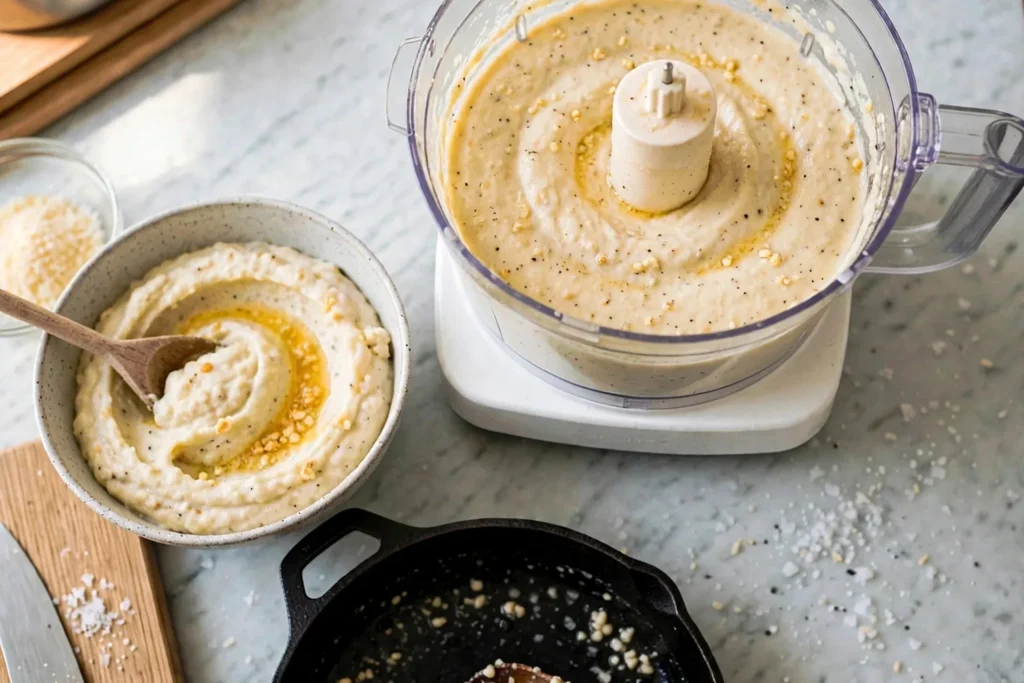
Lay on Parmesan shavings, the rosemary sprig, a pinch of chopped rosemary and cracked pepper. A light drizzle of garlic butter over the top.
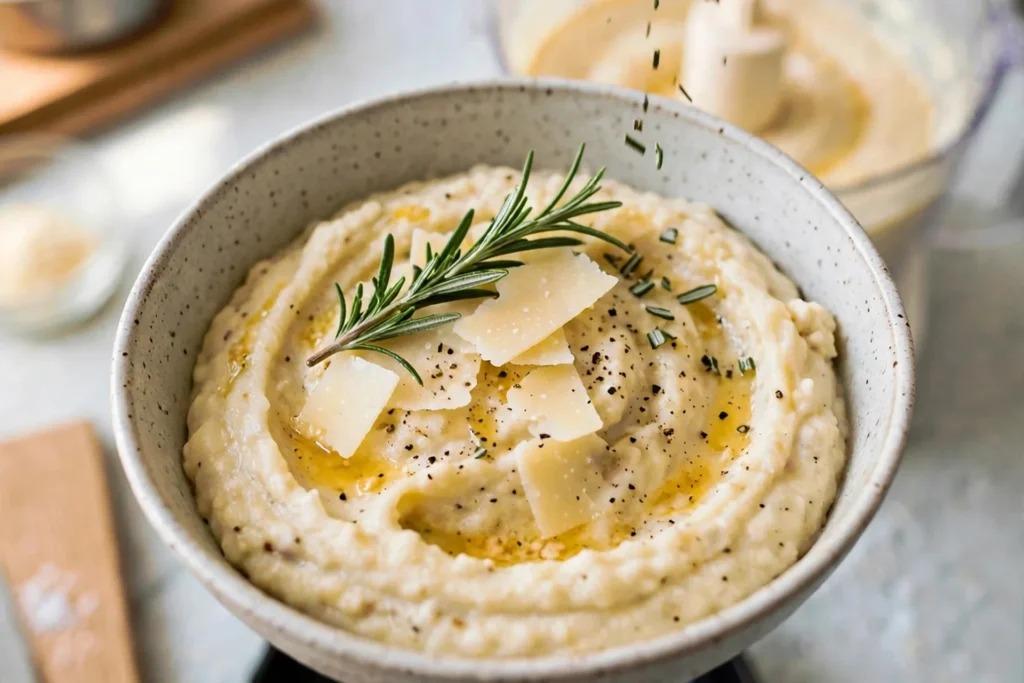
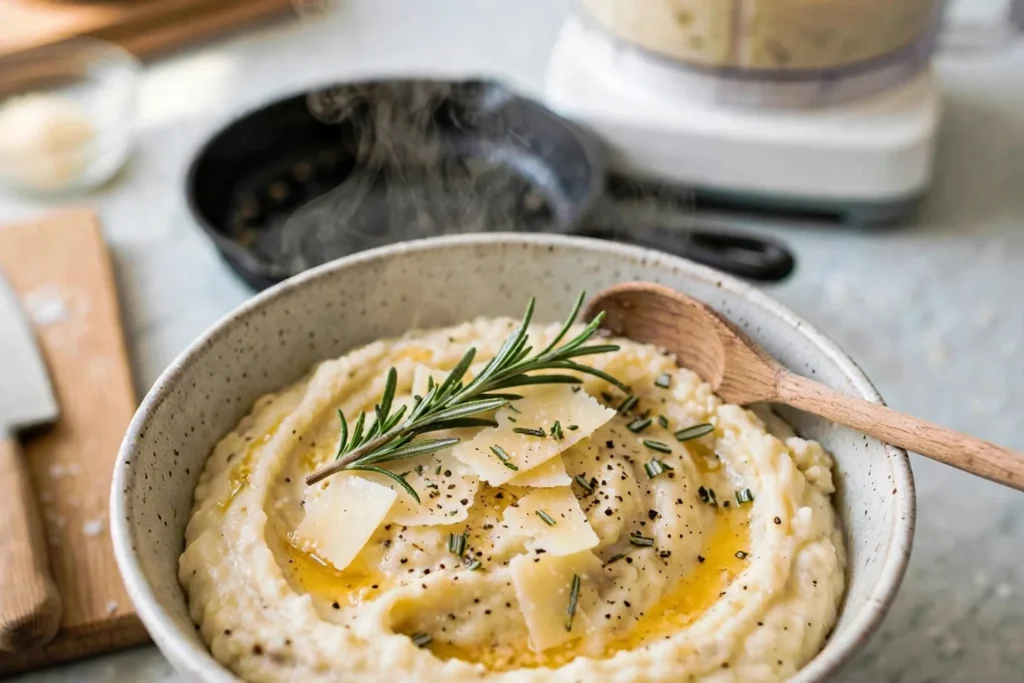
Serve it hot, with the rosemary perfuming the steam as it sits.
Ingredients
Equipment
Method
- Cook the cauliflower: bring a large pot of salted water to a boil; cook the florets 8–12 minutes until fork-tender; drain; steam-dry in the warm pot 2–3 minutes.
- Melt 4 tbsp butter over low heat; cook the garlic 2 minutes until pale gold (not brown).
- In the food processor: hot cauliflower + garlic butter + Parmesan + salt + pepper; blend until smooth.
- Scoop into a bowl; swoosh the surface; pool the remaining garlic butter in the wave.
- Top with Parmesan shavings, rosemary and pepper. Serve hot.
Notes
Recipe 3: Cauliflower Mashed Potatoes
The hybrid. Real Yukon gold potatoes boiled separately, then hand-mashed with the cauliflower, warm milk and butter for a fluffy, rustic mash that’s lighter than all-potato but heartier than all-cauliflower.
You need:
– 1½ lb Yukon gold potatoes (about 3 medium)
– 1 bowl of the cooked cauliflower (about ⅓ of the batch)
– 4 tablespoons butter
– ½ cup whole milk, warmed
– 1 teaspoon kosher salt, plus more to taste
– ¼ teaspoon black pepper
– 2 tablespoons chopped fresh chives
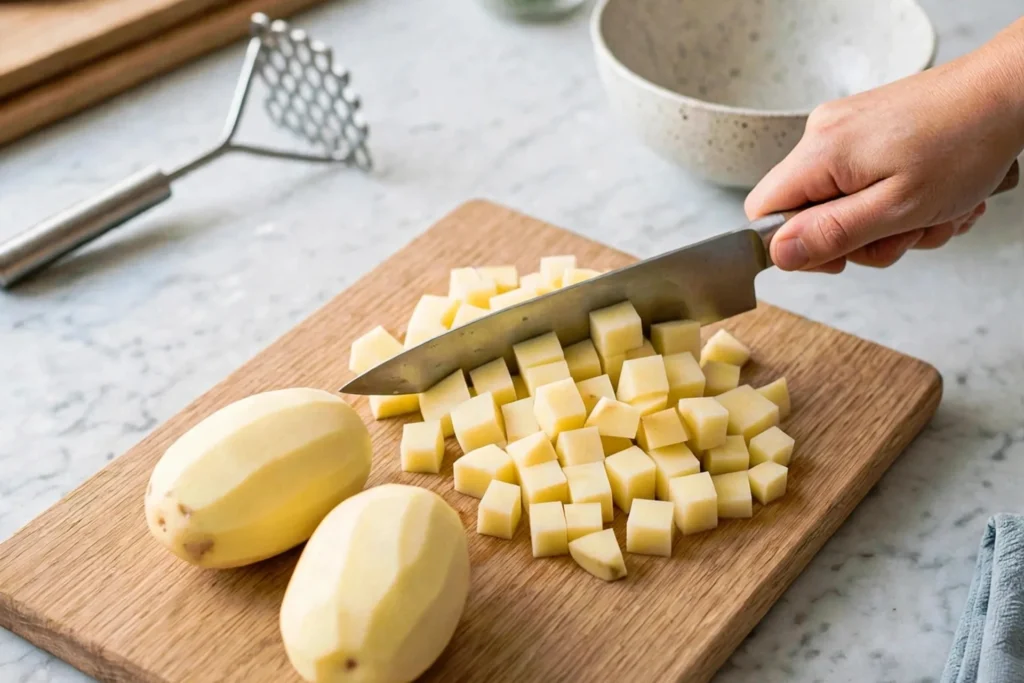
Peel the potatoes — Yukon golds have thin skins, but peeled gives the smoothest result.
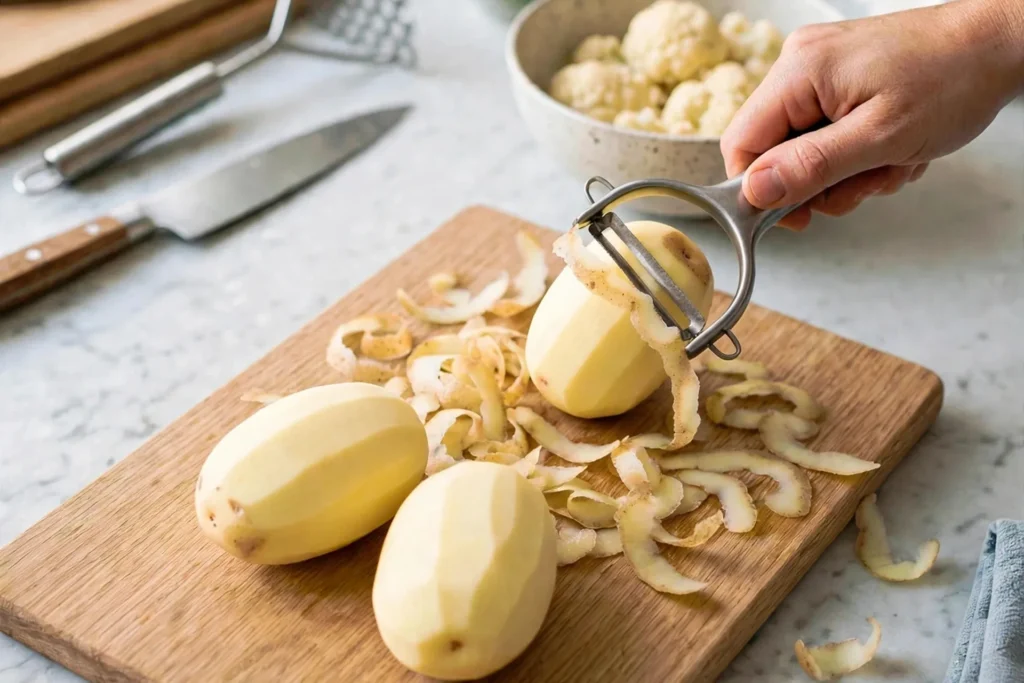
Cut into even 1-inch cubes. Even matters more than small; uniform cubes cook uniformly.
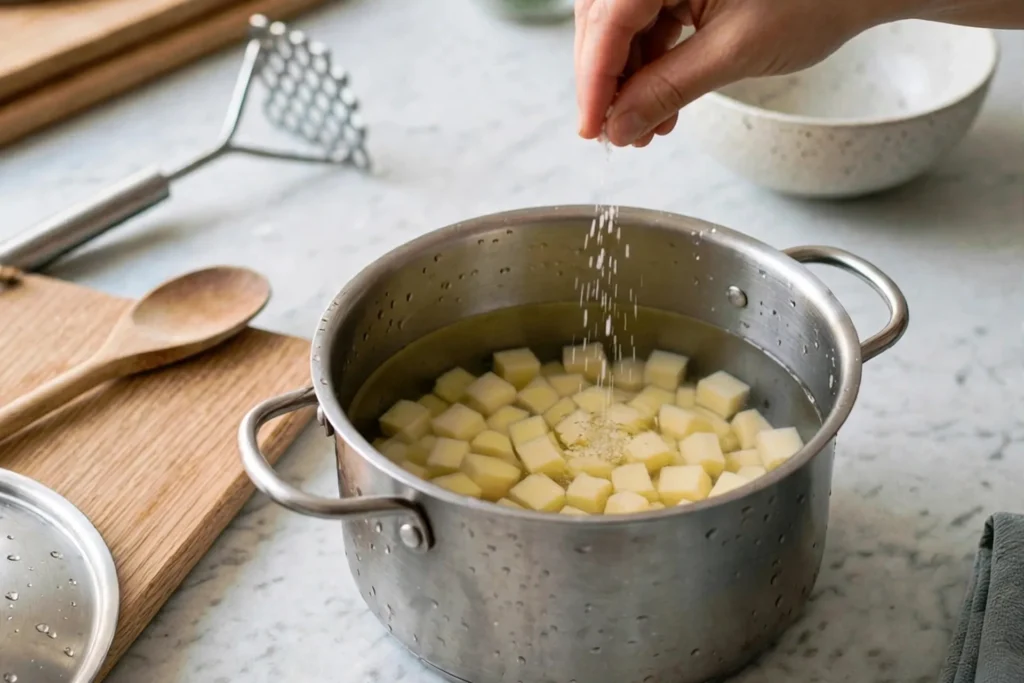
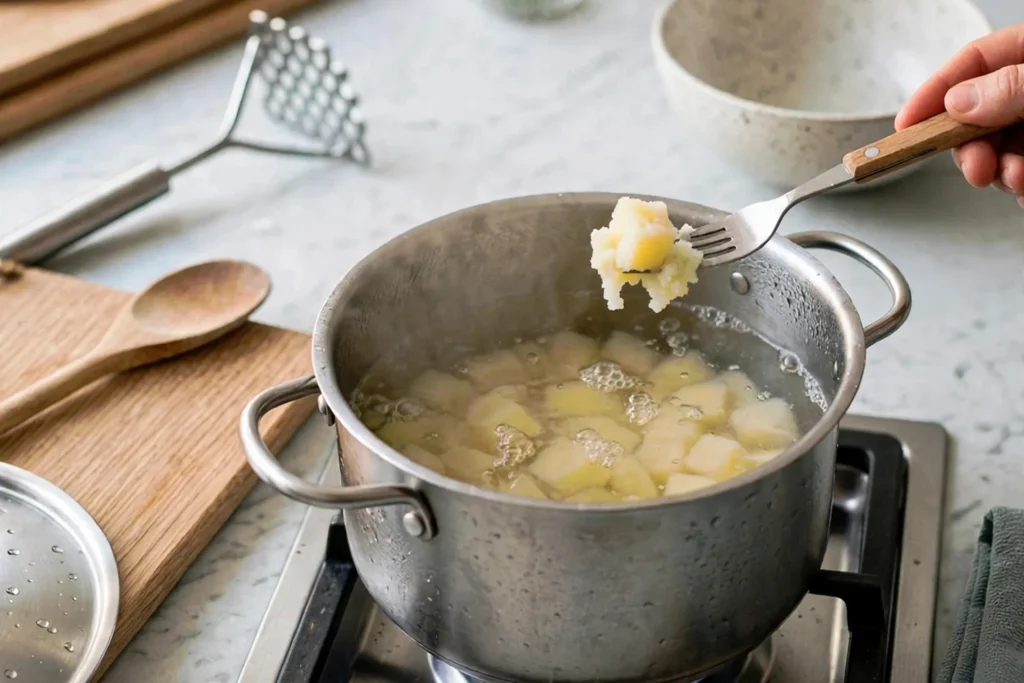
Cover with cold salted water in the pot — starting cold lets the cubes cook through evenly instead of going mushy outside and hard inside. Bring to a boil, then simmer 12 to 15 minutes until a fork slides through with no resistance.
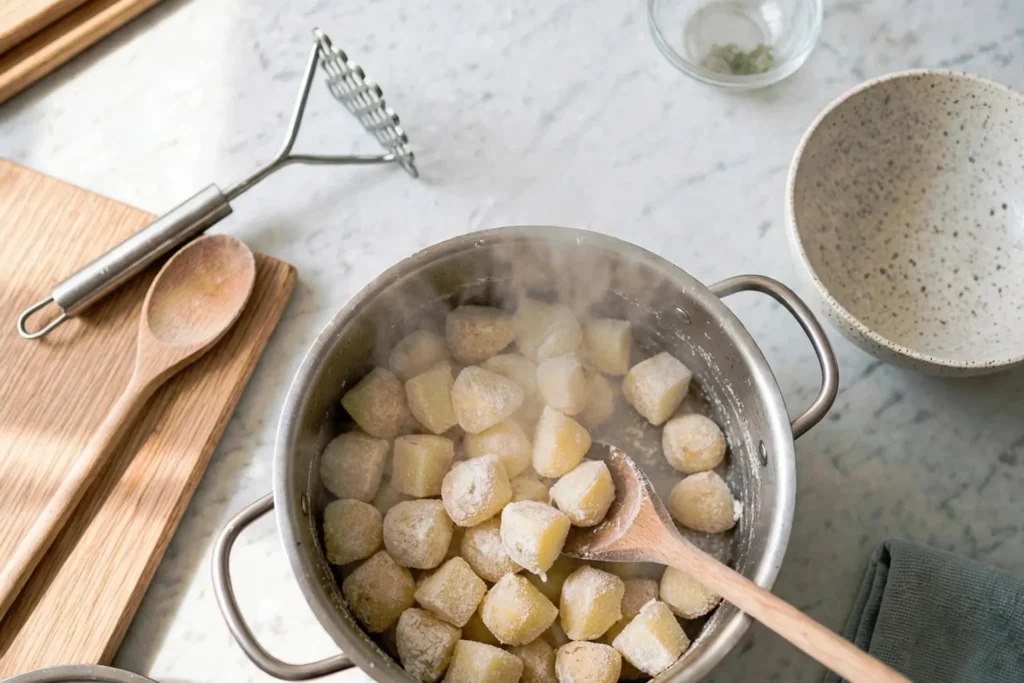
Drain and return to the warm pot, letting the steam rise off for a minute. Dry potatoes absorb the milk instead of turning gluey.
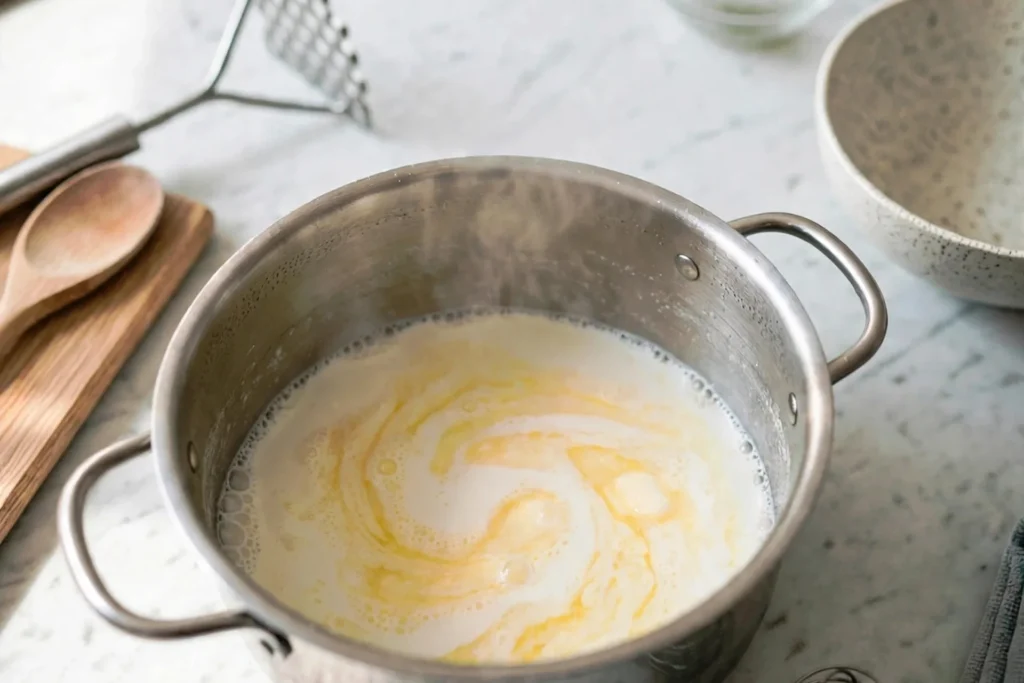
Warm the milk and butter together in a small saucepan — just until the butter melts and swirls in, with tiny bubbles at the edge. Warm liquid keeps the mash fluffy; cold milk would seize it.
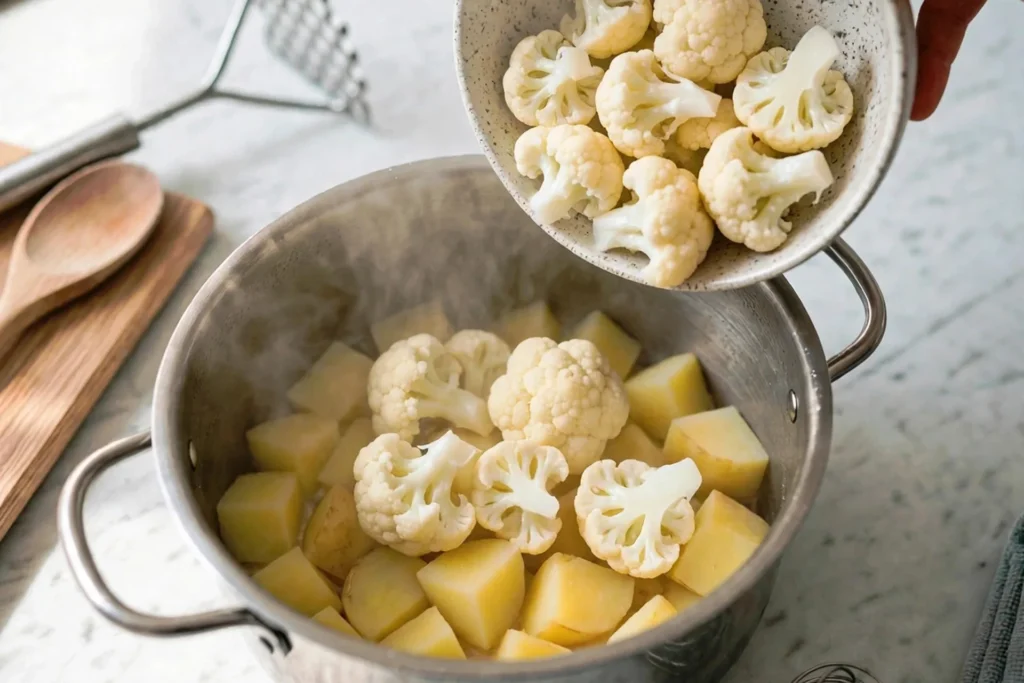
Tip the bowl of cauliflower into the pot with the potatoes.
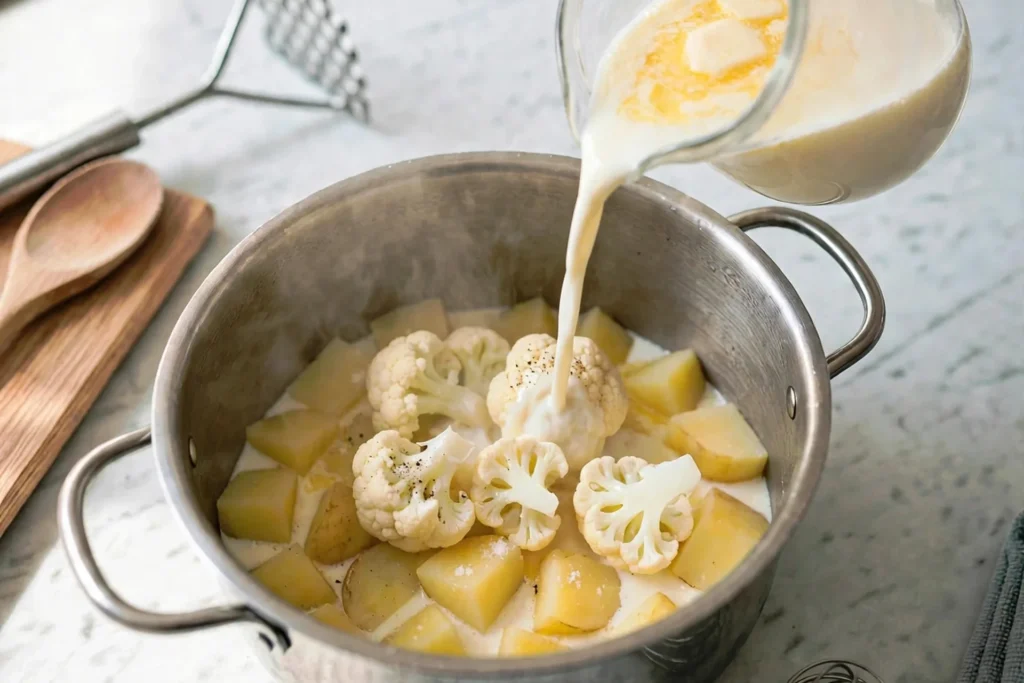
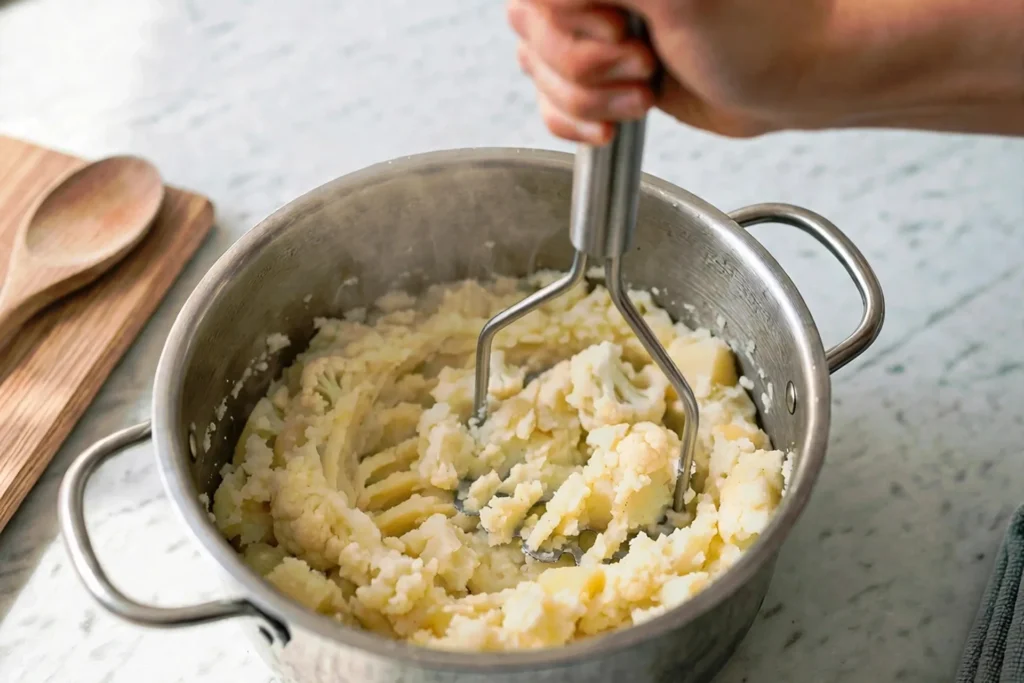
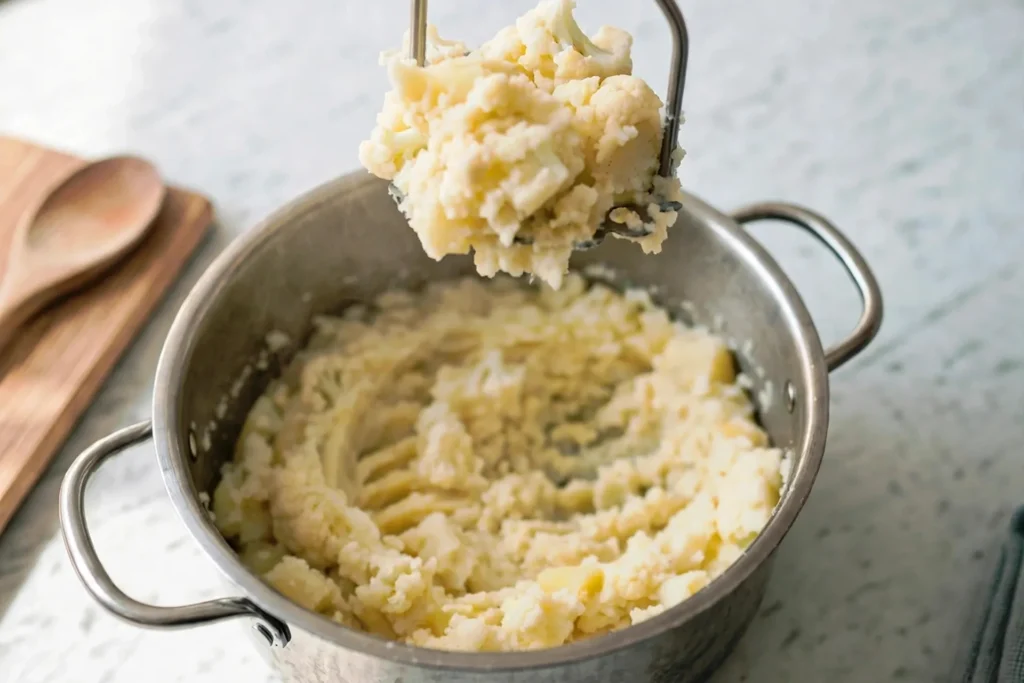
Pour the warm milk and butter over, add salt and pepper, and mash by hand with a potato masher. It won’t go silky like the food processor versions — that’s the point. Stop when it’s fluffy and thick with small visible bits of cauliflower and potato.
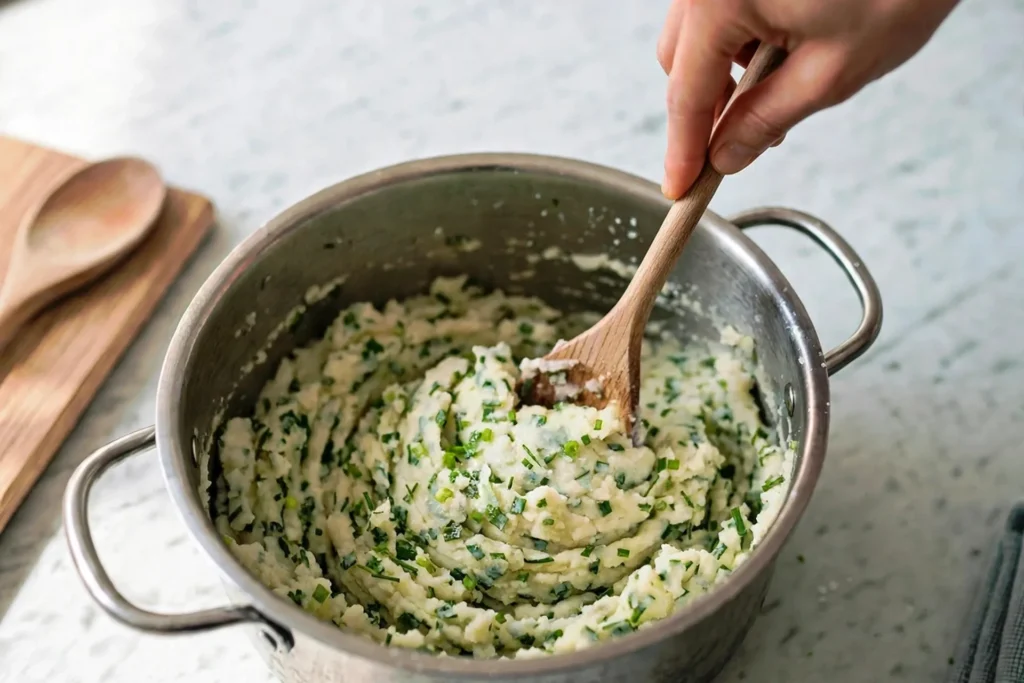
Fold in the chives and taste for salt.
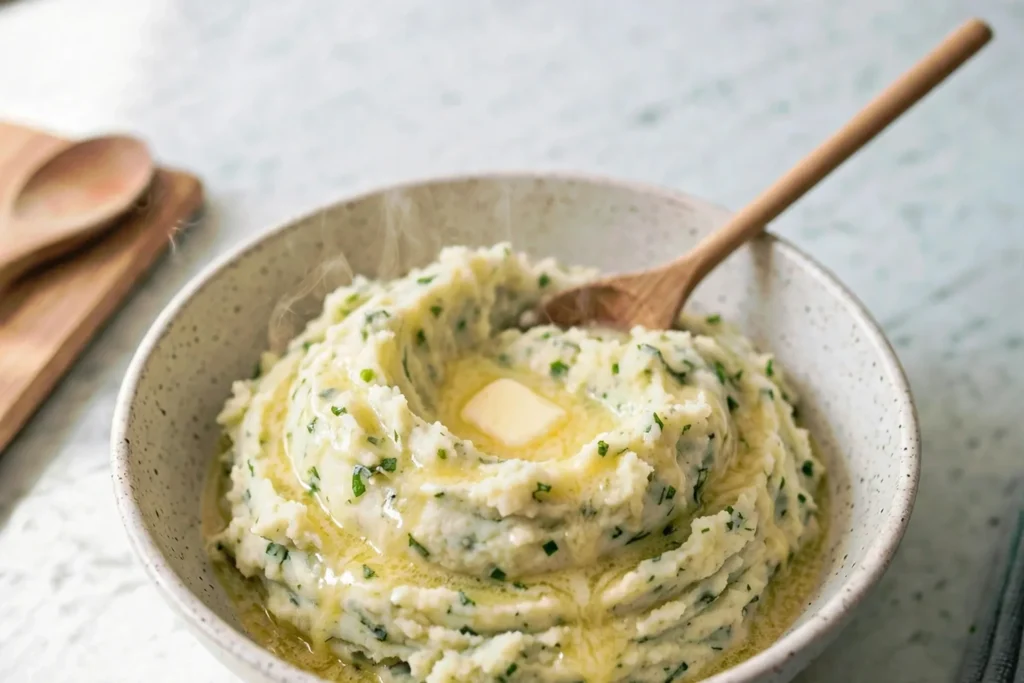
Pile into a bowl, press a small well in the center with a spoon, and set a pat of butter in it to melt down the sides.
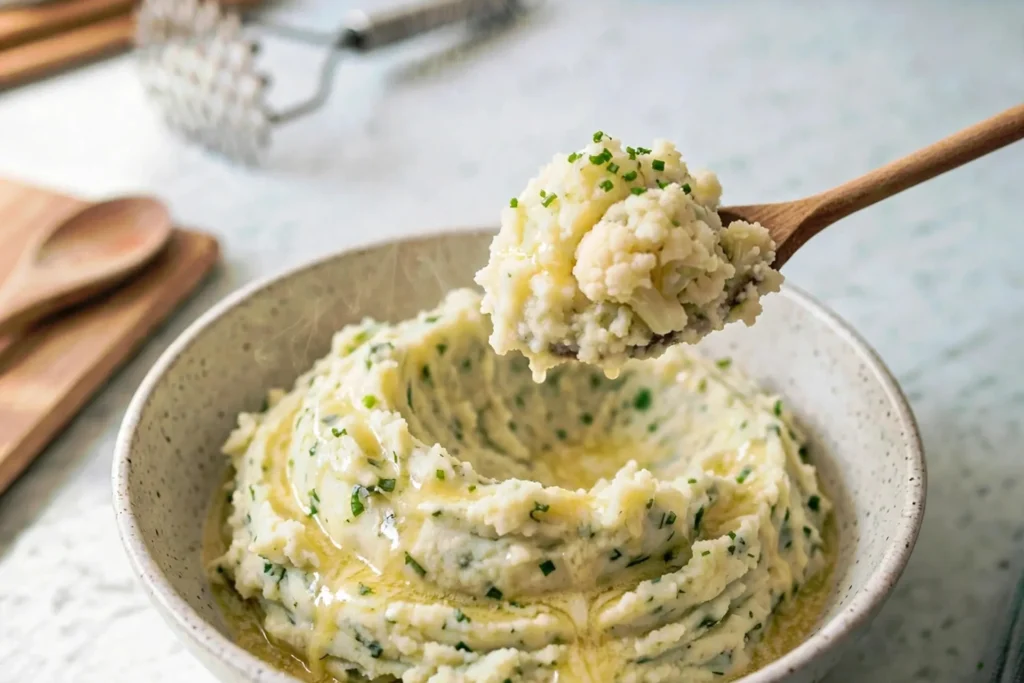
Serve it hot. This is the one that reheats best of the three.
Ingredients
Equipment
Method
- Cook the potatoes: peel, cut into 1-inch cubes, and cover with cold salted water; bring to a boil, then simmer 12–15 minutes until a fork slides through with no resistance; drain and steam-dry in the warm pot 2–3 minutes.
- Warm the milk and butter together in a small saucepan until the butter melts and swirls in (don’t boil).
- Add the cauliflower to the potatoes; pour the warm milk-butter over; add the salt and pepper.
- Mash by hand with a potato masher until fluffy and rustic, with small visible bits of cauliflower and potato.
- Fold in the chives; pile into a bowl; press a small well in the center with a spoon and set a pat of butter in it to melt down the sides. Serve hot.
Notes
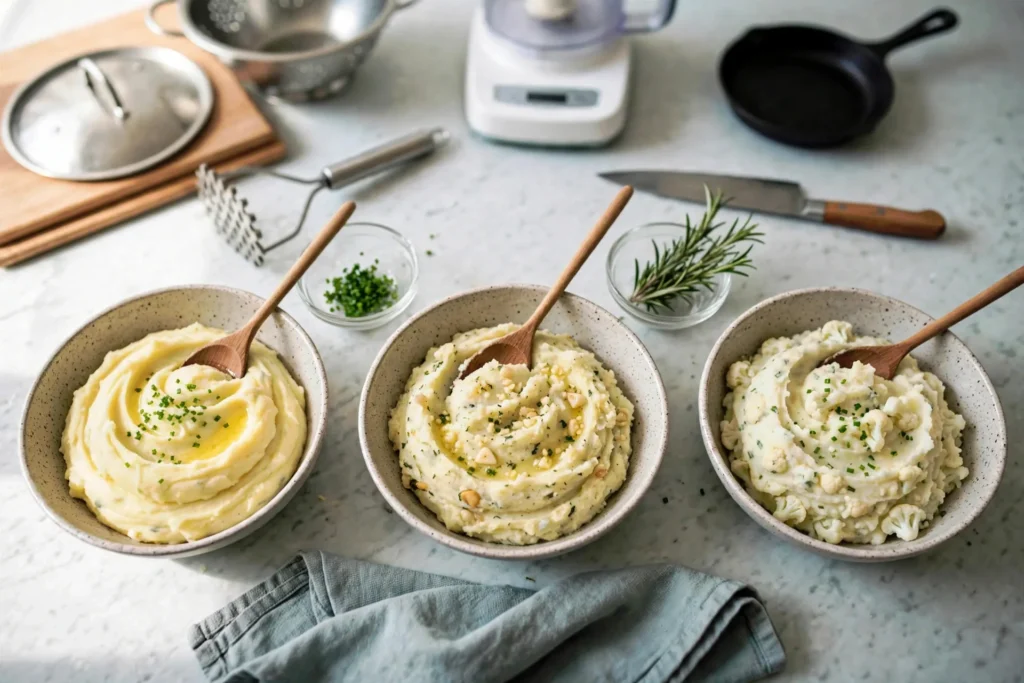
All Three Together
The silky ivory, the golden garlic, the rustic fluffy — three bowls, one vegetable, and proof that mashed cauliflower was never the problem. The water was.
Tips That Actually Matter
Dry the cauliflower twice. Drain it, then steam it dry in the warm pot. This single habit fixes 90% of watery mash complaints.
Hot cauliflower, soft dairy. Cold florets don’t melt the cream cheese or butter properly, and the food processor has to work twice as hard. Work while everything steams.
Salt the boiling water generously. It’s the only seasoning the cauliflower absorbs from the inside. The dairy and Parmesan add surface salt later, but they can’t fix bland centers.
Garlic: pale gold, never brown. In Recipe 2, two minutes over low heat. Browned garlic tastes bitter and there’s no undoing it.
If You’re Out of Something
– No cream cheese: use all sour cream plus an extra tablespoon of butter. Slightly tangier, still silky.
– No Parmesan: Pecorino Romano works in Recipe 2 — saltier, so cut the added salt in half.
– No Yukon golds: russets work in Recipe 3 but go fluffier and drier; add an extra splash of warm milk.
– No fresh rosemary: ½ teaspoon dried, crushed between your palms. Skip the sprig garnish.
– No food processor: a potato masher plus vigorous stirring gets you close to Recipe 1’s texture, though never fully silky. An immersion blender in a deep pot is the next best thing.
Storing and Make-Ahead
All three keep 4 days refrigerated in airtight containers. Reheat gently — stovetop over low heat with a splash of milk, or microwave at 70% power, stirring halfway. The silky version (Recipe 1) stiffens most when cold; it loosens right back up with heat and a spoonful of milk. Recipe 3 reheats the most gracefully. All three freeze up to 2 months, though the texture softens slightly on thawing; stir well while reheating.
Five Things Worth Knowing
1. Even florets cook evenly. A pile of mixed sizes means mush and crunch in the same bite. Two extra minutes with the knife pays off.
2. Knife-tender, not falling apart. The fork should slide in with no resistance, but the floret should still hold its shape going into the colander.
3. Steam-drying is the professional step. Restaurants do exactly this — return drained vegetables to the hot pot so surface moisture evaporates before mashing.
4. Warm milk, always. Cold milk shocks the starch and turns mash gummy. It takes 90 seconds to warm; there’s no excuse.
5. Taste after the dairy. Parmesan and cream cheese both bring salt. Season the cauliflower water well, then adjust at the end — not before.
Frequently Asked Questions
Can I make these dairy-free?
Recipe 3 adapts best: use olive oil instead of butter and warmed unsweetened oat milk. Recipes 1 and 2 lean too hard on dairy to fake well.
Why is my mash watery even though I drained it?
Draining isn’t enough — the florets hold water in their crevices. The steam-dry step in the warm pot is what actually removes it.
Can I use frozen cauliflower?
Yes, and it’s honestly fine here since everything gets mashed. Thaw, then boil 5 to 6 minutes — it cooks faster than fresh. Don’t skip the steam-dry; frozen holds even more water.
Which one is lowest in carbs?
Recipes 1 and 2 — cauliflower plus dairy, no potatoes. Recipe 3 has real potatoes, so it’s the highest of the three, though still lighter than all-potato mash.
Can I prep the cauliflower ahead?
Yes — cook, drain, steam-dry and refrigerate up to 2 days. Rewarm in the pot before mashing so the dairy melts properly.
My food processor mash has lumps — what now?
Keep blending, scraping down twice. If lumps persist, the florets were undercooked — next time give them the full time until truly fork-tender.
One Vegetable, Three Mashes
Blanch it right — cut even, boil till tender, dry it hard — and cauliflower turns into whatever you need: silky, savory, or hearty. Pick your texture, or make all three and let the table argue about the winner.
For another cozy side in the same spirit, the Creamy Butternut Squash Pasta treats fall vegetables with the same respect.