Lemon Pound Cake Recipe (Classic, With Pudding, No Sour Cream, and Starbucks-Style)
 ""
 Pin it

Lemon pound cake is a dense, buttery loaf with a tight, tender crumb and a bright citrus flavor that comes from fresh zest and juice. This page gives you one shared method and three complete versions, so you can make exactly the one you searched for:
- Classic Lemon Pound Cake (no sour cream): the base recipe, made with milk and fresh lemon juice instead of sour cream.
- Lemon Pound Cake With Pudding: the same loaf with instant pudding mix added for a softer, moister, more tender crumb.
- Starbucks-Style Iced Lemon Loaf: a softer, sweeter loaf finished with a thick white lemon icing, inspired by the café-style slice. This is a copycat-style recipe, not the official one.
All three use ingredients you can find at a regular grocery store, bake in a standard 9×5-inch loaf pan, and use the same mixing steps, so once you have made one you can make the others without re-learning anything.
The name comes from the traditional formula: the original pound cake used a pound each of butter, sugar, eggs, and flour. Modern loaf-sized versions scale that down, and many add lemon or a little leavening for a lighter texture.
In this post
- Which Version Should You Make?
- Recipe Overview
- What You Need Before You Start
- Ingredients
- How to Make Lemon Pound Cake (One Method for All Three Versions)
- How to Glaze the Cake
- Version 2 Notes: What Changes With Pudding
- Version 3 Notes: Getting the Starbucks-Style Look
- Common Mistakes and How to Fix Them
- Substitutions
- Storage, Freezing, and Make-Ahead
- FAQ
- Recipe Card: Classic Lemon Pound Cake (No Sour Cream)
- Recipe Card: Lemon Pound Cake With Pudding
- Recipe Card: Starbucks-Style Iced Lemon Loaf
This lemon pound cake recipe gives you one shared method and three complete versions — classic with no sour cream, a pudding version, and a Starbucks-style iced loaf.
Which Version Should You Make?
| Classic (No Sour Cream) | With Pudding | Starbucks-Style Iced | |
|---|---|---|---|
| Crumb | Dense, buttery, slightly firm | Very soft and moist | Soft, tender, slightly lighter |
| Sweetness | Medium | Medium | Sweetest (thick icing) |
| Finish | Thin lemon glaze | Thin lemon glaze | Thick white lemon icing |
| Best for | Tea, slicing, gifting | Moist cake that keeps well | Coffee-shop style slices |
| Extra ingredient | None | 1 box instant pudding mix | More powdered sugar for icing |
Recipe Overview
| Prep time | 20 minutes |
| Bake time | 55 to 65 minutes (Starbucks-style: 50 to 60 minutes) |
| Cooling time | About 1 hour before glazing |
| Total time | About 2 hours 30 minutes |
| Yield | 1 loaf (9×5-inch pan), about 10 slices |
| Difficulty | Easy, with careful measuring and cooling |
What You Need Before You Start
Equipment
- 9×5-inch (23×13 cm) loaf pan, light-colored metal (dark pans brown faster)
- Parchment paper
- Electric hand mixer or stand mixer
- Kitchen scale (recommended)
- Citrus zester or fine grater
- Wire cooling rack
- Toothpick or thin skewer
Prep list (for any one version)
- Buy 3 large lemons. You need the zest of 2 and the juice of 2 to 3, depending on the version.
- Take the butter, eggs, and milk out of the fridge about 30 to 60 minutes ahead so they are at cool room temperature.
- Set the oven rack in the center and preheat to 350°F (175°C).
Ingredients
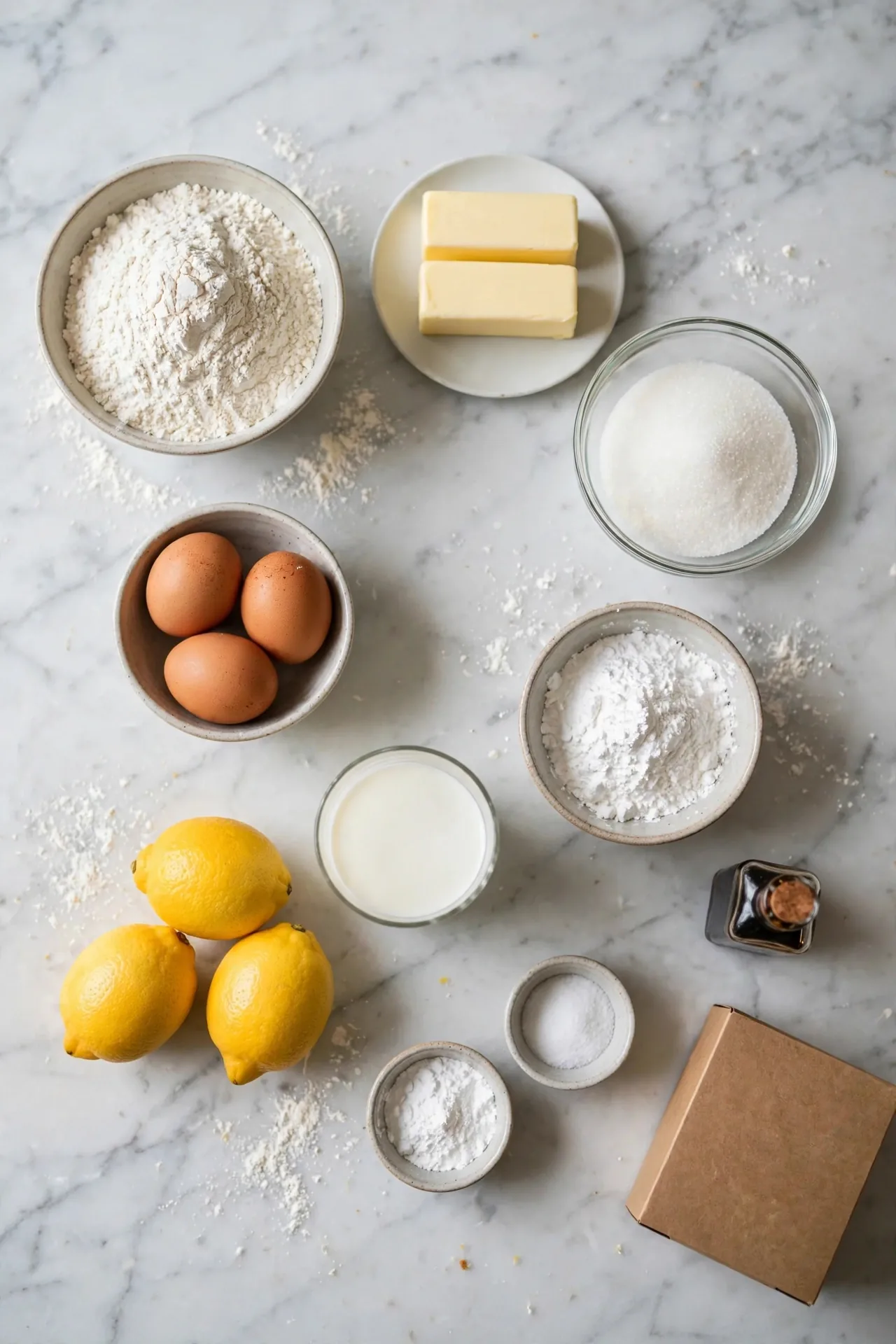
Version 1: Classic Lemon Pound Cake (No Sour Cream)
Cake
- 1¾ cups (220 g) all-purpose flour
- ½ teaspoon baking powder
- ½ teaspoon kosher salt
- ¾ cup (170 g) unsalted butter, softened
- 1 cup (200 g) granulated sugar
- 3 large eggs, room temperature
- 2 tablespoons lemon zest (from about 2 large lemons)
- 1 teaspoon vanilla extract
- ⅓ cup (80 ml) whole milk
- 3 tablespoons (45 ml) fresh lemon juice
Lemon glaze
- 1 cup (120 g) powdered sugar
- 2 to 3 tablespoons fresh lemon juice
Version 2: Lemon Pound Cake With Pudding
Cake
- 1½ cups (190 g) all-purpose flour
- 1 box (3.4 oz / 96 g) instant vanilla or lemon pudding mix (the instant kind, not the cook-and-serve kind)
- ½ teaspoon baking powder
- ¼ teaspoon kosher salt
- ¾ cup (170 g) unsalted butter, softened
- ¾ cup (150 g) granulated sugar
- 3 large eggs, room temperature
- 2 tablespoons lemon zest
- 1 teaspoon vanilla extract
- ½ cup (120 ml) whole milk
- 3 tablespoons (45 ml) fresh lemon juice
Lemon glaze
- 1 cup (120 g) powdered sugar
- 2 tablespoons fresh lemon juice
Version 3: Starbucks-Style Iced Lemon Loaf
Cake
- 1½ cups (190 g) all-purpose flour
- 1 teaspoon baking powder
- ½ teaspoon kosher salt
- ½ cup (113 g) unsalted butter, softened
- 1 cup (200 g) granulated sugar
- 2 large eggs, room temperature
- 1 tablespoon lemon zest
- 1 teaspoon vanilla extract
- ½ cup (120 ml) whole milk
- 2 tablespoons fresh lemon juice
Thick lemon icing
- 1½ cups (180 g) powdered sugar
- 2 tablespoons fresh lemon juice
- 1 tablespoon whole milk, plus more by the teaspoon as needed
Allergens in all three versions: wheat (gluten), milk, eggs. Check pudding mix labels if you have other allergies.
Ingredient Notes
Why no sour cream? Many lemon pound cake recipes use sour cream for tang and moisture. This base recipe gets its moisture from whole milk and its tang from fresh lemon juice instead, so it works with ingredients most kitchens already have. The batter may look slightly curdled when the lemon juice meets the milk. That is normal, and the cake bakes fine.
Fresh lemons only. Bottled juice tastes flat next to fresh juice and carries no zest oil. The zest provides most of the lemon aroma. Zest only the yellow layer, because the white pith underneath is bitter.
Instant pudding mix (Version 2). The mix contains starch and sugar, which hold extra moisture and soften the crumb. Use the instant kind. Cook-and-serve pudding needs heat to thicken and behaves differently in the batter. Because the mix adds sugar, Version 2 uses less sugar and less flour than the classic loaf.
Flour measuring. Weigh flour if you can. If you use cups, spoon the flour into the cup and level it with a knife. Scooping straight from the bag packs in extra flour, and extra flour is the most common reason pound cake turns out dry.
How to Make Lemon Pound Cake (One Method for All Three Versions)
Follow the amounts from the version you picked. Where a step differs, it is marked.
Step 1: Prepare the Loaf Pan
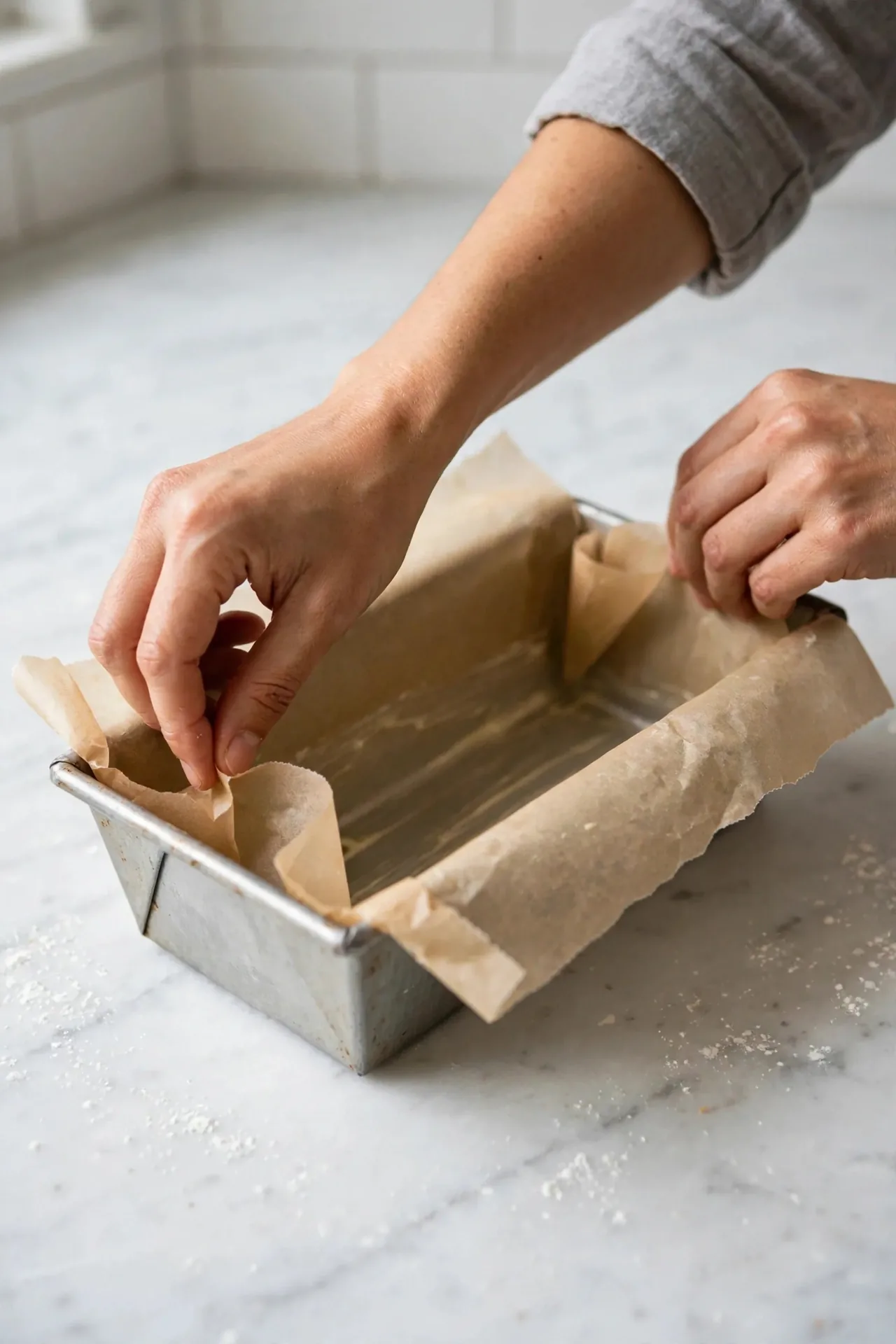
Grease the loaf pan with butter or baking spray, then line it with a strip of parchment that hangs over the two long sides. The overhang works like handles, so you can lift the whole cake out later without it tearing or sticking.
Step 2: Zest the Lemons
Zest the lemons with a fine grater, turning the lemon as you go and stopping when you reach the white layer. Measure the zest for your version. Then juice the lemons and strain out the seeds.

Step 3: Rub the Zest Into the Sugar
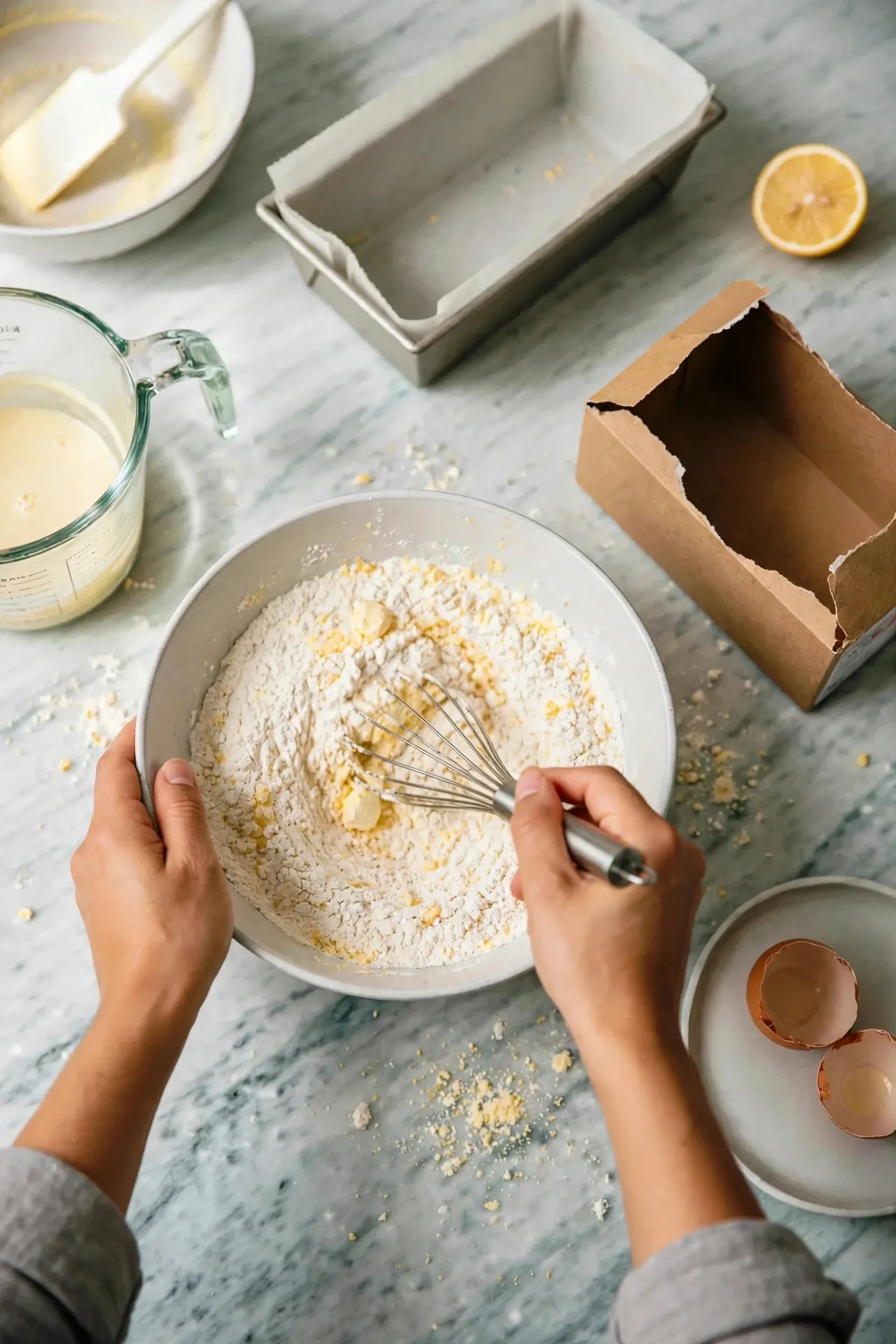
Put the sugar in a large bowl, add the zest, and rub the two together with your fingertips for about a minute until the sugar looks pale yellow and smells strongly of lemon. The sugar crystals scrape the zest and release its oils, which spreads the flavor through the whole cake.

Step 4: Whisk the Dry Ingredients
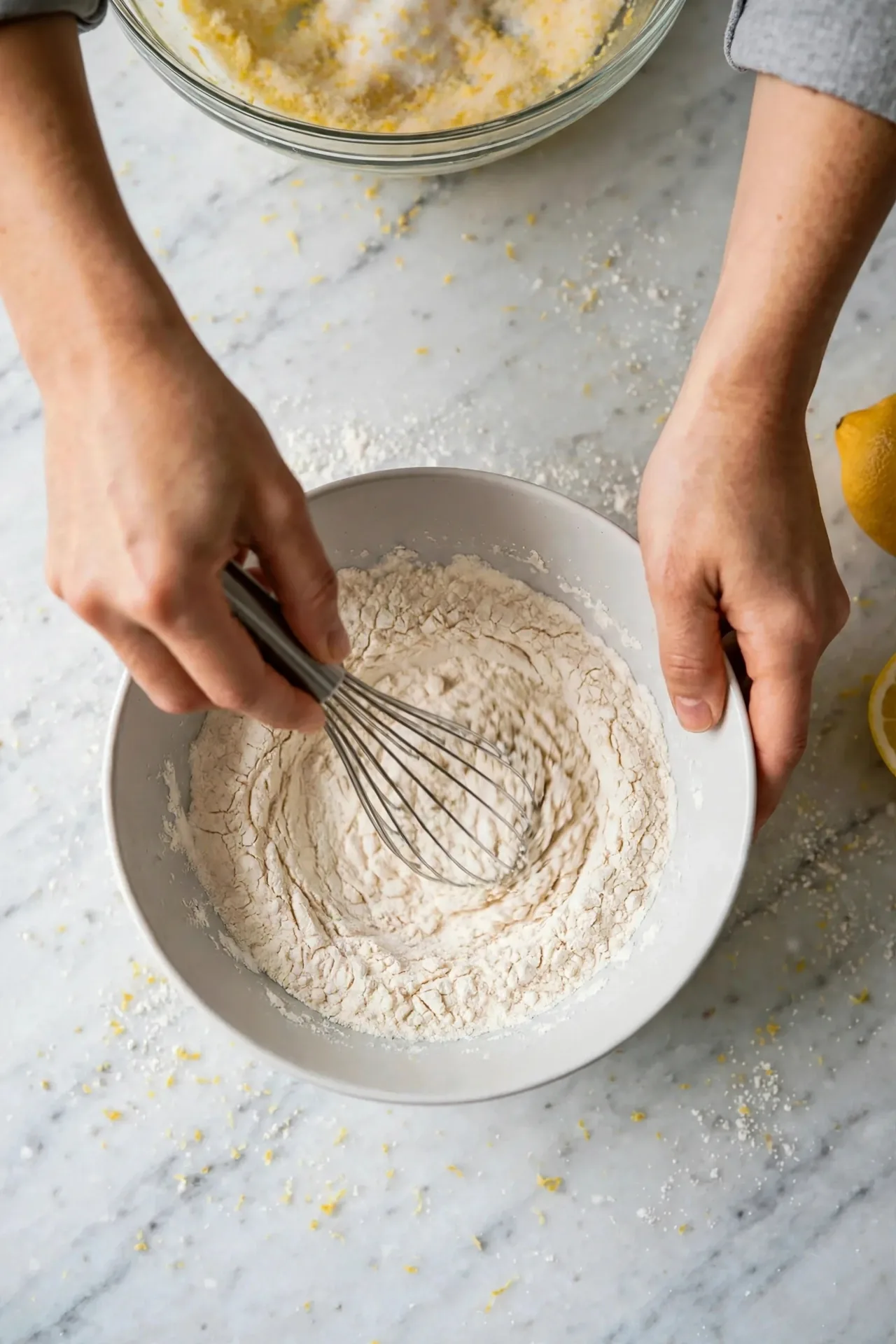
In a separate bowl, whisk together the flour, baking powder, and salt. Version 2: whisk the instant pudding mix into this bowl as well, until no streaks of pudding powder remain.
Set the bowl aside.
Step 5: Cream the Butter and Sugar
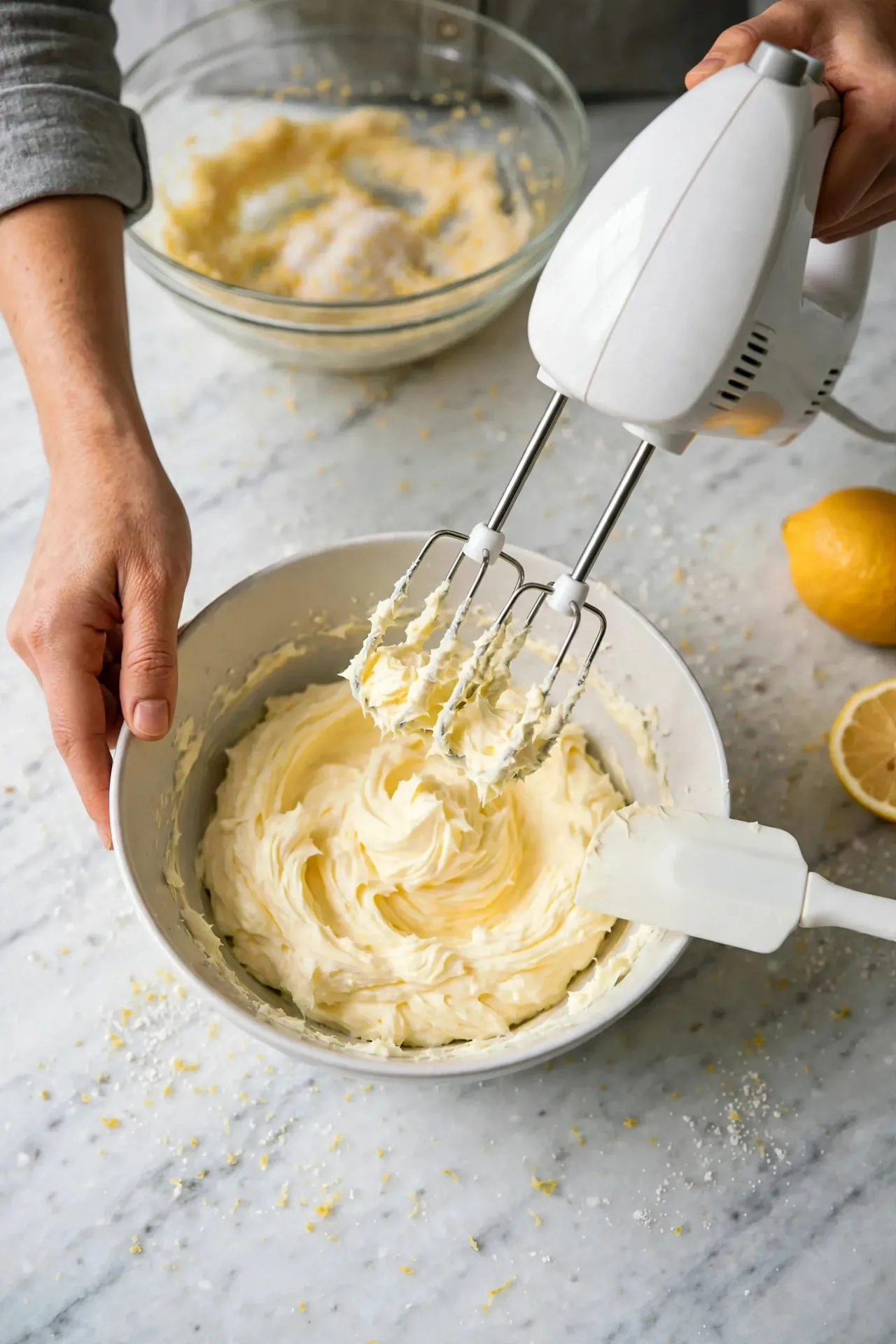
Add the softened butter to the bowl with the lemon sugar. Beat with an electric mixer on medium speed for 3 to 4 minutes, scraping the bowl once or twice, until the mixture is pale, fluffy, and noticeably lighter than when you started.
This step beats tiny air pockets into the butter. Those pockets expand in the oven and give the cake its lift and fine texture, so do not cut it short.
Butter temperature: The butter should be cool and soft, not greasy or melting. If you press it with a finger, it should leave an indent without sliding. Butter that is too warm will not hold air.
Step 6: Add the Eggs One at a Time
Beat in the eggs one at a time, mixing well after each until it disappears into the batter. Add the vanilla with the last egg.
Cold eggs can make the batter look curdled or split because the cold liquid firms up the butter. If that happens, keep mixing for a few seconds and carry on. A spoonful of the measured flour will also help bring it back together.

Step 7: Combine the Milk and Lemon Juice
Stir the milk and lemon juice together in a measuring cup. It may thicken or look slightly curdled. This is the lemon juice reacting with the milk and is fine to use.

Step 8: Add the Dry and Wet Ingredients in Turns
With the mixer on low, add about one-third of the flour mixture to the batter and mix until just combined. Add half of the milk and lemon mixture, then another third of the flour, then the rest of the milk, and finish with the last of the flour.
Stop as soon as you no longer see dry flour. Overmixing builds gluten and makes the cake tough instead of tender. Use a rubber spatula to scrape the bottom of the bowl and give a final few folds by hand.
Watch for: The batter should be thick, smooth, and spreadable, with a texture like soft, thick frosting. If you pull the spatula through, the batter should hold its shape for a second before it settles.
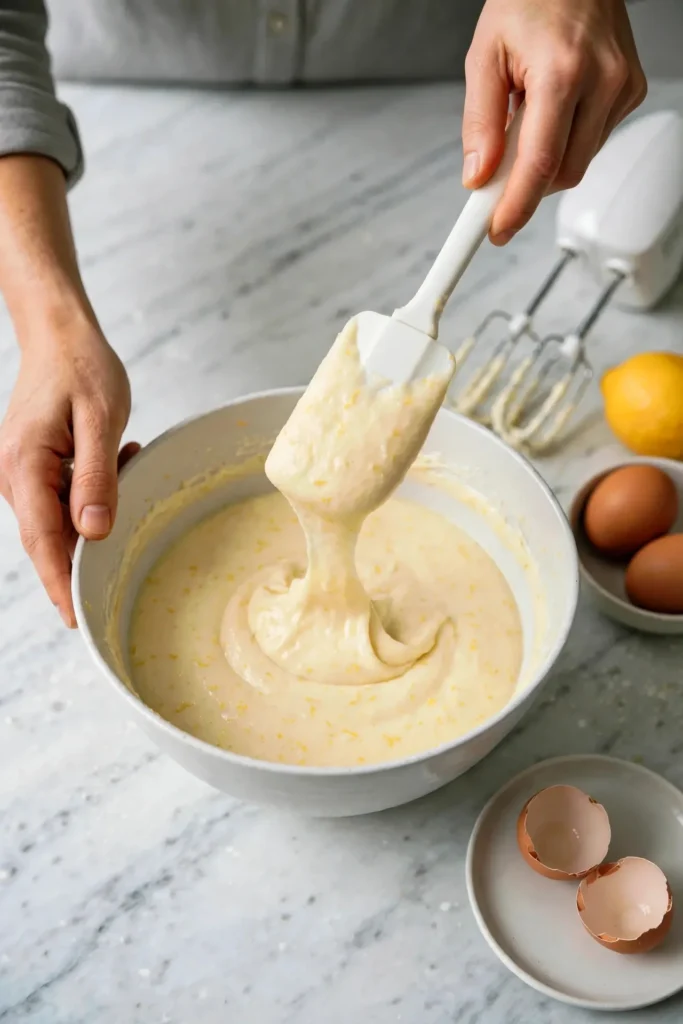
Step 9: Fill the Pan
Spoon the batter into the prepared pan. Use the spatula to push it into the corners and smooth the top, leaving a slight dip in the center. Tap the pan firmly on the counter two or three times to release large air bubbles.
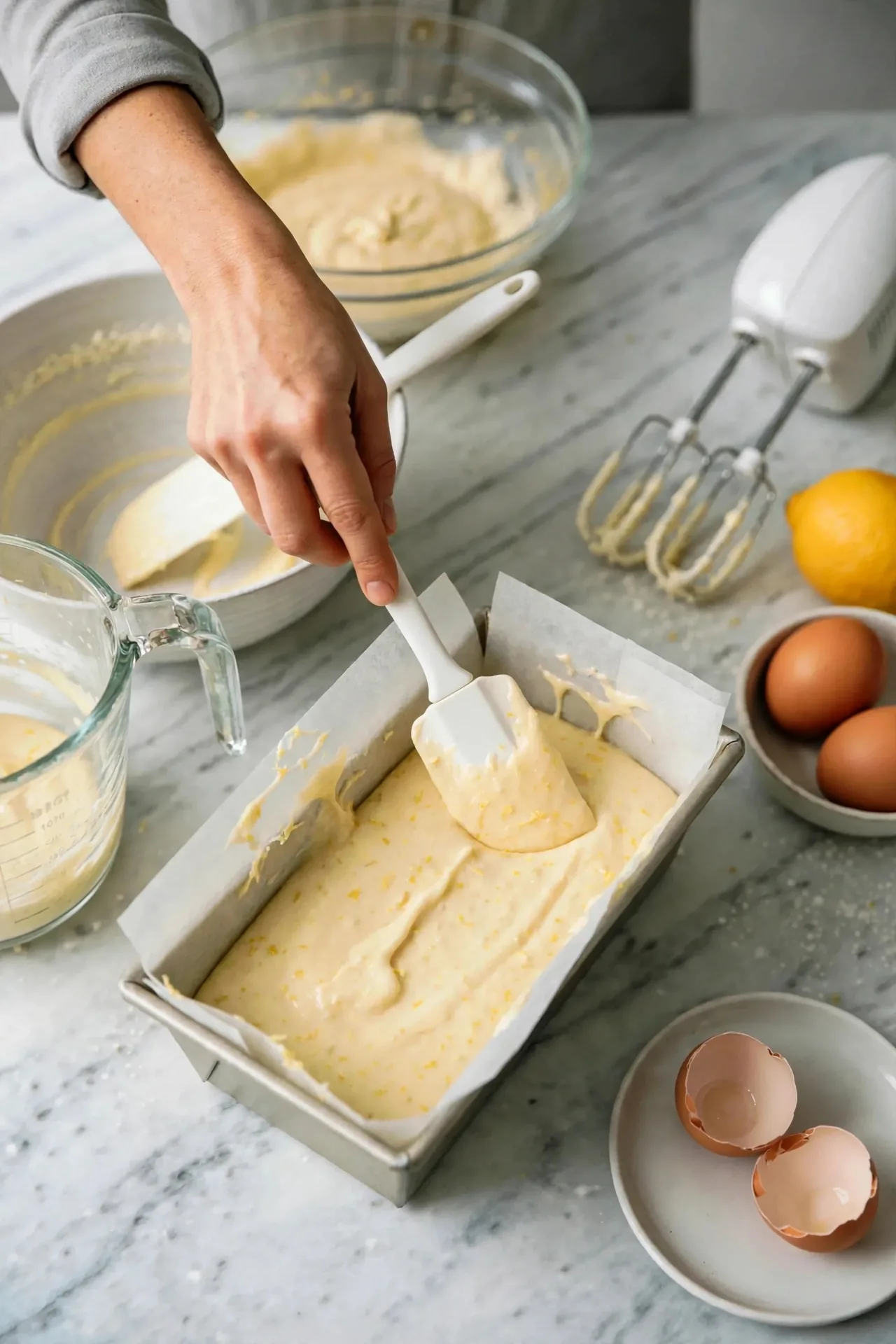
Step 10: Bake
Bake on the center rack at 350°F (175°C):
- Classic and Pudding versions: 55 to 65 minutes
- Starbucks-style version: 50 to 60 minutes
Do not open the oven door during the first 40 minutes, since a sudden drop in temperature can make the center sink. If the top is dark golden before the cake is done, loosely tent the pan with foil for the remaining time.
A split down the center of the top is normal for pound cake. The crust sets while the middle is still rising, and the center cracks open as it finishes.
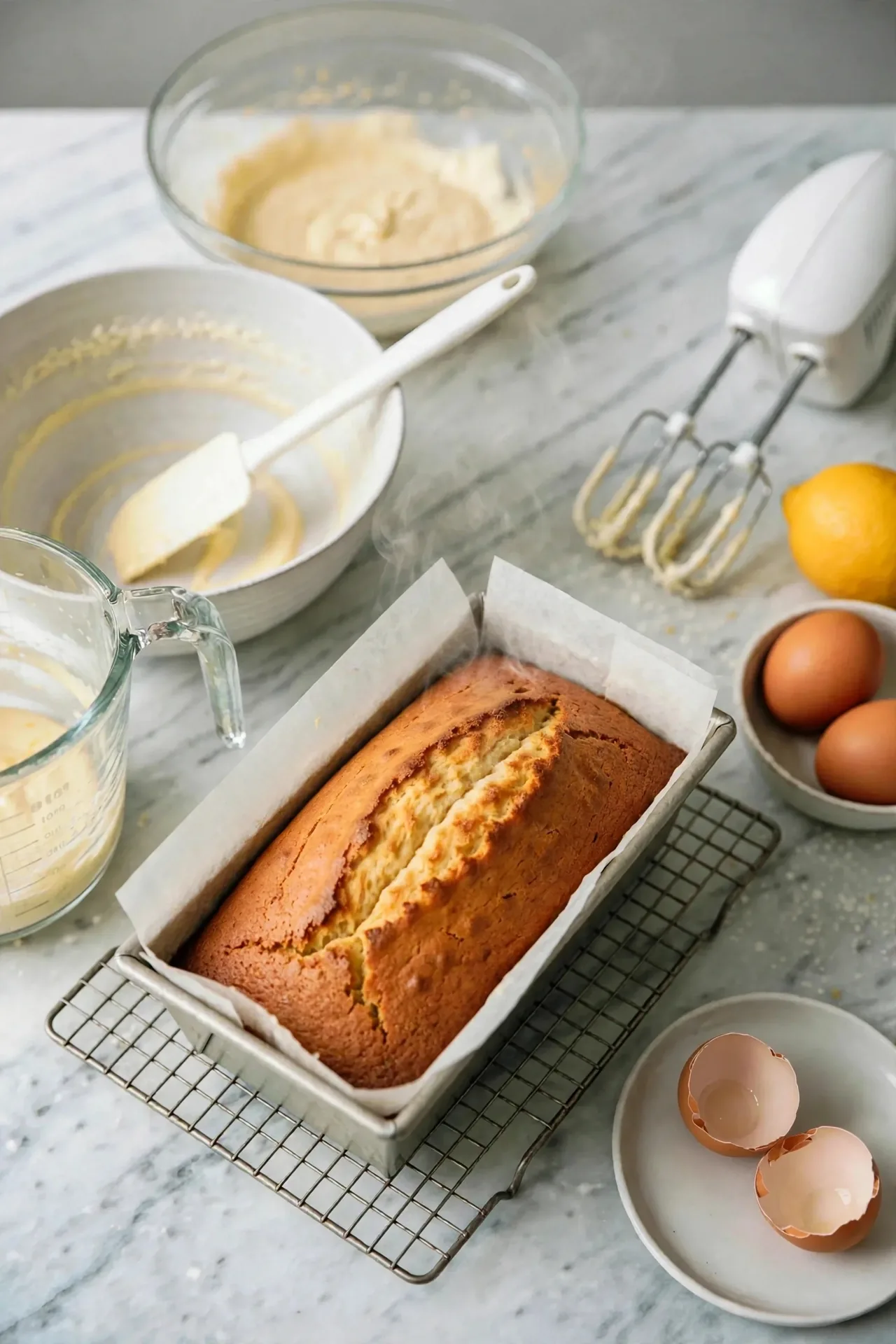
Step 11: Check for Doneness
Insert a toothpick or thin skewer into the thickest part of the cake, in the crack if there is one. It should come out clean or with a few moist crumbs, not wet batter. If you use an instant-read thermometer, the center should read roughly 205°F (96°C).
If you see wet batter, bake 5 more minutes and test again. Ovens vary, so rely on the toothpick and the golden color rather than the clock alone.
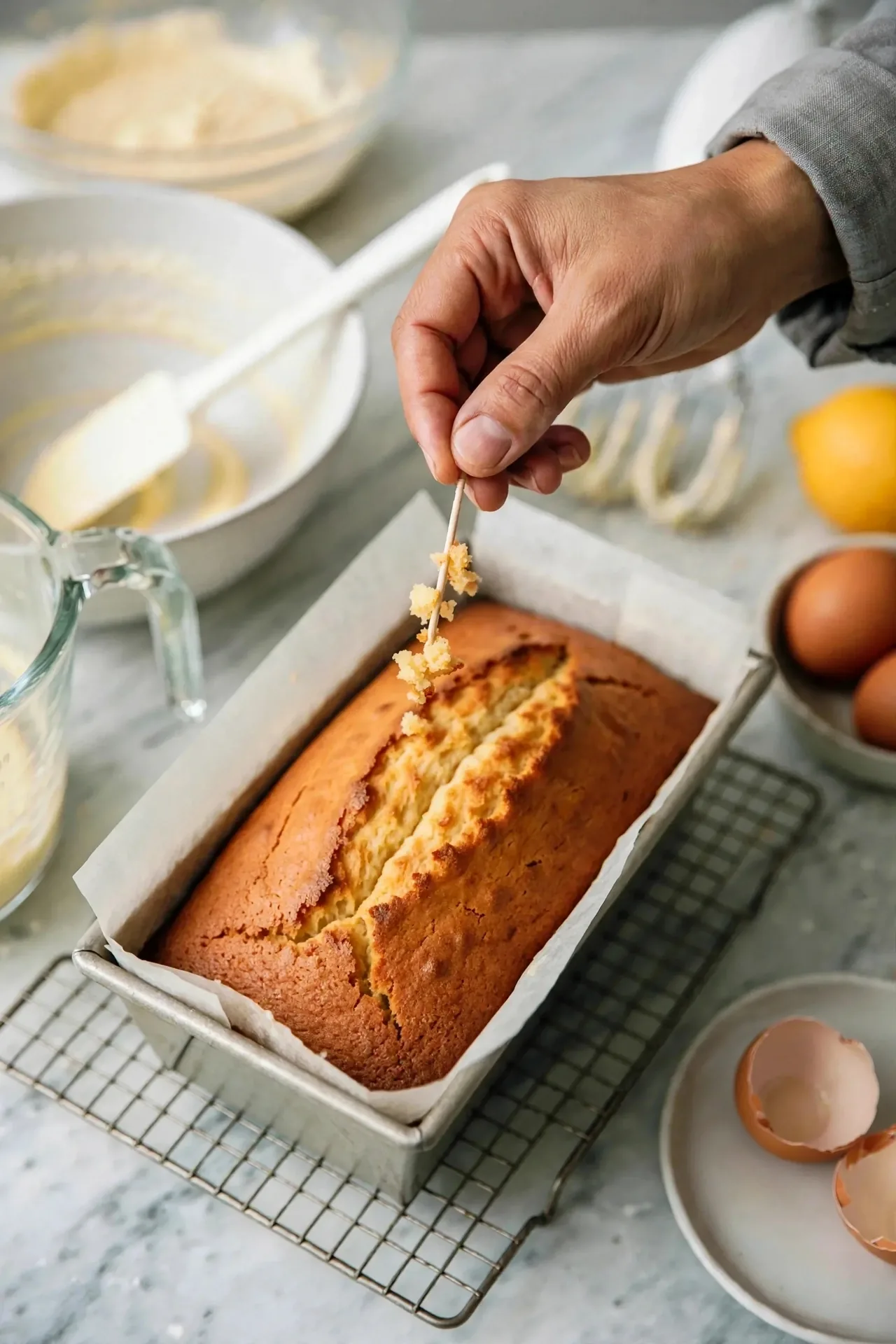
Step 12: Cool in the Pan, Then on a Rack
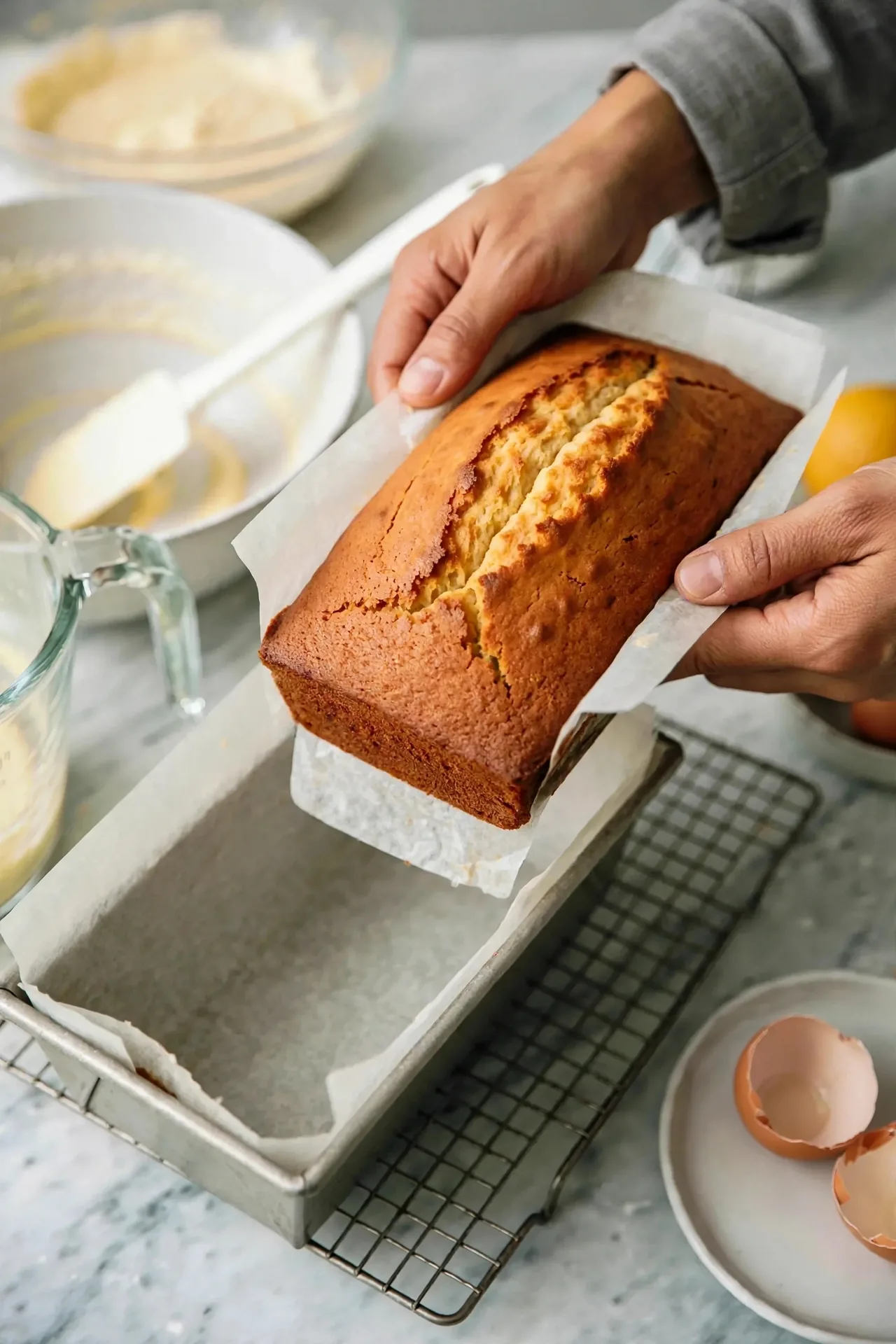
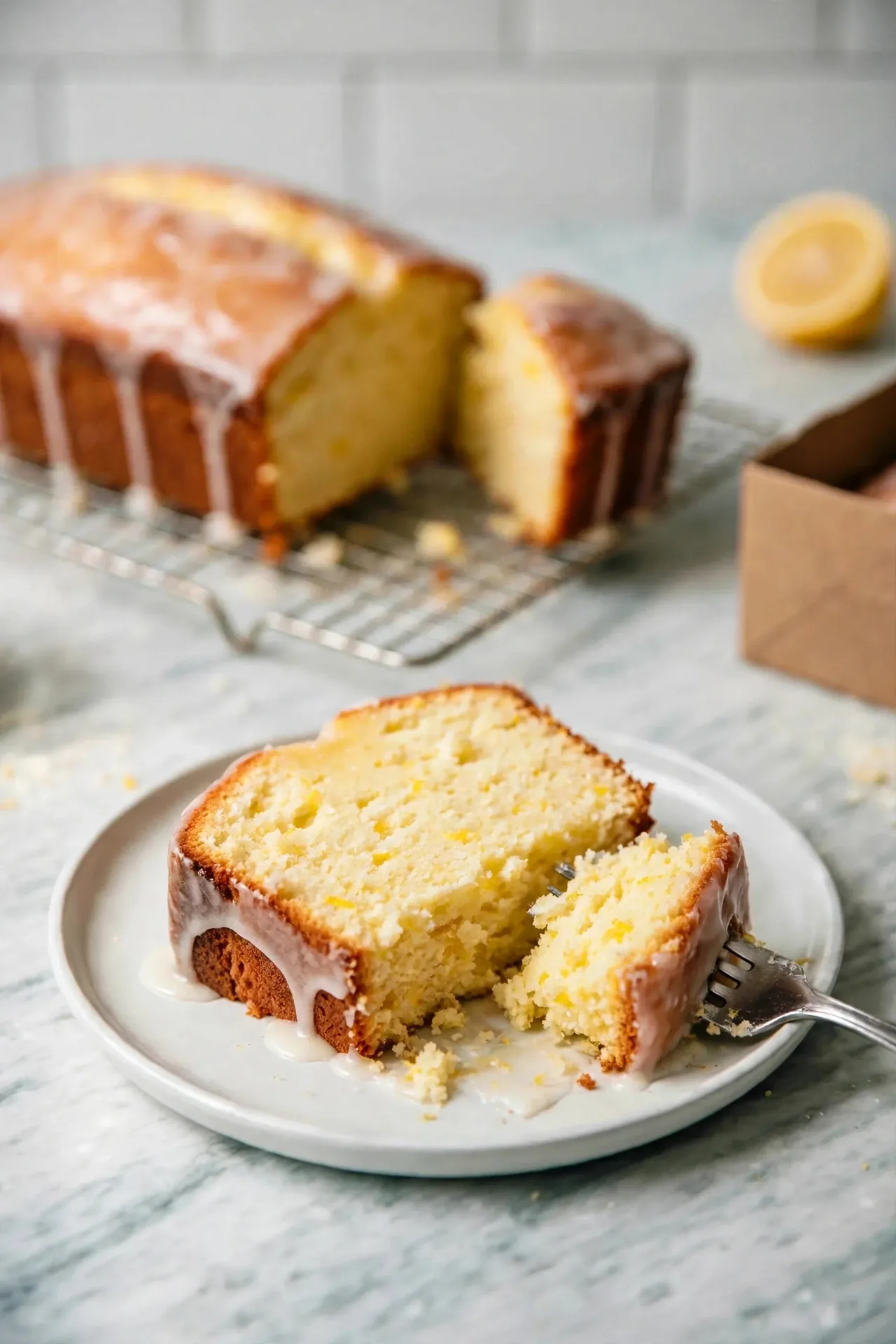
Let the cake cool in the pan on a wire rack for 15 minutes. Then use the parchment overhang to lift it out and set it directly on the rack to cool completely, about 1 hour.
Glazing a warm cake makes the glaze melt and soak in instead of setting on top. Wait until the loaf is cool to the touch.
How to Glaze the Cake
For Versions 1 and 2: Thin Lemon Glaze
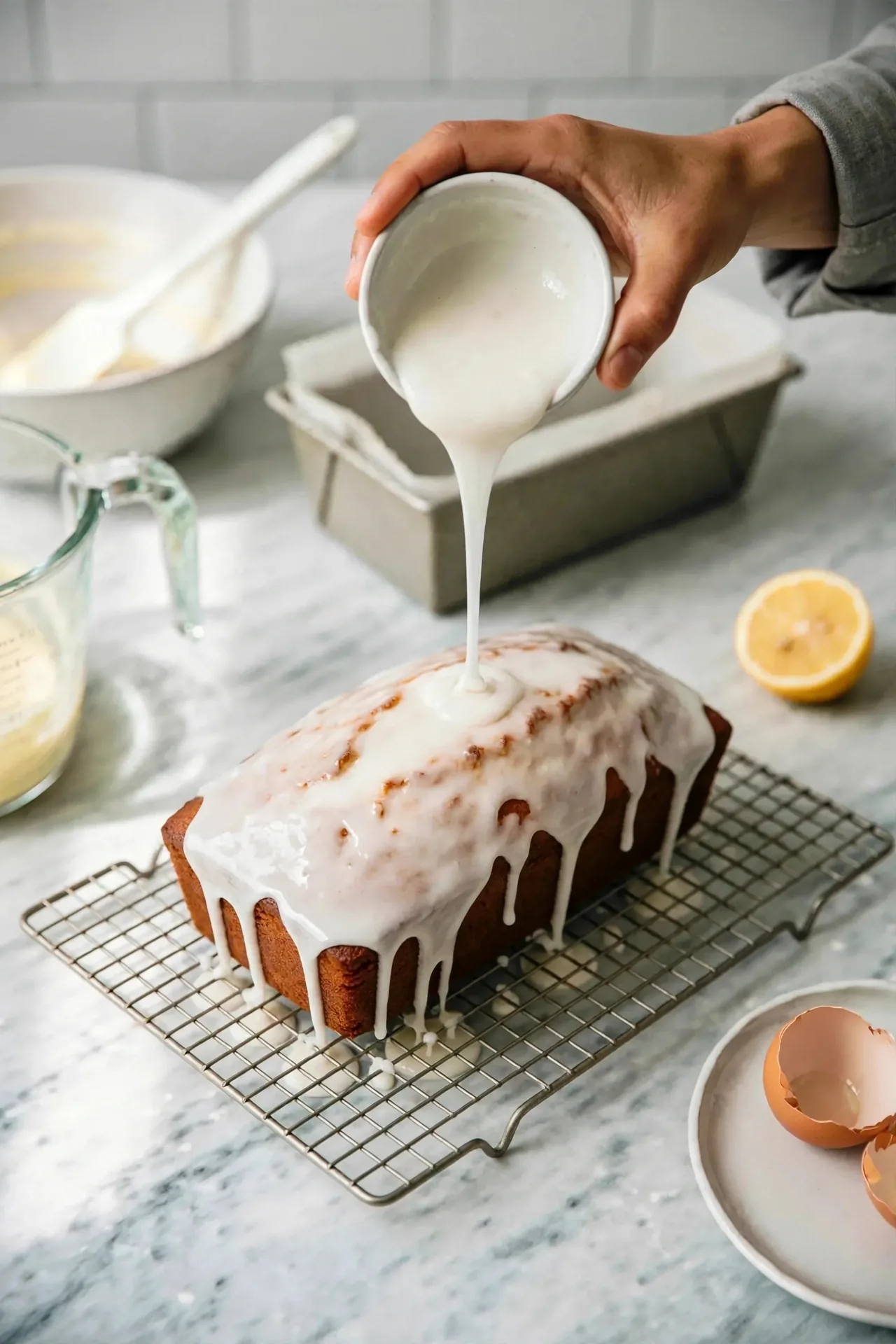
Whisk the powdered sugar and lemon juice together in a small bowl, starting with 2 tablespoons of juice. The glaze should be thick enough to ribbon off the whisk but loose enough to pour. Add more juice a teaspoon at a time if it is too thick, or more sugar if it is too thin.

Pour the glaze over the top of the cooled loaf and let it run down the sides. It sets in about 15 to 20 minutes.
For Version 3: Thick Starbucks-Style Icing
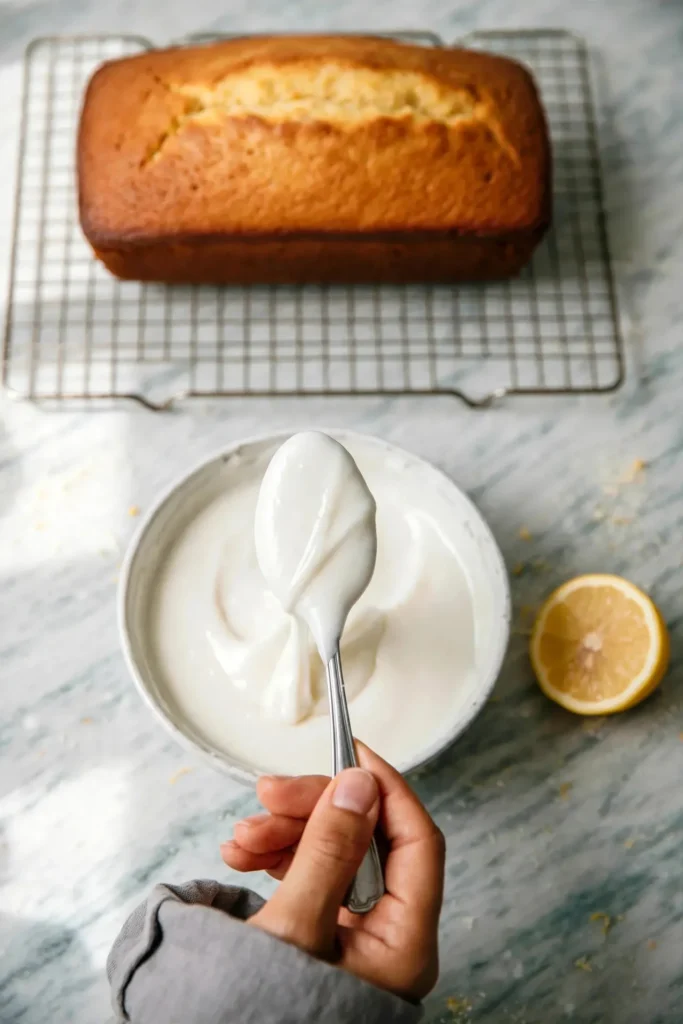
Whisk the powdered sugar, lemon juice, and 1 tablespoon of milk until smooth. The icing should be thick and opaque, closer to spreadable frosting than glaze. If it is too stiff to move, add milk a teaspoon at a time.
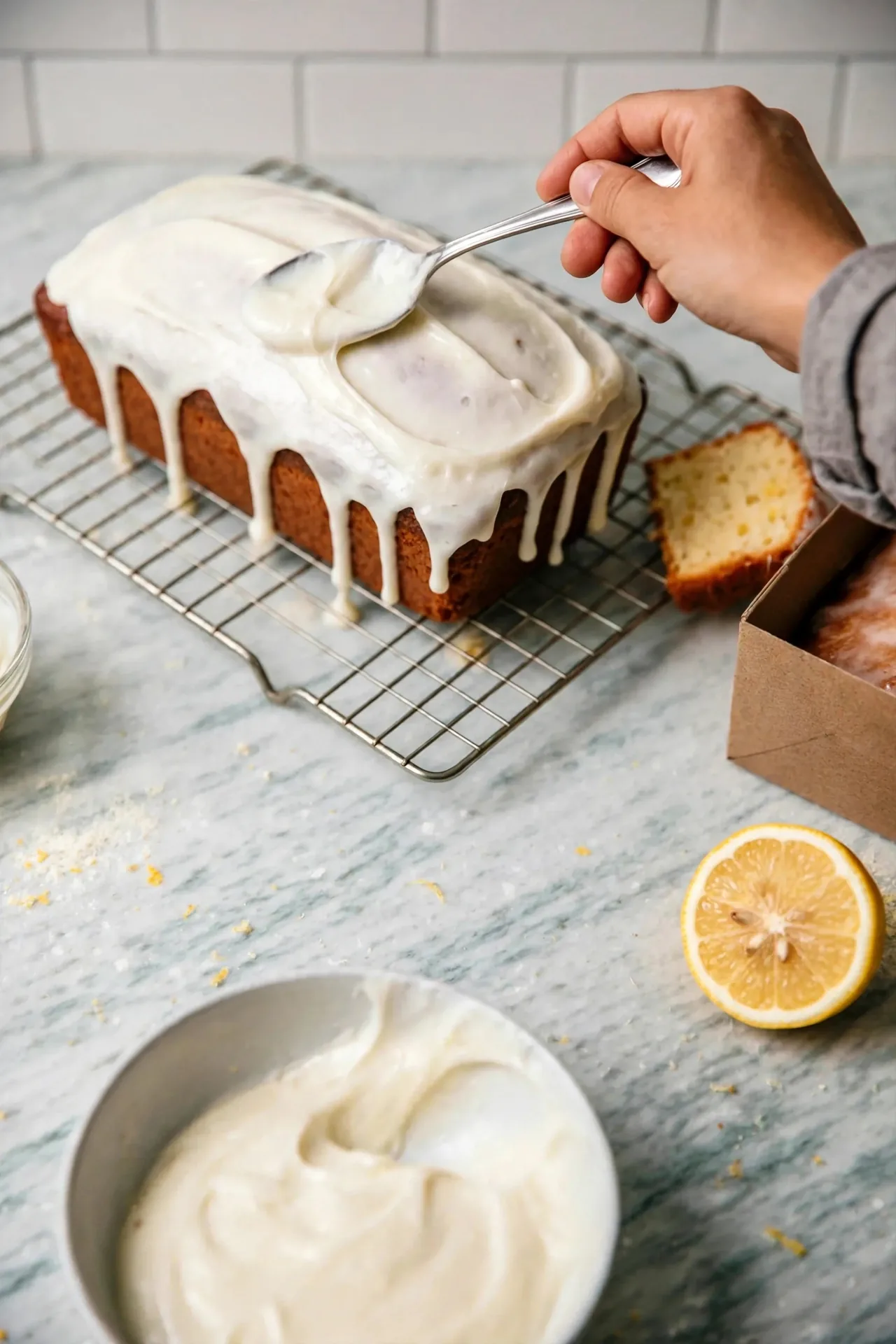
Spoon the icing over the completely cooled loaf and spread it to the edges, letting some run down the sides. Let it set for 20 to 30 minutes before slicing.
Step 13: Slice and Serve
Slice with a sharp serrated knife, using a gentle sawing motion. Wipe the knife between slices for clean edges.

Version 2 Notes: What Changes With Pudding
When you whisk in the instant pudding mix (Step 4), the batter ends up a little thicker and the baked cake has a softer, almost velvety crumb that stays moist for longer. Use vanilla pudding mix for a classic lemon flavor, or lemon pudding mix for an even stronger citrus taste.

Version 3 Notes: Getting the Starbucks-Style Look
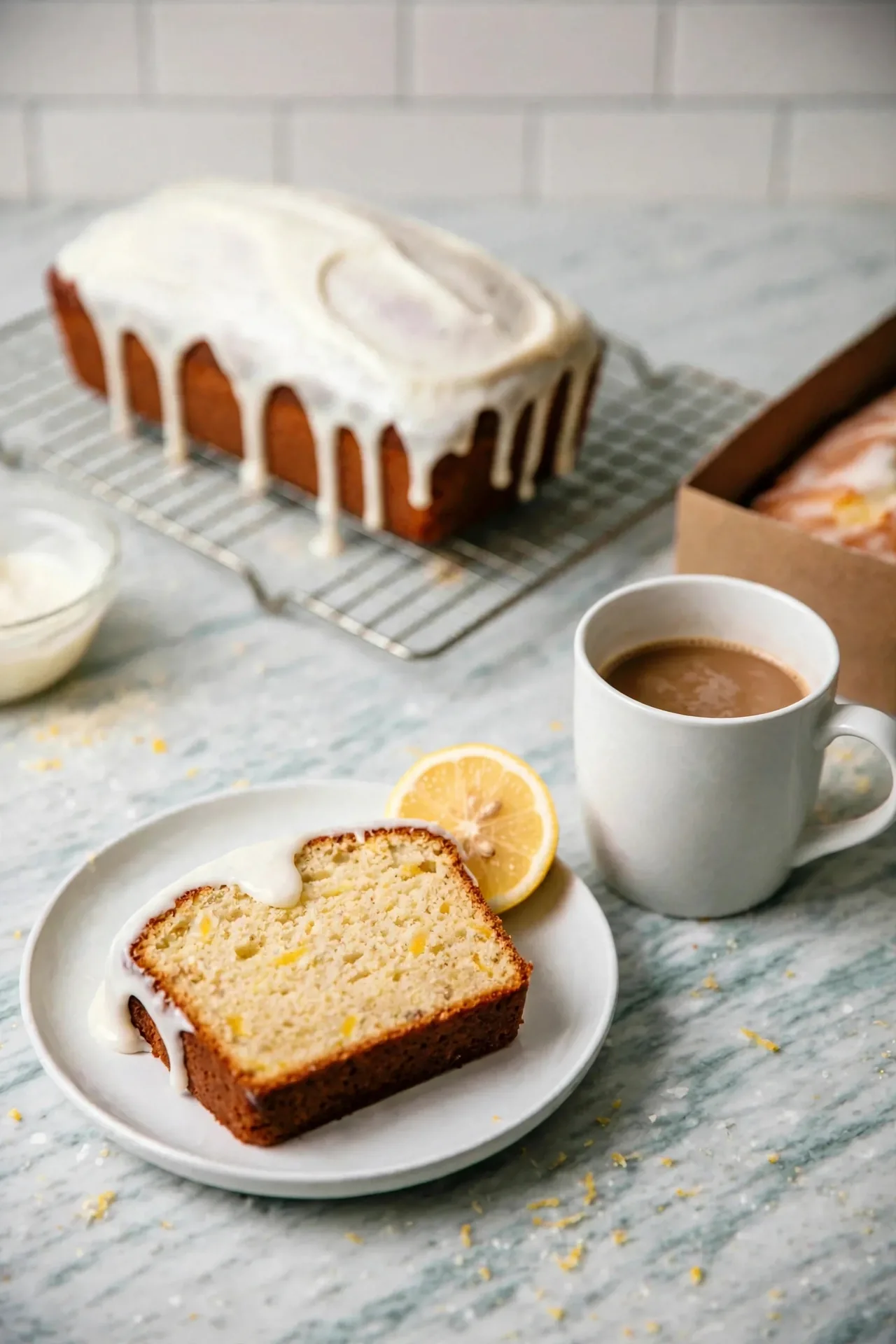
The café look comes from three things: a soft crumb, a pale yellow interior, and a thick layer of white icing that sets into a shiny crust over the top. To get it:
- Cool the loaf completely before icing, or the icing will thin and run off.
- Keep the icing thick. It should sit on top and drip only a little down the sides.
- Let it set uncovered for 20 to 30 minutes.
Common Mistakes and How to Fix Them
The cake sank in the middle. Usually the cake was underbaked, or the oven door was opened early. Next time, test with a toothpick and wait at least 40 minutes before opening the door. A sunken center cannot be undone, but the cake is still edible. Trim or hide it under the glaze.
The cake is dry. The usual causes are too much flour from scooping, overbaking, or a warm oven that runs hot. Weigh the flour, check doneness at the early end of the baking range, and use an oven thermometer if you suspect your oven runs hot.
The cake is heavy and dense. The butter may not have been creamed long enough, the eggs may have been cold, or the batter was overmixed after the flour went in. Cream the butter and sugar for the full 3 to 4 minutes and stop mixing once the flour disappears.
The batter curdled when I added the eggs or milk. This usually means the ingredients were too cold. Keep mixing, and it should come together. It can still bake into a good cake.
The glaze soaked into the cake. The cake was still warm. Cool it fully before glazing.
The top browned too fast. Tent loosely with foil after about 40 minutes and finish baking.
The cake stuck to the pan. Use parchment with an overhang, and grease the pan underneath it. Run a thin knife along the short ends before lifting.
The cake tastes bitter. The zest included white pith. Zest lightly, only the yellow layer.
Substitutions
- Milk: Buttermilk can replace the whole milk for extra tang. Plain Greek yogurt thinned with a splash of milk is a possible swap too, though it will change the texture slightly toward the sour-cream style of cake.
- Butter: Use unsalted butter so you control the salt. If you only have salted butter, reduce the added salt by half.
- Pudding mix: Use instant pudding only. Cook-and-serve pudding is not a direct swap.
- Gluten-free: A 1-to-1 gluten-free flour blend can work in the classic loaf. Expect a slightly different crumb, and check labels on baking powder and pudding mix.
- Lemon extract: A teaspoon of lemon extract can boost flavor, but it does not replace fresh zest and juice.
Storage, Freezing, and Make-Ahead
Room temperature: Cover the loaf tightly or keep slices in an airtight container for up to 2 to 3 days. Keep it away from heat and sunlight.
Refrigerator: Wrapped well, it keeps for up to about a week, though pound cake firms up when chilled. Let slices sit at room temperature for 20 to 30 minutes before eating.
Freezer: Wrap the unglazed, fully cooled loaf (or individual slices) in plastic wrap and then foil, and freeze for up to about 3 months. Thaw at room temperature, then glaze.
Make-ahead: Bake the cake a day ahead and glaze it the day you serve it. The flavor also deepens slightly overnight.
FAQ
Can I make lemon pound cake without sour cream?
Yes. The classic version above uses whole milk and fresh lemon juice for moisture and tang instead, so no sour cream or yogurt is needed.
Can I use a different pan?
You can bake the batter in two smaller loaf pans (check at 35 to 40 minutes) or an 8-inch round pan. Baking time and doneness will change, so rely on the toothpick test.
Is the Starbucks-style version the official recipe?
No. It is a copycat-style recipe inspired by the café’s iced lemon loaf. The official recipe is not published, so the flavor and texture will be similar but not identical.
Can I use lemon pudding instead of vanilla?
Yes. Lemon pudding mix intensifies the citrus flavor. Keep the fresh zest and juice in the recipe either way.
Why is my pound cake cracked on top?
A crack down the middle is normal. The outside sets before the inside finishes rising, so the center splits open.
Can I make this into muffins?
The batter can be baked as muffins in lined cups, filled about two-thirds, for roughly 20 to 25 minutes. Test with a toothpick since oven times vary.
Final Thoughts
Three things decide how this cake turns out: weighing the flour, creaming the butter and sugar for the full time, and cooling the loaf completely before glazing. Pick the classic loaf for a dense, buttery slice, the pudding version for the softest crumb, or the Starbucks-style loaf for thick white icing. All three keep well for a couple of days, and the unglazed loaf freezes well if you want to bake ahead.
Recipe Card: Classic Lemon Pound Cake (No Sour Cream)
Ingredients
Method
- Preheat the oven to 350°F (175°C). Grease a 9×5-inch loaf pan and line it with parchment with an overhang.
- Rub the lemon zest into the sugar for about 1 minute.
- Whisk the flour, baking powder, and salt together.
- Beat the butter and lemon sugar for 3 to 4 minutes until pale and fluffy.
- Beat in the eggs one at a time, then the vanilla.
- Stir the milk and lemon juice together. Add the flour mixture and milk mixture alternately in 3 additions of flour and 2 of liquid, mixing just until combined.
- Spoon into the pan, smooth the top, and tap on the counter.
- Bake 55 to 65 minutes, tenting with foil if browning too fast, until a toothpick has a few moist crumbs.
- Cool in the pan 15 minutes, lift out, and cool completely on a rack.
- Whisk the glaze, pour over the cooled cake, and let set 15 to 20 minutes.
Notes
Recipe Card: Lemon Pound Cake With Pudding
Ingredients
Method
- Preheat the oven to 350°F (175°C). Grease and line a 9×5-inch loaf pan.
- Rub the zest into the sugar.
- Whisk the flour, pudding mix, baking powder, and salt together.
- Beat the butter and lemon sugar 3 to 4 minutes until pale and fluffy.
- Beat in the eggs one at a time, then the vanilla.
- Stir the milk and lemon juice together. Add dry and wet ingredients alternately, mixing just until combined.
- Spoon into the pan, smooth, and tap on the counter.
- Bake 55 to 65 minutes until a toothpick has a few moist crumbs, tenting with foil if needed.
- Cool 15 minutes in the pan, then fully on a rack.
- Glaze and let set.
Notes
Recipe Card: Starbucks-Style Iced Lemon Loaf
Ingredients
Method
- Preheat the oven to 350°F (175°C). Grease and line a 9×5-inch loaf pan.
- Rub the zest into the sugar.
- Whisk the flour, baking powder, and salt together.
- Beat the butter and lemon sugar 3 to 4 minutes until pale and fluffy.
- Beat in the eggs one at a time, then the vanilla.
- Stir the milk and lemon juice together. Add dry and wet ingredients alternately, mixing just until combined.
- Spoon into the pan and smooth the top.
- Bake 50 to 60 minutes until a toothpick has a few moist crumbs.
- Cool 15 minutes in the pan, then fully on a rack.
- Whisk the icing until thick and opaque, spread over the cooled loaf, and let set 20 to 30 minutes.
Notes
Storage (all versions): Airtight at room temperature 2 to 3 days. Unglazed loaf freezes up to about 3 months.
Emily Hart
Hi, I'm Emily! I develop cozy, doable recipes for busy home cooks — clear steps, honest ingredients, and flavors the whole table will love. Follow on Pinterest
Follow on Pinterest

Leave a Reply